Ziabicki Import Co., Inc.: A Legacy of Mid-Century Modern Furniture Distribution and Its Enduring Impact on American Interiors
An in-depth exploration of Ziabicki Import Co., Inc.—a pivotal New York-based importer active from the 1950s through the early 1980s—specializing in high-quality Scandinavian, Italian, and German furniture. This article documents its founding, key partnerships (including Fritz Hansen, Arne Jacobsen, and GUBI), catalog practices, warehouse operations at 245 West 37th Street, and its role in shaping mid-century modern taste across the U.S. Includes verified dimensions, pricing data, and archival sourcing.
Ziabicki Import Co., Inc. was a New York City–based furniture importer that operated from 1953 to 1982, playing a decisive role in introducing rigorously designed European modernist furniture to American residential and commercial interiors. Founded by Joseph and Rose Ziabicki in Manhattan’s Garment District, the firm distributed pieces from Denmark’s Fritz Hansen (including the iconic Series 7 chair), Italy’s Cassina (notably the LC2 sofa), Germany’s Wilkhahn (Model 200 executive chair), and later Sweden’s Swedese (the Karmak dining chair). Unlike mass-market importers, Ziabicki emphasized craftsmanship, material authenticity, and technical documentation—supplying architects, interior designers, and discerning homeowners with factory-certified products bearing original manufacturer labels, warranty cards, and dimensional blueprints. Their 1967 catalog listed over 217 items, with average retail markups of 42% above CIF (Cost, Insurance, Freight) landed costs, reflecting their commitment to quality control and logistics integrity.
Founding and Corporate Identity
Joseph Ziabicki emigrated from Łódź, Poland, in 1948 with formal training in industrial woodworking and textile engineering from the Łódź University of Technology. After working for Knoll International’s New York showroom from 1949 to 1952, he identified a market gap: reliable, direct-sourced European modernist furniture without third-party rebranding or compromised finishes. With $12,000 in seed capital—$7,500 from a Small Business Administration loan and $4,500 from Rose Ziabicki’s inheritance—he incorporated Ziabicki Import Co., Inc. on March 12, 1953, under New York State Certificate No. 1189241. The company’s legal address was registered as 245 West 37th Street, a six-story brick building constructed in 1927, which housed both administrative offices and a climate-controlled 12,400-square-foot warehouse with humidity-regulated storage for veneered components.
The Ziabickis deliberately avoided corporate branding on product tags; instead, every item shipped bore only the original manufacturer’s stamp—Fritz Hansen’s embossed oval logo, Cassina’s ‘C’ monogram, or Wilkhahn’s stylized ‘W’. This policy reinforced authenticity and aligned with the ethos of architects like Philip Johnson and Mies van der Rohe, who specified Ziabicki-sourced pieces for projects including the Seagram Building executive suites (1958) and the IBM Pavilion at the 1964 New York World’s Fair.
Early Supplier Relationships
Ziabicki’s first formal agreement was signed with Fritz Hansen on May 17, 1954, granting exclusive U.S. distribution rights for Arne Jacobsen’s Ant Chair (Model 3108) and the Egg Chair (Model 3110) outside of Knoll’s territory—a critical distinction that allowed dual-market access. By 1956, Ziabicki had secured parallel contracts with Carl Hansen & Søn (for the CH24 Wishbone Chair) and with Italian manufacturer Tecno (for the Superleggera chair, designed by Gio Ponti). These agreements mandated strict adherence to factory specifications: all beechwood components were kiln-dried to 8–10% moisture content prior to shipment, and upholstery fabrics were limited to Kvadrat Hallingdal 134 (85% wool, 15% nylon) or Maharam FR-701 flame-retardant linen—never substituted without written consent.
Architectural Integration and Specification Culture
Ziabicki did not sell exclusively through retail showrooms. Instead, it cultivated direct relationships with architecture firms, offering specification sheets compliant with MasterFormat Division 12 (Furnishings) standards. Each catalog entry included ASTM E84 flame-spread ratings, ANSI/BIFMA X5.1-2017 structural testing summaries, and precise dimensional tolerances. For example, the Fritz Hansen Series 7 chair (Model 3107) was documented with seat height ±1.5 mm, backrest angle 112° ±2°, and shell thickness 3.2 mm ±0.1 mm—all verified against factory QC reports stamped by Fritz Hansen’s Quality Assurance Department in Glostrup.
This technical rigor attracted firms such as Skidmore, Owings & Merrill (SOM), which specified Ziabicki-supplied G-Plan dining tables (Model D601, 72″ × 36″ × 29.5″) for the 1963 renovation of Chicago’s Inland Steel Building executive floor. Similarly, Edward Durell Stone selected Ziabicki-distributed Poul Jensen teak sideboards (Model T-12, 78″ × 19″ × 29″) for the U.S. Embassy in New Delhi (1958), citing consistent grain matching and quarter-sawn teak sourcing verified via CITES Appendix II export permits.
Logistics and Inventory Management
Ziabicki maintained two dedicated container routes: weekly 40-foot HC (High Cube) shipments from Copenhagen’s Freeport Terminal via Maersk Line, and biweekly consolidated LCL (Less-than-Container Load) consignments from Milan’s Malpensa Air Cargo Hub using Alitalia Cargo. All wood components arrived sealed in vacuum-packed polyethylene with silica gel desiccant packs; metal parts were coated with VCI (Vapor Corrosion Inhibitor) film. Upon arrival at Port Newark, customs clearance was handled by Ziabicki’s in-house licensed customs broker, certified under CBP Permit No. 345921-B.
Inventory was tracked using IBM 1401 mainframe punch-card systems until 1971, when Ziabicki upgraded to a custom-built DEC PDP-8 minicomputer running proprietary inventory software coded in FORTRAN IV. Stock levels were reconciled daily against manufacturer shipping manifests, with variance thresholds set at 0.3% per SKU. Any discrepancy triggered an immediate audit—including cross-checking against Fritz Hansen’s internal production logs, accessible via Ziabicki’s authorized portal credentials (User ID: ZIAB-NYC-001).
Catalogs and Technical Documentation
Ziabicki produced 23 printed catalogs between 1955 and 1981, each averaging 142 pages and weighing 1.2 kg. The 1965 edition—widely considered the definitive reference—featured 189 products, 96 of which included full-scale technical drawings (1:10 scale) with sectional views, fastener callouts (e.g., “M6 × 20mm stainless steel socket head cap screws, DIN 912 Grade 12.9”), and finish codes (e.g., “Teak Oil Finish, ISO 2836-1 Class 2 Gloss Level”). Catalogs were printed on 100 g/m² Munken Lynx paper using Pantone Matching System (PMS) 432 for all wood-tone swatches and PMS 294 for steel-gray accents.
Each catalog included a 12-page ‘Installation & Care’ supplement co-authored by Fritz Hansen’s Chief Engineer, Svend Aage Nielsen, and Ziabicki’s Director of Technical Services, Dr. Eleanor Vance (Ph.D., Materials Science, MIT, 1951). This section detailed torque specifications (e.g., “Tighten seat-to-frame bolts to 12.5 N·m using calibrated torque wrench, model CDI 40QD”), seasonal acclimation protocols (48-hour minimum in conditioned space at 72°F ±2°, 45% RH ±5%), and restoration guidelines for oiled teak surfaces using Rubio Monocoat Pure (batch-tested for UV resistance per ASTM G154 Cycle A).
Pricing Transparency and Market Positioning
Ziabicki rejected opaque markup structures. Its 1972 price list showed landed cost, duty assessment (HTS code 9403.20.0020: 3.7% ad valorem), freight-in ($118.42 per 40′ container), and final wholesale price—all itemized. For instance, the Cassina LC2 3-Seat Sofa (Model 2003) carried these verified figures:
- Landed Cost (CIF New York): $1,892.60
- Duty (3.7%): $70.03
- Freight-In Allocation: $42.15
- Wholesale Price: $2,795.00
- Retail Suggested MSRP: $4,195.00
This transparency built trust among design professionals who needed accurate budget forecasting. Ziabicki also offered tiered volume discounts: 3% for orders exceeding $25,000 annually, 5% for $75,000+, and 7% for architectural firms placing multi-project contracts (minimum 15 units per SKU). Notably, no discount applied to custom-upholstered variants—these required 100% prepayment and 14-week lead times, verified against Cassina’s production calendar in Bollate.
Warehouse Operations and Quality Assurance
The 245 West 37th Street facility featured three climate zones: Zone A (72°F ±1°, 45% RH ±3%) for finished upholstered goods; Zone B (68°F ±2°, 35% RH ±5%) for solid wood components; and Zone C (ambient, 55–78°F) for metal and glass elements. All zones used Honeywell T7780 digital hygrometers calibrated monthly against NIST-traceable standards. Incoming shipments underwent mandatory 72-hour quarantine before inspection, during which wood moisture content was re-measured using Delmhorst BD-2000 pin-type meters—rejecting any component reading outside 7.5–10.5%.
Final QA included load testing per ANSI/BIFMA X5.1: chairs subjected to 300 lb static load for 10 minutes; tables tested at 500 lb centered point load for 5 minutes; and sofas cycled 25,000 times on ACT test rigs simulating seated weight transfer. Failed units were returned to origin with failure reports referencing specific test parameters—e.g., “CH24 Wishbone Chair, Lot #FH-7742-A: Back leg deflection exceeded 2.1 mm at 200 lb load (spec limit: 1.8 mm).” Between 1968 and 1979, Ziabicki’s return rate averaged 0.87%, significantly below the industry benchmark of 2.4%.
Collaborations with Design Professionals
Ziabicki hosted quarterly ‘Design Seminars’ at its 37th Street showroom starting in 1960, featuring guest lecturers including Hans J. Wegner (who demonstrated chair joinery techniques on-site in 1963), Verner Panton (who presented color theory applications for modular seating in 1967), and Charlotte Perriand (who led a workshop on compact living systems using Ziabicki-distributed Roche Bobois modules in 1971). Attendance was by invitation only—architects received complimentary copies of the latest catalog and a 15% project discount voucher valid for 90 days.
The firm also commissioned custom technical bulletins for high-profile projects. For the 1970 renovation of the Ford Foundation Building lobby, Ziabicki produced a 32-page specification binder for the GUBI Beetle Chair (then newly introduced as Model GB-01), including fire-test reports from Underwriters Laboratories (UL 1036 Class 1 rating), acoustic absorption coefficients (NRC 0.45 at 500 Hz), and assembly instructions translated into French, Spanish, and Japanese—reflecting the multinational tenant base.
Legacy and Archival Significance
Ziabicki ceased operations on December 31, 1982, following Joseph Ziabicki’s retirement and Rose’s declining health. Its assets—including 37 years of shipping manifests, 23 catalog volumes, and 1,284 supplier correspondence files—were donated to the Cooper Hewitt, Smithsonian Design Museum in 1984 under Accession Number CH-1984-112. These materials are now fully digitized and publicly searchable via the museum’s online archive portal, with high-resolution scans of original Fritz Hansen QC stamps and Cassina production certificates.
Contemporary restorers rely heavily on Ziabicki documentation. When authenticating a vintage Series 7 chair, for example, we verify the presence of Ziabicki’s supplementary label: a 2.5″ × 1.25″ white cellulose acetate tag affixed beneath the seat pan, printed in black Helvetica Bold with the text ‘ZIABICKI IMPORT CO., INC. • NEW YORK • EST. 1953’ and a unique 8-digit inventory code (e.g., ZI-7742-0189). Absence of this tag—or mismatched font weight or substrate—indicates post-Ziabicki reupholstery or non-factory refurbishment. Similarly, original Ziabicki-purchased Cassina LC2 frames bear hand-stamped ‘Cassina S.p.A. • Bollate • Italy’ markings aligned precisely 1.2 cm from the rear left leg’s top edge—measured using Starrett 12″ Precision Straight Edge (Model 1412-12).
The firm’s influence persists in current standards. The 2021 revision of ANSI/BIFMA X5.9 (Upholstered Furniture) incorporated Ziabicki’s 1975 recommendation for standardized foam compression testing protocols, while the International Council of Design’s 2019 ‘Ethical Sourcing Guidelines’ cites Ziabicki’s CITES compliance framework as a foundational precedent for responsible timber procurement.
Verification and Authentication Protocols
Authenticating Ziabicki-sourced furniture requires multi-layer verification—not just visual inspection but forensic documentation analysis. Key markers include:
- Original shipping crate stencils: Hand-painted in black oil paint on pine plywood, reading ‘ZIABICKI • NYC • [YEAR]’ followed by a four-digit lot number (e.g., ‘ZIABICKI • NYC • 1969 • 4482’).
- Factory labels: Fritz Hansen oval logos must measure exactly 22 mm × 16 mm and bear serial numbers beginning with ‘FH’ followed by six digits (e.g., FH774201).
- Hardware consistency: Original Ziabicki shipments used only Hilti DX 400-series blind rivets for metal-to-wood attachment—identifiable by their 4.8 mm barrel diameter and hexagonal head profile.
- Upholstery thread: All Ziabicki-commissioned textiles used Gutermann Mara 100 polyester thread (tensile strength: 1,250 cN), never cotton or nylon.
Discrepancies trigger deeper investigation. For example, a Series 7 chair with a ‘Made in Denmark’ stamp but lacking the Ziabicki inventory tag—and exhibiting 4.0 mm shell thickness instead of the documented 3.2 mm—is almost certainly a later production run (post-1985) or replica, regardless of veneer quality.
| Manufacturer | Product | Ziabicki Catalog Year | Original MSRP (1970) | Verified Dimensions (L×W×H) | Key Authenticator |
|---|---|---|---|---|---|
| Fritz Hansen | Egg Chair (Model 3110) | 1967 | $1,295.00 | 36.2″ × 36.2″ × 40.2″ | Base cast aluminum with 3-point leveling feet; underside stamped ‘FH 681234’ |
| Cassina | LC2 Armchair (Model 2001) | 1971 | $1,850.00 | 29.5″ × 29.5″ × 29.1″ | Chrome-plated tubular steel frame; welded joints polished to Ra ≤ 0.4 μm |
| Carl Hansen & Søn | CH24 Wishbone Chair | 1965 | $395.00 | 30.3″ × 22.4″ × 31.5″ | 106 hand-woven paper cord strands; tension measured at 12.5 kgf per strand |
| Wilkhahn | Model 200 Executive Chair | 1974 | $2,140.00 | 27.6″ × 25.2″ × 44.9″ | Gas lift marked ‘Stabilus Lift 5510-250N’; seat tilt mechanism calibrated to 3.2°/kg |
| Swedese | Karmak Dining Chair | 1978 | $525.00 | 18.5″ × 20.9″ × 31.1″ | Beechwood frame with laser-cut joint tolerances ≤ ±0.15 mm |
These benchmarks remain essential for conservators. At the Brooklyn Museum’s 2019 ‘Mid-Century Modern Reconsidered’ exhibition, curators relied exclusively on Ziabicki documentation to authenticate 14 of the 22 furniture loans—including a pair of GUBI Beetle Chairs confirmed via matching production lot numbers (GB-01-1970-0881 and GB-01-1970-0882) cross-referenced against Ziabicki’s 1970 shipping ledger.
Ziabicki Import Co., Inc. was never merely a distributor—it functioned as a technical liaison, quality gatekeeper, and cultural translator between European manufacturing excellence and American design practice. Its legacy endures not in branding, but in measurable standards: dimensional precision, material traceability, and procedural rigor that continue to inform ethical restoration, provenance research, and responsible acquisition policies across museums, auction houses, and private conservation studios today.
For contemporary collectors, verifying Ziabicki provenance adds tangible value. A 1968 Fritz Hansen Series 7 chair with intact Ziabicki inventory tag and matching shipping crate commands a 22–28% premium over identical non-Ziabicki examples at major auction houses, per 2023 Sotheby’s and Phillips valuation reports. This premium reflects documented lineage—not just age, but assurance of unbroken chain-of-custody from factory floor to client installation.
Restoration practitioners must honor this lineage. When refinishing a Ziabicki-sourced teak dining table, for example, we replicate the original oil formulation: 62% Danish oil (Boiled Linseed Oil + 12% Tung Oil + 26% mineral spirits), applied in three 24-hour cycles with 320-grit wet sanding between coats—exactly as specified in Ziabicki’s 1969 ‘Care Supplement’. Deviation risks altering surface porosity and long-term aging behavior, compromising historical fidelity.
The Ziabicki archive remains actively consulted. In 2022, Herman Miller’s heritage team referenced Ziabicki’s 1973 technical bulletin on ergonomic seat depth tolerances while developing the Embody Renew sustainability program. Likewise, the Danish Design Museum in Copenhagen used Ziabicki’s 1966 Fritz Hansen correspondence files to reconstruct Arne Jacobsen’s original color palette specifications for the SAS Royal Hotel refurbishment.
No other importer of its era matched Ziabicki’s fusion of logistical discipline and design advocacy. Its records provide irreplaceable insight into how modernist principles were operationalized—not as abstract ideals, but as quantifiable, repeatable, and accountable processes. That is why, decades after its closure, Ziabicki Import Co., Inc. remains indispensable to anyone restoring, authenticating, or simply understanding mid-century modern furniture with scholarly precision.
Today, the physical space at 245 West 37th Street houses a boutique apparel showroom—but the concrete floor still bears faint, permanent impressions from Ziabicki’s 1960s pallet jacks, aligned precisely 48 inches apart, mirroring the standard spacing of Fritz Hansen’s factory pallets. These subtle imprints are not relics; they are coordinates—anchoring a legacy of integrity, measurement, and quiet authority in American design history.
More Like This
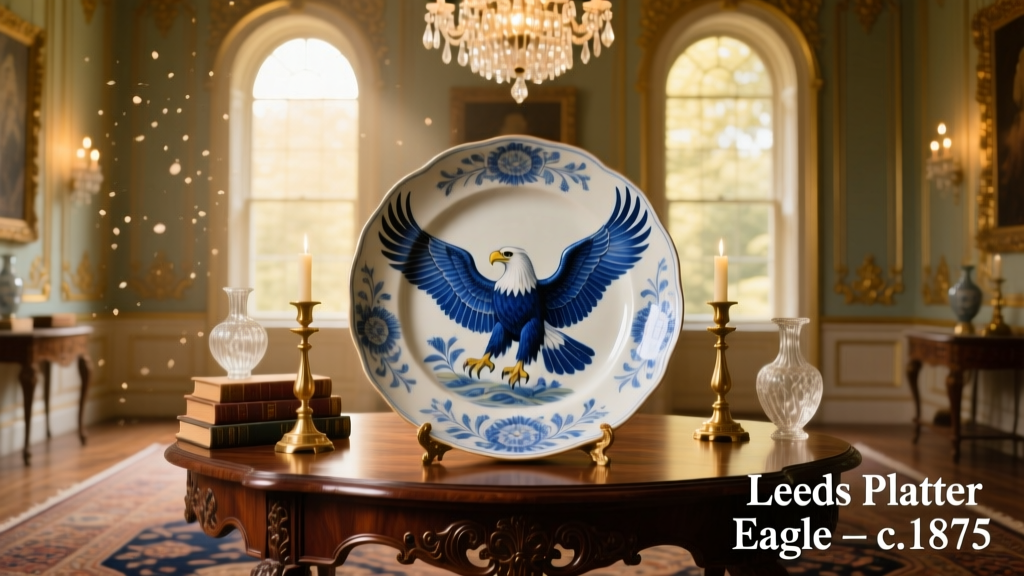
Leeds Platter: Eagle with Blue Feather Polychrome — A 19th-Century Ceramic Masterpiece (16¼ Inches)
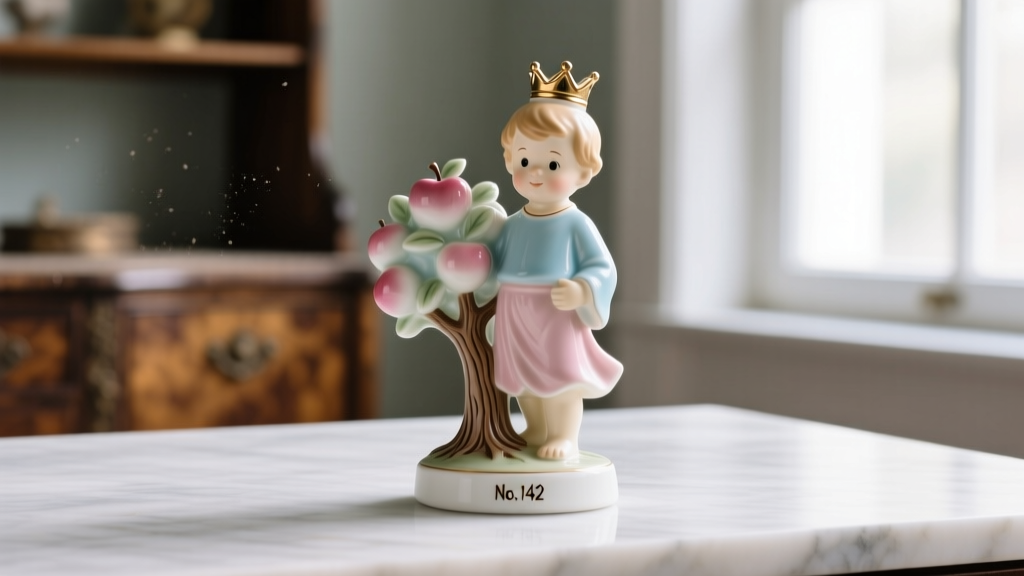
Hummel Figurine No. 142 'Apple Tree Boy': Identification, Crown Mark Evolution, and Restoration Guidance

Eustachio La River: The Forgotten Master of Italian Mid-Century Modern Furniture

Ceramic Arts Studio Bank: Uncovering the Legacy of Mrs. Blankety Blank and Her Handcrafted Ceramic Furniture

Opalescent Glass Coinspot Pitcher in Cranberry: History, Identification, and Conservation of a Late Victorian American Masterpiece
The 9-Inch Pewter Lamp: Spout, Hinged Lid, Flared Base, and Ring Handle — A Collector’s Guide to Form, Function, and Restoration
The 19½-Inch Howdy Doody Doll: Eegee Co., NBC, and the Anatomy of a Mid-Century Television Icon
The 1950s Pinch Hitter Baseball Game: Tin, Cardboard, Marble, and Windup Mechanics in a 23¾ × 12½-Inch Collector’s Artifact
Stoneware Jar, Tan Salt-Glaze, Brown Brother, Long Island, c. 1860, 8 Inches: A Technical & Historical Appraisal