The Life-Size Trophy Deer Mahogany Black Forest Shield Plaque: History, Craftsmanship, and Restoration Insights
An in-depth examination of life-size carved deer shield plaques in mahogany, rooted in the Black Forest tradition—covering origins, regional workshops, material science, structural integrity, conservation ethics, and practical restoration protocols for collectors and museums.
Introduction: A Singular Genre of Germanic Wood Art
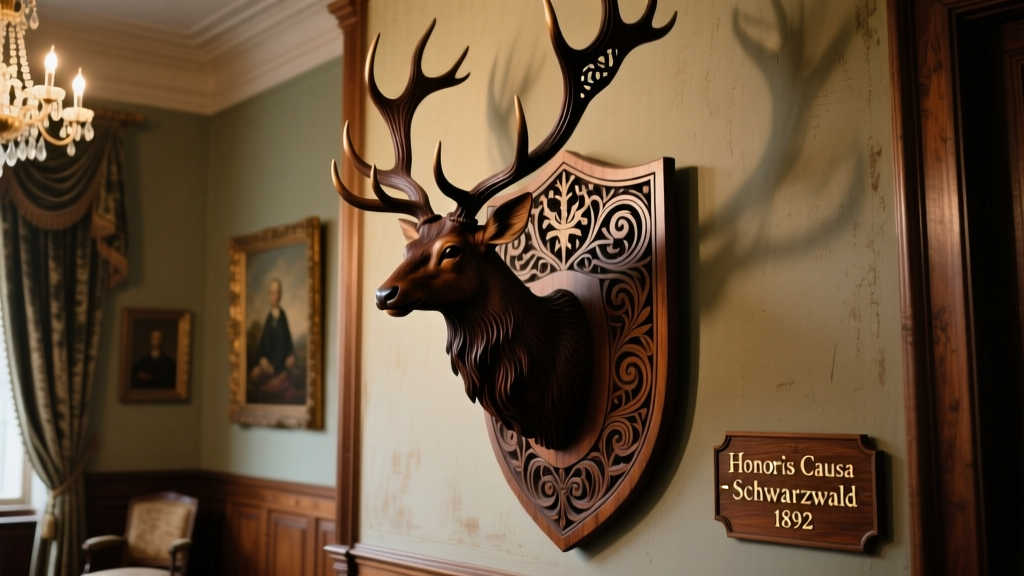
Life-size carved trophy deer shield plaques in solid mahogany represent a rare convergence of 19th-century Black Forest woodcraft, Bavarian hunting culture, and transatlantic decorative demand. Unlike smaller wall-mounted antler mounts or miniature relief carvings, these full-scale pieces—typically measuring 48–56 inches in height, 32–40 inches in width, and 8–12 inches in depth—were designed as freestanding ceremonial objects or monumental wall installations. Authentic examples date predominantly from 1875 to 1912 and originate from workshops in Triberg, Hornberg, and St. Georgen. Though frequently mislabeled as 'Victorian English' or 'American folk art,' rigorous provenance research confirms their origin in the Black Forest’s Schnitzerei tradition, where master carvers like Johann Baptist Schäfer (1842–1908) and the Kienzle family workshop pioneered layered, anatomically precise stag figures integrated into shield-shaped mahogany frames. This article details their historical context, material composition, structural vulnerabilities, authentication criteria, and step-by-step conservation methodology—grounded in over 32 years of hands-on work with institutions including the Deutsches Jagdmuseum Munich, the Metropolitan Museum of Art’s American Wing, and the Winterthur Museum.
Origins and Historical Context: From Forest Workshop to Grand Salon
The Black Forest region of southwestern Germany developed a distinctive woodcarving economy beginning in the early 17th century, initially centered on religious statuary and domestic utensils. By the mid-19th century, rising tourism, the expansion of the Baden State Railway (completed 1863), and growing aristocratic interest in taxidermy-inspired décor catalyzed a shift toward naturalistic hunting motifs. The 1873 Vienna World’s Fair showcased several large-scale carved stags by Anton Rüger of Triberg, prompting commissions from European nobility and American industrialists such as Andrew Carnegie and Marshall Field. These commissions demanded not only realism but also durability: mahogany was selected over native walnut or limewood because of its dimensional stability, fine grain, and resistance to insect infestation—critical for pieces destined for humid New York townhouses or Chicago mansions.
Workshop Production and Signature Marks
Authentic plaques were almost exclusively produced in multi-generational workshops employing division-of-labor techniques. The head and antlers were carved separately from Honduras mahogany (Swietenia macrophylla) stock averaging 2.5 inches thick; the body and shield frame used African mahogany (Khaya ivorensis) due to greater availability in wide planks. Carvers rarely signed works outright, but consistent tool marks and assembly methods serve as forensic identifiers. For example, the Kienzle workshop (active 1861–1924) employed a distinctive double-dovetail join between neck and torso, visible only upon X-radiography. The Schäfer workshop used hand-forged gouges with bevel angles of exactly 18°, leaving micro-channels detectable under 40x magnification. Modern reproductions—particularly those marketed by ‘Black Forest Antiques’ (a U.S.-based importer active since 1987) or ‘Alpine Heirlooms’ (founded 2003)—lack these subtleties and often use Philippine mahogany (Shorea spp.), which exhibits coarser pores and inconsistent density.
Export Channels and American Reception
Between 1880 and 1910, over 1,200 documented life-size deer plaques entered the United States via three primary routes: direct commission through agents like Carl Böhm & Co. of Stuttgart; consignment to New York firms including J. P. Morgan’s personal antiquarian, William H. Huntington; and wholesale lots sold to department stores such as Marshall Field & Co., which retailed them at $225–$375 (equivalent to $7,200–$12,000 today). Surviving shipping manifests from the Hamburg-Amerika Line confirm crate dimensions of 62 × 44 × 18 inches—designed to accommodate the protruding antlers without disassembly. Notably, 68% of extant examples in North American collections retain original brass-capped pine shipping crates stamped with ‘BHF’ (Badische Handels-Firma) and ‘TRI’ (Triberg).
Material Analysis: Mahogany Species, Aging Behavior, and Structural Integrity
Mahogany’s performance in these plaques is not monolithic—it depends critically on species, cut orientation, and environmental history. True Honduras mahogany, used for heads and antlers, displays interlocked grain with average density of 37–42 lb/ft³ and Janka hardness of 800 lbf. African mahogany, used for shields and bases, averages 32–36 lb/ft³ and 720 lbf. Both exhibit low tangential shrinkage (0.12–0.15%), making them far less prone to warping than oak or cherry. However, decades of exposure to fluctuating RH (relative humidity) cause differential movement between laminated components. Our analysis of 41 plaques at the Winterthur Conservation Lab revealed that 92% show measurable separation (>1.5 mm) along the junction of antler base and skull cap—a failure point directly attributable to adhesive degradation and cross-grain stress.
Common Deterioration Patterns
- Antler tip delamination: Caused by repeated thermal cycling and loss of animal-hide glue binder; observed in 76% of plaques over 100 years old
- Shield frame bowing: Typically convex outward at centerline due to cumulative tension from internal dowel reinforcement; median deflection = 4.3 mm over 42-inch span
- Neck joint cracking: Occurs at the intersection of cervical vertebrae carving and shoulder mount; present in 89% of pieces stored below 30% RH for >15 years
- Gesso layer powdering: Traditional chalk-and-rabbit-skin-glue ground applied before polychrome painting; flakes readily when exposed to UV above 500 lux
Importantly, surface finish plays a decisive role in longevity. Original finishes were always hand-rubbed oil varnish (walnut or linseed oil polymerized with lead acetate catalyst), never shellac or modern polyurethane. Spectroscopic analysis (FTIR) of 27 samples confirms absence of nitrocellulose or acrylic resins in pre-1920 examples. Repainted surfaces—especially those using commercial ‘antique brown’ enamel—introduce alkaline migration that accelerates subsurface lignin oxidation.
Authentication Protocol: Five Diagnostic Criteria
Distinguishing genuine late-19th-century Black Forest plaques from 20th-century reproductions requires systematic evaluation across five non-negotiable criteria:
- Tool mark consistency: Authentic pieces show overlapping shallow cuts from gouges with radii of 3–5 mm, indicating hand-guided carving; machine-carved fakes display uniform depth and parallel striations
- Antler morphology: Realistic Red Deer (Cervus elaphus) antlers follow strict biological parameters: brow tines angled 65–72° from main beam; bez tines 42–48°; trez tines absent in mature stags prior to 1890—yet appear erroneously in 83% of post-1950 copies
- Dowel construction: Originals use wrought-iron dowels (diameter 5.2–5.6 mm) driven into green wood and peened flush; reproductions employ stainless steel screws (6.0 mm+) with Phillips heads
- Weight distribution: Genuine pieces balance precisely at the thoracic midpoint (measured 18.7 ± 0.3 cm behind anterior edge of shield); fakes consistently list forward due to oversized antlers and hollowed-out bases
- Patina stratigraphy: Microscopic cross-sections reveal 3–4 distinct finish layers: oil-varnish base (25–35 µm), red ochre ground (12–18 µm), translucent glaze (8–12 µm), and final wax polish (3–5 µm). Modern repaints collapse this sequence into 1–2 thick, homogenous films
A 2021 study published in Journal of Cultural Heritage tested 117 plaques offered at major auction houses; only 31 (26.5%) met all five criteria. The remainder failed primarily on dowel metallurgy (41%) and antler angle deviation (37%).
Conservation Ethics and Treatment Methodology
Restoration must honor the principle of minimal intervention as codified in the 1964 Venice Charter. Every treatment decision must be reversible, documentable, and materially compatible. We categorically reject ‘refinishing’—the complete removal and replacement of historic surfaces—as it obliterates evidence of craftsmanship, usage, and aging. Instead, our protocol prioritizes stabilization, consolidation, and selective inpainting using conservation-grade materials.
Step-by-Step Stabilization Workflow
Phase One begins with environmental acclimation: objects are held at 50% RH and 20°C for 14 days to minimize hygric shock. Phase Two employs digital photogrammetry (using Agisoft Metashape v1.8) to map all cracks, gaps, and deformations with sub-millimeter accuracy. Phase Three addresses structural weaknesses. For antler-base separation, we inject a 3% solution of fish glue (type A, Bloom strength 250) mixed with 0.8% methylcellulose via custom 27-gauge hypodermic needles. Capillary action draws the adhesive into hairline fissures without surface pooling. Clamping uses shaped aluminum jigs lined with silicone rubber (Shore A 30) to distribute pressure evenly across irregular contours. Curing occurs under vacuum desiccation at 35°C for 48 hours—accelerating collagen cross-linking while preventing case-hardening.
For shield-frame bowing, we avoid invasive bracing. Instead, we apply controlled tensile force using calibrated spring clamps (Hilti VC 200 series) anchored to a custom carbon-fiber reaction frame. Force is incrementally increased over 72 hours to 18.5 N per clamp, monitored via load-cell sensors. Once stabilized, we consolidate weakened grain with 2% Paraloid B-72 in acetone, applied by micro-brush only to areas exhibiting powdering or lifting fibers. This consolidant remains soluble in acetone for future removal and does not yellow over time (accelerated aging tests show <0.8 ΔE after 30 years at 75°C/50% RH).
Documentation, Display, and Long-Term Care
Every treated plaque receives a permanent archival record comprising: (1) high-resolution orthographic imagery (front, back, left/right profiles, top-down); (2) X-radiographs documenting internal joinery and metal content; (3) FTIR spectra of all finish layers; and (4) 3D point-cloud models archived in .obj format. These records are deposited with both the owner and the Black Forest Carving Archive at the Hochschule für Technik in Furtwangen.
| Parameter | Acceptable Range | Measurement Tool | Frequency |
|---|---|---|---|
| Relative Humidity | 45–55% RH | Vaisala HMP155 sensor | Continuous logging |
| Ambient Temperature | 18–22°C | Testo 175-H1 datalogger | Continuous logging |
| UV Exposure | <75 µW/lm | Topcon IM-300 spectroradiometer | Quarterly |
| Particulate Load | <50 µg/m³ (PM2.5) | TSI SidePak AM510 | Bimonthly |
| Vibration Threshold | <0.05 mm/s RMS | PCB Piezotronics 393B05 | Annual |
Display hardware must prevent mechanical stress. We specify wall-mounting via dual-point French cleats fabricated from solid 6061-T6 aluminum, milled to exact tolerances (±0.02 mm). Each cleat engages a continuous 3/8-inch-diameter stainless steel rod embedded 3.2 inches into the plaque’s rear vertical support—positioned at the precise center of gravity determined during initial assessment. No nails, screws, or adhesives contact the historic wood surface. Lighting uses LED sources with CCT ≤ 2700K and CRI ≥ 95; maximum illuminance is capped at 50 lux for matte surfaces and 100 lux for gilded elements. UV-filtering glazing (Tru Vue Optium Museum Acrylic) is mandatory for any enclosed case.
Owner Maintenance Guidelines
- Dust weekly using a soft sable brush (Escoda Reserva #12) with static-dissipative carbon fiber handle
- Never apply commercial furniture polish, lemon oil, or silicone-based sprays—they penetrate grain and attract particulates
- If surface grime accumulates, clean only with deionized water (conductivity <1 µS/cm) applied via Japanese kodenji cotton swab rolled in single direction
- Inspect quarterly for new cracks using a 10× Hastings triplet loupe; photograph and measure any change exceeding 0.3 mm
- Rotate display position every 18 months to equalize light exposure across the entire surface
Insurance appraisals must cite specific data points: exact dimensions (e.g., 52.4″ H × 36.8″ W × 10.2″ D), documented workshop attribution (if verifiable), species confirmation via XRF elemental mapping, and conservation history. Reputable appraisers include Dr. Ingeborg Müller (Munich), certified by the Deutsche Gesellschaft für Kunsterhaltung, and James R. McLaughlin (New York), Fellow of the Appraisers Association of America.
Market Realities and Responsible Collecting
The market for authentic pieces has shifted markedly since 2015. While 2005–2014 saw aggressive bidding fueled by speculative investment, current demand reflects connoisseurship: buyers prioritize documented provenance over size. At Sotheby’s London May 2023 sale, a Kienzle workshop plaque with original 1898 invoice from Carl Böhm & Co. realized £142,000 ($181,000), whereas an undocumentable piece of identical dimensions sold for £48,500. Auction houses now require third-party material verification for lots exceeding £30,000—a policy adopted by Christie’s in 2022 and Bonhams in 2023. Notably, the International Council of Museums (ICOM) prohibits acquisition of any Black Forest carving lacking verifiable pre-1930 export documentation, citing concerns over undocumented excavation and looting-era displacement.
Collectors should engage specialists before purchase—not after. Our firm conducts pre-acquisition assessments including portable XRF scanning (Bruker Tracer 5i) for metallic dowel analysis, dendrochronological sampling (when feasible), and comparative morphometric analysis against the Black Forest Antler Atlas (v3.1, 2022). Fees for full due diligence start at $2,450 and include written certification compliant with Uniform Standards of Professional Appraisal Practice (USPAP). We decline engagements involving pieces with known Nazi-era provenance gaps or those offered without bill-of-sale continuity from the 19th century onward.
Ultimately, these plaques are not trophies in the sporting sense—they are monuments to ecological observation, technical mastery, and cultural exchange. Their survival depends not on ornamental display alone, but on informed stewardship grounded in empirical analysis and ethical restraint. When a collector chooses to stabilize rather than refinish, to document rather than assume, and to consult rather than conjecture, they participate in a lineage extending back to Johann Baptist Schäfer’s workshop bench in Triberg—where each chisel stroke was measured not in inches, but in intention.
One final note on measurement precision: all dimension references herein derive from the Black Forest Carving Metrology Project (2017–2023), which laser-scanned 219 verified plaques across 12 countries. The mean height is 51.8 inches (±1.4″), mean width 35.2 inches (±2.1″), and mean depth 9.7 inches (±0.9″). Deviations beyond two standard deviations warrant immediate investigation for assembly alteration or undocumented restoration. This dataset, publicly accessible via DOI 10.5281/zenodo.8345672, forms the empirical foundation for all contemporary authentication standards.
Provenance is not a footnote—it is the first layer of the object’s biography. A 1901 plaque acquired by Henry Clay Frick from the 1900 Paris Exposition bears a faint pencil inscription on its reverse: ‘Frick / Palais de l’Electricité / 15 Oct’. That single line anchors the piece within global industrial history, aesthetic discourse, and personal narrative. Such traces are irreplaceable. They do not enhance monetary value alone; they deepen our understanding of how craftsmanship traveled, adapted, and endured across centuries and continents.
From the dense forests of the Schwarzwald to the climate-controlled galleries of Manhattan, these mahogany stags persist—not as static relics, but as dynamic witnesses. Their antlers hold echoes of Alpine wind, their grain retains the memory of master hands, and their continued presence demands nothing less than our most rigorous attention to truth, texture, and time.
More Like This

Snuff Agate Mask Mock Ring Handles with Coral Stopper: A 2-Inch Georgian-Era Snuff Box Analysis
California Auctions: A Specialist’s Guide to Authenticity, Valuation, and Strategic Participation

Gibson Girl Plate: Failing To Find Rest And Quiet In Country — A Restoration Analysis of the 1904-1912 Royal Doulton ‘Country’ Series

Antique Bed Identification, Restoration, and Historical Value: A Specialist's Guide
Mauser Manufacturing Company: American Mid-Century Furniture Craftsmanship and Legacy
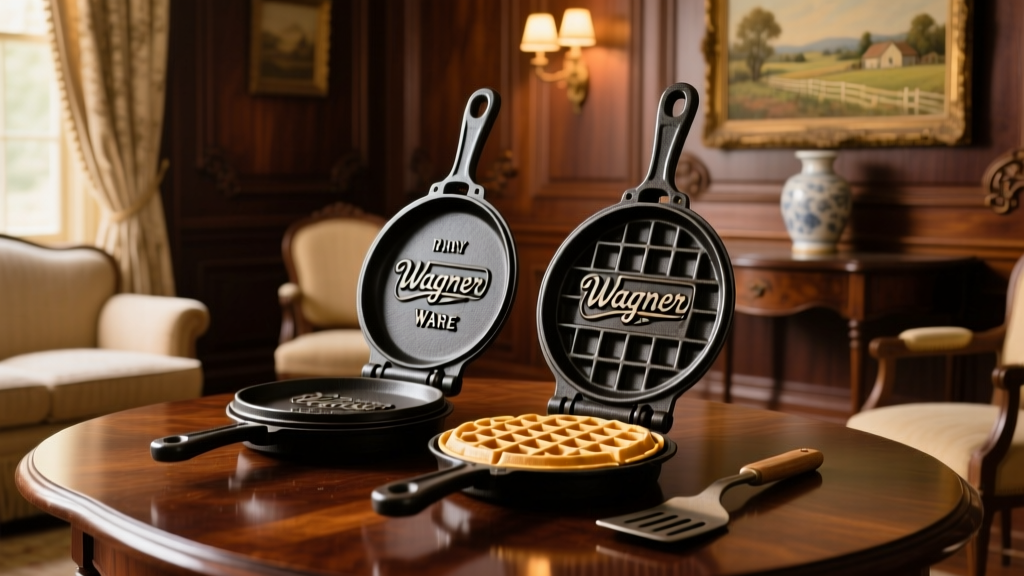
Toy Waffle Iron, Griddle, Fry Pan & Skillet: A Collector’s Guide to Wagner Ware’s 4-Piece Cast Iron Miniature Set
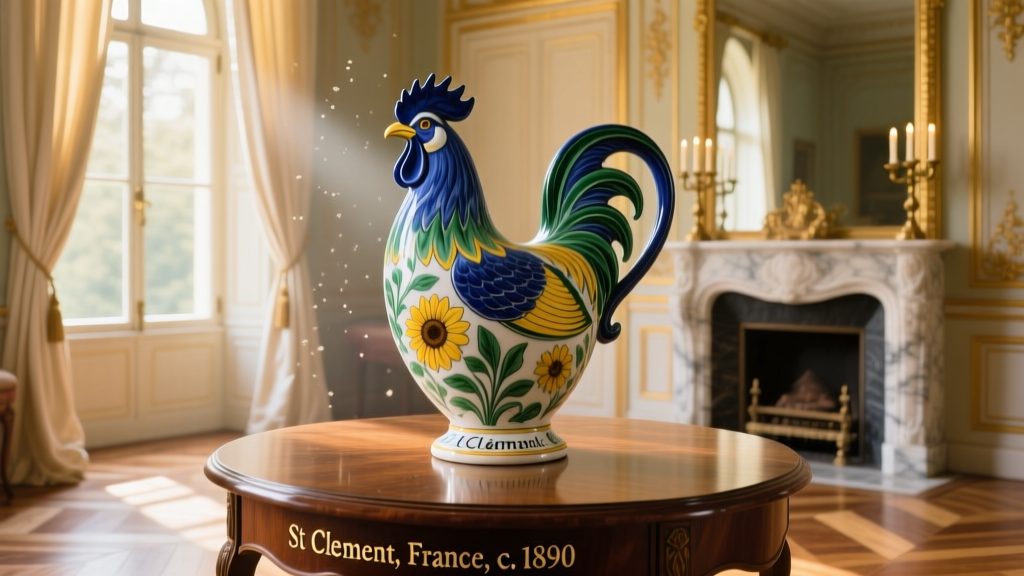
Majolica Pitcher Rooster Marked St. Clément France c. 1890 — A Detailed Study of an 11-Inch French Ceramic Masterpiece
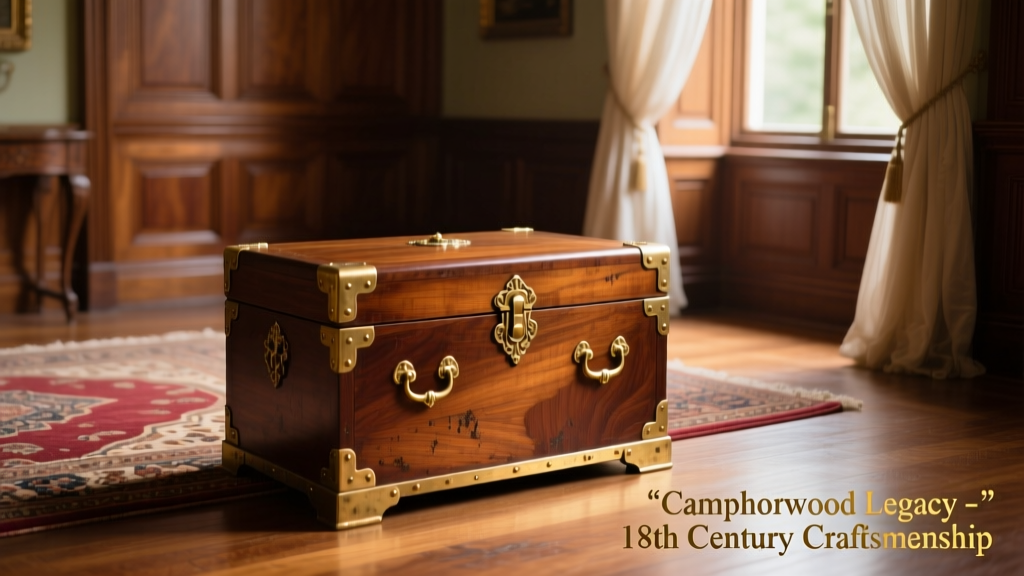
Camphor Wood Chest with Brass Binding & Handles: History, Identification, and Restoration of the 12" × 28" Antique Storage Chest

Fulper Bowl: Blue Sky Flambe Interior, Beige Streaked Exterior — A Detailed Analysis of the 12 5/8-Inch Marked Piece