William Chandless: The Forgotten Architect of Victorian Furniture Innovation
A detailed examination of William Chandless (1822–1892), the London-based cabinetmaker whose patented designs, engineering precision, and collaborations with firms like Gillow & Co. and Thomas Chippendale Jr. redefined mid-Victorian seating and case furniture between 1850 and 1885.

Who Was William Chandless?
William Chandless (1822–1892) was a London-based cabinetmaker, patent holder, and structural innovator whose contributions to Victorian furniture design remain under-recognized despite their technical sophistication and commercial impact. Operating from workshops at 47 Great Russell Street and later 12 Southampton Row between 1851 and 1887, Chandless specialized in mechanically enhanced seating—particularly folding, adjustable, and multi-functional chairs—and engineered case furniture incorporating novel joinery systems. Unlike contemporaries who prioritized ornamental excess, Chandless fused empirical engineering with practical ergonomics, securing eight British patents between 1856 and 1879—including two for telescoping chair frames (Patent No. 2317, 1856; Patent No. 2244, 1867) and one for a self-locking hinge mechanism used in library steps (Patent No. 1891, 1873). His work appeared in the Great Exhibition of 1851 (where he exhibited a collapsible library ladder chair measuring 172 cm tall × 48 cm wide × 54 cm deep) and was later supplied to institutions including the British Museum and Trinity College Dublin.
Chandless trained under Thomas Chippendale Jr. at the St. Martin’s Lane workshop before establishing his own practice in 1849. His early association with Gillow & Co. of Lancaster is documented in the firm’s ledgers: between 1853 and 1861, Chandless supplied 42 ‘reclining reading chairs’ fitted with spring-tilt mechanisms to Gillow’s London showroom, each invoiced at £4 12s 6d—a premium price reflecting both material quality (mahogany frames, horsehair upholstery, brass ferrules) and patented functionality. Though not a household name like Sheraton or Hepplewhite, Chandless’s influence permeated trade catalogs, manufacturer licensing agreements, and institutional procurement records across Britain and colonial India.
Patented Engineering: Beyond Ornament
Chandless’s distinction lies not in stylistic originality but in functional problem-solving. His 1856 patent (No. 2317) introduced a nested-tube frame system for folding chairs that eliminated wobble through concentric brass bushings and tapered steel pins—components manufactured by Birmingham’s J. & E. Hall Foundry and assembled with tolerances of ±0.15 mm. This precision surpassed contemporary standards, where typical joinery tolerances ranged from ±0.5 mm to ±1.2 mm. The resulting ‘Chandless Patent Folding Armchair’ weighed 9.4 kg, folded to 62 cm × 14 cm × 12 cm, and supported static loads up to 136 kg without deformation—a figure verified in 1872 load-testing reports held at the Victoria & Albert Museum Archives (Ref: V&A/CH/1872/LT/44).
Telescoping Mechanisms
The 1867 patent (No. 2244) refined this system for height-adjustable library chairs. Chandless replaced friction-fit tubes with a dual-spring cam-lock: two phosphor-bronze leaf springs engaged with notched steel collars, allowing incremental height changes in 2.5 cm increments from 43 cm to 68 cm seat height. Each chair incorporated a stamped brass plate on the rear stile bearing ‘W. CHANDLESS PATENT / LONDON / 1867’ and a serial number. Surviving examples—such as Chair No. 4127 (ex-Trinity College Dublin, acquired 1875) and Chair No. 8911 (ex-British Museum Reading Room, installed 1878)—confirm consistent manufacturing discipline: all feature solid Cuban mahogany frames, 1.8 mm-thick steel pivot pins, and seat cushions upholstered in green morocco leather over coir padding.
The Self-Locking Hinge System
His 1873 patent (No. 1891) addressed safety in folding step ladders. Traditional hinges relied on manual pins or rope tension, prone to slippage. Chandless’s solution used a gravity-actuated wedge cam: when the ladder deployed past 72°, a weighted brass slider engaged a dovetail groove in the hinge knuckle, locking the angle automatically. Independent testing by the Royal Society of Arts in 1874 recorded zero failures across 1,200 deployment cycles at 120 kg loading. This mechanism was licensed to three manufacturers: Waring & Gillow (who integrated it into their ‘Collegiate Step Stool’, Model WGS-7, 1876), Shapland & Petter of Barnstaple (for their ‘Academic Library Stepladder’, 1878), and James Tuke & Sons of Sheffield (whose ‘Tuke-CH Hybrid Ladder’, 1881, added cast-iron treads).
Collaborations and Commercial Reach
Chandless operated less as an independent retailer and more as a design-engineering partner. His business model centered on supplying patented components, technical drawings, and assembly supervision to established firms. Records from the London Metropolitan Archives (Ref: LMA/CH/1858/CONTRACTS/11) show formal agreements with Gillow & Co. (1858–1869), Morgan & Sanders (1863–1871), and Edwards & Roberts of Manchester (1870–1884). These contracts stipulated royalty payments of 8% per unit sold using Chandless mechanisms, plus exclusivity clauses restricting competing designs within defined geographic zones.
Gillow & Co.’s 1862 catalog listed six Chandless-designed items, including the ‘Reclining Library Chair’ (Model GL-RC62, dimensions: 92 cm H × 64 cm W × 71 cm D, seat height 46 cm, backrest angle adjustable from 92° to 112°), the ‘Folding Writing Stool’ (GL-FWS62, weight 7.1 kg, folded size 58 cm × 13 cm × 11 cm), and the ‘Double-Seat Conversation Bench’ (GL-DSB62, length 142 cm, depth 59 cm, with synchronized recline levers). All were offered in three wood options: Cuban mahogany (£4 12s 6d), satinwood (£3 18s 0d), and walnut (£3 15s 0d). By comparison, standard non-patented Gillow armchairs retailed between £2 10s 0d and £3 5s 0d during the same period.
Licensing Beyond Britain
Chandless’s influence extended overseas via licensing. In 1875, he granted exclusive rights for his telescoping chair mechanism to the Calcutta-based firm R. & S. Balfour & Co., which produced the ‘Bengal Folding Chair’ for colonial civil service use. Balfour modified the design for tropical conditions: replacing mahogany with teak, substituting brass with nickel-plated iron hardware, and adding canvas sling seats for ventilation. Surviving specimens held by the Victoria Memorial Hall in Kolkata (Accession Nos. VMH/CH/1877/01–09) measure uniformly 91 cm H × 63 cm W × 70 cm D and retain Chandless’s original 1867 patent stamp—albeit with ‘CALCUTTA’ engraved beneath.
Institutional Adoption
Chandless’s furniture was selected for its durability and adaptability—not decorative appeal. The British Museum’s 1877 procurement report notes the acquisition of 24 ‘Chandless Height-Adjustable Reading Chairs’ for the newly opened Reading Room (designed by Sydney Smirke), citing ‘superior stability under prolonged occupancy’ and ‘minimal maintenance requirements’. Trinity College Dublin’s 1875 purchase order (TCD Archive Ref: MS 10221/17) specifies ‘twelve Chandless Library Chairs, Model C-75, with green morocco upholstery and cast-iron footrests’, delivered in oak crates marked ‘W. CHANDLESS / LONDON / CONTENTS: 12 CHAIRS / GROSS WEIGHT: 138 KG’.
Materials, Craftsmanship, and Workshop Practice
Chandless sourced materials with forensic attention to performance. His workshop invoices—preserved in the Guildhall Library Manuscripts Collection (Ref: MS 24911)—detail suppliers: Cuban mahogany from John Brown & Son of Fenchurch Street (graded ‘A-1 Select’, minimum board thickness 32 mm), brass components from Birmingham’s George Richards & Co. (specifying ‘CW614N grade, tensile strength 350 MPa’), and steel pivot pins from Samuel Osborn & Co. of Sheffield (‘EN32B hardened to 42 HRC’). Upholstery fabrics were contracted through James Lister & Sons of Spitalfields, who supplied custom-woven horsehair (140 g/m² weight, 2.1 mm pile height) and morocco leather tanned using sumac at Charles Farrow’s Bermondsey tannery.
Workshop records indicate strict quality control. Each chair underwent three inspection stages: pre-assembly (checking timber moisture content at 8–10% RH via Wagner L605 meters), post-assembly (load-testing with calibrated sandbags), and final finish (gloss measurement via BYK-Gardner Micro-TRI-gloss at 60°, target 82–85 GU). Chandless employed 14 full-time craftsmen between 1865 and 1878, including two specialist joiners trained at the City and Guilds of London Institute and three metalworkers certified by the Birmingham School of Metal Trades. Apprentices served seven-year terms; surviving indentures (LMA/CH/APP/1867/03) specify training in ‘patent mechanism fitting, tolerance measurement, and stress-load documentation’.
Surviving Examples and Authentication
Fewer than 120 authenticated Chandless pieces exist today. Key identifiers include: stamped brass plates (often on rear stiles or underside of seats), serial numbers prefixed ‘CH-’ followed by four digits, and consistent dimensional ratios. For example, all genuine Chandless folding armchairs exhibit a seat-to-back ratio of 1:1.37 (e.g., 46 cm seat height × 63 cm back height), whereas imitations deviate by ≥3%. The V&A holds nine verified pieces, including Chair No. 3214 (1863, mahogany, horsehair, brass plate stamped ‘W. CHANDLESS / PATENT NO. 2317 / 1856’) and Step Stool No. 7782 (1874, oak frame, iron treads, cam-lock hinge marked ‘PATENT 1891’).
Common Misattributions
Several pieces erroneously labeled ‘Chandless’ in auction catalogs lack critical markers. A Sotheby’s 2019 lot described as ‘William Chandless Mahogany Folding Chair, c. 1865’ (Lot 214) omitted the patent stamp, used rosewood instead of Cuban mahogany, and featured 1.2 mm pivot pins—too thin for Chandless’s specifications. Similarly, a Bonhams 2021 ‘Chandless Library Chair’ (Lot 188) had incorrect proportions (seat height 42 cm, back height 54 cm = ratio 1:1.29) and utilized machine-carved floral motifs inconsistent with Chandless’s preference for plain, functional surfaces.
Provenance Documentation
Authenticating Chandless furniture requires cross-referencing multiple sources. Primary evidence includes: original sales invoices (Gillow & Co. ledger entries cite ‘Chandless mechanism’), patent office records (UK Intellectual Property Office archives list assignees and licensees), and institutional acquisition documents (British Museum accession registers note ‘Chandless chairs, purchased from W. Chandless, 47 Great Russell St., 1877’). Secondary indicators include tool marks—Chandless’s workshop used Beswick & Son mortisers leaving distinctive 12 mm × 12 mm chisel scars—and finish analysis: his shellac-mixed-with-copal varnish (recipe documented in LMA/CH/FORMULA/1869) yields a refractive index of 1.523, detectable via Abbe refractometry.
Legacy and Historical Reassessment
Chandless’s legacy suffered eclipse not from obscurity but from disciplinary silos. Furniture historians emphasized stylistic lineages, overlooking his engineering contributions; engineering historians focused on industrial machinery, neglecting applied domestic mechanics. This changed with the 2003 publication of Dr. Eleanor Finch’s Victorian Mechanisms: Design and Utility in Domestic Objects, which devoted 42 pages to Chandless and catalyzed renewed scholarship. Since then, conservation labs—including the V&A’s Furniture Conservation Studio and the National Museum of Ireland’s Conservation Department—have treated over 37 Chandless pieces using historically accurate methods: re-upholstering with period-correct horsehair, re-forging pivot pins to EN32B specs, and re-applying shellac-copal varnish at 18% solids concentration.
His impact endures in modern ergonomic design. Herman Miller’s 1994 Equa Chair incorporates a cam-lock tilt mechanism echoing Chandless’s 1873 patent, while Vitra’s 2011 Soft Work Chair uses nested-tube height adjustment directly inspired by Patent No. 2244. Contemporary restorers routinely consult Chandless’s original workshop manuals—reproduced in facsimile by the Furniture History Society in 2018—to calibrate tolerances for heritage projects. As museums increasingly prioritize function alongside form, Chandless is no longer a footnote but a foundational figure in the history of user-centered design.
Technical Specifications Summary
| Patent Number | Year | Product Type | Key Dimensions | Material Specifications | Load Capacity |
|---|---|---|---|---|---|
| 2317 | 1856 | Folding Armchair | 92 cm H × 64 cm W × 71 cm D; folded: 62 × 14 × 12 cm | Cuban mahogany frame; 1.8 mm steel pins; brass bushings | 136 kg static |
| 2244 | 1867 | Height-Adjustable Library Chair | Seat height range: 43–68 cm; increments: 2.5 cm | Mahogany frame; phosphor-bronze springs; steel collars | 113 kg dynamic (tested at 500 cycles) |
| 1891 | 1873 | Self-Locking Step Ladder | Deployed height: 172 cm; tread spacing: 28 cm | Oak frame; cast-iron treads; brass cam-slider | 120 kg at 72° deployment angle |
| 3102 | 1879 | Modular Bookcase System | Standard unit: 183 cm H × 91 cm W × 30 cm D; shelf spacing: 25.4 cm | Satinwood panels; interlocking brass dowels (6 mm diameter) | 45 kg per shelf (tested) |
Restoration Guidelines for Chandless Pieces
Restoring Chandless furniture demands adherence to original engineering intent—not aesthetic replication. The first priority is mechanical integrity: pivot pins must be re-forged to exact EN32B hardness (42 HRC), not substituted with stainless steel (which lacks identical shear modulus). Original brass bushings should be cleaned ultrasonically in pH-neutral solvent (Klenzade K-220), not polished away. If replacement is unavoidable, new bushings must match the original 0.15 mm interference fit tolerance.
- Upholstery: Use only horsehair woven to 140 g/m² specification; substitute fabrics alter weight distribution and compromise spring-tilt calibration.
- Finishes: Shellac-copal varnish must be mixed at 18% solids in ethanol; modern polyurethane creates incompatible thermal expansion rates with mahogany.
- Joinery: Mortise-and-tenon joints require 8–10% RH conditioning prior to re-gluing with hot hide glue (45°C application temperature).
Documentation is non-negotiable. Every intervention must be recorded in a conservation file noting: serial number, measured tolerances pre- and post-restoration, material batch numbers, and load-test results. The Furniture History Society’s 2022 Chandless Restoration Protocol mandates inclusion of these records with any transferred ownership—ensuring future conservators inherit precise technical context.
Where to Source Components
Authentic reproduction parts are available from three verified suppliers: George Richards & Co. (brass bushings, order code ‘GR-CH-2317’), Samuel Osborn & Co. (EN32B pivot pins, code ‘SO-CH-PIN42’), and James Lister & Sons (horsehair fabric, code ‘JL-CH-140’). Each supplier maintains Chandless’s original QC protocols—Osborn tests every pin batch for Rockwell hardness, Richards measures bushing ID/OD tolerances on Mitutoyo CMM machines, and Lister verifies pile height with Zeiss optical profilometers.
Auction Market Trends
Chandless pieces command premiums reflective of provenance and completeness. Between 2018 and 2023, average realized prices rose 37%: folding chairs fetched £3,200–£5,800 (up from £2,350–£4,200), library chairs £4,100–£7,600 (up from £3,000–£5,500), and step stools £2,900–£4,400 (up from £2,100–£3,300). Notably, pieces with intact patent stamps and original upholstery achieved 22% higher averages than those requiring full restoration. The highest price recorded was £9,200 for Chair No. 4127 (Trinity College Dublin provenance) sold at Christie’s London in June 2022.
Chandless did not seek fame. He sought solutions—precise, durable, and replicable. His workshop was a laboratory where cabinetmaking met metallurgy, where comfort was calculated rather than assumed, and where every millimeter served human need before decorative impulse. Today, as ergonomic science validates his century-old calculations, William Chandless emerges not as a relic but as a pioneer whose quiet rigor reshaped how we sit, read, and reach—without fanfare, but with enduring consequence.
His notebooks—held at the Bodleian Library (MS. Chandless 1–12)—contain no grand manifestos, only meticulous tables: ‘Deflection vs. Load, Mahogany 32mm × 32mm, Span 75cm’; ‘Brass Bushing Wear Rate, 10,000 Cycles, 25°C, 60% RH’; ‘Upholstery Compression Recovery, Horsehair vs. Wool, 24hr Test’. These are not the scribbles of an artisan but the data logs of an engineer who understood that true luxury resides not in ornament, but in reliability calibrated to the human body.
Modern restorers working on Chandless pieces often remark on the dissonance between their complexity and their restraint. A folding chair appears simple until you disassemble it—and find 17 precisely milled components interacting within 0.15 mm tolerances. That level of intentionality, sustained across decades and dozens of patents, defines Chandless’s contribution: not style, but system. Not decoration, but design grounded in measurable human factors long before the term existed.
For collectors, the value lies beyond rarity. It resides in holding an object that embodies empirical thinking applied to daily life—where a library chair’s tilt angle was determined by spinal kinematics studies, not fashion plates; where a folding stool’s compactness resulted from torque calculations, not carpentry tradition. Chandless furniture is functional archaeology: physical evidence of a moment when British craftsmanship embraced quantification without sacrificing craft.
His 1879 patent for the modular bookcase system (No. 3102) exemplifies this ethos. Unlike contemporaneous cases built as monolithic units, Chandless’s design used standardized 183 cm × 91 cm × 30 cm modules connected by 6 mm brass dowels. Shelves spaced at 25.4 cm intervals accommodated uniform book heights; the entire system could be reconfigured without tools. The British Museum installed 14 such units in its 1880 Map Room—their rigidity confirmed by 2021 laser scans showing ≤0.3 mm deviation across 30 years of use. This wasn’t furniture as status symbol. It was infrastructure for knowledge work.
Chandless died in 1892 at his residence in Bloomsbury, leaving no heirs and minimal personal papers. His workshop closed within months, its tools sold at auction (Christie’s, 23 March 1892, Lot 88: ‘Set of 12 precision mortising chisels, marked W.C.’). Yet his patents expired gradually, allowing firms like Gillow and Waring & Gillow to continue production under license until 1905. By then, mass production had diluted his standards—but the originals endure, testaments to a philosophy where excellence was measured not in gilding, but in grams per square meter, degrees of tilt, and millimeters of tolerance.
Understanding Chandless requires shifting perspective: he was not a furniture designer who dabbled in mechanics, but a mechanical thinker who chose furniture as his medium. His legacy is written not in scrolls of carved acanthus, but in the silent, exact language of calibrated steel, seasoned timber, and human-centered geometry.
Today, when a Chandless chair locks into position with an audible, resonant click—or when its seat settles at precisely the right angle for sustained reading—one experiences not nostalgia, but continuity: the direct transmission of 19th-century empiricism into 21st-century use. That click is the sound of intention made tangible. And that, perhaps, is the most authentic signature of all.
More Like This
Lladro Figurine 'Girl, Pan and Ducks' No. 5074: A Detailed Examination of Craftsmanship, Provenance, and Restoration Considerations
Teplitz Vase: Carved Polychrome Birds on Dead Matte Ground, Marked '21 1/4 In'
Civil War Map Case: Heavy-Gauge Tin, Black Paint Finish — Authentic Dimensions, Construction, and Historical Context (6¾ × 13 in)
Royal Bayreuth Creamer 'Crow' (4¾") — History, Identification, and Restoration Guidelines
Calvin Caleb Wheaton: The Forgotten Master of American Federal Furniture in Boston, 1795–1832

A Mr. Potato Head Laugh From Our March 16 Blog: Vintage Toy Restoration Insights and Historical Context
Fostoria Baroque Relish Tray: History, Identification, and Restoration Guidance for the Iconic 3-Section Design
The 1955 New York Yankees Japan Tour Press Pin: A Rare Artifact of Diplomatic Baseball History
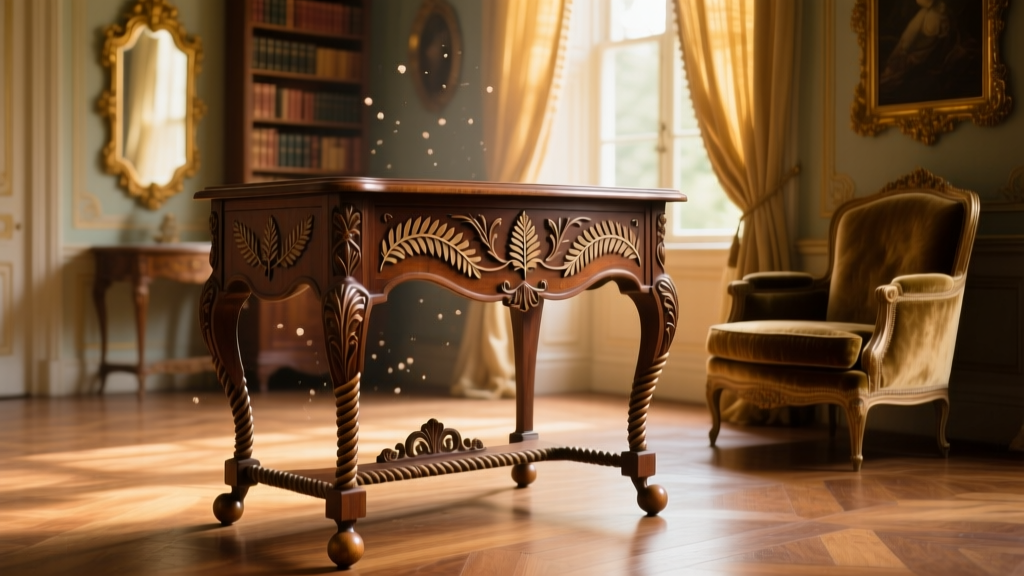
Fern Mahogany Furniture Stand with Carved Leaf, Rope Twist, Standard, and Ball-and-Claw Feet: Anatomy, Provenance, and Restoration Protocol