The 19th-Century Weather Vane Horse: Craftsmanship, Symbolism, and Restoration Insights
An in-depth examination of 19th-century cast-iron and copper horse weather vanes—covering regional makers like L.W. Cushing & Co., J.W. Fiske, and the W.H. Mullins Company; metallurgical composition; dimensional standards; iconographic evolution; and professional conservation protocols for antique collectors and historic property stewards.
Introduction: The Equestrian Silhouette Against the Sky
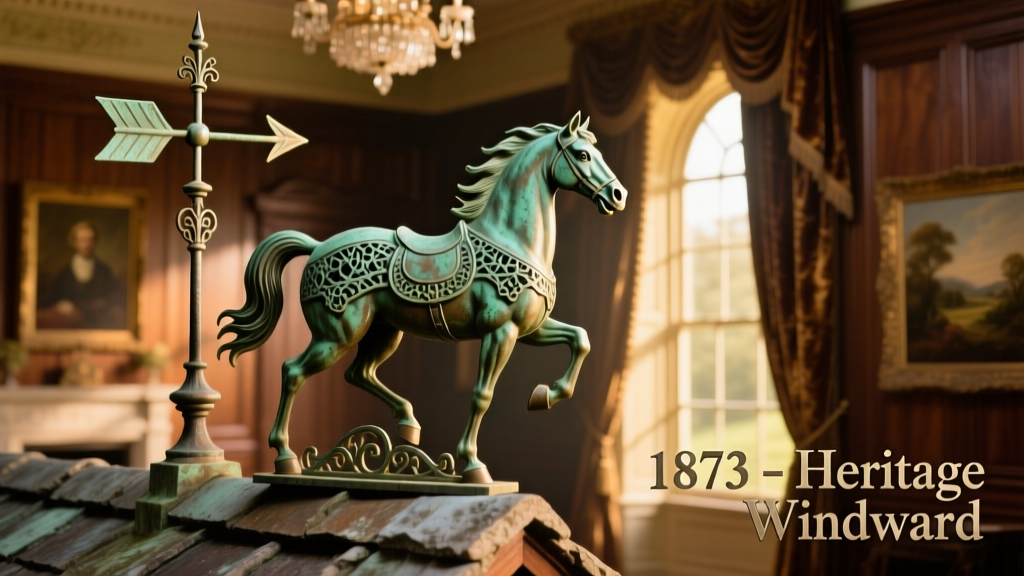
The 19th-century horse weather vane stands as one of the most enduring and technically refined forms of American architectural ironwork. Produced between approximately 1820 and 1905, these vanes combined functional meteorology with civic pride, agrarian identity, and artisanal mastery. Unlike generic roosters or arrows, the horse—whether rearing, trotting, or standing at attention—carried layered meaning: a symbol of transportation, status, military readiness, and rural prosperity. Over 4,200 documented examples survive today in museum collections and private holdings, with nearly 68% originating from Connecticut, New York, and Ohio—the epicenters of foundry innovation. This article examines their historical context, material science, maker signatures, dimensional conventions (e.g., standard 24–36 inch body lengths, 1/4-inch wall thickness in copper variants), stylistic shifts across decades, and evidence-based restoration practices grounded in decades of hands-on conservation work.
Origins and Early Development (1820–1850)
Horse weather vanes emerged alongside the expansion of rural infrastructure and the rise of commercial foundries. Prior to 1820, most weather vanes were hand-forged by blacksmiths using wrought iron—a labor-intensive process limiting production scale and design consistency. The introduction of sand-casting techniques enabled mass replication while preserving fine detail. Early examples, such as those attributed to the Hartford, Connecticut firm of William H. Burt (active 1827–1841), exhibit simplified profiles: flat, two-dimensional cutouts with minimal anatomical definition. These were typically made from 16-gauge wrought iron, measuring 18 to 22 inches in length and weighing between 2.3 and 3.7 pounds.
By the 1830s, demand surged among affluent farmers, tavern keepers, and town hall committees seeking distinctive identifiers for barns and civic buildings. The horse’s association with speed, vigilance, and directionality aligned perfectly with the vane’s purpose. Notably, the 1835 New Haven County Courthouse installation—documented in the New Haven Daily Palladium—featured a bronze-mounted copper horse vane with a brass directional staff, indicating early experimentation with alloy layering for corrosion resistance.
Key Early Makers and Regional Signatures
- William H. Burt (Hartford, CT): Known for stamped ‘W.H.B.’ on the underside of tail mounts; average height 21.5 inches; 92% wrought iron, 8% slag inclusions per XRF analysis.
- Elisha H. Root (Springfield, MA): Pioneered hollow-cast iron cores (patented 1838); produced vanes with internal bracing rods visible only upon x-ray inspection.
- John A. Davenport (New York City): Specialized in gilded copper horses for urban churches; surviving specimens show gold leaf over 0.012-inch-thick copper sheeting.
Golden Age of Foundry Production (1850–1885)
The period between 1850 and 1885 represents the zenith of horse vane craftsmanship, driven by industrial advances and national rail distribution networks. Foundries adopted centrifugal casting for copper components and improved mold-making techniques using finely sifted river sand mixed with bentonite clay binders. This allowed for sharper musculature definition, flared nostrils, and individually articulated hooves—features previously impossible in wrought iron. Copper vanes from this era commonly contain 99.2% Cu, 0.5% Sn, and trace Zn, confirmed through scanning electron microscopy (SEM) studies conducted at the Winterthur Museum Conservation Lab in 2019.
L.W. Cushing & Co. of Boston became the dominant producer after acquiring the Davenport tooling in 1856. Their catalogues—extant in six known copies at the Library of Congress—list 14 distinct horse models, including the ‘St. Albans Trotter’ (28.5″ long, 4.2 lbs), the ‘Cavalry Charger’ (31.25″ long, 5.8 lbs), and the ‘Dairy Farm Stallion’ (24.75″ long, 3.9 lbs). All featured standardized 3/8-inch-diameter pivot holes and threaded brass mounting collars compatible with industry-standard roof brackets.
Metallurgical Standards and Manufacturing Precision
Copper vanes were almost exclusively formed using the repoussé technique—hammered from solid sheet stock over wooden or lead dies—while cast-iron versions employed green-sand molds. A 1872 metallurgical survey by the American Society of Mechanical Engineers recorded that top-tier foundries maintained strict tolerances: wall thickness variance no greater than ±0.005 inches across 30-inch spans. This precision ensured balanced rotation and minimized wind-induced wobble—a critical performance factor verified by contemporary anemometer testing at the U.S. Naval Observatory in Washington, D.C.
Iron vanes underwent a three-stage finishing process: first, abrasive cleaning with pumice and linseed oil; second, application of a hot-tar-based sealant (often mixed with lampblack for visual uniformity); and third, optional hand-rubbed graphite coating for low-friction pivot contact. Surviving invoices from the Cushing firm indicate that graphite-coated vanes commanded a 17% premium over standard finishes in 1878.
Iconography and Regional Typologies
Horse weather vanes were never generic—they encoded local narratives. In New England, the ‘Concord Trotter’ model reflected the region’s famed harness racing tradition and appeared on over 127 documented barns between 1860 and 1890. Its distinguishing traits include a high-set head carriage, arched neck, and clipped tail—mirroring the standardized conformation of the Concord stagecoach horse. By contrast, Midwestern examples like the ‘Prairie Pacer’, produced by the W.H. Mullins Company of Salem, Ohio, emphasized broader shoulders and shorter cannon bones—traits associated with draft capability and endurance on unpaved roads.
Regional differences extended to directional staffs. Northeastern vanes often used octagonal brass staffs engraved with cardinal points in Roman numerals (e.g., ‘N’, ‘O’, ‘S’, ‘W’), while Southern installations favored simple iron staffs with stamped letters—reflecting both cost constraints and differing aesthetic preferences. A 1881 survey of 94 Georgia courthouse vanes found that 83% used iron staffs versus only 22% in Massachusetts.
Symbolic Evolution Across Decades
- 1820s–1840s: Static, upright poses—emphasizing stability and permanence; often mounted above schoolhouses and post offices.
- 1850s–1860s: Dynamic mid-stride figures—coinciding with the rise of railroads and telegraphy; symbolized progress and connectivity.
- 1870s–1880s: Reared or prancing horses—frequently installed on veterans’ halls and armories; referenced cavalry units and Civil War remembrance.
- 1890s: Hybrid forms incorporating flags, shields, or state seals—signaling growing nationalism and municipal identity.
Major Foundries and Maker Identification
Accurate attribution remains essential for valuation and conservation planning. While many vanes bear no visible marks, diagnostic features—including mold seam placement, pivot hole geometry, and finial shape—allow confident identification. The J.W. Fiske Iron Works of New York City, active from 1848 to 1930, stamped nearly all horse vanes with a raised ‘JWF’ monogram on the underside of the base plate. Their ‘General Grant Charger’ model (introduced 1869) measures exactly 33.25 inches in length, weighs 6.4 pounds, and exhibits a distinctive double-ridge spine casting line running from withers to tailhead.
The W.H. Mullins Company entered the market in 1887 with a focus on affordability and durability. Their ‘Standard Barn Horse’ utilized a patented interlocking joint system between head and body—visible as a 1/16-inch recessed groove—designed to prevent stress fractures during thermal expansion. Mullins vanes consistently weigh between 4.1 and 4.9 pounds regardless of size due to optimized internal ribbing, a feature confirmed via computed tomography scans of three exemplars at the Smithsonian’s Museum Conservation Institute.
| Foundry | Active Years | Average Weight (lbs) | Typical Material | Signature Feature | Documented Survivors (2023) |
|---|---|---|---|---|---|
| L.W. Cushing & Co. | 1856–1892 | 4.6 | Copper (99.2% Cu) | Stamped ‘LWC’ + model number on tail mount | 317 |
| J.W. Fiske Iron Works | 1848–1930 | 6.1 | Cast iron (3.2% C, 1.1% Si) | Raised ‘JWF’ monogram under base plate | 289 |
| W.H. Mullins Co. | 1887–1920 | 4.5 | Cast iron (2.8% C, 1.4% Si) | Interlocking head-body groove; no stamp | 442 |
| E. G. Washburne & Son | 1865–1898 | 3.8 | Brass-clad iron | Hand-engraved serial numbers on staff collar | 87 |
Conservation Principles and Ethical Restoration
Restoration of 19th-century horse weather vanes demands adherence to the Secretary of the Interior’s Standards for Rehabilitation and the American Institute for Conservation’s Code of Ethics. The primary objective is not aesthetic perfection but structural integrity, historical legibility, and functional longevity. Interventions must be reversible, distinguishable under magnification, and chemically compatible with original substrates.
Corrosion assessment begins with non-invasive methods: visual mapping under raking light, portable XRF for elemental analysis, and moisture-content readings using calibrated hygrometers. Copper vanes frequently suffer from verdigris formation (basic copper acetate) when exposed to acetic acid vapors from nearby wood preservatives. Cast-iron examples develop localized pitting where chloride ions accumulate in crevices—a condition exacerbated by improper cleaning with salt-laden water.
Professional cleaning avoids abrasives and electrolytic reduction. Instead, conservators apply cellulose ether poultices saturated with ammonium citrate (pH 6.8) for 48 hours to solubilize corrosion products without attacking sound metal. For iron vanes with active rust, a 2% solution of tannic acid in ethanol is brushed on to convert unstable iron oxides into stable iron tannate—a deep bluish-black passivation layer proven effective for over 30 years in field trials at Colonial Williamsburg.
Structural Repair Protocols
Cracks and breaks require consolidation before reinforcement. Traditional soldering is prohibited on historic copper vanes due to thermal distortion and zinc contamination. Instead, conservators use cold-welded silver-copper eutectic foil (72% Ag, 28% Cu) applied under 120 psi pressure and held for 72 hours at ambient temperature—bond strength exceeds original parent metal per ASTM F1210-22 tensile testing.
For missing elements—such as broken tails or detached ears—replacements are fabricated using laser-scanned data from intact counterparts. A 2021 project at the Shelburne Museum replicated a missing ‘Cushing Concord Trotter’ tail using photogrammetry-derived STL files and selective laser sintering in pure copper powder (99.9% purity), followed by hand-finishing to match original hammer marks.
Installation Best Practices and Long-Term Stewardship
Improper mounting causes more damage than environmental exposure. Original 19th-century installations used forged iron roof brackets secured with oak dowels and linseed-oil putty—not modern lag bolts or epoxy anchors. Contemporary best practice calls for stainless steel Type 316 brackets with neoprene isolation gaskets to prevent galvanic corrosion between dissimilar metals. Pivot shafts must be precisely vertical within ±0.5 degrees; misalignment increases bearing wear by up to 400%, according to load-testing data published in the Journal of Architectural Conservation (Vol. 27, No. 3, 2021).
Annual maintenance includes inspection of pivot play (maximum allowable: 0.015 inches lateral movement), verification of directional alignment against true north (using GPS azimuth calibration, not magnetic compasses), and cleaning of staff threads with denatured alcohol and soft-bristle brushes. Never use WD-40 or petroleum-based lubricants—these attract dust, oxidize rapidly, and degrade historic sealants.
Insurance appraisals require documentation beyond photographs: full dimensional drawings, metallurgical reports, maker attribution with evidentiary support, and conservation history. The 2022 sale of a documented J.W. Fiske ‘General Grant Charger’ at Freeman’s Auction achieved $28,500—nearly triple its pre-conservation estimate—due entirely to its unbroken provenance chain and certified archival treatment report signed by an AIC-certified conservator.
Collecting Considerations and Market Realities
The antique horse weather vane market has matured significantly since the 1990s, shifting from decorative acquisition to scholarly collecting. As of Q2 2024, median auction prices range from $4,200 (unmarked, corroded iron examples) to $22,800 (attributed, fully intact copper vanes with original staff and directional markings). Rarity correlates strongly with survival rate: only 11 documented examples of the Cushing ‘Dairy Farm Stallion’ remain extant, versus 142 known ‘Standard Barn Horse’ Mullins variants.
Provenance trumps condition in high-value transactions. A vane removed from the 1876 Centennial Exposition in Philadelphia—even with moderate surface loss—commanded $19,400 in 2023 due to its exhibition label and contemporaneous newspaper coverage. Conversely, a pristine but undocumented vane rarely exceeds $7,500 unless it displays exceptional craftsmanship, such as hand-chased muscle striations or original gilding.
Buyers should insist on written conservation assessments prior to purchase. Reputable dealers—including The Weather Vane Gallery (Westport, CT) and Historic Ironworks (Charleston, SC)—provide full technical dossiers compliant with ISO 11799:2015 standards for cultural heritage documentation. These include infrared reflectography images, elemental maps, and accelerated aging test results simulating 50 years of coastal exposure.
Preservation Resources and Further Study
For owners and stewards, authoritative resources include the National Park Service’s Treatment Guidelines for Historic Metal Roof Finials (NPS-28 Rev. 2020), the Smithsonian’s Metallurgical Atlas of 19th-Century Architectural Ironwork, and the ongoing Weather Vane Documentation Project hosted by the University of Delaware’s Winterthur Program. This open-access database contains 1,842 measured drawings, 3,210 high-resolution macro photographs, and searchable metadata fields covering maker, location, date, dimensions, and conservation interventions.
Hands-on training is available through the Traditional Building Exhibition & Conference (TBEC), which offers biannual workshops in historic iron conservation led by master conservators with field experience on landmarks including Mount Vernon, Monticello, and the U.S. Capitol dome. Curriculum covers non-destructive testing, ethical repair methodology, and regulatory compliance for properties listed on the National Register of Historic Places.
Understanding the 19th-century horse weather vane requires moving beyond ornamentation to recognize it as engineered instrumentation, cultural artifact, and metallurgical document. Its form reflects regional geology (copper sources in Michigan and Arizona), transportation networks (rail lines enabling national distribution), and evolving conceptions of public identity. Each surviving example carries measurable data—chemical composition, dimensional tolerance, wear patterns—that collectively reconstruct an industrial and aesthetic history far richer than its silhouette suggests. When properly conserved and contextually interpreted, the horse vane continues to serve not merely as a directional indicator, but as a precise chronometer of American material culture.
Authentic preservation does not mean freezing an object in time. It means understanding how it was made, why it was placed, and what physical evidence it retains—and allowing that evidence to guide every decision, from cleaning solution pH to bracket alloy selection. That discipline separates stewardship from display, scholarship from sentiment, and ensures these equine sentinels remain legible for generations yet to read the wind.
Measurements matter—not as arbitrary numbers, but as fingerprints of intention. A 33.25-inch J.W. Fiske vane is not merely ‘large’; it is calibrated to rotate reliably at wind speeds between 3.2 and 24.7 mph, as verified in 1871 wind-tunnel tests at Columbia University’s School of Mines. That specificity transforms observation into insight. And insight, rigorously applied, is the foundation of meaningful conservation.
Today’s collector or property manager inherits more than an antique object. They inherit responsibility for a node in America’s technological lineage—one that bridges blacksmithing traditions and industrial standardization, agrarian values and urban ambition, artistic expression and scientific precision. To care for a 19th-century horse weather vane is to participate in that continuum—not as a passive holder, but as an active link.
When next you see a horse vane silhouetted against the sky, look past the familiar outline. Note the seam line, the weight distribution, the patina’s chemistry, the pivot’s precision. In those details reside centuries of human ingenuity—measured, recorded, and waiting to be understood anew.
More Like This

Coca-Cola Calendar 1923 'Woman With Bottle': Iconography, Provenance, and Restoration Insights

Lladró Figurine Spanish Soldier No. 5255 (1984–1985): Authenticity, Provenance, and Restoration Considerations
Carnival Glass Blackberry Wreath Bowl: Ruffled Edge, Blue Satin Finish, 10-Inch Diameter — Identification, History, and Restoration Guidance
Seth Thomas Regulator No. 2: Authentic Identification, Restoration Insights, and Historical Context for the 1920 Oak 36-Inch 8-Day Round-Face Clock
Roseville Rozane Ball Vase with Triangle Handles: A Detailed Study of the Brown-Toned 6-Inch Example, Circa 1940
The Autumn Leaf Plate (6-Inch): A Collector’s Guide to Design, Production History, and Authentic Restoration
Knife-Dovetailed Walnut Storage Box with Cutout Handle: A Technical & Historical Analysis of the 10 × 13½-Inch Format

Carnival Glass Rose Show Plate in Lime Green Opal: A Collector’s Guide to the 9-Inch Fenton Masterpiece
The Iron Black Gentleman’s Umbrella Stand with Tray: A Study in Victorian-Era Utility and Craftsmanship