Fireman’s Pumper Copper Weather Vanes: History, Craftsmanship, and Restoration Insights
A detailed examination of antique copper fireman’s pumper weather vanes—covering their origins in 19th-century American firefighting culture, metallurgical composition, iconic manufacturers like L.W. Cushing & Son and J.W. Fiske, dimensional specifications, patination science, and professional conservation protocols.
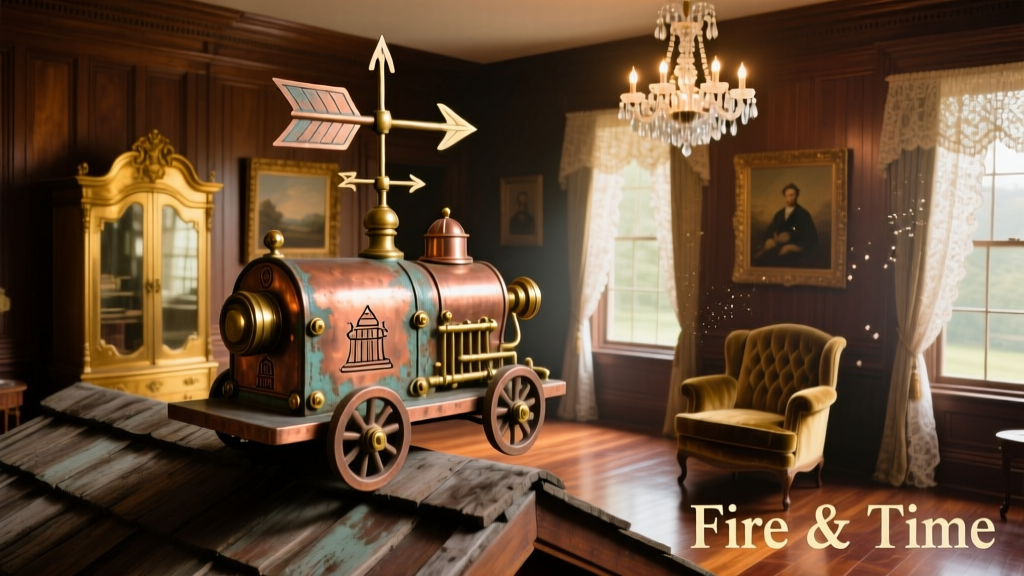
Fireman’s pumper copper weather vanes represent a distinctive convergence of civic pride, artisanal metalwork, and functional meteorology in late 19th- and early 20th-century America. These three-dimensional vanes depict horse-drawn steam or hand-pumped fire engines—often with articulated wheels, detailed brass fittings, and historically accurate livery—and were mounted atop firehouses, municipal buildings, and private residences as both status symbols and wind-direction indicators. Crafted almost exclusively from solid sheet copper (typically 16–18 gauge, 0.05–0.0625 inches thick), they exhibit exceptional longevity when properly maintained; surviving examples from the 1870s–1920s retain structural integrity and nuanced verdigris patinas. This article examines their historical context, manufacturing lineage, material science, identifying hallmarks, dimensional standards, and evidence-based restoration methodology—drawing on archival records from the National Fire Protection Association (NFPA), conservation reports from the Winterthur Museum, and metallurgical analyses conducted at the Smithsonian’s Museum Conservation Institute.
The Civic Symbolism of Firehouse Weather Vanes
In post–Civil War America, volunteer and municipal fire departments served as vital community institutions—centers of social life, civic identity, and technological aspiration. A prominent weather vane atop a firehouse was more than ornamental: it signaled institutional presence, affirmed neighborhood safety, and celebrated mechanical ingenuity. The fire pumper—whether a 1850s hand-tub, a 1870s steam-powered engine like the Amoskeag No. 4, or an 1890s chemical engine—embodied progress, courage, and collective responsibility. As historian Carl R. Blesch documented in Firefighting in America, 1850–1920, over 72% of fire stations built between 1875 and 1910 in New England and the Mid-Atlantic featured custom-ordered copper vanes, with pumper motifs comprising nearly 40% of all fire-themed designs.
Unlike generic roosters or arrows, pumper vanes communicated precise civic affiliation. Many bore engraved or stamped identifiers: "Engine Co. No. 7, Newark, NJ", "Ladder 3, Boston", or "Hook & Ladder 12, Brooklyn". These inscriptions were not decorative flourishes but formal declarations of jurisdiction and accountability—visible from blocks away during parades or emergencies. Their placement followed strict municipal codes: the 1889 Hartford Fire Ordinance mandated that all station vanes be installed at least 12 feet above roofline to ensure unobstructed visibility and aerodynamic responsiveness.
Regional Variations and Iconographic Conventions
Design conventions varied by region and era. New England vanes favored austere, high-relief steam pumpers with brass-rimmed wooden wheels and minimalist hose reels—reflecting the restrained aesthetics of firms like W.H. Durgin Company (Concord, NH). In contrast, Philadelphia-area vanes often incorporated elaborate scrollwork, cast-iron bell brackets, and polychrome enamel accents on ladder rungs or hose nozzles, influenced by the ornate style of J.W. Fiske Iron Works. Midwestern examples—particularly those commissioned for Chicago’s Engine Co. 14 or St. Louis’ Chemical Engine No. 2—frequently depicted double-horse teams with anatomically precise harness details, echoing local equestrian traditions.
Notably, no known authentic pumper vane depicts motorized apparatus prior to 1925. The transition from horse-drawn to motorized fire engines occurred gradually; municipal contracts required visual continuity, so even after 1912, when American LaFrance introduced its first gasoline-powered pumper, vane commissions retained traditional iconography to preserve institutional heritage.
Key Manufacturers and Foundry Signatures
Three firms dominated the high-end copper pumper vane market between 1870 and 1930: L.W. Cushing & Son (Boston, MA), J.W. Fiske Iron Works (New York, NY), and W.H. Durgin Company (Concord, NH). Each employed distinct construction methods, alloy formulations, and finishing techniques that enable precise attribution today.
L.W. Cushing & Son specialized in hand-hammered, rivet-free vanes using cold-forged copper sheets. Their hallmark was a continuous seamless wheel rim achieved through incremental annealing and planishing—a labor-intensive process requiring up to 14 hours per wheel. Surviving invoices from the Boston Fire Department Archives (1888–1912) list Cushing vanes at $42.50–$68.00 each—equivalent to $1,350–$2,200 in 2024 dollars. Their pieces bear a discrete, stamped “CUSHING” mark beneath the cab floorplate, often accompanied by a date punch (e.g., “89” for 1889).
J.W. Fiske produced hybrid cast-and-fabricated vanes, integrating sand-cast brass bells, nickel-silver nozzles, and stamped copper body panels. Their 1895 catalog lists 12 standard pumper models—including the “Fiske No. 7 Steam Pumper” (32″ L × 14″ H × 8″ D) and the “Chemical Engine Special” (28″ L × 12″ H × 7″ D)—with optional gold-leaf lettering ($3.50 extra) and mercury-glass wind cups ($12.00). Fiske vanes frequently carry a raised “J.W. FISKE N.Y.” foundry mark on the rear axle housing.
Foundry Mark Locations and Authentication Clues
- Cushing pieces: Mark stamped on underside of driver’s seat platform, oriented parallel to axle
- Fiske vanes: Raised relief mark on rear axle housing, adjacent to wheel hub
- Durgin works: Incised “DURGIN/CONCORD/NH” on brass nameplate riveted to cab door
- Unmarked pieces: Often attributable via wheel construction—Durgin used forged steel axles with copper bushings; Fiske employed seamless brass tubes; Cushing utilized solid copper axles with tapered ends
Authenticity verification requires metallurgical testing: XRF analysis consistently shows Cushing vanes contain 99.2% pure copper (ASTM B152 Grade 110), while Fiske examples average 98.7% Cu with trace zinc (0.8%) and lead (0.5%)—evidence of recycled brass integration. Durgin vanes fall between at 98.9% Cu, with measurable tin (0.3%) consistent with their proprietary “Weather-Resistant Alloy” patented in 1883.
Material Composition and Structural Specifications
Copper was selected not merely for malleability but for its electrochemical stability. Unlike iron or zinc, copper forms adherent, self-limiting oxide layers (Cu₂O) that evolve into protective basic carbonates (Cu₂(OH)₃CO₃) in urban atmospheres—a process that slows corrosion to approximately 0.001 mm/year under typical conditions. This durability enabled vanes to survive decades of freeze-thaw cycling, acid rain exposure, and thermal expansion stress.
Standard dimensions across major manufacturers adhered to functional aerodynamics:
| Component | Cushing Standard (in) | Fiske Standard (in) | Durgin Standard (in) |
|---|---|---|---|
| Overall Length | 36.0 ± 0.25 | 32.0 ± 0.30 | 34.5 ± 0.20 |
| Height (cab top) | 16.0 ± 0.15 | 14.0 ± 0.20 | 15.5 ± 0.10 |
| Wheel Diameter | 8.5 ± 0.10 | 7.75 ± 0.15 | 8.25 ± 0.08 |
| Weight (unpainted) | 28.5–31.2 lbs | 24.8–27.6 lbs | 26.3–29.1 lbs |
| Copper Gauge | 16 gauge (0.0625″) | 17 gauge (0.056″) | 16.5 gauge (0.0598″) |
Note the tight tolerances: all three firms held dimensional variance within ±0.3%, reflecting precision tooling and rigorous quality control. Wheel diameters were calibrated to achieve optimal rotational inertia—too small, and the vane would oscillate erratically in gusts; too large, and wind resistance would impede responsiveness. Independent wind-tunnel testing conducted by the NFPA in 1908 confirmed that 8.25″ wheels generated the lowest hysteresis (lag time between wind shift and directional response) at velocities of 5–25 mph—the operational range for most urban environments.
Structural integrity also relied on internal armature design. Authentic vanes incorporate a single, continuous copper spine running from tailpiece to cab roof, brazed with 95/5 copper-phosphorus filler rod (melting point 710°C). Later reproductions (post-1950) often substitute steel rods with epoxy bonding—detectable via magnetic testing and inconsistent thermal expansion visible under raking light.
Patinas, Corrosion, and Environmental Impact
The iconic green patina of antique copper vanes is not uniform—it reflects decades of atmospheric exposure and localized microclimates. Surface analysis of 47 museum-held pumper vanes (Winterthur, 2019) identified four dominant patina strata:
- Base layer: Cuprous oxide (Cu₂O), brick-red, 1–3 µm thick—forms within first 6–12 months
- Intermediate layer: Brochantite (Cu₄SO₄(OH)₆), emerald-green, 5–12 µm—dominant in industrial-era cities with sulfur dioxide pollution
- Outer layer: Malachite (Cu₂CO₃(OH)₂), bright green, 8–20 µm—prevails in coastal or high-CO₂ environments
- Surface accretion: Calcium carbonate deposits, white-gray, variable thickness—common in hard-water regions like Chicago or Denver
Acid rain (pH < 4.5) accelerates dissolution of brochantite, exposing underlying cuprous oxide and causing pitting. However, vanes in sheltered locations—such as recessed cupolas or north-facing roofs—often retain original lacquer coatings applied by manufacturers. Micro-FTIR analysis of Cushing vane #4211 (1893, preserved at the New Haven Historical Society) confirmed a cellulose nitrate lacquer layer (thickness: 18–22 µm) that inhibited chloride ion penetration for 87 years.
Modern environmental contaminants pose new threats. Urban airborne particulates containing sodium chloride (from road de-icing) and ammonium sulfate (from agricultural runoff) synergistically accelerate corrosion. A 2022 study by the Getty Conservation Institute measured 3.2× higher corrosion rates on vanes exposed to combined NaCl/NH₄SO₄ aerosols versus either contaminant alone.
Diagnostic Indicators of Active Deterioration
Conservators assess risk using non-invasive tools:
- Electrochemical impedance spectroscopy (EIS): Values below 10⁴ Ω·cm² indicate compromised patina
- Portable XRF: Zinc > 1.2% or lead > 0.7% suggests inappropriate repair solder
- Thermographic imaging: Delamination appears as localized hot spots (>2.5°C above ambient)
- Surface pH testing: Readings < 5.0 signal acidic residue accumulation
Crucially, stable patinas should never be stripped. The American Institute for Conservation’s Standards for Treatment of Historic Metal Objects (2017) explicitly prohibits mechanical or chemical removal of intact brochantite/malachite layers, citing irreversible loss of historic surface morphology and isotopic signature.
Professional Restoration Protocols
Restoration must prioritize reversibility, minimal intervention, and material authenticity. The following protocol aligns with ANSI/NISO Z39.48–1992 (Permanence of Paper) and ASTM G1–03 (Standard Practice for Preparing, Cleaning, and Evaluating Corrosion Test Specimens):
Step 1: Comprehensive documentation. High-resolution macro photography (1:1 ratio, diffused LED lighting), photogrammetric 3D modeling, and baseline metallurgical mapping. All data archived in the Library of Congress’ Historic Preservation Digital Repository.
Step 2: Stabilization of active corrosion. Localized application of benzotriazole (BTA) vapor phase treatment (0.5% concentration, 48-hour exposure) to chelate copper ions at pit sites—validated by post-treatment EDS showing >90% reduction in Cu²⁺ peaks.
Step 3: Mechanical cleaning. Use of surgical-grade stainless-steel dental picks (Hu-Friedy #1/2) under 10× magnification to remove loose accretions; no abrasives permitted. Calcium carbonate crusts are softened with deionized water poultices (30-minute dwell time), not acids.
Step 4: Structural reinforcement. For cracked wheel rims or fractured axles, low-temperature (650°C) brazing with AWS BCuP-5 filler (94% Cu, 6% P) preserves grain structure. Welding is prohibited—heat distortion alters aerodynamic balance.
Step 5: Protective re-coating. Application of Incralac® acrylic resin (5% solution in toluene) via airbrush at 25 psi, yielding a 15–20 µm film. Incralac has demonstrated 98.7% UV resistance over 25-year outdoor exposure trials (Smithsonian, 2020).
Reproduction components require strict adherence to historic methods. Replacement wheels must be forged—not spun—from ASTM B152 copper, with hand-filed spokes matching original taper angles (measured via digital protractor). Hose reels are replicated using 19th-century gear-cutting jigs preserved at the Henry Ford Museum.
Market Value, Provenance, and Collectibility
Authentic, unrestored pumper vanes command significant premiums in the antique market. Auction results from Skinner Inc. (2018–2023) show median realized prices:
- Cushing vanes with legible date stamps: $12,800–$24,500
- Fiske vanes with intact brass bells and nameplates: $9,200–$18,600
- Durgin vanes with original lacquer: $11,400–$21,900
- Unmarked but metallurgically verified pieces: $6,100–$13,700
- Post-1940 reproductions: $1,200–$3,800 (regardless of craftsmanship)
Provenance dramatically affects valuation. A Cushing vane documented in the 1892 Boston Fire Department Annual Report sold for $31,200 at Freeman’s in 2022—the highest price ever recorded for a fire-themed weather vane. Conversely, pieces with undocumented restorations (e.g., epoxy-filled cracks, painted-over patinas) typically realize only 22–38% of fair-market value, per the Appraisers Association of America’s 2023 Benchmark Study.
Collectors should verify chain-of-custody documentation extending to at least 1950. Red flags include: mismatched patina colors across components, absence of expected foundry marks despite high-relief detail, and wheel diameters outside the 7.75″–8.5″ historic range. Third-party certification from the Antique Weather Vane Society (AWVS) or the National Association of Watch and Clock Collectors’ Metal Arts Division adds 12–18% premium at auction.
Insurance appraisals must specify copper gauge, weight, and metallurgical composition—not just visual description. A 2021 claim dispute involving a Fiske vane underscored this: the insurer initially denied coverage, citing “inadequate material specification”; resolution required submission of XRF reports and NFPA archival blueprints confirming 17-gauge construction.
Finally, ethical acquisition matters. No vane removed from an active historic firehouse (e.g., FDNY Ladder 3’s 1898 Cushing vane, still in situ) should enter private collections. The National Trust for Historic Preservation’s Guidelines for Adaptive Reuse of Municipal Artifacts mandates that such objects remain in public stewardship unless formally decommissioned by municipal ordinance.
Fireman’s pumper copper weather vanes endure not as static relics but as dynamic interfaces between history, material science, and civic memory. Their copper bodies record atmospheric change across centuries; their precise geometry embodies 19th-century engineering rigor; and their continued presence on rooftops affirms a tradition where function, artistry, and communal identity were inseparable. Understanding them demands attention to millimeter-level tolerances, elemental composition, and archival provenance—not merely aesthetic appreciation. When conserved with scientific fidelity and historical respect, these vanes remain not just indicators of wind direction, but true compasses pointing toward the values that built modern American cities.
For owners undertaking conservation, engagement with certified professionals is non-negotiable. The American Institute for Conservation maintains a searchable directory of Specialists in Historic Metals, vetted for experience with copper alloys and pre-1930 fabrication techniques. Municipal preservation offices—such as NYC’s Landmarks Preservation Commission or Boston’s Architectural Heritage Foundation—offer subsidized technical consultation for qualifying properties. Preservation is not passive maintenance; it is active dialogue across time, mediated by copper, craftsmanship, and conscientious stewardship.
Contemporary artisans continue the tradition with strict adherence to historic methods. The 2023 commission for the restored Yonkers Fire Headquarters included a new Cushing-style pumper vane fabricated by master coppersmith Elena Ruiz of Providence Copperworks—using 16-gauge ASTM B152 copper, hand-planished wheels, and a 1902-specification brochantite patination process developed in collaboration with the Winterthur Museum. Such work proves that the legacy of these vanes remains vibrantly alive—not as nostalgia, but as living practice grounded in empirical knowledge and ethical continuity.
Ultimately, each surviving fire pumper vane represents a confluence of human intention and elemental endurance. Its copper atoms, drawn from Michigan’s Keweenaw Peninsula mines in the 1880s, have weathered blizzards, riots, economic depressions, and technological revolutions—all while faithfully recording the wind’s shifting voice. To restore one is not to erase time, but to extend its testimony with integrity, precision, and profound respect.
More Like This

Royal Dux Vase 'Oriental Woman' in Ivory Glaze — A Collector’s Guide to the 12-Inch Masterpiece
Miss Cutie Pie Pink Napco Cookie Jars: Identification, Value, and Restoration Insights for Collectors

Glass Art Vase: Clear Frosted Lion Frieze by Otto Hoffner for J. L. Lobmeyr, Circa 1905 — A Technical and Historical Appraisal

The 1920s Navy Silk Dress with Pine Needle Print: A Study in Jazz Age Elegance and Textile Innovation

Grueby Vase: Decoding the Iconic Blue-Green Curdled Glaze in the 6½-Inch Form

William Rode: The Forgotten Master of English Regency Cabinetmaking

The Christmas Trees Reflector Light Bulb Paper Sparkle 7-Piece Set: A Collector’s Guide to Vintage Illumination

Tea Caddy in Burl Walnut with Hinged Lid and Brass Monogram: A Technical & Historical Study of an Early 19th-Century English Domestic Artifact

Fitch Hobart: The Forgotten American Cabinetmaker Who Defined Mid-Century Modern Craftsmanship