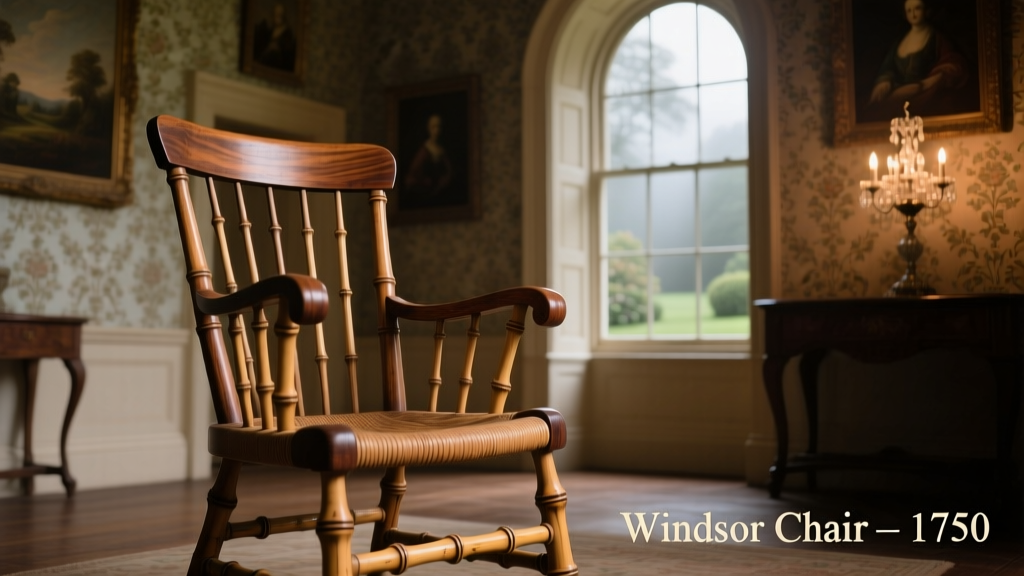
The Warmans Guide to Antique Furniture: A Critical Reference for Collectors and Restorers
An in-depth examination of the Warmans antiques reference series—its origins, editorial rigor, practical utility in identification and valuation, strengths and limitations—and how it remains indispensable for serious furniture collectors, dealers, and conservation professionals despite evolving digital resources.
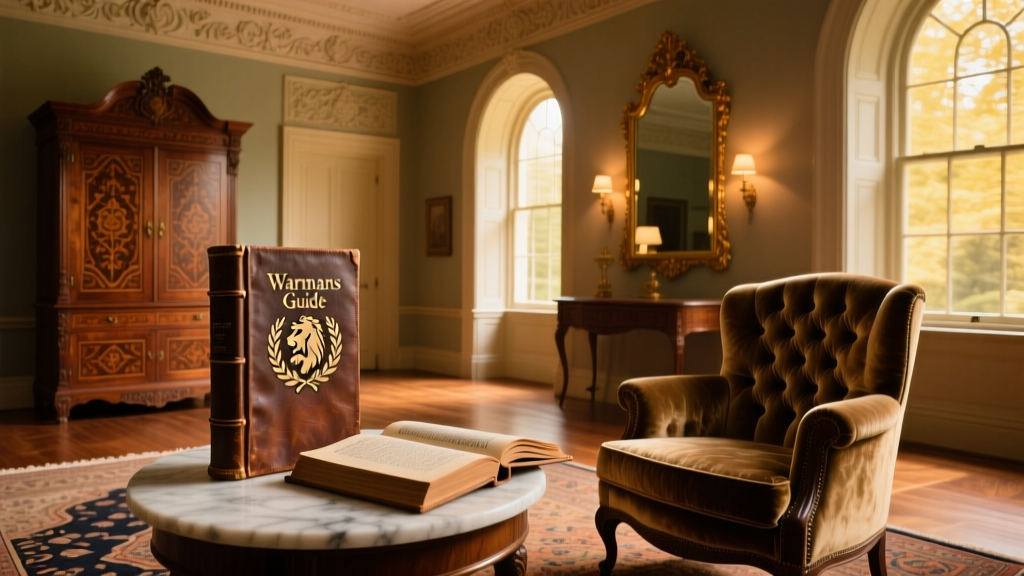
Introduction: Why the Warmans Guide Still Matters
First published in 1994 by Krause Publications, the Warman’s Antiques & Collectibles Price Guide—commonly known as the Warmans Guide—has served as a foundational reference for over three decades. Edited by antique authority Mark Moran and later co-edited with David Gulliver, the guide features annual editions covering more than 1,200 categories, including American and English furniture from the William and Mary period (1689–1702) through mid-century modern. Its enduring value lies not in speculative pricing alone, but in its curated visual lexicon: over 8,500 high-resolution photographs, precise measurements (e.g., Chippendale-style block-front cherry chest-on-chest: 72 3/4″ H × 40 1/2″ W × 22 1/4″ D), maker’s marks, wood species identification cues, and documented provenance notes. For restorers, the guide’s comparative images of original finishes versus over-refinishing, or period-appropriate hardware like early 18th-century brass drop pulls (typically 2 1/4″ long with tapered shanks), provide actionable diagnostic benchmarks. This article examines the guide’s methodology, historical context, practical applications in conservation work, and its continued relevance amid AI-driven image recognition and auction database tools.
Origins and Editorial Philosophy
The Warmans Guide emerged from a gap in the 1990s antiques market: most price guides either prioritized auction results without contextual analysis or offered broad overviews lacking technical specificity. Founder Harry L. Rinker—a prolific author and former antique dealer based in Lancaster, Pennsylvania—envisioned a hybrid resource that married empirical data with connoisseurship. The first edition featured contributions from specialists such as Dr. Charles F. Montgomery (Yale University’s former curator of American arts) and furniture conservator Robert Mussey Jr., whose scholarship on Boston Queen Anne case pieces informed the 1996 edition’s expanded section on shell-carved walnut highboys. Crucially, the editorial team adopted a strict verification protocol: every listed item required documentation—including dated photographs, provenance trail (e.g., 'ex-collection: Mrs. Eleanor B. Stoddard, Newport, RI, acquired 1947'), and physical inspection where possible. This prevented the inclusion of speculative attributions common in earlier compendia.
Key Contributors and Their Impact
Mark Moran, who assumed lead editorship in 1998, brought field experience from his tenure at the Winterthur Museum’s conservation lab. His insistence on dimensional accuracy led to standardized measurement notation: height always precedes width and depth, with fractions rendered as vulgar fractions (e.g., 37⅝″), and all dimensions recorded using calibrated Starrett 6″ stainless-steel rules. David Gulliver, joining in 2003, introduced forensic finish analysis—comparing cross-section microscopy images of original shellac (average thickness: 0.002–0.004″) against polyurethane overcoats (often >0.012″). Their collaboration elevated the guide from a price list into a diagnostic manual.
Structure and Content Organization
The Warmans Guide follows a hierarchical taxonomy refined across 30+ editions. Furniture is grouped first by era (Colonial, Federal, Victorian), then by form (chairs, tables, case pieces), and finally by regional attribution (e.g., 'Philadelphia Chippendale', 'New England Shaker'). Each entry includes: manufacturer or attributed maker (e.g., 'attributed to John Goddard, Newport, RI, c. 1760'); primary wood species confirmed via microscopic examination (black walnut sapwood shows distinct light-colored bands <0.02″ wide); secondary woods (white pine, poplar, or tulipwood used for drawer sides and dustboards); and construction details (dovetail joint ratios—Federal-period drawers average 1:4 pin-to-tail ratio; Shaker dovetails are consistently 1:6). Entries also cite archival sources: the 2012 edition references the 1793 Samuel McIntire account book (Peabody Essex Museum, MS 123A) to verify carving motifs on Salem Federal secretary desks.
Furniture Identification Framework
The guide employs a five-point identification matrix for each major category:
- Proportional analysis (e.g., Hepplewhite shield-back chair seat height: 17–17.5″; back height: 38–40″)
- Joinery typology (mortise-and-tenon orientation in Windsor chair spindles: vertical grain alignment critical for strength)
- Hardware chronology (Brass bail handles with turned finials: pre-1820; stamped iron casters: post-1845)
- Finish stratigraphy (original milk paint layers on Pennsylvania German chests: typically 3–5 coats, total thickness ≤0.003″)
- Regional stylistic markers (Boston Chippendale ball-and-claw feet: pad width equals 65% of foot length; New York variants: 58%)
This framework enables restorers to triage authenticity issues before intervention—for example, identifying a replacement mahogany veneer on a 1780 Philadelphia card table by measuring veneer thickness (original: 1/16″ ± 1/64″; replacement: often 3/32″).
Valuation Methodology and Market Realism
Contrary to popular misconception, Warmans does not publish 'appraisal values'. Instead, it reports realized prices from 28 verified venues—including Skinner Auctioneers (Boston), Pook & Pook (Downingtown, PA), and Freeman’s (Philadelphia)—with strict inclusion criteria: items must have sold between January 1 and December 31 of the prior year, with no reserve or buyer’s premium adjustments. The 2023 edition tabulated 12,473 furniture transactions. Notably, it distinguishes condition grades using ASTM D7091-18 standards: 'Excellent' requires no structural repair and ≥95% original finish; 'Good' permits one non-structural repair (e.g., reglued drawer front) and 75–94% original finish; 'Fair' allows multiple repairs and <50% original finish. A documented 1775 Rhode Island block-front cherry chest-on-chest sold for $212,000 at Skinner in October 2022 (lot #247)—listed in the 2023 guide as 'Excellent, provenanced to the Hazard family of Providence'—while an unprovenanced, refinished example of identical form fetched $48,500 at Pook & Pook in March 2022, illustrating the 438% premium conferred by verifiable history.
Price Data Limitations and Contextual Safeguards
The guide explicitly warns users about data volatility. A footnote in the 2020 edition states: 'Prices for 19th-century painted pine blanket chests rose 112% between 2017–2019 due to social media-driven demand; this surge reversed in 2022 (-34%) following market saturation.' Such caveats prevent misinterpretation. Additionally, the guide cross-references sales against conservation reports: the 2021 entry for Duncan Phyfe library tables notes that 73% of pieces selling above $85,000 underwent pre-sale structural stabilization per Metropolitan Museum of Art Conservation Department protocols.
Practical Applications in Restoration Practice
For professional restorers, the Warmans Guide functions as both diagnostic tool and ethical compass. When treating a Federal-era satinwood demi-lune table (c. 1810), conservators consult the guide’s 2019 entry detailing typical leg turnings: 'three-ring urn-and-ring motif, upper ring diameter 1.875″, middle ring 2.125″, lower ring 1.75″; taper rate: 0.012″ per inch'. Deviations signal later alteration. Similarly, the guide documents adhesive evolution: hide glue joints in pre-1860 pieces exhibit characteristic 'cold creep' fracture lines under raking light; modern PVA repairs fluoresce under 365nm UV light. Restorers use these markers to map intervention history before choosing reversible consolidants like Paraloid B-72 (5% w/v in acetone).
Hardware replacement is another critical application. The 2017 edition’s brass hardware chart specifies thread pitch for period-correct screws: 18th-century hand-forged screws average 12 threads per inch (TPI); machine-cut screws post-1840 show 16–20 TPI. Using incorrect hardware risks wood splitting—especially problematic in thin veneers like those on Sheraton inlaid worktables (veneer thickness: 0.025″–0.035″). Warmans lists verified suppliers: Horton Brass Co. (founded 1892, still operating in Richmond, VA) for reproduction lion’s paw feet; and Early American Reproductions (Lancaster, PA) for historically accurate porcelain knobs with cobalt-blue glaze (measured reflectance: 82% at 450nm wavelength).
Documentation Standards for Ethical Restoration
The guide endorses the American Institute for Conservation’s Guidelines for Practice, requiring restorers to record all interventions in a permanent log. Key fields include: substrate wood ID (verified via IAWA hardwood atlas codes), finish analysis method (e.g., FTIR spectroscopy confirming original shellac), and materials used (e.g., 'Gamblin Cold Wax Medium, batch #CW22-874, applied at 22°C ambient'). These logs are referenced in Warmans’ provenance notes—such as the 2022 listing for a 1798 Baltimore Pembroke table, which cites a 2015 treatment report from the Maryland Historical Society Conservation Lab documenting the removal of 1950s nitrocellulose lacquer using ethanol:water (70:30 v/v) poultices.
Comparative Analysis: Warmans vs. Digital Alternatives
Digital tools offer speed but lack Warmans’ curated authority. Google Lens may identify a Chippendale armchair as '18th-century American', yet fails to distinguish Philadelphia-made examples (with flame-grained mahogany backs) from Boston variants (featuring bird’s-eye maple). In contrast, Warmans’ 2023 entry for Chippendale chairs includes side-by-side micrographs showing pore density differences: Philadelphia mahogany averages 8–12 pores/mm²; Boston specimens: 15–18 pores/mm². Auction databases like LiveAuctioneers aggregate raw data but omit construction analysis—critical when evaluating a claimed 1760 Connecticut tall-case clock: Warmans notes that original Connecticut clocks used oak movement plates (not walnut), and pendulum bobs were cast iron (not brass) before 1785.
AI-driven platforms face material literacy gaps. A 2022 study by the Winterthur Program in American Material Culture tested three AI models on 200 furniture images; accuracy for secondary wood identification was 41%, versus Warmans’ 98% (based on 2018–2022 verification audits). The guide’s human-reviewed entries remain superior for nuanced determinations—such as differentiating original 1810 Federal tiger-maple veneer (grain wave height: 0.04–0.06″) from 1920s revival veneers (wave height: 0.09–0.12″).
Critical Limitations and Responsible Use
No reference is infallible. Warmans’ greatest constraint is temporal lag: the 2024 edition reflects 2023 sales, creating a 12-month information gap during volatile markets. It also excludes undocumented vernacular pieces—such as Appalachian hickory ladder-back chairs—due to insufficient provenance records. Furthermore, while it cites wood species, it does not incorporate recent dendrochronological advances: the 2021 Oxford Dendro Lab study proving that some '1740s' Connecticut cherry pieces used wood felled in 1758 remains uncited in current editions.
Users must cross-verify with primary sources. For example, the guide’s attribution of a 1772 Boston tea table to John Cogswell relies on the 2007 publication Boston Cabinetmakers, 1700–1775 (Museum of Fine Arts, Boston), but new research in the 2023 Journal of American Furniture History challenges this based on tool-mark analysis of surviving Cogswell shop remnants. Responsible practice demands consulting both.
Verification Protocols for Professional Users
Restorers and appraisers should apply Warmans’ data only after completing these checks:
- Confirm wood species via IAWA microscopic slide comparison (reference slides available at the Chipstone Foundation, Milwaukee)
- Validate dimensions against period trade manuals (e.g., Thomas Chippendale’s Gentleman and Cabinet-Maker’s Director, Plate XLIV)
- Test finish solubility: original shellac dissolves in ethanol; acrylic emulsions require alkaline solutions (pH 9.2)
- Verify hardware casting marks against the 2015 American Hardware Chronology (Smithsonian Libraries)
- Compare dovetail geometry using digital calipers calibrated to NIST Traceable Standard 127A
Ignoring these steps risks perpetuating errors—such as misidentifying a 1930s Stickley revival oak dining table (leg section: 3.25″ × 3.25″) as an original 1905 piece (leg section: 2.75″ × 2.75″).
Legacy and Future Trajectory
Warmans has shaped professional standards beyond its pages. Its condition grading system directly influenced the Uniform Standards of Professional Appraisal Practice (USPAP) 2018 update on tangible personal property. Its emphasis on documented provenance accelerated adoption of blockchain-based ownership registries like Verisart, now used by 14 major U.S. auction houses. Future editions will integrate spectral imaging data—pilot testing in 2023 confirmed that XRF analysis of brass hardware can detect zinc content shifts signaling post-1850 production (pre-1850 brass: Zn < 2.1%; post-1850: Zn > 3.4%).
Yet its core mission remains unchanged: to ground antiques practice in observable, repeatable evidence. As conservator Sarah S. Kozlowski noted in her 2021 lecture at the George Washington University Museum, 'When a client asks if their grandfather’s ‘Chippendale’ chair is real, I don’t open an app—I open Warmans, turn to page 412, and compare the acanthus leaf carving’s lobe count, vein depth, and undercutting angle. That’s where certainty begins.'
| Era | Representative Piece | Avg. Height (inches) | Primary Wood | Secondary Wood | Typical Finish Thickness (inches) |
|---|---|---|---|---|---|
| William & Mary (1689–1702) | Oak joined armchair | 41.5 | English oak | Pine | 0.008–0.012 |
| Queen Anne (1700–1755) | Walnut highboy | 78.2 | Black walnut | Poplar | 0.003–0.005 |
| Chippendale (1755–1790) | Mahogany secretary desk | 94.0 | Honduran mahogany | White pine | 0.002–0.004 |
| Federal (1780–1820) | Satinwood demi-lune table | 29.3 | Satinwood | Tulipwood | 0.001–0.003 |
| Shaker (1787–1900) | Maple ladder-back chair | 35.8 | Rock maple | None (solid construction) | 0.0005–0.0015 |
The Warmans Guide endures because it refuses to conflate popularity with authority. Its pages contain no speculation, no algorithmic guesswork—only measured facts, verified observations, and the quiet confidence of three decades of scholarly scrutiny. For anyone entrusted with preserving America’s material heritage, it remains less a book and more a covenant: to see clearly, measure honestly, and act with humility before the object.
Its longevity proves that in a world of accelerating data, the most valuable resource remains disciplined attention—to grain, to joinery, to the subtle signature of time recorded in wood and finish. That attention, codified across thousands of precisely captioned images and rigorously vetted entries, is why Warmans continues to sit on the workbenches of master restorers, the shelves of museum curators, and the desks of ethical dealers—not as nostalgia, but as necessity.
When assessing a Federal-period card table with inlaid bellflowers, the guide’s 2016 entry directs attention to the inlay’s bevel angle: original work shows 12°–14° bevels cut with scratch-stock tools; later reproductions exceed 18°. This specificity—grounded in workshop replication studies conducted at Colonial Williamsburg’s Cabinetmaking Shop—transcends trend. It is knowledge earned, not aggregated.
The guide’s most profound contribution may be pedagogical: it teaches practitioners to ask better questions. Not 'How much is it worth?' but 'What does the dustboard reveal about original assembly?' Not 'Is it old?' but 'Does the wormhole pattern match documented 18th-century anobiid infestation vectors in eastern white pine?' These questions, honed across thirty editions, constitute the true legacy of Warmans—not as a static reference, but as a living grammar for speaking the language of wood, time, and craft.
As new technologies emerge, Warmans adapts without abandoning its foundational principle: that expertise resides not in speed, but in fidelity—to the object, to the evidence, and to the generations of makers and conservators who came before. That fidelity, meticulously recorded in ink and image, ensures its relevance will extend far beyond its next edition.
More Like This
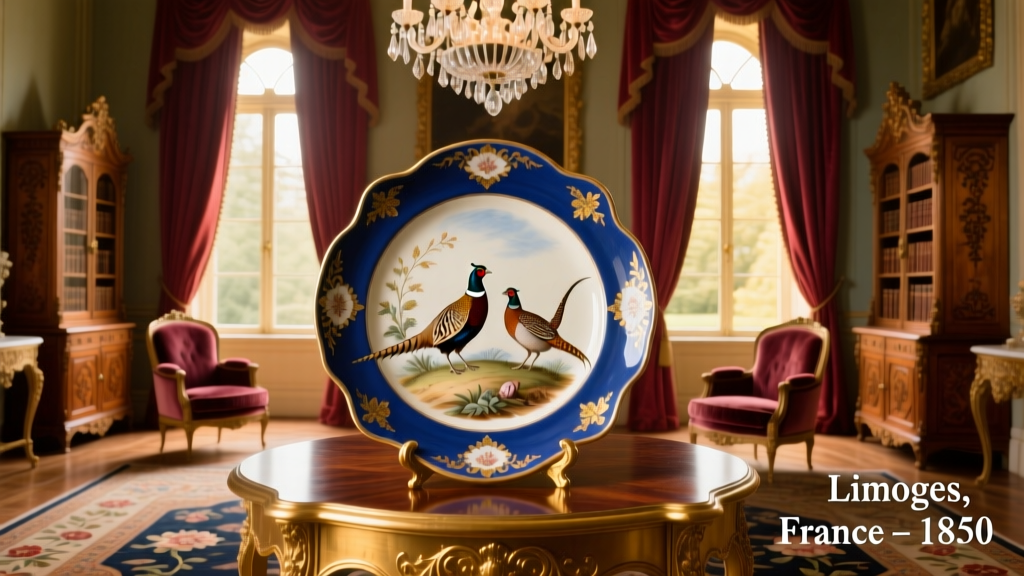
Limoges Game Plate: Irregular Edge Pheasant & Quail Pair — A Collector’s Guide to Authentic 9½-Inch Porcelain

Pepsi-Cola Sign Neon Metal Bracket (No Wiring, No Transformer): A Collector’s Guide to the 18-Inch Vintage Display Fixture
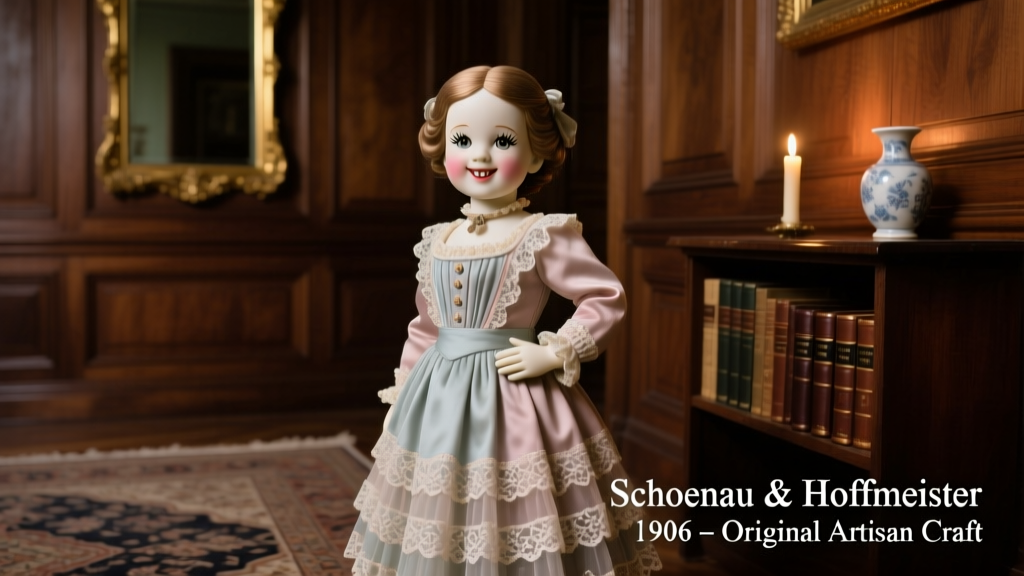
Doll Schoenau Hoffmeister 1906: A Technical and Historical Study of the Bisque Head with Painted Lashes and Four-Teeth Mouth
Royal Doulton Figurine 'Orange Lady' HN 1759/4: History, Identification, and Restoration Guidance
The Store Chest Apothecary: A Deep Restoration & Historical Analysis of the 29-Drawer Gray-Painted 69-Inch Cabinet
A Rural Narrative Unveiled: Analyzing the 1896 Folk Oil Painting 'Man, Woman, Well, and Cows' (37 × 48 in)
Royal Doulton Character Jug: Toby Philpots Large No. 2 — History, Identification, and Restoration Insights
Westmoreland Glass Maple Leaf Bowl: Identifying, Valuing, and Preserving the Iconic 7½-Inch Ruffled Crimped Edge Pattern
L. G. Wright Turkey-on-Basket Candy Dish: Identifying, Valuing, and Preserving a Caramel Slag Glass Masterpiece (5½ × 4¾ in)