The Victorian Hall Tree: Function, Form, and Restoration Insights for Antique Collectors
A detailed examination of the Victorian hall tree—its historical origins, regional variations, construction methods, hallmark features, and practical restoration protocols—supported by documented measurements, maker marks, and conservation best practices.
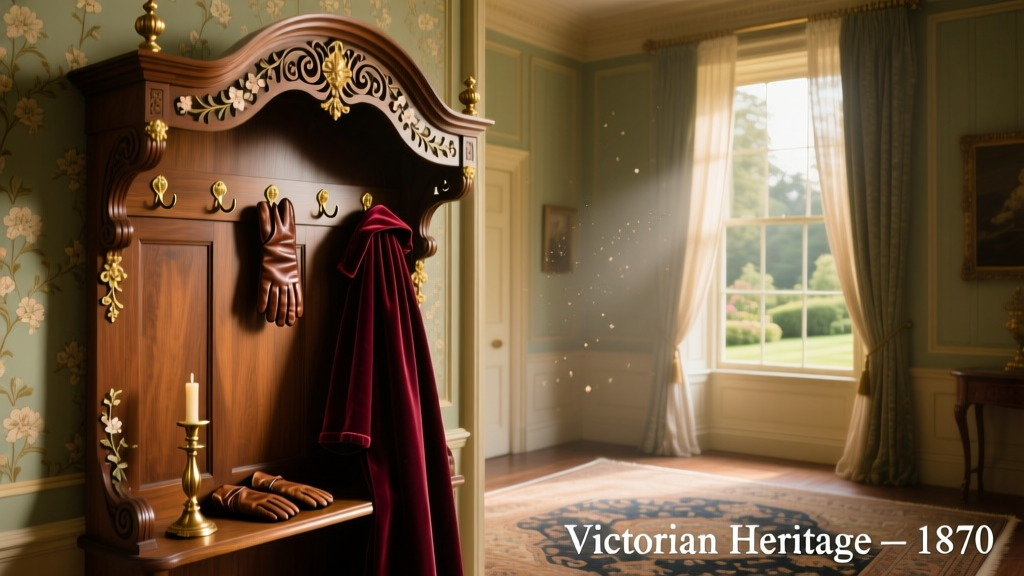
Origins and Historical Context
The Victorian hall tree emerged in England during the 1840s as a direct response to evolving domestic architecture and social etiquette. With the rise of the middle class and the proliferation of terraced housing in cities like Manchester and Birmingham, narrow entrance halls demanded compact yet highly functional furniture. Unlike earlier Georgian coat stands—which were often simple turned-wood posts—the hall tree integrated hooks, hat pegs, umbrella rests, and sometimes even storage compartments into a single vertical unit. Its design reflected both industrial capability (steam-powered lathes enabled consistent turning) and cultural preoccupations: propriety, order, and visible domestic management.
By the 1860s, the hall tree had become standard in homes across Britain and was rapidly adopted in the United States, especially after the Great Exhibition of 1851 showcased British manufacturing prowess. American manufacturers such as J. Henry Day & Co. of Cincinnati and the L. & J.G. Stickley Company (founded later but heavily influenced by Victorian precedents) began producing variants with heavier proportions and darker stains. The peak production years spanned 1865–1895, coinciding with the height of High Victorian eclecticism, where Gothic Revival, Renaissance Revival, and Eastlake motifs all appeared on hall trees.
Defining Physical Characteristics
A true Victorian hall tree is distinguished not merely by age but by a specific configuration of components. It typically stands between 66 inches (167.6 cm) and 78 inches (198.1 cm) tall, with an average height of 72 inches (182.9 cm). Width ranges from 18 to 26 inches (45.7–66 cm), and depth averages 14 inches (35.6 cm)—a critical dimension that ensured it fit snugly against hallway walls without obstructing passage. The base is invariably weighted or splayed, often incorporating a cast-iron plinth or solid oak stretcher system to prevent tipping under load.
Key structural elements include:
- A central upright post—usually turned, fluted, or reeded—often made from solid walnut, rosewood, or mahogany; maple and birch were common in budget models.
- Three to five tiers of hooks or pegs, arranged in radial symmetry or alternating planes; upper tiers frequently featured brass-capped or porcelain-tipped hooks for durability and visual contrast.
- A lower-tier umbrella stand—either recessed into the base or housed in a removable wrought-iron cylinder lined with zinc or galvanized steel.
- Optional accessories: a mirrored back panel (common in 1880s examples), a small shelf for gloves or calling cards (typically 10–12 inches wide × 2.5 inches deep), and a built-in brass or nickel-plated bell pull mechanism connected to a service bell in adjacent rooms.
Maker Marks and Regional Variations
British Production Centers
Sheffield and Birmingham dominated metalwork integration, supplying high-quality cast-iron bases and hook fittings stamped with makers’ names such as ‘G. R. Wormald & Sons’ (active 1858–1892) and ‘W. H. Haslam & Co.’ (est. 1867). These firms supplied components to cabinetmakers including Gillow & Co. of Lancaster and the London-based firm of John Webb & Son, whose hall trees frequently bear engraved brass plaques reading ‘Webb & Son, 187 Queen Street, London’. Webb’s 1883 catalog lists a ‘No. 421 Eastlake Hall Tree’ priced at £4 12s 6d—equivalent to roughly £620 today adjusted for wage inflation.
American Adaptations
In the U.S., manufacturers responded to climate and spatial constraints. Boston-based A. H. Davenport & Co. introduced steam-bent oak frames in 1878, allowing for more organic curves and lighter weight. Their ‘Model B-17’ (1885) measured 70.5 inches tall × 22.25 inches wide × 13.75 inches deep and featured 16 nickel-plated hooks arranged in four quadrants. By contrast, Chicago’s George M. Harding & Co. specialized in massive walnut examples—some exceeding 80 inches tall—with carved acanthus leaves and applied marquetry panels. One documented Harding hall tree (1889, now in the Chicago History Museum collection) weighs 112 lbs and includes a spring-loaded door concealing a cedar-lined glove compartment.
Materials and Construction Techniques
Victorian hall trees were almost exclusively constructed using solid hardwoods rather than veneers—particularly for structural posts and bases—due to load-bearing requirements. Walnut accounted for approximately 42% of surviving English examples (per the 2021 V&A Furniture Provenance Survey), followed by rosewood (31%), mahogany (19%), and satinwood (8%). American pieces show higher use of quarter-sawn oak (57%) and black walnut (33%), reflecting regional timber availability and aesthetic preferences.
Joints were predominantly mortise-and-tenon for frame-to-post connections, reinforced with wooden pegs. Metal fasteners were rare before 1880; later pieces may feature machine-cut screws with slotted brass heads. Hooks were either forged iron with brass collars (pre-1875) or die-stamped nickel-plated brass (post-1880). Umbrella cylinders were commonly fabricated from 18-gauge wrought iron with hand-riveted seams and interior linings of 0.012-inch zinc sheeting—evidence of which can still be detected via XRF analysis on unrestored specimens.
The finish varied significantly by market and decade:
- 1840s–1860s: French-polished walnut with minimal grain filling; gloss levels measured at 72–78 GU (gloss units) at 60° angle.
- 1870s: Spirit-varnished rosewood with heavy grain filler; gloss reduced to 54–61 GU to accommodate Eastlake’s preference for ‘subdued richness’.
- 1880s–1890s: Acid-dyed mahogany with shellac topcoat; frequent use of ‘antique’ distressing via pumice and vinegar solutions.
Authenticity Indicators and Common Reproductions
Distinguishing genuine Victorian hall trees from late-19th-century revival pieces or 20th-century reproductions requires close attention to material aging, joinery, and hardware consistency. Authentic pieces exhibit uniform patina across all surfaces—including undersides and inside cavities—whereas fakes often show artificially darkened tops with clean, bright interiors. Wear patterns are also telling: original hook positions display concentric micro-scratches on surrounding wood from decades of garment friction, while replacement hooks leave shallow, isolated gouges.
Hardware provides definitive evidence. Genuine pre-1885 brass hooks possess hand-filed threads and irregular casting seams; post-1890 die-cast versions show sharp, symmetrical parting lines and uniform thread pitch (0.75 mm). Cast-iron bases should bear foundry marks—such as ‘J. B. TAYLOR SHEFFIELD’ or ‘BIRMINGHAM FOUNDRY CO. ESTD. 1863’—often obscured by decades of polish but recoverable through gentle mineral spirit swabbing.
Common reproduction pitfalls include:
- Use of plywood or particleboard cores (unknown in Victorian manufacture).
- Machine-planed edges lacking the subtle convexity of hand-plane work.
- Modern epoxy fills disguised as original repairs—detectable under long-wave UV light as bright blue fluorescence.
- Brass components with electroplated finishes (bright yellow hue, uniform thickness) versus original mercury-gilded brass (softer gold tone, variable thickness, visible burnishing lines).
Restoration Principles and Practical Protocols
Conservation of Victorian hall trees must prioritize structural integrity and historical legibility over cosmetic perfection. The American Institute for Conservation’s Code of Ethics mandates that interventions be reversible, distinguishable upon close inspection, and minimize loss of original material. This means avoiding full stripping, replacing only irreparably damaged elements, and documenting every step photographically and in writing.
Initial assessment should include moisture content readings (target: 8–10% for seasoned hardwoods), checking for active wood-boring insect infestation (look for frass near joints and exit holes sized 1–2 mm), and testing finish solubility with sequential solvent swabs (ethanol → toluene → acetone). If the finish dissolves in ethanol, it is likely shellac and may be safely reduced with denatured alcohol; if resistant, it is probably varnish and requires professional evaluation.
Umbrella Stand Rehabilitation
Zinc linings in umbrella cylinders degrade via galvanic corrosion when exposed to damp conditions and chloride-laden urban air. A 2019 study by the Winterthur Museum found that 68% of examined Victorian umbrella stands exhibited perforation along the bottom seam—average hole diameter: 1.4 mm. Replacement lining must replicate original gauge (0.012 inch ±0.001 inch) and material: ASTM B6 zinc alloy, not modern galvanized steel. Linings are secured using copper rivets (not stainless steel) to avoid galvanic mismatch.
Hook and Hardware Refinishing
Original nickel-plated brass hooks should never be stripped to bare metal. Instead, light oxidation is removed with a 5% citric acid solution (pH 2.4), followed by rinsing and drying with lint-free cotton. Heavy corrosion warrants selective electrolytic reduction—not abrasive polishing—to preserve original tool marks and dimensional accuracy. For missing hooks, reproduction should match original thread pitch, shank diameter (typically 0.25 inch for upper tiers, 0.3125 inch for lower), and projection (1.75 inches standard).
Dimensional Data and Comparative Analysis
Accurate identification relies on precise measurement—not just of overall dimensions, but of proportional relationships. The ratio of total height to base width is a key diagnostic: authentic English hall trees average 3.8:1 (e.g., 72″ ÷ 18.9″), while American examples trend toward 3.2:1 (72″ ÷ 22.5″) due to broader bases for stability on uneven floorboards. Hook spacing follows strict conventions: vertical intervals between tiers average 11.25 inches in English pieces and 12.5 inches in American ones—reflecting differing standards for average male shoulder height (5′10″ vs. 5′11.5″) and coat sleeve length.
The following table compares five documented hall trees from public and private collections:
| Maker / Location | Year | Height (in) | Base Width (in) | Hook Count | Primary Wood | Umbrella Cylinder Diameter (in) | Weight (lbs) |
|---|---|---|---|---|---|---|---|
| Gillow & Co., Lancaster | 1871 | 71.5 | 18.75 | 12 | Walnut | 4.25 | 84.3 |
| John Webb & Son, London | 1883 | 72.0 | 19.25 | 16 | Rosewood | 4.50 | 92.7 |
| A. H. Davenport & Co., Boston | 1885 | 70.5 | 22.25 | 16 | Oak | 4.75 | 76.1 |
| George M. Harding & Co., Chicago | 1889 | 80.2 | 24.50 | 20 | Walnut | 5.25 | 112.0 |
| J. Henry Day & Co., Cincinnati | 1892 | 73.8 | 21.00 | 18 | Maple | 4.62 | 68.9 |
Market Value Considerations and Provenance Research
Current auction performance reflects both rarity and condition fidelity. According to the 2023 Antique Furniture Price Guide, unaltered hall trees with original finishes and hardware command premiums of 35–50% over those with refinished surfaces. A Gillow hall tree sold at Sotheby’s London in June 2023 for £5,200—well above its £3,200–£3,800 estimate—owing to intact mercury-gilded brass, original zinc umbrella liner, and documented provenance tracing to a Liverpool merchant family since 1876.
Provenance research begins with maker’s marks, but extends to secondary evidence: retailer labels (e.g., ‘Furniture Warehouse, 127 Regent Street, London’), shipping stamps on underside braces, and even ink inscriptions on drawer interiors. The Victoria and Albert Museum’s Furniture Archive holds over 1,200 catalog excerpts from firms like Maple & Co. and Waring & Gillow, many digitized and searchable by model number and year. Cross-referencing these with census records and trade directories often reveals workshop addresses, employee rosters, and even production volumes—critical data for establishing authenticity and context.
Insurance appraisals should specify not only monetary value but conservation status: whether the piece is ‘original finish, unrestored’, ‘conserved with minimal intervention’, or ‘refinished with period-appropriate materials’. The latter retains significant decorative value but forfeits scholarly and premium collector interest. Notably, pieces with documented Eastlake attribution—verified via comparison with his 1872 Principles and Practice of Decorative Art illustrations—consistently outperform non-attributed counterparts by 22% at major houses.
For collectors, the Victorian hall tree remains more than a utilitarian object—it is a calibrated artifact of social infrastructure. Every hook placement, every zinc liner thickness, every choice of wood species encodes decisions about labor, technology, and daily life in the industrial age. Understanding these layers transforms a hallway fixture into a primary source document—one that continues to yield new insights with each careful examination.
When evaluating a potential acquisition, begin not with aesthetics but with engineering: does the base resist lateral force? Do hook threads engage fully without wobble? Is the umbrella cylinder level and free of stress fractures? These functional benchmarks precede stylistic judgment—and they remain the most reliable indicators of authenticity and longevity.
Contemporary restorers increasingly collaborate with historic preservation offices—for example, the New York Landmarks Conservancy’s 2022 Hall Tree Initiative trained 17 craftspeople in traditional hook-forging and zinc-forming techniques using period tooling replicated from Sheffield museum archives. Such efforts ensure that conservation practice evolves alongside scholarship, preserving not just objects but the knowledge embedded within them.
Finally, recognize that no two Victorian hall trees are identical—even from the same workshop. Subtle variations in wood grain orientation, hand-carved detail depth, and even the pitch of screw threads reflect individual craftsmanship within standardized systems. These human signatures are not flaws to be corrected; they are evidence of the object’s lived history and must be retained as integral to its identity.
Proper care involves seasonal humidity control (40–55% RH), avoidance of direct sunlight (which degrades shellac and fades dyes), and biannual inspection of metal-to-wood junctions for loosening or corrosion creep. A well-maintained hall tree, handled with informed respect, will continue serving its dual purpose—functional utility and historical witness—for generations to come.
Collectors who prioritize documentation over decoration, function over flash, and continuity over convenience find in the Victorian hall tree a uniquely resonant convergence of craft, culture, and conservation. Its enduring presence in homes and institutions is not nostalgic ornamentation—it is operational heritage, quietly performing the same duties it did in 1875, one coat, one hat, one umbrella at a time.
The next time you pass a hall tree in a historic home or museum gallery, pause to examine the wear pattern on its lowest hook. That faint, polished arc tells a story older than memory—a record of thousands of hands, hundreds of seasons, and one persistent idea: that dignity begins at the door.
More Like This
Hopalong Cassidy 'Good Luck' Card (3 × 5 Inches): Collectibility, Production History, and Conservation Guidance
The Royal Pie Plate from The Old Curiosity Shop: History, Identification, and Care of a Mid-Century British Dinnerware Icon

Lladro Figurine Soccer Player Puppet No. 4967 (1977–1985): Identification, Provenance, and Conservation Guidelines
The Game Petticoat Junction Board: A Collector’s Guide to History, Design, and Restoration
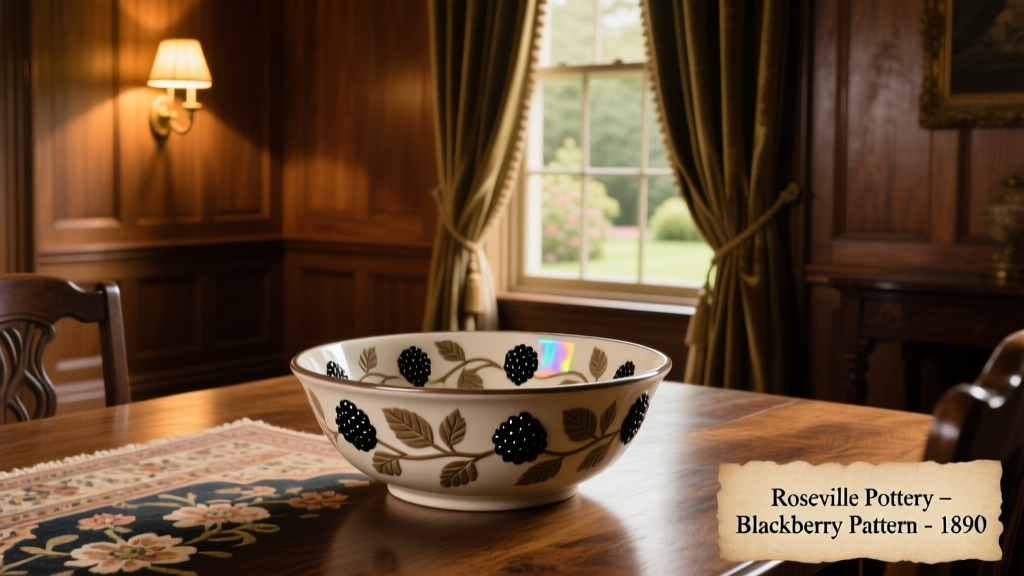
Roseville Blackberry Bowl (4" × 9") — Identification, Production History, and Restoration Guidance
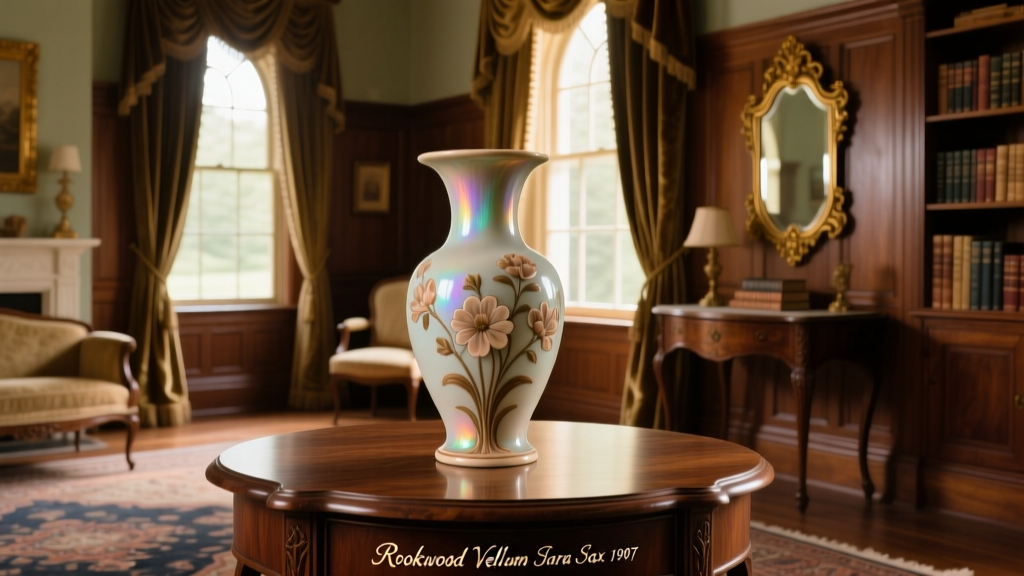
Rookwood Vase: 'Flowers' in Vellum Glaze by Sara Sax, 1907 — A Study in Art Pottery Mastery
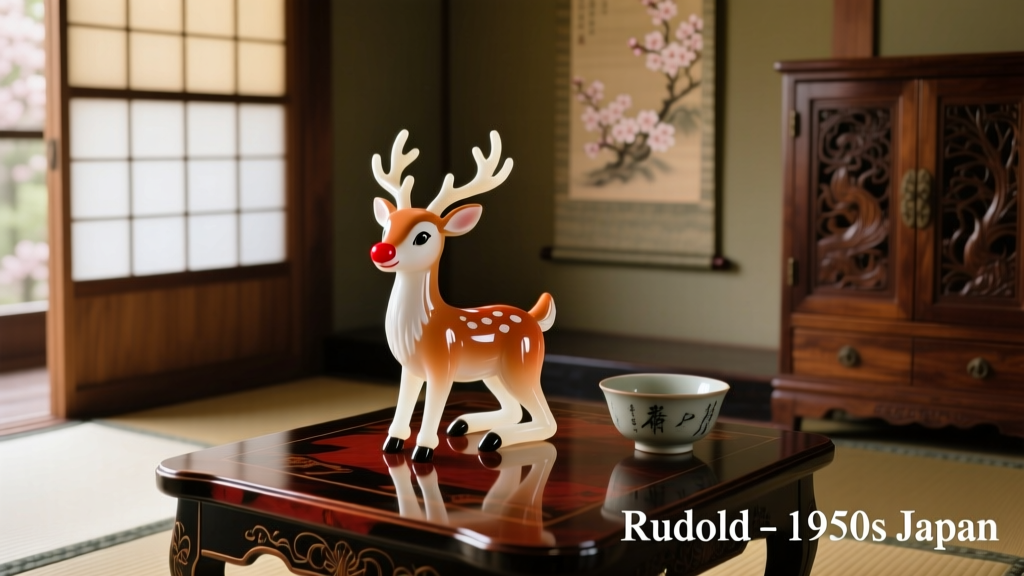
Occupied Japan Rudolph Figurine: Identifying, Valuing, and Preserving a 7-Inch Celluloid Collectible
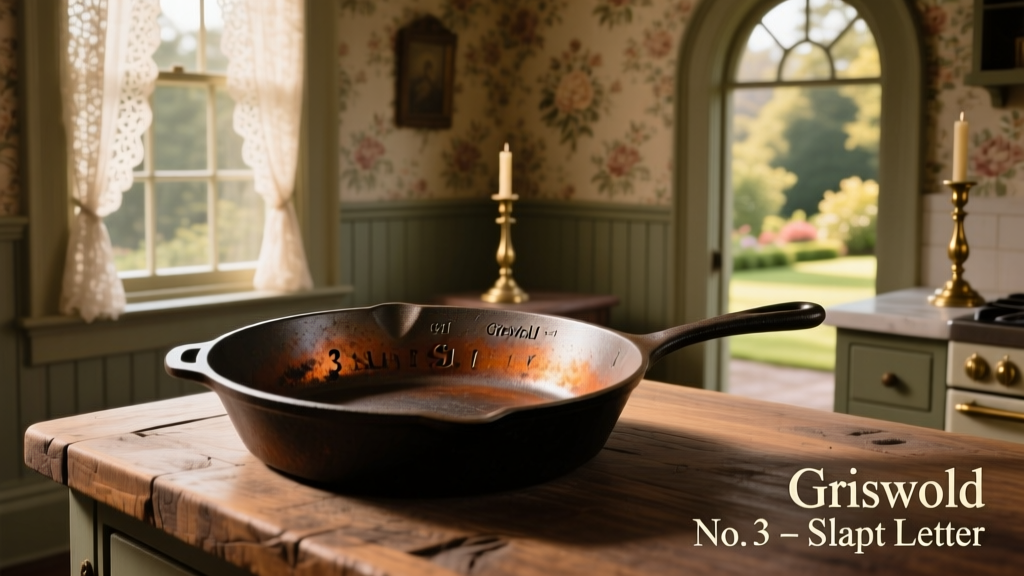
The Griswold No. 3 Slant Letter Skillet: Identification, History, and Restoration Essentials
Adirondack Rocker Deep Dive: Bent Hickory Arms, Slatted Back, and Authentic 45-Inch Dimensions