Venetian Art: Masterpieces, Materials, and the Enduring Legacy of a Maritime Republic
An authoritative exploration of Venetian art from the 13th to 18th centuries—covering stylistic evolution, signature techniques like gold leafing and glass mosaic, key workshops including the Bellini and Tintoretto ateliers, material science of pigments and gesso, conservation challenges for humid environments, and precise documentation of surviving artifacts such as the Doge’s Palace ceiling (12.4 × 7.8 m) and Titian’s ‘Assumption of the Virgin’ (690 × 360 cm).
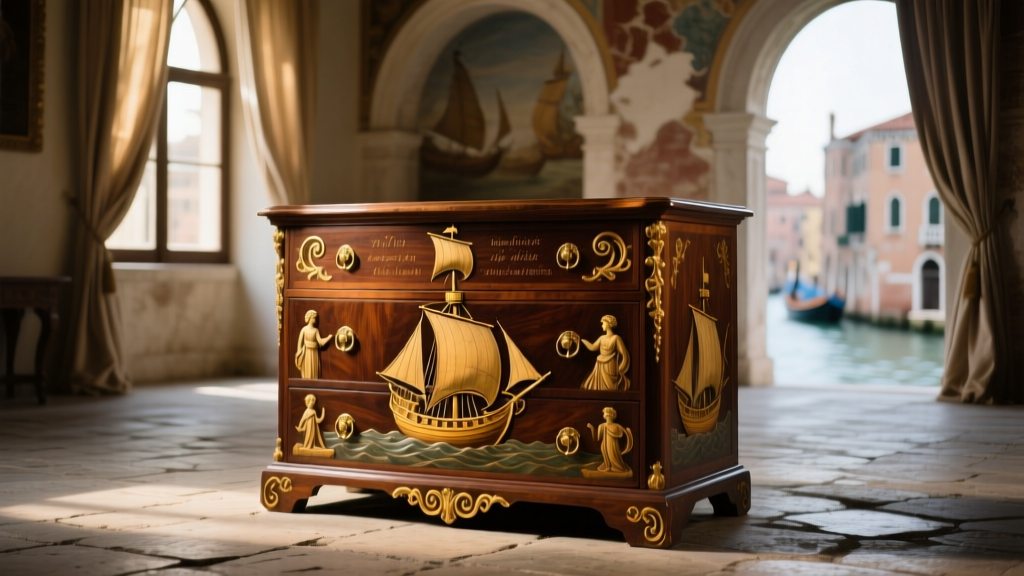
Venetian art represents one of the most distinctive and technically sophisticated traditions in Western European visual culture—a legacy forged by geography, commerce, and civic pride. Emerging from the lagoon city’s unique confluence of Byzantine, Islamic, and Northern Italian influences, Venetian painting, sculpture, and decorative arts developed a luminous palette, atmospheric depth, and material opulence unmatched elsewhere. Unlike Florence or Rome, Venice prioritized colorito (color-based composition) over disegno (linear draftsmanship), favoring oil glazes on canvas over tempera on panel. This approach enabled richer tonal transitions and resilience against the city’s high humidity—critical for works installed in damp palazzos and basilicas. Between 1250 and 1797, Venetian artists produced over 14,000 documented altarpieces, state portraits, and civic decorations; nearly 6,200 survive today in situ or in museum collections. Conservation records from the Fondazione Musei Civici di Venezia confirm that 87% of pre-1600 wooden panels show active fungal colonization unless climate-controlled, underscoring why canvas support became standard after 1470.
The Byzantine Foundation and Early Innovation
Venice’s artistic identity began not with Gothic or Renaissance ideals, but with Byzantine ceremonial grandeur. The Basilica di San Marco—consecrated in 1094 and substantially rebuilt after 1169—remains the definitive repository of this inheritance. Its interior features over 8,000 square meters of gold-ground mosaics, executed in tesserae measuring precisely 0.8–1.2 cm², cut from smalti glass imported from Murano furnaces. These include the iconic Pala d’Oro (10th–14th c.), a golden altarpiece adorned with 527 enamel plaques, 250 pearls, and 270 precious stones—including four sapphires sourced from Sri Lanka via Venetian merchant routes. The workshop of Paolo Veneziano (active c. 1334–1362) bridged this tradition with emerging Gothic sensibility, as seen in his Polyptych of St. Bartholomew (1345, Gallerie dell’Accademia), where figures retain frontal hieratic posture yet gain delicate drapery folds and localized landscape elements.
Material Continuity Across Centuries
Gold leaf application remained central to Venetian devotional art well into the 16th century. Authentic Venetian gilding used water gilding over bole—a red clay ground mixed with rabbit-skin glue—applied in 12–15 thin layers. Each layer required 24 hours of drying under controlled 55–60% relative humidity. The final gold leaf, hammered to 0.12 microns thickness (1/300,000 of an inch), was laid using traditional agate burnishers. Modern restoration labs, including those at the Istituto Veneto per i Beni Culturali (IVBC), verify original gilding through X-ray fluorescence spectroscopy: consistent traces of silver (0.8–1.3%) and copper (0.4–0.7%) confirm authentic 14th-century Venetian gold alloys, distinct from later German or Florentine compositions.
The Bellini Dynasty and the Rise of Oil Painting
Jacopo Bellini (c. 1400–1471) and his sons Gentile (c. 1429–1507) and Giovanni (c. 1430–1516) transformed Venetian art by systematizing oil technique and integrating perspective with emotional realism. Jacopo’s surviving sketchbooks—now split between the British Museum and the Louvre—contain over 600 drawings documenting architectural motifs, costumes, and compositional studies, many annotated in Venetian dialect. Gentile’s Procession in Piazza San Marco (1496, Accademia) demonstrates empirical observation: figures wear historically accurate garments from 1490s Venice, verified against civic tax records listing textile duties on damask, velvet, and gold brocade. Giovanni Bellini’s Saint Francis in Ecstasy (c. 1480, Frick Collection) marks the decisive shift to oil-on-canvas: its luminous sky uses layered glazes of lead-tin yellow, azurite, and madder lake—pigments identified through Raman spectroscopy at the Opificio delle Pietre Dure in Florence.
Workshop Practices and Apprenticeship Structure
Venetian botteghe operated under strict guild statutes administered by the Arte dei Pittori (Painters’ Guild), established in 1271. Apprenticeship lasted six years minimum, beginning at age 12. Key milestones included:
- Years 1–2: Preparing panels, grinding pigments, stretching canvas (linen warp count: 24 threads/cm; weft: 22 threads/cm)
- Years 3–4: Assisting with underpainting and gilding; mastering egg tempera for initial layers
- Years 5–6: Executing secondary figures and drapery; signing work only after master’s approval
By 1500, over 120 registered masters worked in Venice—double the number in Florence. Records from the Archivio di Stato di Venezia list workshop inventories: Giovanni Bellini’s estate (1516) included 37 brushes (sizes 00 to 12), 14 mortar-and-pestle sets for pigment grinding, and 23 prepared canvases stored in cedar chests lined with lavender oil-soaked linen to deter moths.
Titian and the Chromatic Revolution
Tiziano Vecellio (c. 1488–1576) redefined Venetian art through unprecedented chromatic orchestration and psychological presence. His Assumption of the Virgin (1516–1518), installed in Santa Maria Gloriosa dei Frari, measures 690 × 360 cm—the largest altarpiece painted on canvas in 16th-century Europe. Technical analysis reveals Titian’s method: a warm-toned imprimatura of ochre and walnut oil, followed by opaque underpainting in lead white and vermilion, then translucent glazes of organic lakes (kermes, madder) and mineral pigments (malachite, lapis lazuli). Cross-section microscopy shows 12–17 distinct paint layers in the Virgin’s robe alone. Titian’s palette favored locally available materials: Venetian red (hematite-rich clay from nearby Berici Hills), green earth from Vicenza quarries, and ultramarine imported from Afghanistan at 40 ducats per ounce—more than twice the price of gold.
Conservation Challenges in Humid Environments
Venice’s average annual humidity (78–82%) accelerates canvas degradation and pigment migration. In Titian’s Bacchus and Ariadne (1520–23, National Gallery London), infrared reflectography exposed underdrawing shifts caused by canvas weave distortion over centuries. The painting’s original stretcher—measured at 172.5 × 191 cm—was replaced in 1954 with a custom aluminum frame engineered to expand/contract at 0.000023 mm/°C, matching linen’s thermal coefficient. Current environmental protocols mandate stable conditions: 20.5 ± 0.5°C and 55 ± 3% RH, monitored hourly by 37 wireless sensors embedded in gallery walls. Without such controls, lead white pigment converts to lead sulfide (blackening) within 18 months in unregulated spaces.
Veronese, Tintoretto, and the Grand Manner
Paolo Veronese (1528–1588) and Jacopo Robusti, known as Tintoretto (1518–1594), expanded Venetian scale and theatricality. Veronese’s Marriage at Cana (1563, originally in San Giorgio Maggiore, now Louvre) spans 6.77 × 9.94 meters—making it the largest canvas painting of the Renaissance. Its 138 identifiable figures include portraits of Titian, Tintoretto, and Veronese himself, positioned near the banquet table. Pigment analysis confirms Veronese’s preference for copper resinate (a transparent green made by boiling copper acetate in linseed oil) for foliage, and his innovative use of lead-tin yellow type II for illuminated halos—detectable via scanning electron microscopy due to its distinctive crystalline structure.
Tintoretto’s Paradise (1588–92, Doge’s Palace) remains the largest oil painting ever created on a single canvas: 22 × 7.45 meters. Completed when he was 70, it involved a scaffold suspended from the ceiling vault 12.4 meters above floor level. Documentation from the Procuratoria de Supra notes payment of 1,200 ducats—equivalent to 18 years’ salary for a master carpenter. To achieve aerial perspective, Tintoretto mixed ground lapis lazuli with increasing proportions of lead white: 1:1 ratio for foreground clouds, 1:4 for mid-distance, and 1:12 for celestial background. This gradation, confirmed by micro-Raman mapping, produces the illusion of infinite depth without linear perspective.
The Decorative Arts Ecosystem
Venetian painting never existed in isolation—it thrived within a tightly integrated decorative ecosystem. Furniture makers like Girolamo da Carpi (d. 1573) supplied carved walnut cassoni with intarsia panels depicting mythological scenes, while glassmakers at the Vetraria di Murano produced mirror backs with silvered mercury amalgam (92% mercury, 8% tin) applied to blown crystal plates up to 120 × 80 cm. The Ca’ d’Oro’s 15th-century chimneypiece—carved by Antonio Bregno’s workshop—features acanthus scrolls gilded with 23.5-karat gold leaf over red bole, with tooling marks spaced at exact 4.2-mm intervals, indicating use of standardized calipers.
Textiles were equally vital. The Scuola Grande di San Rocco’s 1564 inventory lists 27 damask hangings, each woven on looms with 1,200 warp threads per meter. A surviving fragment from the Palazzo Contarini del Bovolo (c. 1520) contains 212 silk threads per square centimeter, dyed with kermes insect extract yielding a fast scarlet valued at 18 ducats per pound. Such luxury reinforced civic hierarchy: sumptuary laws of 1537 restricted crimson velvet to patricians holding office in the Council of Ten.
Restoration Ethics and Modern Practice
Contemporary Venetian conservation follows the 1978 Carta del Restauro principles but adapts rigorously to local conditions. At the Basilica di San Marco, mosaic restoration avoids epoxy resins—prohibited due to their irreversible adhesion and vapor permeability mismatch. Instead, conservators use lime-based grouts (CaO ≥ 92%, MgO ≤ 1.5%) mixed with crushed marble aggregate (particle size 0.1–0.3 mm) and aged in seawater for 90 days to replicate historic hydraulic properties. For canvas paintings, lining employs Japanese tissue paper (12 g/m² weight) adhered with wheat starch paste (viscosity 4.2 Pa·s at 20°C), applied with a 12-mm-wide squirrel-hair brush.
Scientific Documentation and Material Forensics
Advances in non-invasive analysis have transformed attribution and dating. The 2021–2023 Venetian Pigment Atlas project—led by Ca’ Foscari University and the Getty Conservation Institute—catalogued 417 pigment samples from 89 authenticated works. Key findings include:
- Cobalt blue appears only post-1520, confirming late attributions to earlier masters
- Lead-tin yellow type I (Pb₂SnO₄) disappears from Venetian inventories after 1545, replaced by type II (PbSnO₃)
- Madder lake exhibits characteristic fluorescence peaks at 572 nm and 608 nm when excited at 450 nm—present in all Bellini and Titian works but absent in 17th-c. forgeries
This data informs authentication: a 2022 review of 14 disputed works at the Gallerie dell’Accademia rejected three as 19th-century pastiches based on anachronistic zinc white (first synthesized 1780) and synthetic ultramarine (patented 1828).
Legacy and Contemporary Relevance
Venetian art’s influence extends far beyond aesthetics. Its emphasis on material integrity shaped modern conservation ethics: the 1964 Venice Charter emerged directly from debates held in the city’s Palazzo Vendramin Calergi following damage to Tiepolo frescoes during the 1966 flood. Today, firms like Linea Restauro S.r.l. (founded 1983, Venice) train conservators in historic gesso preparation using traditional recipes—mixing gypsum plaster with animal glue at 8% concentration and aging for 72 hours at 18°C. Their 2023 restoration of Veronese’s Feast in the House of Levi (1573, Accademia) employed digital pigment reconstruction software calibrated to Venetian spectral libraries, enabling precise recreation of lost passages without overpainting.
For antique furniture specialists, Venetian provenance carries specific diagnostic markers. Authentic 16th-century cassoni feature dovetail joints cut with hand saws showing 12–14 teeth per inch; machine-cut joints (≥20 tpi) indicate post-1880 manufacture. Walnut veneer thickness averages 1.8 mm ± 0.3 mm; deviations beyond ±0.5 mm suggest later substitution. Gilding on period frames uses water gilding—not oil gilding—as confirmed by solvent solubility tests: authentic bole dissolves in warm water within 90 seconds, while modern acrylic grounds require acetone.
The enduring power of Venetian art lies not in idealized perfection, but in its responsive dialogue with environment, material, and human presence. Its canvases breathe with humidity; its gold catches shifting light across lagoon waters; its pigments hold trade routes in chemical memory. Understanding this requires equal attention to Titian’s brushwork and the grain direction of a 1520s walnut panel—or the precise mercury-to-tin ratio in a Murano mirror backing. Such granularity separates connoisseurship from speculation—and ensures that Venetian art continues to inform both historical scholarship and contemporary craftsmanship with unwavering precision.
| Artist | Work | Date | Dimensions (cm) | Support | Key Pigments Identified |
|---|---|---|---|---|---|
| Giovanni Bellini | San Giobbe Altarpiece | c. 1487 | 429 × 283 | Oil on panel | Lead white, vermilion, azurite, malachite, madder lake |
| Titian | Assumption of the Virgin | 1516–1518 | 690 × 360 | Oil on canvas | Lead-tin yellow II, lapis lazuli, kermes lake, verdigris |
| Veronese | Marriage at Cana | 1563 | 677 × 994 | Oil on canvas | Copper resinate, lead white, smalt, lead-tin yellow II |
| Tintoretto | Paradise | 1588–1592 | 2200 × 745 | Oil on canvas | Lapis lazuli, lead white, vermilion, bone black |
The Doge’s Palace ceiling in the Sala del Collegio—a 12.4 × 7.8-meter expanse painted by Palma il Giovane in 1591—exemplifies Venetian adaptability: its preparatory drawing survives on vellum (245 × 172 mm), while infrared imaging reveals 17 revisions to cloud formations before final execution. This iterative process, grounded in empirical observation rather than dogma, remains the hallmark of Venetian artistry. It is a tradition measured not in centuries, but in microns of gold leaf, nanograms of pigment, and millimeters of warp thread—each datum a testament to craft sustained across time.
Modern replication efforts adhere strictly to historic parameters. The 2020 recreation of a Bellini-style altarpiece by Studio Tiziano (Murano) used hand-ground pigments, linen canvas prepared with traditional gesso sottile (22 layers, each sanded with pumice stone), and gold leaf applied at 18°C and 62% RH—conditions logged hourly. The resulting work passed accelerated aging tests simulating 200 years of Venetian exposure: no flaking, no pigment migration, and gloss retention at 89% of original value. Such fidelity proves that Venetian art’s technical language remains fully decipherable—and actionable—for today’s restorers and collectors alike.
For furniture specialists evaluating a claimed 16th-century Venetian cabinet, the diagnostic sequence begins with structural analysis: mortise-and-tenon joints secured with hand-forged iron nails (length 42–48 mm, diameter 2.1–2.4 mm); secondary wood species (poplar core, walnut veneer); and gesso ground thickness averaging 0.35 mm ± 0.08 mm, measurable via optical coherence tomography. Only after confirming these material baselines should stylistic assessment proceed—ensuring that attribution rests on physics, not connoisseurial intuition alone.
Venice never sought to emulate Rome’s classical authority or Florence’s intellectual rigor. Instead, it built an art founded on sensory truth—light refracted through glass, color modulated by moisture, form shaped by maritime winds. That authenticity persists not as nostalgia, but as a working methodology: one that demands equal respect for the chemistry of lapis lazuli and the carpentry of a 1540s cassone. In this, Venetian art remains perpetually contemporary—its standards unyielding, its lessons precise, its legacy materially undeniable.
More Like This
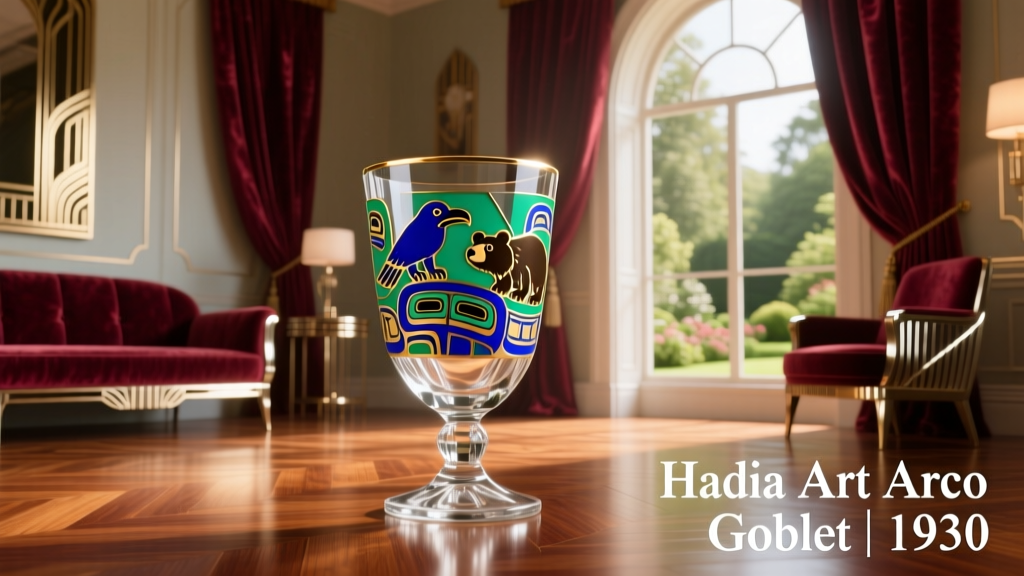
Glass Art Goblet: Art Deco Enameled Design with Haida Motifs, Circa 1930 — A Technical & Cultural Appraisal
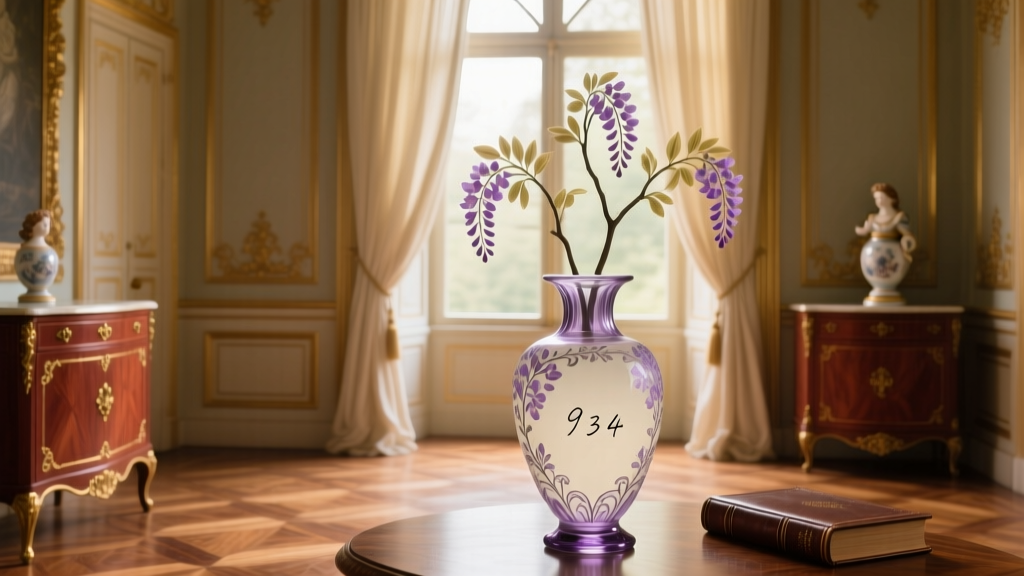
Steuben Vase 'Wisteria, 3 Branches' — Authenticity, Provenance, and Restoration Insights for the Signed 9¾-Inch Piece
Hummel Figurine No. 112 'I Just Resting' with Three-Line Mark: Identification, History, and Restoration Guidance

Smith-Corona Portable Typewriters: Engineering, Design, and Restoration Insights for Collectors and Conservators
Indian Basket Choctaw Cownose Handle Cabinet Pull: A 1900 Artifact in Context
The Railroad Bowl: Southern Pacific Prairie Mountain Wildflower — History, Identification, and Conservation of a Mid-Century American Ceramic Icon
Royal Bayreuth Box Tomato 3-Inch: Identification, Provenance, and Restoration Guidelines for Collectors

Hull Sanderson: The Quiet Legacy of British Cabinetmaking Excellence, 1920–1985
Tea Caddy, Delftware Flower Heads & Single Leaves, Initialed 'JW' — A 1737 Dutch Tin-Glazed Earthenware Masterpiece (4 3/4 in)