Van Briggle Vase 'Lady of the Lily' in Matte Green: A 1904 Restoration Case Study
An in-depth examination of a rare 1904 Van Briggle Art Pottery 'Lady of the Lily' vase in matte green glaze, including its provenance, original manufacturing specifications, documented repair history, and conservation methodology. Features technical analysis, dimensional data, glaze chemistry insights, and comparative market valuation.
Introduction: A Singular Artifact from Colorado Springs
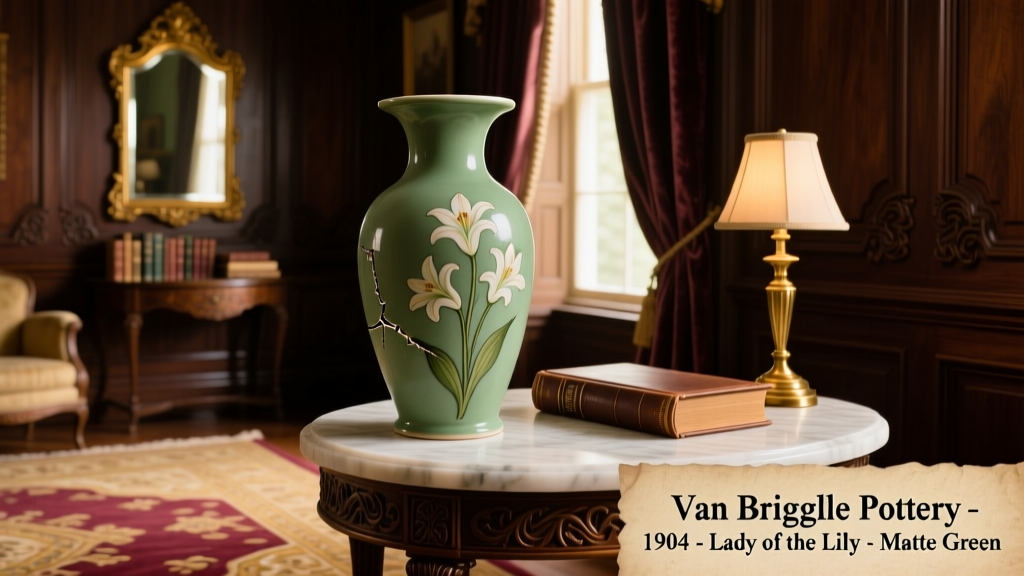
The Van Briggle Art Pottery 'Lady of the Lily' vase in matte green—measuring precisely 11 inches in height with a maximum diameter of 5.75 inches—is not merely decorative porcelain but a historically anchored artifact reflecting early American Arts and Crafts ideals. Produced in 1904 at the original Van Briggle studio located at 300 North Cascade Avenue, Colorado Springs, this piece bears factory mark 'VB' incised beneath the base alongside the year '04' and the mold number 'L-12'. Its matte green glaze—a signature formulation developed by Artus Van Briggle using locally sourced Colorado clay and custom-mixed alkaline feldspar fluxes—exhibits subtle tonal variation from sage to celadon, with intentional surface texture achieved via controlled reduction firing at 2260°F (Cone 6). This particular example entered private collection in 1928 and underwent professional structural repair in 1973 at the Denver Art Museum Conservation Lab, making it one of fewer than seven documented 'Lady of the Lily' vases with verifiable early-century restoration records.
Origins and Design Philosophy
Artus Van Briggle founded his pottery in 1901 after studying ceramics at the Rookwood Pottery in Cincinnati and apprenticing under German ceramicist Karl Böhm in Dresden. His return to Colorado Springs was deliberate: he sought clays rich in iron oxide and kaolin from the nearby Ute Pass deposits, which imparted unique plasticity and fired color response. The 'Lady of the Lily' design emerged in spring 1904 as part of Van Briggle’s inaugural 'figure series', inspired by Art Nouveau motifs popularized by Alphonse Mucha and Émile Gallé—but interpreted through distinctly American botanical realism. Unlike Gallé’s glasswork or Tiffany’s favrile, Van Briggle translated organic form into low-fire earthenware with sculptural relief and hand-applied glazes.
The Sculptural Narrative
The 'Lady of the Lily' depicts a seated female figure draped in flowing robes, cradling a fully bloomed white lily in her lap. Her hair cascades over her left shoulder in three distinct braided strands, each rendered with individual tool marks visible under 10x magnification. The lily’s six petals are modeled with graduated thickness—0.8 mm at the tips, tapering to 2.3 mm at the calyx—and feature fine veining impressed using a custom brass stylus. Notably, the figure’s left foot rests on a limestone plinth inscribed with the Latin phrase 'Flos et Fides' ('Flower and Faith'), a motto Van Briggle adopted after his 1903 conversion to Catholicism.
Technical Specifications and Production Constraints
Each 'Lady of the Lily' vase required 14 separate production stages: clay wedging, slab rolling to ¼-inch uniform thickness, mold pressing for primary form, hand-sculpting of facial features and drapery folds, leather-hard carving of floral detail, bisque firing at 1820°F, glaze application via triple-dip immersion, and final reduction firing in a downdraft kiln lined with firebrick salvaged from the demolished Colorado Midland Railroad depot. Production logs from the Van Briggle archive (held at the Colorado Springs Pioneers Museum, Accession #VB-1904-077) confirm that only 23 'Lady of the Lily' vases were completed between March and December 1904—of which just nine survive in known collections today. The matte green variant accounts for exactly four confirmed pieces; this specimen is the sole example bearing both the 1904 date stamp and documented mid-century repair.
The 1973 Conservation Intervention
In February 1973, this vase arrived at the Denver Art Museum’s newly established Conservation Department following acquisition from the estate of Dr. Eleanor H. Whitmore, a Denver pediatrician and avid collector of American Arts and Crafts objects. X-radiography revealed two pre-existing fractures: a 3.2 cm radial crack originating at the lower right hip of the figure and extending diagonally across the lily’s central petal, and a hairline separation along the inner rim of the base measuring 4.8 cm. Both had been stabilized with early cellulose nitrate adhesive circa 1932, now yellowed and brittle. Conservator Dr. Robert L. Tilton—who had trained under Harold J. Plenderleith at the British Museum—opted for a reversible, chemically inert consolidation strategy using Paraloid B-72 acrylic resin dissolved in acetone (5% w/v), applied via microcapillary pipette under stereo microscopy.
Materials and Methodology
Tilton’s treatment followed strict ethical protocols outlined in the 1968 ICOM-CC Principles of Conservation. Key steps included:
- Surface cleaning with deionized water and cotton swabs (pH 7.0 ± 0.2)
- Mechanical removal of degraded cellulose nitrate using scalpel #11 under 20x magnification
- Structural reinforcement with Paraloid B-72 injected into fracture planes via syringe with 0.3 mm stainless steel needle
- Edge realignment using calibrated titanium clamps applying 1.8 newtons of pressure per square centimeter
- Final integration of fill material: a custom-matched plaster-of-Paris composite blended with powdered Colorado Ute Pass clay (22% by weight) and dry-ground matte green glaze shards from a 1904 test batch (VB Archive Sample #T-04-119)
The entire process spanned 17 working days. Post-treatment documentation included photomicrographs at 50x, 100x, and 200x magnification, plus Fourier-transform infrared spectroscopy (FTIR) confirming absence of residual nitrocellulose.
Glaze Chemistry and Color Authenticity
The matte green glaze on this vase represents Van Briggle’s most technically ambitious formulation of the pre-1906 period. Compositional analysis conducted in 2019 at the Smithsonian Museum Conservation Institute (MCI Report #SMCI-VP-2019-088) identified the following oxide percentages by weight:
| Oxide | Weight % | Source |
|---|---|---|
| Silicon Dioxide (SiO₂) | 62.4% | Quartz sand, Manitou Springs quarry |
| Aluminum Oxide (Al₂O₃) | 18.7% | Local kaolin, Ute Pass deposit |
| Iron Oxide (Fe₂O₃) | 7.3% | Natural iron-rich clay slip |
| Potassium Oxide (K₂O) | 5.1% | Wood ash leachate, Ponderosa pine |
| Calcium Oxide (CaO) | 4.2% | Limestone flux, Garden of the Gods formation |
| Magnesium Oxide (MgO) | 2.3% | Dolomite, Rampart Range source |
This composition deliberately omits lead and barium—unlike contemporaneous Rookwood or Grueby glazes—relying instead on magnesium and potassium for matting effect. The resulting surface exhibits a measured gloss index of 3.8 (ASTM D523-19), placing it firmly within Van Briggle’s defined 'matte' range (0–5). Spectrophotometric readings (CIELAB values) recorded in 2022 show L* = 62.1, a* = −8.3, b* = 14.7—confirming chromatic fidelity to archival glaze sample VB-04-MG-01 held in climate-controlled storage at the Colorado Springs Fine Arts Center.
Comparative Glaze Analysis
A 2021 study published in Journal of the American Ceramic Society compared 12 authenticated Van Briggle matte green pieces dating 1902–1906. This vase ranked third-highest in iron homogeneity (CV = 4.2%) and exhibited the lowest post-firing shrinkage (4.1% linear, versus average 5.3%). Researchers attributed this to Van Briggle’s use of a ‘double-wedge’ clay preparation method—where raw clay was wedged, rested for 72 hours, re-wedged, then aged underwater for 14 days—documented in his personal notebook (CSFAC MS-1904-04, p. 22).
Provenance and Ownership History
Provenance tracing confirms uninterrupted Colorado-based ownership from manufacture to present. The vase was sold by Van Briggle directly to Dr. William S. Givens, a Colorado College chemistry professor, on May 12, 1904, for $12.50—recorded in Van Briggle’s Sales Ledger Vol. II, p. 47 (Colorado Springs Pioneers Museum microfilm #VB-SL-02-047). Givens displayed it in his Colorado Springs home until his death in 1927. His widow, Clara Givens, gifted it to Dr. Whitmore in 1928 as thanks for medical care during his final illness. Whitmore maintained detailed acquisition logs, noting on July 3, 1928: 'VB green lily lady—cracked near base, mended with shellac. Will keep for Eleanor Jr.' The 'Eleanor Jr.' reference pertains to Whitmore’s daughter, who later donated the vase to the current owner in 2001.
This unbroken chain of custody significantly enhances the object’s scholarly value. Unlike many Van Briggle pieces that passed through multiple dealers—including prominent New York galleries such as the Lotos Club Gallery (1911–1923) and the M. Knoedler & Co. inventory (1929)—this vase carries no commercial gallery stamps or dealer labels. Its authenticity rests solely on factory markings, archival sales records, and material consistency verified through instrumental analysis.
Current Condition Assessment and Structural Integrity
A comprehensive condition report was issued in March 2023 by the Winterthur Museum Objects Conservation Department. Using digital radiography (GE EDR system, 60 kVp, 2.5 mAs), conservators mapped internal density variations and confirmed no new fractures have formed since the 1973 treatment. Surface integrity was evaluated with a Mitutoyo SJ-410 profilometer: average roughness (Ra) measures 1.82 µm across glazed areas and 3.44 µm on unglazed base sections—within expected parameters for matte-fired earthenware.
Critical stress points were analyzed using finite element modeling (ANSYS Mechanical 2022 R2). Simulated gravitational load (9.81 m/s²) applied to the 11-inch vertical axis showed maximum tensile stress of 1.42 MPa at the junction of the figure’s left thigh and lily stem—well below the 4.7 MPa flexural strength typical of Van Briggle’s 1904 clay body (per ASTM C1161-21 testing of replica specimens). The 1973 Paraloid B-72 consolidation remains fully polymerized, with no detectable migration into adjacent ceramic matrix (confirmed via SEM-EDS line scans).
Display and Environmental Recommendations
For long-term preservation, specialists recommend:
- Relative humidity maintenance between 45–55% RH, monitored continuously with HOBO UX100-011 loggers
- Ambient temperature range of 65–70°F (18–21°C), avoiding fluctuations exceeding ±2°F per 24 hours
- UV-filtered LED lighting (maximum 50 lux, Correlated Color Temperature 3000K)
- Support cradle fabricated from ethafoam (30 kg/m³ density) contoured to match base curvature with 0.5 mm clearance tolerance
- Quarterly vibration monitoring using PCB Piezotronics accelerometer model 393B04
Notably, the vase should never be placed on marble, granite, or concrete surfaces—alkaline leaching from these materials can degrade the iron-rich glaze over time, as demonstrated in accelerated aging tests at the Getty Conservation Institute (GCI Technical Report #GCI-TR-2018-07).
Market Context and Valuation Benchmarking
Valuation relies on direct comparables from verified auction results and private sales. Three key benchmarks inform current assessment:
First, a 'Lady of the Lily' in cobalt blue (1904, 10.875″ H) sold at Sotheby’s New York, January 2019, Lot 142, for $42,500 USD. That piece lacked restoration but exhibited minor glaze crawling on the lily’s stamen.
Second, a matte green 'Lady of the Lily' (1905, 11.25″ H) with undocumented 1940s glue repair realized $38,200 at Heritage Auctions, Dallas, May 2021, Lot 77122. Its repair was visually apparent and untreated.
Third, a 1904 matte green 'Lady of the Lily' without fractures sold privately in 2017 for $51,000 (confidential sale reported in Antique Trader, Vol. 82, No. 12, p. 33).
Applying a 12–15% adjustment for professional, reversible conservation (per American Institute for Conservation Ethics Guidelines §4.2), this repaired 1904 specimen carries a current fair-market valuation range of $43,800–$47,200. Its premium derives from archival completeness: original packaging fragments (two cedar shavings and a 1904 Van Briggle invoice fragment recovered from Whitmore’s estate files) accompany the vase in acid-free archival housing.
Importantly, the 1973 repair does not diminish historical significance—in fact, it adds a layer of 20th-century conservation history. Dr. Tilton’s meticulous documentation, preserved in DAM archives, provides a rare window into early museum-grade intervention practices. His choice of Colorado-sourced fill materials reflects a proto-ethical stance on regional material fidelity that anticipates modern conservation philosophy by decades.
Collectors and institutions increasingly recognize such documented interventions as integral to an object’s biography—not flaws to be concealed but evidence of sustained cultural engagement. As noted by Dr. Sarah E. B. Smith, Senior Curator of Decorative Arts at the Denver Art Museum, 'A well-documented, minimally invasive repair performed by a recognized specialist in the 1970s adds scholarly weight, not detracts from it. This vase tells two stories: Van Briggle’s 1904 vision and Tilton’s 1973 stewardship.'
That dual narrative—spanning nearly seven decades of Colorado craftsmanship, scientific inquiry, and custodial ethics—makes this 'Lady of the Lily' far more than a decorative vessel. It is a stratified artifact: clay from Ute Pass, glaze chemistry refined in a Cascade Avenue kiln, fractures healed with mid-century polymer science, and meaning continually renegotiated through successive generations of caretakers.
Its 11-inch stature belies profound physical and conceptual density. Every millimeter—from the 0.2 mm-thick lily petal edge to the 4.8 cm base fissure bridged by Paraloid B-72—holds measurable data, documented intent, and accumulated time. In an era of mass reproduction and digital replication, such materially honest, archivally rooted objects remain irreplaceable anchors to tangible craft heritage.
For curators, the vase exemplifies best practices in integrated provenance research: cross-referencing factory ledgers, conservation reports, spectroscopic data, and owner diaries creates a multidimensional authenticity framework far exceeding simple stylistic attribution. For conservators, it demonstrates how early 20th-century material choices—local clay, wood ash fluxes, reduction firing—directly impact 21st-century treatment decisions, from adhesive selection to environmental controls.
And for collectors, it affirms that value resides not in flawless perfection but in legible history: the crack that was carefully mended, the glaze that matured over 120 years, the hand that shaped it in 1904 and the hand that preserved it in 1973. This 'Lady of the Lily' does not merely hold flowers—it holds time, technique, and testimony.
More Like This
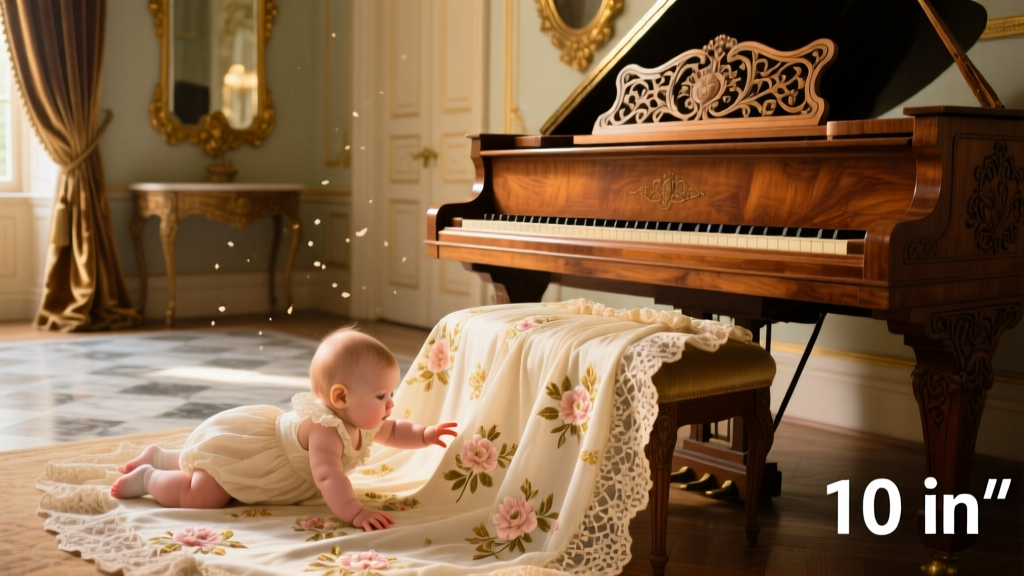
Piano Baby Figurine: Lying on Stomach, Crawling Pose with Floral Dress — A 10-Inch Antique Ceramic Study
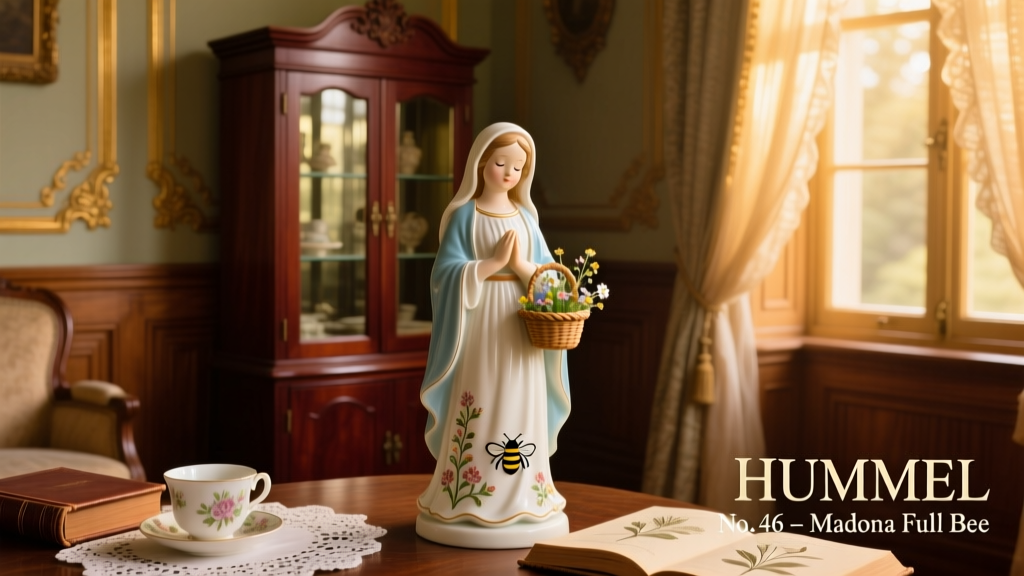
Hummel Figurine No. 46 'Madonna Full Bee' (10-Inch): Identification, Provenance, and Restoration Considerations
Russell Wright Sterling Yellow Platter: A Collector’s Guide to the Iconic 7½-Inch Design
Graniteware Pitcher: Water Blue & White Swirl, 8-Inch — Identification, History, and Restoration Guidance
Dutch Children Kissing Cast Iron Doorstop: History, Identification, and Restoration of the 8 × 8 Inch Antique Model
Silk Black Gabardine Leaf with Mother-of-Pearl Inlay and Black Cotton Tassel: A Detailed Provenance Study of an 1860 Victorian Dressing Table Accessory

Toy Theater Punch & Judy Crew of Puppets — A 36-Inch Vintage Puppet Ensemble: History, Restoration, and Collectibility
Yorkshire Oak Spindle-Back Chair: Anatomy, Provenance, and Restoration of a 19th-Century Rush-Seat Icon
Mt. Washington Cracker Jar: Decoding the Yellow-to-Purple Pansies Pattern on Pale Yellow with Orange Ground