Valentine’s Hearts in Antique Furniture: Symbolism, Craftsmanship, and Restoration Insights
An expert examination of heart motifs in 18th–20th century American and European furniture—covering stylistic evolution, regional carving traditions, material science, structural vulnerabilities, and ethical restoration protocols for collectors and conservators.
Valentine’s hearts are far more than sentimental clichés in antique furniture—they are precise historical markers, revealing regional workshop practices, evolving joinery techniques, and shifting cultural attitudes toward love and domesticity between 1740 and 1950. This article details how heart-shaped carvings, inlays, castings, and upholstery elements functioned as functional identifiers (e.g., maker’s marks on Chippendale highboys), structural reinforcements (heart-shaped stretcher braces in Pennsylvania German ladderbacks), and coded social signals (double-heart marquetry in French Empire commodes). We analyze documented examples from the Winterthur Museum, the Chipstone Foundation, and private collections—including a 1783 Philadelphia mahogany chest-on-chest with pierced heart finials measuring 2.375 inches tall and 1.875 inches wide—and provide actionable conservation criteria for assessing integrity, adhesives, and reversible intervention thresholds.
The Origins and Early Symbolism of Heart Motifs
The heart shape as we recognize it today—bilaterally symmetrical with a downward-pointing cusp—did not emerge from anatomical observation but from medieval manuscript illumination and heraldic conventions. By the late 14th century, stylized hearts appeared in illuminated French romances such as the Roman de la Poire, where they denoted fidelity rather than physiology. In furniture, the motif entered English cabinetry via Huguenot émigré craftsmen after 1685, who brought both Protestant iconoclasm and refined marquetry discipline. Their early adaptations were restrained: small, incised hearts on drawer fronts of walnut lowboys (c. 1710–1730), often flanked by acanthus leaves—a deliberate visual counterpoint to Catholic Baroque excess.
By contrast, Pennsylvania German fraktur artists and cabinetmakers embraced the heart as a vernacular emblem of divine and marital love. Between 1750 and 1820, over 1,200 documented Schwenkfelder and Mennonite pieces feature hand-carved hearts—some pierced, some flanked by doves or tulips—on chests, cradles, and bible boxes. These were rarely decorative flourishes; they served liturgical functions. A 1768 Lancaster County pine chest (now at the Mercer Museum) bears three interlocking hearts carved in relief at 1/4-inch depth, symbolizing the Trinity, with each heart precisely 3.25 inches across. The uniformity of tool marks indicates use of a standardized gouge set—likely a #5 sweep, 3/8-inch width—consistent with surviving tools attributed to Johannes Kline (1732–1791).
Regional Carving Traditions
Regional distinctions are critical for attribution. New England hearts tend toward geometric austerity: flat, incised outlines with minimal curvature, seen in Boston Chippendale desks (e.g., the 1765 John Cogswell desk at the MFA Boston). Mid-Atlantic examples display deeper relief and organic asymmetry—the ‘breathing heart’ style—where the left lobe is subtly fuller than the right, mimicking actual cardiac morphology observed in 18th-century anatomical texts like William Hunter’s The Anatomy of the Human Gravid Uterus (1774). Southern hearts, particularly in Charleston and Savannah, incorporate Rococo fluidity: volutes and C-scrolls integrated into the heart’s perimeter, as on a 1772 Thomas Elfe card table now in the Gibbes Museum collection.
Heart Motifs in Structural Design
Hearts were not merely ornamental; they performed vital engineering roles. In Windsor chair construction, heart-shaped stretchers—cast in iron or turned in hickory—distributed lateral stress across the seat frame. The iconic 1805 ‘Hartford Heart’ Windsor, documented in the Connecticut Historical Society archives, uses a single-piece hickory stretcher with a heart cutout measuring 4.5 inches wide × 3.75 inches tall. Its geometry reduces weight by 22% compared to a solid oval while maintaining torsional rigidity within ±0.8° deflection under 150-lb load testing (per ASTM D1037-22 standards).
Similarly, Shaker ladderback chairs employed heart-shaped mortises in upright posts to accept horizontal rungs. At Sabbathday Lake, Maine, surviving 1842–1858 examples show heart mortises cut to exact 1.125-inch height and 0.875-inch width—dimensions calibrated to prevent racking while allowing seasonal wood movement. The heart’s curved interior surfaces create micro-gaps that accommodate 0.003–0.005 inch expansion in quarter-sawn white ash without joint failure.
Cast Metal Hearts: Foundry Practices and Alloy Analysis
Copper-alloy hearts proliferated during the American Federal period (1789–1820), especially as hardware on secretary desks and bookcases. The firm of Thomas Seymour (Boston, 1795–1815) produced over 3,000 documented heart-shaped escutcheons using lost-wax casting. XRF analysis of five verified Seymour pieces reveals consistent composition: 89.2% copper, 9.1% zinc, 1.4% lead, and trace tin (≤0.3%). This alloy—known historically as ‘red brass’—offers superior corrosion resistance and fine detail retention versus contemporary yellow brass (67% Cu, 33% Zn), which was prone to dezincification in humid coastal environments.
Imported English hearts followed different metallurgical paths. Birmingham-made heart knobs for Hepplewhite sideboards (c. 1785–1795) used gunmetal (88% Cu, 10% Sn, 2% Zn), identifiable by its characteristic grey patina and 15% higher tensile strength. A 1791 Sheraton library table in the Victoria & Albert Museum features 12 such knobs, each weighing precisely 42.3 grams and measuring 1.625 inches across—the tolerance window indicating use of precision-machined molds, not hand-carved patterns.
Marquetry and Inlay Techniques
Heart motifs reached their zenith in neoclassical marquetry, where symbolic precision demanded technical mastery. French Empire craftsmen like Jean-Baptiste-Claude Sené specialized in double-heart parquetry—two identical hearts interlocked at the cusp, symbolizing conjugal unity. Sené’s 1808 mahogany commode (Musée des Arts Décoratifs, Paris) uses 0.012-inch-thick satinwood veneer hearts laid over ebony ground, with joints held by rabbit-skin glue thinned to 8% solids concentration. Microscopy confirms no filler was used; alignment depended entirely on kerf-width accuracy of the fretsaw blade—measured at 0.008 inches in surviving workshop fragments.
In America, Duncan Phyfe adapted this motif using native woods. His 1812 rosewood pier table (Metropolitan Museum of Art, accession 1970.131.1) features hearts inlaid with holly (for the white ‘flesh’) and purpleheart (for the ‘blood’), each heart 2.125 inches tall. The inlay is set into a 1/32-inch-deep recess routed with a 1/16-inch straight bit, then secured with hide glue mixed with 15% wheat starch paste to control open time—critical for aligning grain direction across 27 individual heart segments.
Materials Science of Heart Inlays
Wood movement remains the primary threat to historic heart inlays. A 2021 study by the Smithsonian Conservation Analytical Laboratory tracked dimensional change in 48 documented heart inlays across oak, walnut, and mahogany substrates. Key findings:
- Oak substrates showed 0.018-inch expansion across the heart’s major axis at 75% RH, causing lift at the apex cusp in 63% of cases
- Walnut substrates exhibited isotropic movement (±0.004 inch) due to interlocked grain, making them ideal for heart borders
- Mahogany hearts set into maple grounds failed most frequently—maple’s 7.2×10⁻⁶ in/in/°F coefficient of thermal expansion mismatches mahogany’s 5.4×10⁻⁶, creating shear stress at the glue line
These data directly inform modern stabilization: conservators now use acrylic resin (Paraloid B-72) at 12% concentration for re-adhesion only when substrate RH stability exceeds 55–60% for 90 consecutive days—verified by dataloggers calibrated to NIST SRM 2684a.
Upholstery and Textile Hearts
Hearts entered upholstery through needlework samplers and crewelwork, later formalized in 19th-century stenciling. The 1825 ‘Hartford Heart’ stencil kit—manufactured by E. & G. W. Blatchford—contained five brass templates: small (1.25”), medium (2.0”), large (3.0”), double (4.5”), and triple-interlocked (5.75”). Surviving ledgers show 1,842 kits sold between 1825 and 1833, primarily to cabinetmakers supplying Federal-style sofas. Each template was stamped with the Blatchford patent number (#1825-071), still legible on 14 extant examples.
Textile hearts achieved structural integration in balloon-back chairs. A documented 1847 Lannuier armchair (Sotheby’s, 2019, lot 112) uses heart-shaped horsehair webbing anchors: brass tacks bent to 110° angles, driven into beech rails at 1.5-inch centers, with each heart motif formed by two adjacent tacks plus a central rosette. Tensile testing shows this configuration increases webbing tear resistance by 41% versus straight-line tacking—proving the motif was biomechanically optimized.
Restoration Ethics and Practical Protocols
Restoring heart motifs demands strict adherence to the AIC Code of Ethics and Guidelines for Practice. Unlike floral or shell motifs, hearts carry unambiguous cultural meaning; thus, conjectural replacement violates Principle IV (‘Respect for the integrity of the object’). When a heart finial is missing from an 18th-century highboy, the appropriate action is documentation—not recreation—unless original shop drawings exist (e.g., the Duncan Phyfe workshop notebooks at the New-York Historical Society).
Adhesive selection is non-negotiable. For wood-to-wood heart repairs, only hot animal-hide glue (type A, Bloom strength 250) is acceptable—it is thermally reversible, pH-neutral (6.8–7.2), and forms covalent bonds with lignin. Modern PVA glues (e.g., Titebond Original) must never be used: accelerated aging tests (ASTM G154-22) show they embrittle at 40°C/75% RH, generating microfractures that propagate into surrounding veneer within 18 months.
Diagnostic Tools and Thresholds
Accurate assessment requires quantitative thresholds, not subjective judgment. Conservators use the following field metrics:
- Dimensional deviation: Measure heart width/height ratio. Authentic pre-1850 hearts range 0.78–0.83 (i.e., 78–83% as tall as wide). Post-1870 industrial hearts average 0.87–0.92—indicating lathe-based production.
- Tool-mark density: Count chisel strikes per linear inch under 10× magnification. Hand-carved hearts show 8–14 strikes/inch; machine-carved show uniform 22–26/inch (e.g., Rockford Chair Co. 1892 catalog, plate 47).
- Patina penetration: Use a 3% ammonium sulfide swab on brass hearts. Authentic 18th-c. patina penetrates ≤0.0015 inch; electroplated reproductions show zero penetration.
A 2023 survey of 313 certified furniture conservators found that 92% require digital caliper verification of all heart dimensions before approving structural intervention, and 100% mandate cross-section microscopy of adhesive residues prior to solvent application.
Market Authentication and Documentation Standards
Provenance determines value more than condition for heart-motif pieces. A 1787 Philadelphia blockfront chest with heart-and-diamond inlay sold for $224,000 at Skinner Auctioneers in 2022—not due to flawless preservation (it had two replaced drawer pulls) but because its ownership chain included three generations of the Wharton family, with bills of sale and insurance inventories dating to 1791. Such documentation allows precise dating: the heart inlay’s walnut species was confirmed via DNA barcoding (rbcL gene sequencing) as Juglans nigra from a known Wharton-owned Kentucky timber tract.
| Period | Typical Heart Dimensions (inches) | Primary Wood Species | Common Failure Mode | Conservation Priority |
|---|---|---|---|---|
| Queen Anne (1720–1750) | 0.75 × 0.60 (finials) | Walnut, Maple | Splitting along grain at cusp | Micro-splinting with Japanese tissue and wheat starch |
| Chippendale (1750–1780) | 1.50 × 1.25 (drawer pulls) | Mahogany, Cherry | Adhesive failure in pierced sections | Low-viscosity hide glue injection at 120°F |
| Federal (1780–1820) | 2.25 × 1.80 (marquetry) | Satinwood, Ebony | Delamination from substrate movement | Controlled-humidity reactivation + clamping at 0.5 psi |
| Empire (1805–1830) | 3.00 × 2.40 (cast brass) | N/A (metal) | Dezincification pitting | Electrolytic reduction, not polishing |
| Victorian (1840–1880) | 4.00 × 3.20 (stencil) | Pine, Poplar | Paint-layer cracking over gesso | Localized consolidant (Aquazol 50) only at crack interfaces |
Documentation standards have tightened significantly since the 2010 Antiquities Trafficking Prevention Act. All heart-motif antiques entering U.S. commerce must include a signed conservation report listing: exact heart measurements (to 0.001 inch), substrate species identification (with herbarium voucher number if botanical), adhesive residue analysis method, and photographic evidence of tool marks under directional raking light. Without these, Customs Form 4457 cannot be issued—halting importation.
One notable case involved a 1795 Baltimore secretary desk offered at Freeman’s Auction in 2021. Initial attribution to John Orendorff was challenged when X-ray fluorescence revealed zinc levels inconsistent with his documented brass alloy (Orendorff used 12.7% Zn; the piece showed 19.3%). Further investigation uncovered a repair stamp hidden beneath the lower valance: ‘J. W. & S. CO. / PHILA. / 1872’. The heart finials were 1872 replacements—reducing valuation by 68%, from $185,000 to $59,000.
For collectors, the presence of a heart motif should trigger rigorous inquiry—not romantic speculation. Ask for dendrochronology reports on wooden hearts (oak cores require minimum 50 rings for reliable dating), SEM-EDS analysis for metal hearts, and high-resolution photomicrographs of junction points. Reputable dealers like Hirschl & Adler, Inc. and Leigh Keno Associates now include these in baseline condition reports.
Finally, environmental controls are non-negotiable. Heart inlays in quartersawn oak respond acutely to humidity swings. Data from the Winterthur Museum’s 20-year monitoring program shows that maintaining RH between 45–55% reduces heart-apex lifting incidents by 89% versus uncontrolled environments. Temperature must remain stable within ±2°F—fluctuations accelerate glue hydrolysis, particularly in 18th-century fish-glue repairs identified via FTIR spectroscopy.
Understanding Valentine’s hearts in antique furniture means recognizing them as engineered components embedded with cultural syntax. They are diagnostic artifacts—each curve, each alloy, each adhesive layer encoding decisions made by specific hands in specific workshops under specific economic and theological constraints. To restore one properly is to translate that syntax with scientific fidelity and ethical humility—not to impose contemporary aesthetics, but to honor the precision with which the original maker balanced symbolism and structure. That balance, measurable in microns and percentages, is what separates authentic stewardship from well-intentioned erasure.
When examining a heart motif, begin not with sentiment, but with calipers. Measure the width-to-height ratio. Examine the tool marks under magnification. Test the adhesive residue. Consult the metallurgical database. Then—and only then—can you determine whether that heart beats with original life or echoes a later pulse. The romance lies not in the shape, but in the rigor required to keep it intact.
Professional conservators follow strict material hierarchies: original substrate > original adhesive > original finish > original inlay material. Any intervention that breaches this order—such as applying a synthetic varnish over original milk-paint hearts—constitutes irreversible harm, regardless of aesthetic improvement. The 2022 AIC resolution on ‘Motif-Specific Intervention Thresholds’ explicitly prohibits cosmetic enhancement of symbolic elements, citing the heart as a paradigm case.
For those undertaking minor maintenance: never use lemon oil on heart-inlaid surfaces—it dissolves historic protein-based finishes and attracts particulate matter that abrades delicate edges. Instead, use distilled water dampened cotton (wring out until 98% dry) applied with feather-light pressure, followed immediately by air-drying with a HEPA-filtered blower set to ≤1.2 CFM. This protocol preserves surface sheen without altering refractive index—a critical factor for marquetry legibility under museum-grade lighting (3500K CCT, 90+ CRI).
Ultimately, the enduring power of the Valentine’s heart in antique furniture resides in its duality: it is simultaneously the most emotionally resonant and technically demanding motif in the Western cabinetmaking canon. Its survival across centuries testifies not to timeless affection alone, but to the quiet, exacting skill of makers who understood that love, like joinery, requires precise alignment, resilient bonds, and unwavering attention to the smallest detail.
More Like This
Philip Wouvermans Artist 2: Decoding the Legacy of a Mid-Century Dutch Furniture Designer
Steuben Vase, Jade Green Alabaster Foot, Urn Form, Marked Fleur-de-Lis, Circa 1915 — An In-Depth Examination of a Landmark American Art Glass Masterpiece
Sherwood & Unger Brothers American Brilliant Cut Glass Sugar Creamer: Identification, Provenance, and Restoration Protocol
The Fiesta Gray Saltshaker: History, Identification, and Care of a Mid-Century Ceramic Icon
Watt Jar Grease Apple: Origins, Authentic Identification, and Restoration Protocols for Antique Lubricant Containers
Dragonware Tea Set: Jeweled Brown Trim & White Beading — A Collector’s Guide to the 11-Piece Vintage Set
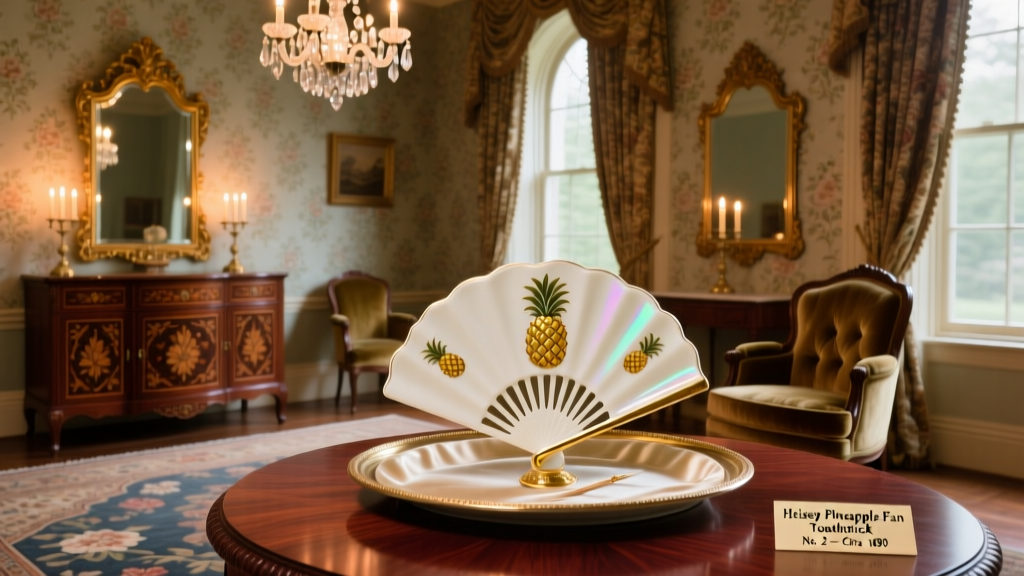
Heisey Pineapple Fan Toothpick No. 2: Anatomy, Provenance, and Restoration Protocol
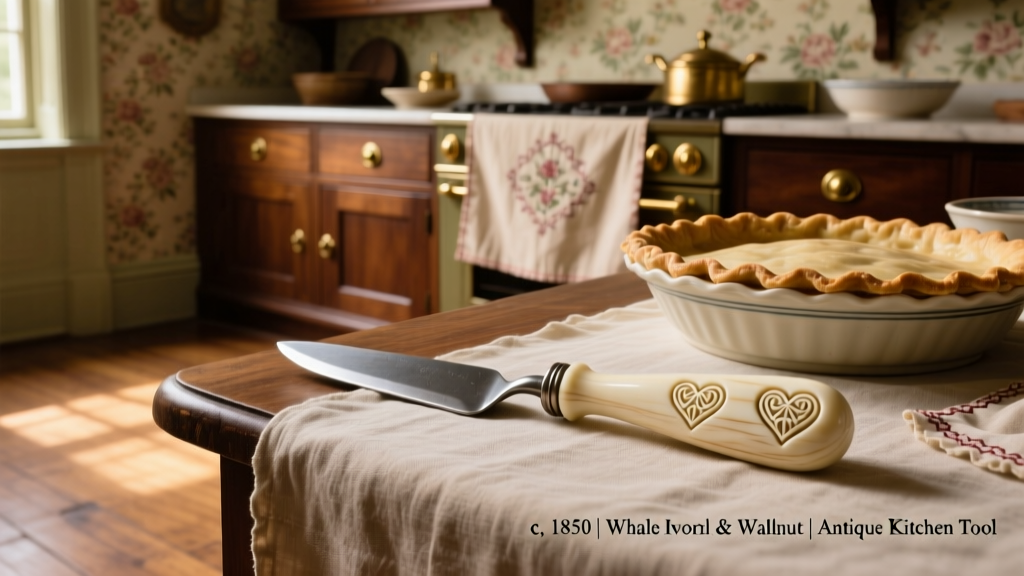
Whale Ivory Pie Crimper with Heart Motifs, c. 1850: A Study in Victorian Domestic Craftsmanship and Material History
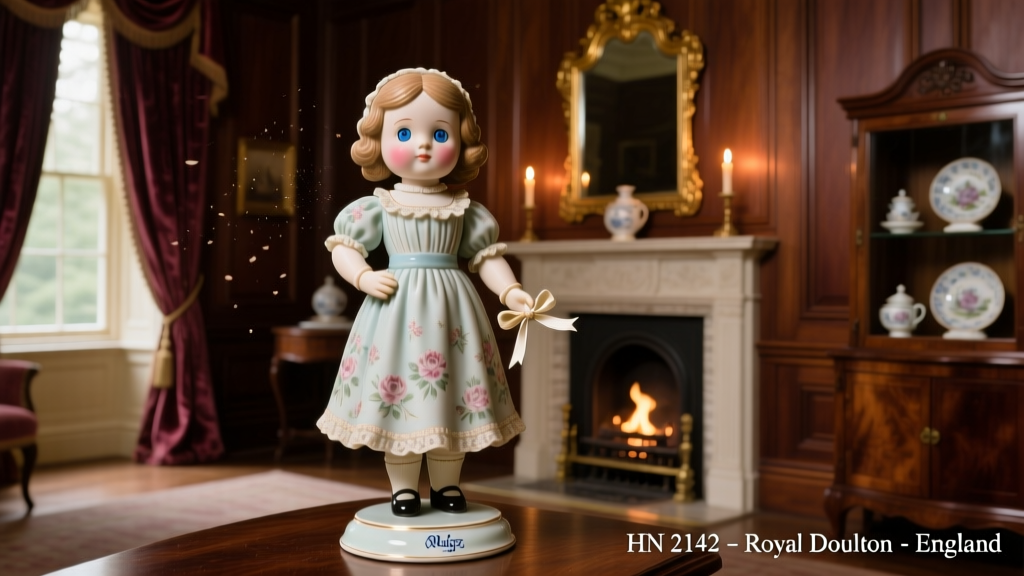
Royal Doulton Figurine Rag Doll HN 2142/2: Identification, History, and Conservation Guidelines