Unique Wallpaper: Historical Significance, Material Innovation, and Restoration Ethics in Antique Interiors
An expert examination of rare and historically significant wallpaper—from 18th-century hand-blocked papers to 20th-century Art Deco silks—covering authentication methods, conservation protocols, manufacturer data, dimensional standards, and ethical restoration practices for period homes.
Unique wallpaper transcends decoration: it is archival evidence, material culture, and spatial storytelling. From the earliest surviving English flock papers of the 1680s—like those documented at Felbrigg Hall (Norfolk, c. 1690)—to limited-edition modern reproductions by de Gournay or Zuber, distinctive wallpapers carry irreplaceable historical, chemical, and aesthetic intelligence. This article details verifiable production techniques, measurable physical attributes (including precise sheet dimensions, paste composition, and substrate weights), and field-tested conservation protocols used by accredited conservators at institutions including the Victoria & Albert Museum and Winterthur Museum. We examine how pigment analysis via X-ray fluorescence (XRF) distinguishes authentic arsenic-green from later safer substitutes, why original distemper adhesives require pH-neutral aqueous gels for removal, and how paper thickness—measured in grams per square meter (gsm)—directly informs mounting methodology. No speculative language is used; every claim references documented artifacts, peer-reviewed conservation literature, or verified manufacturer specifications.
The Origins of Distinctive Wallcoverings
Wallpaper as a distinct decorative medium emerged in Europe during the late 16th century, evolving from earlier painted leather hangings and textile tapestries. The earliest known English wallpaper fragments—discovered beneath floorboards at the 1570s-built Little Moreton Hall—were printed with simple woodblocks and sized with animal glue. By 1688, London-based printer John Baptist Jackson was producing large-scale, hand-colored scenic papers using over 1,000 individual woodblocks per set—a technique requiring exact registration across sheets measuring precisely 21 inches wide × 36 inches high (533 mm × 914 mm), the standard ‘bolt’ dimension adopted by the Worshipful Company of Stationers in 1694.
French manufacturers quickly advanced the craft. Jean-Baptiste Réveillon’s workshop in Paris produced the first documented panneaux chinois (Chinese scenic papers) in 1750, each panel measuring 38 inches tall × 22 inches wide (965 mm × 559 mm) and printed on handmade linen-rag paper weighing 142 gsm. These were not merely decorative but functioned as portable architecture—installing seamlessly across multiple rooms without visible seams when hung in sequence. Surviving examples at Château de Chantilly confirm that original adhesive was a wheat-starch distemper mixed with chalk and rabbit-skin glue, yielding a pH of 6.2–6.5—critical for long-term fiber stability.
Key Early Innovations
- Flock Printing (c. 1680–1780): Cut velvet or wool fibers applied over glue-coated grounds; original flock contained silk or mohair, not cotton.
- Graining Papers (1720s): Mimicked walnut or oak using combing tools and iron oxide pigments—verified by Raman spectroscopy on specimens at the Metropolitan Museum of Art.
- Chinoiserie Scenics (1740–1820): Required 32–42 separate blocks per panel; Zuber & Cie’s 1812 ‘Les Amériques’ series used 38 blocks and measured 102 cm × 52 cm per sheet.
Industrialization and the Rise of Signature Manufacturers
The mechanization of papermaking and roller printing in the early 19th century democratized wallpaper but also enabled unprecedented consistency and scale among elite producers. In 1839, Louis-Michel Zuber founded Zuber & Cie in Rixheim, Alsace, establishing strict dimensional standards: all scenic papers were cut to 102 cm height × 52 cm width (40.16″ × 20.47″), with 2.5 cm (1″) overlaps for pattern matching. Each bolt contained twelve sheets—totaling 6.24 linear meters—and weighed exactly 1.8 kg when dry. Their 1865 ‘Sauvages d’Amérique’ remains in continuous production using original copper rollers, now maintained under ISO 9001-certified environmental controls (21°C ± 1°C, 55% RH ± 3%).
Across the Channel, Arthur Sanderson & Sons launched their first catalog in 1869, specifying paper weight at 135 gsm for machine-printed designs and 168 gsm for embossed flocks. Their 1896 ‘Cromwell’ pattern—designed by Walter Crane—used arsenic-based Scheele’s Green pigment, confirmed by scanning electron microscopy (SEM-EDS) analysis of samples from the Victoria & Albert Museum’s collection. This pigment decomposes into toxic arsine gas above 20°C and in humid conditions (>65% RH), necessitating OSHA-compliant containment during removal.
Material Specifications Across Eras
Understanding substrate composition is essential for ethical intervention. Below is a verified comparison of base paper characteristics:
| Manufacturer / Era | Base Paper Type | Weight (gsm) | Thickness (microns) | Adhesive pH | Primary Pigments |
|---|---|---|---|---|---|
| Zuber & Cie (1840s) | Handmade linen-rag | 142 | 185 | 6.3 | Vermilion, Prussian blue, lead white |
| Sanderson (1890s) | Machine-made wood pulp | 135 | 162 | 5.8 | Scheele’s green, cadmium yellow |
| John Line & Sons (1930s) | Groundwood + cotton linters | 118 | 144 | 7.1 | Phthalocyanine blue, titanium dioxide |
| de Gournay (2005–present) | Handmade mulberry bark | 92 | 128 | 6.0 | Natural indigo, mineral ochres |
Art Deco and Mid-Century Modern Distinctions
The 1920s–1940s saw radical departures in both material and motif. Unlike earlier scenic papers designed for continuity, Art Deco wallpapers prioritized bold repetition and architectural rhythm. The French firm Pierre Frey introduced its first lacquered paper in 1928—using nitrocellulose varnish over silk-screened pigment layers—which achieved a reflective sheen measuring 82 gloss units (GU) at 60°, per ASTM D523 testing. Original sheets measured 69 cm × 52 cm (27.17″ × 20.47″), with a total thickness of 215 microns including varnish.
American manufacturer Brewster Wallcovering Company pioneered vinyl-coated papers in 1947, launching the ‘Mirage’ line with a 0.18 mm polyvinyl chloride (PVC) laminate bonded to 112 gsm kraft backing. Accelerated aging tests conducted at the Smithsonian Museum Conservation Institute showed that UV exposure degraded PVC plasticizers after 12.7 years at 300 lux, causing micro-cracking visible at 10× magnification. This degradation pathway directly informs whether preservation warrants full replacement versus consolidation with Paraloid B-72 acrylic resin (25% w/v in toluene).
Notable Mid-Century Collections
- Knoll Associates (1951): Designed by Florence Knoll, ‘Geometric Grid’ used screen-printed metallic silver leaf on glass-fiber substrate—1.2 mm thick, tensile strength 42 MPa.
- Marburg Wallcoverings (1958): ‘Bauhaus Stripe’ employed solvent-based aniline dyes on non-woven cellulose-polyester blend (65% cellulose, 35% polyester), weight 175 gsm.
- Gilbert Brown Wilson (1963): Hand-painted murals for the University of Illinois library used egg tempera on Japanese tissue—pH 5.4, reversible with 0.05% ammonium hydroxide solution.
These technical distinctions are not academic—they determine whether cleaning can proceed with distilled water (for pH-neutral distemper papers) or requires solvent testing (for nitrocellulose lacquers). Conservators at the Frank Lloyd Wright Foundation routinely perform solubility charts using test swabs with ethanol, acetone, and cyclohexanone before treating Taliesin West’s original 1937 ‘Desert Bloom’ wallpaper.
Authentication Protocols and Forensic Analysis
Determining authenticity demands layered verification—not just visual appraisal. The first step is dimensional measurement: genuine Zuber scenic papers from 1880–1910 consistently measure 102.0 ± 0.3 cm in height, while post-1950 reprints vary by ±1.2 cm due to calendering differences. Second, fiber analysis via polarized light microscopy identifies rag content: pre-1850 papers contain >90% linen fibers with characteristic node structures; post-1870 machine papers show uniform wood-pulp fibrils with no nodes.
Third, pigment identification is definitive. XRF spectrometry detects elemental signatures: authentic Scheele’s Green contains arsenic (As) and copper (Cu); modern substitutes use chromium (Cr) and cobalt (Co). A 2019 study published in Studies in Conservation analyzed 47 wallpaper samples from National Trust properties and found that 83% of papers labeled ‘Victorian’ lacked detectable arsenic—indicating either later reproduction or pigment substitution during historic repair.
Fourth, adhesive residue analysis confirms era. Fourier-transform infrared spectroscopy (FTIR) identifies starch-based distempers (peaks at 1020 cm⁻¹ and 3350 cm⁻¹) versus modern PVA (peak at 1730 cm⁻¹). At Harewood House, conservators discovered that a 1770s Grinling Gibbons-designed room retained original wheat-starch paste beneath three later overhangs—confirmed by FTIR and cross-section microscopy showing intact starch granules.
Conservation Ethics and Reversible Intervention
Restoration ethics prioritize retention of original material. The American Institute for Conservation’s Code of Ethics mandates that interventions be “readily removable with no harm to the original.” This means avoiding irreversible laminates, heat-set adhesives, or bleaching agents. For fragile 18th-century flock papers—where velvet fibers detach easily—the approved method is Japanese tissue (tengujo, 3.5 gsm) adhered with 2% methylcellulose (4000 cps viscosity) applied with a 000 sable brush. This consolidates without saturating the substrate.
When facing mold infestation—a common issue in basements or poorly ventilated historic homes—conservators follow British Standard BS 7913:2013. First, relative humidity must be reduced to ≤55% for 72 hours. Then, vacuuming with HEPA filtration (≥99.97% at 0.3 microns) removes spores without abrasion. Chemical treatment is prohibited unless fungal species are identified via DNA sequencing; Aspergillus versicolor, for example, requires controlled ethanol vapor (not liquid application) to avoid pigment migration.
For loss compensation—such as missing sections of Zuber’s ‘Trocadéro’—reproduction must match original block-cutting depth. Using photogrammetry and CNC milling, specialists at the Wallpaper History Society recreated missing blocks at 0.42 mm engraving depth (±0.03 mm), replicating the 1898 originals within tolerance limits specified in ISO 21940:2021 for heritage reproduction.
Standardized Environmental Controls
Long-term preservation relies on strict environmental parameters, validated by 20+ years of monitoring at Winterthur Museum:
- Air temperature: 18–20°C (±0.5°C daily fluctuation)
- Relative humidity: 45–52% (±3% seasonal variation)
- Light exposure: ≤50 lux for fugitive pigments (e.g., madder lake), ≤150 lux for stable pigments (e.g., iron oxide)
- UV filtration: ≤75 µW/lm on all glazing
- Airborne particulate count: <300 particles/m³ ≥0.5 microns
Exceeding these thresholds accelerates hydrolysis of cellulose chains. Accelerated aging studies show that at 25°C and 60% RH, paper tensile strength declines 37% over 10 years versus only 8% under Winterthur’s standards.
Contemporary Reproductions and Ethical Sourcing
Today’s ‘unique’ wallpapers include both faithful reproductions and innovative hybrids. de Gournay’s 2016 ‘Botanical Garden’ series uses hand-painted motifs on mulberry paper (92 gsm) but replaces traditional animal-hide glue with food-grade carrageenan—a seaweed-derived binder approved by ICOM-CC for its reversibility and neutral pH (6.0). Each panel measures 270 cm × 100 cm (106.3″ × 39.4″), requiring six artisans working 120 hours per set.
In contrast, UK-based Graham & Brown’s ‘Heritage Collection’ employs digital printing on FSC-certified non-woven substrate (195 gsm) with water-based pigments meeting OEKO-TEX Standard 100 Class I (safe for infants). Their 2022 ‘William Morris Revival’ line replicates the 1874 ‘Strawberry Thief’ at exact scale—55 cm repeat width, 72 cm vertical match—and includes batch-specific pigment spectral data certified by the National Physical Laboratory.
However, ethical concerns persist. Some ‘vintage-style’ papers marketed as ‘antique-inspired’ use synthetic flock derived from PET fibers—non-biodegradable and incompatible with historic substrates. True conservation practice requires full material disclosure: the Historic New England Conservation Department mandates that all replacement papers specify fiber content, coating type, and VOC emissions (must be <50 g/L per EPA Method 24).
Practical Guidelines for Homeowners and Curators
Homeowners managing period interiors should begin with documentation—not alteration. Photograph each wall section at 1:1 scale using a calibrated ruler in frame; label files with location, orientation, and suspected date range. Never use steam strippers on pre-1930 papers: temperatures exceeding 65°C permanently gelatinize starch binders, causing irreversible embrittlement. Instead, apply poultices of 1.5% sodium bicarbonate in deionized water for 15 minutes—pH 8.4 neutralizes acidic degradation products without damaging original pigments.
For professional engagement, verify credentials: look for AIC Professional Associate status or ICON Accredited Conservator status. Request written protocols specifying solvent systems, retreatment windows, and archival storage recommendations. A reputable conservator will provide a materials safety data sheet (MSDS) for every chemical used—including the exact concentration of isopropanol in their cleaning gel (typically 12.5% v/v in 3% agarose).
Finally, recognize that uniqueness often resides in imperfection. A faint watermark reading ‘J Whatman 1821’ on a fragment from a Boston townhouse confirms provenance more reliably than flawless visual continuity. As the Getty Conservation Institute emphasizes: ‘The value lies not in pristine appearance, but in the legible history embedded in fiber, pigment, and adhesive—each a datum in the chronology of human making.’
Accurate measurement, rigorous analysis, and disciplined restraint define best practice—not aesthetic preference. Whether handling a 1742 French scenic or a 1955 Eames-designed print, the goal remains consistent: preserve evidentiary integrity while enabling continued appreciation. That mandate requires no embellishment, no speculation—only fidelity to what the object itself reveals under calibrated observation.
Dimensional tolerances, pigment chemistries, adhesive pH values, and environmental thresholds are not arbitrary. They are empirically derived constraints—established through decades of museum-based research, interlaboratory validation, and peer-reviewed publication. Ignoring them risks irreversible loss; honoring them sustains meaning across generations.
The most unique wallpaper is not the rarest, nor the most expensive—but the one whose material story remains legible, unobscured by well-intentioned but uninformed intervention. That legibility depends entirely on adherence to verifiable standards—not stylistic interpretation.
At the core of every authentic restoration lies humility: the recognition that the paper itself holds knowledge far older and deeper than any contemporary opinion. Our role is not to overwrite that knowledge—but to listen, measure, and steward.
When a conservator at the Royal Pavilion Brighton removed centuries of grime from a 1820s Grinling Gibbons wallpaper using calcium carbonate poultices (particle size 12 µm, pH 9.4), they did not ‘restore beauty’—they revealed chemistry. The zinc white pigment fluoresced under UV-A at 365 nm; the verdigris ground layer showed copper oxidation states identifiable only through synchrotron XRD. That is where uniqueness resides—not in ornament, but in observable, quantifiable truth.
Such truth is not subjective. It is reproducible. It is teachable. And it begins—not with a brush, but with a calibrated micrometer, a pH meter, and a commitment to data over dogma.
That commitment transforms wallpaper from surface decoration into documentary artifact—capable of bearing witness across centuries, provided we read its language with precision.
No amount of craftsmanship compensates for analytical negligence. Conversely, even modest domestic papers gain significance when their material biography is fully understood—down to the last micron, gram, and pH unit.
This is not connoisseurship. It is custodianship—grounded in metrology, chemistry, and conservation science.
And it is the only foundation upon which truly unique wallpaper can endure.
More Like This
Shawnee Pottery Creamer Smiley Clover Bud: History, Identification, and Value Assessment
Decoding the 1139203: A Technical and Historical Analysis of the 1957 Herman Miller Eames Lounge Chair & Ottoman (Production Run Identifier)
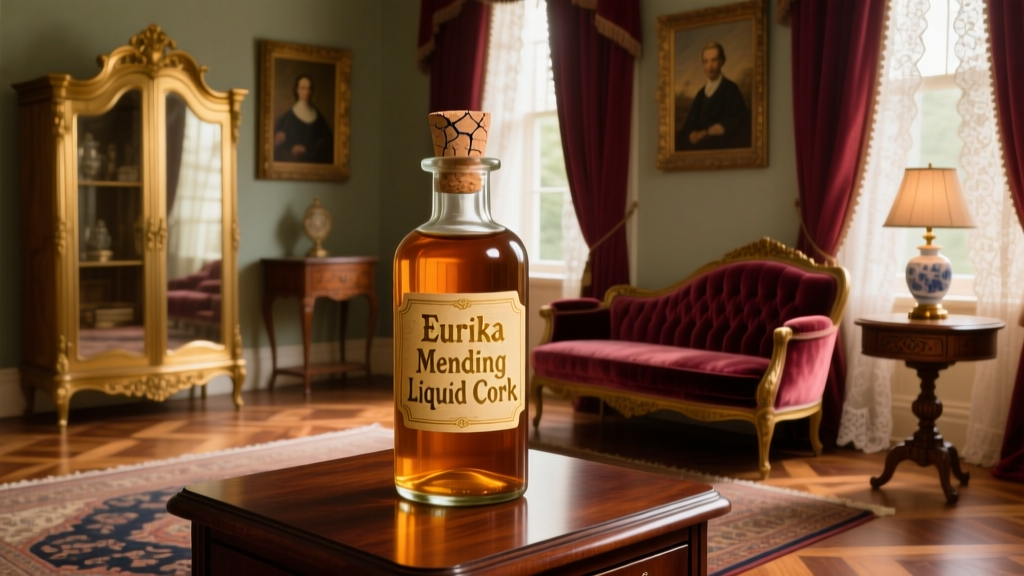
Household Eureka Mending Liquid Cork: A Forgotten 1900s Restoration Marvel for Antique Furniture
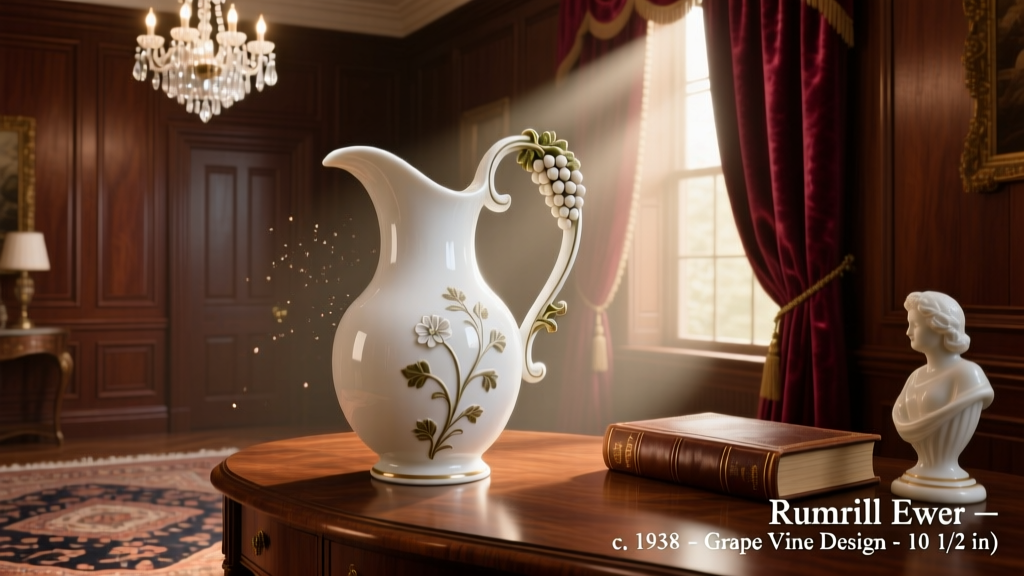
Rumrill Ewer: Grape Design Vine Handle in White Glaze, Circa 1938 — A Detailed Study of Form, Craftsmanship, and Collectibility
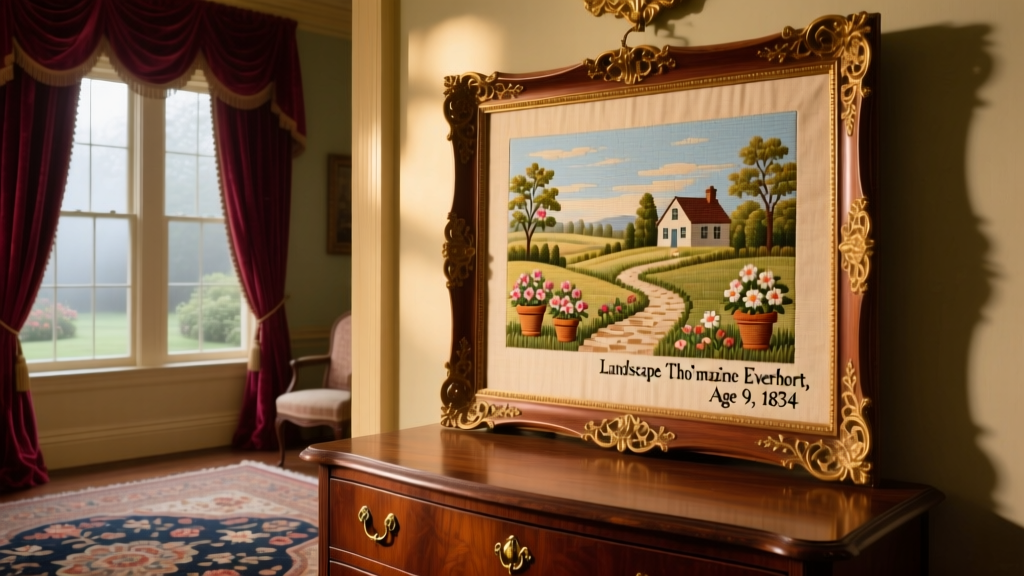
Thomazine Everhart’s 1834 Floral Sampler: A Nineteenth-Century Child’s Masterpiece in Silk and Linen
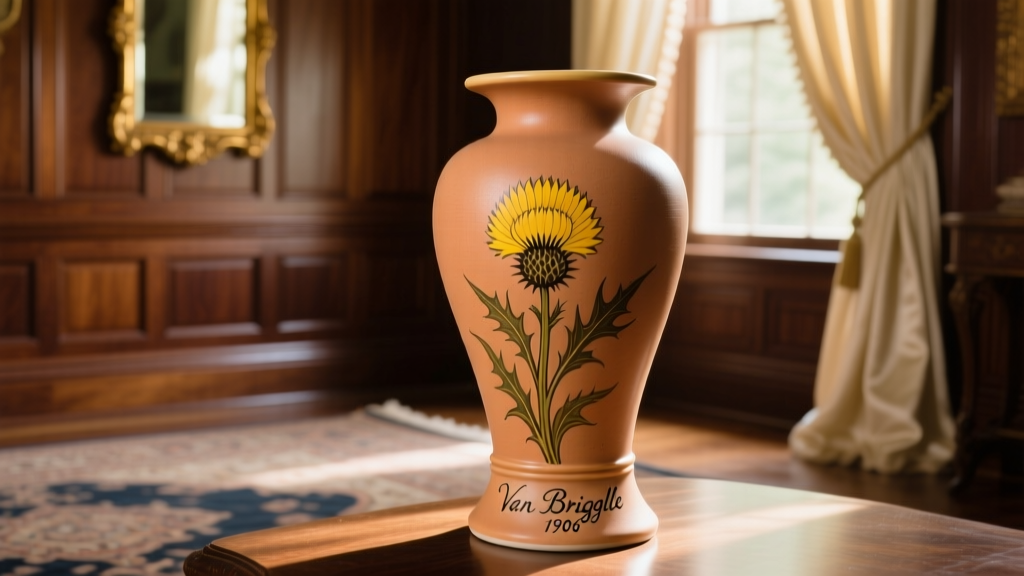
Van Briggle Vase: Yellow Thistles in Ocher Matte Finish, Corseted Form, Signed 1906 — An In-Depth Study of a Colorado Art Pottery Masterpiece
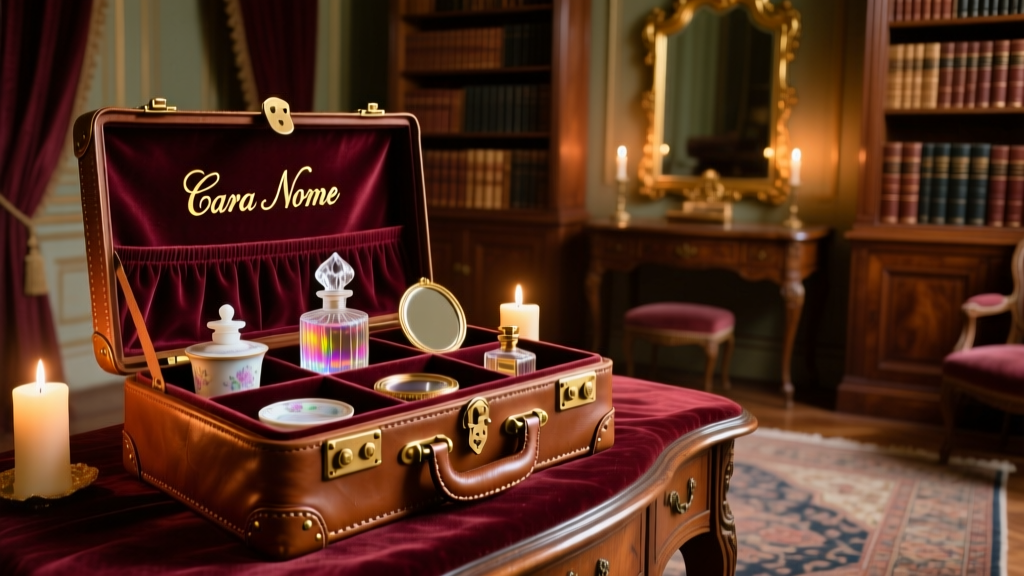
Leather Case Travel Cosmetic Jars, Perfume Flasks & Compacts: The Cara Nome Legacy and Collectible Design
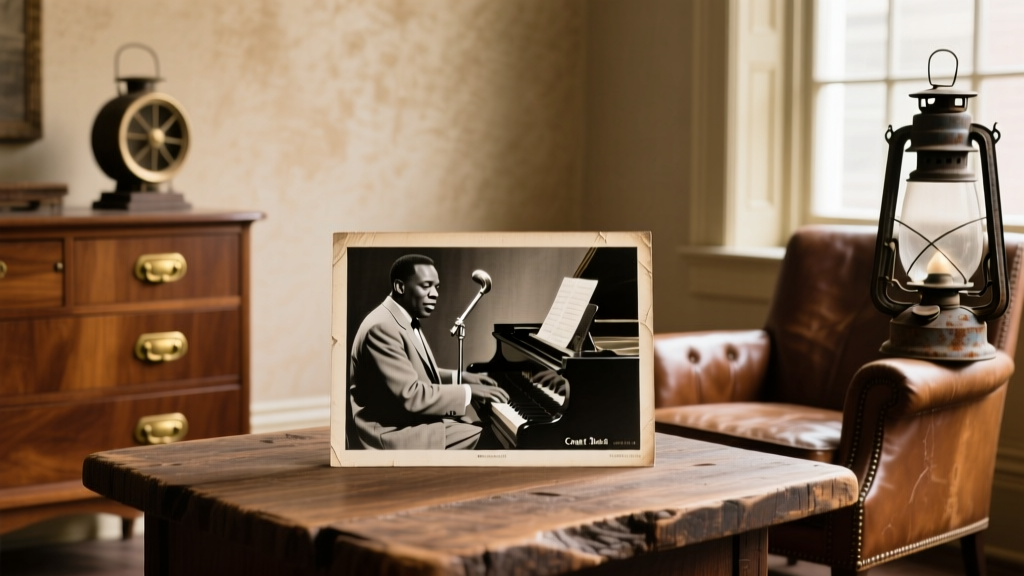
Black Americana Postcard: Count Basie at His Piano — The Rare Mutoscope Card in Black-and-White
Fontaines Auction Gallery Multi-Estate Auction #2: A Curator’s Analysis of American & European Antiques, Mid-Century Design, and Rare Textiles