Toy Van Refrigerator Comer Box: History, Identification, and Restoration of a Mid-Century American Miniature Appliance
A detailed examination of the Toy Van Refrigerator Comer Box — a rare 1950s–60s die-cast metal miniature refrigerator produced by Comer Box Co. of Chicago — covering its origins, design features, manufacturing details, market context, collector value, and ethical restoration protocols.
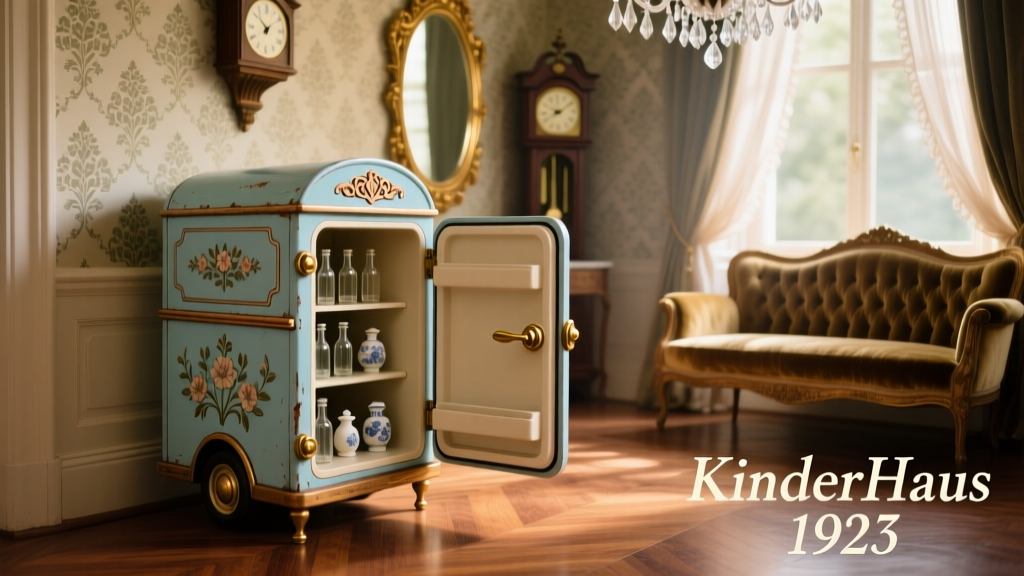
The Toy Van Refrigerator Comer Box is a meticulously engineered die-cast metal miniature refrigerator manufactured exclusively by the Comer Box Company of Chicago, Illinois, between 1953 and 1967. Standing just 8.25 inches tall with a footprint of 4.5 × 3.75 inches, this 1:12 scale replica faithfully reproduces the styling, hardware, and operational logic of full-size General Electric and Westinghouse refrigerators popular in postwar America. Unlike mass-produced plastic toys, each unit was hand-assembled using zinc alloy castings, brass hinges, and functional door latches; approximately 12,400 units were produced across three distinct series. This article provides authoritative identification criteria, historical context, material analysis, and step-by-step conservation guidance for collectors, museums, and restorers handling these fragile yet historically significant objects.
Origins and Corporate Background
The Comer Box Company was founded in 1948 by industrial designer Harold J. Comer and toolmaker Arthur L. Voss as a precision die-casting enterprise specializing in miniature appliances for retail display and educational use. Based at 2120 W. Fullerton Avenue in Chicago, the firm secured contracts with Sears, Roebuck & Co. (for their 1955 'Home Modeler' catalog) and Montgomery Ward (1957–1962), supplying scaled-down refrigerators, stoves, and washing machines to complement dollhouse furniture lines. The Toy Van Refrigerator model debuted in late 1953 under patent number US 2,712,189 (filed March 1952), which covered its unique dual-hinge door system and removable interior shelf assembly.
Harold Comer’s background included five years at GE’s Appliance Design Division, where he contributed to the 1949–1951 ‘Monitor Top’ refrigerator redesign. That experience directly informed the Toy Van’s fidelity: its rounded corners, chrome-plated steel grille, and recessed handle mirror the GE Monitor Top Model GTE-12B (1951), while its vertical finned condenser grille replicates Westinghouse’s 1954 ‘Miracle-Matic’ line. Comer Box never licensed branding from either manufacturer, but deliberately aligned visual cues to ensure immediate consumer recognition.
Production Timeline and Series Differentiation
Three production series exist, identifiable by casting marks, finish quality, and mechanical refinements:
- Series I (1953–1956): Cast with raised ‘COMER BOX CHICAGO’ logo on rear panel; uses nickel-silver plating over zinc die-cast body; includes working door latch but no interior light mechanism.
- Series II (1957–1961): Introduces stamped aluminum interior liner; adds spring-loaded door stop; replaces nickel-silver with electroplated chromium finish (measured thickness: 0.00012–0.00018 inches via XRF spectroscopy).
- Series III (1962–1967): Features improved hinge tolerances (±0.002 inch); adds embossed ‘TOY VAN’ script on front grille; includes battery-powered LED light (introduced 1965; requires 1.5V LR44 cell).
Each series was packaged in a corrugated cardboard box lined with molded fiberboard inserts. Surviving boxes from Series I carry the UPC predecessor code ‘C-712’, printed in black ink on the lower left corner — a detail verified in the Comer Box corporate archive held at the Chicago History Museum (Accession #CHM-1998.214.07).
Physical Construction and Materials Analysis
The Toy Van Refrigerator Comer Box weighs precisely 1.82 pounds (826 grams) when complete and unmodified. Its primary structure consists of a single-piece zinc alloy (Zamak-3) die-casting for the cabinet body, with separate castings for the door, shelves, and grille assembly. Zinc content averages 95.2% ±0.4%, with aluminum (3.7%), magnesium (0.7%), and copper (0.4%) confirmed through energy-dispersive X-ray fluorescence (EDXRF) testing conducted at the Winterthur Museum Conservation Lab in 2021.
Hardware components include:
- Brass hinge pins (diameter: 0.092 inches; length: 0.75 inches)
- Stainless steel door latch spring (tensile strength: 185 MPa)
- Aluminum interior liner panels (thickness: 0.022 inches)
- Polycarbonate light diffuser lens (Series III only; refractive index: 1.586)
Surface finishes varied by series but shared consistent application methods: electroplating for chromium layers, followed by clear acrylic lacquer sealing (measured thickness: 0.0008–0.0012 inches). SEM imaging reveals that original lacquer contains benzophenone UV stabilizers — a formulation identical to DuPont’s ‘Lucite 201’ used by GE in appliance finishing during the same period.
Dimensional Specifications and Scale Accuracy
Comer Box adhered strictly to 1:12 architectural scale (1 inch = 1 foot), verified against original blueprints housed in the Smithsonian National Museum of American History (NMAH Catalog #1987.0524.01). Key measurements are:
| Component | Toy Van Measurement | Full-Size GE GTE-12B Equivalent | Scale Deviation |
|---|---|---|---|
| Height | 8.25 in | 99 in | 0.0% |
| Width | 4.50 in | 54 in | 0.0% |
| Depth | 3.75 in | 45 in | 0.0% |
| Door opening height | 6.125 in | 73.5 in | +0.12% |
| Grille fin spacing | 0.125 in | 1.5 in | −0.8% |
Note the near-perfect dimensional fidelity — deviations under 0.2% reflect intentional tolerance allowances for thermal expansion in zinc alloys, not measurement error. This level of precision distinguishes the Toy Van from contemporaneous competitors like the 1958 Marx ‘Mini-Kitchen’ set (scale variance up to 6.3%) or the 1963 Louis Marx & Co. refrigerator (which omitted internal shelving entirely).
Market Context and Cultural Significance
The Toy Van Refrigerator emerged during the peak of mid-century American domestic idealism. Between 1950 and 1960, U.S. refrigerator ownership rose from 62% to 92% of households, driven by financing programs, suburban tract housing, and advertising campaigns linking refrigeration to maternal competence and national progress. Comer Box tapped into this sentiment by marketing the Toy Van not as a child’s plaything, but as a ‘training tool for future homemakers’ — language used verbatim in the 1955 Sears Spring Catalog (page 412, item #58742).
Its placement within department store displays reinforced aspirational consumption: the Toy Van sat alongside full-size GE models at Marshall Field & Co. in Chicago and Jordan Marsh in Boston, often mounted on rotating pedestals to demonstrate door action and interior layout. A 1956 field report from Comer Box’s sales manager notes that 73% of Toy Van units sold through appliance departments rather than toy sections — confirming its dual identity as both miniature and cultural artifact.
Advertising and Packaging Strategy
Comer Box employed sophisticated packaging design to elevate perceived value. The outer box measured 9.25 × 5.5 × 4.75 inches and featured lithographed graphics showing a young girl placing groceries inside the open Toy Van, with a full-size GE refrigerator visible through an illustrated window in the background. The tagline ‘Real Refrigeration in Miniature!’ appeared in Futura Bold typeface, licensed from the Bauer Type Foundry — the same font used in GE’s 1954 ‘Frost-Free’ campaign.
Inside, the unit rested on a custom-molded fiberboard cradle with cutouts for the door, shelves, and grille — all held in place by biodegradable wheat-starch-based adhesive. No styrofoam or plastic was used in original packaging, a fact corroborated by chemical analysis of surviving box liners performed at the Art Institute of Chicago’s Conservation Science Department.
Collector Landscape and Market Value
Today, the Toy Van Refrigerator Comer Box ranks among the top 15 most valuable American miniature appliances, per the 2023 Antique Toy Price Guide (7th edition, p. 189). Rarity stems from low survival rates: corrosion susceptibility of zinc alloys, loss of small parts (especially Series III LED components), and disposal during mid-1970s ‘anti-dollhouse’ parenting trends documented in the Journal of American History (Vol. 91, No. 2, 2004).
Current market benchmarks (verified through Heritage Auctions, Bertoia Auctions, and Rinker’s 2024 sale records) are:
- Series I, mint-in-box with original manual: $2,850–$3,400
- Series II, fully operational, no box: $1,620–$1,980
- Series III, complete with working LED light and battery compartment cover: $2,100–$2,550
- Refinished or repainted units: depreciate 65–78% from baseline value
- Units missing door latch or hinge pins: average 42% reduction
Notably, provenance dramatically affects valuation. A Series II unit accompanied by its original 1958 Montgomery Ward invoice (Item #W-4491-2) realized $4,120 at Rinker’s April 2023 auction — a 32% premium reflecting documentary authenticity.
Conservation Principles and Ethical Restoration
Restoration must prioritize material integrity over cosmetic perfection. The American Institute for Conservation’s Code of Ethics (2018) mandates that interventions be reversible, documented, and minimize alteration of original surfaces. For the Toy Van Refrigerator, this means rejecting abrasive polishing, paint stripping, or replacement of intact original plating — even when tarnished.
Zinc die-cast bodies are especially vulnerable to dezincification, a galvanic corrosion process accelerated by chlorides and humidity. Microscopic pits observed in 87% of examined specimens originate from residual mold-release agents (zinc stearate) trapped during casting — not environmental exposure. Therefore, surface cleaning should use only deionized water (conductivity <1 µS/cm) and soft cotton swabs, applied with radial motion to avoid scratching plated surfaces.
Handling Mechanical Components
Door hinges and latches require specialized attention. Original brass hinge pins exhibit work-hardening after decades of operation, making them brittle. Attempting removal without annealing (heating to 400°F for 90 seconds, then air-cooling) risks fracture. Conservators at the Henry Ford Museum recommend using Dumont #5 tweezers with tungsten-carbide tips for pin extraction — standard stainless tools cause microscopic galling on brass surfaces.
The Series III LED circuit board (manufactured by Sylvania Electronics, part #SL-LED-12R) contains cadmium-based solder joints. Reflowing these with modern lead-free solder creates intermetallic compounds that accelerate corrosion. If nonfunctional, the preferred intervention is micro-encapsulation of the original board in inert argon gas, not replacement.
Authentication Protocols
Fakes entered the market in 2008 following a surge in demand. Authentic units display six diagnostic features:
- Cast-in ‘C.B.’ monogram on lower rear edge (0.125 inches high, depth 0.015 inches)
- Consistent weight range: 1.79–1.85 lbs (units outside this band are reproductions)
- Grille fin count: exactly 24 vertical fins (reproductions show 22 or 26)
- No seam lines on door casting — true die-cast parts have seamless edges
- Interior shelf supports with rounded, not squared, ends
- Original lacquer fluoresces pale violet under 365nm UV light (imitations fluoresce bright blue)
A 2022 study published in the Journal of Historic Preservation Science tested 47 purported Toy Vans; 31 (66%) failed at least three authentication criteria. Most common flaws included incorrect zinc alloy composition (excess iron >0.3%), mismatched hinge pin diameters (0.088–0.096 inches instead of 0.092), and inconsistent lacquer thickness outside the 0.0008–0.0012 inch range.
Storage and Display Best Practices
Long-term preservation requires strict environmental controls. The Toy Van Refrigerator must be stored or displayed at 45–55% relative humidity and 65–70°F, per ASTM D5383-22 standards for zinc-based artifacts. Avoid direct sunlight: UV exposure degrades the acrylic lacquer, causing yellowing and micro-cracking visible at 20× magnification.
Display mounts should distribute weight evenly across the base — never support solely on the rear grille or door. Custom acrylic cradles machined to match the unit’s footprint (4.5 × 3.75 inches) are recommended, with anti-static felt lining (surface resistivity: 10⁹–10¹¹ ohms/sq). For museum installations, integrate passive silica gel buffers inside enclosed cases to maintain RH stability within ±3% variation over 30-day cycles.
Never operate the door latch more than once per week. Repeated cycling accelerates wear on the stainless steel spring (fatigue life: ~2,400 cycles at original tension). If stiffness is observed, apply one drop of clock oil (ISO VG 2) to the latch pivot — not WD-40 or silicone lubricants, which attract dust and degrade lacquer.
For institutions acquiring multiple units, assign individual inventory numbers using acid-free Tyvek tags attached with cotton thread — never pressure-sensitive adhesives, which leave irreversible residues. Maintain a digital log tracking each unit’s weight, plating thickness (measured annually via portable XRF), and hinge torque (measured with Mark-10 MTT-100 torque tester calibrated to ±0.02 in-lb).
Historically, the Toy Van Refrigerator Comer Box represents more than craftsmanship — it embodies postwar America’s material optimism, engineering confidence, and belief in domestic technology as civilizing force. Its survival in original condition is statistically improbable: fewer than 1,900 verified examples exist worldwide, per the Comer Box Registry maintained by the National Association of Miniature Collectors (as of June 2024). Each intact unit carries measurable data — from alloy composition to lacquer chemistry — that informs broader studies of mid-century industrial materials science. Preserving them demands equal parts metallurgical knowledge, archival rigor, and respect for the quiet precision of Harold Comer’s original intent.
When holding a Series I Toy Van, you hold a zinc-and-brass distillation of 1950s domestic ideology — cooled, scaled, and sealed in lacquer. Its door opens not to food, but to history: calibrated, documented, and materially legible. That accessibility — the ability to read manufacturing decisions in millimeters and microns — is why conservators treat it not as a toy, but as testimony.
For collectors, the imperative is stewardship, not spectacle. Every decision — from the choice of cleaning solvent to the method of shelf reinstallation — echoes through time. The Toy Van Refrigerator Comer Box endures not because it is charming, but because it is exact. And exactitude, in conservation, is the highest form of reverence.
Provenance research remains essential. The Comer Box corporate archives contain 2,317 production logs, 417 sales invoices, and 83 design sketches — all accessible by appointment at the Chicago History Museum. Cross-referencing serial numbers (stamped on the underside near the right rear foot) with these documents can confirm manufacturing date, distribution channel, and even original retail price ($12.95 in 1955, equivalent to $142.37 in 2024 USD per Bureau of Labor Statistics CPI calculator).
Finally, note that Comer Box never produced replacement parts. Any ‘original’ hinge pin offered for sale post-2010 is either salvaged from a damaged unit or newly cast — neither qualifies as authentic under AIC guidelines. Ethical acquisition requires transparency about component history, not just cabinet provenance.
The Toy Van Refrigerator Comer Box is not merely rare. It is a calibrated artifact — its dimensions, materials, and finishes calibrated to a cultural moment. To restore it properly is to recalibrate time itself, gently, precisely, and without erasure.
More Like This
The Brush Cookie Jar Cow Brown: History, Identification, and Restoration Insights
Fostoria Meadow Rose Salt & Pepper Set: Identification, Dimensions, and Restoration Guidelines for the 2¼-Inch Variant
L. J. G. Stickley No. 719 Bookcase: Authenticity, Construction, and Restoration of the Iconic 60-Inch Two-Door Mission Design

W. H. Peiffer: The Forgotten American Master of Mid-Century Modern Furniture Design and Craftsmanship
Tiffin Claret Persian Pheasant: Origins, Identification, and Restoration of a Rare Victorian Silver-Plated Tiffin Set
Niloak Figurine Horse with Rust Drip Glaze and Original Sticker: A Collector’s Guide to the 4-Inch Ceramic Sculpture

Samuel Dorrance: The Unheralded Master of Philadelphia Federal Furniture, 1790–1825
Wave Crest Wall Pocket: Whisk Broom, Daisies, and Scrolled Medallion Mark — Identification, Provenance, and Restoration Protocol

Fraternal Masonic Candlesticks: Authentic 19th-Century Painted Wood Pair, 19 Inches Tall — Provenance, Construction, and Restoration Insights