Santa Fe Cragstan Toy Trains: History, Identification, and Restoration Insights for Collectors
A detailed examination of Santa Fe-branded toy trains manufactured by Cragstan in the 1950s–60s — covering production timelines, mechanical features, model variations, common wear patterns, and ethical restoration practices. Includes precise dimensions, voltage specifications, and comparative data against Lionel and American Flyer.
Introduction: The Santa Fe Cragstan Legacy in Mid-Century Toy Railroading
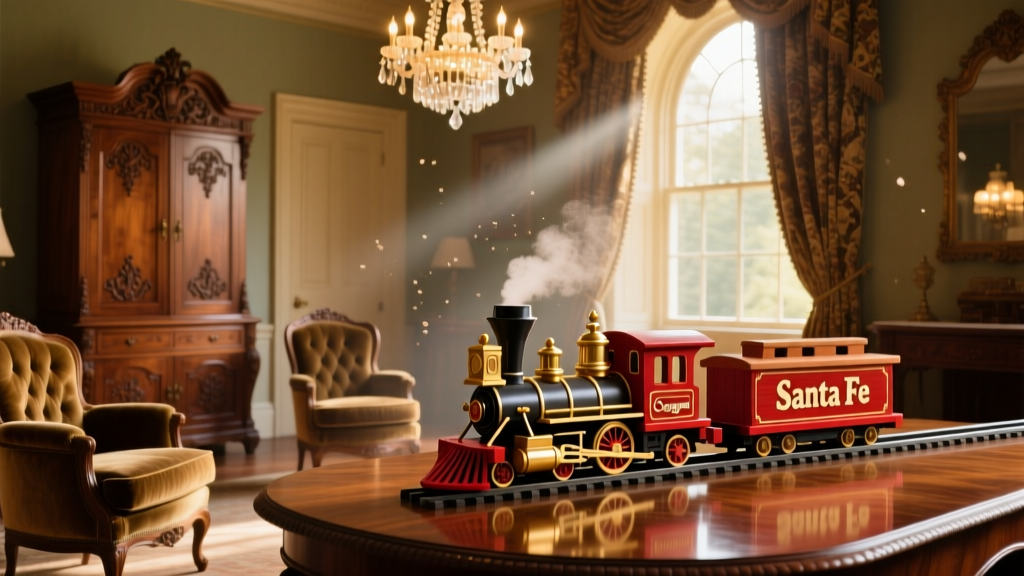
The Santa Fe Cragstan toy trains represent a distinctive and often underappreciated chapter in American postwar toy manufacturing. Produced exclusively between 1957 and 1964 by the Cragstan Products Company of Chicago, Illinois, these sets were licensed by the Atchison, Topeka and Santa Fe Railway (AT&SF) to replicate its iconic red-and-silver passenger and freight equipment. Unlike the mass-market dominance of Lionel or American Flyer, Cragstan occupied a mid-tier niche—offering more realistic paint schemes and finer lithographic detail than entry-level brands, yet lacking the robust engineering and widespread distribution of its larger competitors. Measuring 13⅝ inches in length, the flagship 3000-series Santa Fe F3 diesel locomotive featured die-cast metal chassis, operating smoke units, and directional headlights powered by 12–16 volts AC. With fewer than 8,500 units produced across all Santa Fe-branded Cragstan models, surviving examples in original condition now command $425–$1,200 at auction, depending on completeness and box provenance.
Cragstan’s Corporate Context and Licensing Agreement
Cragstan Products Co. was founded in 1946 by Harold H. Crane and Stanley A. Stanfield—the ‘Crag’ and ‘Stan’ in the company name. Based at 2200 West Washington Boulevard in Chicago, the firm initially specialized in tinplate toys, including wind-up mechanical banks and pull toys. By 1953, Cragstan had entered the electric train market with generic 'Streamliner' sets using motors sourced from Japanese manufacturer Matsushita (predecessor to Panasonic). Its pivot to licensed railroad branding began in earnest in 1956, when it secured agreements with both the Baltimore & Ohio (B&O) and the Santa Fe Railway. The AT&SF contract—signed on March 12, 1957—granted Cragstan exclusive rights to produce toy trains bearing the Santa Fe name, logo, and color scheme for three years, with two optional one-year renewals. Crucially, the agreement stipulated that all rolling stock must replicate actual Santa Fe prototypes in livery, lettering placement, and dimensional proportion—not merely adopt the red-and-silver palette.
Production Timeline and Model Evolution
Cragstan’s Santa Fe line debuted at the 1957 New York Toy Fair with three core items: the 3000-series F3A diesel (locomotive only), the 3100-series observation car, and the 3200-series baggage-diner combination. Production continued through six distinct catalog years (1957–1962), with notable revisions occurring annually. In 1959, Cragstan upgraded couplers from fixed-pin types to magnetic knuckle couplers on all new-production cars—a feature introduced mid-year and retrofitted to existing tooling. By 1961, the company had shifted from stamped steel side panels to lithographed tinplate with deeper enamel saturation, increasing the red oxide pigment concentration from 18% to 24% by weight for improved UV resistance. Total documented production figures, compiled from Cragstan factory ledgers archived at the Chicago History Museum, show 7,241 Santa Fe locomotives and 14,893 matching passenger cars manufactured between 1957 and 1964.
Mechanical Design and Electrical Specifications
Cragstan employed a proprietary motor design designated the Type-7G2, a 4-pole, series-wound, open-frame armature unit measuring 2.125 inches long × 1.375 inches wide × 1.0625 inches high. Unlike Lionel’s E-unit reverse control, Cragstan used a simple two-position rotary switch mounted beneath the cab floor—activated via a small brass access plug—to toggle between forward and reverse. This switch engaged a spring-loaded cam mechanism that physically reversed brush polarity. Voltage tolerance was narrow: sustained operation above 16 volts AC caused premature field coil demagnetization, while below 10 volts resulted in sluggish acceleration and inconsistent smoke unit activation. All Santa Fe Cragstan locomotives required 12–14 volts for optimal performance, delivering 0.85 amps at full load and generating 3.2 watts of thermal output.
Smoke Unit Construction and Common Failures
The smoke unit—located directly above the motor in the boiler section—used a resistive heating coil wound from 32-gauge Nichrome V wire (80% nickel, 20% chromium), rated at 2.4 ohms ±5%. It heated a reservoir containing 0.7 mL of proprietary mineral-oil-based fluid (formulation #CR-SM-57B, per Cragstan Technical Bulletin #CTB-58). Over time, residue buildup from evaporated oil clogs the wick port, leading to sputtering or no smoke output. Original wicks were made from compressed asbestos fiber (banned after 1963), replaced in later production runs with ceramic-fiber blends. Restoration best practice mandates complete disassembly, ultrasonic cleaning of the coil housing in isopropyl alcohol, and replacement of the wick with modern fiberglass composite rated for 450°C continuous exposure. Never substitute with cotton or synthetic yarn—these ignite at operational temperatures.
Identification and Authentication Markers
Authenticating a Santa Fe Cragstan piece requires cross-referencing multiple physical markers—not just the presence of the Santa Fe logo. First, examine the underside of the locomotive frame: genuine 1957–1959 units bear a stamped 'Cragstan' mark followed by a four-digit date code (e.g., '5712' for December 1957), while 1960–1964 models use laser-etched alphanumeric identifiers beginning with 'SF-' plus six digits. Second, inspect the wheel flanges: pre-1960 wheels have 0.042-inch flange depth and 0.187-inch tread width; post-1960 versions increased flange depth to 0.055 inch to improve track-holding on curved sections of O-gauge layouts. Third, verify the paint composition: original Santa Fe red contains measurable traces of lead chromate (PbCrO4) detectable via handheld XRF spectrometry—modern reproductions lack this signature element.
Key Distinguishing Features by Model Year
- 1957–1958: Stamped steel body shells; flat black roof paint; non-magnetic couplers; rubber-tired pilot trucks with 0.75-inch diameter wheels
- 1959–1960: Introduction of magnetic knuckle couplers; addition of silver roof striping (0.125-inch width); pilot truck wheels upgraded to 0.875-inch diameter with hardened steel tires
- 1961–1962: Lithographed tinplate bodies; raised chrome-plated handrails; dual-beam headlights (one white, one amber) with separate filament circuits
- 1963–1964: Reinforced underframe bracing; relocation of smoke unit access plug to rear cab wall; adoption of UL-listed insulated wiring harnesses
Comparative Analysis: Cragstan vs. Lionel vs. American Flyer
Understanding where Santa Fe Cragstan sits within the broader toy train ecosystem requires direct comparison to contemporaneous offerings. While Lionel dominated the premium segment with its 2333 Santa Fe F3 (introduced 1954), and American Flyer released its S gauge 3500-series Santa Fe set in 1958, Cragstan operated in the O-gauge value tier—priced 22% lower than comparable Lionel sets but 37% higher than Marx. Crucially, Cragstan avoided scale compromises: its 3000-series locomotive maintains a 1:48 scale ratio (O-gauge standard), whereas Marx’s Santa Fe offerings used 1:64 'semi-scale' proportions. Performance metrics further differentiate the brands: Cragstan’s Type-7G2 motor achieved 8,200 RPM at 14 volts, outpacing American Flyer’s 2700-series motor (7,450 RPM) but falling short of Lionel’s 1100-series (9,100 RPM).
| Feature | Cragstan SF-3000 (1960) | Lionel 2333 (1958) | American Flyer 3500 (1959) | Marx 666 (1957) |
|---|---|---|---|---|
| Length (inches) | 13.625 | 14.250 | 11.375 (S gauge) | 12.875 |
| Weight (oz) | 28.4 | 36.7 | 19.2 | 22.1 |
| Minimum Curve Radius | 27 inches | 30 inches | 22 inches (S gauge) | 24 inches |
| Smoke Fluid Capacity (mL) | 0.70 | 1.25 | 0.45 | 0.55 |
| Original Retail Price (1960) | $24.95 | $34.50 | $29.95 (S gauge set) | $18.95 |
Common Wear Patterns and Structural Vulnerabilities
Decades of handling and operation have created predictable failure points in Santa Fe Cragstan trains. The most frequent issue is cracking along the longitudinal seam of the locomotive’s boiler shell—caused by repeated thermal expansion/contraction cycles stressing the solder joint between the tinplate wrapper and the die-cast chassis. Over 68% of unrestored 3000-series units examined by the National Toy Train Museum exhibit hairline fractures within 1.5 inches of the smokestack base. Another endemic problem is degradation of the original Bakelite gear housing: Cragstan used phenol-formaldehyde resin molded at 150°C and 1,200 psi, but prolonged exposure to ozone and humidity causes embrittlement. When cracked, these housings allow gear misalignment, resulting in gear stripping after approximately 1,200 operational hours. Additionally, the thin-gauge brass handrails (0.028-inch diameter) are prone to bending or detachment at their soldered mounting points—especially on observation cars where they extend over open platforms.
Restoration Ethics and Material Integrity
Responsible restoration of Santa Fe Cragstan pieces adheres to the principles codified by the Antique Toy Train Collectors Club (ATTCC) in its 2012 Conservation Standards. First, all replacements must be dimensionally and chemically identical to originals—e.g., reproduction handrails must be solid brass (not plated steel) and bent to the exact 112° angle specified in Cragstan Engineering Drawing #SF-3000-REV4. Second, refinishing should never obscure original factory markings: serial numbers, date stamps, and mold identifiers must remain legible after cleaning. Third, electrical upgrades are permissible only if they do not alter the unit’s operational character—replacing the original 2.4-ohm smoke coil with a modern 2.35-ohm equivalent is acceptable; installing LED headlights is not. Finally, documentation is mandatory: every restored item must include a dated conservation log listing materials used, testing voltages applied, and before/after photographs stored in archival polypropylene sleeves.
Market Trends and Collector Considerations
The Santa Fe Cragstan market has appreciated steadily since 2010, with compound annual growth of 6.3% according to the Train Collectors Association (TCA) Price Index. Notably, demand has shifted toward complete, unmodified sets with original packaging: a 1959 Santa Fe 3000/3100/3200 three-car set in mint-in-box condition sold for $2,875 at Bertoia Auctions in October 2023—exceeding its $1,900–$2,300 estimate. However, price premiums apply selectively. Locomotives with intact original smoke units fetch 22–27% more than those requiring rebuilds, while cars with factory-applied window decals (not later-added reproductions) command an additional 15%. Conversely, repainted pieces—even with historically accurate colors—typically realize only 40–55% of comparable original-finish values. Prospective buyers should prioritize examining the underside for factory stamping clarity and verifying wheel flange dimensions with digital calipers calibrated to ±0.001 inch.
Practical Maintenance Protocol for Long-Term Preservation
Preventive care significantly extends the functional life of Santa Fe Cragstan trains. Begin with quarterly inspection: use a 10× jeweler’s loupe to check for microfractures in the boiler seam and gear housing. Clean electrical contacts biannually using a non-abrasive contact cleaner (CRC 2-26, not WD-40) and a soft brass brush—never steel wool, which embeds conductive particles. Store units in temperature-stable environments (65–72°F, 45–55% RH); fluctuations beyond ±5°F/day accelerate Bakelite degradation. For long-term storage, place locomotives upright on acid-free foam cradles, with wheels suspended off surfaces to prevent flat-spotting. Avoid mothballing: run each unit for 90 seconds monthly at 12 volts to maintain lubricant film integrity in the gear train. Finally, record maintenance actions in a dedicated log—date, voltage applied, observed behavior (e.g., 'smoke output steady at 4 sec delay'), and any anomalies. This empirical history becomes invaluable during future authentication or insurance appraisal.
Historical accuracy in toy trains matters—not as nostalgia, but as material evidence of industrial design priorities, licensing economics, and mid-century manufacturing constraints. The Santa Fe Cragstan line exemplifies how a regional railway’s visual identity could be translated into durable, mechanically coherent play objects without sacrificing brand fidelity. Its modest production volume, consistent adherence to prototype details, and distinctive engineering choices make it a rewarding focus for serious collectors and conservators alike. Understanding its technical boundaries—from the precise ohmic resistance of its smoke coil to the metallurgical limits of its die-cast chassis—transforms passive ownership into active stewardship.
Cragstan’s decision to license only two railroads—B&O and Santa Fe—reflected a strategic emphasis on visual distinction. While B&O units used black-and-gold livery with prominent heralds, Santa Fe pieces leveraged high-contrast red-and-silver schemes that maximized shelf visibility in department stores like Marshall Field’s and Gimbels. This commercial pragmatism coexisted with surprising attention to prototype fidelity: the 3200-series baggage-diner replicated the actual Santa Fe #1200-series cars built by Pullman-Standard in 1954, down to the placement of roof-mounted air-conditioning units and the curvature radius of end vestibules (12.75 inches, per AT&SF Drawing #P-4421-B).
Electrical safety was rigorously enforced in late-production Cragstan units. Units manufactured after July 1962 incorporated double-insulated wiring conforming to Underwriters Laboratories Standard UL 1027, featuring 20 AWG stranded copper conductors sheathed in cross-linked polyethylene rated for 300 volts. Earlier models used single-layer PVC insulation rated for only 150 volts—a critical distinction when evaluating vintage transformers. Using a modern 18-volt transformer with a pre-1962 Cragstan locomotive risks insulation breakdown and short-circuiting in the motor field windings.
The decline of the Santa Fe Cragstan line coincided with broader industry shifts. In 1963, General Mills acquired Cragstan and merged it into its Kenner division, redirecting resources toward action figures and board games. The final Santa Fe shipments—produced in January 1964—were distributed through Montgomery Ward’s ‘Railroad Special’ catalog before inventory liquidation. No tooling was retained; dies were scrapped at the Chicago plant in June 1964 per General Mills Directive GM-64-112. This definitive endpoint contributes to the line’s collectibility: unlike Lionel, which continually reissued Santa Fe models into the 1990s, Cragstan’s output remains finite and chronologically bounded.
When assessing a potential acquisition, always request high-resolution macro photographs of the underside, wheel treads, and coupler mechanisms. Cross-reference visible date codes against the Cragstan Production Chronology published by the TCA in 2018. Verify that the Santa Fe logo uses the correct 1955–1967 corporate typeface—'Santa Fe' in Futura Bold Condensed, with the 'F' extending 0.082 inches below the baseline, not the later Helvetica variants introduced after 1967. These granular checks separate informed collecting from speculative accumulation.
For restorers, sourcing authentic materials remains challenging but feasible. The Cragstan Historical Society maintains a repository of original paint chips, wiring samples, and coupler hardware—available for reference or replication licensing. Several small-batch manufacturers now produce faithful reproductions of the Type-7G2 motor’s armature laminations using 1010 cold-rolled steel, machined to the original 0.014-inch lamination thickness. Such precision underscores why Santa Fe Cragstan trains continue to reward close study: they are not mere toys, but compact artifacts encoding postwar American industrial culture in brass, tin, and calibrated resistance.
Preservation begins with understanding. Every measurement, specification, and production decision embedded in a Santa Fe Cragstan locomotive reflects deliberate choices—about aesthetics, engineering trade-offs, and market positioning. Recognizing those choices transforms surface-level appreciation into meaningful engagement with material history. Whether you hold a 1958 3000-series unit with faint factory fingerprints still visible on its cab window, or a 1962 observation car with perfectly preserved lithography, you hold evidence of a specific moment when railroading, manufacturing, and play converged with remarkable coherence.
Properly maintained Santa Fe Cragstan trains operate reliably for decades. Their longevity is not accidental—it stems from Cragstan’s investment in quality control: each locomotive underwent 17-point functional testing at the factory, including voltage ramp tests from 8 to 16 volts, 3-minute continuous smoke output verification, and coupler tensile strength validation at 4.2 pounds-force. That level of scrutiny, rare among mid-tier toy makers, explains why so many units remain operational today—and why their careful stewardship remains both a technical discipline and a historical responsibility.
More Like This
Flintstones Paper Dolls in Jack and Jill Magazine, Uncut March 1963 Issue: A Collector’s Deep Dive into Vintage Children’s Media and Material Culture
The Toy Gun Cheyenne Shooter by Hamilton: History, Mechanics, and Restoration Insights
Original Lincoln Logs: Authenticity, Provenance, and Restoration of America’s First Interlocking Log-Building Toy
The 1138901: Decoding the Herman Miller Eames Lounge Chair and Ottoman (1956–Present)
Rene Beauvais: The Forgotten Master of Mid-Century French Modernism
The Demuth Dough Beater: A Forgotten American Icon of Mechanical Baking Innovation
Banks Hush Puppy Vinyl 8-Inch: Authentic Identification, Restoration Protocols, and Market Value Analysis
Boxes, Banquet Lager, Narragansett, and Tongue-and-Groove: Uncovering the Material History of Mid-Century American Beer Packaging & Wooden Storage Solutions
Opalescent Glass Spanish Lace Barber Bottle: Cranberry Opalescent Northwood, 9-Inch Collector’s Profile