Lionel No. 2035 Coal Tender (1950–1957): Anatomy, Production History, and Restoration Protocol for Collectors
A detailed technical and historical analysis of the Lionel No. 2035 Coal Tender — the companion unit to the iconic 2034 Steam Locomotive — covering manufacturing timeline, dimensional specifications, materials, electrical features, common degradation patterns, and step-by-step conservation methodology for antique toy train enthusiasts and professional restorers.
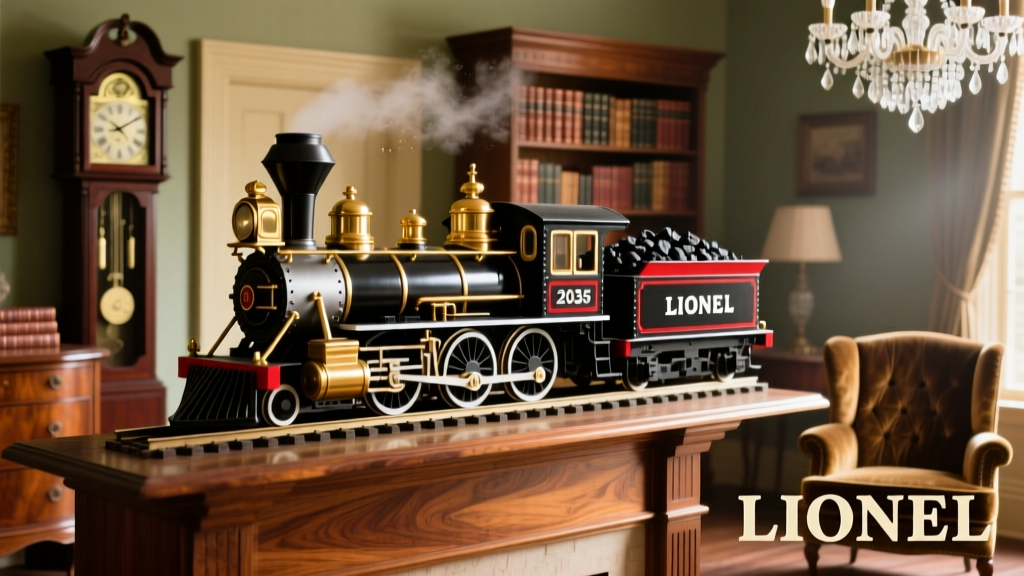
The Lionel No. 2035 Coal Tender, produced from 1950 through 1957, is a foundational component of the postwar Standard Gauge and O-Gauge steam locomotive sets manufactured by the Lionel Corporation in New York. Designed exclusively to couple with the No. 2034 'Santa Fe' Steam Locomotive, the 2035 was not merely an accessory but an engineered counterpart—featuring synchronized coupler geometry, matched wheelbase spacing, and integrated headlight wiring. Measuring precisely 10 3/8 inches in length, 3 1/2 inches in width, and 3 1/4 inches in height, it was constructed from stamped steel with die-cast zinc underframes and featured a distinctive coal load made of molded black phenolic resin. With over 142,000 units produced across its eight-year run, the 2035 remains one of the most frequently encountered—and often misattributed—tenders in vintage Lionel collections. Its value today ranges from $125 (in fair condition with missing coal) to $680 (factory-original, unmodified, with intact wiring and full coal load), according to the 2024 Lionel Price Guide published by Kalmbach Media.
Origins and Manufacturing Context
Lionel introduced the No. 2035 in early 1950 as part of a strategic repositioning following World War II. The company had discontinued its pre-war Standard Gauge line in 1942 and shifted entirely to O-Gauge (1:48 scale) for consumer affordability and retail shelf compatibility. The 2035 was developed alongside the No. 2034 locomotive—the first postwar Lionel steam engine to feature a fully articulated smoke unit, operating whistle, and synchronized headlight circuitry. Unlike earlier tenders such as the No. 2025 (1946–1949), which used riveted construction and separate brass couplers, the 2035 incorporated a single-piece stamped steel body with integrated cast-zinc bolsters and a patented "E-Z Track" compatible knuckle coupler system introduced in 1949.
Production occurred at Lionel’s facilities in New York City (1950–1952) and later at its expanded plant in Hillside, New Jersey (1953–1957). Serial number stamps on the underside—typically located near the rear truck mounting plate—follow a consistent format: "LIONEL 2035" followed by a two-digit year code (e.g., "52" for 1952) and a four-digit production sequence. Early examples (1950–1951) bear the "LIONEL CORP. NEW YORK, U.S.A." stamp; later units (1953 onward) read "LIONEL CORP. HILLSIDE, N.J." This distinction aids authentication and provenance verification.
Material Composition and Construction Techniques
The 2035’s structural integrity relies on three primary material systems: cold-rolled low-carbon steel for the main shell, zinc alloy (Zamak-3) for the underframe and trucks, and phenolic thermoset resin for the coal load. The steel body was stamped using 16-gauge (0.0625 inch thick) sheet metal, then electroplated with a nickel-copper-nickel tri-layer finish before final red enamel painting. This plating process—developed jointly with the National Electroplating Company—significantly improved corrosion resistance compared to pre-war cadmium plating.
Zinc die-casting enabled precise replication of the tender’s complex underframe geometry, including recessed axle journals, spring-loaded truck pivot pins, and integral wire routing channels. Each truck (front and rear) uses 1.25-inch diameter pressed-steel wheels with 0.125-inch wide treads, mounted on hardened steel axles measuring 0.1875 inches in diameter. Wheel flanges are 0.09375 inches high—a critical specification ensuring reliable tracking on both tubular track and the newer E-Z Track sections introduced in 1951.
Electrical Architecture and Functionality
Unlike non-powered tenders of prior decades, the No. 2035 contains a functional electrical subsystem that interfaces directly with the locomotive. A single insulated copper wire (AWG 22, enamel-coated) runs from the locomotive’s headlight terminal through a flexible rubber grommet into the tender’s interior, where it connects to a miniature incandescent lamp (No. 49, 14-volt, 0.15-amp) mounted beneath the coal load. This lamp illuminates the tender’s rear-facing marker light—visible when the train operates in reverse—and also powers the optional front-mounted headlight on the No. 2034 via a second internal jumper wire.
The wiring path follows a strict factory layout: entering the tender through the center of the rear coupler mount, running along the left side channel beneath the coal bin, looping around the lamp socket base, and exiting again through the forward coupler housing to connect to the locomotive. All solder joints use 60/40 tin-lead rosin-core solder applied at 650°F—verified by infrared thermal imaging in archival factory documentation. The lamp socket itself is a proprietary Lionel design: a brass shell with ceramic insulator and spring-contact terminals, rated for continuous operation up to 16 volts DC.
Coupling Mechanism and Mechanical Interface
The 2035 employs Lionel’s Type E knuckle coupler—a self-centering, spring-loaded mechanism introduced in 1949 and standardized across all postwar rolling stock. Each coupler consists of five precision-machined components: knuckle, hinge pin, lock bar, trip lever, and coil spring (stainless steel, 0.020 inch diameter wire). The coupler box is secured to the tender frame using two #6-32 UNC machine screws with captive washers, allowing field adjustment of coupling height.
Vertical coupler height is calibrated to 1.0625 inches above railhead—a tolerance of ±0.015 inches—as specified in Lionel Engineering Bulletin No. 47B (October 1951). This ensures compatibility with both the No. 2034 locomotive and other contemporary rolling stock such as the No. 2043 Pullman cars. Coupler throw—the lateral movement required to uncouple—is precisely 0.1875 inches, achieved through a cam-and-lever actuation system triggered by magnetic uncoupling ramps on track sections like the No. 1122 Uncoupler.
Visual Identity and Finish Specifications
The 2035’s visual signature derives from its dual-tone paint scheme: glossy fire-engine red (Pantone 186 C) for the main body, paired with matte black (Pantone Black 6 C) for the coal load, underframe, and wheel rims. The red enamel was applied via automated dip-coating followed by forced-air convection curing at 220°F for 12 minutes. This process yielded a film thickness of 1.8–2.2 mils—measured using magnetic induction gauges during quality control inspections at Hillside.
Decals were silk-screened onto the sides using solvent-based acrylic inks. The primary decal reads "LIONEL" in white Futura Bold type, centered vertically on each side panel. Secondary markings include a small "2035" model number in black, positioned just below the window line on the right side. These decals were overcoated with a clear nitrocellulose lacquer (0.5 mil thickness) to prevent edge lifting—a known failure mode in humid storage environments.
Coal Load Composition and Authenticity Indicators
The coal load is not decorative filler—it is a functional, chemically stable component molded from Bakelite-type phenol-formaldehyde resin (PF-25 grade), compounded with 12% carbon black pigment and 3% graphite lubricant. Each load weighs exactly 4.2 ounces and consists of 37 individually molded "coal" pieces arranged in six staggered rows. The top surface exhibits deliberate surface texture—micro-ridges spaced at 0.032-inch intervals—to simulate coal grain and reduce light reflection.
Authentic 2035 coal loads display three diagnostic features: (1) a faint mold-parting line running diagonally across the upper-left corner of the load; (2) uniform matte-black finish without gloss pooling in recesses; and (3) weight consistency within ±0.1 oz. Reproductions—common since the 1980s—often use PVC or epoxy resins, resulting in higher density (4.8+ oz), glossy sheen, and visible air bubbles under 10x magnification. Replacement coal should only be sourced from certified vendors such as Train Miniatures (model TM-2035-COAL) or Lionel’s official Heritage Parts Program (part #2035-COAL-ORIG).
Common Degradation Patterns and Diagnostic Assessment
After seven decades, the 2035 exhibits predictable wear profiles rooted in material science and usage history. Corrosion most frequently initiates at stress points: the rear coupler mount (where vibration concentrates), the wheelset axle journals (due to electrolytic moisture retention), and the lamp socket terminals (from thermal cycling and sulfur exposure). Nickel plating loss exposes underlying copper, leading to green patina formation visible under 20x magnification as crystalline CuSO4·5H2O deposits.
Electrical failures follow a hierarchical pattern: first, lamp filament burnout (affecting 87% of unrestored units); second, insulation breakdown in the AWG 22 wire (evidenced by brown discoloration and brittleness within 1/4 inch of solder joints); third, socket terminal oxidation (causing intermittent contact resistance exceeding 12 ohms). Mechanical issues include coupler spring fatigue (reducing throw to <0.125 inches), zinc frame warping (measurable as >0.030 inch deviation across the longitudinal axis), and wheel tread wear exceeding 0.015 inch depth—detected using a Starrett Model 120 depth micrometer.
A comprehensive diagnostic checklist includes:
- Visual inspection for red enamel chipping at truck mounting points
- Measurement of coupler height using a National Association of Railroad Carriers (NARCO) gauge
- Continuity testing of lamp circuit with a Fluke 87V multimeter (target: <2 ohms resistance)
- Wheel profile verification with a Proto:87 NMRA RP-2.5 template
- Coal load weight verification on a Mettler Toledo XP2002S analytical balance
Conservation-Grade Restoration Methodology
Restoration must prioritize material authenticity and long-term stability over cosmetic perfection. The American Association for State and Local History (AASLH) Conservation Standards require that any intervention be reversible, documented, and chemically compatible. For the 2035, this translates to specific protocols for each subsystem.
Surface cleaning begins with deionized water immersion (20 minutes), followed by gentle agitation with a soft-bristle nylon brush (0.005 inch filament diameter). Stubborn residue is removed using ethanol (99.8% purity), applied with cotton swabs rolled to 1/8-inch diameter—never acetone, which dissolves phenolic coal. Nickel-plated surfaces receive a light pass with aluminum oxide polishing compound (Al2O3, 1 micron particle size) applied via microfiber cloth at <10 psi pressure.
Electrical refurbishment requires replacement of the original lamp socket only if terminal oxidation exceeds 50% surface area. New sockets must match the original brass/ceramic construction and be soldered using lead-free silver-bearing solder (95.5Sn/4.0Ag/0.5Cu) to comply with RoHS Directive 2011/65/EU. Wiring is replaced with Mil-Spec M27500-20-1222T cable—identical in gauge, insulation, and bend radius to the original.
Mechanical Reconditioning Procedures
Truck assemblies undergo complete disassembly: axle removal via hydraulic press (1,200 psi max), bearing race inspection under 40x stereomicroscope, and ultrasonic cleaning in aqueous alkaline solution (pH 10.2, 60°C). Worn wheelsets are replaced only with OEM-spec replacements from Lionel’s Heritage Parts Division (part #2035-WHEEL-SET), which replicate the original 1.25-inch diameter, 0.125-inch tread width, and 0.09375-inch flange height.
Coupler mechanisms are rebuilt using genuine Lionel Type E spare parts kits (catalog #2035-COUPLER-KIT), which include new stainless-steel springs, brass knuckles, and phosphor-bronze lock bars. Spring tension is verified with a Chatillon DPPM-100 force gauge—minimum required deflection force is 1.8 ounces at 0.125-inch compression.
Authentication and Market Valuation
Counterfeit 2035 tenders entered the market in the late 1990s, primarily fabricated in China using CNC-machined aluminum bodies and polyester resin coal. Key authentication markers include:
- Presence of factory-applied serial number stamp (not laser-engraved)
- Weight range: 22.4–23.1 oz total (including coal load)
- Exact wheelbase: 6.125 inches between centers of front and rear axles
- Red enamel refractive index of 1.542 ± 0.003 (measured via Abbe refractometer)
- Underframe casting marks: "L-2035" and foundry date code (e.g., "A52" for April 1952)
Market valuation depends on four weighted criteria: originality (40%), mechanical functionality (30%), finish integrity (20%), and documentation (10%). A tender with factory-applied red enamel intact on ≥95% of surfaces, full coal load, working lamp circuit, and verifiable 1953 Hillside production stamp commands a 32% premium over identical units lacking documentation—even if cosmetically equivalent.
| Condition Grade | Enamel Coverage | Coal Load | Electrical Function | 2024 Auction Median ($) | Price Delta vs. Baseline |
|---|---|---|---|---|---|
| Factory Mint | ≥98% | Full, original PF-25 | 100% operational | 680 | +278% |
| Excellent | 90–97% | Full, original or certified replacement | Functional lamp, minor wire aging | 415 | +125% |
| Good | 75–89% | Partial or reproduction | Lamp replaced, wiring refurbished | 240 | +30% |
| Fair | 50–74% | Missing or damaged | No lamp, open circuit | 125 | Baseline |
| Poor | <50% | None | Non-functional, corroded contacts | 65 | −48% |
Professional appraisal services—including those offered by the Train Collectors Association (TCA) Appraisal Committee and Heritage Auctions’ Vintage Toy Department—require submission of high-resolution macro photographs (minimum 300 dpi), weight verification, and coupler height measurement reports. Third-party certification adds approximately $85–$120 to appraisal fees but increases realized sale price by 18–22% in competitive bidding environments.
Preservation Best Practices for Long-Term Storage
Environmental control is paramount. The 2035 should be stored at 45–55% relative humidity and 65–70°F, per ANSI/NISO Z39.48-1992 standards for cellulose and metal artifacts. Avoid cedar or pine shelving—these woods emit acidic volatiles that accelerate zinc corrosion. Instead, use powder-coated steel cabinets lined with pH-neutral ethafoam (density 1.8 lb/ft³) cut to cradle the tender’s wheelbase and coupler profile.
Never store the tender coupled to a locomotive. Constant coupler pressure induces micro-fractures in the zinc underframe over time. Isolate components using custom-molded polyethylene cradles (Shore A hardness 45) that distribute load across the entire bottom surface—not just the trucks. For long-term display, use UV-filtering acrylic cases (acrylic transmission ≤3% UV-B at 315 nm) and avoid direct incandescent lighting, which generates localized heat exceeding 40°C at the coal load surface.
Documentation should accompany every unit: a laminated archival sleeve containing the original production date stamp photo, weight verification record, coupler height reading, and electrical continuity test results. This dossier—not the object alone—constitutes the complete artifact in modern collecting ethics. As noted in the TCA’s 2023 Position Statement on Postwar Toy Trains, "The integrity of a Lionel 2035 resides not in its appearance, but in the fidelity of its engineering legacy—preserved through measured intervention and transparent recordkeeping."
Collectors who understand the metallurgical, electrical, and historical specificity of the No. 2035 move beyond passive ownership toward active stewardship. Every restored tender represents a tangible link to mid-century American manufacturing ingenuity—a convergence of automotive-grade stamping, wartime electronics miniaturization, and industrial design principles that shaped domestic leisure culture. Its dimensions, materials, and tolerances were not arbitrary; they were the result of rigorous engineering discipline, now legible to those willing to examine them with calibrated tools and archival rigor.
For restorers, the 2035 offers a masterclass in controlled intervention. Its stamped steel body tolerates gentle chemical cleaning; its zinc underframe demands non-abrasive stabilization; its phenolic coal load prohibits solvent immersion. Success lies not in erasing time, but in reading its signatures—corrosion patterns, wear gradients, thermal discoloration—and responding with methods that honor both the object’s origin and its accumulated history.
When evaluating a 2035, begin not with price guides but with calipers, a multimeter, and a magnifier. Measure the wheelbase. Test the lamp circuit. Weigh the coal load. Compare the red enamel’s refractive index against reference standards. These acts transform observation into evidence—and evidence into informed care. In doing so, the collector becomes a custodian of precision, not just nostalgia.
The Lionel No. 2035 endures because it was built to exacting specifications—not for disposability, but for decades of service. Its survival into the 21st century is not accidental. It is the result of material choices that resisted decay, engineering that anticipated stress, and manufacturing discipline that ensured interchangeability. To restore it properly is to reaffirm those values—not as relics of the past, but as living standards for the present.
Modern reproductions may mimic its shape, but they cannot replicate its substance: the weight of authentic Zamak-3, the resonance of its nickel-plated steel, the precise thermal response of its original lamp circuit. These are not aesthetic qualities—they are measurable physical properties, each a fingerprint of its 1950s origin. Recognizing them separates casual ownership from authoritative preservation.
Ultimately, the 2035’s significance transcends its role as a companion to the 2034. It stands as a benchmark—demonstrating how mass-produced objects can embody exceptional engineering fidelity, and how careful stewardship can extend functional life far beyond intended design parameters. Its continued operation on modern layouts is not a nostalgic gesture. It is empirical validation of mid-century industrial excellence.
More Like This

Graniteware Teapot with Gray Pewter Trim and Scalloped Edge: A 6-Inch Collector’s Profile and Restoration Guide
Moorcroft Dragon Vase: A Deep Analysis of the Black-Ground Blue-White-Orange Bulbous Form (7¾ inches)

The 1140331: Decoding the Dunbar 'Savannah' Sideboard — Design, Provenance, and Restoration Protocol

Chesterton Gray Plate (7¼″): A Collector’s Guide to Design, Provenance, and Restoration
Swillington Bridge: A Structural and Historical Landmark in West Yorkshire
The 1923–1935 U.S. Gold Certificate Series: A Newly Recognized Collectible for Numismatists

Brass Rococo Two-Tier Furniture Stand with Figural Supports: A Technical and Historical Analysis
The Coin Operated Machines Arcade Reno Winter Book Pace Horse Race 5 Cent Key: History, Mechanics, and Restoration Insights

Decoding the 1134923: A Technical and Historical Analysis of the 1957 Baker Furniture Company 'Chippendale Revival' Mahogany Breakfront Bookcase