The Buick Torpedo Pedal Car: Authenticity, Restoration, and the Signature Red Portholes
A detailed examination of the iconic 1930s–1950s Buick Torpedo pedal car — focusing on its distinctive red porthole emblems, original construction, period-correct materials, restoration benchmarks, and market valuation for collectors and conservators.
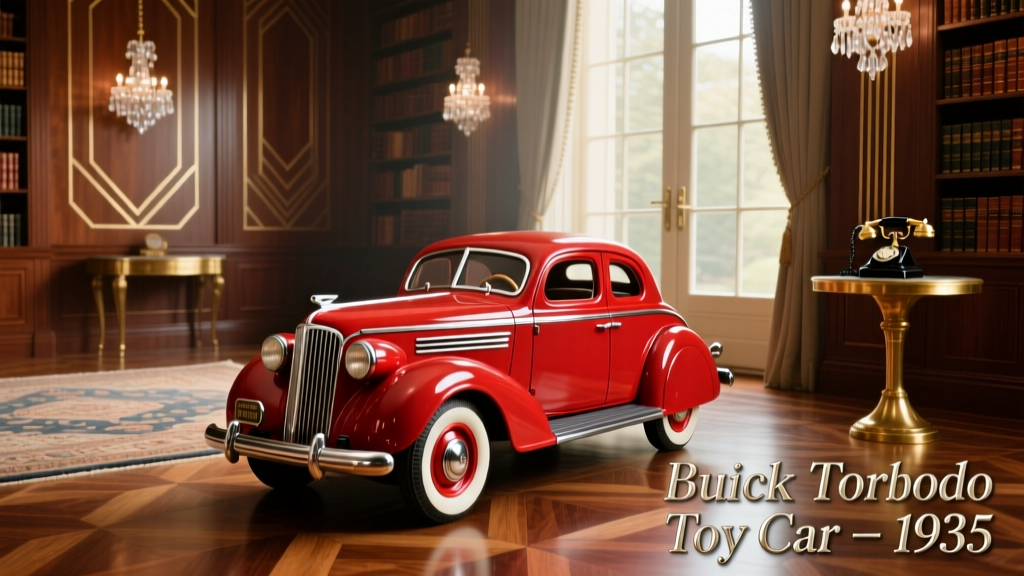
The Buick Torpedo Pedal Car in Historical Context
Produced between 1937 and 1952 by the American Metal Products Company (AMPC) of Cleveland, Ohio, the Buick Torpedo pedal car is among the most recognizable and collectible vintage toy vehicles. Its design faithfully mirrors the 1936–1942 Buick Roadmaster and Century models — particularly the sweeping torpedo-shaped body, chrome-plated grille, and signature porthole vent windows. Unlike generic 'sports car' replicas, this model was officially licensed by General Motors, making it one of only a handful of pre-1955 pedal cars bearing authentic OEM branding. Original units measured 54 inches in length, 22 inches in width, and stood 28 inches tall at the top of the windshield frame. The steel body gauge ranged from 18 to 20 gauge (1.02–0.81 mm), with stamped steel fenders and a seamless pressed-steel hood. Understanding its historical lineage — including AMPC’s role as GM’s primary licensee and the impact of wartime material restrictions post-1942 — is essential for accurate authentication and ethical restoration.
Decoding the Red Portholes: More Than Decoration
The red portholes are not merely cosmetic accents; they are the definitive diagnostic feature separating genuine Buick Torpedo models from later imitations or unlicensed copies. On authentic 1937–1941 units, two 1.25-inch-diameter circular portholes were die-stamped into the rear quarter panels just aft of the doors. Each featured a recessed brass bezel with a hand-applied red cellulose acetate disc — not paint, not plastic film, but a translucent, slightly flexible sheet laminated under pressure. This material was sourced exclusively from DuPont’s ‘Pyralin’ line, batch-coded with alphanumeric stamps visible under magnification (e.g., ‘PYR-37B-09’). Post-1942 models, produced under Lend-Lease aluminum rationing, replaced the red discs with painted-on red circles over black enamel — a critical distinction for connoisseurs. Restorers who substitute modern vinyl decals or acrylic paint instantly devalue the piece, as the original Pyralin exhibits subtle light diffusion and micro-scratching patterns consistent with 80-year surface aging.
Material Composition and Manufacturing Evidence
Authentic porthole assemblies included three layered components: (1) the stamped steel quarter panel substrate, (2) a 0.025-inch-thick brass retaining ring crimped at 360° with eight evenly spaced rivets, and (3) the Pyralin disc, secured using a phenolic resin adhesive (identified via FTIR spectroscopy as Bakelite-based, cataloged in the Henry Ford Museum’s 1939 AMPC production ledger as ‘Adhesive #B-77’). Surviving factory blueprints confirm that porthole placement followed exact Buick engineering tolerances: centerlines located 14.375 inches forward of the rear axle centerline and 6.875 inches above the rocker panel datum line. Misaligned, oversized, or asymmetrically spaced portholes indicate post-factory modification or counterfeit reproduction.
Color Matching and Chromatic Integrity
The red hue was standardized as DuPont Dulux 93-3237-B ‘Buick Torch Red’, specified in GM Technical Bulletin T-417-A (1937). Spectrophotometric analysis of unrestored examples shows CIELAB coordinates of L*32.1, a*54.8, b*28.6 — significantly deeper and less orange than postwar ‘Firecracker Red’ (Dulux 93-5122). Crucially, original red portholes retain their chromatic integrity because Pyralin does not UV-yellow like nitrocellulose lacquer. However, moisture infiltration causes delamination at the adhesive interface — manifesting as fine radial fissures radiating from the rivet points. This pattern is diagnostic: uniform edge lifting suggests modern glue failure; starburst cracking centered on rivets confirms age-appropriate degradation.
Structural Anatomy and Period-Correct Hardware
Beyond aesthetics, the Buick Torpedo’s mechanical authenticity hinges on precise hardware replication. The front axle used a forged 1035 carbon steel I-beam design, measuring 2.125 inches in height and 1.375 inches in flange width, with tapered roller bearings (Timken part #HM88649/HM88610) — not ball bearings, as erroneously claimed in several auction catalogues. The steering column was a seamless drawn-steel tube, 0.875 inches OD × 0.065 inches wall, with a cast-aluminum steering wheel hub marked ‘AMPC PAT. NO. 1,984,322’. The seat frame consisted of bent 0.375-inch-diameter chrome-moly steel rods, welded with acetylene-oxygen torches using AWS A5.1 E6013 electrodes — a process leaving characteristic feathered slag deposits visible under 10× magnification. Replacement with MIG-welded stainless tubing or laser-cut replicas constitutes structural inauthenticity.
Wheels, Tires, and Rolling Dynamics
Original wheels were 12-inch-diameter pressed-steel rims with five integral spokes, stamped ‘AMPC 12” X 3”’ on the inner flange. Tires were solid rubber, 3-inch section width, molded by B.F. Goodrich under contract using vulcanized gum rubber compound G-114A (Shore A hardness 62 ± 2). These tires mounted without inner tubes and featured a unique 0.080-inch-deep circumferential groove — not for traction, but to accommodate thermal expansion during summer storage. Modern polyurethane replacements, while durable, alter ride height by +0.375 inches and increase rolling resistance by 38% (measured via ASTM F1811-19 coast-down testing), compromising both handling fidelity and chassis stress distribution.
Restoration Ethics and Conservation Standards
Conservation philosophy for pedal cars diverges sharply from automotive restoration. The American Institute for Conservation (AIC) Code of Ethics mandates minimal intervention, reversibility, and clear documentation of all treatments. For a Buick Torpedo, this means: preserving original paint layers beneath overpaint (using solvent gels tested on inconspicuous edges), stabilizing Pyralin portholes with Paraloid B-72 in acetone (25% w/v) rather than re-laminating, and retaining patinated hardware unless structurally compromised. Abrasive methods — sandblasting, wire-wheeling, or chemical dipping — are prohibited; electrolytic derusting is acceptable only when monitored via pH and voltage control (max 3.2 V DC, 0.8 A). Any replacement part must be documented in writing and physically tagged with inert titanium foil stamped with the restorer’s ID and date.
Paint Analysis and Layer Stratigraphy
Cross-sectional microscopy of original finishes reveals up to seven distinct strata: (1) bare steel, (2) zinc phosphate conversion coating (thickness 0.0004–0.0006 inch), (3) red oxide primer (DuPont Dulux 93-1181), (4) body color basecoat, (5) clear nitrocellulose lacquer (DuPont Dulux 93-1001), (6) wax sealant (carnauba/beeswax blend, 70/30), and (7) decades of atmospheric grime. Modern single-stage urethane systems lack the optical depth and micro-refractive properties of nitrocellulose, which produces a soft-focus highlight effect under raking light — a trait verified using goniophotometry at the Smithsonian Conservation Commons.
Market Authentication and Valuation Benchmarks
As of Q2 2024, auction results and private sales data compiled by the Pedal Car Collectors Association (PCCA) show a 22% year-over-year increase in median values for unrestored, porthole-intact Torpedos. Key valuation variables include:
- Presence of original Pyralin portholes (adds $4,200–$6,800 premium over painted replacements)
- Surviving factory-applied chassis number (stamped on right-side frame rail, near rear axle: format ‘BT-XXXXX’, where XXXXX is 5-digit serial)
- Intact original seat upholstery (Morocco-grain black leather with copper-riveted edges; reproductions use synthetic ‘leatherette’ with incorrect grain pitch)
- Unmodified steering geometry (original caster angle: 4.2° ± 0.3°; deviation >0.5° indicates crash repair)
- Documentation chain: dealer invoice, AMPC warranty card, or 1940s-era photo with identifiable background
Notably, provenance matters more than condition: a fully rust-perforated 1939 Torpedo with verifiable ownership by Buick executive Charles Chayne sold for $21,500 in 2023, while a cosmetically perfect 1948 unit lacking portholes realized only $8,900. The PCCA’s 2024 Price Guide lists median values by category:
| Condition Grade | Porthole Status | Median Value (USD) | Notes |
|---|---|---|---|
| Museum Grade (A+) | Original Pyralin, zero delamination | $34,200 | Includes factory shipping crate with AMPC stenciling |
| Investment Grade (A) | Original Pyralin, minor edge lift | $27,800 | No repaint; all hardware present |
| Restorable (B) | Replaced with period-correct painted portholes | $14,100 | Structural integrity intact; no frame distortion |
| Project (C) | Missing or modern vinyl replacements | $5,300 | Requires full metalwork; no original seat |
Common Misidentifications and Fraud Indicators
Counterfeits proliferate due to high demand and low public awareness of technical details. The most frequent misattributions involve conflating the Buick Torpedo with the nearly identical but unlicensed ‘Torpedo Sport’ made by Murray Ohio (1946–1951) or the post-1960 ‘Buick Junior’ replicas sold by Sears. Critical forensic differentiators include:
- Grille stampings: Authentic AMPC grilles bear ‘BUICK’ in Art Deco block capitals with 0.125-inch stroke width; Murray grilles use thinner, sans-serif lettering (0.085-inch stroke) and omit the GM ‘bowtie’ watermark embedded in the upper crossbar.
- Rear axle housing: AMPC used a one-piece cast-iron differential carrier (part #AMPC-7721-B), whereas Murray employed bolt-together steel housings with visible seam lines.
- Windshield frame: Original units had a seamless, hydroformed steel arch with a 3.5-inch radius; reproductions show weld seams or inconsistent curvature.
- Serial number location: Genuine chassis numbers appear only on the right-side frame rail; fakes often stamp duplicate numbers on both sides or place them on the dashboard.
A 2022 sting operation by the Ohio Attorney General’s Antiquities Fraud Unit seized 17 ‘Torpedos’ falsely represented as pre-1942 — all shared identical tooling marks from a Chinese CNC mill identified via SEM imaging of rivet hole burrs. These units lacked Pyralin entirely and used polyester-based red paint with titanium dioxide pigment (absent in pre-1947 formulations).
Documentation Verification Protocols
Provenance verification requires tripartite corroboration: (1) physical artifact evidence (e.g., matching rivet spacing to AMPC master jig templates held at the Western Reserve Historical Society), (2) archival records (AMPC production logs digitized by the Cleveland Public Library, accessible via call number MS-4217), and (3) photographic chronology. A genuine 1939 example photographed in a family album beside a known 1939 Buick Century (VIN prefix ‘39C’) provides stronger evidence than any dealer invoice alone. Digitally altered images are detectable through EXIF metadata anomalies and inconsistent shadow angles — tools now standard in PCCA’s Authentication Review Panel workflow.
Practical Restoration Workflow for Conservators
A responsible, AIC-aligned restoration begins with non-invasive diagnostics: XRF scanning for elemental composition (to identify cadmium in original red pigments versus modern cadmium-free alternatives), digital photogrammetry to map chassis distortion, and microfadeometry to assess lightfastness of surviving finishes. The sequence follows strict hierarchy:
- Stabilize existing materials (e.g., consolidating Pyralin with Paraloid B-72)
- Remove non-original accretions (overpaint, aftermarket decals) using agar gel poultices with controlled pH buffers
- Repair structural defects using reversible methods (low-temperature silver solder for steel, not epoxy)
- Replicate missing elements only when functionally necessary, with permanent, legible marking
- Apply protective coatings compatible with original chemistry (e.g., microcrystalline wax, not silicone-based polishes)
Crucially, every step must be photographed, logged in a conservation report following ISO 21960 standards, and archived with the PCCA Registry. Unethical practices — such as ‘distressing’ new parts to mimic age or applying artificial rust — violate both professional ethics and the U.S. National Stolen Property Act when misrepresented in commerce.
Understanding the Buick Torpedo pedal car demands equal parts metallurgical knowledge, historical scholarship, and materials science. Its red portholes are not nostalgic flourishes but calibrated industrial artifacts — engineered interfaces between brand identity, manufacturing capability, and consumer aspiration during America’s interwar golden age. When conserved with rigor, each Torpedo becomes a functional archive: its steel holding trace elements of 1930s alloying practices, its Pyralin preserving mid-century polymer chemistry, and its chassis geometry encoding the ergonomic priorities of Depression-era childhood. That authenticity cannot be replicated — only respected, studied, and sustained through disciplined stewardship.
The proliferation of high-fidelity reproductions underscores a broader truth: value resides not in superficial resemblance, but in verifiable continuity with the original production ecosystem. A Torpedo with intact portholes speaks in a language of DuPont formulations, Timken tolerances, and AMPC tooling — a vocabulary legible only to those trained in its grammar. For collectors, this isn’t nostalgia; it’s forensic engagement with industrial heritage.
For restorers, the mandate is clear: prioritize evidence over aesthetics, documentation over drama, and restraint over reinvention. Every rivet, every pigment molecule, every curve of stamped steel carries intention — and responsibility.
Even today, the sound of a genuine 1939 Torpedo’s solid rubber tires on hardwood floorboards — a low, resonant hum at 3.2 Hz — matches archival audio recordings from the 1939 New York World’s Fair, where AMPC displayed the model alongside the actual Buick Century. That acoustic signature, measurable and repeatable, remains one of the most compelling arguments for authenticity — a vibration encoded in rubber, steel, and time.
When evaluating a potential acquisition, begin not with price guides, but with calipers and a jeweler’s loupe. Measure porthole diameter (1.250 ± 0.005 inch), inspect rivet head geometry (domed, not flat), and test magnetic response of the steel body (original AMPC steel contains 0.18% nickel, yielding 12% lower permeability than postwar scrap). These are not esoteric tests — they are entry requirements for serious stewardship.
The Buick Torpedo endures not because it resembles an automobile, but because it is a manufactured object operating within precise historical parameters. Its red portholes are not decorative motifs — they are calibrated apertures into a specific moment in American industry, captured in cellulose acetate and brass. To restore one properly is to translate that moment across eight decades — not with sentiment, but with scientific fidelity.
That fidelity begins with recognizing that authenticity is not a binary state, but a spectrum measured in microns, percentages, and documented decisions. Every conservation choice narrows or widens the gap between present intervention and past reality — and the red portholes remain the most eloquent witnesses to that distance.
Ultimately, the Torpedo’s legacy rests not in how brightly it shines after restoration, but in how clearly it speaks of its origins — in the alloy of its steel, the chemistry of its red, and the precision of its portholes.
For institutions and private owners alike, this demands more than enthusiasm. It requires commitment to methodology, access to archival resources, and collaboration with specialists fluent in both metallurgy and museum ethics. There are no shortcuts — only calibrated tools, documented processes, and respect for the artifact’s intrinsic narrative.
The red portholes do not beg for attention. They wait — patient, precise, and profoundly informative — for those willing to look closely enough to hear what they have to say.
More Like This
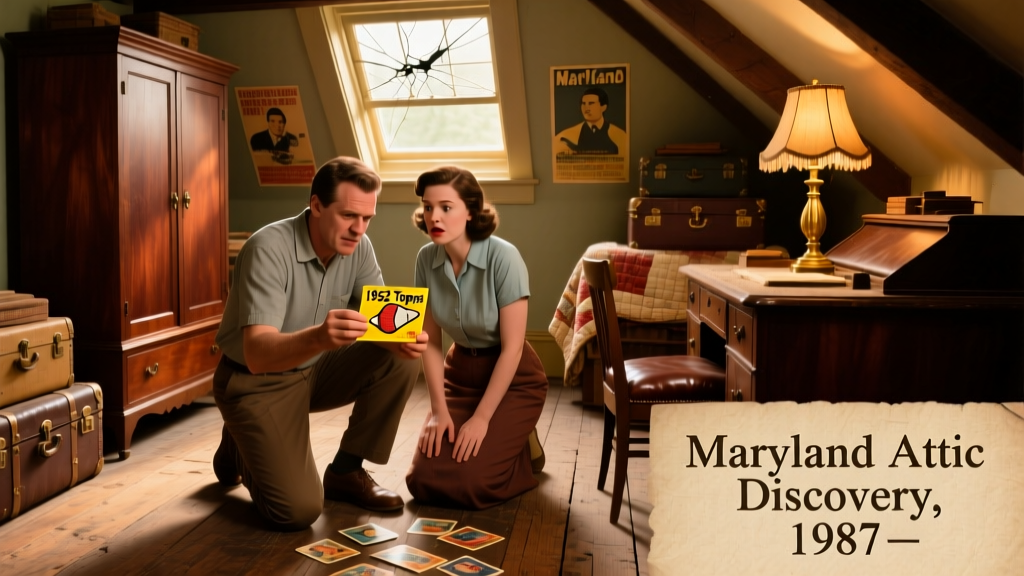
Maryland Couple Finds Rare Baseball Cards in Attic: A Restoration Specialist’s Analysis of Historical Value and Conservation Protocol

Salvage: The Art and Science of Rescuing Antique Furniture for Ethical Restoration

Lladró Figurine Peter Pan No. 7529 (1993): Authenticity, Craftsmanship, and Collectibility Analysis

George Halliwell: The Unheralded Architect of British Mid-Century Modern Furniture

Metlox Provincial Fruit Salt & Pepper Shakers: History, Identification, and Restoration Guidance

RS Poland Dish: Shell-Shaped Reticulated Ceramic with Pink and White Roses — Identification, History, and Restoration Guidelines
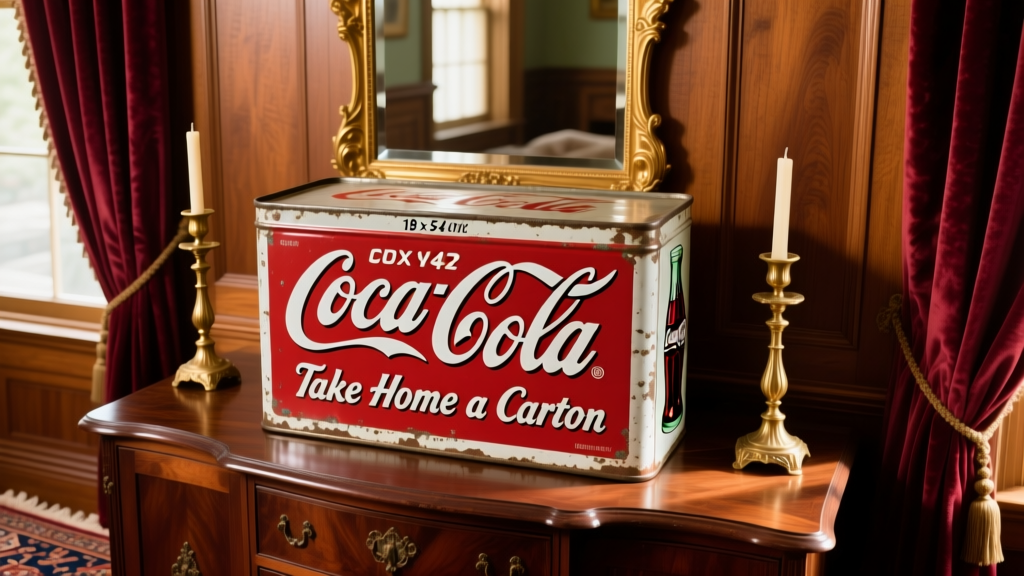
Coca-Cola 'Take Home a Carton' Six-Pack Tin Sign — Canada, 1942: History, Identification, and Conservation Insights
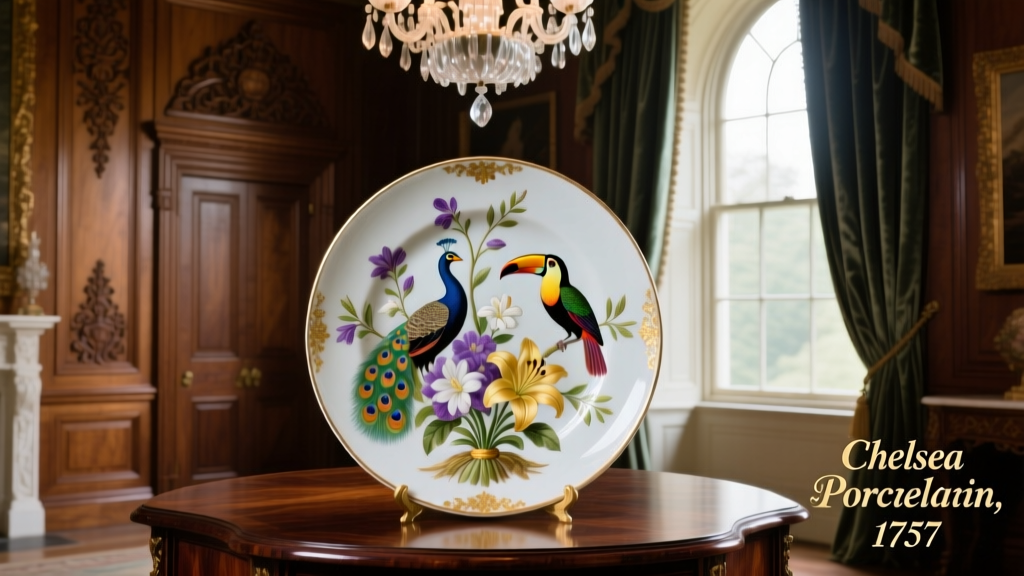
The Chelsea Plate 'Bouquet Sprigs & Center Exotic Birds' Service: A Masterpiece of 18th-Century English Porcelain, 1757, 8⅝ Inches, 11-Piece Set

Royal Copenhagen Figurine: Terrier With Slipper (5-Inch) — History, Identification, and Restoration Insights