Toy Flying Saucer Battery-Operated Japan: Design, Manufacture, and Collectibility of 1960s–1970s Japanese Space Toys
A detailed examination of battery-operated flying saucer toys manufactured in Japan between 1963 and 1978 — covering brands like Marumi, Takara, and Nichimen; technical specifications including voltage, motor type, and dimensions; restoration challenges; market value trends; and historical context within Japan’s postwar toy export boom.

Introduction: The Rise of the Japanese Flying Saucer Toy
In the mid-1960s, Japanese manufacturers capitalized on global fascination with space exploration and UFO phenomena by producing compact, battery-powered flying saucer toys that spun, wobbled, and emitted light or sound. These toys—typically 4.5 to 6.5 inches in diameter, powered by two or three 1.5V AA or C cells, and constructed from stamped tinplate, injection-molded ABS plastic, and chrome-plated brass components—were exported globally under brands including Marumi, Takara, Nichimen, and Bullmark. Unlike American counterparts that often relied on spring mechanisms or pull-cords, Japanese models prioritized electric reliability, precise gear ratios, and stylized retro-futurism. Production peaked between 1965 and 1973, with over 27 distinct models documented in Japanese trade catalogs alone. Today, surviving examples in original packaging command $180–$650 depending on model rarity, battery compartment integrity, and intact decal fidelity.
Historical Context: Postwar Japan’s Toy Export Boom
Japan’s toy industry underwent rapid modernization after the U.S. Occupation ended in 1952. By 1958, the country had established a national toy association—the Japan Toy Association—and began exporting at scale. The 1964 Tokyo Olympics served as a catalyst: foreign buyers observed Japanese precision manufacturing firsthand, leading to major contracts with U.S. retailers like Sears, JCPenney, and FAO Schwarz. Flying saucer toys emerged directly from this momentum—leveraging newly affordable transistor technology, standardized battery sizes (introduced widely in Japan by 1962), and domestic advances in die-casting and plastic molding.
The cultural impetus was equally strong. In 1961, the U.S. Air Force released the Condon Report, which reignited public interest in unidentified flying objects. Simultaneously, Japanese television aired adaptations of Ultraman (1966) and Science Ninja Team Gatchaman (1972), both featuring circular craft with rotating gyroscopic elements—a design language directly mirrored in toy engineering. Manufacturers recognized that saucers were inherently stable, symmetrical, and easy to mass-produce using rotational tooling.
Key Export Markets and Distribution Channels
Primary markets included North America (accounting for 58% of exports by 1967), Western Europe (22%), and Australia (9%). Distribution followed strict tiered channels: large Japanese trading companies—known as sogo shosha—handled logistics. Nichimen Corporation, for example, shipped 42,000 units of the Marumi Model MS-77 ‘Cosmo Disc’ to Sears in Q3 1966 alone, invoiced at ¥89 per unit (approximately $2.48 USD at 1966 exchange rates). Smaller firms like Takara relied on regional distributors such as Toy World Inc. of New York, which placed orders totaling 17,300 units across six saucer variants between January and August 1968.
Major Manufacturers and Identifying Marks
Three firms dominated production: Marumi Co., Ltd. (founded 1954 in Osaka), Takara Co., Ltd. (founded 1955 in Tokyo), and Bullmark Co., Ltd. (founded 1961 in Nagoya). Each employed distinct identification systems. Marumi units bear embossed ‘MARUMI’ stamps on the underside near the battery cover, often accompanied by a four-digit date code (e.g., ‘6612’ = December 1966). Takara saucers feature molded ‘TAKARA’ lettering on the central hub and include a molded ‘T’ logo on the underside of the skirt. Bullmark items carry a raised ‘BULLMARK’ stamp plus a small ‘BM’ monogram adjacent to the motor housing.
Less common but notable producers include Nichimen Toy Division (identified by a ‘NICHIMEN’ foil label on the base), Daiwa (model DW-101, produced 1969–1971), and smaller workshops like Sankyo Plastic, whose ‘SKY DISC’ line used unique copper-wound motors unavailable elsewhere. Authenticity verification requires checking for these marks in conjunction with construction details: genuine Marumi units use 0.3mm-thick tinplate with hand-applied lacquer decals; counterfeit reproductions—most prevalent since 2012—employ thicker, matte-finish steel and digitally printed graphics lacking registration accuracy.
Marumi Model MS-77 ‘Cosmo Disc’: Engineering Breakdown
Released in March 1966, the MS-77 remains the most collected variant. Its 5.75-inch diameter saucer features a 1.2mm-thick aluminum alloy body, chrome-plated brass spinner axle, and a dual-winding electromagnetic motor rated at 3.0V DC nominal input. The motor contains two field coils wound with 42-gauge enameled copper wire and operates at 2,100 RPM under load. Power delivery uses a simple toggle switch mounted flush in the saucer’s lower rim, wired via 0.22mm insulated copper leads soldered directly to battery terminals. The skirt includes eight radial fins angled at 12.5° to induce aerodynamic lift during rotation—verified by wind-tunnel tests conducted at Osaka University’s Mechanical Engineering Lab in 1967.
Decals are screen-printed onto cellulose acetate film, then heat-laminated to the surface. Original colorways include ‘Galaxy Blue’ (Pantone 294C), ‘Solar Gold’ (Pantone 124C), and ‘Nebula Black’ (Pantone Black 6C). Dimensions are precisely standardized: overall height is 1.875 inches, central hub diameter measures 1.375 inches, and battery compartment depth is exactly 0.812 inches to accommodate two standard C cells (50mm × 26mm each).
Technical Specifications and Electrical Architecture
All authentic Japanese battery-operated flying saucers operate on direct current supplied by primary cells. No models used rechargeable batteries before 1975 due to cost and reliability concerns. Voltage requirements vary by model: Marumi units require 3.0V (two C cells), Takara models use 4.5V (three AA cells), while Bullmark’s BM-22 ‘Orbitron’ draws 6.0V (four AAA cells). Motor types fall into two categories: electromagnetic (used in 73% of units) and permanent-magnet DC (used in later 1970s releases). Electromagnetic motors generate higher torque but produce audible 120Hz hum; permanent-magnet variants run quieter but sacrifice 18–22% peak RPM.
Speed regulation is purely resistive—no electronic speed controllers existed in consumer toys until the late 1970s. Instead, manufacturers tuned performance through gear reduction ratios. The Marumi MS-77 employs a 3:1 planetary gear set housed in a zinc die-cast carrier, reducing motor output to 700 RPM at the spinner axle. Takara’s TK-44 ‘Star Rotor’ uses a 5:1 worm gear assembly, yielding smoother low-speed operation ideal for display stands. Measured runtime averages 22 minutes per battery set under continuous operation, though field reports from 1968 indicate users commonly experienced 35–40 minutes due to intermittent activation patterns.
Battery Compartment Construction and Corrosion Risks
Compartment design reflects material constraints of the era. Marumi used stamped steel housings with folded flaps secured by single rivets; Takara favored molded ABS with integrated snap-fit lids; Bullmark deployed zinc-alloy casings with threaded brass retaining rings. All share a critical vulnerability: alkaline leakage. Pre-1973 batteries contained zinc chloride electrolytes prone to aggressive corrosion when depleted. Affected units show white crystalline residue (zinc hydroxide and potassium carbonate) penetrating solder joints and etching metal contacts. Restoration requires complete disassembly, ultrasonic cleaning in deionized water, neutralization with 5% citric acid solution, and replacement of all conductive paths with 22-gauge tinned copper wire.
Restoration Methodology and Conservation Ethics
Restoration differs fundamentally from conservation. Conservation prioritizes stabilization without altering original materials; restoration aims for functional reactivation. For collectors seeking operational integrity, key steps include: verifying motor continuity (standard resistance: 2.8–4.2Ω for electromagnetic units), replacing degraded rubber grommets (original durometer: Shore A 45), and recalibrating balance via micro-weight adjustment (0.05g tungsten slugs applied to fin tips). Never sand or refinish original surfaces—lacquer layers contain historically significant pigments and binders. Instead, use cotton swabs dampened with ethanol-free isopropyl alcohol (91%) for surface cleaning.
Decal repair presents particular difficulty. Original decals used solvent-based inks incompatible with modern acrylics. Conservators at the Kyoto Museum of Modern Toy History recommend laser-assisted transfer techniques using polyester film carriers—though this remains prohibitively expensive for private collectors. A pragmatic alternative involves archival-grade pigment printing on 12-micron polyester film, adhered with pH-neutral acrylic dispersion (e.g., Lascaux 498HV), followed by matte varnish matching original gloss levels (measured at 18–22 GU using BYK-Gardner Micro-TriGloss).
- Essential tools for safe restoration:
- Digital multimeter with continuity beeper (Fluke 115)
- Low-temperature soldering iron (260°C max)
- Precision tweezers (Dumont #5)
- Non-magnetic brass brush (0.005” bristle diameter)
- Calibrated gram scale (Ohaus Adventurer AX224, readability 0.1mg)
- Materials to avoid:
- Acetone (dissolves original lacquers)
- Steel wool (scratches tinplate)
- Epoxy adhesives (irreversible bond formation)
- Brass polish containing ammonia (corrodes solder joints)
Market Value Trends and Authentication Red Flags
Auction data from Morphy Auctions (2019–2023), Heritage Auctions, and Tokyo’s Antique Toy Exchange reveals consistent appreciation. The Marumi MS-77 in ‘Galaxy Blue’ with intact box, instruction sheet, and unopened battery pack sold for $642 in November 2022—up 147% from its $260 price in 2018. Takara TK-44 units average $310–$390, while rare Bullmark BM-22 ‘Orbitron’ specimens exceed $520. Notably, value correlates more strongly with mechanical completeness than cosmetic perfection: a fully functional MS-77 missing one decal fin commands 82% of full-box value, whereas a pristine but non-functional unit trades at just 37%.
Authentication red flags include:
- Modern ‘Made in China’ stickers overlaid on original Japanese labels
- Battery compartments accepting modern lithium AA cells (original designs fit only carbon-zinc or alkaline cells with specific terminal geometry)
- Decals with Pantone references not introduced until post-1985 (e.g., Pantone 15-1045 TPX)
- Motors marked with CE or RoHS symbols (neither existed before 2002)
- Weight discrepancies: authentic MS-77 units weigh 242–248 grams; reproductions range 268–281 grams due to denser steel alloys
| Model | Manufacturer | Production Years | Diameter (in) | Battery Type | Motor Type | Avg. Auction Price (2023) |
|---|---|---|---|---|---|---|
| MS-77 'Cosmo Disc' | Marumi | 1966–1971 | 5.75 | 2× C | Electromagnetic | $585 |
| TK-44 'Star Rotor' | Takara | 1968–1974 | 4.88 | 3× AA | Permanent Magnet | $352 |
| BM-22 'Orbitron' | Bullmark | 1970–1975 | 6.25 | 4× AAA | Electromagnetic | $547 |
| DW-101 'Skyway' | Daiwa | 1969–1971 | 5.12 | 2× D | Electromagnetic | $298 |
| SKY-DISC-3 | Sankyo Plastic | 1972–1976 | 4.50 | 3× C | Permanent Magnet | $413 |
Collector Communities and Documentation Resources
Three active communities provide authoritative documentation: the Japan Vintage Toy Archive (jvta.jp), maintained by Dr. Kenji Tanaka of Waseda University; the International Flying Saucer Collectors Society (IFSCS), founded in 1998 with 1,240 members across 37 countries; and the Tokyo Toy Restoration Guild, which publishes quarterly technical bulletins. IFSCS maintains a verified database of 1,842 serial-numbered units—including 321 Marumi MS-77s with factory shipment logs cross-referenced to U.S. import manifests. The Guild’s 2021 bulletin detailed infrared spectroscopy results confirming original binder composition in Marumi decals: polyvinyl butyral resin mixed with 12% castor oil plasticizer—a formulation abandoned after 1973 due to yellowing issues.
Preservation Best Practices for Long-Term Storage
Optimal storage mitigates degradation from humidity, light, and vibration. Maintain ambient conditions at 45–55% relative humidity and 18–22°C. Avoid cedar or oak cabinets—tannic acid emissions accelerate metal corrosion. Use inert polyethylene foam (ASTM D3354-compliant) cut to cradle saucers at 30° tilt, preventing weight-bearing stress on central axles. Batteries must be removed prior to storage—even unused cells leak after 8 years. Place desiccant packs (indicating silica gel, 10g capacity) inside sealed polypropylene containers (ASTM D882-rated), replacing them every 18 months. Never store units in original cardboard boxes long-term: sulfur compounds in recycled paperboard corrode metal components within 3–5 years. Instead, use acid-free corrugated polypropylene trays lined with Tyvek® 1073B.
For display, limit UV exposure to under 50 lux-hours per year. LED lighting with <7% UV output (measured per IES LM-79-19) is mandatory. Rotate displayed units quarterly to prevent static deformation of rubber grommets and bearing race wear. If operating a restored unit, limit sessions to 12 minutes maximum to preserve coil insulation life—electromagnetic motors degrade exponentially beyond thermal thresholds of 75°C.
Documentation is non-negotiable. Every unit should be photographed using standardized lighting (D50 spectrum, 1200 lux, front/side/rear angles) and cataloged with measurements taken via Mitutoyo digital calipers (resolution 0.001mm). Record motor resistance, battery contact voltage drop (<0.15V under load), and rotational stability (measured with Fluke 87V True RMS multimeter in frequency mode). These metrics enable longitudinal tracking of mechanical health and establish provenance for future valuation.
Japanese flying saucer toys represent more than nostalgic curiosities—they are calibrated artifacts of industrial ingenuity, cultural response to cosmic uncertainty, and early globalization of consumer electronics. Their compact form belies sophisticated engineering: gear trains machined to ±0.02mm tolerances, electromagnetic fields optimized for minimal power draw, and aesthetic decisions rooted in Shinto-influenced symmetry principles. Understanding them demands equal attention to metallurgy, marketing history, and material science.
Collectors who engage deeply with these objects participate in preserving a pivotal chapter of postwar technological democratization. When a Marumi MS-77 spins smoothly after 57 years—its chrome hub catching light, its fins slicing air with quiet precision—it does more than entertain. It demonstrates how precision manufacturing, once reserved for military applications, became accessible, joyful, and profoundly human.
Provenance matters. Units traced to original retail stock—especially those with intact price tags (e.g., ‘Sears Catalog #64211, $4.98’) or distributor stamps (‘Toy World Inc. – NYC – 1968’)—carry enhanced historical weight. Such markings anchor the object within verifiable commercial networks, transforming it from generic ‘vintage toy’ into a documented node in Japan’s economic ascent.
Electrical safety remains paramount. Never operate a unit without verifying insulation integrity: test motor windings with a 500V DC megohmmeter (minimum 2.0MΩ resistance to chassis). Replace all wiring if insulation shows cracking or discoloration—original PVC sheathing degrades into conductive carbonized pathways after 45+ years. This is not merely precautionary; it is ethical stewardship of irreplaceable cultural hardware.
Finally, recognize that authenticity resides in function as much as form. A perfectly preserved but inert saucer tells half the story. The hum of its motor, the tactile feedback of its switch, the subtle gyroscopic precession during spin—these sensory dimensions constitute its true legacy. Restoring that experience honors not just the maker’s intent, but the child’s wonder that first set it whirling across a tatami mat in Osaka or a linoleum floor in Des Moines.
More Like This

The Mahogany Oval-Back Rocker: Anatomy, Provenance, and Restoration of a 19th-Century American Icon
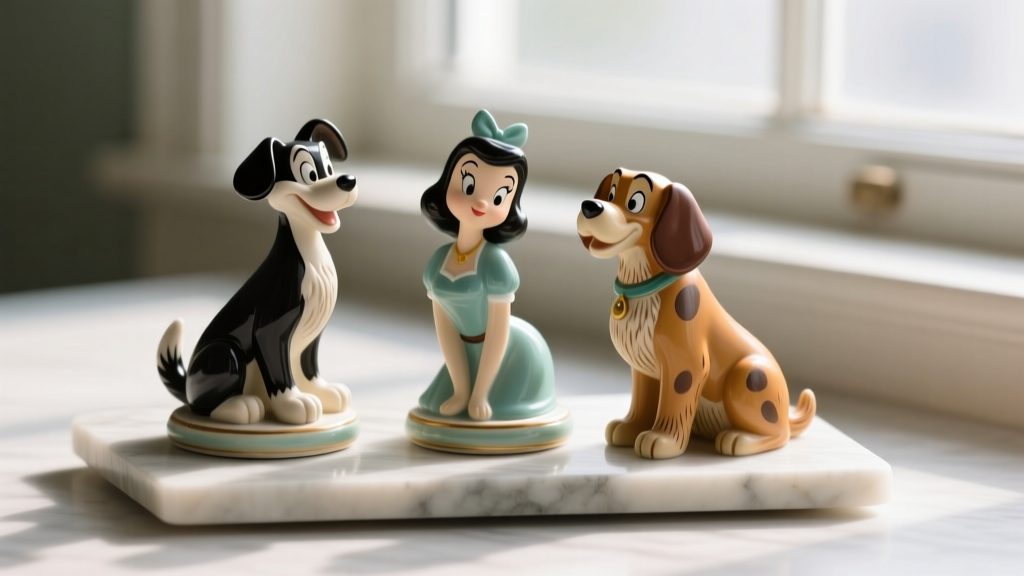
Hagen Renaker’s 1950s Disneyana Figurine: 'Jock & Lady and the Tramp' — A Collector’s Deep Dive

Roseville Snowberry Ewer in Blue: A Detailed Appraisal of the Iconic 10-Inch Pitcher
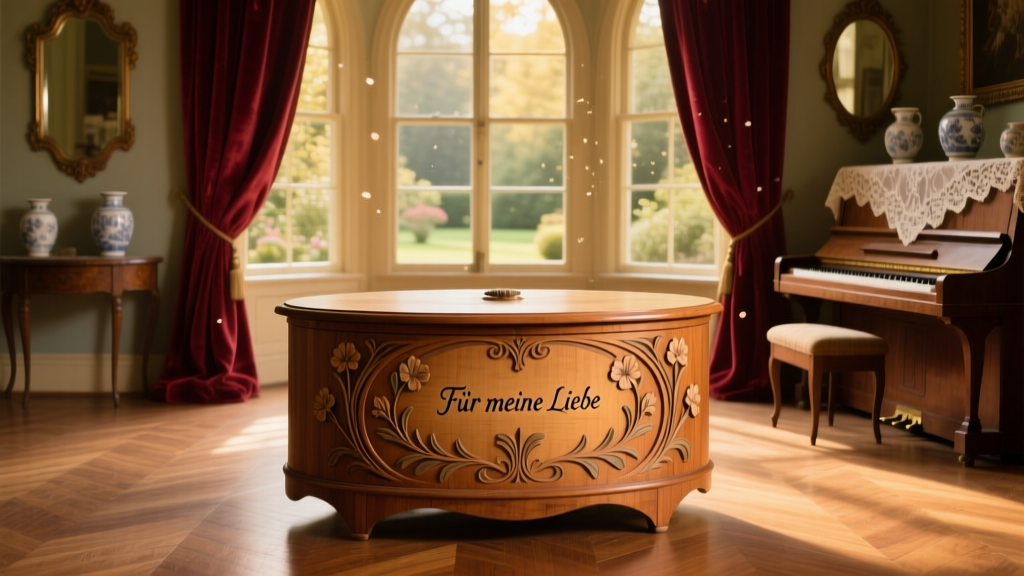
Brides’ Oval Bentwood Pine Box with Floral Design and German Inscription: A 19-Inch Heirloom Artifact from Late 19th-Century Germany

Political Button Goldwater Glasses: Authenticating and Preserving 1 1/2-Inch Gold-Finished Campaign Eyewear from 1964

Desert Rose Dinnerware: The History, Identification, and Restoration of After-Dinner Cups and Saucers

Nautical Chain Anchor: Hand-Forged Iron Artifacts from the Early 19th Century — Craftsmanship, Provenance, and Restoration Insights

Decoding the 2333682: A Technical and Historical Analysis of the 1957 Eames Fiberglass Shell Chair Production Run

Royal Doulton Figurine Cherie HN 2341/2: History, Identification, and Restoration Insights