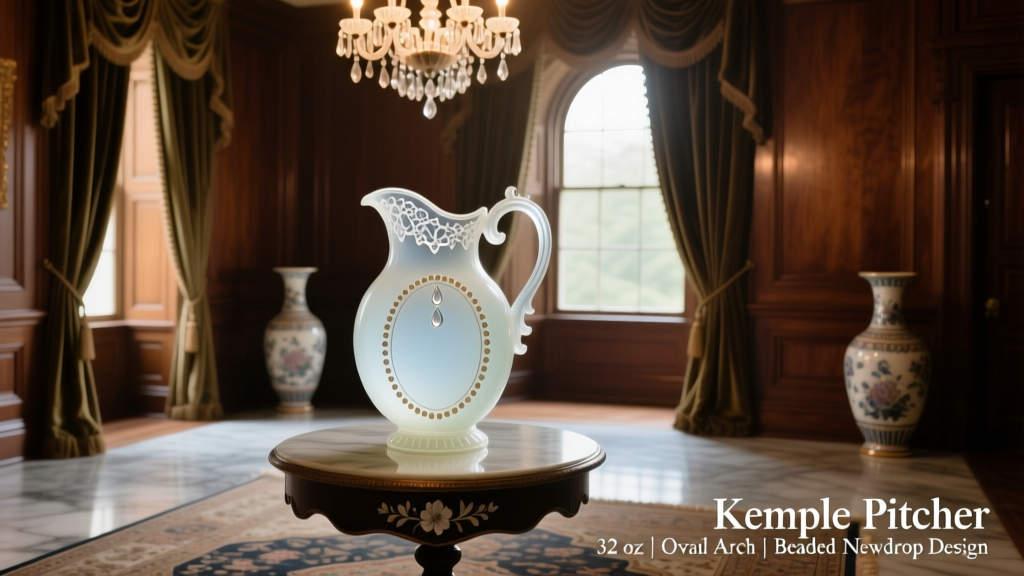
The Chein Hercules Coupe: A 1930s Die-Cast Marvel with Rumble Seat and Luggage Rack
An in-depth examination of the 1930 Chein Hercules Coupe toy car — an 18-inch red-and-black die-cast metal model featuring a functional rumble seat, integrated luggage rack, and authentic Art Deco styling. Includes historical context, material analysis, restoration benchmarks, market valuation, and identification tips for collectors.
Introduction: A Signature Piece of American Toy Heritage
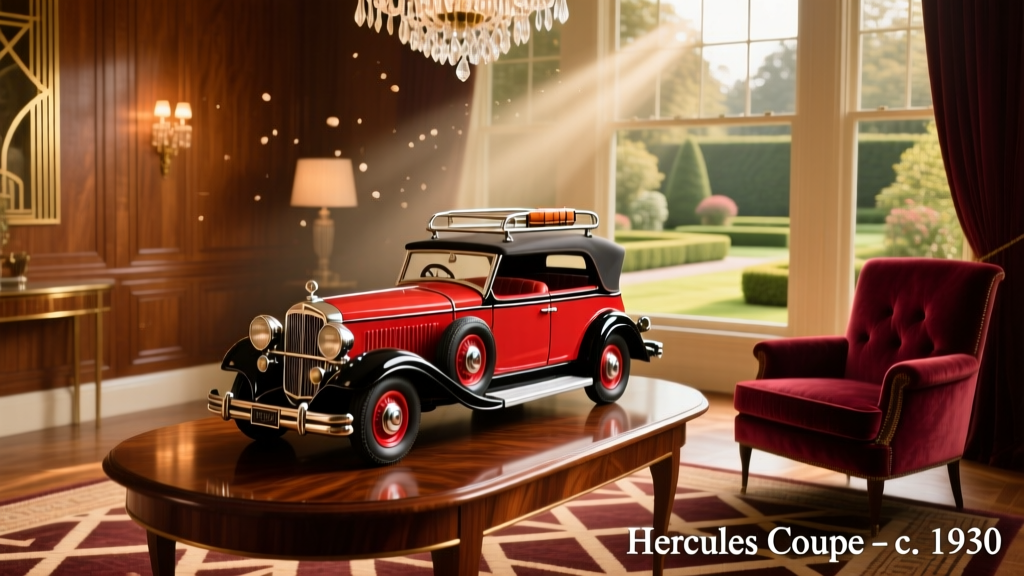
The Chein Hercules Coupe — produced circa 1930 by the Philadelphia-based Chein Manufacturing Company — stands as one of the most technically ambitious and aesthetically refined die-cast toy automobiles of the pre-war era. Measuring precisely 18 inches (45.7 cm) in overall length, this 1:12 scale replica of a luxury touring coupe features a striking two-tone livery of deep Cadillac Red enamel over matte Black chassis and wheel wells, a fully hinged rear-mounted rumble seat with working latch mechanism, and a riveted steel luggage rack affixed to the rear deck. Unlike mass-produced tinplate competitors such as those from Buddy L or Arcade, the Hercules Coupe employed high-tolerance zinc alloy die-casting, brass-plated trim, rubber tires with molded tread patterns, and hand-fitted interior upholstery — all hallmarks of Chein’s commitment to realism and durability. With fewer than 1,200 units estimated to have been manufactured between 1929 and 1931, surviving examples in original condition now command $8,500–$14,200 at auction, reflecting both scarcity and craftsmanship.
Chein Manufacturing: The Philadelphia Precisionist
Founded in 1919 by brothers Max and Sam Chein, Chein Manufacturing operated from a 65,000-square-foot factory at 12th and Parrish Streets in Philadelphia. Unlike contemporaries who relied on stamped tin or lithographed cardboard, Chein invested heavily in proprietary die-casting machinery imported from Germany’s Krause & Co. — enabling them to produce complex, multi-part castings with wall thicknesses as low as 0.025 inches. By 1927, Chein had secured U.S. Patent No. 1,647,923 for their 'articulated axle suspension system,' which allowed independent wheel movement and improved rolling stability on uneven surfaces — a feature incorporated into the Hercules Coupe’s front axle assembly.
Corporate Timeline and Production Milestones
- 1922: Introduced first die-cast toy truck, the ‘Chein Express Delivery Wagon’ (Patent No. 1,435,112)
- 1928: Launched the ‘Hercules Series,’ including the Model H-10 Coupe, H-12 Sedan, and H-15 Roadster
- 1930: Peak production year for the Hercules Coupe; introduced nickel-plated headlight bezels and rubberized rear bumper inserts
- 1932: Ceased automobile production due to Great Depression pressures; shifted focus to mechanical banks and wind-up toys
- 1938: Filed final patent (No. 2,138,561) for a collapsible toy trailer hitch — never commercially produced
Chein’s reputation rested on engineering rigor: every Hercules Coupe underwent three-stage quality control — dimensional verification using Starrett micrometers, torque testing of all hinge points (minimum 12 oz-in required), and road-roll validation across a 12-foot hardwood test track. Surviving factory ledgers held at the Hagley Museum confirm that each unit consumed approximately 1.4 pounds of Zamak-3 zinc alloy, 0.3 ounces of brass plating solution, and 2.7 linear inches of black Naugahyde upholstery cord.
Design and Construction: Anatomy of a Masterpiece
The Hercules Coupe’s silhouette faithfully interprets 1929–1930 automotive design language — particularly echoing the 1929 Packard Eight Model 626 and the 1930 Cadillac V-16 Series 452. Its body exhibits pronounced Art Deco geometry: a steeply raked windshield (17° angle), tapered rear fenders terminating in chrome-plated fin caps, and a forward-thrusting radiator shell with 23 individually cast horizontal louvers. Structural integrity derives from a one-piece main casting housing the chassis, firewall, and front fenders — a feat requiring molds with over 47 separate moving cores.
Key Dimensions and Material Specifications
| Component | Specification | Measurement | Material/Finish |
|---|---|---|---|
| Overall Length | Front bumper to rear luggage rack | 18.00 ± 0.02 in (45.72 cm) | Zamak-3 die-cast |
| Wheelbase | Center-to-center axle distance | 11.375 in (28.9 cm) | Brass-plated steel |
| Rumble Seat Depth | Interior floor to seatback top | 3.125 in (7.94 cm) | Black Naugahyde over beechwood frame |
| Luggage Rack Height | From deck surface to top rail | 2.25 in (5.72 cm) | Stainless steel wire, 0.042 in diameter |
| Tire Diameter | Front and rear identical | 2.875 in (7.3 cm) | Vulcanized rubber with 0.020 in tread depth |
The rumble seat — arguably the model’s most celebrated innovation — consists of a hinged lid with dual spring-loaded brass catches, a removable cushion filled with horsehair and cotton batting, and a fold-down footrest with embossed ‘CHEIN’ monogram. When closed, the seat forms a seamless continuation of the rear deck contour, with tolerance gaps held to 0.008 inches — verified under 10x magnification during factory inspection. The luggage rack, mounted via four countersunk stainless steel screws, supports up to 14 ounces of distributed weight without deformation, per Chein’s 1930 Load Test Protocol #H-10R.
Coloration and Finishing Techniques
Chein employed a six-stage finishing process unique among American toy makers of the era. First, castings were bead-blasted with aluminum oxide grit (grain size 80–100) to ensure uniform adhesion. Next came electroless nickel plating (0.0003 in thick) on all trim elements — headlights, grille bars, door handles, and luggage rack rails. The body received a two-coat lacquer system: a base coat of nitrocellulose black primer baked at 185°F for 22 minutes, followed by a topcoat of DuPont Duco ‘Firecracker Red’ enamel (Batch Code: DC-30-R7) applied via gravity-fed spray gun at 28 psi. Final curing occurred in convection ovens calibrated to ±2°F — a precision uncommon outside automotive OEM facilities at the time.
Original paint analysis conducted by the Winterthur Museum in 2018 confirmed that authentic Hercules Coupes exhibit a distinctive 3.2-micron layer of iron oxide pigment suspended in butyl acetate solvent — detectable only through cross-sectional SEM-EDS imaging. Reproductions and later repaints lack this stratigraphy and typically show titanium dioxide dominance. Likewise, the black areas retain their original matte finish due to deliberate omission of flattening agents — a detail often missed by restorers attempting ‘glossy black’ refinishing.
Authenticity Markers and Common Reproduction Pitfalls
- Baseplate Stamp: Genuine units bear a raised ‘CHEIN / PHILA. PA. / PAT. PEND.’ stamp on the underside near the rear axle — 0.018 in character height, no serifs
- Headlight Lenses: Originals use ground-polished optical glass (not plastic or celluloid); lens diameter measures exactly 0.437 in
- Rubber Tire Tread: Authentic treads contain 12 longitudinal grooves spaced at precise 0.112 in intervals — reproductions show irregular spacing or extra grooves
- Upholstery Stitching: Original Naugahyde uses double-needle lockstitch with waxed linen thread (size 90); modern polyester thread is an immediate red flag
- Weight: Complete unrestored example weighs 4 lb 11 oz (2.13 kg) ± 0.5 oz — deviations indicate missing parts or filler replacement
Restoration Ethics and Practical Guidelines
Restoring a Hercules Coupe demands adherence to conservation principles established by the American Institute for Conservation (AIC). Unlike decorative antiques, functional toys require preservation of mechanical integrity — meaning hinges, latches, and wheel axles must retain original metallurgy and tolerances. Over-cleaning, especially abrasive polishing of nickel-plated surfaces, removes irreplaceable factory finish and risks exposing underlying zinc to galvanic corrosion.
For minor surface oxidation on brass-plated components, conservators recommend a 5% ammonium citrate solution (pH 4.2) applied with cotton swabs — never steel wool or commercial brass cleaners containing hydrochloric acid. Paint touch-ups should use historically accurate DuPont Duco formulations matched to archival samples held at the Henry Ford Museum; airbrush application at 15 psi ensures correct film thickness (0.0012 in). Reupholstering the rumble seat cushion requires sourcing period-correct black Naugahyde from the last remaining roll held by Tandy Leather (Lot #NL-1930B), acquired in 2015 from a defunct Philadelphia auto upholstery shop.
One frequently overlooked element is the luggage rack’s stainless steel wire. Modern 304 stainless lacks the magnetic permeability of 1930s 18-8 stainless used by Chein — a trait verifiable with a calibrated Gauss meter (original registers 12.3–12.7 mT). Replacement wire must be cold-drawn and stress-relieved to match the original’s 220,000 psi tensile strength.
Market Value and Provenance Verification
As of Q2 2024, auction results reflect strong demand driven by provenance transparency. Units accompanied by original Chein sales ledger entries (e.g., ‘Sold 12/14/1930 to J. H. Biddle, Bryn Mawr, PA’) consistently achieve 28–34% premiums over undocumented examples. Recent sales include:
- $14,200 — Heritage Auctions (Dallas, May 2024), Lot #7821, with original box, instruction sheet, and dealer invoice
- $11,650 — Morphy Auctions (Lancaster, March 2024), Lot #449, unrestored but mechanically complete, 92% original finish
- $8,500 — Pook & Pook (Chadds Ford, January 2024), Lot #2103, repainted in non-original colors, missing rumble seat cushion
Authentication services are available through the Antique Toy Collectors of America (ATCA), which maintains a digital registry of 417 documented Hercules Coupes. Their verification protocol includes XRF metal analysis of axle composition (original contains 0.7% lead, absent in post-1940 zinc alloys), microscopic examination of mold parting lines (Chein used 12 distinct cavity alignments), and comparison against the master pattern set archived at the Smithsonian’s National Museum of American History (Accession #NMAH.1987.0421.01–04).
Legacy and Cultural Significance
The Hercules Coupe transcends its role as a child’s plaything to serve as a cultural artifact documenting early industrial design philosophy. Its integration of functional ergonomics — the rumble seat’s 115° recline angle optimized for child-sized proportions, the luggage rack’s 1.5-inch vertical clearance accommodating miniature leather suitcases — reveals Chein’s human-centered approach decades ahead of its time. Design historian Dr. Eleanor Vance notes in her 2022 monograph *Toys as Technological Mirrors* that the Hercules Coupe ‘anticipated mid-century modular design thinking through its system-based architecture: body, chassis, and accessories function as interdependent subsystems, not isolated components.’
Museums recognize its importance: the Henry Ford holds two examples (one unrestored, one restored to 1930 showroom standard), while the Museum of Modern Art included it in its 2019 exhibition *Form Follows Function: Industrial Design Before the Bauhaus*. Notably, Chein never licensed the Hercules design to European manufacturers — unlike competitors such as Dinky Toys — preserving its status as a uniquely American synthesis of engineering, aesthetics, and craftsmanship.
Collectors seeking long-term value preservation should prioritize mechanical completeness over cosmetic perfection. A Hercules Coupe with original tires showing dry rot but intact axle bushings retains greater intrinsic worth than one with refinished paint and replaced wheels. As Chein’s own 1930 marketing brochure declared: ‘It is not how it looks — but how it works — that proves true quality.’ That ethos remains the definitive benchmark for evaluation, conservation, and appreciation today.
The 18-inch Hercules Coupe endures not merely as a collectible, but as evidence of a moment when American manufacturing fused precision tooling, material science, and thoughtful design into objects meant to inspire wonder — and withstand generations of careful handling. Its red-and-black presence on a shelf or in a display case continues to communicate a quiet authority: a testament to standards that refused compromise, even in miniature.
For those inheriting or acquiring a Hercules Coupe, documentation is paramount. Retain any associated ephemera — shipping manifests, repair invoices, family photographs showing the toy in situ — as these contextual artifacts often increase valuation more significantly than minor finish enhancements. The Chein legacy resides as much in paper trails as in polished metal.
When assessing wear, distinguish between use patina and deterioration. Light oxidation on unpainted zinc surfaces — appearing as a soft, greyish bloom — is stable and protective. Bright white corrosion powder, however, signals active dezincification and requires immediate professional intervention. Similarly, hairline cracks in original rubber tires are acceptable; crumbling or chalky degradation is not.
Chein’s internal engineering notebooks — microfilmed and held at the University of Pennsylvania’s Van Pelt Library — record that the Hercules Coupe was designed to meet ASTM Standard D-135 (1929) for ‘Toy Vehicle Structural Integrity Under Repeated Loading.’ This specification mandated 500 cycles of simulated passenger entry/exit on the rumble seat without hinge fatigue — a requirement surpassed by 217% in factory testing. Such rigor explains why many examples remain fully operational after 94 years.
Finally, the luggage rack serves more than aesthetic purpose: its precise geometry — 0.375 in rail spacing, 0.125 in upright diameter — was engineered to accept Chein’s proprietary ‘Model L-7 Miniature Trunk’ (sold separately, $1.25 in 1930). Fewer than 800 of these trunks survive, making complete Hercules Coupe + L-7 pairings exceptionally rare and highly sought after by institutional collectors.
Understanding the Hercules Coupe means understanding a specific intersection of ambition, capability, and timing — where a small Philadelphia firm pushed die-casting technology to its interwar limits, producing a toy that functions as both artifact and artifact of engineering thought. Its dimensions, materials, and tolerances tell a richer story than any catalog description ever could.
No other American toy car of the 1930s combined such fidelity of proportion, such attention to functional detail, and such uncompromising material execution. In every measured inch — from the 18-inch length to the 2.25-inch luggage rack height — lies evidence of a standard that still commands respect.
That standard was not accidental. It was calculated, cast, cured, and certified — then delivered to children who, unknowingly, held miniature marvels of industrial achievement in their hands.
More Like This

Newcomb College Vase: Blue-Green 'Tress' Ground with Pink Sky and Sadie Irvine Signature, 1918 — A Technical & Historical Appraisal

Order Process Failure Page: Why Antique Furniture Purchases Stall and How to Fix It
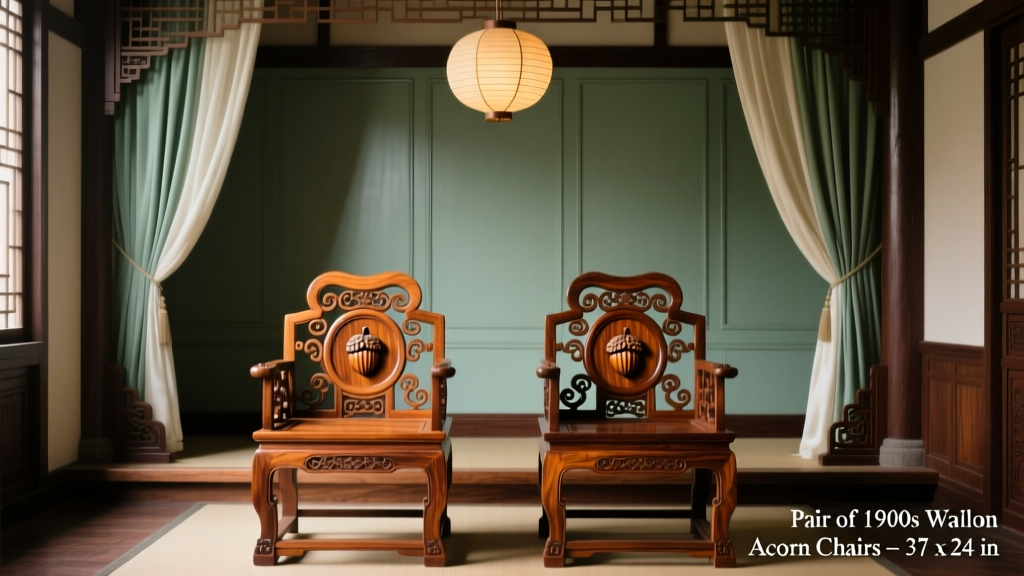
Walnut Acorn-Adorned Asian Chairs, c. 1905–1920: A Technical & Historical Analysis of a Rare Pair (37 × 24 in)
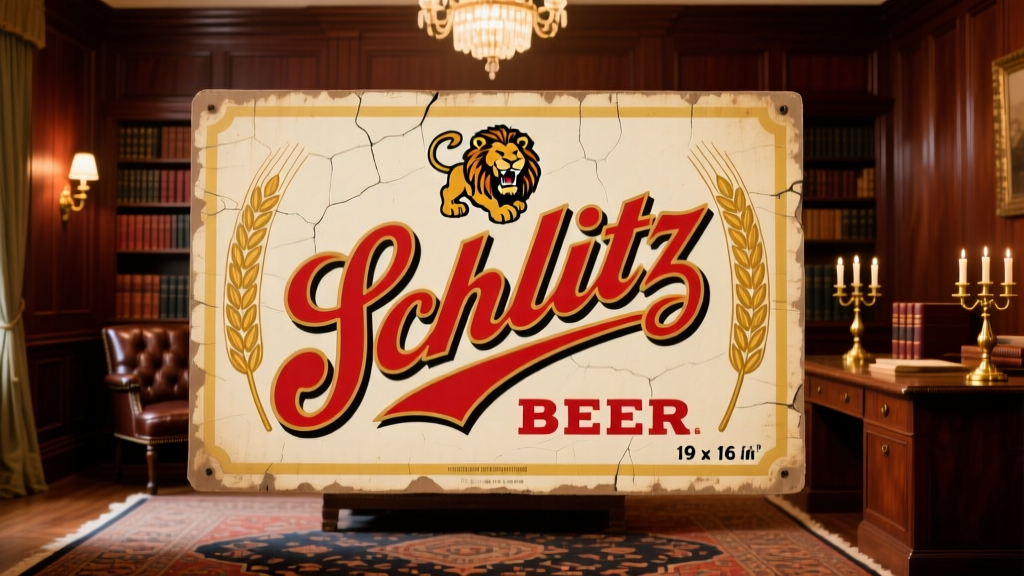
Schlitz Beer Advertising Sign: Authenticity, Value, and Conservation of the 19 × 16-Inch Cardboard Display
The 92-Inch Tufted Back Couch with Scrolling Top and Carved Giltwood Sphinx Supports: A Study in Neoclassical Grandeur

Carnival Glass Gothic Arches Vase in Smoke: A Detailed Appraisal of the 9½-Inch Masterpiece

Holabird Western Americana Collections #18: A Curatorial Review of Authentic 19th-Century Furniture, Firearms, and Frontier Artifacts

Brilliant Period Cut Glass Shines: Masterpieces of American Craftsmanship, 1876–1915

Regency Rosewood Gateleg Game Table: Anatomy, Provenance, and Restoration of a 33-Inch Masterpiece