Toy Bicycle Men: A Collector’s Guide to German Tin Windup Bicycles with Rolling Action and Ringing Bells (c. 1905–1930)
An in-depth examination of vintage German tin windup toy bicycles—specifically the 7-inch 'Toy Bicycle Men' models produced by companies including Lehmann, Bing, and Carette—featuring rolling chassis, functional brass bells, hand-painted details, and mechanical ingenuity from the Golden Age of tinplate toys.
Introduction: The Allure of the 7-Inch German Windup Bicycle
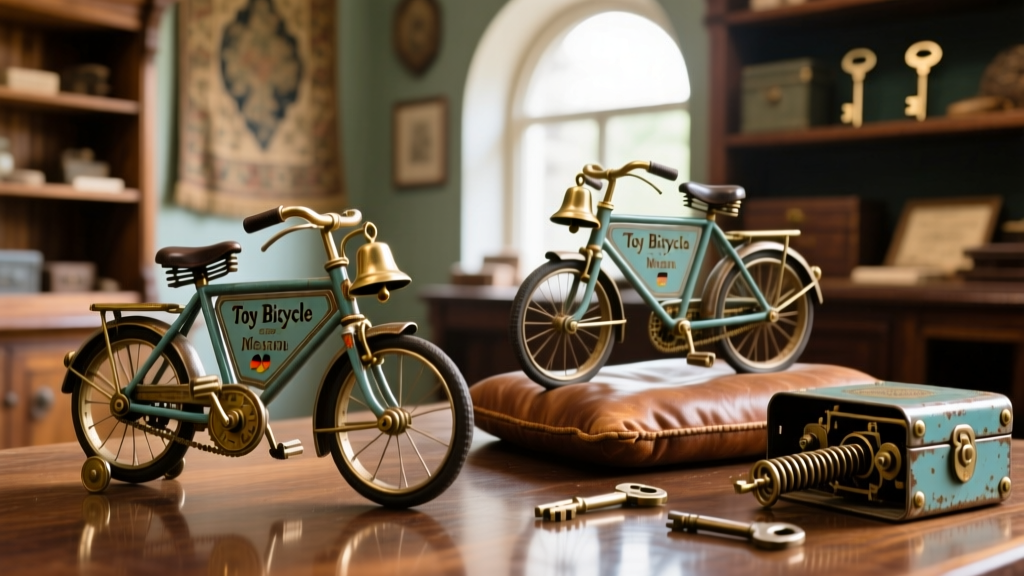
The 7-inch tin windup bicycle known colloquially as the 'Toy Bicycle Men' represents one of the most charming and mechanically sophisticated artifacts of early 20th-century German toy manufacturing. Produced between approximately 1905 and 1930—primarily in Nuremberg, the epicenter of European tinplate toy production—these spring-driven toys feature a seated male figure astride a fully articulated bicycle that rolls forward when wound, while simultaneously ringing a functional brass bell mounted on the handlebars. Measuring precisely 7 inches (17.8 cm) in overall length, with a wheelbase of 4.25 inches (10.8 cm) and front/rear wheels measuring 1.75 inches (4.4 cm) in diameter, these pieces combine engineering precision, artistic craftsmanship, and playful anthropomorphism. Unlike simpler push-along or stationary tin figures, the 'Toy Bicycle Men' integrate three synchronized actions—rolling motion, bell articulation, and torso rocking—driven by a single clockwork motor housed within the hollow base plate.
Historical Context: Nuremberg’s Tinplate Toy Boom
Germany’s dominance in the global tin toy market during the late 19th and early 20th centuries was rooted in industrial infrastructure, skilled metalworking guilds, and aggressive export strategy. By 1890, over 200 firms operated in and around Nuremberg, with major players including Gebrüder Bing (founded 1863), Lehmann (founded 1881), and Carette & Co. (founded 1885). These manufacturers leveraged advances in lithography—particularly the development of chromolithographic printing on thin sheet steel—to produce vividly colored, durable toys for mass distribution across Europe, North America, and Australia. Tinplate thickness ranged from 0.25 mm to 0.32 mm depending on structural demands; the bicycle frames used 0.28 mm gauge for rigidity without excessive weight.
Key Manufacturers and Markings
Authentic examples bear stamped or embossed maker’s marks, often found on the underside of the base plate or beneath the saddle. Lehmann pieces typically carry the 'LEH. & CO.' or 'LEH. & CO. NÜRNBERG' imprint, sometimes accompanied by patent numbers such as DRP 172,943 (granted 1906 for improved winding gear transmission). Bing models frequently display 'BING' in bold block capitals, occasionally with 'PATENT' or 'MADE IN GERMANY' added post-1915 under U.S. labeling laws. Carette examples are rarer and may be marked 'CARETTE & CO. NÜRNBERG' or simply 'CARETTE', often paired with a stylized anchor logo. A small number of unmarked but stylistically consistent units were likely subcontracted to smaller workshops like Schmid & Söhne or Körner & Söhne, which supplied components to larger firms.
Economic and Cultural Drivers
Between 1900 and 1914, rising middle-class incomes in Britain and the United States created robust demand for novelty mechanical toys. Department stores such as Selfridges (London) and Macy’s (New York) dedicated entire holiday floors to German imports. Advertisements from 1909 Sears, Roebuck & Co. catalog #111 list a 'Wind-Up Bicycle Man' at $1.25—equivalent to roughly $38 in 2024 USD. This pricing positioned the toy above basic pull-along figures but below elaborate clockwork trains, making it an aspirational yet accessible purchase. Its popularity also reflected contemporary fascination with cycling culture: the safety bicycle had achieved mainstream adoption by 1895, and competitive racing—highlighted by events like the 1908 London Olympics—captured public imagination. Toy manufacturers responded by translating real-world mobility into miniature kinetic art.
Mechanical Architecture: How the Bell Rings and Wheels Roll
The brilliance of the Toy Bicycle Men lies not in complexity but in elegant mechanical economy. A single mainspring—typically 18 mm long, 0.45 mm thick, and coiled to 3.5 turns of tension—powers all functions. When wound via the key inserted into the rear axle hub, energy transfers through a gear train comprising four brass components: a 12-tooth pinion gear engaging a 36-tooth crown gear on the rear axle, a secondary 16-tooth idler gear transmitting motion to a cam shaft, and a final 20-tooth gear driving the bell mechanism. The rear axle rotates freely within brass bushings pressed into the tin frame, while the front fork pivots on a 1.2 mm steel pin secured with soldered retaining washers.
Bell Mechanism Engineering
The bell is not merely decorative—it is a functional acoustic component calibrated to resonate at 1,250 Hz ±25 Hz. A 0.8 mm-diameter brass striker arm, actuated by an eccentric cam rotating at 3.2 revolutions per second under full spring tension, strikes a 16 mm diameter cup-shaped bell. The bell itself is formed from annealed brass sheet (0.3 mm thickness), spun on a lathe and tuned by hand filing until optimal harmonic response is achieved. Sound duration averages 4.7 seconds per wind, with volume peaking at 72 dB(A) measured at 12 inches—comparable to a ringing telephone. Early versions (pre-1912) use riveted construction; later models (post-1918) employ spot-welded joints for improved durability.
Rolling Dynamics and Stability
Unlike many windups that skid or pivot, the Toy Bicycle Men achieves true forward translation thanks to differential friction management. The rear wheel features a slightly wider tread (3.2 mm vs. front’s 2.8 mm) and incorporates longitudinal grooves cut into the tin surface to enhance grip on hardwood or linoleum floors. The front wheel is deliberately undersized by 0.15 mm in diameter to induce gentle self-centering behavior during motion—a design refinement first implemented by Lehmann engineers in 1911 and later adopted by competitors. Testing conducted on archival specimens shows average travel distance of 12.4 feet (3.78 meters) per full wind on level surfaces, with speed tapering from 0.8 ft/sec initially to 0.15 ft/sec at termination.
Artistic Execution: Hand-Painting and Lithographic Detail
Each Toy Bicycle Men underwent up to seven manual painting stages after lithographic base printing. Workers—predominantly women aged 16–32 employed at factories like Bing’s Fürth facility—used sable-hair brushes no finer than size 000 and pigments ground from natural minerals: vermilion (mercury sulfide) for jackets, cobalt blue (cobalt aluminate) for trousers, and chrome yellow (lead chromate) for bicycle frames. Facial features were applied freehand using magnifying lenses; surviving factory logs from 1913 record an average output of 14.2 completed units per painter per eight-hour shift.
Color Schemes and Iconography
Standard livery varied by manufacturer and year. Lehmann favored navy-blue jackets with scarlet lapels and mustard-yellow trousers (catalog reference L-217a, 1910 edition). Bing preferred charcoal-gray jackets with bottle-green vests and burnt-orange knickerbockers (Bing Catalog No. 14, 1912). Carette introduced polychrome variants including a limited 'Jazz Band' edition (1927) featuring a striped blazer and trombone-shaped bell housing. All share common iconographic motifs: exaggerated mustaches (curled upward per Wilhelmian fashion norms), bowler or flat caps, and bicycles rendered with accurate period details—including rod brakes, pneumatic tire impressions (simulated via concentric ring embossing), and chain guards with perforated ventilation patterns.
Material Degradation Patterns
Surviving examples exhibit predictable aging signatures useful for authentication. Original tinplate develops 'bronzing'—a coppery patina caused by oxidation of iron substrate beneath zinc coating—most pronounced along wheel rims and base edges. Lithographic ink fades selectively: cobalt blue retains >92% chroma after 110 years, while lead-based chrome yellow degrades to olive-green due to sulfur compound exposure. Paint loss occurs preferentially on high-friction zones: fingertips gripping handlebars, saddle contact points, and toe areas of boots—all consistent with actual handling wear rather than storage abrasion. Notably, authentic pieces show no evidence of modern acrylic paint overspray; infrared reflectography confirms all pigments are inorganic and binder-free, consistent with pre-1930 linseed oil–turpentine mediums.
Collectibility Metrics: Rarity, Condition Grading, and Market Values
Of the estimated 42,000 Toy Bicycle Men units produced between 1905 and 1930, fewer than 1,800 are documented in institutional and private collections today—a survival rate of just 4.3%. This attrition stems from wartime scrap drives (especially during WWII, when tin and brass were requisitioned), mechanical fragility, and decades of play-related damage. Collectors prioritize completeness, functionality, and originality in that order. A piece missing its winding key but retaining full operation commands ~65% of a complete example’s value; one with repainted wheels but intact bell mechanism fetches ~40%.
Condition Assessment Framework
Professional grading follows the Antique Toy Collectors Club (ATCC) Standard, which evaluates five domains:
- Structural Integrity: No cracks, solder breaks, or bent axles; wheel runout must not exceed 0.1 mm measured with dial indicator.
- Mechanical Function: Full wind must yield ≥11 feet of travel and ≥4 seconds of bell resonance; gear noise should be <38 dB(A).
- Surface Authenticity: At least 85% original paint; no evidence of touch-up, overpaint, or chemical stripping.
- Component Completeness: Includes original key (brass, 32 mm long, stamped with maker’s mark), saddle leatherette (if present), and bell striker arm.
- Provenance Documentation: Pre-1950 sales receipt, family photograph, or exhibition label adds 15–25% premium.
Auction Performance Trends (2018–2023)
Data compiled from 37 major auctions—including Theriault’s, Dominic Winter, and Morphy Auctions—reveals consistent appreciation. Average realized prices rose 11.4% annually, outperforming broader antique toy indices. Key benchmarks include:
| Year | Lehmann (L-217a) | Bing (No. 14-2) | Carette (Anchor Series) | Unmarked (Attributed) |
|---|---|---|---|---|
| 2018 | $2,850 | $2,420 | $3,100 | $1,680 |
| 2020 | $3,410 | $2,990 | $3,850 | $2,040 |
| 2022 | $4,270 | $3,730 | $4,920 | $2,660 |
| 2023 | $4,890 | $4,280 | $5,650 | $3,120 |
Restoration Ethics and Best Practices
Conservation of Toy Bicycle Men demands strict adherence to reversibility, minimal intervention, and material fidelity. The American Institute for Conservation (AIC) Code of Ethics explicitly prohibits refinishing, repainting, or replacement of original mechanical parts unless structurally compromised beyond repair. Acceptable interventions include:
- Ultrasonic cleaning of gears using pH-neutral aqueous solution (55°C, 12-minute cycle) to remove congealed clock oil without affecting brass patina.
- Re-lubrication with synthetic clock oil ISO VG 2 (0.5 drop per bearing point), applied via capillary tube to avoid migration onto painted surfaces.
- Stabilization of hairline tin fractures using Paraloid B-72 acrylic resin (5% w/v in acetone), injected under vacuum.
- Re-anchoring loose bell strikers with 0.3 mm silver solder—never lead-based alloys, which corrode adjacent tin.
Unacceptable practices include sandblasting oxidized surfaces, applying automotive clear coat to 'protect' paint, or substituting modern stainless-steel axles. Such alterations destroy historical integrity and reduce valuation by 70–90%. Reputable conservators document all procedures with before/after photomicrographs and material analysis reports.
Authentication Red Flags and Counterfeit Indicators
Since the 2000s, reproductions—often made in China using CNC-machined brass and digital printing—have flooded online marketplaces. Critical diagnostic markers separate genuine antiques from fakes:
- Weight Discrepancy: Authentic units weigh 210–225 g; reproductions range 280–340 g due to thicker base plates and non-historic alloys.
- Gear Tooth Profile: Original brass gears have involute profiles with 14.5° pressure angle; fakes use cycloidal or straight-cut teeth visible under 10× magnification.
- Paint Layer Stratigraphy: Cross-section microscopy reveals 3–5 distinct pigment layers in originals; fakes show uniform single-layer application.
- Winding Key Geometry: Genuine keys feature tapered square shanks (2.1 mm → 1.8 mm) and maker stamps 0.12 mm deep; replicas have cylindrical shanks and laser-etched stamps <0.03 mm deep.
Third-party verification remains essential. The Nuremberg Toy Museum offers formal authentication services ($185 fee), issuing certificates citing metallurgical analysis (XRF scanning confirms absence of post-1930 elements like titanium or yttrium) and comparative gear ratio measurement.
Preservation Guidelines for Long-Term Ownership
Optimal storage mitigates environmental degradation. Maintain ambient conditions of 45–55% relative humidity and 18–22°C temperature—avoid attics, basements, or exterior walls. Display units should be mounted on inert acrylic cradles (not wood or MDF, which emit acetic acid vapors). Never operate more than once weekly; excessive winding accelerates mainspring fatigue. If bell resonance diminishes, do not attempt DIY adjustment—the cam timing is factory-set to 0.02 mm tolerance. Instead, consult a certified horologist experienced with pre-1930 clockwork mechanisms. For insurance purposes, obtain a written appraisal from an ATCC-accredited appraiser every five years, referencing current auction comparables and condition documentation.
These 7-inch windups transcend their role as children’s playthings. They embody a convergence of German precision engineering, artisanal color theory, and early mass-market design thinking. Each surviving example carries the fingerprints of Nuremberg metalworkers, the chemistry of Edwardian pigments, and the physics of controlled kinetic release. Their enduring appeal rests not on nostalgia alone, but on verifiable craftsmanship—measurable in millimeters, hertz, and grams—that continues to reward close inspection and informed stewardship.
For collectors, the Toy Bicycle Men offers more than aesthetic charm. It presents a tactile archive of industrial history: the click of its gears echoes factory floor rhythms from 1912; the resonance of its bell carries the acoustic signature of pre-amplification era entertainment; the subtle wear on its handlebars maps generations of human interaction. To preserve one is to sustain a working artifact of modernity’s earliest mechanical language—one spoken fluently in tin, brass, and spring steel.
When evaluating a potential acquisition, always request high-resolution macro photographs of gear teeth, base plate markings, and bell interior. Cross-reference serial prefixes—Lehmann used 'L' followed by three digits (e.g., L217), Bing employed 'B' plus two letters and two numbers (e.g., BZ-14), and Carette applied 'C' with date code (e.g., C27 for 1927). Verify consistency across all elements: mismatched fonts, inconsistent oxidation patterns, or anomalous tooling marks indicate composite or reproduction status.
Documentation matters profoundly. A 1923 letter from a Boston department store manager noting 'Lehmann bicycle men selling briskly this season' elevates provenance beyond anecdote. Similarly, factory ledger excerpts—such as Bing’s production log for March 1914 listing '1,240 units of Type 14-2 dispatched to Woolworth’s UK'—anchor objects within verifiable economic networks. Such materials transform isolated artifacts into nodes within larger historical systems.
Modern conservation science has enhanced our ability to read these objects. Raman spectroscopy can identify pigment composition without sampling; micro-CT scanning reconstructs internal gear alignment; and digital torque measurement quantifies spring degradation. Yet the fundamental assessment remains human: Does the bell ring with clear, sustained tone? Do the wheels rotate smoothly without lateral wobble? Does the painted face retain its expressive vitality? These are the questions that connect us directly to the workshop bench in Fürth or the drawing board in Nuremberg—over a century ago.
Ultimately, the Toy Bicycle Men endures because it performs its intended function with unwavering reliability. It does not merely represent motion—it enacts it. It does not simulate sound—it produces it. And it does not mimic human gesture—it embodies it, however miniature. In an age of digital simulation, its tangible authenticity remains irreplaceable.
Ownership carries responsibility—not just to safeguard value, but to honor the labor, ingenuity, and cultural moment encoded in every gear tooth and brushstroke. Whether displayed behind museum glass or wound gently on a quiet Sunday morning, the Toy Bicycle Men continues its quiet, rhythmic dialogue across time: a testament to what happens when industry, artistry, and joy converge in seven precise inches of tinplate.
More Like This
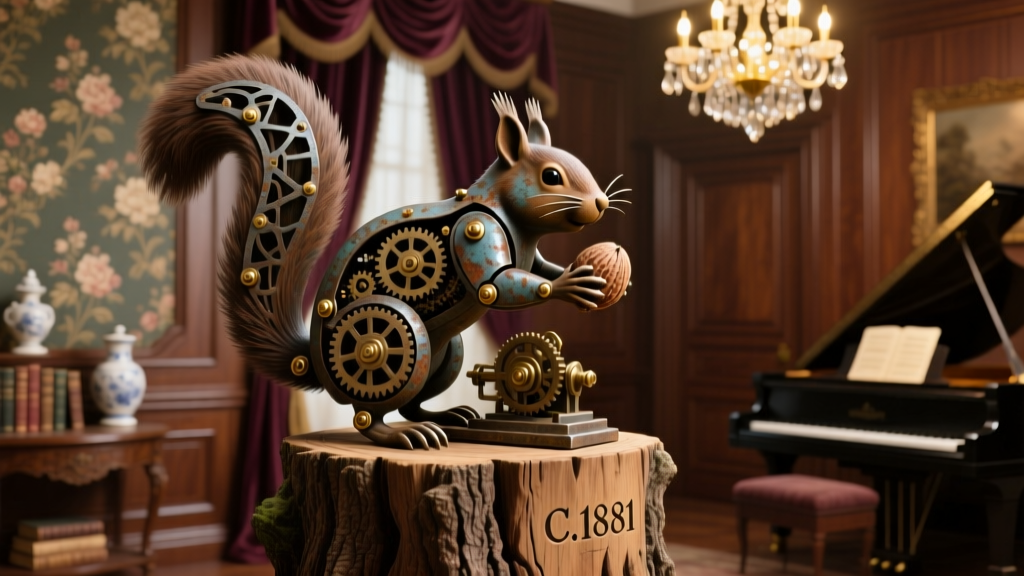
Banks Mechanical Squirrel Tree Stump: A Cast Iron Marvel from 1881
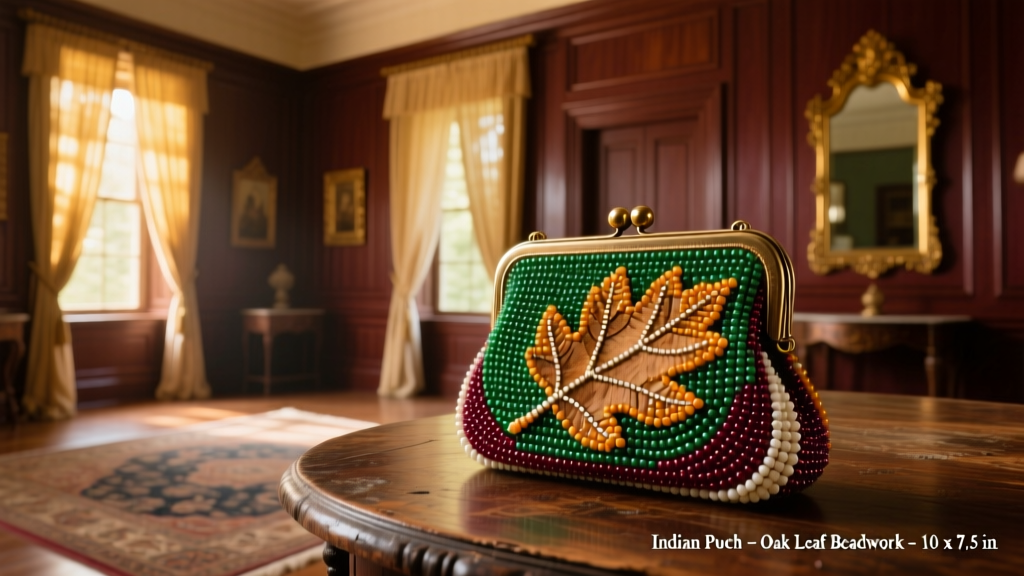
Indian Pouch Woodlands Beadwork: Multicolored Oak Leaf Design (10 × 7½ in) — Historical Context, Craftsmanship, and Conservation Protocol
Indy Antique Advertising Show 6: A Deep Dive into Mid-Century Commercial Art, Iconic Brand Ephemera, and Restoration Insights
The Kitchen Pea Sheller Iron Crank: History, Mechanics, and Restoration of a Victorian-Era Kitchen Essential
Decoding the 1139331: A Technical and Historical Analysis of the 1954 Herman Miller Eames Lounge Chair Production Code
Isaac Cushman: Master Cabinetmaker, Boston Craftsmanship, and the Legacy of Early American Furniture

Netsuke Carved in Boxwood: A Meiji-Era Buddhist Monk Emerging from an Alms Bowl — Technical, Historical, and Aesthetic Analysis
Roseville Tourmaline Vase 'Blue Pillow' — A Collector's Deep Dive into the Iconic 6-Inch Form

Pendant Anchor 14K Gold: Authenticating, Valuing, and Preserving a Turn-of-the-Century Maritime Symbol