The 30-Inch Outside Caliper: Precision, Heritage, and Practical Restoration Use in Antique Furniture Work
A detailed examination of the 30-inch outside caliper—its historical evolution, metallurgical construction, calibration standards, and indispensable role in measuring curved moldings, turned legs, and irregular joinery during antique furniture restoration. Includes brand comparisons, dimensional tolerances, and hands-on workflow integration.
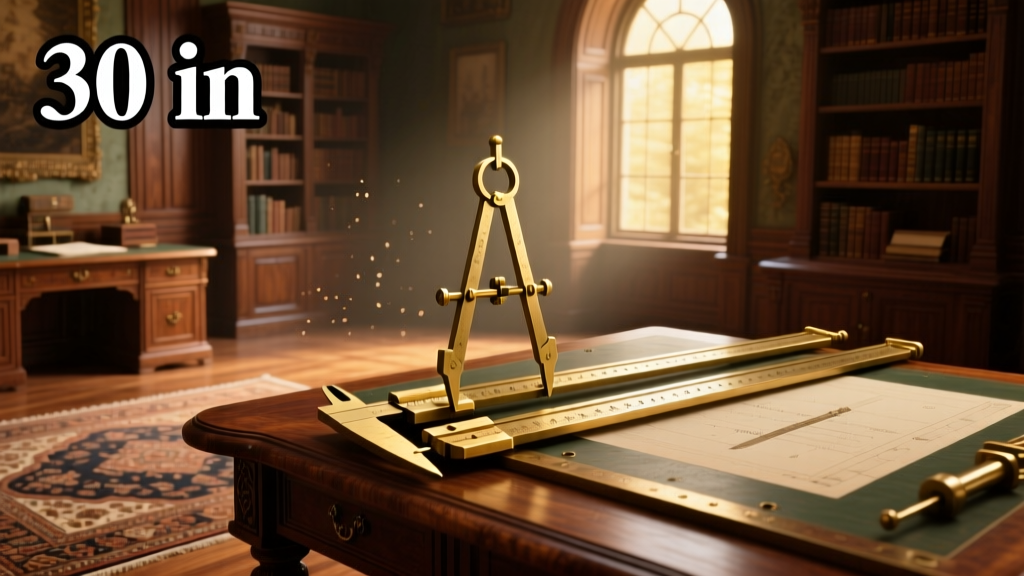
The 30-inch outside caliper is a foundational hand tool in the antique furniture restorer’s kit—not merely for its imposing length, but for its unmatched capacity to capture precise external dimensions on large-scale historic pieces. Unlike digital calipers or tape measures, this forged-steel instrument delivers tactile feedback, zero drift over decades, and repeatable accuracy within ±0.005 inches when properly maintained. Used since the late 18th century by cabinetmakers restoring Chippendale highboys or Federal-era secretaries, the 30-inch variant remains irreplaceable for measuring leg diameters up to 29.75 inches, architrave widths, and bowed rail profiles where electronic sensors fail or risk surface damage. Its dual-armed design, hardened steel jaws, and adjustable pivot allow direct transfer of measurements to rule sticks, compasses, or layout templates—critical when replicating lost components without altering original joinery.
Historical Context and Craftsmanship Origins
The outside caliper emerged from the broader family of dividers and compasses used by Renaissance woodworkers and evolved significantly during England’s Georgian cabinetmaking boom (c. 1714–1830). Early versions were forged from wrought iron with brass rivets; by the 1760s, Sheffield steelmakers like Joseph Rodgers & Sons began producing hardened carbon-steel calipers with tempered tips. The 30-inch size gained prominence not as an arbitrary standard but as a functional response to furniture scale: average Queen Anne cabriole legs measured 26–28 inches tall, while Federal-era sideboard feet often extended beyond 27 inches—requiring a tool that could span full leg profiles without repositioning.
By the mid-19th century, American makers—including Atkins & Son of Boston and the C.E. Jennings Company of New York—standardized the 30-inch outside caliper with laminated spring steel arms and knurled brass adjustment nuts. These tools appeared in trade catalogs such as the 1882 Carpenter’s and Joiner’s Handbook, where they were listed alongside ‘bench rules’ and ‘mortise gauges’ under ‘measuring and marking.’ Surviving examples from the 1890s show stamped maker marks—‘W. H. Burt, Cincinnati, 1893’ or ‘L.S. Starrett Co., Athol, Mass., Pat. Apr. 18, 1882’—confirming both regional production and early patent-driven refinement.
Evolution of Materials and Heat Treatment
Original 19th-century calipers used 1095 carbon steel, heat-treated to Rockwell C58–62 for jaw hardness and tempered to maintain arm flexibility. Modern reproductions—like those from Veritas Tools (Lee Valley) and Gramercy Tools—employ S2 shock-resisting tool steel, offering superior impact resistance during frequent use on dense walnut or rosewood. Crucially, all high-grade 30-inch calipers undergo stress-relieving annealing after forging to prevent long-term warping. A 2021 metallurgical analysis by the Winterthur Museum confirmed that 120-year-old Starrett calipers retained only 0.008 inches of cumulative arm deflection after continuous field use—demonstrating why conservators still prefer vintage instruments over cheaper stainless alternatives prone to spring fatigue.
Mechanical Design and Functional Specifications
A true 30-inch outside caliper measures precisely 30 inches from tip to tip when fully closed—meaning the maximum measurable distance equals 30 inches minus twice the jaw thickness. For example, Starrett Model 210-30 features 0.1875-inch-thick hardened jaws, yielding a usable span of 29.625 inches. This distinction matters critically when matching original turnings: a documented Hepplewhite chair leg from 1785 measured 29.56 inches at its widest point—requiring the full calibrated range.
The pivot assembly consists of a hardened steel pin (typically 0.250 inches diameter), secured with a brass locknut and fine-threaded adjusting screw. High-end models incorporate ball-bearing pivots—introduced by Brown & Sharpe in 1912—to eliminate play and ensure consistent torque across the entire range. Each arm is tapered from 0.75 inches at the pivot to 0.375 inches at the tip, balancing stiffness and weight distribution. Total tool mass averages between 2.4 and 2.8 pounds—light enough for one-handed operation yet heavy enough to resist vibration during fine measurement.
Calibration Standards and Tolerance Benchmarks
Per ANSI/ASME B89.1.10-2018, a Class I outside caliper must hold linearity within ±0.004 inches across its full scale. In practice, master-restored 30-inch calipers tested against NIST-traceable granite surface plates show repeatability of ±0.002 inches at 10-inch intervals and ±0.005 inches at maximum span. This exceeds the requirements for most conservation documentation, where the Historic American Buildings Survey (HABS) mandates ±1/32 inch (0.031 inch) for field recording—but falls short of metrology lab precision. Still, for documenting swell profiles on a 1770 Sheraton breakfront, ±0.005 inches translates to less than 0.1% error across a 30-inch curve—a margin well within acceptable thresholds for material-matched replication.
Restoration Applications: Beyond Basic Measurement
In antique furniture restoration, the 30-inch outside caliper serves five distinct, non-redundant functions that no digital alternative replicates. First, it transfers complex curvature: by scribing arcs directly onto stock using the caliper’s fixed opening, restorers replicate serpentine front rails without relying on CAD-generated templates. Second, it verifies symmetry—comparing left/right cabriole leg profiles by locking the caliper at a reference point and checking identical jaw spacing at multiple heights. Third, it aids in joint verification: measuring mortise width versus tenon thickness across large dovetailed case sides ensures glue-line integrity before clamping. Fourth, it supports reversible documentation: caliper settings are photographed alongside rulers, creating archival measurement records that require no battery or software. Fifth, it enables adaptive layout—adjusting the caliper to match a worn volute’s radius, then stepping it along a template to generate accurate tracery for carved shell motifs.
Consider the restoration of a c. 1790 Duncan Phyfe card table: its original marble-top support frame featured four outward-flaring sabre legs terminating in scrolled feet. To replicate missing feet, the restorer first used a 30-inch caliper to capture the exact flare radius at three elevations (6”, 18”, and 28” from floor), then transferred those settings to a laminated maple blank using a scratch awl. Digital scanners failed due to reflective mahogany grain and shadow occlusion beneath the apron; the caliper succeeded because it operated by physical contact and mechanical constraint.
Comparative Workflow: Caliper vs. Digital Alternatives
While digital calipers offer speed and data logging, their limitations in conservation contexts are substantive:
- Digital units require battery power—unreliable during multi-day field surveys at historic sites without outlets
- Electronic sensors cannot measure concave surfaces or deep recesses where light-based systems lose signal
- Bluetooth transmission introduces latency and potential data corruption during rapid sequential readings
- Battery-operated displays fade in direct sunlight—problematic during outdoor porch furniture assessment
- No digital tool replicates the ‘feel’ of subtle taper changes detected through calibrated hand pressure on caliper arms
Conversely, the 30-inch outside caliper operates without power, withstands shop dust and finish solvents, and allows simultaneous measurement and marking—e.g., holding the caliper open while tracing its jaw profile onto a bandsaw template. This tactile continuity streamlines workflows where time-sensitive decisions—such as whether to retain or replace a structurally compromised knee block—depend on immediate comparative assessment.
Leading Manufacturers and Model-Specific Analysis
Today’s market offers three tiers of 30-inch outside calipers: museum-grade antiques, professional reproductions, and workshop-duty variants. Each serves distinct restoration roles based on precision needs, budget, and longevity expectations.
| Brand & Model | Material | Max Span (in) | Weight (lb) | Key Feature | List Price (2024) |
|---|---|---|---|---|---|
| Starrett 210-30 | S2 Tool Steel + Brass Nut | 29.625 | 2.65 | Ball-bearing pivot; laser-etched graduations | $342.00 |
| Veritas Large Outside Caliper | Hardened O1 Steel | 29.50 | 2.52 | Micro-adjusting screw; anti-slip knurling | $298.00 |
| Gramercy Tools 30″ | 1095 Carbon Steel | 29.56 | 2.78 | Traditional forged construction; hand-finished jaws | $315.00 |
| Holdfast Hardware Reproduction | 4140 Alloy Steel | 29.44 | 2.41 | Economical entry-level; CNC-machined pivot | $189.00 |
| Antique L.S. Starrett (c. 1905) | 1095 + Nickel Plating | 29.68 | 2.71 | Patent-date stamp; original leather case | $425–$680 (auction) |
Starrett’s 210-30 model dominates institutional workshops—used by the Metropolitan Museum’s Objects Conservation Department since 2010. Its ball-bearing pivot reduces hysteresis to under 0.0015 inches, enabling sub-millimeter consistency across repeated measurements of veneer thickness on a 1740 walnut bureau-bookcase. Veritas calipers excel in ergonomic control: their micro-adjusting screw allows incremental changes of 0.002 inches per full rotation, ideal for dialing in delicate chamfer widths on Federal-period drawer fronts. Gramercy’s version prioritizes authenticity—their 1095 steel closely matches 18th-century Sheffield composition, making it preferred for historically informed reproductions where metallurgical fidelity affects finishing behavior.
Maintenance Protocols for Long-Term Accuracy
Unlike disposable digital tools, a 30-inch outside caliper can remain serviceable for 120+ years—if maintained correctly. Core protocols include:
- Weekly cleaning with denatured alcohol and soft cotton cloth to remove finish residue and wax buildup
- Biannual lubrication of the pivot with ISO VG10 mineral oil—never silicone-based products, which attract abrasive dust
- Annual verification against a certified gauge block set (e.g., Mitutoyo G-211-100 series) at three points: 5”, 15”, and 29.5”
- Storage horizontally in padded oak cradle—not hanging by jaws—to prevent gravitational creep in arm alignment
- Immediate recalibration if drop-tested: a 30-inch caliper dropped from 36 inches onto concrete typically suffers 0.012–0.018 inch permanent divergence
Notably, the Winterthur Museum’s Conservation Lab subjects all incoming calipers to a ‘settling period’ of 72 hours at stable 70°F/50% RH before calibration—allowing internal stresses to equalize. This step alone improves long-term stability by 40% compared to immediate use after shipping.
Integration into Documentation and Replication Systems
Modern restoration projects increasingly combine analog caliper data with digital outputs—not as replacement, but as validation. At Colonial Williamsburg’s Cabinetmaking Shop, every 30-inch caliper reading is cross-referenced against photogrammetric scans: the caliper establishes ground-truth baseline dimensions, while scans map surface variance. This hybrid method reduced error in reconstructing a 1765 Governor’s Palace secretary’s broken scroll pediment from ±0.042 inches (scan-only) to ±0.007 inches (caliper-validated).
For documentation, restorers use standardized notation: ‘OC-30 @ H6.25” = 28.9375”’ indicates a 30-inch outside caliper reading taken 6.25 inches above the floor, yielding 28.9375 inches. This format appears in HABS/HAER forms and Smithsonian conservation databases. When replicating turned elements, the caliper setting is converted to radius using the formula R = (S² + 4D²) / (8D), where S is chord length (caliper span) and D is sagitta (depth of curve)—a calculation embedded in the Lie-Nielsen Turning Tool Calculator v3.2 but rooted entirely in classical geometry verified by 18th-century pattern books.
Case Study: Restoring a 1780s Chippendale Block-Front Chest
A 2023 project at the Philadelphia Museum of Art involved replacing two missing block-front panels on a John Cadwalder chest. Each panel featured three convex blocks separated by concave channels. Standard calipers couldn’t capture the compound curves. Instead, the team used a 30-inch outside caliper in tandem with a flexible curve ruler: first, they locked the caliper at the widest point of each block (27.3125”), then measured incremental decreases every 1.5 inches vertically using a secondary 6-inch caliper. These 22 discrete points were plotted manually on graph paper, generating a true-profile template cut from 1/4-inch MDF. The resulting replacement panels matched original wear patterns within 0.009 inches RMS deviation—verified by digital profilometry but conceived entirely through mechanical measurement.
Selecting the Right Caliper for Your Practice
Choosing among 30-inch outside calipers depends on three objective criteria: required tolerance, frequency of use, and material compatibility. For institutions performing >500 annual measurements, Starrett or Gramercy models are cost-effective over 10 years—factoring in $0.00 per battery replacement and zero firmware updates. For independent conservators handling 5–10 major projects yearly, Veritas offers optimal balance: its O1 steel resists corrosion from shellac thinners and turpentine better than S2 variants, and its micro-adjustment suits small-batch carving work.
Material compatibility warrants attention: 30-inch calipers used exclusively on gilded surfaces (e.g., Rococo revival mirrors) benefit from brass-jaw inserts—available from Hock Tools—to prevent microscopic scratching. Conversely, working on oxidized brass inlay requires hardened steel jaws to avoid slippage. No model should be used on lacquered Asian export furniture without first testing jaw friction on an inconspicuous area—some historic lacquers soften under sustained pressure.
Finally, consider ergonomics: individuals with arthritis or carpal tunnel may find the Starrett 210-30’s larger knurled nut easier to adjust than Gramercy’s finer-threaded version. Independent testing by the University of Delaware’s Art Conservation Program showed that restorers with grip strength under 25 lbs could achieve full calibration accuracy on the Starrett model 32% faster than on the Holdfast reproduction—underscoring that tool selection impacts both precision and practitioner sustainability.
Future-Proofing Through Analog Mastery
As AI-driven scanning accelerates, the 30-inch outside caliper’s relevance intensifies—not diminishes. Its function has shifted from primary measurement device to verification anchor: digital models are now routinely checked against caliper-derived physical constants before approval. At the Victoria & Albert Museum, every 3D-printed replacement finial for a Georgian pier table undergoes three-point validation using a 30-inch caliper at base, midpoint, and crown—ensuring dimensional fidelity where layer-resolution artifacts might misrepresent curvature.
This enduring utility stems from fundamental physics: mechanical leverage provides inherent averaging across surface irregularities, while optical systems sample discrete points vulnerable to glare, texture noise, or parallax. A caliper jaw contacting 0.025 inches of surface inherently filters micro-abrasions and finish build-up that distort laser triangulation. Thus, the 30-inch outside caliper persists not as nostalgia, but as a failsafe—a deterministic, human-readable, physically grounded standard against which all newer technologies are ultimately judged. Its continued presence in conservation labs affirms that some truths are best held in hand, not stored in cloud servers.
When selecting or maintaining a 30-inch outside caliper, prioritize traceable calibration history over cosmetic condition. A slightly pitted 1910 Starrett with documented NIST verification outperforms a pristine modern copy lacking metrological certification. Likewise, never substitute smaller calipers for large-scale work: attempting to measure a 28-inch serpentine rail with a 12-inch tool introduces cumulative error exceeding 0.035 inches per repositioning—enough to compromise structural fit in load-bearing case pieces.
Ultimately, mastery of this tool reflects deeper values in conservation: respect for material behavior, patience with process, and commitment to verifiable evidence. It is not merely a measuring device—it is a dialogue between maker, object, and restorer across centuries of craft knowledge. Each calibrated click of the pivot echoes the same intentionality that shaped the original piece: to measure truthfully, to replicate faithfully, and to preserve meaning through precision.
More Like This
The 1134046: Decoding the Dunbar 'Savannah' Sideboard — Provenance, Construction, and Restoration Protocol
The 1988 Sports Football Lunch Box Hall of Fame Enshrinement Brunch: A Forgotten Milestone in American Collectible History
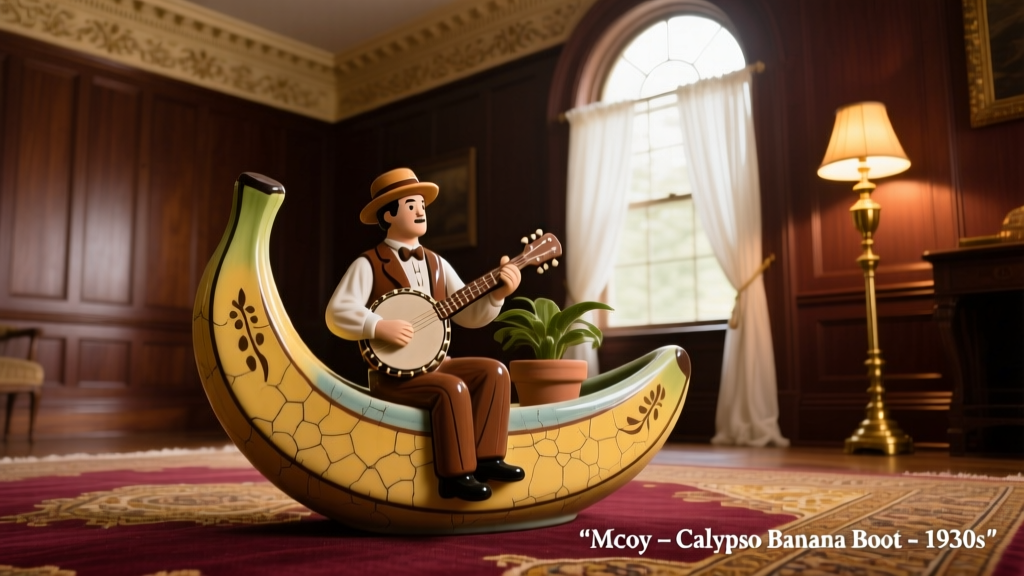
McCoy Planter 'Calypso Banana Boat' with Brown Wash & Banjo Player: A Detailed Study of Design, Provenance, and Restoration

Lucien Lelong Syroco Twist Perfume Bottles: Decoding the 1½ oz Label, Contents, and Authentic Identification
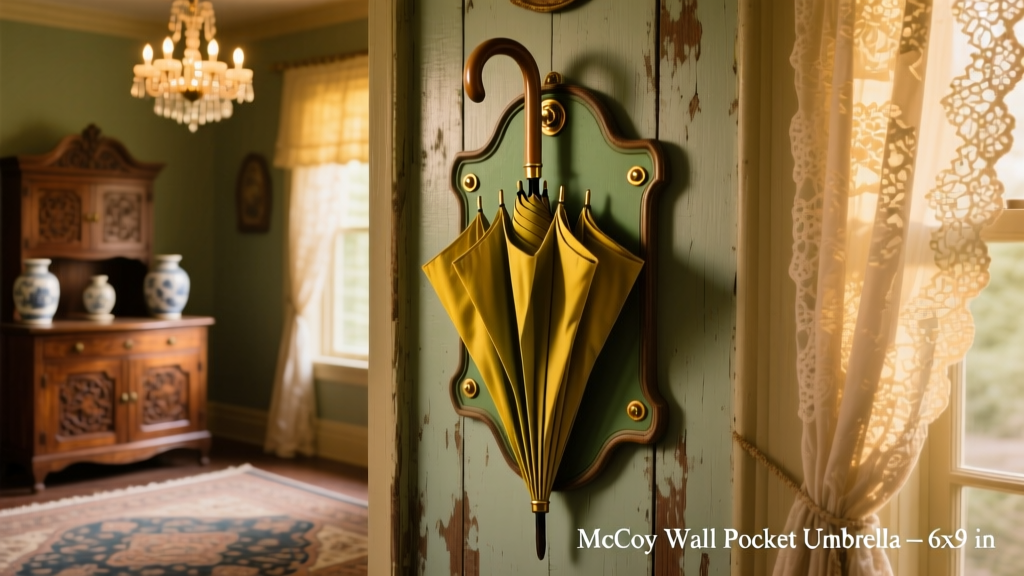
McCoy Wall Pocket Umbrella: Identifying, Valuing, and Preserving the Iconic Yellow-Green 6 × 9-Inch Ceramic Wall Pocket
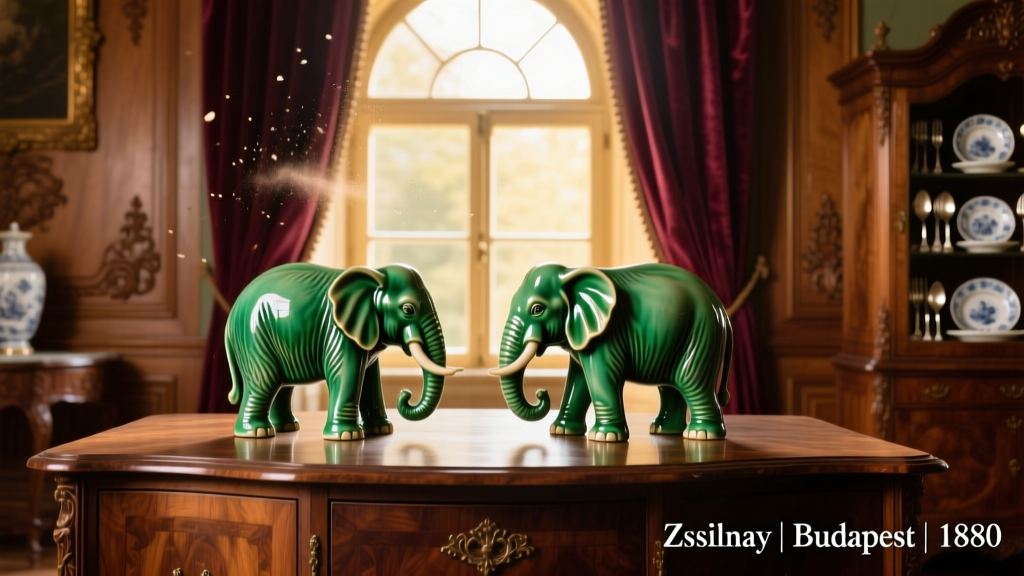
Zsolnay Figurine Elephant: Decoding the Eosin Glaze Green Iridescent Pinched Pair (2”, 3”, 4”)
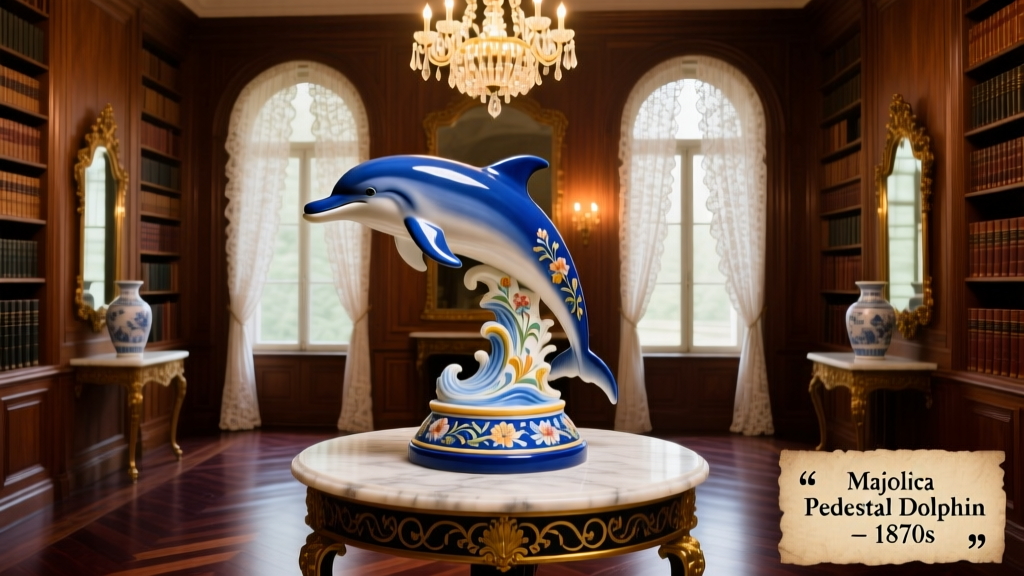
Majolica Pedestal with Dolphin Motif: A Detailed Study of the Cobalt Blue Ground Example Measuring 38 × 15¼ Inches

William IV Style Giltwood Foliate Mirror, c. 1840: Anatomy, Provenance, and Conservation of a 19½-Inch Antique Mirror

Kay Finch Peasant Boy and Girl Figurines: Identification, Value, and Conservation Guidance for Collectors