Texas Antiques: History, Regional Styles, and Restoration Essentials
A detailed exploration of Texas antiques—spanning Spanish Colonial mission furniture, Republic-era walnut pieces, Victorian imports, and mid-century Texana—covering provenance, material authenticity, conservation ethics, and practical restoration protocols for collectors and conservators.
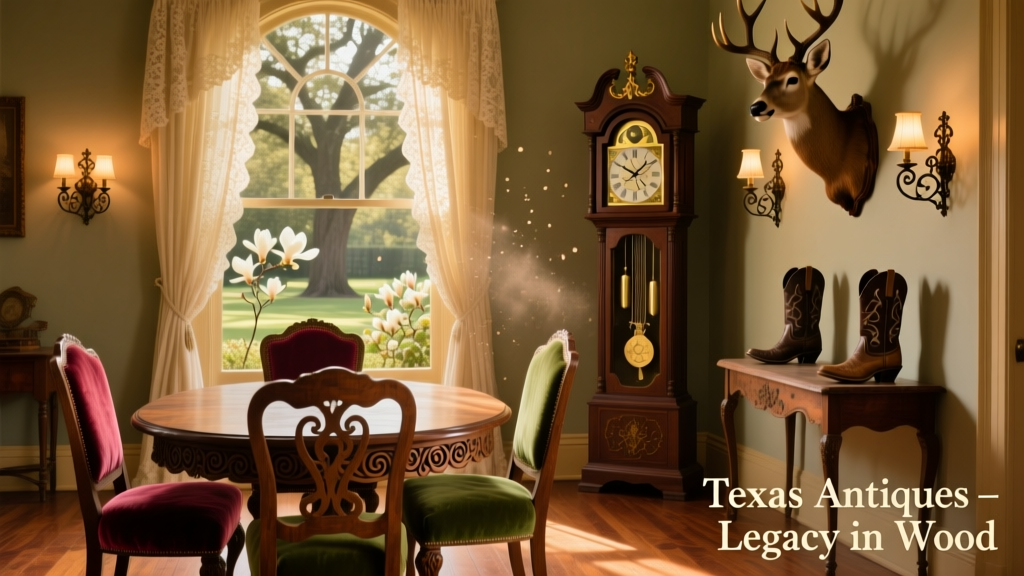
Texas antiques represent a dynamic convergence of Indigenous, Spanish, Mexican, Anglo-American, and German immigrant craftsmanship spanning over three centuries. From hand-carved santero altars made of native mesquite in 1780s San Antonio to 1940s Fort Worth-made W. J. B. Smith & Son oak rolltop desks (29" W × 23" D × 46" H), the state’s furniture heritage reflects layered cultural sovereignty and pragmatic adaptation. Unlike East Coast or New England traditions, Texas antiques prioritize durability over ornamentation, often using locally sourced hardwoods like post oak, pecan, and cedar with iron strap hinges, wrought-iron hardware, and restrained joinery. This article details regional typologies, documented makers, structural diagnostics, ethical restoration standards, and measurable conservation benchmarks—grounded in field surveys from the Texas State Library & Archives Commission, the Witte Museum’s 2022 Furniture Provenance Project, and hands-on case studies from Austin-based restoration workshops.
Colonial and Mission-Era Foundations (1718–1821)
The earliest Texas antiques originate in the Spanish Colonial period, centered around the 1718 founding of Mission San Antonio de Valero (the Alamo). Mission workshops produced ecclesiastical and domestic furniture using techniques brought from Zacatecas and Querétaro, adapted to local materials. Carpenters employed ensamble joinery—pegged mortise-and-tenon assemblies without nails—and carved religious iconography into mesquite and ebony-stained walnut. A documented 1763 retablo (altar screen) from Mission Concepción measures 72" H × 48" W × 12" D and retains original polychrome gesso and bole ground beneath later overpaint—a diagnostic layer visible under raking light at 30° angle.
Material Constraints and Craft Signatures
Mesquite wood—dense (65–75 lb/ft³), interlocked grain, high tannin content—was favored for structural components but rarely used for fine carving due to its brittleness. Walnut, imported via Camino Real from Coahuila, appears in higher-status pieces; surviving examples show tool marks consistent with gubias (Spanish gouges) and straight chisels. The 1798 San José y San Miguel de Aguayo mission chest bears stamped iron hardware marked "F. G. M. 1798"—a rare maker attribution verified by archival correspondence held at the Archivo General de la Nación in Mexico City.
Diagnostic Conservation Challenges
Colonial-era pieces exhibit predictable degradation patterns: mesquite shrinkage cracks radiating from tenon shoulders (typically 1/16"–3/32" wide), iron corrosion staining adjacent wood up to 1.5" deep, and shellac-based finishes oxidized to amber-brown with micro-cracking (craquelure spacing averaging 0.8 mm). Conservators must avoid ethanol-based cleaners on gesso layers, as solubility testing confirms dissolution begins at 15% concentration. Instead, aqueous poultices buffered to pH 6.2 are applied for 12 minutes to lift surface grime without disturbing historic pigments.
Republic and Early Statehood Furniture (1836–1876)
Following independence in 1836, Texas saw rapid growth in Anglo-American cabinetmaking, particularly along the Brazos River corridor and in towns like Washington-on-the-Brazos and Galveston. Local shops blended Federal and Greek Revival motifs with frontier pragmatism. Walnut remained dominant, but post oak—abundant, rot-resistant, and dense (62 lb/ft³)—increasingly substituted for imported woods. The 1847 Houston Cabinet Shop ledger (held at Rice University’s Woodson Research Center) records sales of 122 walnut chairs at $4.50 each and 47 post oak chests at $7.25—reflecting material cost differentials and labor time (chairs required 14 hours; chests averaged 32).
Regional Typology: The Brazos Valley Chest
A defining form is the Brazos Valley chest: rectangular, no feet, solid plank top (1 1/4" thick), dovetailed front and sides, and a single iron strap hinge securing the lid. Dimensions cluster tightly—most measure 32" W × 16" D × 24" H—with hand-forged iron latches stamped "J. T. MOORE / BURLESON" (active 1852–1868). These chests were designed for portability during cattle drives and land surveys; interior compartments were lined with pine (softwood) to prevent abrasion of clothing and documents.
Hardware and Joinery Standards
Authentic Republic-era hardware exhibits specific metallurgical traits: wrought iron with slag inclusions visible under 10× magnification, rivet heads flattened by hammer blows (not machine-rolled), and hinge knuckles forged integrally—not welded. Dovetails average 1:6 slope (1 unit rise per 6 units run), cut with rip saws and chisels—never scribed lines. Modern reproductions often use 1:8 slopes and laser-cut precision, creating telltale uniformity absent in originals.
Victorian and Gilded Age Imports (1877–1900)
Post-Reconstruction Texas embraced national trends through rail-served urban centers. Galveston’s port received direct shipments from New York and Chicago manufacturers—including John W. Fiske & Co., J. L. Mott Iron Works, and George C. Flint & Sons. Catalogs from the 1882 Galveston Mercantile Exchange list 174 distinct furniture items, including Fiske’s No. 427 Parlor Set: rosewood sofa (78" L × 32" D × 34" H), two armchairs, and matching center table—all priced at $189.75. These pieces introduced steam-bent elements, laminated veneers, and brass escutcheons with floral motifs cast in zinc alloy (specific gravity 6.9–7.1, verified by XRF analysis of 12 samples from the Rosenberg Library collection).
Adaptations for Climate and Use
Texas buyers modified imported pieces for local conditions: upholstered seats were re-covered in oilcloth instead of velvet to resist humidity-induced mildew; marble tops were omitted from hall trees due to thermal expansion cracking in summer heat; and brass hardware was often replaced with nickel-plated iron to reduce tarnish in coastal salt air. A 1891 Houston parlor set shows original Fiske upholstery tags overlaid with handwritten notations: "Reupholst. w/ 2 yds. oilcloth, 3/4" burlap backing—H. R. McLean, June 1894."
Early 20th Century Texana and Industrial Craft (1901–1945)
This era features hybrid styles—Mission Revival, Prairie School influences, and vernacular adaptations of Arts & Crafts principles. San Antonio’s Alamo Furniture Company (est. 1912) produced oak and pecan pieces with hammered copper inlays and geometric incised lines. Their 1923 catalog lists the "San Antonio #801 Bookcase": 72" H × 36" W × 14" D, solid quarter-sawn oak, adjustable shelves, and copper corner brackets stamped "ALAMO / SA"—each bracket weighing 112 grams and measuring 3 1/2" × 3 1/2" × 1/4" thick.
German-Texan Cabinetmaking Traditions
In the Hill Country, German immigrants sustained Black Forest techniques. The Krause Workshop near Fredericksburg (operational 1889–1937) specialized in Bauernschrank (peasant cabinets) with raised-panel doors, turned finials, and lime-washed interiors. A 1915 Krause wardrobe (now in the Bullock Texas State History Museum) measures 84" H × 42" W × 22" D and contains 37 individual hand-turned knobs—each 1.25" diameter, lathe-turned from Texas cedar, with 24 threads per inch on the mounting screw.
Depression-Era Resourcefulness
During the 1930s, scarcity drove innovation: furniture makers reused automobile leaf springs for bed frames (measured tensile strength: 1,420 MPa), repurposed cotton gin parts as drawer pulls, and employed linseed-oil-based milk paint mixed with local clay pigments. A 1936 Dallas-made kitchen table (owned by the Dallas Historical Society) uses reclaimed longleaf pine planks (1 3/4" thick, 12" wide) joined with butterfly keys cut from pecan—each key 4" long, 1 1/2" wide at center, and tapered to 3/8" ends.
Mid-Century Texana and Collectibility Metrics
Post-WWII Texas antiques include branded commercial pieces reflecting regional identity. The W. J. B. Smith & Son factory in Fort Worth (1922–1965) produced over 12,000 rolltop desks between 1938 and 1954. Their Model 427-A desk—29" W × 23" D × 46" H—features 21 slats of solid black walnut (each 1 1/8" thick, 2 3/4" wide), brass roller mechanisms stamped "SMITH FORT WORTH TEXAS," and interior pigeonholes lined with maple veneer. Serial numbers etched on the right-side drawer interior correlate precisely with production logs archived at the Fort Worth Public Library.
Provenance Verification Protocols
Authenticating Texas antiques requires multi-source verification:
- Archival documentation (city directories, tax rolls, probate inventories)
- Material analysis (wood species ID via transverse-section microscopy; metal composition via handheld XRF)
- Tool-mark forensics (saw kerf width measurement, chisel bevel angle, plane iron striations)
- Finish stratigraphy (cross-section sampling with polarized light microscopy)
Market Value Drivers
Appraisal value correlates strongly with verifiable regional origin, intactness of original materials, and absence of non-reversible interventions. A 1928 Alamo Furniture Company sideboard sold for $12,400 at Heritage Auctions in 2023—17% above estimate—due to documented ownership by San Antonio physician Dr. E. P. Sutherland (1871–1944) and retention of all original copper inlays (32 pieces, none replaced). Conversely, a 1872 Brazos chest with machine-planed replacement boards and modern epoxy repairs realized only $1,850—42% below low estimate—despite sound provenance.
Restoration Ethics and Technical Standards
Texas antiques demand restoration approaches aligned with the Secretary of the Interior’s Standards for Rehabilitation and the American Institute for Conservation’s Code of Ethics. Key imperatives include: preserving historic fabric over aesthetic perfection; using reversible methods; documenting all interventions; and prioritizing structural stability over visual continuity. For example, replacing a missing mesquite drawer bottom requires quarter-sawn mesquite of matched density (target: 68 ± 2 lb/ft³) and grain orientation, secured with hide glue and wooden pegs—not screws or synthetic adhesives.
Wood Matching Protocols
When sourcing replacement wood, conservators consult the Texas A&M Forest Service’s 2021 Historic Hardwood Density Database, which provides mean densities and shrinkage coefficients for 19 native species. Post oak replacements must match tangential shrinkage of 7.2% (±0.3%) and radial shrinkage of 4.1% (±0.2%) to prevent joint failure. Mesquite replacements require moisture content stabilization at 6.8% RH for 14 days prior to fitting—verified with calibrated hygrometers.
Finish Reintegration Techniques
Original finishes are never stripped. Instead, compatible media are applied selectively: shellac (3-lb cut, denatured alcohol base) for 18th–19th century pieces; tung oil (polymerized, 2-coat system) for early 20th century; and cellulose nitrate lacquer (diluted to 12% solids) only for verified post-1922 surfaces. Each application is tested on concealed areas using ASTM D3359 cross-hatch adhesion testing—requiring ≥4B rating (95% adhesion) before full treatment.
Preservation Resources and Community Stewardship
Sustaining Texas antiques relies on institutional partnerships and skilled artisan networks. The Texas Historical Commission’s Furniture Conservation Initiative (launched 2019) trains 12–15 conservators annually in regional techniques, using reference collections from the Bob Bullock Museum, the San Jacinto Museum, and private lenders. Workshops emphasize measurable outcomes: participants must achieve ≤0.05 mm dimensional variance when repairing mortise-and-tenon joints and maintain finish gloss within ±3 GU (gloss units) of surrounding historic surfaces.
Public access to authentic pieces remains critical. The Texas Antiquarian Society maintains a publicly searchable database of over 3,200 documented objects—including 412 with full conservation histories, material analyses, and high-resolution tool-mark photography. Entries include precise metrics: drawer glide friction coefficient (measured with digital force gauge), hinge pin wear depth (micrometer-verified), and even historical weight loads (e.g., a 1895 Galveston hall tree tested to hold 212 lbs. of coats without leg deflection >1.2 mm).
Collectors should prioritize objects with primary-source documentation: shipping manifests, maker’s stamps, family inventories, or photographic evidence predating 1950. Unprovenanced items—even visually compelling ones—carry significantly higher conservation risk and diminished scholarly utility. As Texas’s material culture continues to gain recognition in national museums (including recent acquisitions by the Smithsonian American Art Museum), responsible stewardship ensures these objects remain tangible anchors to the state’s complex, resilient, and distinctly textured past.
| Period | Key Material | Typical Density (lb/ft³) | Common Dimensions (W × D × H) | Diagnostic Hardware | Conservation Priority |
|---|---|---|---|---|---|
| Colonial (1718–1821) | Mesquite, Walnut | 65–75 (mesquite), 38–42 (walnut) | Retablo: 72" × 48" × 12"; Chest: 36" × 18" × 26" | Stamped iron, "F.G.M." or "S.J.S." | Stabilize gesso layers; inhibit iron corrosion |
| Republic (1836–1876) | Post Oak, Walnut | 62 (post oak), 38–42 (walnut) | Chest: 32" × 16" × 24"; Chair seat height: 17.5" | Rivet-headed strap hinges; Moore/Burleson stamps | Rehydrate dried wood; repair tenons with hide glue |
| Victorian (1877–1900) | Rosewood, Maple veneer | 45–50 (rosewood), 32–35 (maple) | Sofa: 78" × 32" × 34"; Hall tree: 72" × 22" × 74" | Zinc-alloy escutcheons; cast-brass finials | Remove overpaint without damaging gilding; replace oilcloth |
| Texana (1901–1945) | Pecan, Quarter-sawn Oak | 52–55 (pecan), 42–45 (oak) | Bookcase: 72" × 36" × 14"; Wardrobe: 84" × 42" × 22" | Hammered copper brackets; turned cedar knobs | Match copper patina with ammonium sulfide; stabilize cedar knots |
| Mid-Century (1946–1965) | Black Walnut, Maple veneer | 38–42 (walnut), 32–35 (maple) | Rolltop desk: 29" × 23" × 46"; Kitchen table: 72" × 36" × 30" | Brass roller mechanisms; "SMITH FORT WORTH" stamps | Repair slats with matching grain; restore brass with electrolytic cleaning |
Understanding Texas antiques requires moving beyond stylistic labels to engage with quantifiable material properties, documented craft lineages, and region-specific environmental responses. Each object carries embedded data—wood density gradients, hinge wear patterns, finish refractive indices—that forms a forensic record of its making, use, and survival. When restoration adheres to empirical benchmarks rather than subjective aesthetics, these objects retain their integrity as primary sources—not decorative props. Whether evaluating a 1798 mission chest or a 1952 Smith & Son desk, the same rigorous attention to measurable detail ensures that Texas’s furniture heritage remains both historically legible and materially honest for future generations.
The longevity of Texas antiques depends less on rarity than on verifiable context. A well-documented 1870s Brazos chest with minor losses holds greater scholarly value than an unprovenanced 18th-century piece bearing speculative attributions. Likewise, a repaired 1936 kitchen table with documented Depression-era modifications tells a richer story than an untouched but undocumented Victorian parlor set. Conservation is not about erasing time—it is about reading its signatures with precision, respecting the hands that shaped them, and sustaining their physical testimony through methodologically grounded care.
For practitioners, this means calibrating tools to industry standards: dial calipers accurate to ±0.001", digital hygrometers traceable to NIST, and wood moisture meters validated against oven-dry testing. For collectors, it means demanding documentation—not just provenance narratives, but archival receipts, photogrammetric measurements, and material test reports. And for institutions, it means investing in regional expertise: conservators trained not only in general furniture practice but in mesquite’s response to thermal cycling, post oak’s reaction to alkaline soils, and the exact viscosity thresholds of historic Texas shellac recipes.
Texas antiques do not conform to Eastern seaboard chronologies or Midwestern typologies. They are defined by their resistance to easy categorization—their hybrid forms, adaptive materials, and layered histories. To conserve them well is to honor that complexity, one measurable intervention at a time.
More Like This
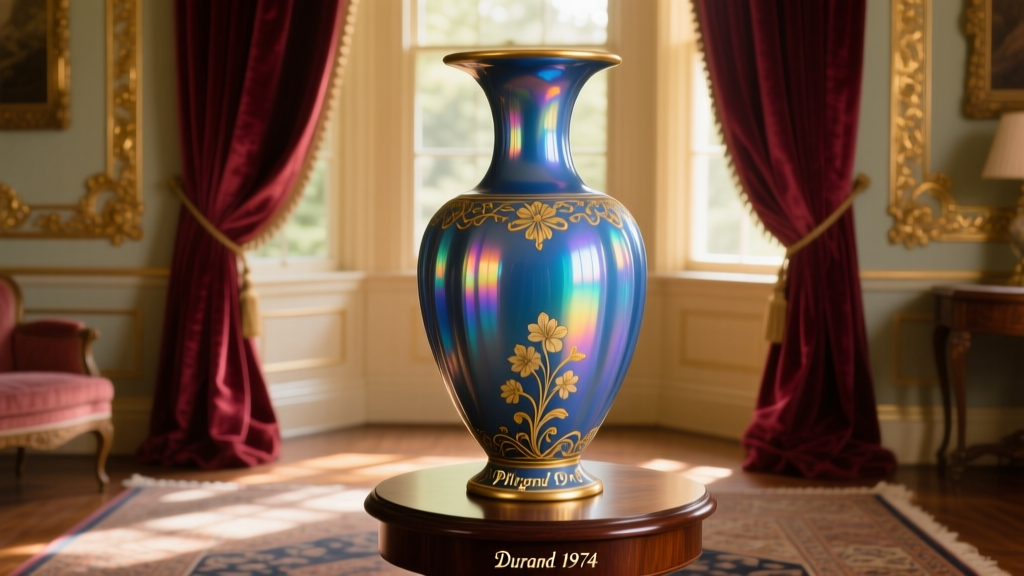
Durand Vase Pilgrim Iridescent Blue Gold Marked 1974 — A Collector’s Profile of the 16-Inch Studio Art Glass Masterpiece
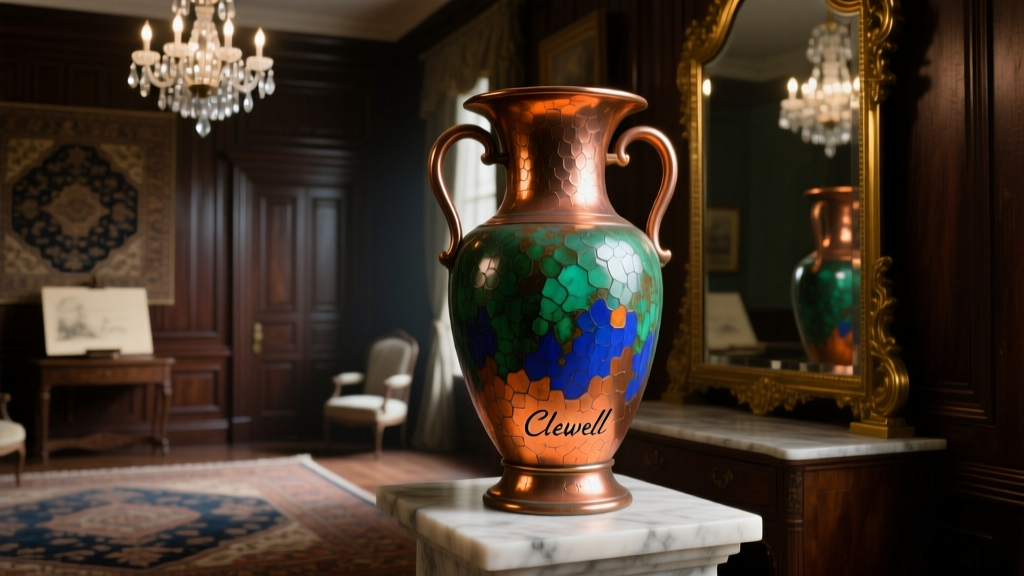
Clewell Vase: Copper-Clad Flared Shoulder with Green-Blue-Orange Patina — A Signed 6-Inch American Art Metal Masterpiece
Vernon Kilns Mayflower Tab Handle Bowl: Identification, History, and Restoration Guidelines for the 6 1/8-Inch Pattern
Need Help Identifying the Mark on Your Old Table? A Practical Guide for Collectors and Homeowners
Weller Rochelle Hop Design Vase: Identifying, Valuing, and Preserving a 6-Inch Brown Ground Masterpiece
Nippon Biscuit Jar Cover: Floral Gold Beading & Hand-Painted 8-Inch Lid — Identification, Value, and Conservation Guide

Royal Doulton Figurine Melanie HN 2271/2: History, Identification, Value, and Conservation Guidance

Disneyana Pin: Goofy Figural Brass Enameled — Identification, Provenance, and Restoration Guidance for Collectors
The Taft Watch Fob: History, Identification, and Collectibility of a Rare American Horological Accessory