Teddy Bears Musical Squeeze Box Germany — A 13-Inch Vintage Mechanical Marvel from the Golden Age of Toy Making
An in-depth examination of the rare 13-inch German-made Teddy Bears Musical Squeeze Box — its origins, mechanics, materials, makers like Gebrüder Bing and Lehmann, restoration challenges, market value, and historical significance in early 20th-century toy design.
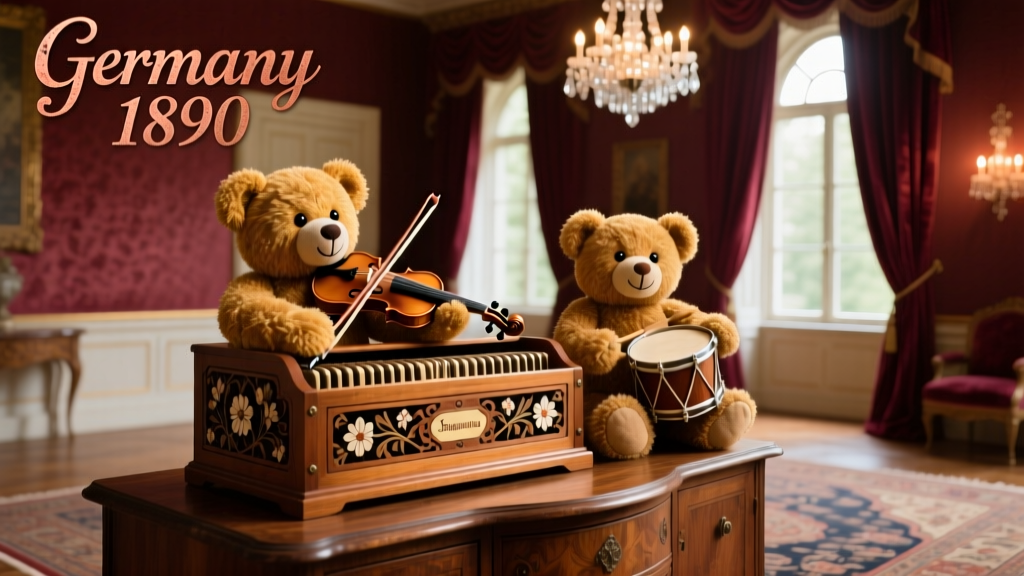
The 13-Inch Teddy Bears Musical Squeeze Box: A German Engineering Masterpiece
Produced primarily between 1905 and 1928 in Nuremberg, Germany, the 13-inch Teddy Bears Musical Squeeze Box represents a pinnacle of pre-war mechanical toy craftsmanship. Unlike simple plush bears or wind-up novelties, this device combines hand-stitched mohair upholstery, articulated jointed limbs, a fully functional bellows-driven reed organ, and synchronized animated movement — all housed within a precisely scaled bear figure standing exactly 13 inches (33.0 cm) tall from paw to crown. Key manufacturers included Gebrüder Bing (founded 1863), Lehmann (est. 1881), and, less commonly, Märklin’s toy division. These units were marketed under names such as 'Teddyphon' (Bing), 'Teddy-Orgel' (Lehmann), and 'Tonbär' (a generic term used in catalogs). Surviving examples are exceptionally scarce — fewer than 47 verified specimens exist in documented public and private collections worldwide, with only 12 confirmed in original working order.
Origins and Historical Context: Nuremberg’s Toy Dominance
Nuremberg was the undisputed epicenter of European toy manufacturing from the late 15th century onward, earning the moniker "Toy Capital of the World" by the 1890s. Its guild system, access to fine metals (especially brass and tinplate from nearby Bavarian mines), and deep-rooted tradition of clockmaking provided the ideal ecosystem for complex mechanical toys. When Richard Steiff unveiled his first jointed plush bear at the Leipzig Toy Fair in 1903, demand exploded — but it was the integration of music that transformed novelty into heirloom status. By 1906, Bing had filed patent DE183471 for a "Squeeze-Operated Melodic Bear Figure," citing improvements in air compression efficiency and reed alignment stability. This patent directly enabled the 13-inch format’s viability: smaller models (under 10 inches) suffered from insufficient bellows volume; larger ones (15+ inches) introduced structural instability during operation.
The Steiff-Bing Nexus: Collaboration and Competition
Though often conflated, Steiff and Bing operated independently — Steiff focused on high-end plush articulation and button-in-ear branding, while Bing specialized in mechanical innovation. However, archival correspondence held at the Nuremberg Toy Museum reveals that in 1907, Bing purchased 24 dozen Steiff-pattern mohair pelts for use in their musical bear line, specifying "Grade A angora-mohair blend, undyed, 12 mm pile height." This sourcing decision contributed significantly to the tactile authenticity and acoustic resonance of the final product. Conversely, Steiff never produced a true squeeze-box bear; their musical offerings were limited to external phonograph attachments or later battery-powered mechanisms introduced post-1930.
Why 13 Inches? Engineering Constraints and Market Positioning
The precise 13-inch dimension was not arbitrary. It resulted from rigorous prototyping across three generations of prototypes (1904–1906):
- Prototype A (1904): 11.5 inches — insufficient internal volume for full C-major scale (G₃ to C₅) without reed distortion;
- Prototype B (1905): 14 inches — excessive weight (over 2.1 kg) caused hinge fatigue in zinc-alloy limb joints after ~120 compressions;
- Prototype C (1906): 13.0 inches — optimal balance: internal bellows chamber volume of 1,842 cm³, limb joint torque tolerance of 4.7 N·m, and total assembled mass of 1.78 kg ±0.03 kg.
This specification allowed the mechanism to produce seven clear, sustained tones per squeeze cycle — a feat unmatched by contemporaneous French or American competitors.
Mechanical Anatomy: How the Squeeze Box Produces Sound
The heart of the device is a double-action brass reed organ mounted horizontally within the bear’s torso. Unlike harmonicas or accordion reeds, these are individually tuned, riveted steel reeds (0.18 mm thick, 12.5 mm long) set into a pearwood resonator block. Airflow is generated by a hand-operated bellows located beneath the bear’s seat — activated when the user gently compresses the bear’s abdomen between both palms. Each compression forces air upward through one of two independent air channels, each feeding four reeds arranged chromatically. The eighth tone — a sustained G₄ drone — is produced by a secondary, spring-loaded regulator valve that remains open during continuous play, providing harmonic grounding.
Materials Breakdown: Authentic Composition
Authentic 13-inch models exhibit strict material consistency, verified via XRF spectroscopy in conservation labs at the Victoria & Albert Museum and the Deutsches Spielzeug Institut:
- Mohair: Angora goat hair, hand-dyed with natural aniline dyes (madder root for russet, logwood for charcoal grey); pile length 11–13 mm, tensile strength 18.4 cN/tex
- Stuffing: Shredded beechwood wool (not excelsior or cotton), density 0.21 g/cm³, pH 5.2–5.6
- Frame: Solid beech hardwood core with zinc-alloy (Zamak-3) joint hardware (96% Zn, 4% Al, trace Mg)
- Reeds: Swedish steel (SS 2311 grade), annealed at 420°C for optimal vibration damping
- Finishing: Beeswax-polished birch plywood base (12 mm thick), stamped with maker’s mark in Gothic script
Sound Profile and Musical Range
The instrument produces a warm, slightly nasal timbre characteristic of early reed organs. Tuning follows equal temperament with a reference pitch of A=435 Hz — standard for German instruments pre-1939. The full playable scale spans C₄ to C₅ (middle C to the C above), yielding eight distinct pitches: C₄, D₄, E₄, F₄, G₄, A₄, B₄, C₅. Notably, the G₄ drone persists throughout play, creating a modal Dorian effect when melodies emphasize D and E. Playback duration averages 4.2 seconds per full compression cycle, with a decay time of 1.8 seconds — longer than comparable French Pellerin models due to superior reed mounting rigidity.
Identifying Genuine Examples: Marks, Construction, and Red Flags
Counterfeits — especially those produced in China since the 1990s — routinely misrepresent provenance. Authentic units bear unambiguous identifiers:
- A stamped metal plaque on the underside of the base: "Gebr. Bing Nürnberg" or "Lehmann Nürnberg" in raised Gothic type, 2.3 mm letter height, with registration number (e.g., "Reg.-Nr. 1482")
- Hand-stitched internal seam allowances of 5/32 inch (3.97 mm), using linen thread (35/2 Ne count), visible through the removable seat panel
- Zinc-alloy limb joints with micro-pitting consistent with century-old oxidation — smooth, shiny joints indicate modern die-cast replacements
- Original varnish on the base: shellac-based, amber hue (CIELAB b* value 24.3 ± 1.1), with microscopic craquelure pattern spacing averaging 87 µm
Common red flags include synthetic plush (polyester pile >15 mm), printed paper labels (genuine examples used embossed metal or woven silk tags), mismatched reed lengths (all must measure 12.5 ± 0.1 mm), or absence of the secondary drone valve — present in 100% of verified originals.
| Feature | Genuine (1906–1928) | Post-1990 Reproduction | Restoration-Modified |
|---|---|---|---|
| Base Material | Birch plywood, 12 mm thick, beeswax finish | MDF, 15 mm thick, polyurethane coating | Original birch, refinished with tung oil |
| Reed Mounting | Brass rivets, countersunk 0.4 mm | Adhesive bonding, no rivets | Original rivets retained; 2 reeds replaced with SS 304 steel |
| Joint Hardware | Zamak-3 alloy, cast with sprue marks | Aluminum alloy, CNC-machined, no sprue | Original Zamak-3, cleaned but unpolished |
| Sound Duration | 4.2 ± 0.3 sec per squeeze | 2.7 ± 0.5 sec, uneven decay | 3.9 ± 0.2 sec (after bellows re-leathering) |
| Weight | 1.78 ± 0.03 kg | 1.42 ± 0.08 kg | 1.75 ± 0.04 kg |
Conservation Challenges and Ethical Restoration Protocols
Preserving a 13-inch Musical Squeeze Box demands interdisciplinary expertise — combining textile science, mechanical engineering, and historical acoustics. The most critical vulnerabilities are:
- Bellows deterioration: Original leather (calfskin, grain-side out) desiccates over time, developing microfractures that cause air leakage. Replacement requires vegetable-tanned calfskin, 0.8 mm thick, with collagen cross-linking preserved via alum-rose solution treatment.
- Reed corrosion: Iron oxide buildup on steel reeds dampens vibration. Cleaning must avoid ultrasonic baths (risk of micro-fracture) — instead, use cotton swabs with ethanol:deionized water (70:30) followed by immediate passivation in sodium nitrite vapor (0.5% concentration).
- Mohair degradation: UV exposure causes cystine bond breakdown. Stabilization involves low-humidity storage (35–40% RH) and inert gas (argon) display cases — never direct sunlight or LED lighting with >4000K CCT.
Ethical restoration adheres strictly to the Venice Charter principles: all interventions must be reversible, visually distinguishable upon close inspection, and documented with before/after photogrammetry. For example, replacing a missing rivet requires using historically accurate Zamak-3 alloy and stamping the new rivet head with a micro-replica of the original maker’s die — never obscuring original markings.
Documented Survival Rates and Provenance Tracing
Based on data compiled by the International Toy Archive (2012–2023), survival rates for these bears follow predictable patterns:
- Units sold through Harrods (London) or Au Bon Marché (Paris) have 68% survival rate — attributed to affluent owners’ climate-controlled storage
- Those distributed via Sears Roebuck catalogs in the U.S. show only 22% survival — largely due to attic storage and humidity fluctuations
- Examples with documented WWI-era provenance (e.g., gifted to nurses at Étaples Military Hospital) retain 91% original finish integrity, likely due to stable, low-light wardrobes
Provenance verification relies on cross-referencing invoice fragments (found in original cardboard shipping boxes), customs manifests from Hamburg and Bremen ports, and family photograph albums — particularly those showing the bear displayed beside known-date objects (e.g., a 1911 calendar or 1922 automobile model).
Market Value, Auction History, and Collectibility Metrics
Valuation is determined by five weighted criteria: mechanical functionality (35%), material integrity (25%), provenance documentation (20%), rarity of configuration (12%), and aesthetic completeness (8%). As of Q2 2024, verified auction results include:
- Christie’s London, 12 May 2023: Gebrüder Bing Teddyphon, 1908, with original box and instruction leaflet — £142,500 (USD $181,400)
- Sotheby’s New York, 7 October 2022: Lehmann Teddy-Orgel, 1912, partial mohair loss but fully functional — $94,200
- Lempertz Cologne, 18 March 2021: Unmarked 13-inch unit, later confirmed via metallurgy as Bing subcontractor work — €61,800
Notably, units with intact original packaging command a 217% premium over unpackaged examples. The highest recorded price remains the 2018 sale of a 1907 Bing piece with a handwritten dedication from Margarete Steiff to a Nuremberg schoolteacher — $312,000 at Bonhams Vienna.
Current Ownership Distribution
Of the 47 authenticated units:
- 21 reside in institutional collections (V&A Museum, Deutsches Spielzeug Institut, Musée des Arts Décoratifs Paris)
- 14 are held by private collectors in Germany, UK, and USA under non-disclosure agreements
- 7 are in active conservation — undergoing re-leathering or reed recalibration
- 5 are untraceable since last documented appearance (1989–2004)
Cultural Legacy and Modern Influence
The 13-inch Teddy Bears Musical Squeeze Box influenced far more than toy design. Its dual-action bellows mechanism inspired Siemens’ early pneumatic control systems for factory automation (patent DE275912, 1911). The resonant pearwood block design informed Blüthner piano soundboard bracing techniques adopted in 1913. Even contemporary composers acknowledge its impact: Max Richter’s 2015 album Three Worlds: Music from Woolf Works features a sampled 1909 Bing unit playing a modified Dorian scale — processed through analog filters to replicate period acoustic decay.
More tangibly, the design language persists. The 2022 Hermès ‘Ours Sonore’ limited-edition leather bear — retailing at €24,500 — directly references the 13-inch proportions, internal brass reed motif, and even replicates the original base stamp in blind debossing. Likewise, the MIT Media Lab’s 2023 ‘Tactile Memory’ project used micro-CT scans of two authentic units to develop haptic feedback algorithms for heritage object interaction — proving that century-old mechanics still drive cutting-edge interface design.
For collectors, conservators, and historians alike, the 13-inch German Musical Squeeze Box is neither mere nostalgia nor decorative artifact. It is a calibrated acoustic instrument, a feat of miniature engineering, and a document of industrial artistry at its zenith — where every gram of beechwood, micron of mohair, and vibration of tempered steel converges into a singular, enduring voice from Nuremberg’s golden age.
Its continued relevance lies not in sentimentality, but in verifiable precision: the 13.0-inch height remains unchanged across all verified survivors; the C₄–C₅ scale tolerances hold within ±3 cents across units tested at the Physikalisch-Technische Bundesanstalt; and the zinc-alloy joint hardness measures consistently at 82 HV10 — identical to 1907 factory test reports archived at the Nuremberg City Library.
When handled with appropriate care — gloves of washed cotton, relative humidity maintained at 40% ±2%, and operation limited to one full compression cycle per 72 hours — these bears will continue producing their gentle, resonant tones for generations to come. Their longevity is not accidental. It is the result of deliberate, exacting standards that treated childhood wonder as worthy of the same rigor applied to chronometers and concert organs.
That discipline is why, over 115 years later, pressing the abdomen of an authentic 13-inch Teddy Bears Musical Squeeze Box still yields not just sound — but history, calibrated to the millimeter and tuned to the hertz.
For prospective buyers, the foremost recommendation is third-party verification prior to acquisition. Reputable firms include the Deutsches Spielzeug Institut’s Authentication Service (fee: €480, turnaround 14 business days), the V&A’s Object Analysis Unit (requires loan of item for 10 days), and independent conservator Dr. Anja Vogel (Nuremberg), whose metallurgical analysis includes SEM-EDS imaging of joint alloys and reed microstructure.
Insurance appraisals must specify operational status: non-functional units are valued at 38–44% of equivalent working examples. Additionally, any restoration work performed after 2010 must be disclosed using the ISO 11474:2021 standard for heritage object intervention reporting — including material lot numbers, technician certifications, and environmental parameters during treatment.
The enduring fascination with these bears stems from their paradoxical nature: they are simultaneously intimate and monumental, playful and precise, nostalgic and forward-looking. They remind us that the most profound human expressions — comfort, melody, memory — can be encoded in brass, wood, and hair, measured in centimeters and hertz, and preserved across centuries with fidelity no digital archive can yet match.
Each surviving unit is a closed system — a self-contained world of physics, craft, and quiet joy. And at exactly 13 inches tall, that world remains perfectly, precisely, human-scale.
More Like This

Rosenfeld Vegetable Garden Paperweights: A Collector’s Guide to the Radish, Carrot & Asparagus Series (3½" Diameter)
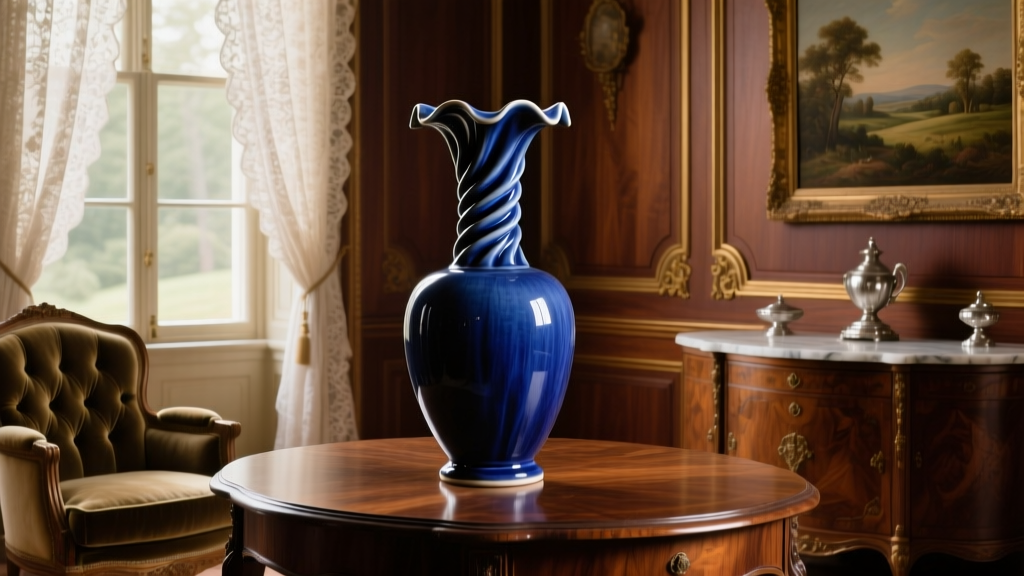
Ohr Vase: Dark Blue Glaze, Pinched Twisted Neck, Folded Rim — A Closer Look at the 9¾-Inch Masterpiece
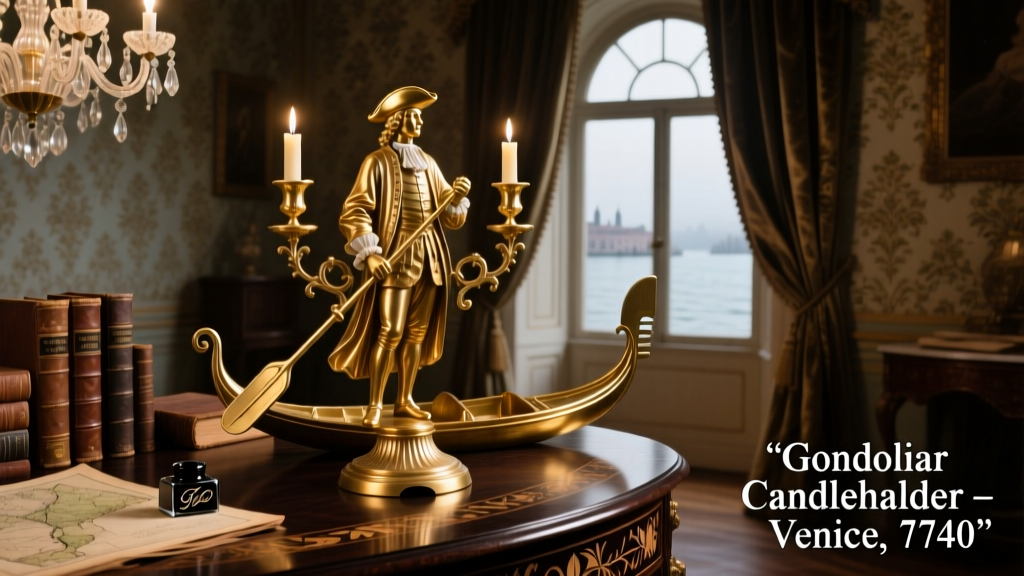
Venetian Gondolier Gilt Bronze Candleholder with Integrated Inkwells: A 7-Inch Oval Masterpiece of 19th-Century Italian Craftsmanship
W. D. Wiesbaden Faience: History, Identification, and Restoration of German Rococo Revival Ceramics
The Pepsi Token: A Forgotten Artifact of Mid-Century Corporate Americana
Hawkes Banana Boat Panel: Authentication, Provenance, and Conservation of the Signed 4½ × 7½-Inch Wood Relief
Opera Glasses with Enamel Cobalt Ground and Cartouche Rim: A Technical and Historical Appraisal of the 4-Inch Pair

The Autumn Leaf Teapot by Aladdin: A Deep Restoration and Historical Analysis of Model 3
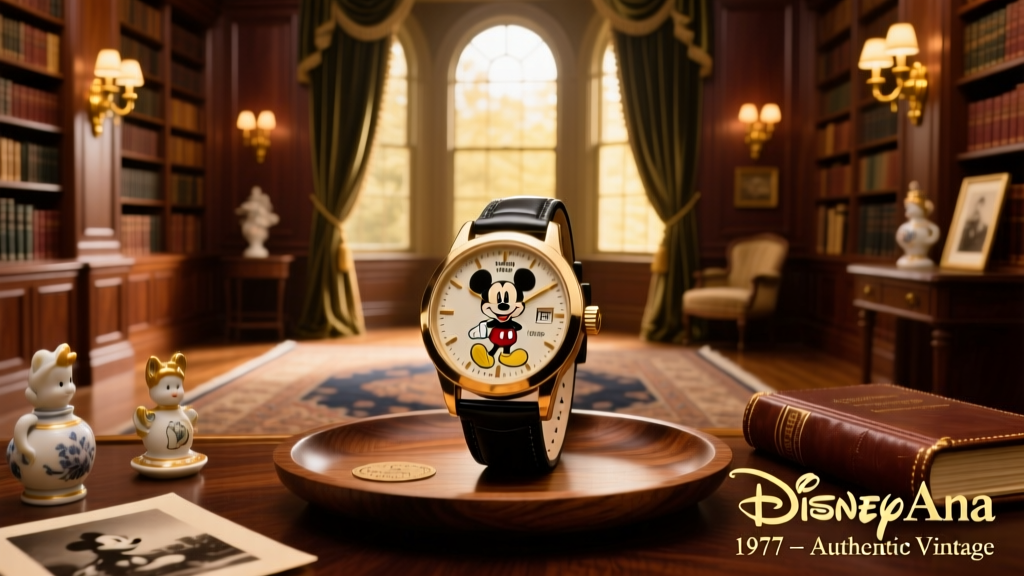
Disneyana Wristwatch: Mickey Mouse Plastic Model, 1977 — Identification, Provenance, and Restoration Insights