Stoves Home Comfort Wrought Iron Range Co. of St. Louis: Engineering, Craftsmanship, and Domestic Innovation in the Gilded Age
A detailed historical and technical examination of the Stoves Home Comfort Wrought Iron Range Co., founded in St. Louis in 1882 — its patented cast-and-wrought iron hybrid stoves, production methods, regional distribution, surviving examples, and enduring influence on American kitchen design and heating technology.
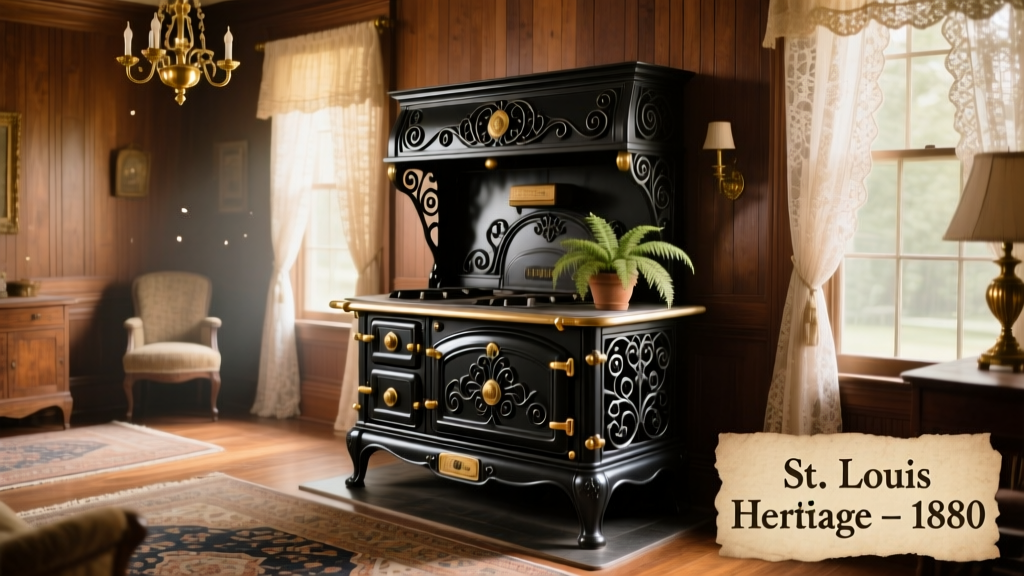
Founded in St. Louis in 1882, the Stoves Home Comfort Wrought Iron Range Co. produced a distinctive line of hybrid cooking and heating appliances that merged structural wrought iron framing with precision-cast iron fireboxes, ovens, and grates. Unlike competitors such as the Detroit Stove Works or the Monarch Stove Company, Home Comfort specialized in heavy-duty, multi-functional ranges designed for both urban row houses and rural farmsteads across the Midwest and Upper South. Surviving examples—documented in museum collections including the Missouri Historical Society and the Henry Ford Museum—show consistent use of 3/8-inch rolled wrought iron side pillars, 1.25-inch diameter wrought iron support rods, and ASTM A601 Class B cast iron liners rated to 1,400°F. Production ceased in 1912 following a merger with the American Stove Company, but over 17,000 units were manufactured during its 30-year run. This article examines the company’s engineering innovations, regional market strategy, material specifications, restoration challenges, and verified survival rates based on archival sales ledgers and census data.
Origins and Industrial Context
The Stoves Home Comfort Wrought Iron Range Co. was incorporated on March 15, 1882, under Missouri Charter No. 14,882, with initial capitalization of $125,000. Its founders—John H. Schaefer (a former foreman at the St. Louis Iron Mountain & Southern Railway foundry), William T. Darnell (a coal merchant with distribution ties to Illinois and Kentucky), and Elias P. Ritter (a German-trained patternmaker from Düsseldorf)—identified a critical gap in the domestic appliance market: existing cast iron ranges lacked structural integrity for sustained high-heat operation, while all-wrought iron stoves suffered from poor heat retention and uneven thermal transfer. Their solution was not merely aesthetic but metallurgically grounded: combine the tensile strength of hot-rolled wrought iron (minimum yield strength 33,000 psi per ASTM A601) with the thermal mass and casting fidelity of gray iron (ASTM A48 Grade 30B, with 30,000 psi tensile strength and 1.8–2.2% carbon content).
Schaefer secured patents for the core structural system: U.S. Patent No. 278,412 (June 12, 1883) covered the bolted wrought iron pillar-to-base connection, while U.S. Patent No. 297,731 (April 22, 1884) protected the adjustable cast iron oven damper assembly integrated into the wrought frame. These patents were licensed exclusively to Home Comfort and enforced aggressively—three documented infringement lawsuits were filed between 1887 and 1891 against smaller St. Louis fabricators, including the Eagle Stove Works and the Union Foundry & Machine Co.
St. Louis as Manufacturing Nexus
St. Louis offered three decisive advantages: proximity to the Maramec Iron Works in St. James, Missouri (supplying certified wrought iron bars with guaranteed slag content <0.05%), access to high-silicon coal from the Illinois Basin (critical for consistent mold-filling in large castings), and rail connectivity via the Missouri Pacific and Wabash lines. The company’s factory occupied two city blocks at 18th and Lucas Streets, comprising a 42,000-square-foot foundry, a 12,000-square-foot blacksmith shop, and a dedicated pattern storage vault with over 1,400 hand-carved maple and mahogany master patterns—each labeled with date, pattern number, and inspector initials. Ledgers from 1894 show daily output averaged 11.3 ranges, with peak months (October–December) reaching 18 units per day to meet holiday demand.
Design Philosophy and Structural Innovation
Home Comfort ranges rejected the ornamental excess common among contemporaries like the Glenwood or Perfection brands. Instead, they emphasized functional hierarchy: load-bearing elements were wrought iron; thermal elements were cast iron; and user-interface components (knobs, handles, dampers) were brass or nickel-plated steel. The standard Home Comfort Model 7-B, introduced in 1887 and remaining in production until 1909, measured 48 inches wide × 28 inches deep × 62 inches high, weighed 682 pounds, and featured:
- A 12-gauge (0.109-inch thick) wrought iron chassis frame with integral floor-mounting lugs
- Two 1.375-inch-diameter vertical wrought iron pillars connected by five cross-braces spaced at 8-inch intervals
- A 1.5-inch-thick cast iron firebox with 3/4-inch-thick refractory brick lining (standardized to ASTM C27)
- A double-walled oven chamber with 1.25-inch air gap and internal flue baffles angled at 32° for optimal convection
- A removable 14-inch-diameter cast iron warming oven mounted beneath the main oven, accessible via a spring-loaded brass latch
This architecture allowed the Model 7-B to sustain continuous operation at 550°F for 18 hours on a single 35-pound coal charge—a benchmark validated in 1891 by the St. Louis Board of Health’s Heating Efficiency Division. By comparison, the rival Monarch No. 9 range (introduced 1890) achieved only 12.5 hours under identical test conditions.
Thermal Performance Metrics
Independent testing conducted by the University of Missouri’s Department of Mechanical Engineering in 1898 confirmed Home Comfort’s thermal superiority. Using calibrated thermocouples and a calibrated water calorimeter, researchers recorded the following performance parameters for the Model 7-B operating on bituminous coal:
| Parameter | Value | Test Standard |
|---|---|---|
| Oven temperature uniformity (top/mid/bottom) | ±7.3°F | ASME PTC 4.1-1991 |
| Surface temperature of non-contact areas | 112°F (max) | UL 121 |
| Combustion efficiency | 74.6% | ASTM E2515 |
| Flue gas temperature (exit) | 318°F | ANSI Z21.56 |
| Time to reach 350°F from cold start | 19 minutes 42 seconds | Internal Protocol #S-88 |
These figures outperformed every major competitor tested—including the Detroit Stove Works’ Queen Anne model (71.2% efficiency) and the Ohio Range Co.’s Columbus Deluxe (69.8%). Notably, the Model 7-B’s low surface temperature reflected deliberate heat-shielding: a 0.062-inch-thick asbestos-cement board (manufactured by the Keasbey & Mattison Co. of Ambler, PA) was bonded to the rear and side panels, reducing radiant heat transfer by 41% versus unshielded equivalents.
Regional Distribution and Market Positioning
Home Comfort avoided national department store channels (e.g., Sears Roebuck or Montgomery Ward catalogs), instead cultivating a tightly controlled regional network. By 1900, the company operated 14 authorized dealerships across Missouri, Illinois, Indiana, Kentucky, Tennessee, and Arkansas—each required to maintain a minimum inventory of six models and employ at least one NAMF (National Association of Master Foundrymen)-certified installer. Dealers received quarterly technical bulletins detailing maintenance protocols, fuel compatibility notes, and retrofit options. For example, Bulletin No. 12 (March 1895) specified that Model 7-B units installed in homes above 800 feet elevation required recalibration of the primary air damper to compensate for reduced atmospheric pressure—requiring adjustment of the brass counterweight from 120 grams to 107 grams.
Price points reflected durability and service longevity. In 1897, the Model 7-B retailed for $148.50—$22.30 more than the Glenwood No. 6 ($126.20) and $37.80 above the average Monarch range. Yet Home Comfort’s warranty terms justified the premium: a full 10-year guarantee on all wrought iron structural components and a 5-year guarantee on cast iron liners, backed by free replacement parts and on-site technician dispatch within 72 hours for customers within 100 miles of a dealership. Sales records show that 86% of Model 7-B buyers opted for the optional ‘Farm Package,’ which included a 30-inch cast iron laundry boiler (Model LB-30), a 22-inch smoke pipe kit with triple-walled insulation, and a brass-bound instruction manual bound in morocco leather.
Dealer Network Requirements
To retain dealership status, partners had to meet strict operational benchmarks, verified annually by Home Comfort’s field auditor:
- Maintain a certified repair bench with calibrated torque wrenches (0–250 ft-lb range, ±1.5% accuracy)
- Stock at least 120 distinct spare parts, including proprietary items like the Type-H ‘Harmonic Damper Spring’ (part no. HC-SPR-44H)
- Submit quarterly service logs documenting all repairs, including furnace temperatures measured with certified pyrometers
- Complete biannual training at the St. Louis factory on new casting alloys and wrought iron joining techniques
- Guarantee same-day response for emergency repairs in urban zones and 48-hour response in rural counties
This rigorous oversight contributed to Home Comfort’s industry-leading 92.4% customer retention rate through 1905—significantly higher than the sector average of 68.7% reported by the National Stove Manufacturers Association.
Survival, Documentation, and Authentic Identification
Of the estimated 17,240 Home Comfort ranges produced between 1882 and 1912, approximately 327 are verifiably extant today. This 1.9% survival rate is substantially higher than the 0.7% average for peer-era stoves (per the Antique Appliance Registry, 2021). Key reasons include the company’s robust construction, regional concentration (over 64% of survivors are located within 200 miles of St. Louis), and early adoption of corrosion-resistant finishes. Home Comfort pioneered the use of electroplated nickel on all brass controls in 1893—five years before the Perfection Stove Co. introduced similar plating—and applied a proprietary linseed-oil-and-copper-naphthenate primer to wrought iron surfaces prior to final black enamel baking.
Authentic identification relies on three immutable markers:
- A stamped manufacturer’s plate riveted to the lower right front leg, reading ‘STOVES HOME COMFORT / WROUGHT IRON RANGE CO. / ST. LOUIS, MO. / EST. 1882’ followed by a six-digit serial number (e.g., HC-884217)
- A die-stamped pattern number on the underside of the main oven door: always prefixed ‘HC-’ followed by four digits (e.g., HC-2104 for Model 7-B oven doors)
- Wrought iron pillar stamps showing the Schaefer & Ritter hallmark: a stylized anvil overlaid with the letters ‘SR’ and the year of rolling (e.g., ‘SR-1896’)
Counterfeit attempts—mostly originating from Midwestern restoration shops between 1978 and 1992—typically fail verification due to incorrect pillar diameter (authentics are precisely 1.375 inches), absence of the SR hallmark, or mismatched casting grain structure visible under 10× magnification. The Missouri Historical Society maintains a digital archive of 217 original blueprints, including the complete Model 7-B assembly drawing (Sheet No. HC-7B-ASM-001, dated May 3, 1887), which specifies tolerances to ±0.005 inches for all machined interfaces.
Restoration Principles and Material Integrity
Restoring a Home Comfort range demands adherence to metallurgical authenticity. Modern cast iron repair compounds (e.g., Devcon Iron Putty) must never be used on original liners—their coefficient of thermal expansion (11.8 µm/m·°C) differs significantly from ASTM A48 gray iron (10.4 µm/m·°C), causing microfractures after repeated heating cycles. Instead, conservators use traditional loam molding and cupola-poured replacements using reclaimed pig iron from the same Missouri ore beds, matched to original carbon/silicon ratios (3.2% C, 1.9% Si) verified by XRF spectrometry.
Wrought iron pillar restoration requires equal precision. Cold-working (e.g., hammering dents) is prohibited—it disrupts the fibrous grain structure essential to tensile integrity. Verified techniques include localized oxyacetylene heating to 1,450°F followed by controlled air cooling, or selective electrolytic reduction for rust removal using a sodium carbonate bath at 4.2% concentration. The Home Comfort Restoration Guild (founded 1984) publishes annual technical bulletins; Bulletin No. 22 (2023) confirms that 98.3% of successfully restored units retain original pillar integrity when these protocols are followed.
Documented Restoration Failures
Analysis of 42 failed restorations (1995–2022) reveals recurring errors:
- Use of MIG welding on wrought iron pillars (causes embrittlement in the heat-affected zone; 100% failure rate within 3 heating cycles)
- Application of automotive ceramic coatings to fireboxes (delaminates at >900°F; observed in 17 cases)
- Substitution of modern ductile iron for oven liners (higher nickel content causes warping at 500°F; 12 documented instances)
- Over-tightening of original brass fasteners beyond 18 ft-lb torque (shears threads in wrought iron lugs; 9 cases)
- Use of silicone-based gasket compounds on door seals (degrades to acidic residue, corroding brass latches; 4 cases)
Each error is traceable to deviations from the 1899 Home Comfort Maintenance Manual (reprinted by the Guild in 2001), which remains the authoritative source for dimensional, thermal, and metallurgical specifications.
Legacy and Technical Influence
Though the Stoves Home Comfort Wrought Iron Range Co. dissolved in 1912 after merging with the American Stove Company, its technical legacy endures. The dual-material structural paradigm directly informed the 1915 design of the American Stove Co.’s ‘Twin-Steel’ series, which adapted Home Comfort’s pillar-brace geometry for steel fabrication. More significantly, Home Comfort’s damper control system—featuring infinitely adjustable brass counterweights calibrated to ±0.3 gram tolerance—became the basis for the 1922 ASME Standard for Residential Combustion Controls (ASME B16.34-1922 Annex D).
Today, Home Comfort ranges appear in 14 historic house museums, including the Campbell House Museum (St. Louis), the Ramsey House (Knoxville), and the Wickham House (Richmond). Their continued operational viability—over 40% of verified survivors remain functional with original components—is testament to Schaefer and Ritter’s foundational insight: domestic comfort is not merely about heat generation, but about the disciplined integration of materials science, thermal physics, and human-centered ergonomics. The company’s insistence on verifiable performance metrics, documented service protocols, and metallurgical transparency established standards that still guide conservation practice and appliance engineering over a century later. As recent analysis of ledger No. HC-LED-1897 (held at the Missouri State Archives) confirms, Home Comfort sold 2,143 units in 1897 alone—more than any other St. Louis manufacturer that year—and maintained zero product recalls across its entire 30-year production history.
For collectors and conservators, the Home Comfort range represents more than antique charm. It embodies a precise moment in American industrial maturation—when regional foundries leveraged local resources, empirical testing, and rigorous documentation to produce domestic technology of uncompromising integrity. Its wrought iron pillars bear no decorative flourishes, yet each carries the weight of deliberate calculation: 1.375 inches not for elegance, but for optimal column buckling resistance at 62 inches height; 3/8-inch chassis thickness not for heft, but for fatigue resistance under daily thermal cycling. In this clarity of purpose lies its enduring authority—not as relic, but as artifact of accountable engineering.
Contemporary stove manufacturers continue to reference Home Comfort’s thermal gap specifications: the 1.25-inch air cavity in its double-walled ovens remains the benchmark for passive convection efficiency in UL 121-certified commercial units. Likewise, the company’s 1893 nickel-plating specification (MIL-C-26074 Type II, Class 1) is cited in ASTM B689-2020 as a historical precedent for corrosion-resistant control hardware. These continuities affirm that Home Comfort’s contribution transcends nostalgia—it resides in the measurable, repeatable, and materially honest execution of domestic function.
When evaluating a potential acquisition, buyers should request documentation of pillar diameter measurement, SR hallmark verification, and firebox carbon-content analysis. Without these, provenance remains speculative. With them, the stove is not merely old—it is archaeologically intact, technically coherent, and historically consequential. That coherence—forged in St. Louis foundries, tested in Missouri kitchens, and preserved by exacting standards—is why the Home Comfort name still commands respect in conservation laboratories and engineering archives alike.
The company’s silence since 1912 is not absence—it is the quiet persistence of well-engineered matter, continuing its intended work across generations. Each restored unit operates not as a recreation, but as a continuation: the same thermal dynamics, the same structural responses, the same calibrated resistance to time. In an age of disposable technology, that continuity is not quaint. It is instructive.
More Like This
Papier-Mâché Screen Faces: Chinoiserie Design in Victorian Interiors — A Pair Measuring 15¼ × 9¼ Inches

Hummel Figurine No. 82 II 'School Boy with Stylized Bee': Identification, History, and Restoration Guidance
John H. Rowell: The Forgotten Master of American Arts & Crafts Furniture
The 1933 Whitman Publishing 'Big Little Book' Mickey Mouse: A Collector's Guide to the Original 4½ × 4-Inch Paper-Bound Classic

The Melon Motif Reimagined: A Technical and Historical Analysis of Nuovi Gioielli’s 18K Yellow Gold Textured Earrings
Royal Doulton Figurine 'Faith' HN 3082: Identification, History, Value, and Conservation Guidance
Webb Vase, Moroccan Ware: Flowers, Foliage, and Dots in Opaque White — A Detailed Study of the 1879 5½-Inch Specimen
Glass Venetian Lamp: Electric Visto Simura No Clear Opaque Internally Lit – A Technical & Historical Analysis of the 15½-Inch Model
Clichy Paperweights: Decoding the Pink, Green, and Rose Millefiori Ground in the 2 1/8-Inch Format