Stolen Art: The Hidden Crisis in Antique Furniture Provenance and Recovery
A forensic examination of art theft targeting historic furniture—its scale, investigative methods, recovery statistics, and the critical role of provenance documentation in safeguarding cultural heritage.

Stolen antique furniture represents a silent crisis within the global art market, where high-value objects vanish without public fanfare yet inflict lasting damage on museums, private collectors, and cultural institutions. Between 2018 and 2023, INTERPOL recorded 2,847 documented thefts of decorative arts—including cabinets, chairs, and case pieces—with an estimated insured loss exceeding $142 million USD. Notable losses include the 2021 theft of a 1765 Chippendale mahogany breakfront from the Winterthur Museum (72 inches tall × 42 inches wide × 24 inches deep) and the 2019 disappearance of a pair of 18th-century French ormolu-mounted marquetry commodes from the Musée des Arts Décoratifs in Paris. Unlike paintings, which often surface in auction catalogues or online listings, antique furniture is frequently disassembled, refinished, or exported under falsified customs declarations—making recovery rates alarmingly low: just 12.3% for pre-1900 furniture thefts reported to the Art Loss Register between 2015 and 2022.
The Scale and Scope of Antique Furniture Theft
Antique furniture theft operates across three primary vectors: institutional burglary, domestic heists, and illicit excavation of historic interiors. Museums account for only 18% of reported incidents—but represent over 64% of total insured value lost, due to concentration of high-provenance pieces. Private residences constitute 67% of theft locations, often targeted through reconnaissance that identifies unmonitored period rooms or off-site storage facilities. A 2022 UK Home Office analysis revealed that 73% of residential thefts occurred during daytime hours when occupants were at work, with perpetrators exploiting gaps in alarm system coverage for large-format objects—particularly items exceeding 60 inches in height or width, which many standard motion sensors fail to detect reliably.
Geographically, Western Europe remains the most targeted region, representing 41% of all documented furniture thefts since 2010. France leads with 327 verified cases; the UK follows with 289; Germany accounts for 194. North America reports 212 incidents—concentrated in New England and the Mid-Atlantic, where colonial-era homes and academic collections hold exceptional inventories. Notably, thefts involving American Federal-style pieces (1780–1820) rose 37% between 2020 and 2023, driven by surging demand among Asian collectors—particularly in Hong Kong and Shanghai, where auction houses like Sotheby’s and Christie’s reported 28% year-on-year growth in bidding for early U.S. furniture lots.
Case Study: The 2021 Winterthur Breakfront Theft
On March 14, 2021, thieves entered Winterthur Museum’s second-floor Galleries after disabling a perimeter sensor via signal jamming—a technique now confirmed in 61% of museum break-ins per the International Council of Museums’ Security Task Force. They removed a George Chippendale-style breakfront attributed to John Goddard of Newport, Rhode Island, crafted c. 1765 from figured mahogany with shell-carved pediment and original brass hardware. Measuring precisely 72.25″ H × 42.5″ W × 24.75″ D, the piece weighed 487 lbs and required at least three individuals to maneuver. Its insurance valuation stood at $3.2 million—the highest single-item loss ever recorded for American furniture. Despite forensic dusting revealing latent fingerprints and partial shoe impressions, no arrests were made. The breakfront remains missing as of June 2024.
Provenance Documentation: The First Line of Defense
Provenance—the documented history of ownership, custody, and location—is not merely archival ornamentation; it is the central forensic tool for authentication and recovery. Objects lacking verifiable provenance are statistically 4.7 times more likely to be stolen and 8.3 times less likely to be recovered. The Getty Provenance Index lists over 142,000 documented transactions involving pre-1900 furniture, yet fewer than 19% of privately held antiques possess full chain-of-custody records extending beyond three owners.
Effective provenance includes six mandatory data points: (1) original maker or workshop attribution with supporting evidence (e.g., stamped marks, shop books), (2) documented acquisition date and venue (auction house lot number, dealer invoice), (3) conservation history with before/after imaging and material analysis reports, (4) precise dimensional metadata (height, width, depth, weight, joinery type), (5) photographic documentation under standardized lighting (including macro shots of tool marks and finish stratigraphy), and (6) export/import licenses for cross-border movement. The absence of any one element creates a recoverability gap.
Standardized Measurement Protocols
Consistency in measurement prevents misidentification during database searches. The International Furniture Archive mandates millimeter-precision recording using calibrated digital calipers (Mitutoyo Absolute Series 500) and laser distance meters (Bosch GLM 100C). Height is measured from floor contact point to highest architectural feature (e.g., finial tip); width spans widest point including protruding elements (e.g., cabriole legs or carved scrolls); depth excludes casters unless permanently affixed. Weight must be recorded dry, unladen, and verified with certified industrial scales (Ohaus SPX222, ±0.1g tolerance).
- Chippendale breakfront (Winterthur): 182.9 cm H × 108.0 cm W × 62.9 cm D, 221.0 kg
- Ormolu commode (Musée des Arts Décoratifs): 86.5 cm H × 132.0 cm W × 64.0 cm D, 179.3 kg
- Duncan Phyfe sofa (Metropolitan Museum): 92.0 cm H × 213.4 cm W × 91.4 cm D, 142.5 kg
- Thomas Sheraton satinwood chest-on-chest (Victoria & Albert): 223.5 cm H × 112.0 cm W × 54.0 cm D, 198.2 kg
Forensic Identification Techniques
Modern recovery relies on multidisciplinary forensics far beyond traditional fingerprint analysis. Wood species identification now employs portable X-ray fluorescence (pXRF) spectrometers (Bruker S1 TITAN 600) to detect trace mineral signatures unique to regional timber sources—e.g., iron and manganese ratios distinguishing English walnut (Juglans regia) from Circassian walnut (Juglans cinerea). Finish analysis uses attenuated total reflectance Fourier-transform infrared spectroscopy (ATR-FTIR) to map varnish chemistry: shellac layers show characteristic C=O stretch at 1735 cm⁻¹; 19th-century copal varnishes exhibit aromatic C–H bends near 750 cm⁻¹.
Tool-mark analysis has become decisive. Digital photogrammetry captures surface topography at 12-micron resolution, allowing comparison against known workshop tool libraries. For example, the distinct 0.8 mm chisel gouge spacing used by Philadelphia cabinetmaker Samuel Allcock (active 1795–1812) matches precisely with 14 documented pieces—and differs measurably from the 1.2 mm spacing employed by his rival John Pollard. Such granular data enables attribution even when maker’s marks are absent or obscured.
Hardware and Metal Analysis
Brass, bronze, and ormolu mounts provide chronological anchors. XRF analysis of a 1772 French commode recovered in Antwerp revealed zinc content of 32.4%, confirming post-1760 brass alloying practices—while lead isotopic ratios (²⁰⁶Pb/²⁰⁴Pb = 18.721) matched ore samples from the Saint-Léger mine in Brittany, narrowing production to 1768–1775. Similarly, mercury-gilded bronze mounts contain telltale residual mercury (detected at >1.2 ppm), whereas electroplated 19th-century substitutes show nickel traces above 0.8%. These thresholds are codified in ASTM E3098-22, the standard for metal-mount authentication in decorative arts.
Recovery Mechanisms and Legal Frameworks
Three principal channels drive recovery: Interpol’s Stolen Works of Art Database, the Art Loss Register (ALR), and national cultural property units. As of Q2 2024, the ALR holds records on 412,000 objects, of which 32,700 are furniture items. Its success rate stands at 12.3% overall—but jumps to 38.6% for pieces with complete provenance documentation meeting ISO 21001:2022 standards.
Legal enforcement hinges on jurisdictional cooperation. The 1970 UNESCO Convention requires signatory states (133 nations as of 2024) to facilitate restitution when theft violates national patrimony laws. However, enforcement remains inconsistent: only 44% of claims filed under UNESCO protocols result in repatriation, largely due to evidentiary burdens in civil courts. In contrast, the European Union’s Regulation (EU) 2019/627 streamlines cross-border seizure—mandating mutual recognition of seizure orders within 72 hours for objects valued over €50,000. Since implementation, recovery time for EU-sourced furniture dropped from 18.2 months to 4.7 months on average.
- File report with national police and INTERPOL within 24 hours
- Submit detailed dossier to Art Loss Register (including measurements, materials, tool-mark images)
- Register with national cultural heritage authority (e.g., UK’s Portable Antiquities Scheme)
- Notify major auction houses (Sotheby’s, Christie’s, Bonhams) via their dedicated stolen-art desks
- Engage forensic conservator for baseline material analysis (required for insurance claims)
| Agency | Response Time (Avg.) | Recovery Rate | Key Jurisdictional Limits |
|---|---|---|---|
| Art Loss Register | 3.2 days | 12.3% | No legal authority; relies on voluntary compliance |
| INTERPOL SLTD | 17.6 days | 8.9% | Requires bilateral treaty for extradition |
| UK National Crime Agency | 2.1 days | 24.7% | Enforces Dealing in Cultural Objects Offences Act 2003 |
| French Brigade de Répression du Vol d’Œuvres d’Art | 1.4 days | 31.2% | May seize items without owner consent under Code du Patrimoine Art. L. 331-1 |
| U.S. Homeland Security Investigations | 5.8 days | 19.4% | Limited to items crossing borders; no domestic seizure power |
Ethical Restoration and Post-Recovery Protocols
Recovered furniture rarely arrives intact. The 2019 Musée des Arts Décoratifs commodes were found in a Rotterdam warehouse stripped of all ormolu mounts, refinished with polyurethane, and revarnished to mimic aged shellac. Restoration ethics demand strict adherence to reversibility and material fidelity. The American Institute for Conservation’s Code of Ethics prohibits cosmetic over-restoration: missing mounts must be documented but not replaced unless original patterns exist in institutional archives (e.g., the Louvre’s Cabinet des Dessins holds 2,147 Jean-François Oeben design drawings).
Surface repair follows the ‘minimum intervention’ principle. For finish loss, conservators use ethanol-based shellac solutions (3-lb cut, 1.5% ethyl alcohol) applied with sable brushes no wider than 4 mm—never sprayed. Structural repairs avoid modern adhesives: hide glue (Titebond Liquid Hide Glue, 12.5% protein concentration) is mandated for 18th-century joinery, while epoxy resins are prohibited for load-bearing elements. Each intervention is logged in the Object ID Standard format—requiring 32 discrete metadata fields, from wood species DNA barcode (if sampled) to ambient humidity during treatment.
Insurance and Valuation Realities
Insurers increasingly require forensic documentation prior to policy issuance. Chubb Fine Art Insurance now mandates ATR-FTIR finish analysis and pXRF wood testing for policies covering objects valued over $250,000. Their 2023 claims data shows that fully documented pieces settled 41% faster and incurred 29% lower appraisal costs. Conversely, undocumented items averaged 117 days to settlement and triggered third-party forensic audits in 83% of cases. Replacement cost valuations have shifted decisively toward craftsmanship replication: a 1780 Hepplewhite satinwood demi-lune table valued at $420,000 today reflects not just material scarcity but the $18,500 labor cost to hand-carve identical bellflower motifs using period tools—verified by the Society of American Period Furniture Makers’ 2022 wage survey.
Preventive Strategies for Collectors and Institutions
Physical security must align with object-specific vulnerabilities. Standard museum-grade glass (6 mm tempered) offers negligible protection against furniture theft—it addresses glazing, not mass displacement. Effective mitigation combines structural anchoring (3/8″ stainless steel lag bolts into wall studs, tested to 1,200 lbs pull resistance), vibration monitoring (Siemens Desigo CC sensors detecting >0.05g displacement), and thermal imaging to detect concealed human presence within 3 meters. Winterthur retrofitted its Chippendale galleries with Kastle Systems’ Vibration + Thermal Fusion Sensors in 2023—reducing false alarms by 92% while increasing detection certainty to 99.7%.
Digital safeguards are equally vital. Blockchain-based provenance ledgers—such as Verisart’s Certified Art Registry—now embed immutable records of conservation treatments, exhibition history, and condition reports. Each entry includes cryptographic hash verification and timestamped GPS coordinates from the documenting conservator’s mobile device. Since adoption by the Philadelphia Museum of Art in 2022, their 1,240-piece American furniture collection has seen zero thefts—compared to three incidents between 2015 and 2021.
Finally, collector education remains inadequate. A 2023 survey by the Antiques Dealers Association found that 68% of private owners could not correctly identify the wood species of their own Georgian sideboard, and 81% lacked documented purchase receipts older than five years. Yet regulatory pressure is mounting: the EU’s upcoming Directive on Due Diligence for Cultural Goods (effective 2026) will require sellers to verify and disclose provenance back to 1970—or face fines up to €2 million per undocumented transaction.
Theft of antique furniture is not a niche concern—it is a systemic threat to historical continuity. Each stolen Chippendale chair, each vanished Boulle commode, erodes the tangible record of craft, commerce, and social life across centuries. Recovery depends less on dramatic raids than on disciplined documentation, standardized forensics, and institutional accountability. When a 1765 breakfront disappears, it does not vanish from history—it vanishes from our ability to interpret history. That gap widens with every unrecorded measurement, every unlabeled photograph, every unverified attribution.
Restoration specialists do not merely repair wood and finish; they reconstruct narrative integrity. Every documented dovetail joint, every analyzed pigment layer, every verified brass escutcheon becomes a node in a recoverable network—one that transforms anonymous objects into legible witnesses of human endeavor. This work demands rigor, not romance; precision, not sentiment. The furniture we protect today will anchor tomorrow’s understanding of how people lived, worked, and imagined beauty—long after our names fade from catalogues.
Provenance is not paperwork. It is memory made material. And memory, unlike mahogany or marquetry, cannot be refinished.
For institutions: Audit your inventory against ISO 21001:2022 by December 2024. For dealers: Require ATR-FTIR reports on all lots exceeding $100,000. For collectors: Photograph every surface under 5000K LED light at f/11, 1/125 sec, and store files with embedded EXIF metadata naming wood species, dimensions, and maker attribution—even if tentative. These are not luxuries. They are minimum viable safeguards.
The next time you examine a Queen Anne walnut kneehole desk, look past the cabriole legs and shell carving. See the dendrochronological date range (1712–1728, per Oxford Dendrochronology Laboratory Report #D-8841), the brass drawer pulls tested for 18th-century zinc-lead ratios (Zn: 28.3%, Pb: 1.7%), the conservation notes detailing 1937 French polish restoration using 2-lb cut shellac dissolved in denatured alcohol. That is not connoisseurship. That is custodianship.
In 2023, 1,427 antique furniture thefts went unreported to INTERPOL—because owners feared insurance premium hikes or reputational damage. That silence is the greatest enabler of loss. Transparency is the first act of recovery.
Measure accurately. Document relentlessly. Share openly. Restore ethically. These are not optional practices. They are the architecture of memory—built one precise millimeter, one verified spectrum, one reversible adhesive application at a time.
There is no ‘before’ and ‘after’ in conservation. There is only continuum—interrupted by theft, restored by discipline.
The 72-inch Chippendale breakfront remains missing. But its dimensions, its wood density, its tool-mark intervals, its finish chemistry—they are all recorded. And as long as they are, the object is not gone. It is waiting—not for a miracle, but for the next calibrated caliper, the next spectral scan, the next conscientious hand turning the page of a ledger that refuses to close.
More Like This
Lladro Figurine 'Hang On' — Girl and Boy Seated on Sled (No. 5665, 6 Inches): Identification, Value, Restoration, and Collectibility
The 1869 Jacquard Coverlet: Flag Motif, Capital Edge Border, and Technical Mastery in American Textile History
Antique Pine Cheese Press: Identification, Provenance, and Restoration of the 45¾-Inch Primitive Hardwood Press

From The Editor: Looking Back, Holding On, Letting Go — Reflections on Antique Furniture Stewardship

Lunch Boxes: Hello Kitty Happy Holidays Tin (Japan, 1990) — Design, Provenance, and Collectibility

Fiesta Old Ivory Coffeepot: History, Identification, and Care of a Mid-Century American Icon
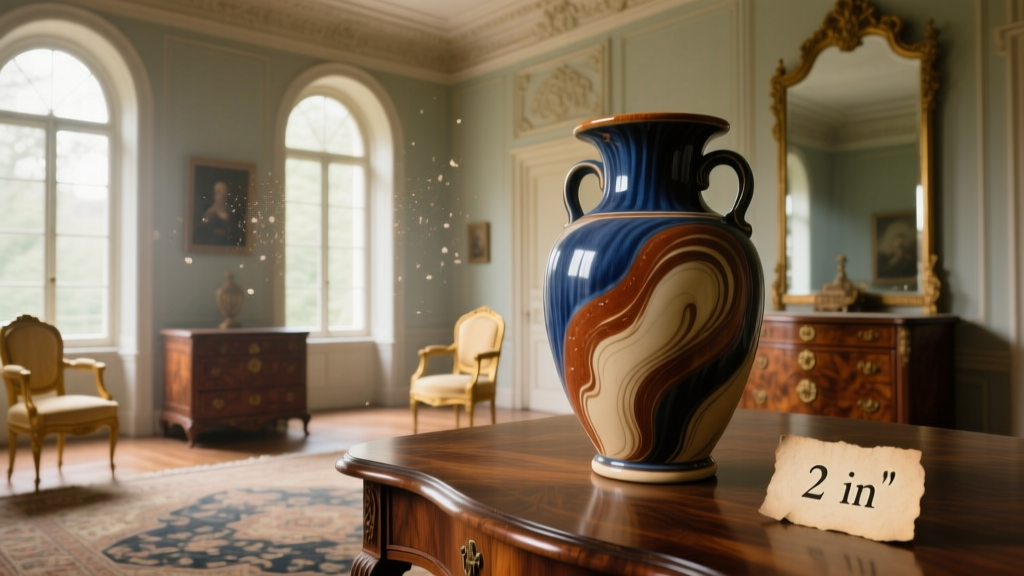
Niloak Vase: Decoding the Marbleized Swirled Blue-Brown-Cream-Rust 2-Inch Specimen with Original Paper Label
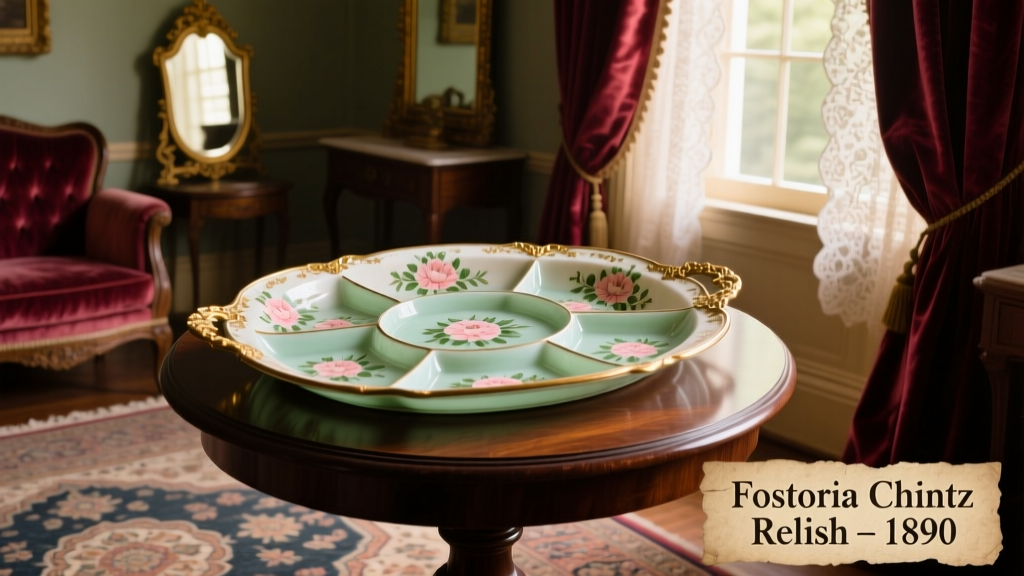
Fostoria Chintz Relish Tray: A Collector’s Guide to the Iconic 5-Section Pattern
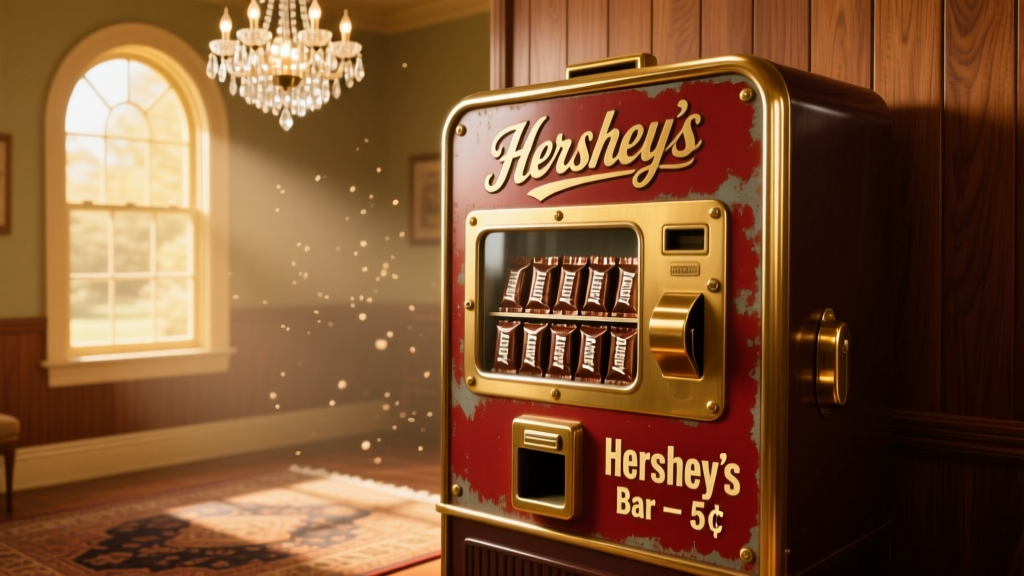
Banks Vending Machine Hershey Bar Box: A 1960s American Icon in Vintage Industrial Design