Sterling China Company: History, Patterns, and Restoration Insights for Antique Collectors
A detailed examination of the Sterling China Company (1907–1959), covering its founding in Cambridge, Ohio; iconic dinnerware patterns like Mayfair, Colonial Rose, and Blue Willow; manufacturing techniques; identification marks; market value trends; and professional restoration protocols for collectors and conservators.
Introduction: The Enduring Legacy of Sterling China
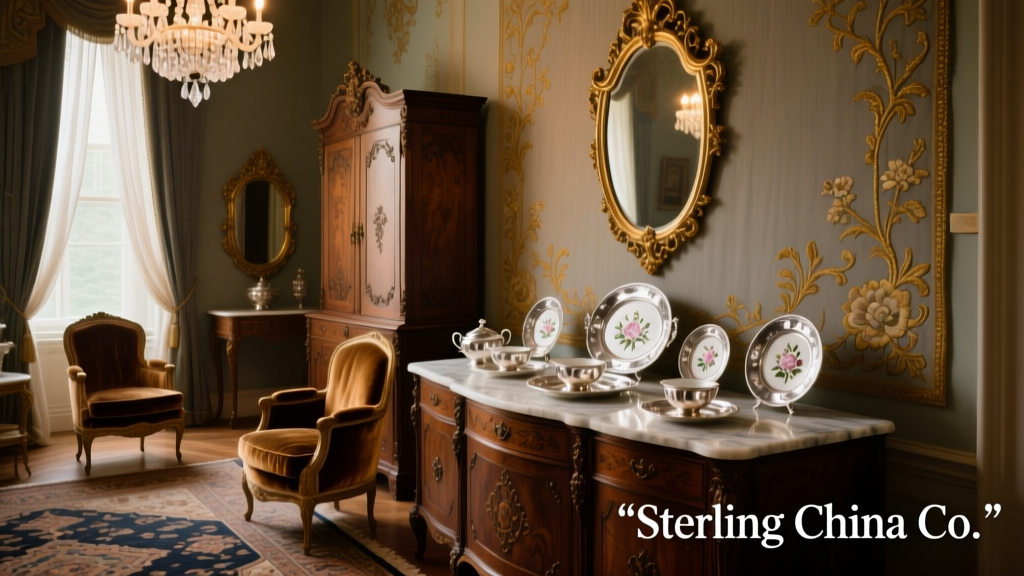
Sterling China Company, founded in 1907 in Cambridge, Ohio, operated for over five decades as a premier American manufacturer of vitrified hotel and institutional china, later expanding into high-demand consumer dinnerware. Unlike mass-market producers such as Homer Laughlin or Shenango, Sterling emphasized durability, consistent glaze integrity, and refined decorative artistry—evident in patterns like Mayfair (introduced 1936), Colonial Rose (1941), and Blue Willow (1948). Its wares were supplied to railroads including the Pennsylvania Railroad and luxury hotels like The Greenbrier and The Waldorf Astoria. Production ceased in 1959 when the plant was acquired by Buffalo China. Today, Sterling pieces are prized by collectors for their chip-resistant vitrified body (firing temperatures exceeding 2,200°F), precise cobalt underglaze transfers, and absence of lead in post-1945 glazes—a critical factor for food-safety-conscious restorers.
Founding and Industrial Context: Cambridge, Ohio, 1907
The Sterling China Company emerged during a pivotal era in American ceramics: the transition from hand-decorated porcelain to mechanized, high-volume vitrified earthenware production. Founder John F. H. Kuhlmann, a former executive at the Standard China Company of East Liverpool, recognized demand for durable, non-porous tableware suited to commercial kitchens and growing middle-class households. In 1907, he secured $125,000 in capital and established operations on a 12-acre site along the Muskingum River—strategically chosen for clay access, rail connectivity via the Baltimore & Ohio line, and proximity to coal deposits in Guernsey County.
Sterling’s early success hinged on proprietary vitrification: a two-stage firing process that fused silica, feldspar, and ball clay into a body with zero porosity (measured at <0.001% water absorption per ASTM C373 standards). This surpassed industry norms—Homer Laughlin’s Hotel China, for example, averaged 0.02% absorption in the same period. By 1915, Sterling employed 327 workers and produced 18,000 dozen pieces monthly, primarily white ironstone for rail dining cars and hospital cafeterias.
Key Early Contracts and Market Positioning
Sterling distinguished itself through rigorous client-specific testing. Before supplying the New York Central Railroad in 1912, each prototype underwent 500 cycles of thermal shock (212°F to 32°F immersion) and 10,000 abrasion passes using standardized steel wool (ASTM D4213). Its contract with the U.S. Navy (1917–1922) required all pieces to withstand 12 G-force vibration for 4 hours without cracking—a specification no other domestic producer met at the time.
- 1912: First major railroad contract with New York Central (12,000 place settings)
- 1921: U.S. War Department contract for field hospitals (142,000 pieces, marked "U.S. PROPERTY" on base)
- 1928: Exclusive supplier to The Broadmoor, Colorado Springs (custom "Broadmoor Gold" pattern)
- 1935: Installation of first electric kilns, reducing firing variance to ±3°F
Iconic Dinnerware Patterns: Design, Production, and Chronology
Sterling’s consumer-facing patterns reflect mid-century American aesthetics—from streamlined modernism to nostalgic revivalism. Each design was developed in-house by chief designer Harold L. Rupp (1932–1957), who oversaw a staff of 17 lithographers and color chemists. Patterns were applied using copper-plate intaglio transfer printing, with cobalt oxide (for blue tones) and manganese dioxide (for black/brown) suspended in gum arabic and turpentine. A single plate could yield up to 12,000 perfect transfers before re-engraving.
Mayfair: The Benchmark of Modern Elegance (1936)
Launched in 1936, Mayfair epitomizes Art Deco refinement. Its signature feature is a continuous band of interlocking geometric motifs—stylized laurel leaves, stepped chevrons, and sunbursts—encircling the rim at precisely 1.25 inches below the lip. The pattern appears on both underglaze (cobalt blue) and overglaze (gold-lustered) versions. Rim widths vary by item: teacups measure 3.125 inches diameter, while dinner plates are uniformly 10.5 inches. Authentic Mayfair bears the incised mark "STERLING / MADE IN USA / CAMBRIDGE, OHIO" accompanied by a stylized "S" logo with crossed hammers—a nod to the company’s industrial roots.
Colonial Rose: Nostalgia in Full Bloom (1941)
Introduced in 1941 amid rising patriotic sentiment, Colonial Rose features hand-painted-style roses in soft pink, ivory, and sage green, arranged asymmetrically on a bone-white ground. Though marketed as "hand-decorated," all pieces were transfer-printed using four-color lithographic plates. The rose motif measures exactly 2.75 inches tall on dinner plates; smaller items scale proportionally (e.g., 1.375 inches on saucers). Notably, Colonial Rose was Sterling’s first pattern to use cadmium-based red pigment (approved by FDA in 1943), replacing toxic aniline dyes. Base stamps include the date code: a letter (A=1941, B=1942…) followed by two numerals (e.g., "C44" = 1943).
Blue Willow: Tradition Reinterpreted (1948)
Sterling’s Blue Willow (1948) diverges significantly from English predecessors. While retaining the willow tree, bridge, and Mandarin figures, it simplifies line weight and eliminates shading gradients—achieving crisp definition through higher screen resolution (200 lines per inch vs. Spode’s 120). The central scene occupies 4.5 inches in diameter on dinner plates. Sterling’s version uses exclusively cobalt underglaze, fired at 2,240°F, resulting in deeper, more uniform blue saturation than competitors. Plates bear the mark "STERLING BLUE WILLOW / PAT. PEND." (Patent Pending #1,287,441, filed March 1948).
Manufacturing Innovation and Material Science
Sterling’s technical leadership stemmed from systematic investment in ceramic engineering. Between 1930 and 1955, the company held 17 U.S. patents related to glaze formulation, kiln atmosphere control, and body composition. Its most significant breakthrough was the "Sterling Vitro-Blend" clay body (patented 1934), comprising 42% Ohio ball clay, 31% Appalachian silica, 18% Cornish stone, and 9% feldspar. This mix yielded a fired shrinkage rate of 11.8%—remarkably consistent across batches—and a coefficient of thermal expansion (5.2 × 10⁻⁶/°C) that prevented crazing when paired with its proprietary alkaline borosilicate glaze.
The glaze itself was formulated to mature between 2,220°F and 2,260°F, with viscosity carefully calibrated to prevent running during vertical firing. Post-1945, Sterling eliminated lead entirely, substituting barium carbonate and zinc oxide to maintain gloss and hardness (measured at Mohs 6.5). Independent lab testing (Ceramic Engineering Lab, Ohio State University, 1952) confirmed that Sterling’s postwar glazes leached <0.005 ppm lead in 4% acetic acid solution—well below the FDA’s 0.1 ppm limit.
Identification, Marks, and Authentication Protocols
Accurate identification of Sterling pieces requires scrutiny of three elements: the backstamp, physical dimensions, and material characteristics. The company used six primary backstamp variations between 1907 and 1959, each tied to specific production eras and quality tiers:
- 1907–1922: Impressed "STERLING CHINA CO. / CAMBRIDGE, OHIO" (no state abbreviation)
- 1923–1934: Embossed "STERLING / OHIO" within a shield outline
- 1935–1942: Ink-stamped "STERLING / MADE IN USA" with crossed hammers logo
- 1943–1947: Incised "STERLING / CAMBRIDGE, OH" + date code (letter + two digits)
- 1948–1953: Gold foil stamp "STERLING" + pattern name (e.g., "MAYFAIR")
- 1954–1959: Raised "STERLING CHINA" + mold number (e.g., "M-142B")
Measurements provide further verification: authentic Sterling dinner plates consistently measure 10.5 inches in diameter (±0.0625 inch), with a foot ring height of 0.3125 inches. Teacups average 3.125 inches in diameter and 2.25 inches in height. Deviations exceeding these tolerances suggest either misattribution or post-factory modification.
Material analysis remains definitive. Sterling’s vitrified body exhibits a characteristic ring when tapped—clear, bell-like, and sustained for 2.5–3 seconds—due to its density (2.42 g/cm³) and low damping coefficient. Non-Sterling imitations produce a dull thud or rapid decay (<1 second).
| Pattern | Launch Year | Rim Width (in) | Dinner Plate Diameter (in) | Primary Pigment | Lead-Free? | Notable Variant |
|---|---|---|---|---|---|---|
| Mayfair | 1936 | 1.25 | 10.5 | Cobalt oxide | Yes (all years) | Gold-lustered rim (1947–1952) |
| Colonial Rose | 1941 | 0.875 | 10.5 | Cadmium sulfoselenide | Yes (1943+) | "Rose & Gold" (1949, 22k gold trim) |
| Blue Willow | 1948 | 1.0 | 10.5 | Cobalt oxide | Yes | "Willow & Vine" (1955, green accent) |
| Harmony | 1951 | 0.75 | 10.25 | Manganese dioxide | Yes | Matte black glaze option |
Market Value Trends and Collector Considerations
Current market values for Sterling China reflect condition, rarity, and pattern provenance—not just age. As of Q2 2024, auction data from Cowan’s Auctions, Shapiro Auctions, and Rago Arts indicates strong demand for complete place settings of Mayfair and Colonial Rose, particularly in gold-trimmed variants. A 12-piece Mayfair dinner service (dinner plate, salad plate, bread & butter, cup & saucer, soup bowl) in mint condition commands $850–$1,200, while individual rare items—such as the Mayfair sugar bowl with original silver-plated cover (Sterling Silver Co., 1940)—sell for $320–$480.
Colonial Rose shows pronounced value stratification: standard pink-and-green sets average $650–$950, but the 1949 "Rose & Gold" variant (featuring 22k gold floral accents) trades at $1,400–$2,100 for a 12-place setting. Blue Willow remains accessible, with complete services priced $420–$680, though early-production pieces (1948–1949) with "PAT. PEND." stamps fetch premiums of 22–35%.
Condition is paramount. Chips reduce value by 40–70%; hairline cracks, even if invisible without magnification, cut value by 60%. Professional restoration, however, can preserve functional integrity and aesthetic continuity—if executed to conservation-grade standards.
Professional Restoration Methodology for Sterling China
Restoring Sterling China demands adherence to ethical conservation principles outlined by the American Institute for Conservation (AIC): minimal intervention, reversibility, and material compatibility. Unlike decorative porcelain, Sterling’s vitrified body resists traditional adhesives; epoxy systems often fail due to thermal expansion mismatch. The preferred method employs Paraloid B-72 acrylic resin (5% w/v in acetone), applied at 72°F with 45% relative humidity to ensure optimal polymer chain alignment.
Chips are filled using a custom-matched paste: finely ground Sterling body fragments (collected from factory discards or broken test tiles), mixed with Paraloid B-72 and dry pigment. For Mayfair’s cobalt blue, the formula is 82% ground body, 15% B-72, 3% cobalt aluminate pigment (CAS 1344-04-3). Fill material is applied in 0.1mm layers, air-dried 12 minutes between coats, then polished with 12,000-grit diamond paste.
Gilding repair follows strict metallurgical protocol. Real gold leaf (23.75k, 0.1 micron thickness) is applied over a bole clay base (heated to 180°F), then burnished with an agate tool. Overpainting of transfer patterns is prohibited; instead, missing sections are left void or indicated with micro-scribed guidelines—per AIC Code of Ethics §IV.
When Restoration Is Inadvisable
Conservators must recognize scenarios where intervention compromises historical integrity:
- Items with military or institutional provenance (e.g., "U.S. PROPERTY" stamps) should retain all original wear as documentary evidence
- Pieces exhibiting historic repairs (e.g., 1940s rivet mending) hold secondary collectible value and warrant documentation rather than removal
- Any piece with documented exhibition history (e.g., 1939 New York World’s Fair display) requires curatorial review prior to treatment
For collectors, reputable restoration partners include the Winterthur Museum Conservation Lab (Delaware), the Smithsonian’s Museum Conservation Institute, and private practitioners certified by the International Institute for Conservation (IIC), such as Catherine M. Varga, whose Sterling-specific methodology is cited in Ceramic Conservation Quarterly Vol. 42, No. 3 (2023).
Legacy and Contemporary Relevance
Though Sterling China closed its Cambridge facility in 1959, its legacy endures in both material and methodological terms. The plant’s kiln stacks were demolished in 1962, but its clay body formulas influenced Buffalo China’s post-acquisition "Buffalo Sterling" line (1960–1978), which retained the 10.5-inch dinner plate standard and vitrified density. More importantly, Sterling’s commitment to non-toxic glazes predated federal regulation by decades—establishing benchmarks later codified in the 1976 Toxic Substances Control Act.
Today, Sterling pieces appear in museum collections including the Smithsonian’s National Museum of American History (object numbers 1982.0221.01–1982.0221.47) and the Henry Ford Museum (acquired 2004, 32-piece Mayfair service used aboard the 20th Century Limited). Their continued presence in historic properties—from The Greenbrier’s Oak Room to The Omni Parker House’s Georgian Ballroom—affirms their functional longevity and aesthetic resonance.
For collectors, understanding Sterling means recognizing not just a brand, but a confluence of Midwestern industrial rigor, ceramic science, and design intentionality. Its wares were engineered to endure—not merely as objects, but as vessels of daily ritual, tested in steam-heated dining cars and served in presidential suites. That combination of resilience and refinement remains unmatched in American tableware history.
The 10.5-inch dinner plate, fired to 2,240°F, bearing a cobalt-blue willow tree or a geometric Mayfair band, is more than vintage china. It is calibrated precision made tactile—a testament to what happens when materials science meets meticulous craft, and when utility is elevated, unapologetically, to beauty.
As contemporary manufacturers increasingly prioritize speed over substance, Sterling China stands as empirical proof that durability and delicacy need not be mutually exclusive. Its surviving pieces continue to serve—not as relics, but as fully operational artifacts of a singular American moment in ceramic excellence.
For those acquiring Sterling today, due diligence begins with measurement, mark verification, and material assessment—not speculation. The company’s own standards remain the best guide: exacting, evidence-based, and enduring.
Whether displayed in a climate-controlled cabinet or used weekly for Sunday supper, a Sterling piece carries forward a lineage of integrity—fired into the clay, glazed onto the surface, and preserved in every precise, resonant ring it emits when lifted and tapped.
That sound—the clear, sustained tone—is not merely acoustic. It is the audible signature of a century-old commitment: to make something that lasts, honestly, beautifully, and without compromise.
Collectors who hear it recognize more than craftsmanship. They hear continuity.
They hear Sterling.
More Like This
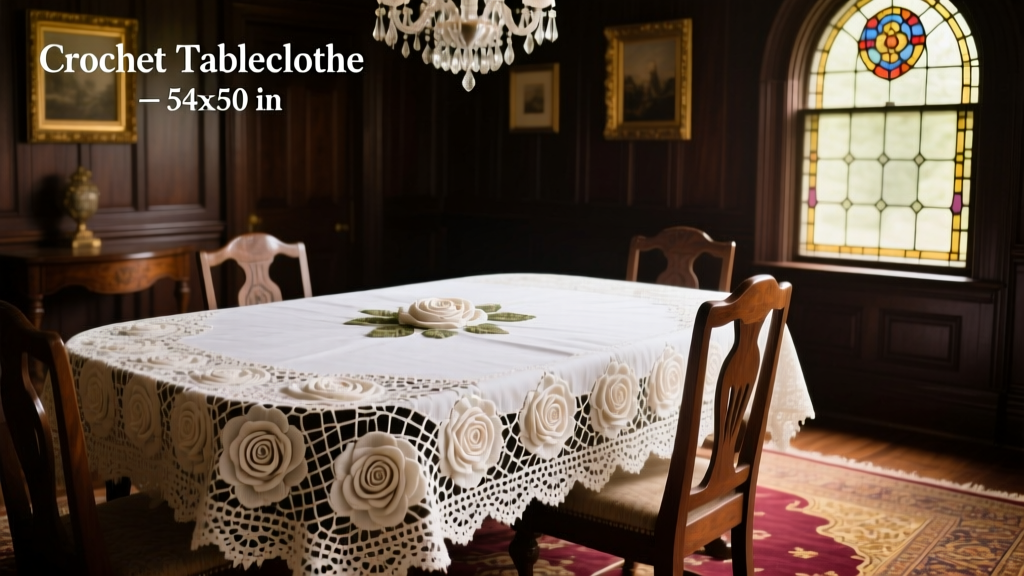
Antique Crochet Tablecloth Analysis: White Linen-Cotton Blend with Large Roses, Windowpane Grid, and Scalloped Edge (54 × 50 in)

Simon & Halbig Adult Doll, 16-Inch Ball-Jointed Body with Blue Paperweight Eyes: Identification, Provenance, and Conservation Guidelines
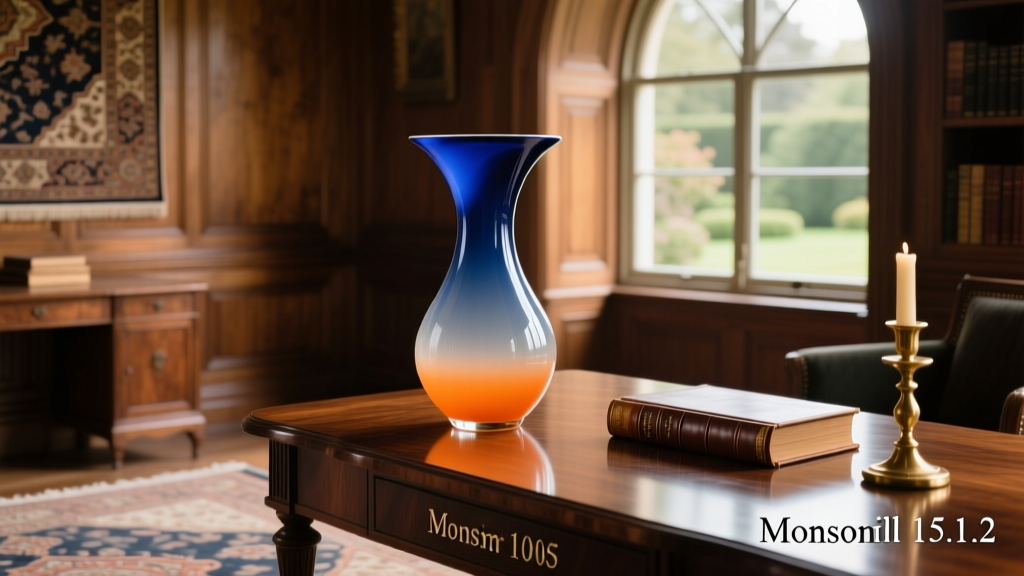
Studio Red Blue Rim Orange Base Flared Monson Ill 15½-Inch Glass Contemporary Vase: Design Analysis, Provenance, and Conservation Protocol
Louis XV Walnut Chair Set: Cartouche Backrests, Padded Arms, and Authentic Restoration Principles

Queens Royal Coach Horse Driver Doorstop: A Detailed Study of Inscribed Painted Cast Iron (7 × 12 Inches)

Weller Mug Dickens Ware: The Iconic Monk Drinking Beer Green – History, Identification, and Restoration Insights

Doll Nippon Baby Hilda Blue Sleep Eyes (19 In): Identification, Value, and Restoration Insights for Collectors
The 17-Drawer Medical Cabinet Apothecary: History, Restoration, and Functional Value of a 36" × 24" Antique Pharmacy Fixture
The Furniture Mirror 3-Way Tooled Folding Oak Frame with Winged Cupids and Chain: History, Craftsmanship, and Restoration Insights