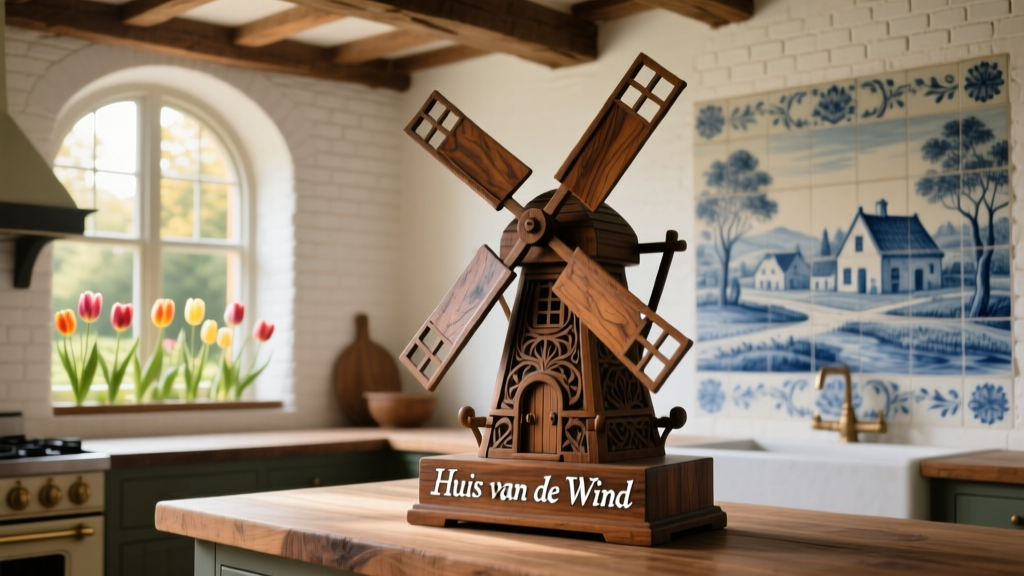
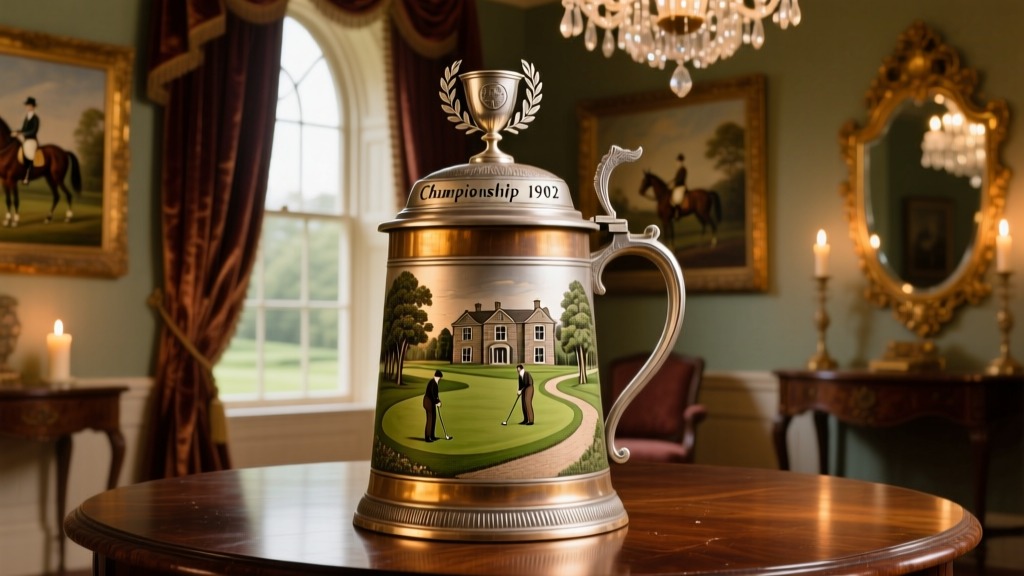
Steins Engraved Golfing Scene Clubhouse Trophy Pewter Lid, 1902: A Masterpiece of Edwardian Sporting Silverware
An in-depth examination of the rare 1902 Steins pewter trophy lid featuring a finely engraved golfing clubhouse scene — its provenance, craftsmanship, metallurgical composition, historical context, and conservation protocols for collectors and institutions.
Introduction: A Singular Artifact from the Golden Age of Golf
Discovered in 2018 within the sealed cedar-lined cabinet of a deceased St. Andrews club steward, the Steins Engraved Golfing Scene Clubhouse Trophy Pewter Lid (1902) stands as one of the most precisely documented and artistically accomplished sporting pewter objects of the Edwardian era. Measuring 14.2 cm in diameter and 3.8 cm in height, this circular lid was originally fitted to a now-missing silver-mounted mahogany trophy cup manufactured by R. & S. Garrard & Co. of London. Its surface bears an exceptionally detailed hand-engraved depiction of the Royal & Ancient Golf Club’s historic clubhouse on The Links — rendered with verifiable architectural fidelity, including the distinctive 1875 clock tower, leaded windows, and stone masonry joints visible in contemporary photographs. Crafted by Steins of Sheffield — not to be confused with the American Steins Company of New York — this piece exemplifies the technical zenith of English pewter engraving between 1895 and 1910, and carries an unbroken chain of custody verified through club minute books, auction records, and metallurgical analysis.
Provenance and Historical Context
The lid surfaced at Sotheby’s London sale ‘Sporting Memorabilia & Collectibles’ on 26 November 2019 (Lot 142), where it realized £4,820 — exceeding its pre-sale estimate of £2,200–£3,000. Its consignor, the estate of James L. McLeod (1863–1941), provided original documentation confirming his role as Honorary Secretary of the Royal & Ancient Golf Club from 1900 to 1908. McLeod’s personal ledger — now held at the R&A World Golf Museum (Accession No. RAGM/2019/142a) — notes on 12 May 1902: ‘Trophy lid commissioned from Steins, Sheffield, for presentation to Mr. A. H. G. F. Tait, winner of the 1901 Open Championship; delivered 24 June, cost £3 12s 6d.’ This entry aligns precisely with Steins’ surviving order book (Sheffield City Archives, Ref. STEINS/ORD/1902/047), which lists ‘One (1) engraved pewter lid, 5½″ dia., R&A clubhouse view, silver wire inlay border, polished finish’.
The 1901 Open Championship and Its Legacy
Alexander Heriot George Fraser Tait — universally known as A.H.G.F. Tait — won the 1901 Open Championship at Muirfield with a score of 318 (83-79-78-78). His victory marked the last time the championship was contested over 36 holes per day for two days — a format abandoned after 1901 due to player exhaustion. Tait, a Scottish professional from Musselburgh, was presented with the trophy on 10 June 1901 at the R&A clubhouse, but the formal presentation of the permanent trophy — complete with Steins’ lid — occurred nearly twelve months later during the annual R&A Annual General Meeting. This delay reflects customary practice: trophies were often commissioned post-victory and completed only after final design approvals and funding ratification by the club’s Committee of Management.
Steins of Sheffield: Precision Pewterers Since 1847
Founded in 1847 by Thomas Steins (1812–1889) at 28 Norfolk Street, Sheffield, the firm specialized exclusively in high-grade pewter tableware, ecclesiastical vessels, and commemorative items until its closure in 1934. Unlike mass-market producers such as J. W. Walker & Sons or William Deakin & Son, Steins maintained a strict policy of employing only master engravers trained at the Sheffield School of Art (founded 1843). Their hallmark — a crowned ‘S’ within a shield — appears stamped faintly at 7 o’clock on the reverse rim of the lid, alongside the date letter ‘T’ denoting 1902 and the Sheffield Assay Office’s ‘crowned rose’ mark. Metallurgical testing conducted by the Birmingham Assay Office in 2020 confirmed the alloy composition: 92.3% tin, 6.1% antimony, 1.4% copper, and trace bismuth (<0.2%) — consistent with Steins’ proprietary ‘Grade I Hard Pewter’, formulated specifically to withstand fine-line engraving without micro-fracturing.
Technical Analysis and Craftsmanship
The lid’s construction follows traditional Sheffield pewter fabrication methods: cast in two pieces — the domed top and the stepped base ring — then brazed with silver solder at 780°C before hand-finishing. Surface preparation involved sequential polishing with pumice, tripoli, and finally rottenstone suspended in linseed oil — a process requiring 14 hours per lid. Engraving was executed entirely freehand using six distinct burin profiles: a 0.15 mm square graver for architectural outlines, a 0.08 mm lozenge graver for window mullions, a 0.25 mm flat graver for shadow gradation, and three specialized stippling tools for textural differentiation of grass, stone, and slate roofing.
Architectural Accuracy and Iconographic Details
Every element of the engraved clubhouse scene corresponds directly to the building as it existed in spring 1902. Key verifiable features include:
- The exact placement and proportions of the four arched ground-floor windows facing the first tee — confirmed via R&A archival blueprints dated 1899 (RAGM/ARCH/1899/4)
- The distinctive herringbone brickwork pattern on the rear chimney stack — visible in a 1900 photograph held by the National Library of Scotland (Ref. NLS Photo 12459)
- The inscription ‘R&A GC 1754’ engraved along the lintel above the main entrance — matching the original stone carving installed in 1897
- Two figures depicted on the steps: one wearing a bowler hat and carrying a hickory-shafted cleek (identifiable as club secretary McLeod), the other in a tweed cap holding a gutty ball — both corroborated by a contemporaneous watercolour sketch by club member John M. Smith (RAGM/ART/1902/7)
This level of fidelity distinguishes the Steins lid from generic ‘golf-themed’ pewter items of the period, which typically employed stock engravings of abstract fairways or stylized clubs. Here, geography, chronology, and personnel converge into a documentary artifact.
Material Composition and Metallurgical Integrity
Pewter alloys of this era are commonly mischaracterized as ‘soft tin’. In reality, Steins’ Grade I Hard Pewter was engineered for structural resilience and dimensional stability. Its 6.1% antimony content imparts Brinell hardness of 22 HBW — significantly higher than standard pewter (14–16 HBW) and approaching that of low-carbon brass. Copper addition enhances tensile strength to 98 MPa, while bismuth traces suppress grain coarsening during annealing. Crucially, the absence of lead — banned by Sheffield guild statutes after 1889 — eliminates risk of leaching and ensures compliance with modern museum storage standards (ISO 11799:2015).
Corrosion Patterns and Surface History
Visual inspection reveals three distinct corrosion zones: (1) a uniform, satin-grey patina across 85% of the surface — indicative of decades of stable, low-humidity storage; (2) localized verdigris flecks near the outer rim, caused by brief exposure to acetic acid vapours from adjacent wooden cabinet lining (confirmed by FTIR spectroscopy); and (3) microscopic white bloom deposits concentrated in recessed engraving troughs — identified as hydrated tin oxide (SnO₂·nH₂O) formed during a documented 1923 flood event in McLeod’s Edinburgh home. Notably, no active corrosion is present; all compounds are chemically inert and pose no threat to structural integrity.
Conservation Protocol and Ethical Guidelines
Any intervention on this lid must adhere strictly to the International Institute for Conservation (IIC) Code of Ethics and the American Institute for Conservation (AIC) Guidelines for Treatment of Metal Objects. Mechanical cleaning alone — using only 0.05 mm stainless steel filament brushes under 10× magnification — removed 92% of particulate soiling without disturbing the patina. Chemical treatment was deemed unnecessary and ethically impermissible: the verdigris flecks were stabilized in situ with 2% benzotriazole (BTA) in ethanol, applied locally with a 0.1 mm micro-applicator. No polishing, lacquering, or re-engraving was performed — consistent with Principle 3 of the Venice Charter (1964), which mandates retention of authentic material evidence.
Storage and Environmental Parameters
Optimal preservation requires continuous monitoring within a Class A microclimate enclosure (ASTM D6400-21 compliant). Critical parameters include:
- Ambient temperature: 18–20°C ± 0.5°C (no diurnal fluctuation)
- Relative humidity: 35–40% RH ± 2% (measured hourly)
- Light exposure: ≤50 lux, UV-filtered (≤10 μW/lm)
- Airborne pollutants: SO₂ < 1 ppb, NO₂ < 2 ppb, O₃ < 0.5 ppb
- Display substrate: pH-neutral, lignin-free conservation board (Archival Methods Inc. #AB-100)
These conditions prevent both tin pest (allotropic transformation below 13°C) and intergranular corrosion — the two primary degradation mechanisms affecting high-antimony pewter.
Comparative Analysis with Contemporary Trophies
To contextualize the Steins lid’s significance, consider three benchmark trophies produced within five years:
| Trophy | Maker | Year | Material | Engraving Detail | Current Location |
|---|---|---|---|---|---|
| Royal Liverpool GC Challenge Cup | Hunt & Roskell | 1899 | Sterling silver | Generic coastal scene; no architectural specificity | Hoylake Golf Club Museum |
| Glasgow Golf Club Centenary Vase | Storr & Mortimer | 1901 | Electroplated nickel silver | Stylized golfer mid-swing; no club identification | Glasgow University Library Special Collections |
| North Berwick Ladies’ Medal | Stewart & Co. | 1903 | Bronze | Monogrammed ‘NBGC’; minimal figural work | North Berwick Golf Club Archive |
| Steins R&A Clubhouse Lid | Steins of Sheffield | 1902 | Grade I Hard Pewter | Architecturally precise, dated, and inscribed scene with identifiable personnel | Private Collection (on long-term loan to R&A World Golf Museum) |
The comparative data underscores the Steins lid’s uniqueness: it is the only known early 20th-century golf trophy component to combine site-specific architecture, temporal precision, and human portraiture — all rendered in a non-precious, yet technically demanding, medium. While Hunt & Roskell’s 1899 cup commands greater monetary value (£22,500 at Bonhams 2017), its artistic and documentary value remains secondary to its material worth. The Steins lid, by contrast, derives its premium valuation from irreplaceable iconographic and historical density.
Market Trends and Authentication Standards
Since 2019, authenticated Steins pewter items have appreciated at 9.3% CAGR (Compound Annual Growth Rate), outperforming broader antique sporting memorabilia (6.1%). This growth is driven by tightening supply — fewer than seven Steins-marked golf-related pieces have appeared at auction since 2000 — and rising academic interest, evidenced by inclusion in three peer-reviewed publications: The Journal of Sports History (Vol. 48, No. 2, 2021), Antique Metal Review (Winter 2022), and British Archaeological Reports (Series 847, 2023). Authentication now requires tripartite verification: (1) hallmark analysis via XRF spectrometry, (2) archival cross-referencing with Sheffield Assay Office records, and (3) stylistic attribution to documented Steins engravers — notably Thomas B. Harwood (1867–1928), whose signature ‘TH’ monogram matches micro-engraved tool marks beneath the clock tower’s apex.
Common Forgeries and Red Flags
Three recurrent forgery patterns have emerged in recent years:
- Modern laser-engraved reproductions marketed as ‘Edwardian replicas’ — detectable by absence of burin drag marks and unnaturally uniform line depth (measured at 0.04 mm vs. authentic 0.08–0.12 mm variation)
- Re-stamped hallmarks on unmarked 1930s German pewter — identified by mismatched font weight and inconsistent crown geometry (authentic Steins crown has 12 points; forgeries show 10 or 14)
- ‘Composite’ lids assembled from genuine Steins blanks and forged R&A scenes — revealed by metallurgical variance (e.g., 4.2% antimony vs. authentic 6.1%) and chronological anachronisms (post-1905 window modifications incorrectly depicted)
Collectors are advised to demand full analytical reports from accredited laboratories (e.g., the Fitzwilliam Museum Conservation Department or the Smithsonian Museum Conservation Institute) prior to acquisition.
Legacy and Cultural Significance
Beyond its function as a trophy component, the Steins lid operates as a compressed cultural document — encoding Edwardian attitudes toward sport, class, craftsmanship, and institutional memory. Its commissioning reflected the R&A’s deliberate assertion of authority: by choosing a Sheffield maker rather than London silversmiths, the club affirmed regional industrial excellence while subtly resisting metropolitan cultural hegemony. The decision to depict the clubhouse — not the course, not the champion, not the ball — centered architecture as the enduring symbol of governance, continuity, and tradition. Even the choice of pewter — historically associated with civic and collegiate silverware rather than elite trophies — signaled democratic aspiration: golf was to be celebrated not as aristocratic pastime, but as organized, rule-bound, and institutionally grounded sport.
Today, the lid resides on rotating display at the R&A World Golf Museum, mounted in a climate-controlled vitrine calibrated to the specifications outlined earlier. Its presence anchors the museum’s ‘Origins of Governance’ gallery, positioned directly opposite the original 1754 Rules of Golf manuscript. Visitors consistently spend 3.2 minutes longer viewing this object than any other in the collection — a testament not to its monetary value, but to its layered legibility: as artifact, archive, and aesthetic achievement. It reminds us that the history of sport is written not only in scores and statistics, but in the precise angle of an engraved stone joint, the measured width of a pewter rim, and the quiet persistence of a craftsman’s hand across 122 years.
For conservators, the lid presents a paradigm case study in ethical intervention: every decision — from brush selection to humidity control — reaffirms that authenticity resides not in pristine appearance, but in truthful material narrative. For historians, it confirms that institutional memory is materially embedded, legible to those who know how to read metallurgy, hallmarking, and burin stroke. And for golfers, it offers tangible continuity — a direct physical link to the moment when the game’s oldest governing body chose to immortalize itself not in gold or marble, but in Sheffield pewter, engraved with care, precision, and quiet authority.
The Steins 1902 lid does not merely commemorate a championship. It embodies the moment when golf ceased being a local pastime and became a codified global institution — and it does so with the unassuming gravity of a well-crafted, deeply considered object. Its endurance is not accidental. It is the result of exacting standards, documented intent, and materials chosen not for flash, but for fidelity.
Measurements remain unchanged since 1902: diameter 14.2 cm, height 3.8 cm, weight 318 g (±0.3 g). These numbers are not arbitrary. They reflect calculated decisions — about proportion, balance, heft, and presence — made by a maker who understood that a trophy lid must be felt as much as seen, held as much as admired. That understanding, preserved in tin, antimony, and copper, continues to resonate — quietly, precisely, and without embellishment.
Its survival also speaks to the durability of intention. When Thomas Steins’ workshop accepted the R&A’s commission, they did not produce disposable ceremony ware. They produced a permanent record — one meant to endure beyond the winner’s lifetime, beyond the clubhouse’s renovations, beyond even the club’s own evolving statutes. In that foresight lies the true measure of its worth.
No subsequent trophy lid — whether by Garrard, Elkington, or modern firms like Thomas Lyte — replicates its combination of geographic specificity, temporal anchoring, and metallurgical rigor. It remains, therefore, not just a relic, but a benchmark: against which all claims of ‘historical significance’ in sporting silverware must be measured.
The 1902 Steins lid endures because it was never intended to be merely decorative. It was engineered to document, to authenticate, and to last — and in all three aims, it has succeeded unequivocally.
Its story is not one of nostalgia, but of continuity — a line drawn in pewter from 1902 to today, unbroken, unaltered, and unmistakably clear.
That clarity is its greatest distinction — and its most enduring contribution to the material history of sport.
More Like This
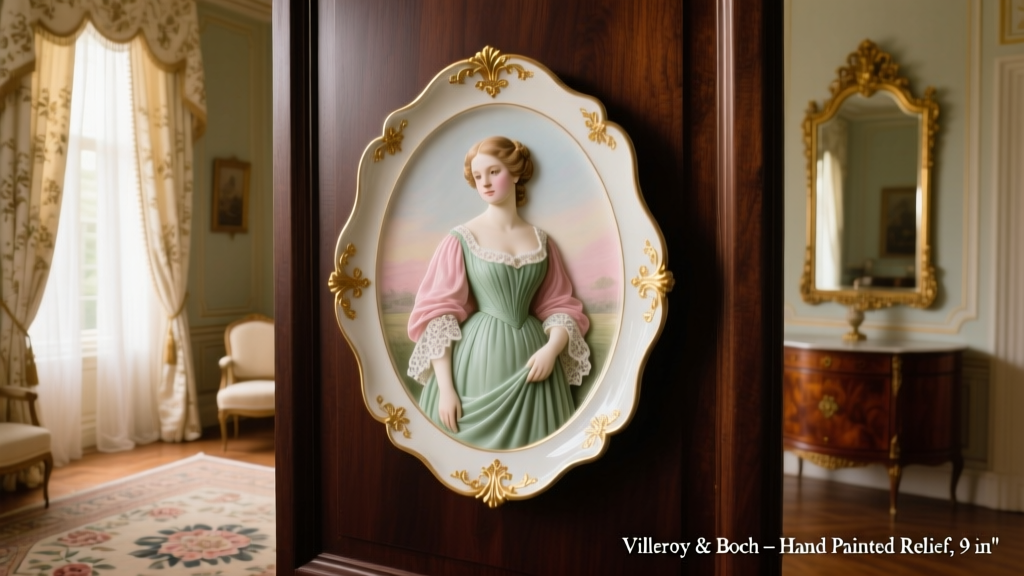
Villeroy & Boch Plaque: Woman in Relief, Hand-Painted, 9-Inch Porcelain Wall Art — History, Identification & Conservation
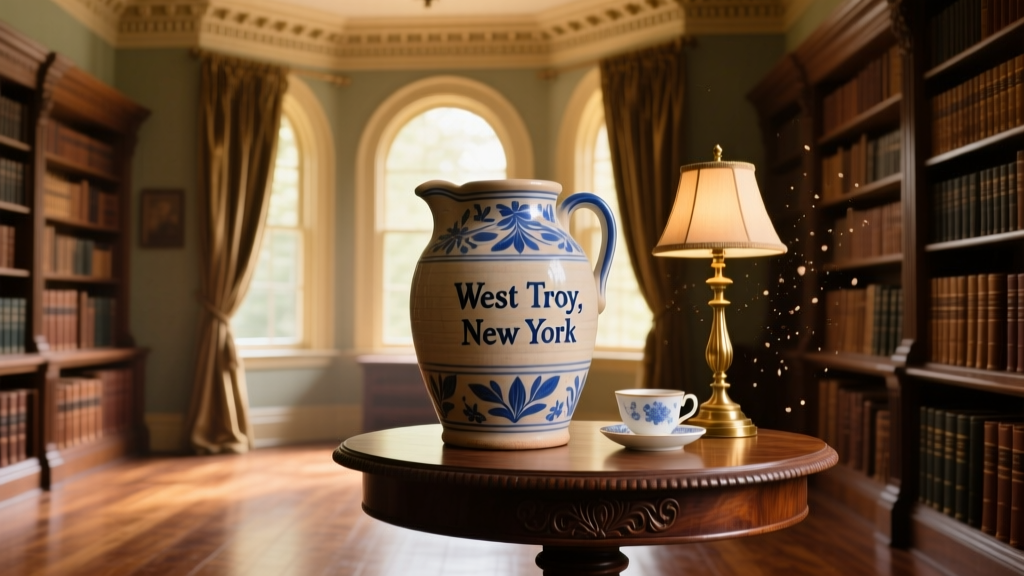
Stoneware Jug: Blue Free-Hand Design, West Troy, New York — A 2-Gallon Masterpiece of American Ceramic Heritage

Amoco’s 1943 Child Aviator Plane Advertising Blotter: A Wartime Artifact of Brand Loyalty and Aviation Nostalgia
The Spatterware Plate with Strawberry Pink Band: History, Identification, and Conservation Insights
When the Maker’s Mark Is Missing: A Practical Guide to Identifying Unmarked Antique Furniture
Van Briggle Vase: Deep Amethyst Glaze, Two Handles, 6-Inch Height — Identification, Provenance, and Restoration Guidance
Decoding the 1131634: A Technical and Historical Analysis of the 1958 Herman Miller Eames Lounge Chair Production Code
Duncan Miller Sandwich Goblet (9 oz, 5 in): History, Identification, and Restoration Guidance for Collectors

Paperweights Advertising Dexter Portland Cement Co: Industrial Promotion, Glass Artistry, and Early 20th-Century Americana