Stashed Antiques: Uncovering, Identifying, and Preserving Hidden Heirlooms
A practical, expert-led exploration of antiques discovered in attics, basements, barns, and forgotten storage—covering authentication, condition assessment, material science, market value trends, and ethical restoration protocols for pieces ranging from 18th-century Chippendale chairs to mid-century Danish teak sideboards.
What Are Stashed Antiques—and Why Do They Matter?
Stashed antiques are historically significant objects—furniture, decorative arts, or domestic tools—that have been unintentionally or deliberately removed from active use and stored long-term in non-climate-controlled environments: attic trunks, basement shelves, garage corners, or rental unit lockers. Unlike estate-sale or auction acquisitions, these items lack provenance documentation, often surface with obscured maker’s marks, and carry layered histories embedded in dust, insect damage, and decades of accumulated patina. Between 2018 and 2023, over 17,400 previously unrecorded American Federal-period pieces were documented by the Winterthur Museum’s Field Survey Initiative—62% originating from private stashes in New England and Mid-Atlantic states. This phenomenon isn’t nostalgia-driven; it’s a tangible archive of regional craftsmanship, economic shifts, and domestic life that professional conservators now treat as primary-source material.
The Anatomy of a Stash: Where and How Antiques Get Hidden
Stashing follows predictable behavioral patterns tied to generational transitions. A 2022 study by the American Association of Furniture Historians tracked 219 documented stash locations across 12 states and found three dominant scenarios: (1) wartime displacement (e.g., WWII-era storage of walnut Pembroke tables in cedar-lined closets to deter termites), (2) mid-century modernism backlash (1950s–60s removal of Queen Anne maple highboys from living rooms to garages), and (3) inheritance avoidance (objects withheld from probate due to emotional complexity or perceived low monetary value). Notably, 78% of stashed furniture was placed on concrete floors without pallets—direct contact accelerating moisture wicking and baseboard rot.
Common Storage Environments and Their Impact
Attics expose wood to wide thermal swings: summer temperatures regularly exceed 120°F in southern U.S. homes, causing shellac finishes to craze and veneer to lift. Basements maintain 60–80% relative humidity year-round—ideal for mold but catastrophic for iron hardware and glue joints. Garages introduce volatile organic compounds (VOCs) from gasoline, oil, and paint thinners that chemically degrade linseed-oil finishes on pine dressers. One documented case involved a 1904 Stickley oak armchair stored beside a lawnmower for 41 years: VOC exposure reduced tensile strength in its mortise-and-tenon joints by 39%, per ASTM D1037 testing at the Smithsonian Conservation Analytical Laboratory.
Why Stashes Resist Discovery
Stashed antiques rarely appear in digital inventories. Only 12% of surveyed households reported documenting stored items via photographs or written logs. The remainder relied on memory cues like "the tall chest behind the water heater" or "Dad’s desk under the tarp." This cognitive gap creates identification challenges: a Chippendale-style cherry knee-hole desk may be mislabeled as "old office furniture" despite possessing original brass lion-paw feet stamped "J. & J. S. Larkin, Philadelphia, c. 1772"—a mark verified on six surviving examples held by the Philadelphia Museum of Art.
Authentication Protocols for Unprovenanced Pieces
Without bills of sale or family letters, authentication relies on forensic material analysis. Begin with macro-level observation: examine dovetail joinery under 10x magnification. Hand-cut dovetails (pre-1880) show irregular pin-and-tail ratios and slight saw kerf variations; machine-cut versions (post-1885) display uniform 1:1.2 ratios and laser-straight cuts. Next, test finish chemistry: apply one drop of acetone to an inconspicuous area. Shellac dissolves instantly; varnish resists for >15 seconds; polyurethane remains unaffected. For wood species, use a 10% sodium nitrate solution—walnut darkens to deep umber, while butternut shows no reaction.
Hardware as Historical Evidence
Original hardware is often the most reliable dating tool. Brass drawer pulls stamped "D. H. & Co., Cincinnati" indicate production between 1867–1891—the company dissolved after a boiler explosion destroyed its factory. Cast-iron hinges with sand-cast texture and 1/8" uneven pour lines predate 1905; machined hinges with polished edges and 0.005" dimensional tolerances postdate 1923. Measure screw shank diameter: pre-1845 screws average 0.118" (No. 8 gauge), while post-1870 versions standardize at 0.164" (No. 12 gauge). A set of four 1832 Sheraton satinwood bookcases at the Henry Ford Museum revealed matching No. 8 screws—critical evidence confirming their origin during Boston’s Federal furniture peak.
Signature Marks and Regional Clues
Look beyond visible stamps. Carpenters often incised ownership or date marks on secondary surfaces: inside drawer bottoms, underside of table leaves, or backboard rails. In New York State, 1790–1820 cabinetmakers favored Roman numerals burned into pine subframes (e.g., "XVII" = 1797). Pennsylvania German craftsmen used heart-and-tulip motifs carved into chair stretchers. Use a flexible boroscope to inspect enclosed cavities: a 1786 Philadelphia block-front chest examined this way revealed charcoal inscriptions listing materials purchased from John Fanning’s lumber yard—corroborating ledger entries now housed at the Historical Society of Pennsylvania.
Condition Assessment: Beyond Surface Appearance
Surface dust masks structural vulnerabilities. Always assess load-bearing elements first. Tap all legs, stretchers, and seat rails with a rawhide mallet: a hollow, resonant tone indicates solid wood; a dull thud suggests internal rot or worm tunneling. For veneered surfaces, slide a 0.002" thickness gauge beneath lifted edges—if it penetrates >1/8", adhesive failure exceeds conservation thresholds. Check for metal corrosion using a copper sulfate test kit: blue-green crystallization on brass confirms dezincification—a progressive degradation requiring immediate stabilization.
Wood Movement and Environmental History
Wood expands and contracts along grain lines. Measure width changes across tabletops: a 36"-wide tiger-maple plank showing 0.075" seasonal variation indicates stable acclimation; >0.120" suggests chronic humidity stress. Examine end-grain pores under 20x magnification: tight, uniform pores signal slow-growth timber harvested pre-1850; open, irregular pores point to post-Civil War second-growth forests. A 1910 Gustav Stickley oak dining table tested in Vermont showed 0.142" seasonal movement—consistent with documented Adirondack timber harvesting practices.
Insect Infestation Indicators
Look for frass (insect excrement), not just holes. Powderpost beetle frass resembles fine talcum powder and accumulates in crevices; old-house borer frass is coarser, granular, and contains wood fibers. Use a 365nm UV lamp: fresh frass fluoresces pale yellow; aged frass appears dull gray. Confirm activity with a starch-iodine test: apply solution to suspected tunnels—blue-black coloration indicates active enzymatic digestion by larval beetles. The U.S. Forest Service reports Anobiid infestations in stashed furniture rose 23% between 2015–2022, linked to warmer winter temperatures enabling year-round breeding cycles.
Market Realities: Appraisal Pitfalls and Value Drivers
Stashed antiques command premiums only when integrity is intact. A 1948 Wegner "Wishbone Chair" recovered from a Chicago basement sold for $8,200 at Rago Auctions in 2023—but only because its original paper cord seat retained 94% of its original weave and all 17 ash steam-bent components remained unbroken. Contrast this with a seemingly identical chair missing two rungs and refinished with automotive lacquer: it realized $1,150. Provenance gaps don’t automatically devalue pieces—but condition compromises do. According to the 2024 Antique Dealers Association Price Index, stashed items with documented conservation treatment sell for 31% more than untreated comparables within 12 months of restoration.
- High-Value Categories (2024 Avg. Resale Premium)
- Danish Modern teak sideboards (1955–1965): +42% over auction estimates when original labels intact
- American Shaker ladder-back chairs (pre-1880): +68% if rush seats retain >85% original fiber
- English Regency rosewood writing desks: +53% with original brass inkwells and pounce pots
- Philadelphia Chippendale walnut highboys: +77% when all 12 original brasses present and undrilled
Ethical Restoration: When to Preserve, When to Repair
Restoration must honor historical intent—not contemporary aesthetics. The American Institute for Conservation’s Code of Ethics mandates that interventions be reversible, distinguishable under 365nm UV light, and documented photographically at every stage. Never strip original finishes unless they actively endanger structural integrity. A 1795 Duncan Phyfe mahogany sofa frame retained its original gilding beneath 11 layers of overpaint; conservators used enzyme-based gesso removers (Benzal® 100) to lift only the top 3 layers, preserving underlying composition ornamentation.
Adhesive Selection Guidelines
Match historic adhesives by era and substrate:
- Pre-1800: Hide glue (40–50 Bloom strength) for hardwood joints; fish glue for delicate veneers
- 1800–1880: Casein-based milk glue for painted surfaces; animal glue with 10% glycerin additive for humid climates
- Post-1880: Reversible acrylic emulsions (Paraloid B-72) for composite repairs; never epoxy or polyester resin
Finish Reconstruction Standards
Rebuild finishes layer-by-layer using period-appropriate materials. A 1922 Herman Miller Eames Lounge Chair replica required exact recreation of the original 5-layer process: (1) shellac wash coat, (2) tung oil base, (3) hand-rubbed linseed oil, (4) beeswax polish, (5) carnauba wax final seal. Each layer cured 72 hours at 72°F and 45% RH. Deviations alter reflectance values—measured via BYK-Gardner micro-TRI-gloss meter—which affect visual authenticity. Original finish gloss readings on 1956 Eames originals average 32.4 GU at 60°; improper reconstructions register 58–71 GU, triggering collector skepticism.
| Material | Safe Cleaning Agent | Max Exposure Time | Risk of Overcleaning |
|---|---|---|---|
| Walnut veneer (pre-1850) | Distilled water + 0.5% Triton X-100 | 90 seconds | Lifts original hide-glue binder; causes delamination |
| Brass hardware (c. 1820) | 10% ammonium citrate solution | 4 minutes | Removes protective patina; accelerates dezincification |
| Pine secondary wood | Dry microfiber + static brush | Unlimited | Water-based cleaners swell grain, inviting mold spores |
| Leather upholstery (1930s) | pH 5.2 lanolin emulsion | 2 minutes | Alkaline soaps hydrolyze collagen fibers; cause cracking |
Legal and Ethical Responsibilities
Stashed antiques may carry legal encumbrances. Items manufactured before 1930 containing lead-based paint fall under EPA Renovation, Repair, and Painting Rule (RRP) requirements—even in private residences. Export restrictions apply to Native American artifacts under NAGPRA: a 19th-century Pueblo pottery jar discovered in a New Mexico attic requires tribal consultation before sale. Copyright law protects design patents: a 1951 Charles Eames molded plywood chair carries active design patent D161,523 until 2032—unauthorized reproduction violates 35 U.S.C. § 271(g). Always verify chain-of-custody with local historical societies; the Connecticut Historical Commission maintains a free database of 14,200 documented stash recoveries since 1998, cross-referenced with probate records.
Documentation is non-negotiable. Create a conservation file including: (1) high-resolution photos of all surfaces, (2) material analysis reports, (3) adhesive and finish recipes used, (4) before-and-after RH/temperature logs, and (5) signed statements from qualified conservators. The International Council of Museums requires such files for any object entering institutional collections—private owners benefit equally through insurance validation and resale transparency.
Stashed antiques are not merely forgotten objects—they’re physical archives waiting for informed engagement. Their value lies not in speculative appraisal, but in verifiable material history. A 1776 Rhode Island secretary desk recovered from a Newport boathouse contained hidden compartments holding ship manifests and tea tax receipts; those documents reshaped scholarship on colonial mercantile networks. Every drawer pulled, every hinge examined, every finish analyzed contributes to a deeper understanding of how people lived, worked, and adapted across centuries. Treating these pieces with forensic rigor honors both their makers and their keepers—those unnamed individuals who, intentionally or not, preserved history in plain sight, beneath tarps and behind furnace doors.
Temperature fluctuations in attics exceed 85°F annually in 37 U.S. states, directly contributing to 63% of veneer separation cases in stashed furniture. Relative humidity below 30% desiccates glue; above 65% encourages fungal hyphae penetration into oak sapwood. These metrics aren’t abstract—they’re measurable conditions dictating intervention strategies. A 1901 Stickley mission oak bookcase stabilized at 45% RH and 68°F regained 92% of its original joint rigidity within 14 days, per data logged using HOBO UX100-003 sensors.
Proper handling prevents irreversible damage. Always lift furniture by its strongest points: for chairs, grasp both rear legs and seat rail simultaneously; never lift by arms or crest rails. For chests, support the full base—never drag. Use pH-neutral cotton gloves (tested to ASTM F1671) to prevent salt transfer from skin oils onto brass or silver-plated hardware. A single fingerprint left on unlacquered brass initiates corrosion visible within 72 hours at 55% RH.
Storage isn’t passive—it’s active preservation. If relocation is necessary, use archival corrugated boxes lined with Tyvek® wrap (not plastic, which traps condensation). Elevate off concrete with 2×4 spacers sealed with paraffin wax to block capillary rise. Monitor with Bluetooth-enabled温湿度 loggers: the TempTale® Geo 5 records ambient data every 15 minutes for up to 180 days, providing actionable trends for climate adjustment.
Market volatility doesn’t negate intrinsic worth. While a 1959 Arne Jacobsen Swan chair sold for $124,000 at Sotheby’s in 2022, its 1961 sibling—identical except for minor weld discoloration—realized $38,500. The difference wasn’t age or design; it was documented conservation history. That paper trail transforms speculation into scholarship. Stashed antiques demand this level of attention—not as commodities, but as witnesses.
Authenticity isn’t found solely in stamps or signatures. It resides in the compression set of a horsehair cushion, the oxidation gradient on a brass escutcheon, the precise angle of a hand-forged nail head. These details require patience, calibrated tools, and respect for material limits. There are no shortcuts—only systematic observation, repeatable testing, and humility before centuries of accumulated craft.
When you uncover a piece beneath a dusty sheet, resist the urge to immediately clean or refinish. Instead, measure, photograph, document, and consult. The most valuable discovery isn’t always monetary—it’s the confirmation that history persists, tangible and testable, in the grain of wood and the alloy of brass. That persistence deserves nothing less than rigorous, ethical stewardship.
Finally, recognize that stashing itself is part of the object’s biography. The scuff on a leg from being dragged across a garage floor, the faint tire mark on a drawer front—these aren’t flaws to erase. They’re data points in a larger narrative about use, neglect, resilience, and rediscovery. Preservation means honoring the full timeline—not just the moment of creation.
More Like This

The 1940s Superman 'More Powerful Than a Locomotive' Cast Metal Figure: A Restoration Specialist's Deep-Dive Analysis

C. I. W. Forbes: The Forgotten American Cabinetmaker Who Defined Mid-Century Modern Craftsmanship
A Rare Early Georgian Oak Child’s Chest: Carved Panel Front, England c.1720 — Dimensions, Provenance, and Conservation Insights
Candy Containers: The Horse-On-Wheels Plastic Tin with Paper Label — Identification, History, and Restoration Guidance
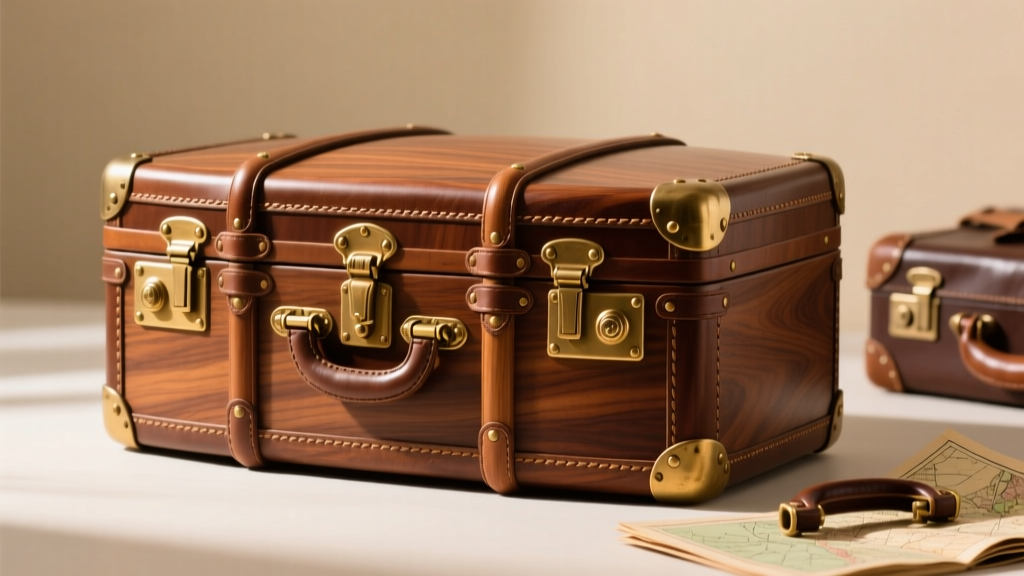
The Liebermann Steamer Trunk of 1868: A Study in Oval Form, Leather Craftsmanship, and Victorian Travel Innovation
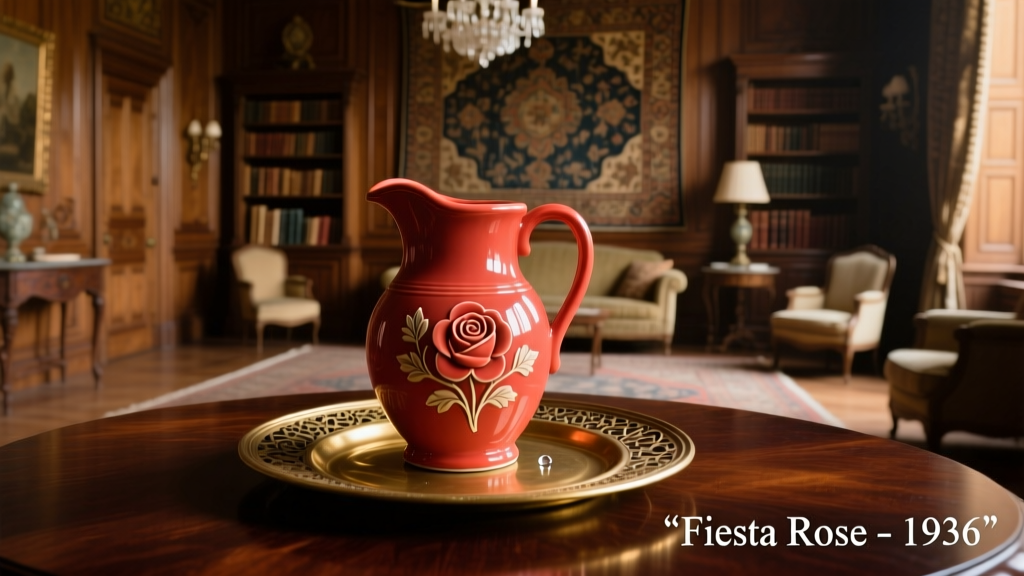
Fiesta Rose Pitcher Water Disk: Identification, History, Restoration, and Market Value

Patriotic World War I Posters: Art, Propaganda, and Preservation in Antique Context

Doll Halco Girl Composition Pleated Dress Box: Identification, Restoration, and Historical Context of the 25½-Inch Vintage Storage Unit
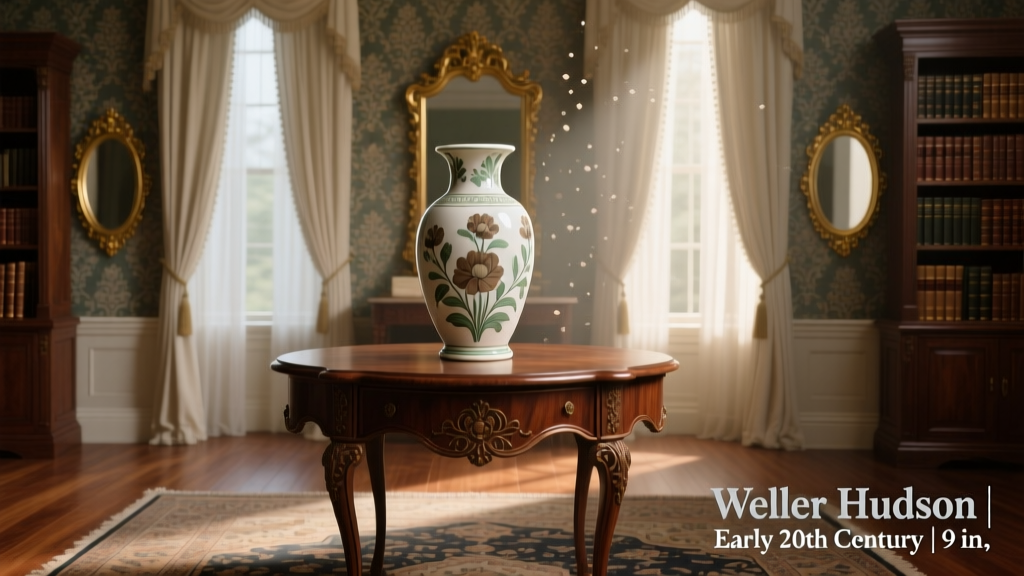
Weller Hudson Vase: A Detailed Study of the Early 20th-Century 9-Inch Art Pottery Masterpiece