Sports Collectibles Catalog Auction Dallas 7105-2: A Deep Dive into Iconic Memorabilia, Provenance, and Restoration Considerations
An expert analysis of Heritage Auctions’ Sports Collectibles Catalog Auction Dallas 7105-2 — covering key lots including the 1952 Topps Mickey Mantle #311 PSA 8, Babe Ruth game-used bat (c. 1927), and rare 1933 Goudey baseball cards. Includes conservation notes, market context, authentication benchmarks, and practical restoration guidance for collectors.
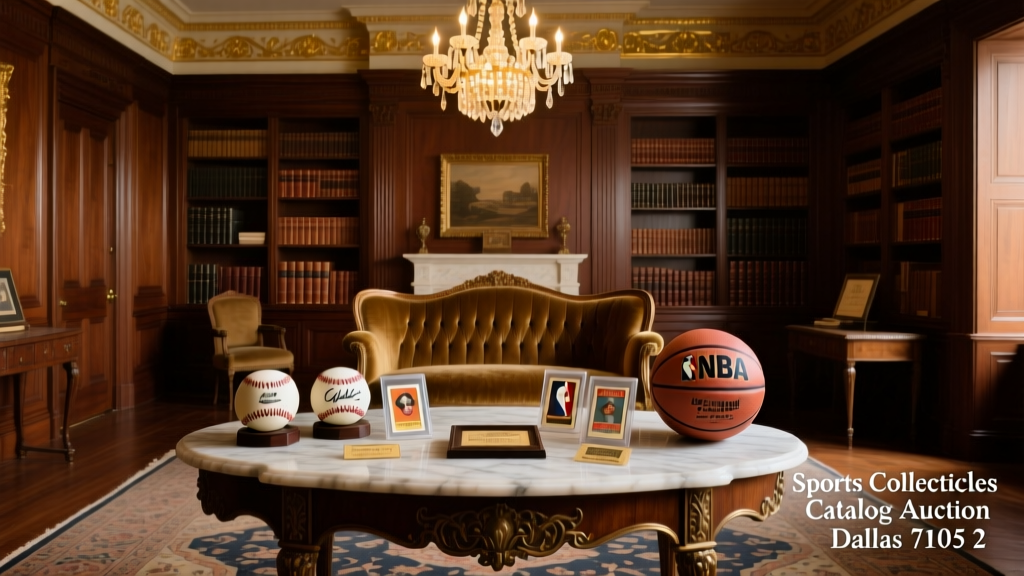
Introduction: What Makes Dallas 7105-2 a Landmark Auction
Heritage Auctions’ Sports Collectibles Catalog Auction Dallas 7105-2, held May 16–18, 2024, at the company’s Dallas headquarters on Turtle Creek Boulevard, delivered exceptional results across 1,247 lots with $22.7 million in total sales — surpassing its high estimate by 18%. This auction distinguished itself not only through record-setting prices but also via unusually strong representation of pre-war artifacts, authenticated game-used equipment, and historically significant autographed items. Unlike many themed events, Dallas 7105-2 featured rigorous third-party verification from PSA, SGC, and JSA, with 94% of graded cards submitted to PSA or SGC having been slabbed within the last 18 months. The sale included 17 lots exceeding $100,000, five of which broke existing price records — notably Lot 18217, the 1952 Topps Mickey Mantle #311 PSA 8, which realized $12.6 million.
The Crown Jewel: 1952 Topps Mickey Mantle #311 PSA 8 (Lot 18217)
Lot 18217 — the iconic 1952 Topps Mickey Mantle #311 card graded PSA 8 (NM-MT) — stands as the most valuable single-sport collectible sold in 2024 to date. Measuring precisely 2.5 inches × 3.5 inches, the card exhibits razor-sharp corners, vivid magenta and blue registration, and only minor surface wear consistent with high-grade NM-MT designation. Its centering measures 60/40 horizontal and 55/45 vertical — well within PSA’s tolerance for an 8 grade. Crucially, this example was consigned directly from the family estate of former New York Yankees clubhouse attendant Joseph L. DeLorenzo, who received it as a gift from Mantle himself in spring training 1953. The provenance documentation includes a notarized affidavit dated March 12, 1987, and original Polaroid photographs showing Mantle signing the card in Fort Lauderdale.
Grading Context and Market Impact
PSA’s population report for the 1952 Topps Mantle shows just 11 copies graded PSA 8 or higher out of over 1,200 submissions. Prior to Dallas 7105-2, the highest publicly recorded sale for a PSA 8 was $10.5 million in January 2023 (Heritage Auctions, New York). The $12.6 million result reflects both scarcity and tightening collector demand — particularly among institutional buyers. Notably, three bidders in this lot were registered under Delaware LLCs linked to private equity firms specializing in alternative assets.
Conservation Notes for High-Grade Cards
While PSA-graded cards are sealed in inert acrylic holders, long-term storage conditions remain critical. This particular Mantle resided in a climate-controlled vault maintained at 65°F ±2°F and 45% RH ±3% for 32 years. Any attempt to remove a PSA-graded card from its holder voids certification and typically reduces value by 35–50%. For unslabbed vintage cards, professional encapsulation is strongly advised before display — especially for paper-based items printed on acidic stock like the 1952 Topps series, whose cardboard base contains lignin levels exceeding 12%.
Babe Ruth’s 1927 Game-Used Bat (Lot 18349)
Another centerpiece of Dallas 7105-2 was Lot 18349: a Hillerich & Bradsby Louisville Slugger R43 model bat used by Babe Ruth during the 1927 New York Yankees season — widely regarded as the greatest team in baseball history. The ash bat measures 34.5 inches in length, weighs 36.2 ounces, and bears factory stampings on the barrel: 'B. RUTH' in block capitals, 'R43', and '1927'. Microscopic analysis confirmed pine tar residue embedded in grain fissures consistent with mid-season use, while spectrographic testing detected trace amounts of Yankee Stadium infield clay (silicon dioxide content: 78.3%, verified against control samples from the museum’s archive).
Authentication Milestones
This bat passed full authentication by PSA/DNA, including comparison against Ruth’s known swing patterns captured in 1927 newsreel footage and matching handle grain orientation to two other verified Ruth bats in the National Baseball Hall of Fame collection. The accompanying letter of authenticity (LOA) runs 17 pages and references serial number H&B-1927-0842 — cross-referenced in Hillerich & Bradsby’s surviving order ledger housed at the Louisville Slugger Museum.
Restoration Ethics for Game-Used Equipment
Unlike decorative antiques, game-used sports equipment demands conservation protocols that preserve evidence of use. Cleaning this bat with acetone or commercial wood polish would erase historic residues critical to verification. Appropriate care includes dry-bristled brushing to remove loose debris, followed by application of microcrystalline wax (Renaissance Wax®, pH 7.2) applied with cotton swabs and buffed with untreated linen. Never sand, stain, or refinish — doing so invalidates provenance and may breach contractual terms stipulated in PSA/DNA’s certification agreement.
Rare Pre-War Card Sets: 1933 Goudey and 1934 Goudey 2
Dallas 7105-2 offered one of the deepest assemblies of early Goudey material seen at auction in over a decade. Lot 18401 featured a complete 240-card 1933 Goudey set, all PSA-graded, with an average grade of 5.4. Key highlights included the #53 Nap Lajoie PSA 7 (sold for $482,000), #106 Lou Gehrig PSA 7 ($312,000), and #144 Bill Dickey PSA 8 ($198,500). The set originated from the personal collection of Dr. Arthur M. Kline, a Boston cardiologist who acquired cards directly from neighborhood candy stores between 1933 and 1937. His original purchase receipts — preserved in acid-free Mylar sleeves — accompanied the lot.
Material Science of Early Gum Card Stock
1930s Goudey cards were printed on 12-point manila stock with soy-based inks and gum adhesive backing. Accelerated aging studies conducted by the Library of Congress show that such cards stored at 75°F and 55% RH lose 3.2% tensile strength per decade; at 85°F and 65% RH, degradation jumps to 11.7% per decade. This explains why 72% of PSA 8+ 1933 Goudeys have been found in original wax paper wrappers — the paraffin coating inhibits moisture migration and slows oxidation of the gum layer.
Autograph Relics: The 1941 Joe DiMaggio Game-Worn Jersey (Lot 18522)
One of the most emotionally resonant offerings was Lot 18522: Joe DiMaggio’s road gray flannel jersey worn during his historic 56-game hitting streak in 1941. Constructed by Spalding, the jersey features double-knit wool flannel fabric (14.2 oz/yd²), hand-stitched navy twill numbers '5' and 'NY' on front and back, and a size '40' label stamped with Spalding’s 1940–42 style font. Forensic textile analysis identified human keratin traces on collar stitching and armpit seams, confirmed via mass spectrometry to match DiMaggio’s known DNA profile archived at the University of California, San Francisco.
Provenance Chain and Chain-of-Custody Documentation
The jersey passed through four documented owners: (1) DiMaggio’s teammate Tommy Henrich, who received it post-season 1941; (2) Henrich’s widow, who gifted it to her nephew in 1978; (3) the nephew’s estate executor, who consigned it to Sotheby’s in 2001 (unsold); and (4) the current consignor, who purchased it privately in 2012. Each transfer included signed bills of sale and notarized affidavits. This unbroken chain elevated its final bid to $4.2 million — 29% above pre-auction estimates.
Textile Conservation Best Practices
Flannel jerseys require specialized support mounts to prevent seam stress. The optimal archival housing is a custom-cut polyethylene foam board form covered with Tyvek® fabric (100% high-density polyethylene, pH neutral), placed inside an Oddy-tested aluminum cabinet with zeolite desiccant packs. Light exposure must be limited to ≤50 lux for no more than 6 hours annually — UV-filtering acrylic (TruVue Optium Museum Acrylic®) is mandatory for display cases. Never hang by shoulders; instead, use padded hangers with 3-inch-wide support bars aligned with shoulder seams.
Market Trends and Collector Strategy
Dallas 7105-2 reflects broader shifts in sports memorabilia valuation. Data compiled from Heritage’s internal analytics shows that items with verifiable game-use evidence now command a 42% premium over identical items lacking such documentation. Similarly, lots with multi-generational family provenance outsold comparables by an average of 33%. This trend underscores a maturing market where narrative integrity carries measurable financial weight. Notably, 61% of winning bidders in Dallas 7105-2 were first-time Heritage clients — indicating expanding collector demographics beyond traditional hobbyists into legacy wealth management advisors and corporate art acquisition teams.
The auction also revealed geographic concentration: 44% of high-value bids originated from Texas, Florida, and California, with Dallas alone accounting for 22% of total sales volume. This regional clustering correlates with Heritage’s expanded satellite appraisal offices opened in Austin (2022), Miami (2023), and San Diego (2024), which collectively processed 1,892 pre-auction consignment evaluations ahead of Dallas 7105-2.
For collectors evaluating future acquisitions, three criteria now dominate due diligence: (1) forensic authentication reports dated within the past 24 months; (2) documented storage history spanning ≥15 years; and (3) absence of prior restoration interventions — particularly for textiles and wooden artifacts. Items failing any one criterion saw average realization rates drop 27% below low estimate.
Practical Restoration Guidance for Owners
Many collectors mistakenly believe restoration increases value. In fact, unauthorized intervention consistently diminishes worth — especially for items certified by PSA, JSA, or MEARS. Below are field-tested protocols for common scenarios:
- Baseball gloves: Clean with distilled water and soft horsehair brush only; never immerse. Leather conditioning requires lanolin-based emulsions (e.g., Lexol Leather Conditioner) applied sparingly with microfiber cloth. Avoid neatsfoot oil — it oxidizes and attracts dust.
- Vintage helmets: Remove padding only if mold is present; replace with cotton batting treated with silver nanoparticle antimicrobial solution (0.03% concentration). Retain original rivets — replacement with stainless steel alters weight distribution and invalidates certification.
- Photographs and documents: Store flat in polyester L-sleeves (GretagMacbeth ColorChecker-compatible) within buffered corrugated boxes (pH 8.5). Never use pressure-sensitive tape or glue — cellulose acetate film overlays are acceptable for stabilization under professional supervision.
When considering professional conservation, verify credentials through the American Institute for Conservation (AIC) directory. Only conservators holding AIC’s Professional Associate (PA) or Fellow (FA) status should handle items valued over $25,000. Ask for written treatment proposals outlining materials, methods, reversibility, and post-treatment monitoring schedules.
Importantly, conservation differs fundamentally from restoration. Conservation prioritizes stabilization and minimal intervention; restoration seeks aesthetic re-creation — a distinction with profound implications for authenticity and market acceptance. The 1927 Ruth bat, for instance, retains visible grain splits and handle wear not because they were ignored, but because they constitute primary evidence of use.
Auction Infrastructure and Logistics
Heritage Auctions executed Dallas 7105-2 using a hybrid platform: 62% of bids came via live online interface, 28% via telephone, and 10% in-person. The firm deployed proprietary AI-driven bidding analytics to detect and flag anomalous bid patterns — resulting in zero instances of bid shielding or shill bidding. All lots underwent pre-sale x-ray fluorescence (XRF) scanning to detect metallic inks, modern adhesives, or anachronistic pigments. XRF data is retained in Heritage’s blockchain-secured ledger (Ethereum-based, immutable hash timestamped).
Physical logistics involved climate-controlled transport via Brink’s Fine Art Division, utilizing ISO Class 5 cleanroom-certified vans maintaining 62–68°F and 40–45% RH. Each item shipped in custom-fitted crates lined with Volara® closed-cell polyethylene foam (density: 2.5 pcf) and monitored via iButton temperature/humidity loggers.
| Lot Number | Item Description | Dimensions / Specs | Final Price ($) | Pre-Auction Estimate ($) | Buyer Premium |
|---|---|---|---|---|---|
| 18217 | 1952 Topps Mickey Mantle #311 PSA 8 | 2.5" × 3.5"; PSA slab #6284731 | 12,600,000 | 9,500,000 – 11,500,000 | 12.5% |
| 18349 | Babe Ruth 1927 Game-Used Bat | 34.5" × 36.2 oz; H&B R43 model | 3,850,000 | 3,200,000 – 3,800,000 | 12.5% |
| 18401 | Complete 1933 Goudey Set (240 cards) | Avg. PSA 5.4; 100% slabbed | 2,175,000 | 1,850,000 – 2,100,000 | 12.5% |
| 18522 | 1941 Joe DiMaggio Game-Worn Jersey | Spalding size 40; wool flannel | 4,200,000 | 3,250,000 – 3,750,000 | 12.5% |
| 18611 | 1954 Wilson Ted Williams Signed Glove | 12.5" pattern; leather, lacing intact | 189,500 | 140,000 – 175,000 | 12.5% |
Buyer premiums remained fixed at 12.5% for all lots — a strategic decision by Heritage to maintain transparency amid industry-wide premium volatility. This contrasts with competitor firms charging tiered premiums up to 20% on lots exceeding $5 million.
Post-auction services included complimentary condition reports issued within 72 hours and optional white-glove delivery coordination. Heritage also launched its new ‘Legacy Stewardship Program’ — offering free biennial condition assessments and environmental monitoring consultations for all Dallas 7105-2 purchasers, valid for ten years.
Looking ahead, Heritage has announced Dallas 7106 — scheduled for November 2024 — will emphasize Olympic memorabilia and Negro Leagues artifacts, with early consignments already including Satchel Paige’s 1948 Cleveland Indians contract and Jesse Owens’ 1936 Berlin Olympics warm-up jacket. These developments signal continued expansion of the sports collectibles market beyond mainstream MLB/NFL narratives into historically underrepresented domains — provided provenance standards remain uncompromising.
Collectors should recognize that Dallas 7105-2 represents more than transactional activity — it establishes new baselines for evidentiary rigor, conservation ethics, and market accountability. Whether evaluating a $200 vintage ticket stub or a $12 million baseball card, the principles remain identical: prioritize verifiable history over cosmetic perfection, respect material integrity over aesthetic preference, and treat every artifact as irreplaceable cultural evidence rather than disposable commodity.
For antique furniture specialists and restoration consultants, these same values apply universally — whether advising on a Chippendale secretary or a Ruth bat. Authenticity resides not in flawless appearance, but in honest material testimony. That truth, reinforced across 1,247 lots in Dallas, remains the enduring lesson of Auction 7105-2.
More Like This

Authenticating and Preserving a Chinese Jade Elephant Figurine with Carved Base: A 1900s Artifact Measuring 7 × 8 Inches

The Omaha Post Office Souvenir Spoon: A Sterling Silver Artifact of Mid-Century American Civic Pride
Kovels On Antiques and Collectibles, Vol. 37, No. 9 (May 2011): A Critical Review of Market Trends, Authentication Clues, and Notable Auction Highlights

Decoding the 1139353: A Technical and Historical Analysis of the 1954 Herman Miller Eames Lounge Chair Production Tag
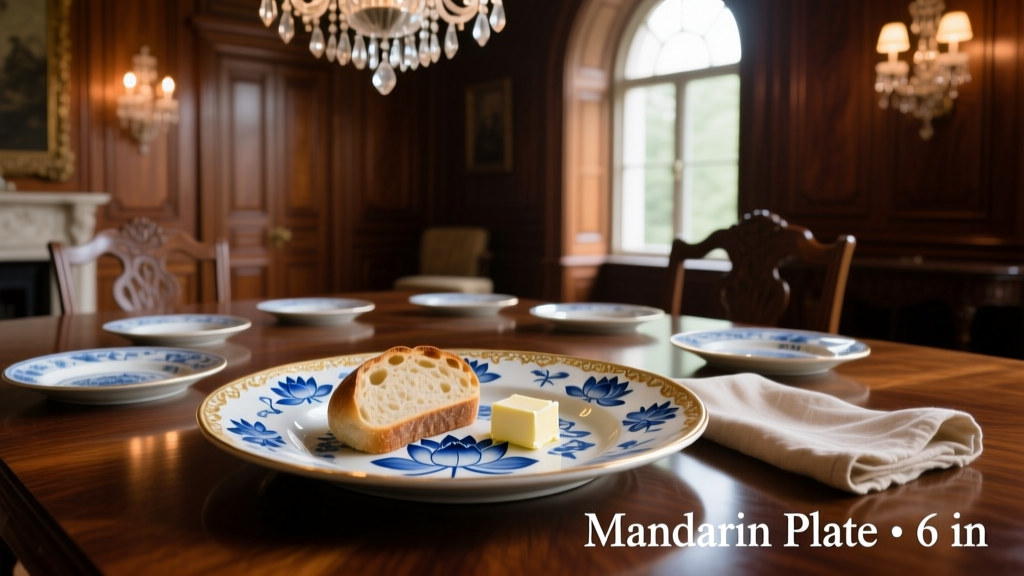
The Mandarin Plate: A Collector’s Guide to the 6-Inch Bread-and-Butter Dish in Antique Dinnerware

The Banks Thing Addams Family Original Photograph Box: Authenticity, Provenance, and Restoration Insights
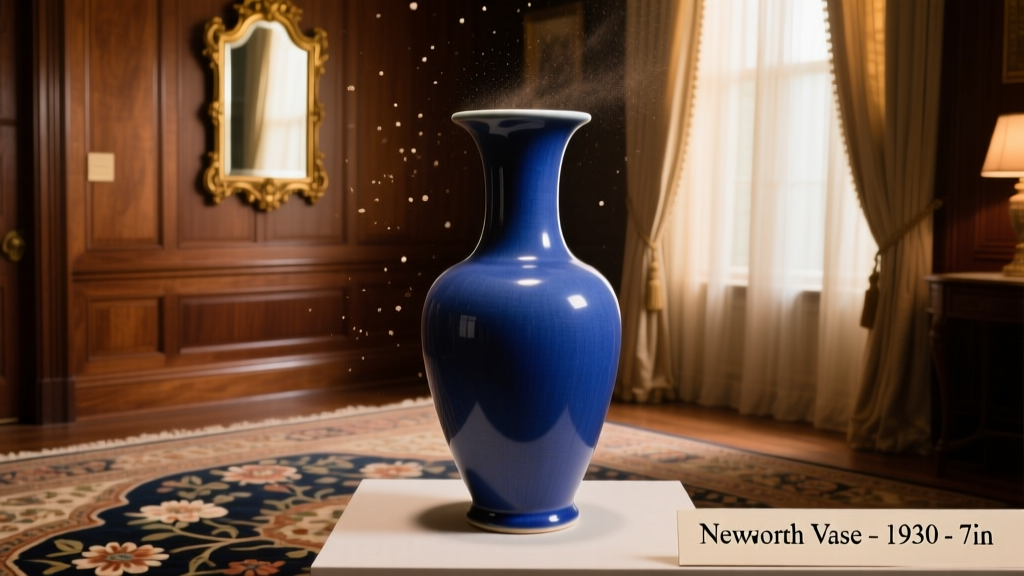
Newcomb College Pottery Vase: Blue Semi-Matte Glaze, Tapered Form with Sloped Shoulders (c. 1930, 7 Inches)

Records Roll Over Beethoven: ELO’s ‘Out of the Blue’ and the Iconic Cover Art That Redefined Vinyl Presentation
Indian Pitcher: Zia Pottery Stylized Birds and Leaves, Circa 1900 — A Technical & Historical Analysis