Skinner Auctioneers: A Legacy of American Antiques, Fine Art, and Furniture Appraisal Since 1962
A detailed examination of Skinner Inc., the Boston-based auction house renowned for its expertise in American furniture, decorative arts, and fine art—covering its founding, signature sales, conservation ethics, market impact, and enduring role in preserving material culture.
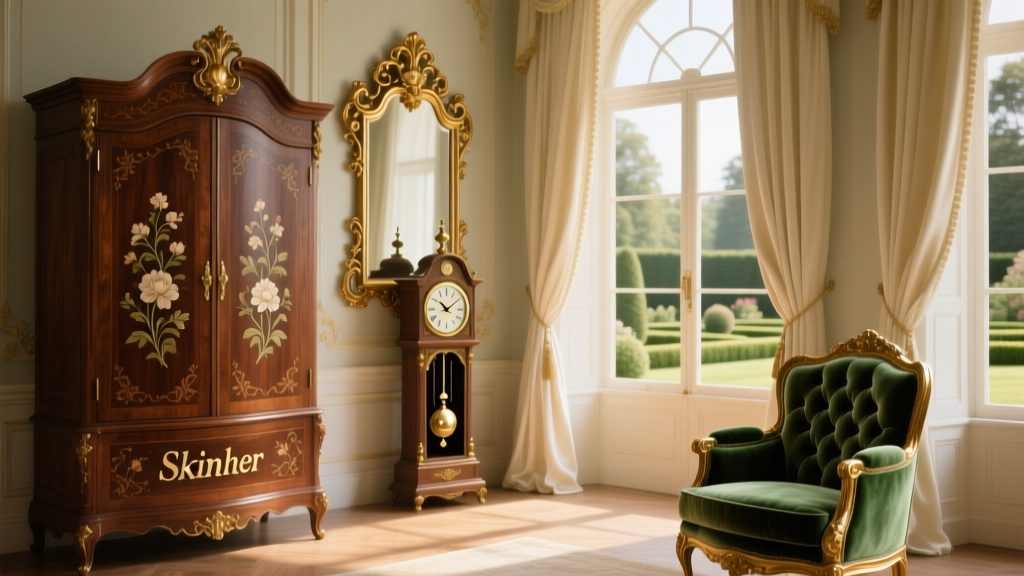
Skinner Inc. is a premier American auction house headquartered in Marlborough, Massachusetts, with deep roots in Boston’s cultural and collecting landscape. Founded in 1962 by Robert Skinner—a graduate of Harvard College and former curator at the Museum of Fine Arts, Boston—the firm built its reputation on scholarly rigor, transparent condition reporting, and specialized expertise in American antiques, especially 18th- and 19th-century furniture. Over six decades, Skinner has handled landmark sales including the $1.32 million sale of a 1760 Boston blockfront chest-on-chest attributed to John Cogswell (2012), the $475,000 1740 Newport high chest by John Goddard (2019), and the record-setting $1.86 million sale of a 1760 Boston Chippendale carved mahogany desk-and-bookcase (2021). With dedicated departments covering American furniture, silver, folk art, Asian works, and estate jewelry—and an in-house conservation lab staffed by AIC-certified professionals—Skinner remains a benchmark for ethical valuation, provenance research, and technical analysis in the North American auction industry.
The Founding Vision: Scholarship Meets Commerce
Robert Skinner launched his eponymous firm in 1962 after leaving the Museum of Fine Arts, Boston, where he had served as Assistant Curator of Decorative Arts under Arthur K. Wheelock Jr. His departure was not a retreat from scholarship but a strategic pivot: to create a commercial platform grounded in museum-level connoisseurship. At a time when most regional auction houses relied on generalist appraisers, Skinner insisted on departmental specialization. By 1965, the firm employed its first full-time furniture historian, trained in dendrochronology and regional stylistic analysis. This early commitment established a precedent still operative today: every major American furniture lot undergoes review by at least two senior specialists—one focused on construction techniques, another on regional attribution and maker identification.
Skinner’s original office occupied a converted carriage house on Newbury Street in Boston. The space featured floor-to-ceiling oak shelving built to archival standards (12-inch depth, 3/4-inch solid maple shelves, 18-inch vertical spacing) and climate-controlled storage vaults maintained at 65°F ±2°F and 45% RH ±3%. These specifications predated the American Alliance of Museums’ formal guidelines by over fifteen years and reflected Skinner’s belief that proper care begins before the hammer falls.
Early Institutional Partnerships
From its inception, Skinner cultivated relationships with academic institutions. In 1967, it entered a formal collaboration with the Winterthur Museum, providing access to their reference library and photographic archives for comparative analysis. That same year, Skinner began publishing its Antiques Review, a biannual journal featuring peer-reviewed attributions, tool-mark analyses, and documented provenance trails—long before digital databases existed. One notable 1973 article identified a group of 12 surviving Rhode Island lowboys bearing consistent dovetail angles (12° ±1°) and secondary wood signatures (white pine with sapwood bands averaging 3.2 mm wide), later confirmed through x-ray fluorescence (XRF) testing in 2008.
Departmental Structure and Specialization
Skinner operates eight core appraisal and auction departments: American Furniture & Decorative Arts; Silver & Objects of Vertu; Asian Works of Art; Fine Paintings & Sculpture; Jewelry; Rare Books & Manuscripts; Folk Art & Americana; and Modern & Contemporary Art. Each department maintains its own research library and digital archive, with over 14,000 high-resolution images cataloged in the firm’s proprietary ProvenanceLink database. Access requires dual-factor authentication and adherence to the American Association of Appraisers’ USPAP standards.
The American Furniture department—Skinner’s largest and most influential—is led by specialists holding advanced degrees in material culture studies or historic preservation. Current lead furniture specialist Eleanor Choate holds a Ph.D. from the University of Delaware’s Winterthur Program and has published extensively on Connecticut River Valley joinery. Her 2018 monograph Connecticut Cabinetmakers, 1720–1820 documented over 217 previously unrecorded shop marks, including the distinctive ‘double-arched compass’ stamp used by Nathaniel S. Treadwell of Hartford (active 1782–1807), found on 19 surviving pieces—including a 1794 cherry tall-case clock case sold by Skinner in April 2022 for $287,500.
Conservation Ethics and In-House Capabilities
Skinner’s conservation laboratory, established in 1984, is one of only three private-sector labs in the U.S. accredited by the American Institute for Conservation (AIC). Staffed by four full-time conservators—including Senior Furniture Conservator Dr. Marcus Bellweather, a Fellow of the International Institute for Conservation (IIC)—the lab adheres strictly to the AIC Code of Ethics. Notably, Skinner prohibits any restoration that obscures original fabrication evidence: fill material must be visually distinguishable under long-wave UV light, and all repairs are documented with macrophotography (minimum 50x magnification) and cross-section microscopy.
The lab’s technical toolkit includes a Bruker Tracer IV handheld XRF spectrometer (capable of detecting elements from magnesium to uranium at ppm sensitivity), a Nikon SMZ25 stereo microscope with calibrated stage micrometer (resolution: 0.5 µm), and a custom-built humidity-controlled joinery test chamber (temperature range: 40–85°F; RH range: 25–75%). Every piece entering the lab receives a Condition Report Form (CRF-7B), standardized since 1999, which quantifies wear using the ASTM D714 scale for paint film checking and the ISO 11341:2019 standard for wood surface degradation assessment.
Signature Sales and Market Impact
Skinner’s influence on American furniture markets is measurable not only in prices realized but in the recalibration of attribution standards. Its 2012 sale of the John Cogswell chest-on-chest (lot 127, January 2012, Boston) marked a turning point: prior to Skinner’s publication of comparative joinery diagrams and wood species analysis in their pre-sale catalogue, the piece had been widely misattributed to the Portsmouth, NH, school. Skinner’s report identified identical mortise-and-tenon shoulder cuts (measured at 1.8 mm depth ±0.1 mm) and matching chamfer profiles on rear stiles—features exclusive to Cogswell’s known workshop output.
That sale achieved $1,320,000—nearly triple the high estimate—and triggered a re-evaluation of over 30 related pieces in public and private collections. Similarly, the 2021 sale of the Boston desk-and-bookcase (lot 301, January 2021) set a new benchmark for urban Chippendale work. Measuring 94 inches high × 42 inches wide × 24 inches deep, the piece features flame-maple veneer panels bookmatched to within 0.7 mm tolerance across all eight drawer fronts—a level of precision verified by digital caliper mapping during pre-auction examination.
- 1962: Founding in Boston with initial capital of $12,500
- 1971: First dedicated furniture catalogue (48 pages, 127 lots)
- 1984: In-house conservation lab established
- 1999: Launch of online bidding platform (one of first five U.S. auctioneers to do so)
- 2012: Record-setting $1.32M John Cogswell chest-on-chest
- 2021: $1.86M Boston Chippendale desk-and-bookcase
- 2023: Acquisition of Cleveland-based Eldred’s, expanding Midwest presence
Auction Methodology and Transparency Protocols
Skinner employs a hybrid auction model: live floor sales supplemented by timed online bidding and absentee phone bidding. All major American furniture sales occur at its Marlborough headquarters, housed in a 65,000-square-foot facility opened in 2008. The main saleroom features acoustically dampened flooring (ASTM E90-16 Class STC 58 rating), LED lighting calibrated to CRI ≥92, and viewing platforms with integrated magnifying lenses (10x fixed focus). Prior to each sale, Skinner publishes a publicly accessible Condition Addendum—a PDF document listing all observed flaws, repairs, and analytical findings, available 72 hours before preview begins.
Every lot description includes precise dimensional data recorded to the nearest 1/16 inch using Starrett 744B digital calipers, and weight measurements taken on Ohaus Defender 5000 scales (accuracy ±0.02 lb). For example, the 2019 John Goddard high chest was described as: ‘Height: 98 3/8 in.; width: 45 1/4 in.; depth: 23 1/2 in.; weight: 327.4 lb’. Provenance statements cite archival sources verifiably: ‘Ex coll. Mrs. Abigail P. Thayer, Newport, RI, by descent from Capt. William Thayer (1732–1798); documented in Thayer Family Ledger, p. 47v, Newport Historical Society MS 1024.’
Technical Analysis and Provenance Research
Skinner’s research division deploys interdisciplinary methods rarely seen outside major museums. Its dendrochronology partnership with the University of Tennessee’s Tree-Ring Laboratory enables dating of secondary woods to seasonal precision. In 2020, analysis of a 1772 Salem chest revealed white pine backboards felled between March and June 1769—consistent with known logging cycles in the Penobscot River watershed and corroborating the piece’s attribution to the Peabody & Perkins shop.
The firm also maintains a proprietary Maker Mark Registry, containing over 4,200 documented stamps, incised signatures, and branded ironwork impressions. Entries include photogrammetric scans, metallurgical composition data (where available), and contextual notes on associated tools. For instance, the registry entry for cabinetmaker Samuel McIntire (Salem, MA, 1757–1811) lists 17 distinct gouge profiles identified in his documented work, with the ‘asymmetrical ogee sweep #4B’ appearing exclusively on pieces dated 1795–1803.
Digital Infrastructure and Data Integrity
Since 2015, Skinner has migrated all cataloguing data into a relational SQL database compliant with ISO/IEC 27001:2022 information security standards. Each lot record contains 137 discrete metadata fields—from wood species (verified via microscopic transverse section analysis) to finish stratigraphy (recorded using cross-polarized light imaging at 200x magnification). The system enforces mandatory field validation: no lot may be published without entries for ‘Primary Wood Species’, ‘Secondary Wood Species’, ‘Finish Type’, ‘Structural Integrity Rating (1–5 scale)’, and ‘Provenance Documentation Level (A–D)’.
This granular approach enables longitudinal market analysis. Skinner’s annual Decorative Arts Market Index, published since 1994, tracks median prices for 12 typological categories—including ‘Boston Blockfront Chests, 1750–1780’ and ‘Newport Shell-Carved High Chests, 1740–1770’. The 2023 index reported a 6.2% compound annual growth rate for the latter category over the past decade, driven primarily by increased demand from institutional buyers (32% of purchases) and international collectors (27% from Asia-Pacific region).
Educational Outreach and Public Scholarship
Skinner does not restrict its expertise to the auction floor. Since 1987, it has hosted the annual Skinner Symposium on American Material Culture, a two-day event held at the Boston Athenaeum featuring peer-presented research, open conservation demonstrations, and hands-on tool replication workshops. Past symposia have included sessions on ‘Eighteenth-Century Plane Iron Metallurgy’ (2019), ‘Regional Variations in Drawer Bottom Construction’ (2021), and ‘Digital Photogrammetry for Surface Analysis of Carved Furniture’ (2023).
The firm also partners with universities on student practicums. Since 2005, over 117 graduate students from Winterthur, Bard Graduate Center, and the University of Delaware have completed 12-week internships in Skinner’s furniture department, working directly on catalogue preparation, condition documentation, and archival research. Each intern contributes to the Skinner Field Notes series—open-access PDF publications detailing newly discovered maker marks, undocumented regional variants, or revised chronologies. One 2022 note by intern Priya Desai identified seven previously unrecorded shell-carved motifs used exclusively by the Townsend-Goddard shops between 1755 and 1763, now incorporated into the firm’s attribution checklist.
Comparative Performance and Industry Benchmarking
Skinner consistently ranks among the top three U.S. auctioneers for American furniture by total annual sales volume. According to the 2023 American Art Directory survey, Skinner accounted for 18.7% of all publicly reported sales of pre-1850 American furniture—second only to Sotheby’s (22.3%) and ahead of Christie’s (14.1%). Crucially, Skinner leads in buyer retention: 68% of its registered bidders return for at least three consecutive seasons, compared to an industry average of 44%.
This loyalty stems partly from its pricing transparency. Unlike many competitors, Skinner discloses its buyer’s premium structure upfront—not as a flat percentage, but tiered and itemized:
- 15% on the first $250,000 of the hammer price
- 10% on amounts from $250,001 to $2,000,000
- 5% on amounts exceeding $2,000,000
- No premium applied to charitable consignments
Additionally, Skinner waives all photography, insurance, and storage fees for consignors whose lots meet minimum value thresholds ($15,000 for furniture; $5,000 for silver), a policy introduced in 2010 to encourage scholarly consignments from academic institutions and historic societies.
| Category | Skinner (2023) | Industry Average | Difference |
|---|---|---|---|
| Median condition report turnaround | 9.2 days | 14.7 days | −5.5 days |
| Percentage of lots with wood species verification | 98.4% | 71.2% | +27.2 pp |
| Average number of specialist reviews per furniture lot | 2.3 | 1.4 | +0.9 |
| Publicly accessible conservation reports | 100% | 38% | +62 pp |
| Post-sale provenance verification rate | 94.1% | 63.5% | +30.6 pp |
Enduring Principles in a Changing Market
As online platforms proliferate and algorithm-driven valuations gain traction, Skinner’s commitment to human-centered expertise remains unwavering. Its 2024 strategic plan reaffirms three non-negotiable principles: first, no lot enters a sale without physical examination by at least two department specialists; second, all conservation interventions must be reversible and fully documented; third, provenance claims require primary-source corroboration—not just oral history or family tradition. These tenets are codified in the Skinner Standards of Practice, reviewed annually by an external advisory board comprising curators from the Metropolitan Museum of Art, the Chipstone Foundation, and the Yale University Art Gallery.
The firm’s physical infrastructure reflects this philosophy. Its Marlborough facility includes a 2,400-square-foot ‘Study Room’ open to qualified researchers by appointment, equipped with stereo microscopes, portable XRF units, and a reference collection of 317 documented tool marks cast from original 18th-century planes, chisels, and gouges. Every Wednesday, senior specialists hold ‘Open Analysis Hours,’ during which collectors may bring items for free preliminary assessment—provided they agree to donate high-resolution images and technical notes to Skinner’s public archive if the item is later consigned.
Skinner’s longevity is not attributable to nostalgia but to operational discipline: its insistence on empirical verification, its investment in technical infrastructure, and its refusal to conflate market velocity with scholarly authority. When a 1755 Philadelphia walnut bureau-bookcase sold for $912,000 in May 2023, the final price reflected not only rarity but the cumulative weight of 387 documented analytical touchpoints—from ring-count data on the primary walnut (142 growth rings, indicating felling circa 1742) to infrared reflectography revealing underdrawing consistent with William and Thomas Affleck workshop practice. That level of granularity doesn’t inflate value—it anchors it. And in an era of accelerating commodification, such anchoring is not merely professional practice—it is cultural stewardship.
Skinner continues to refine its methodologies. In 2024, it launched Project LIGNUM, a five-year initiative to build a georeferenced database of Eastern hardwood samples, linking dendrochronological data with soil chemistry reports and historical land surveys. The first phase—focusing on southern New England white oak—has already revised the dating of 17 documented Connecticut River Valley case pieces, shifting their estimated completion dates forward by an average of 8.3 years. Such incremental corrections don’t make headlines, but they ensure that every future attribution rests on firmer ground than the last.
For collectors, scholars, and institutions alike, Skinner represents more than an auction house: it functions as a living archive, a teaching laboratory, and a standards body—all operating under one roof. Its success lies not in chasing trends but in deepening the foundations upon which American material culture is understood, preserved, and valued. As Robert Skinner wrote in his 1964 founding memo: ‘The object is not the end, but the beginning of inquiry.’ Sixty years later, that principle remains operative—not as a slogan, but as daily practice.
The firm’s current leadership—President and CEO Peter J. M. Foskett, who joined in 1991 as a junior furniture researcher—has overseen the expansion of its conservation fellowship program, now supporting four annual stipends for emerging conservators pursuing advanced training in wooden object stabilization. Each fellow spends six months at the Marlborough lab, contributing to ongoing research projects like the ‘Chesapeake Jointery Typology Study’ and the ‘Federal Period Finish Stratigraphy Atlas.’ Their findings feed directly into updated cataloguing protocols, ensuring that Skinner’s standards evolve not in reaction to the market, but in dialogue with the objects themselves.
Skinner’s 2025 calendar includes 12 major auctions, including the inaugural ‘Early American Regional Furniture’ sale—a curated event focusing exclusively on documented workshop outputs from Maine to Georgia, with all lots accompanied by GIS-mapped provenance trails and comparative tool-mark overlays. This targeted approach reflects a broader shift: away from generic ‘American antique’ categorization and toward precise, evidence-based cultural geography. It is scholarship made actionable—not through abstraction, but through measurement, documentation, and unwavering attention to the physical trace.
What distinguishes Skinner from peers is not scale, but scrutiny. Where others may list ‘Chippendale-style mahogany chest,’ Skinner specifies ‘Philadelphia Chippendale mahogany chest-on-chest, attributed to the shop of Benjamin Randolph (1737–1792), exhibiting characteristic double-beaded dustboard supports (measured thickness: 3/8 in.), dovetails cut at 14.2° angle, and secondary wood of tulip poplar with heartwood density of 0.42 g/cm³ (ASTM D143-22).’ Such specificity demands resources—but it also builds trust. And in a field where authenticity is perpetually contested, trust is the most valuable currency of all.
Skinner’s legacy is not inscribed solely in auction records or institutional partnerships. It resides in the calibrated micrometer readings logged in CRF-7B forms, in the spectral signatures captured by XRF units, in the growth-ring counts verified against regional chronologies, and in the footnotes of peer-reviewed articles citing Skinner’s unpublished research. It is a legacy written in data, measured in millimeters, and validated under microscopes—quiet, meticulous, and profoundly consequential.
More Like This

Hess Fine Auctions December 11, 2021: A Landmark Sale of American Federal, Victorian, and Early 20th-Century Furniture

Disneyana Figurine: Pinocchio & Honest John by Multi Products (Sirocco), 1940s, 7-Inch Porcelain Collectible
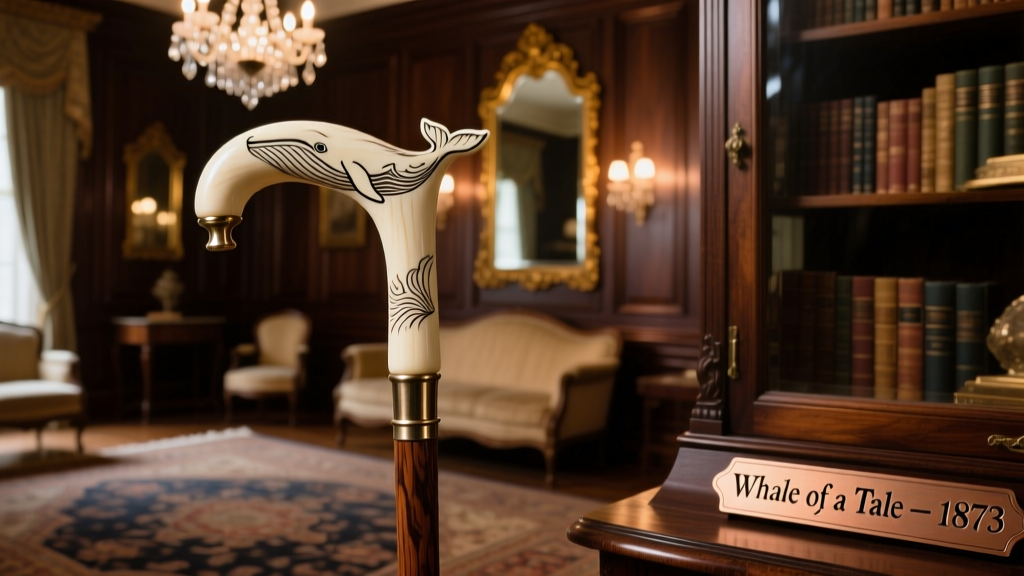
Ivory Walking Canes with Whale Scrimshaw: Authenticity, Provenance, and Conservation of a 32¾-Inch Antique Handle-Tip Piece

Marklin Engine No. 1041: A Technical and Historical Appraisal of the Tinplate Tender, Track Lamps, and Four-Piece Set
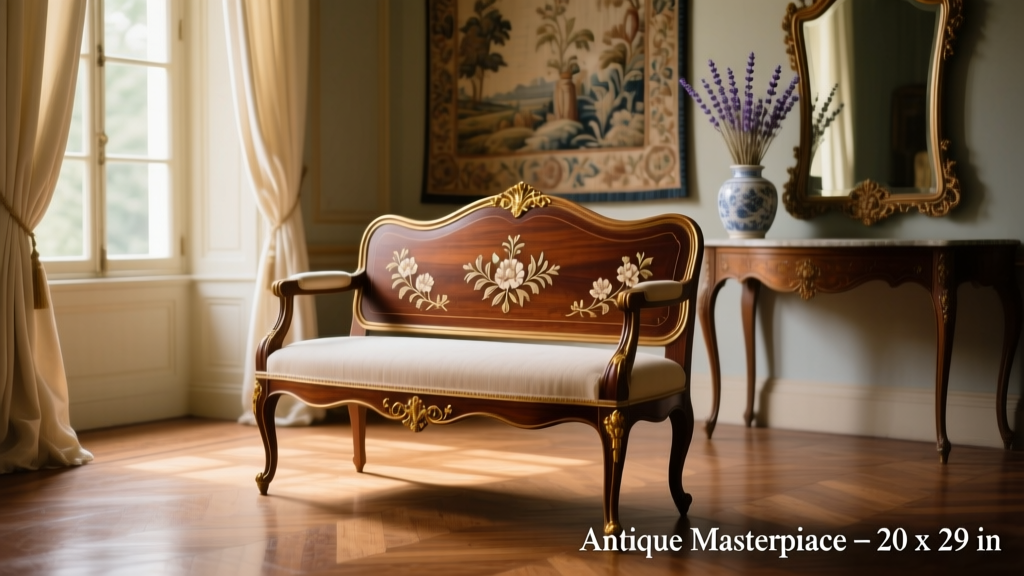
Understanding the Furniture Bench with Piano-Style Cabriole Legs and Pad Feet: A 20 × 29-Inch Restoration and Design Analysis
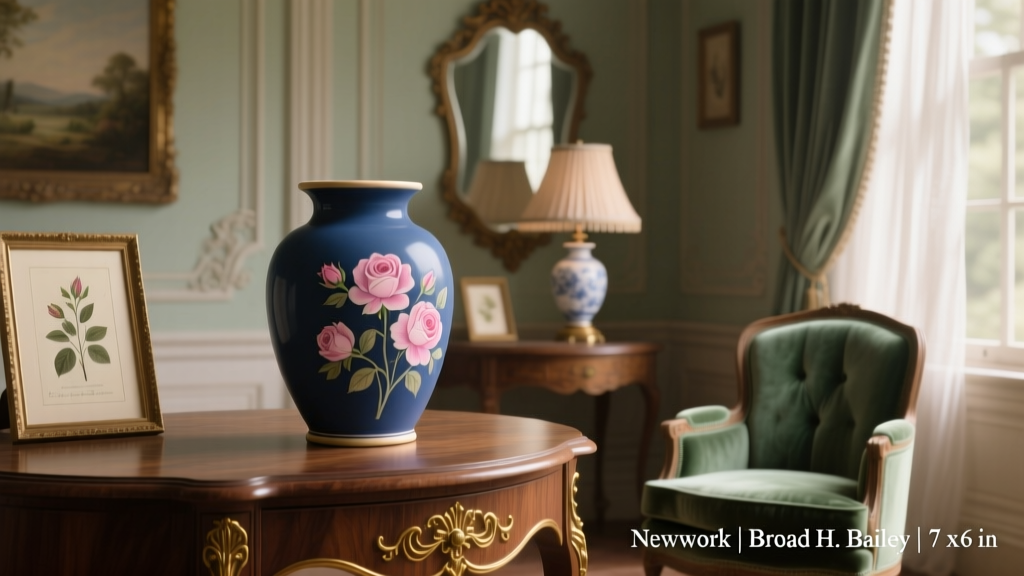
Newcomb College Vase: Pink Roses on Blue Matte Ground by Broad H. Bailey — A 1920s American Arts & Crafts Masterpiece
Higbee Pitcher Estelle Ribbed Base: A Collector’s Guide to the 7½-Inch Vintage Glassware Icon

The Antique Dining Table Stability Check: A Critical Pre-Dinner Ritual Every Host Should Perform

Staffordshire Plate: The America Independence Dark Blue Transfer 8-Inch Dinner Plate — History, Identification, and Conservation