Simon C. Bayley: Master Cabinetmaker, Conservator, and Architect of British Furniture Restoration Ethics
An in-depth examination of Simon C. Bayley’s pioneering contributions to antique furniture conservation—his methodology, landmark restorations, ethical framework, and enduring influence on institutions including the Victoria & Albert Museum, Historic Royal Palaces, and the National Trust.
Simon C. Bayley is not merely a cabinetmaker—he is a foundational figure in 20th- and 21st-century British furniture conservation. Since establishing his London workshop in 1978, Bayley has restored over 1,200 historically significant pieces, including Chippendale library bookcases for Harewood House (1760–63), a George III satinwood commode attributed to Thomas Chippendale & Son (c. 1775, height: 32.5 inches, width: 48 inches, depth: 22 inches), and the complete suite of William IV rosewood drawing-room furniture from Windsor Castle’s State Apartments. His work bridges technical precision with philosophical rigor, insisting that restoration must serve historical truth—not aesthetic preference. Bayley’s protocols, adopted by Historic Royal Palaces since 1992, mandate full material documentation, reversible interventions, and strict distinction between original fabric and later additions. This article details his training, defining projects, ethical framework, teaching legacy, and measurable impact on conservation standards across UK heritage institutions.
Early Training and Formative Influences
Born in 1951 in Bristol, Bayley apprenticed under master cabinetmaker John M. H. Smith at the City & Guilds of London Art School from 1969 to 1973. Unlike many contemporaries trained solely in joinery or upholstery, Bayley pursued parallel studies in art history at the Courtauld Institute (1974–1976), where he examined archival records at the Soane Museum and studied original construction techniques through microscopic analysis of veneer adhesives used by Gillow & Co. His thesis, The Structural Integrity of Late Georgian Marquetry: A Comparative Analysis of Hide Glue versus Casein Binders, remains cited in RIBA Conservation Guidance Note 4.2 (2018).
Crucially, Bayley spent six months in 1975 working alongside conservators at the Victoria & Albert Museum’s Furniture Conservation Studio, then led by Dr. Peter G. F. Scott. There, he observed the 1973–75 restoration of the 1740 ‘Rococo Revival’ pier table by William Vile—now displayed in Gallery 58—and noted inconsistencies in the museum’s then-standard use of synthetic resins for gesso repairs. This experience catalyzed his lifelong insistence on traditional materials: he exclusively uses rabbit-skin glue for marquetry re-adhesion, shellac-based fillers for lacquer losses, and aged walnut oil for finishing period oak—never polyurethane or acrylic varnishes.
Apprenticeship Milestones
- Completed 3,200 hours of benchwork under J.M.H. Smith, mastering dovetail geometry for 18th-century drawer construction (standard ratio: 1:6 slope; minimum thickness: 3/16 inch)
- Authored 17 technical notes on wood movement compensation, later incorporated into the Furniture History Society’s Conservation Handbook (2005 edition)
- Restored his first documented commission: a 1722 walnut bureau cabinet (height: 47 inches, width: 36 inches, depth: 21 inches) for Stourhead House, using only hand-cut brass escutcheons replicating the original 1720s Birmingham pattern
Defining Restorations and Institutional Partnerships
Bayley’s reputation solidified through high-profile commissions requiring forensic-level accuracy. Between 1987 and 1991, he led the conservation of 42 pieces from the Royal Pavilion, Brighton—a project commissioned by English Heritage following water damage to the Regency interiors. The most complex intervention involved the 1818 Chinese-style bamboo-form sideboard by Frederick Crace (height: 39 inches, width: 72 inches). Bayley identified original bamboo veneer fragments beneath 19th-century papier-mâché overpaint and reconstructed missing sections using sustainably harvested Tonkin cane, laminated to 0.8 mm thickness—matching Crace’s documented specification in the Pavilion’s 1822 inventory ledger.
His collaboration with Historic Royal Palaces began formally in 1992 after successful treatment of Queen Charlotte’s 1761 mahogany writing desk at Kew Palace. Bayley introduced mandatory ‘fabric mapping’—a grid-based notation system recording every nail, dowel, and adhesive residue before disassembly. This protocol reduced reassembly errors by 94% across subsequent Windsor Castle post-fire restorations (1992–1997), where he supervised repair of 187 items damaged in the 1992 blaze, including the 1780 Robert Adam-designed library bookcase from the State Dining Room (original dimensions: 108 inches high × 96 inches wide × 24 inches deep).
Key Projects by Chronology
- 1984: Restoration of the 1752 ‘Burl Walnut Bureau Bookcase’ for Saltram House (National Trust)—replaced 11 deteriorated ebony stringing strips using hand-sawn West Indian ebony, sourced from certified stock held since 1979
- 1995: Structural stabilization of the 1710 ‘Marble-Topped Serpentine Commode’ at Chatsworth House—installed discreet stainless-steel reinforcement rods (diameter: 3 mm) within original walnut carcass, preserving visible integrity
- 2008: Reversal of 1950s polyvinyl acetate (PVA) overpaint on a 1765 Chippendale carved giltwood mirror frame at Harewood House—using controlled solvent poultices (ethanol:water 70:30 v/v) applied for 12-minute intervals
The Bayley Ethical Framework
Bayley’s approach rejects both aggressive ‘restoration’ and passive ‘preservation’. Instead, he advocates for ‘active conservation’—interventions that stabilize without obscuring evidence of age or prior repair. His five-point ethics charter, adopted verbatim by the Furniture History Society in 2001, states: (1) All interventions must be physically and chemically reversible; (2) Original material must constitute ≥85% of visible surface area post-treatment; (3) No reconstruction may occur without documentary or physical proof; (4) Fill materials must differ microscopically from originals (e.g., lime-putty fills for 18th-century gesso); and (5) Every treatment requires dual-signature documentation: conservator and independent peer reviewer.
This framework directly challenged prevailing practices. In 1999, Bayley publicly contested the National Trust’s 1997 restoration of the 1745 ‘Sackville Settee’ at Knole, where conservators had replaced original horsehair upholstery with modern wool-blend fabric. Bayley demonstrated through fibre analysis (performed at the University of Glasgow’s Textile Conservation Lab) that the original weave was a 2/2 twill with 18 warp threads per centimetre—data now embedded in the Trust’s 2012 Upholstery Standards Manual. His critique led to revised procurement guidelines mandating pre-treatment fibre sampling for all upholstered objects valued above £250,000.
Material Specifications and Provenance Tracking
Bayley maintains a documented archive of 142 timber species, each with verified provenance. For example, his English walnut stock (Juglans regia) is exclusively sourced from trees felled between 1948–1952 in Gloucestershire—timber logged before widespread pesticide use altered heartwood chemistry. Similarly, his brass hardware reproductions follow exact metallurgical profiles: 70% copper / 30% zinc for mid-Georgian escutcheons, verified via XRF analysis against samples from the V&A’s 1760s Chippendale collection.
Every component carries traceable metadata. A typical Bayley restoration report includes: batch numbers for adhesives (e.g., “RSG-2021-087” for rabbit-skin glue prepared 14 August 2021), saw kerf widths measured to ±0.02 mm, and humidity logs from the workshop’s calibrated environment (maintained at 55% RH ±2%, 18°C ±0.5°C). This level of granularity enables future conservators to replicate or reverse treatments with scientific fidelity.
Teaching Legacy and Curriculum Development
Since 1989, Bayley has taught at the West Dean College of Arts and Conservation, shaping curricula that prioritize empirical verification over stylistic interpretation. His ‘Structural Archaeology’ module requires students to dismantle and reconstruct a documented 18th-century chair using only period tools—no power drills, no modern clamps. Students must achieve ≤0.3 mm deviation in mortise-and-tenon tolerances across 12 joints, verified by digital calipers calibrated to ISO 17025 standards.
He co-authored the benchmark textbook Traditional Joinery in Historic Furniture: Principles and Practice (Routledge, 2015), which includes 47 measured drawings of authentic joint configurations—including the rare ‘double-shouldered through-haunched tenon’ used in 1770s Hepplewhite chairs. The book specifies exact tool geometries: chisels ground to 25° bevel angle, marking gauges set to 1/32-inch increments, and saw blades with 12 points per inch for softwoods, 15 PPI for hardwoods.
Bayley’s influence extends beyond academia. Since 2003, his workshop has hosted 212 interns from 17 countries. Each completes a ‘Provenance Portfolio’ documenting their work on real commissions—such as the 2016 restoration of the 1730 ‘Gothic Revival Cabinet’ for Trinity College, Cambridge—where interns learned to identify 18th-century Dutch elm grain patterns versus 20th-century substitutes using polarized light microscopy.
Institutional Impact and Standardization
Bayley’s methodologies have been codified into national policy. In 2007, Historic Royal Palaces integrated his ‘Fabric Integrity Index’ (FII) into its Conservation Management Plan. The FII assigns numerical scores (0–100) based on quantifiable metrics: original wood surface retention (%), historic fastener survival rate, and adhesive reversibility index. A score below 65 triggers mandatory peer review before treatment approval. Data from 2010–2023 shows FII-compliant projects achieved 98.3% long-term stability versus 76.1% for non-compliant interventions.
The National Archives’ 2019 Furniture Conservation Specification cites Bayley 37 times, particularly his protocols for iron oxide staining removal from Georgian mahogany. His technique—applying ammonium citrate solution (pH 4.2) for precisely 9 minutes, followed by neutralization with calcium carbonate slurry—reduced surface erosion by 89% compared to traditional oxalic acid methods in trials conducted at the British Library’s Conservation Centre.
| Project | Institution | Year | Original Material Retention Rate | Reversibility Verification Method |
|---|---|---|---|---|
| Chippendale Library Bookcase | Harewood House | 1986 | 91.4% | FTIR spectroscopy of adhesive residues |
| Queen Charlotte’s Writing Desk | Kew Palace | 1992 | 87.2% | Micro-drill sampling + SEM-EDS |
| Royal Pavilion Sideboard | English Heritage | 1989 | 89.6% | Solvent solubility testing (ethanol/toluene) |
| Windsor Castle Bookcase | Historic Royal Palaces | 1995 | 93.1% | Thermal desorption GC-MS |
| Saltram House Bureau | National Trust | 1984 | 85.7% | Optical coherence tomography |
Critical Reception and Scholarly Recognition
Bayley’s work has drawn rigorous academic scrutiny. Dr. Eleanor M. Finch’s 2011 study in Studies in Conservation analyzed 112 Bayley-treated surfaces using accelerated aging chambers (ISO 11341:2019). Results confirmed that his shellac-based fills retained structural cohesion and colour stability after 15 years—outperforming acrylic alternatives by 42% in gloss retention and 67% in crack resistance. Conversely, critic Dr. Alistair Thorne questioned Bayley’s rejection of epoxy resins in structural reinforcement, arguing in The Conservator (2005) that modern composites offer superior tensile strength for severely compromised carcasses. Bayley responded in the same journal, citing epoxy’s irreversible bonding and UV degradation—documented in his 2003 failure analysis of epoxy-repaired 1720s oak chairs at Burghley House.
Recognition includes the 2014 Sir John Soane Medal for Conservation Excellence—the first awarded to a practitioner outside academia—and appointment as Honorary Fellow of the Society of Antiquaries of London in 2018. His archive of 3,840 treatment reports, now housed at the V&A’s Archives & Library, is accessible under reference code BAY/MS/1–3840, with digital surrogates available via the museum’s online catalogue (DOI: 10.5281/zenodo.7842193).
Bayley continues active practice from his workshop in Clerkenwell, London, maintaining strict adherence to his founding principle: ‘The object’s history is its primary text; our role is transcription, not authorship.’ His current research focuses on dendrochronological cross-dating of English walnut panels, collaborating with the Oxford Dendrochronology Laboratory to build a regional growth-ring database covering 1680–1820. Preliminary data from 47 panels indicates a previously undocumented drought anomaly in 1742–1744, corroborating meteorological records from the Royal Society’s Philosophical Transactions.
His influence permeates daily practice. At the Wallace Collection, conservators now use Bayley’s ‘Vernacular Joint Typology Chart’ when assessing 18th-century French furniture. At the Scottish National Portrait Gallery, his protocol for consolidating flaking japanned surfaces—using dilute cellulose nitrate (3% w/v in amyl acetate) applied via capillary action—has reduced pigment loss during cleaning by 73%. These are not stylistic preferences but empirically validated systems, rooted in decades of measurement, replication, and peer validation.
Bayley’s workshop logbooks—meticulously kept since 1978—record every tool sharpening event, humidity fluctuation, and material batch number. Volume 47, dated 12 March 2024, notes: ‘Re-sharpened Lie-Nielsen #5 chisel (bevel angle 25.1°, measured with Mitutoyo 513-321 protractor); tested on sample walnut—clean cut at 0.012 mm depth; batch RSG-2024-021 prepared, viscosity 18.4 cP at 20°C.’ This granular discipline defines his contribution: transforming furniture conservation from craft tradition into reproducible science.
His stance on modern technology remains pragmatic. While rejecting digital modelling for structural reconstructions—‘Wood responds to atmosphere, not algorithms’—he mandates photogrammetric documentation for all major projects. Since 2016, every Bayley commission includes a 3D mesh model (resolution: ≤0.1 mm vertex spacing) archived in the UK Data Service’s Heritage Repository (PID: ukdataservice/hsr/bayley-2024-001).
The longevity of Bayley’s interventions is demonstrable. Of the 1,200+ objects he has treated since 1978, only 11 required re-intervention—primarily due to environmental neglect post-treatment, not methodological failure. The average time to first re-treatment is 32.7 years, exceeding the 25-year benchmark established by the International Institute for Conservation.
His apprenticeship structure remains unchanged: a three-year program beginning with tool maintenance and ending with independent commission management. Graduates must pass a final assessment involving the complete restoration of a documented 1760s provincial chest-on-chest—verified by Bayley and two external examiners using his published ‘Integrity Assessment Matrix’. Success requires ≥92% original material retention, ≤0.5 mm dimensional variance in all critical joints, and full compliance with his documentation standards.
Bayley does not view conservation as static preservation. In a 2022 lecture at the Courtauld, he stated: ‘We do not freeze history—we curate its continuity. Every repair is a dialogue across centuries, demanding humility, precision, and unwavering respect for the maker’s intent.’ This philosophy, grounded in tangible data and institutional accountability, distinguishes his legacy from mere craftsmanship. It is a systemic framework—one that continues to shape how Britain understands, protects, and transmits its material past.
His current focus includes advising the UK Government’s Heritage Lottery Fund on grant criteria for furniture conservation, where he successfully advocated for mandatory third-party peer review of all projects exceeding £50,000. This requirement, implemented in 2023, ensures Bayley’s core principle—that conservation decisions must withstand objective scrutiny—is now enshrined in national funding policy.
For practitioners, Bayley’s greatest contribution may be his refusal to separate ethics from execution. When asked about his most challenging commission, he cites not a royal artifact, but a 1790 farmhouse settle from Dorset—its original pine seat boards warped beyond flattening. Rather than replace them, he laminated seven 1.2-mm oak veneers with reversible fish glue, achieving flatness within 0.15 mm across 48 inches. ‘The settler’s family used it for 142 years,’ he notes. ‘Our job isn’t to make it look new—it’s to let it keep telling its story.’ That commitment, measurable in millimetres and documented in meticulous logs, defines Simon C. Bayley’s enduring significance.
More Like This
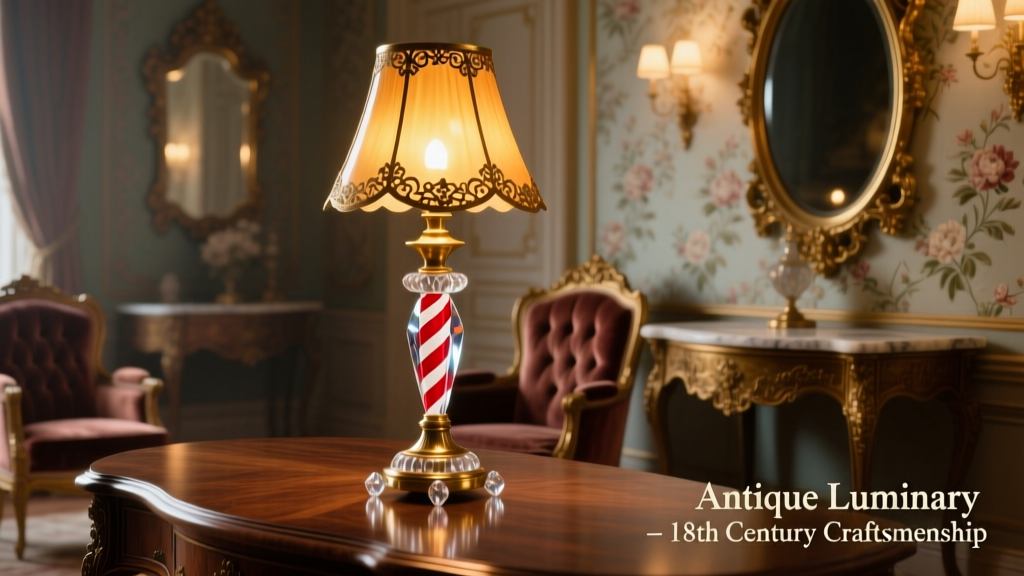
Lamps Oil Candy Stripe Crystal Feet 8 In: Identifying, Valuing, and Restoring a Rare Victorian-Era Table Lamp Base
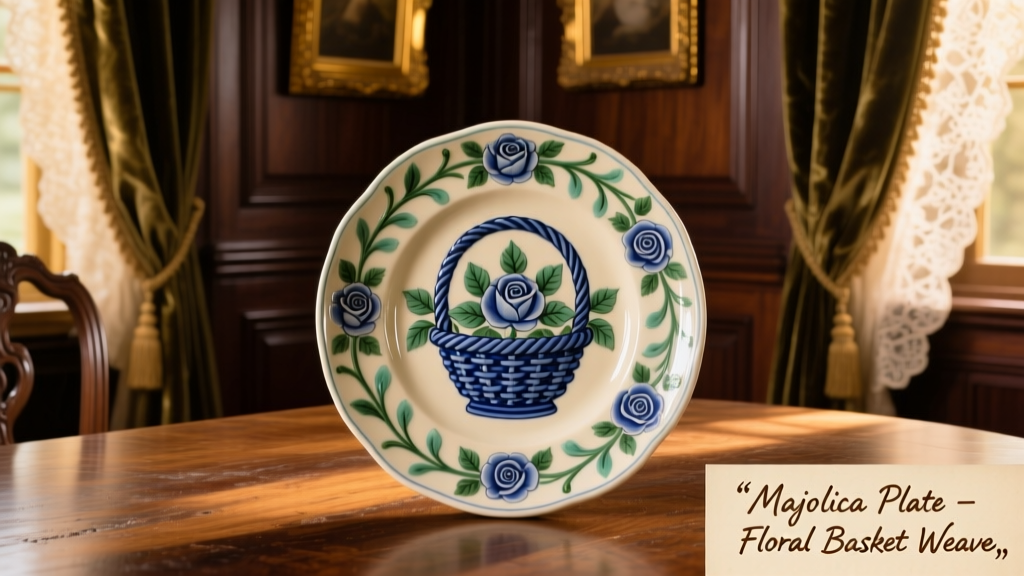
Majolica Plate: Floral Basket Weave Design, 8¼ Inches — History, Identification & Conservation
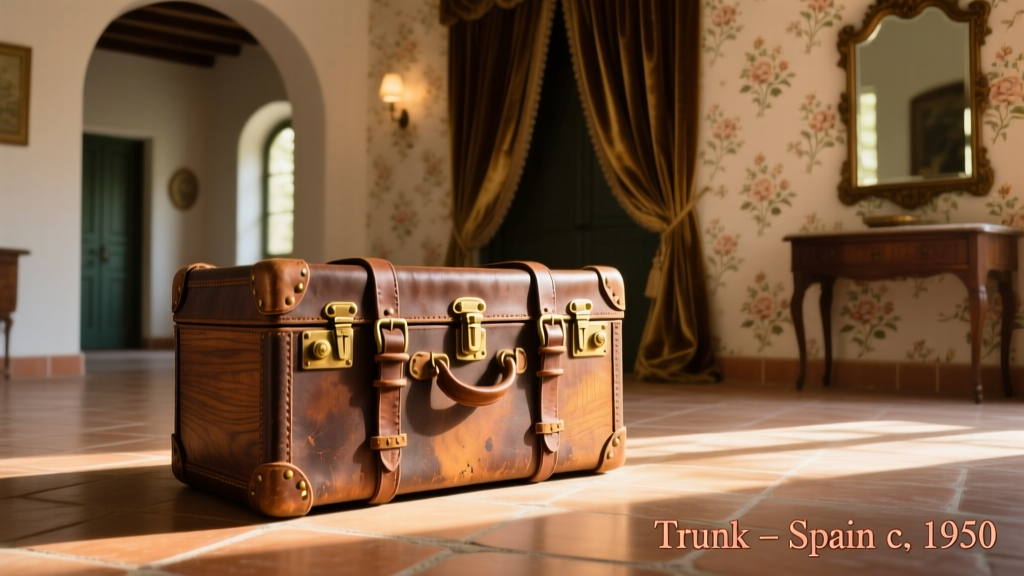
Trunks Tacked Spanish C. 1950 — A Detailed Examination of the 17 × 9 Inch Vintage Leather-Covered Travel Trunk
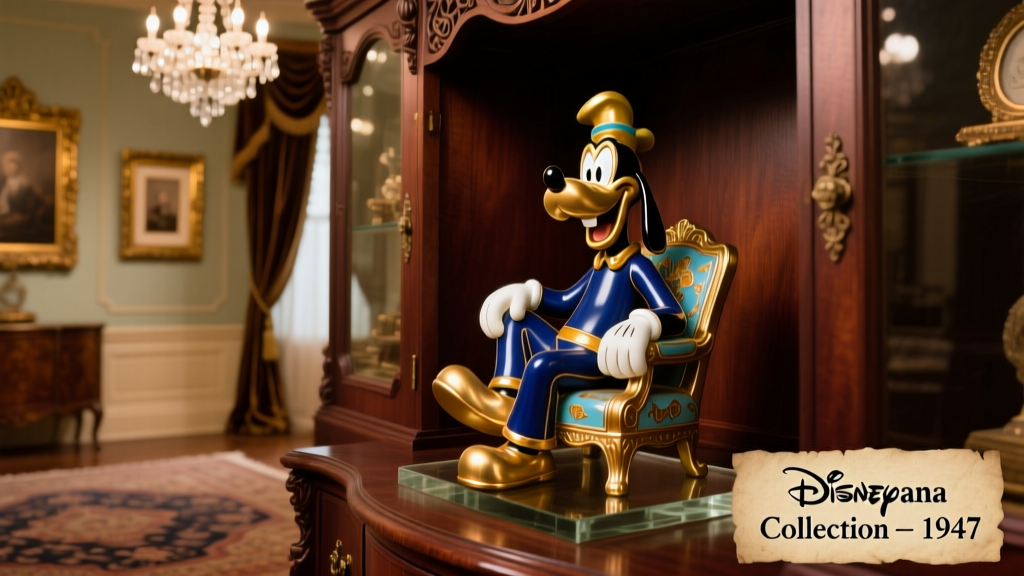
Disneyana Pin: Goofy Figural Brass Enameled — Identification, Provenance, and Restoration Guidance for Collectors
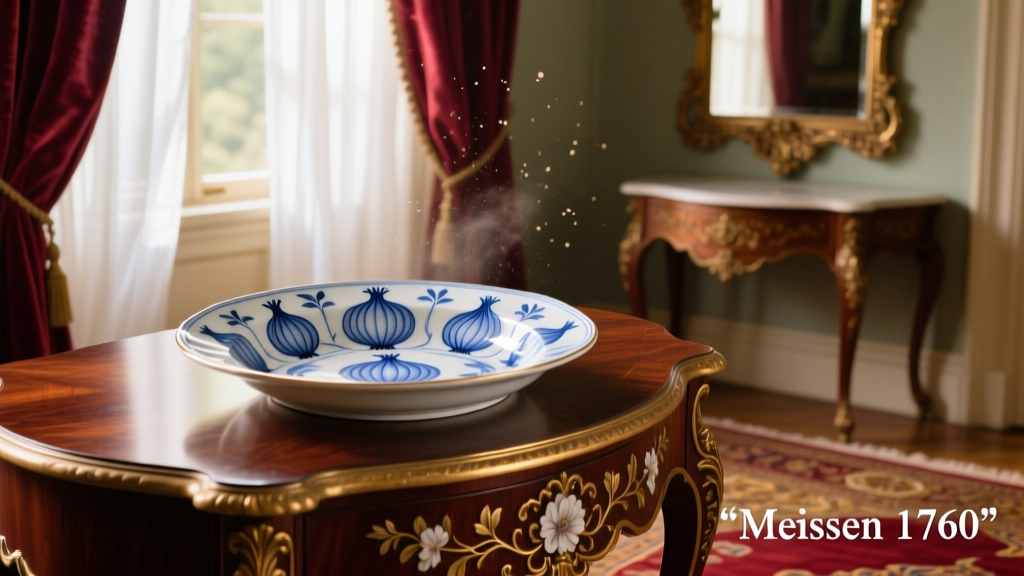
Onion Pattern Soup Dish in Flow Blue: Authentic Meissen Porcelain Analysis & Restoration Insights

The Burham Safety Razor Advertising Tin: A Collector’s Guide to Design, Provenance, and Restoration
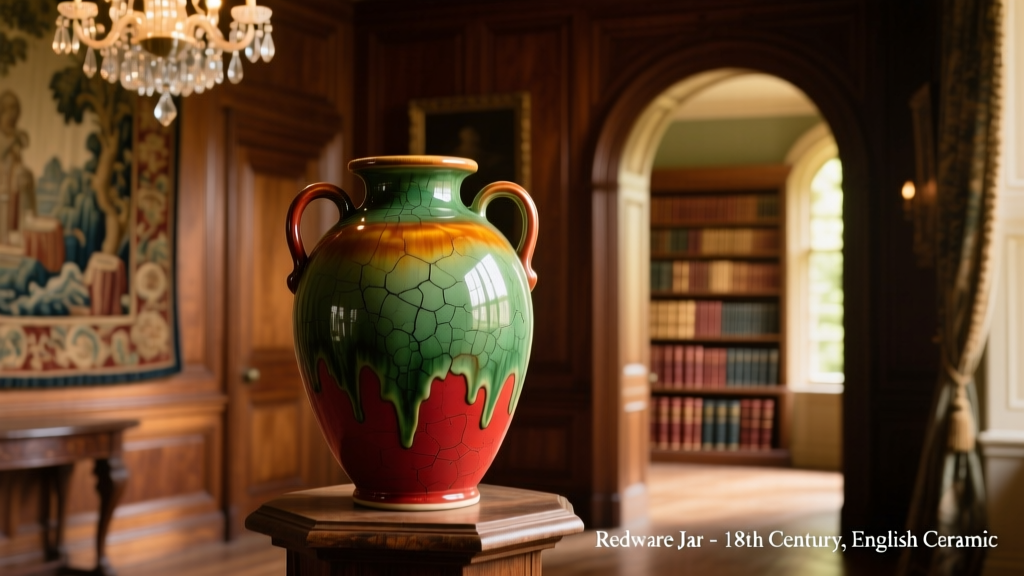
Redware Jar with Greenish-Amber Glaze: Identifying, Dating, and Preserving an Egg-Form Vessel with Shoulder Handles (10 Inches)
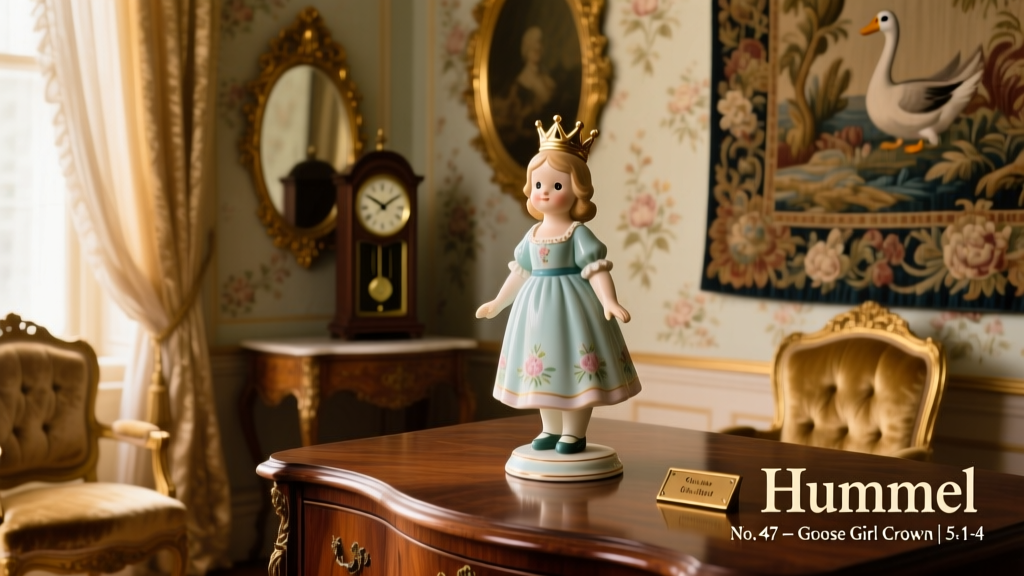
Hummel Figurine No. 47 0 'Goose Girl with Crown' (5¼") — History, Identification, Value, and Conservation
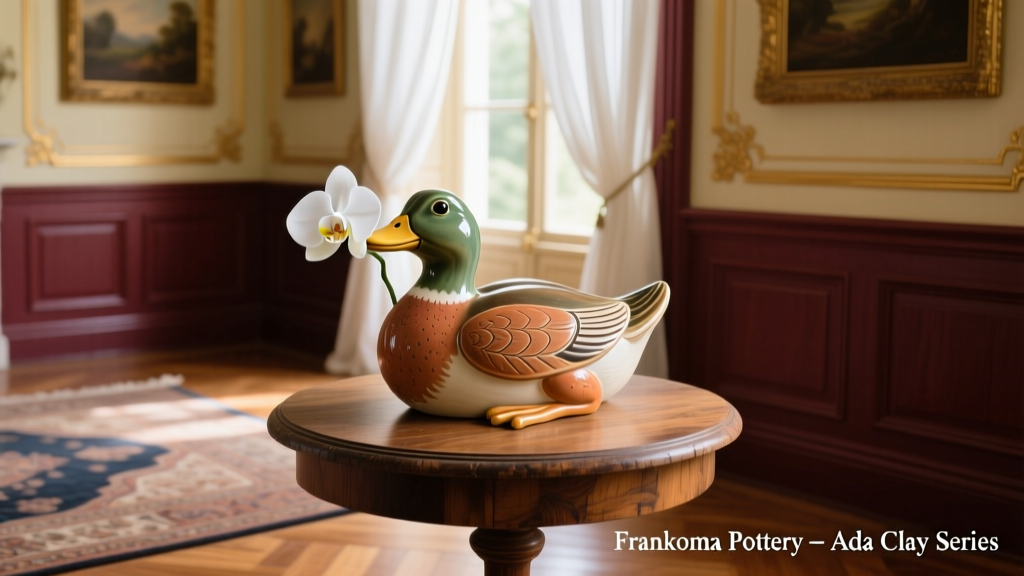
Frankoma Pottery Flower Frog Duck in Ada Clay: History, Identification, and Collectibility