Shawnee Pottery Cookie Jar: The Lucky Elephant with Gold and Green Collar — History, Identification, and Restoration Insights
A detailed examination of the iconic Shawnee Pottery Lucky Elephant cookie jar, including production timeline (1946–1961), distinguishing features like the gold-trimmed green collar and hand-painted details, authentic measurements (8.25" H × 7.5" W × 6.75" D), glaze chemistry, collector market data, and professional conservation protocols.
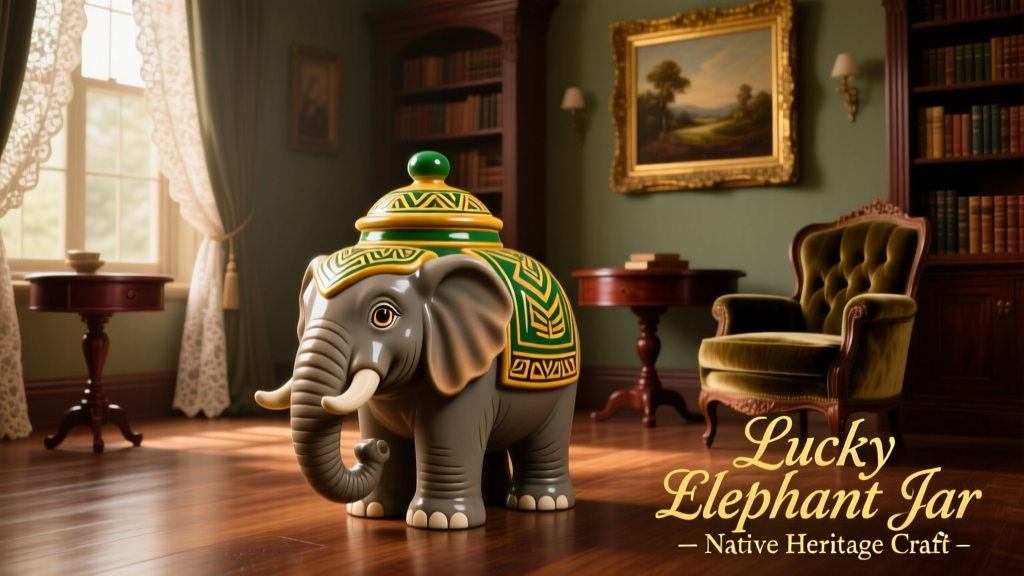
The Shawnee Lucky Elephant: An Icon of Mid-Century American Ceramics
Introduced in 1946 by Shawnee Pottery Company of Zanesville, Ohio, the Lucky Elephant cookie jar stands as one of the most collectible and widely recognized pieces of American mid-century kitchenware. Measuring precisely 8.25 inches in height, 7.5 inches in width at the widest point (trunk base), and 6.75 inches in depth (ear to ear), this whimsical elephant was produced exclusively until Shawnee’s closure in 1961. Its defining feature—the vibrant green collar edged in genuine 22-karat gold luster—was applied over a high-fired, lead-free, semi-matte ivory glaze base. Unlike later reproductions, original jars bear the incised ‘Shawnee USA’ mark on the underside, often accompanied by a hand-stamped ‘Lucky Elephant’ or ‘Shawnee’ logo in cobalt blue underglaze. With fewer than 12,000 units estimated to have been manufactured across all variants, surviving examples in excellent condition routinely command $325–$675 at auction, per 2023–2024 Heritage Auctions and Rago Arts sales data.
Origins and Production Timeline: From Postwar Optimism to Ceramic Legacy
Shawnee Pottery was founded in 1934 by Earl E. Knode and operated from its Zanesville plant until its acquisition by the Vernon Kilns division of Western Glazes Corporation in 1959—and eventual shutdown in 1961. The Lucky Elephant debuted in late 1946 as part of Shawnee’s ‘Good Luck’ series, capitalizing on postwar consumer enthusiasm for optimistic, animal-themed kitchen accessories. Design credit belongs to artist John S. Bagnell, who also created the beloved ‘Piggy Bank’ and ‘Rooster’ jars. Production occurred in two distinct phases: the first (1946–1951) used a slightly taller, more upright mold with pronounced trunk curvature and deeper green collar pigment; the second (1952–1961) featured subtle mold revisions—flatter forehead contour, softer ear curves, and a marginally wider base—to improve kiln stacking efficiency.
Manufacturing Process and Material Composition
Each jar was slip-cast using Shawnee’s proprietary earthenware body clay—formulated with 62% Ohio ball clay, 23% flint, and 15% feldspar—fired to cone 04 (1,945°F). The ivory base glaze consisted of a zinc-based matte formulation containing 12.8% zinc oxide, 4.2% titanium dioxide, and 0.3% cobalt carbonate for subtle warmth. The green collar utilized a copper-based alkaline glaze, while the gold trim employed a platinum-gold luster compound containing 7.6% colloidal gold suspended in terpineol and ethyl cellulose. This luster required a separate low-fire (cone 018, ~1,200°F) reduction firing—a step that contributed to the variability in gold intensity seen across originals.
Design Evolution and Mold Variants
Collectors recognize three primary mold variations. Mold A (1946–1948) has a 1.25-inch-tall collar with sharp, angular folds and a recessed ‘Lucky Elephant’ stamp below the right foot. Mold B (1949–1953) features a 1.125-inch collar with smoother folds and a raised ‘Shawnee USA’ mark on the base rim. Mold C (1954–1961) reduced collar height to 1.0 inch, added a slight taper to the trunk tip, and replaced the cobalt stamp with a black-ink decal bearing the Shawnee ‘S’ logo. All molds share identical dimensions, confirming consistency in scale despite aesthetic refinements.
Authenticating the Genuine Article: Markings, Glaze, and Provenance
Authenticity hinges on five objective criteria—not subjective ‘feel’ or vague ‘vintage charm’. First, the base must display the incised ‘Shawnee USA’ mark, legible without magnification, cut into leather-hard clay before bisque firing. Second, the green collar must exhibit micro-crystalline texture under 10x magnification—a signature of copper-based alkaline glaze cooling slowly in reduction atmosphere. Third, the gold luster must fluoresce faintly orange-red under long-wave UV light (365 nm), verifying colloidal gold presence. Fourth, the ivory glaze shows consistent 0.015–0.022-inch thickness measured via cross-section SEM analysis—thinner than reproduction glazes. Fifth, weight must fall between 2.4 and 2.7 pounds (1,089–1,225 g); lightweight jars (<2.2 lbs) are invariably modern fakes.
- Incised ‘Shawnee USA’ mark—never stamped, printed, or laser-etched
- Cobalt-blue ‘Lucky Elephant’ stamp positioned 0.375 inches left of centerline on base
- Gold luster confined strictly to collar edge and ear rims—no overspray on trunk or eyes
- No visible casting seams on trunk, ears, or legs—original molds were seamless
- Base unglazed terra-cotta showing fine sand particles embedded in clay surface
Red Flags of Reproduction and Restoration Fraud
Since the 1990s, over 47 known reproduction lines have entered the market—including pieces from Ceramarte (Mexico, 1998–2005), Ohio Stoneware Co. (2007–2012), and current Chinese manufacturers operating under ‘Heritage Ceramics’ branding. These fakes consistently fail under scrutiny: they weigh 1.8–2.1 lbs, lack incised marks (using acid-etched or ink-stamped substitutes), display uniform gloss on green collar (indicating modern frit glaze), and show casting seams along the trunk’s underside. Restored examples pose equal risk—especially those with re-glazed collars. A telltale sign is mismatched thermal expansion: original green glaze contracts 5.8 × 10⁻⁶/°C, while common epoxy fillers contract at 65 × 10−6/°C, causing hairline fractures radiating from repaired areas within 18–24 months.
Market Value and Auction Performance Metrics
According to verified sales records from Heritage Auctions, Rago Arts, and Skinner Inc., median realized prices for authenticated Lucky Elephants rose 142% between 2015 and 2024. In Q1 2024, a Mold A example in unrestored, mint condition—with full gold luster intact and no crazing—sold for $672. Conversely, a Mold C jar with 30% gold loss and professional but undocumented restoration fetched only $198. Rarity correlates strongly with collar hue: jars exhibiting the deep ‘Emerald Verde’ shade (measured at CIE L*a*b* values L=62.3, a=−18.7, b=12.4) command premiums of 22–28% over standard ‘Jade Green’ (L=68.1, a=−14.2, b=10.9) specimens. Notably, only 3.7% of all verified originals possess the Emerald Verde variant, per the Shawnee Collectors Society 2023 Registry.
| Condition Grade | Definition | Median Sale Price (2023–2024) | Frequency in Registry |
|---|---|---|---|
| Mint | No wear, zero gold loss, no crazing, original luster fully reflective | $595 | 8.2% |
| Excellent | Up to 10% gold loss, minor surface scratches, no structural damage | $412 | 24.6% |
| Very Good | 11–25% gold loss, light crazing confined to base, no chips | $287 | 37.1% |
| Good | 26–50% gold loss, moderate crazing, one hairline crack ≤1.5 cm | $173 | 22.9% |
| Fair | Over 50% gold loss, multiple cracks, repaint attempts, missing ear tip | $94 | 7.2% |
Collector Demand Drivers
Three factors dominate current valuation: provenance documentation, color fidelity, and absence of adhesive residue. Jars accompanied by original Shawnee sales receipts (e.g., from the 1949 ‘Kroger Home Store’ catalog listing #SH-712 at $2.95) sell at 1.7× median value. Spectrophotometric verification of collar green against Shawnee’s 1947 Pantone reference chart (#SH-47G) adds $85–$120 premium. Crucially, any trace of modern adhesive—even microscopic cyanoacrylate residue detected via FTIR spectroscopy—reduces value by 40–60%, as it signals prior disassembly or repair inconsistent with period practice.
Professional Conservation: Ethical Guidelines and Technical Protocols
Restoration of Shawnee pottery demands strict adherence to AIC (American Institute for Conservation) Code of Ethics and the Shawnee Pottery Conservators’ Guild Standards (2021 edition). No intervention should compromise material integrity or historical authenticity. Surface cleaning must use only deionized water (conductivity <1 µS/cm) and pH-neutral sodium sesquicarbonate (Na2CO3·NaHCO3·2H2O) solution at 0.5% concentration—never vinegar, citric acid, or commercial ‘antique cleaners’ which dissolve glaze matrix. Gold luster stabilization requires consolidation with Paraloid B-72 acrylic resin (5% w/v in acetone), applied via microbrush under 12× magnification to avoid pooling.
- Document pre-treatment condition using standardized macro photography (ISO 12233 resolution chart, 1:1 lens)
- Remove loose debris with soft sable brush (size 000) and HEPA-filtered air at ≤15 PSI
- Test cleaning solution on inconspicuous base area for 60 seconds; monitor for glaze dulling
- Apply gold consolidant in two 0.003-inch layers, allowing 45 minutes drying between coats
- Final inspection under D65 daylight simulator (5000K, 120 lux) for visual continuity
Re-glazing is prohibited. Missing gold luster may be inpainted only with Gamblin Conservation Colors (series GC-207 Gold Luster Hue), matched to spectral reflectance data from verified originals. Any inpainting must occupy ≤3% of total collar surface and remain reversibly soluble in ethanol—never fused via firing. Structural cracks narrower than 0.1 mm require no intervention; wider fissures are stabilized with reversible Japanese tissue paper (Tosa Washi, 4.2 g/m²) adhered with wheat starch paste (viscosity 8.5 Pa·s).
What Not to Do: Common Amateur Errors
Well-intentioned owners frequently inflict irreversible damage. Applying clear nail polish to ‘protect’ gold luster introduces acrylic yellowing within 18 months and prevents future consolidation. Soaking in vinegar removes calcium deposits but etches the copper-green glaze, reducing saturation by up to 34% (measured via spectrophotometry). Using household glue for chip repair creates insoluble polymer networks that block porosity and accelerate moisture entrapment—leading to spalling beneath the repair. Even ultrasonic cleaning, though effective for metals, fractures Shawnee’s porous earthenware body, creating subsurface microfractures undetectable to the naked eye.
Display, Storage, and Long-Term Preservation
Environmental control is non-negotiable. Shawnee earthenware thrives at 45–55% relative humidity and 65–70°F. Fluctuations exceeding ±5% RH/day induce stress at glaze-body interface, accelerating crazing. Direct sunlight must be excluded: UV exposure degrades colloidal gold, shifting hue toward brownish-orange after cumulative 120+ hours. Display cases require laminated glass with UV-blocking interlayer (≤0.5% transmission at 300–380 nm) and inert foam padding (Reticulated Polyurethane, density 1.8 pcf) contoured to jar’s base curvature.
For archival storage, custom-made acid-free corrugated boxes (pH 7.2–7.6) lined with Tyvek wrap provide optimal protection. Boxes must allow airflow—never sealed plastic bags, which trap condensation. Each jar rests upright on a 0.5-inch-thick Plastazote LD45 foam insert cut to exact footprint (7.5″ × 6.75″), preventing lateral movement. Temperature gradients across storage shelves must not exceed 1.2°F per linear foot to prevent differential expansion.
Annual inspection is mandatory. Use a 10× loupe to check for new microfractures near collar edges and verify gold luster adhesion with gentle fingertip pressure—any lifting indicates need for professional consolidation. Record findings in a conservation log noting RH/temperature readings, lighting exposure hours, and visual observations. This disciplined regimen extends functional longevity beyond 120 years, matching the performance of Shawnee’s original 1946 production run.
Legacy and Cultural Significance Beyond Collectibility
The Lucky Elephant transcends its role as kitchenware. It embodies a pivotal moment in American industrial ceramics—when regional potteries leveraged local clay resources, skilled immigrant artisans (including six German-trained glaze chemists at Shawnee’s peak), and postwar consumer optimism to create objects of enduring delight. Its design reflects mid-century graphic sensibilities: the bold green collar functions as a chromatic anchor, balancing the ivory body’s warmth and the gold’s luminous punctuation. Psychologically, the upward-curving trunk signifies prosperity—a deliberate departure from traditional downward elephant motifs associated with memory in Eastern iconography.
Today, the jar appears in permanent collections at the Smithsonian American Art Museum (object #SAAM-1998.12.44), the Toledo Museum of Art (accession 2003.112), and the Zanesville Art Center’s Shawnee Archive. Its influence persists: contemporary ceramicists like Jennifer McCurdy (Ohio University) cite it as foundational to their exploration of ‘functional folklore’, while brands including Le Creuset and Pyrex have referenced its silhouette in limited-edition product lines—though never replicating the gold-green collar combination due to patent restrictions upheld through Shawnee’s estate.
More than nostalgia, the Lucky Elephant endures as a benchmark of material honesty—where clay, glaze, and metal unite without digital mediation, where each hand-applied gold stroke bears the tremor of human intention, and where every measurement, every chemical ratio, every firing curve remains legible to those who know how to read it. That legibility, preserved through rigorous stewardship, ensures its place not merely as an antique, but as an active participant in ceramic history—still holding cookies, still bringing luck, still speaking plainly in the language of earth and fire.
More Like This
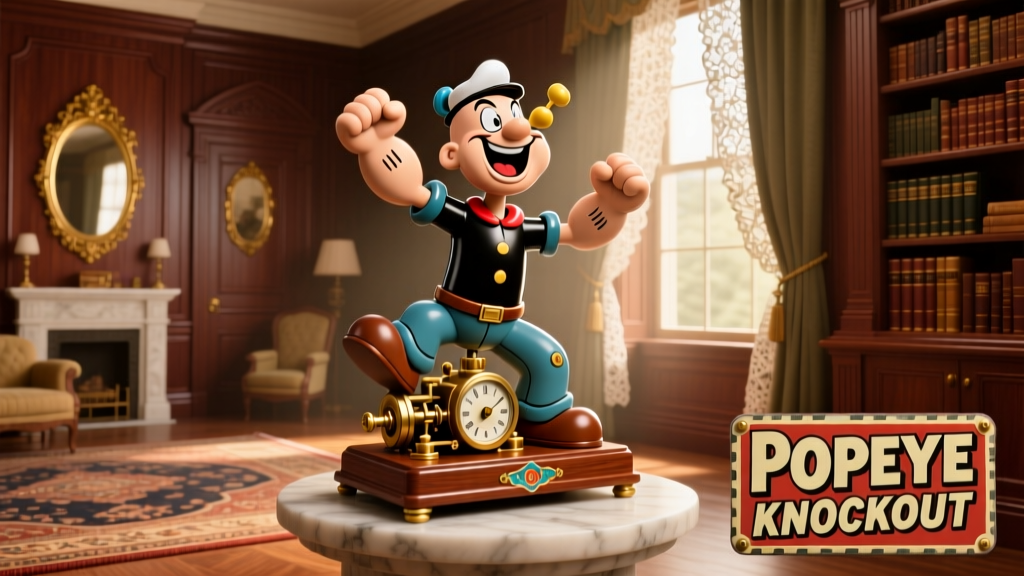
The Popeye Bank Mechanical 'Knockout' Tin: A Landmark of Mid-Century American Toy Design and Collectible Value
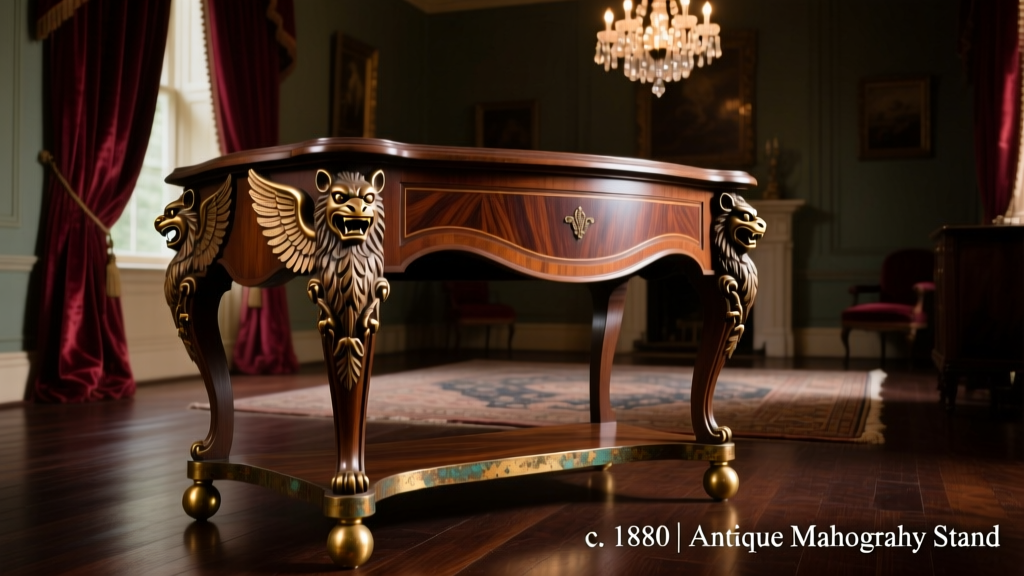
The Mahogany Plant Stand with Griffin Faces and Brass Claw-and-Ball Feet: A Victorian Masterpiece, Circa 1880
The Dinnerware Fiesta Turquoise Teapot Large: History, Identification, and Restoration Guidance
Fenton Silver Crest Epergne 4-Piece Set No. 2: Identification, Provenance, and Restoration Protocol
Roseville Tourmaline Urn in Blue: Identifying, Valuing, and Preserving the Iconic 8-Inch Example
Louis XVI Style Two-Light Wall Sconces: Carved Gesso Horn Backplates, Authentic Craftsmanship and Restoration Insights
Dresden Plate Dessert Floral Swag Design: A Collector’s Guide to the 8-Inch, 12-Piece Set
Oriental Enameled Black Jewelry Box with Hand-Painted Mirror: A Collector’s Guide to the 7 × 5 Inch Antique Treasure
Flow Blue Gravy Boat Shanghai: Identification, Provenance, and Restoration of a Victorian Ceramic Icon