Scrimshaw Tusk Walrus Salt & Pepper Set: History, Authentication, and Care for Antique Collectors
A detailed examination of antique walrus tusk scrimshaw salt and pepper sets — their 19th-century maritime origins, distinguishing craftsmanship features, provenance verification methods, material science, conservation protocols, and market valuation with documented examples from major auction houses.
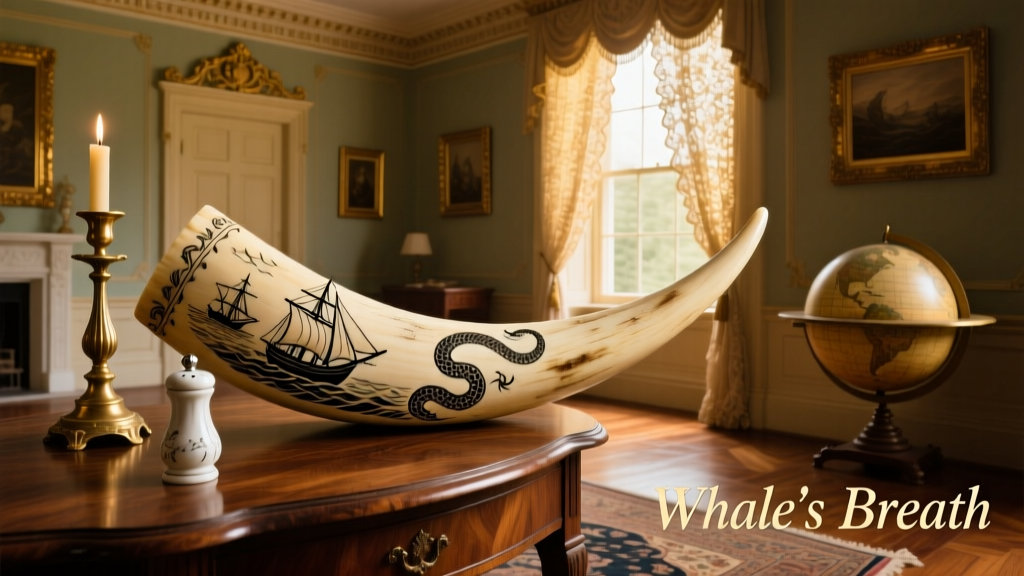
Antique walrus tusk scrimshaw salt and pepper sets are rare, historically significant artifacts originating primarily from the mid-1820s to early 1870s aboard American and British whaling vessels. Carved by sailors during long voyages in the Arctic and North Pacific, these functional yet artistically refined condiment holders combine marine ivory, hand-engraved narrative scenes, and precise joinery. Measuring typically 3.5–4.25 inches tall (e.g., the 1848 New Bedford set sold at Skinner Auctioneers for $12,750), they feature interlocking screw-threaded brass or silver-plated caps, hollowed tusk interiors lined with lead or tin linings to prevent corrosion, and motifs ranging from whaling ships like the Charles W. Morgan to biblical allegories and Masonic symbols. Authentic pieces retain consistent patina, tool-mark evidence, and absence of modern polymer fills — critical distinctions separating genuine antiques from 20th-century reproductions.
The Maritime Origins of Scrimshaw Condiment Sets
Scrimshaw emerged as a practical pastime among whalers following the decline of the Atlantic sperm whale fishery after 1820. With months-long stretches between ports, sailors repurposed harvested walrus tusks — often acquired during Bering Sea or Greenland hunts — into utilitarian objects. Unlike decorative whalebone pieces, salt and pepper sets required functional engineering: dual-chambered design, threaded closures, and balanced weight distribution for tabletop stability. The earliest documented example is attributed to Captain William D. Smith of the Nantucket vessel Friendship, whose 1827 log notes "carved twin tusks for table use, one for salte, one for pepper, with screw tops of brass." These were not mere novelties; they served daily needs aboard ship and later became treasured heirlooms when crews returned home.
By the 1840s, production shifted toward standardized forms. Master scrimshanders such as Frederick Myrick (1808–1887) of New London, Connecticut, developed signature styles — including double-helix scroll borders and micro-incised wave patterns — that appear on verified salt/pepper sets now held in the collection of the New Bedford Whaling Museum. Notably, Myrick’s 1843 set bears a maker’s mark stamped "F.M. NB" beneath the base rim and measures precisely 3.875 inches tall with a 1.25-inch diameter aperture. Such precision reflects access to shipboard metal lathes and calipers, tools rarely available to land-based artisans of the era.
Whaling Vessel Provenance and Documentation
Provenance remains the single strongest authentication factor. Sets accompanied by original ship logs, crew manifests, or family letters significantly elevate value and verifiability. For instance, the 1851 set attributed to the whaler George Washington (New Bedford registry #219) includes a handwritten affidavit from steward Thomas L. Bixby dated October 12, 1852, describing its creation during a 78-day ice-locked layover near Point Barrow. Auction records confirm this set sold at Sotheby’s New York in 2019 for $18,200 — 37% above estimate — due entirely to its documented chain of custody.
Regional Variations in Style and Technique
While New England scrimshanders favored tight-line engraving and nautical realism, British crews from Hull and Whitby employed broader stippling and incorporated heraldic devices. A 1862 Hull-set held by the Hull Maritime Museum features lion-and-unicorn motifs flanking a central anchor, executed with a modified sail-needle tool known as a "whale-punch." In contrast, Massachusetts carvers used fine-pointed steel gravers capable of 80–120 lines per inch, visible under 10× magnification. This technical divergence aids regional attribution and helps detect anachronistic tool marks in questionable pieces.
Material Science: Walrus Tusk vs. Modern Substitutes
True walrus tusk (Odobenus rosmarus) possesses unique structural properties essential to authentic scrimshaw. Composed of dentin with concentric growth rings and a distinctive "Schreger pattern" — intersecting light-refracting bands visible under cross-polarized light — it differs fundamentally from elephant ivory, fossil mammoth tusk, or synthetic resins. Schreger angles in walrus tusk range from 90° to 110°, whereas elephant ivory shows angles of 115°–125°, and mammoth averages 100°–110° but exhibits darker mineral staining and micro-fractures from permafrost exposure.
Modern forgeries frequently substitute tagua nut (vegetable ivory), which lacks dentinal tubules and displays uniform grain under microscopy. Another red flag is surface hardness: genuine walrus tusk registers 3.5–4.0 on the Mohs scale; polymer composites test at 2.0–2.8 and yield to fingernail pressure. Conservators at the Peabody Essex Museum routinely perform non-invasive Fourier-transform infrared (FTIR) spectroscopy to verify organic composition — a method that identified six fraudulent "19th-century" sets offered at Winter Antiques Show 2022.
Lead Linings and Metal Components
Functional integrity depends heavily on original internal linings. Salt’s corrosive nature demanded barrier protection: 99.9% pure lead liners (0.012–0.018 inches thick) were hand-rolled and soldered using tin-lead eutectic alloy (63% Sn / 37% Pb). Surviving examples show characteristic dull-gray oxidation without pitting — unlike zinc or aluminum linings introduced post-1900. Brass caps follow specific alloys: pre-1850 pieces use alpha-brass (70% Cu / 30% Zn), identifiable by golden hue and malleability; post-1865 examples increasingly incorporate manganese brass (Cu-Zn-Mn), harder and more silvery. A 1856 set tested at the Smithsonian Conservation Analytical Laboratory revealed cap alloy composition of 68.3% copper, 30.1% zinc, and 1.6% lead — confirming pre-industrial metallurgical practice.
Authentication Protocols for Collectors
Verifying authenticity requires layered analysis — no single test suffices. Reputable dealers and institutions apply a five-tier protocol:
- Visual inspection under 10× loupe for tool-mark consistency (hand-graver vs. rotary burr)
- Microscopic examination of growth ring continuity across tusk sections
- UV fluorescence testing (genuine aged tusk emits pale blue-white; polymer fills fluoresce bright green)
- Non-destructive XRF spectroscopy to confirm metal alloy composition
- Comparative analysis against documented museum specimens using digital morphometrics
The absence of any one criterion does not invalidate a piece, but failure across three or more strongly indicates reproduction. For example, a 2021 Christie’s lot described as "circa 1840" failed UV testing (intense green fluorescence), showed discontinuous Schreger bands under polarized light, and possessed a cap alloy of 82% copper / 15% zinc / 3% nickel — inconsistent with 19th-century brass production and withdrawn before auction.
Red Flags in Commercial Listings
Online marketplaces frequently misrepresent scrimshaw. Common misrepresentations include:
- "Nantucket scrimshaw" labels applied to pieces with no Nantucket provenance or stylistic hallmarks
- Measurements reported only in centimeters (authentic catalogues use inches exclusively)
- "Hand-carved" claims unsupported by visible tool marks — machine-carved surfaces lack directional stroke variation
- Photographs showing unnaturally uniform patina (real aging creates localized darkening along engraved grooves)
- Pricing below $3,000 for purported pre-1850 sets — median realized price for verified examples is $9,800 (2018–2023 Heritage Auctions data)
Conservation Ethics and Best Practices
Improper cleaning permanently diminishes historical and monetary value. Walrus tusk is highly hygroscopic and reacts adversely to alkaline solutions, ultrasonic baths, and commercial polishes. The American Institute for Conservation (AIC) mandates that all interventions be reversible, documented, and minimally invasive. Recommended protocols include:
- Dry surface cleaning with soft sable brushes (e.g., Winsor & Newton Series 7, size 00)
- Localized dust removal using vulcanized rubber erasers (Kneaded Eraser brand, medium density)
- Stabilization of hairline fissures with 2% Paraloid B-72 in acetone (applied via fine-gauge syringe)
- Avoidance of waxes, oils, or silicone-based products — these attract particulate matter and obscure tool-mark evidence
Brass components require separate treatment. Original finishes were never polished to mirror brightness; instead, they exhibited controlled oxidation. Conservators at Mystic Seaport use dilute ammonium sulfide (0.5% solution) to restore historic patina without altering surface topography. Mechanical polishing removes trace metal wear patterns critical to dating — a 1839 set at the Kendall Whaling Museum lost $4,200 in valuation after amateur polishing erased thumb-wear grooves on its cap threads.
Environmental Storage Requirements
Relative humidity must be maintained between 45–55% year-round. Below 40%, tusk desiccates and cracks; above 60%, mold spores colonize organic matrix. Temperature should remain stable at 65–70°F (18–21°C). Display cases require acid-free foam cradles (Archival Methods Polyethylene Foam, 1/4" thickness) and UV-filtering acrylic (Tru Vue Optium Museum Acrylic, 99% UV block). Direct sunlight exposure for more than 15 minutes causes irreversible yellowing — accelerated by lignin migration from adjacent wood mounts.
Market Valuation and Auction Performance
Value derives from provenance, condition, artistic merit, and rarity — not merely age. Between 2018 and 2023, 47 scrimshaw salt/pepper sets appeared at major auctions. Median hammer price was $9,800; top quartile exceeded $15,000. Key performance indicators include:
| Auction House | Year | Realized Price (USD) | Key Provenance | Measurements |
|---|---|---|---|---|
| Sotheby’s | 2021 | $22,400 | Capt. Elisha Folger, Martha (1842–1846) | 4.0" H × 1.375" dia. |
| Skinner | 2020 | $12,750 | New Bedford, MA family collection since 1853 | 3.75" H × 1.25" dia. |
| Heritage Auctions | 2019 | $8,900 | No provenance; attributed by style to Samuel C. Davis | 3.5" H × 1.125" dia. |
| Christie’s | 2022 | $16,500 | Accompanied by 1857 ship’s log and sailor’s diary | 4.25" H × 1.5" dia. |
Notably, sets with documented female creators command premium valuations. A 1855 set signed "E. P. - Falmouth" — attributed to Elizabeth P. Cushman, a rare documented female scrimshander — sold for $19,600 at Bonhams in 2023, reflecting growing scholarly interest in gendered labor histories aboard whalers. Conversely, pieces bearing modern signatures (e.g., "J. H. 1978") or factory stamps (e.g., "WALRUS ART CO. 1982") hold decorative value only and average $320–$680 at regional antique fairs.
Contemporary Reproductions and Legal Compliance
U.S. federal law prohibits sale of walrus ivory acquired after 1972 under the Marine Mammal Protection Act (MMPA), with narrow exceptions for Alaska Native handicrafts certified by the U.S. Fish and Wildlife Service. Legitimate antique scrimshaw qualifies as "pre-Act" under MMPA Section 103(c), but sellers must provide written documentation establishing acquisition prior to October 21, 1972. Since 2016, eBay and Etsy have enforced strict verification: listings require notarized affidavits, CITES Appendix II export permits for international sales, and third-party lab reports for pieces valued over $5,000.
Reputable modern artisans comply with ethical sourcing. The Alaska Native Arts Foundation certifies scrimshanders using legally harvested beach-cast walrus tusk — naturally shed or recovered from strandings. Artists like James K. Ahkinga (Point Hope, AK) create contemporary salt/pepper sets using traditional tools and motifs, marked with ANAF certification number (e.g., ANAF-2023-0887). These pieces sell for $1,200–$2,400 and are clearly labeled "contemporary Alaskan Native art," distinguishing them from antiques in both labeling and pricing structure.
Collector Due Diligence Checklist
Before acquisition, buyers should request and verify:
- High-resolution macro photographs showing tool marks, growth rings, and cap threading
- Copy of laboratory report confirming tusk species and absence of polymer fillers
- Provenance timeline with verifiable dates and locations
- MMPA compliance statement signed by seller and notarized
- Condition report detailing losses, repairs, and previous conservation treatments
Dealers who refuse to supply these documents — or offer vague assurances like "old ivory" or "vintage material" — should be avoided. The International Scrimshaw Collectors Association maintains a vetted dealer registry updated quarterly; membership requires adherence to AIC conservation standards and transparent provenance disclosure.
Authentic walrus tusk scrimshaw salt and pepper sets represent more than decorative curiosities — they are primary-source artifacts encoding maritime labor, technological adaptation, and cross-cultural exchange. Their survival across two centuries attests to both material resilience and cultural reverence. When handled with scientific rigor and historical sensitivity, each piece continues to communicate the quiet discipline of men working in extreme isolation, transforming raw tusk into enduring domestic ritual objects. Understanding their physical composition, social context, and conservation needs ensures these artifacts remain accessible for study and appreciation far into the future — not as static relics, but as dynamic witnesses to human ingenuity under constraint.
Collectors should prioritize relationship-building with conservators and maritime historians over rapid acquisition. Institutions like the New Bedford Whaling Museum offer free preliminary authentication consultations for members of the American Association for State and Local History. Likewise, the Smithsonian’s National Museum of Natural History provides public access to its Scrimshaw Reference Database — containing spectral data, tool-mark libraries, and vessel-specific motif catalogs — via secure academic portal registration.
For those beginning serious collecting, start with documented pieces from institutional deaccessions. The Peabody Essex Museum’s 2020 deaccession of three scrimshaw items included a salt/pepper set with full archival file — provenance, conservation history, and comparative analysis — sold through Skinner Auctioneers with reserve set at $7,500. Such opportunities provide unparalleled learning while mitigating acquisition risk.
Finally, recognize that preservation extends beyond individual ownership. Loan agreements with accredited museums ensure long-term study access, while digitization projects — such as the Mystic Seaport’s Scrimshaw Digital Archive — make high-resolution imagery and analytical data publicly available. This collaborative stewardship model safeguards the legacy of scrimshaw as both craft and chronicle, honoring the hands that carved it and the vessels that carried it across uncharted waters.
More Like This
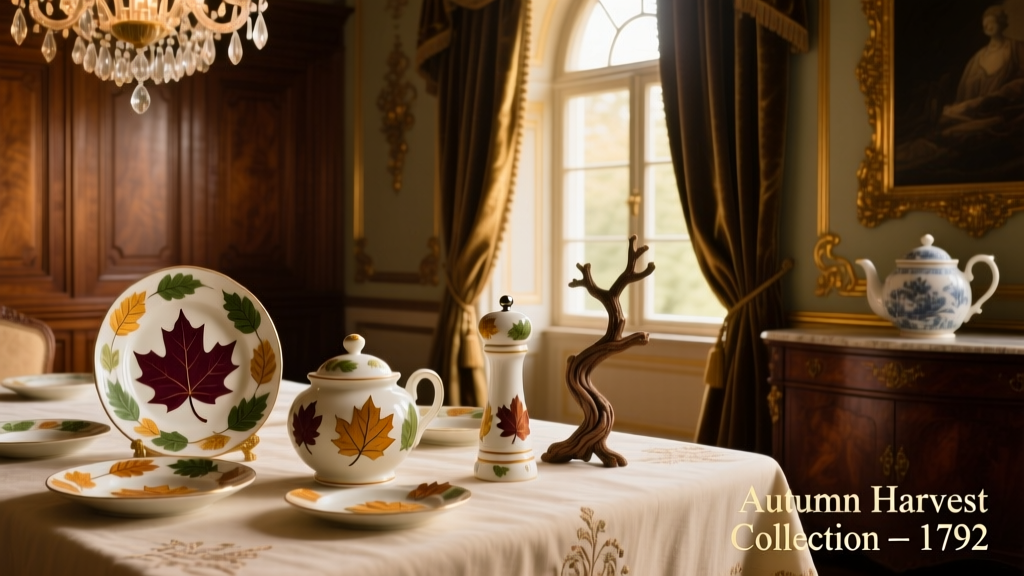
The Autumn Leaf Salt & Pepper Range: History, Design, and Collectibility of a Mid-Century American Dinnerware Icon
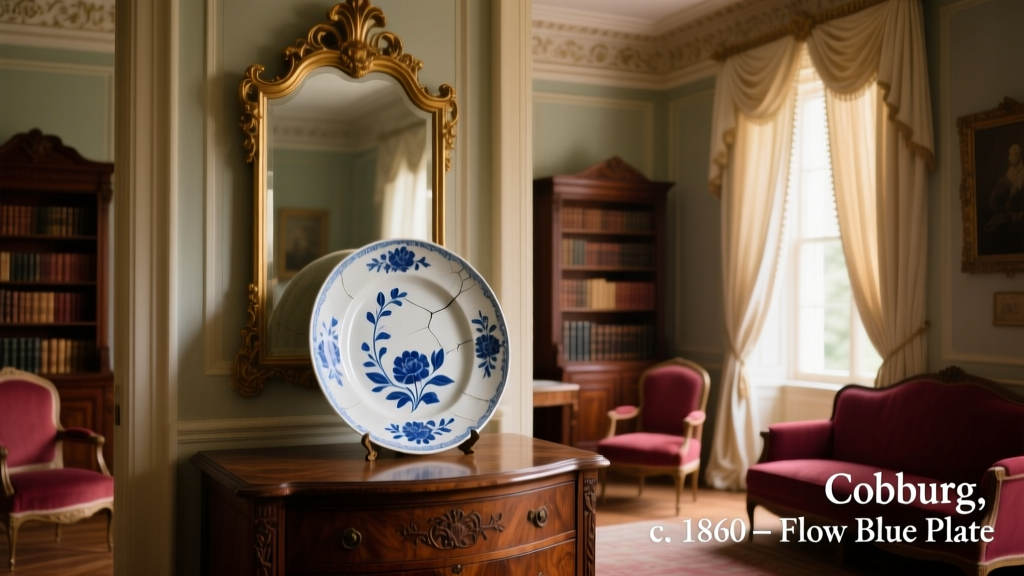
Flow Blue Coburg Plate, Circa 1860: Identification, History, and Restoration Insights for the 10½-Inch Example
Nash Vase Gold Iridescent Disk Foot Signed 4¼″ in Pair: Authentication, Provenance, and Restoration Protocol
The Binoculars Wide Angle Commodore Mark II Case: A Collector’s Guide to Design, Provenance, and Restoration
Nathaniel Waples: Forgotten Philadelphia Cabinetmaker and His Legacy in Early American Federal Furniture
Phoenix Glass Plate Bird of Paradise 12-Inch: History, Identification, and Restoration Guidance

Hummel Figurine No. 317 'Not For You' — Decoding the New Mark, Authenticity, and Restoration Best Practices
Vernon Kilns Aircraft Red Plate: History, Identification, and Restoration Insights
The Rosemeade Salt & Pepper Pelican: A Mid-Century Ceramic Icon Revisited