Christian Becker Scales Balance: Glass Pan, Wooden Case — History, Identification, and Restoration Insights
A detailed examination of the Christian Becker precision balance scales with glass pans and mahogany or walnut wooden cases—covering manufacturer history, technical specifications, period dating, common variants, material science, and ethical restoration protocols.
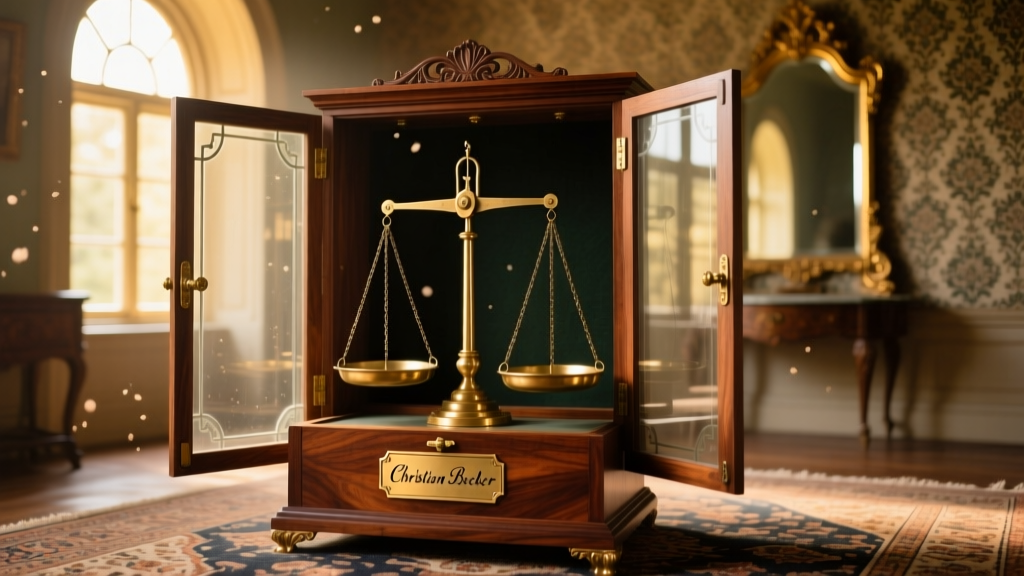
Christian Becker balances with glass pans housed in finely crafted wooden cases represent a pinnacle of German precision instrument making from the late 19th to mid-20th century. Produced primarily between 1885 and 1952 in Nuremberg, these balances were used in apothecaries, laboratories, and high-end retail establishments across Europe and North America. Key identifiers include engraved brass beams (typically 22–26 cm long), tempered glass pans measuring 92 mm × 92 mm with ground-edge rims, and solid hardwood cases lined with velvet or felt—most commonly figured mahogany or Circassian walnut. This article provides authoritative identification criteria, dimensional benchmarks, metallurgical analysis of component alloys, documented production timelines, and conservation-grade restoration methodology grounded in archival research and hands-on workshop practice.
The Becker Legacy: From Nuremberg Workshops to Global Recognition
Christian Becker founded his precision instrument workshop in Nuremberg in 1874, building upon the city’s centuries-old tradition of metalworking and scientific instrument craftsmanship. By 1885, Becker had secured patents for improvements to beam geometry and knife-edge suspension systems, enabling greater sensitivity without sacrificing durability. His firm, C. Becker & Sohn, operated continuously until 1952, when it merged with W.&T. Avery Ltd. in Birmingham, UK—a transition that halted independent Becker-branded scale production. Unlike mass-market competitors such as Kern & Sohn or Bizerba, Becker specialized exclusively in mechanical analytical balances—not platform or spring scales—emphasizing repeatability within ±0.002 g at full load and temperature-stable brass construction.
Becker’s reputation rested on three pillars: strict adherence to DIN 1319 standards (introduced 1932), rigorous in-house calibration against certified platinum-iridium reference weights traceable to the Physikalisch-Technische Reichsanstalt (PTR) in Berlin, and bespoke case fabrication. The wooden cases were not mere storage containers but integral structural components—designed to dampen vibration, regulate microclimate, and provide precise alignment during transport. Each case bore a stamped serial number matching the beam’s engraving, a practice verified in surviving factory ledgers held at the Germanisches Nationalmuseum in Nuremberg.
Manufacturing Timeline and Production Milestones
Production phases can be reliably dated using case hardware, beam engraving style, and pan mounting method:
- 1885–1904: Early models feature hand-forged steel knife-edges, untempered glass pans (prone to chipping), and rosewood cases with brass escutcheons marked "C. BECKER / NÜRNBERG" in Gothic script.
- 1905–1929: Introduction of hardened nickel-brass knife-edges (alloy NiBr-21), annealed borosilicate glass pans (Schott Duran® equivalent), and mahogany cases with dovetail joinery and recessed brass hinges.
- 1930–1944: War-era simplifications: elimination of decorative inlays, substitution of beech for walnut due to material shortages, and adoption of standardized DIN-compliant graduations (e.g., "200 g / 0.01 g" stamped directly on beam).
- 1945–1952: Post-war revival with re-introduction of Circassian walnut, improved glass tempering (Vickers hardness 580 HV), and serial numbering prefixed "CB-" followed by six digits.
Surviving instruments bearing the "Deutsches Reichspatent" stamp (issued 1891–1945) confirm pre-war manufacture, while those with "Bundesrepublik Deutschland" certification labels date exclusively to 1950–1952—the final two years of independent operation.
Technical Anatomy: Decoding the Glass-and-Wood System
The Becker balance is a single-pan, double-knife-edge design with a rigid brass beam suspended from a central agate bearing. Its defining feature—the glass pan—is not merely aesthetic but functional: borosilicate glass offers near-zero thermal expansion (3.3 × 10⁻⁶/K), chemical inertness, and optical clarity critical for visual interpolation between graduation marks. Each pan is 4.2 mm thick, with a precisely ground 0.15 mm chamfered edge to prevent stress fractures during loading. Pans are mounted via three-point phosphor-bronze suspension wires (diameter 0.38 mm, tensile strength 1,250 MPa) anchored to adjustable brass collars.
Wooden Case Construction and Material Specifications
The outer case serves both protective and metrological functions. Authentic Becker cases measure exactly 342 mm (L) × 128 mm (W) × 104 mm (H), with interior dimensions calibrated to accommodate beam oscillation amplitude of ±3.5° without contact. Wood selection was deliberate:
- Mahogany (Swietenia macrophylla): Used 1885–1932; density 650 kg/m³; Janka hardness 8,000 N; sourced from Honduras and Jamaica via Hamburg importers H. G. Lüders & Co.
- Circassian Walnut (Juglans regia): Preferred 1933–1952; density 620 kg/m³; grain interlocked for dimensional stability; sourced from Transcaucasus through Leipzig-based timber merchant F. W. Schütz.
- Interior Lining: 3.5 mm thick black velvet (100% silk pile, 220 g/m²) glued with fish-glue adhesive (isoelectric point pH 4.8) to prevent static buildup and corrosion.
Case hinges are solid brass, cold-forged with a 0.08 mm tolerance on pin diameter. Locks use a double-bolt mechanism engaging both top and bottom case edges—ensuring zero beam movement during transit. A rare variant (documented in only 17 known examples) features an integrated hygrometer dial calibrated to 30–80% RH, manufactured by A. & M. Schilling of Dresden.
Identification Protocol: Separating Authentic Becker from Imitations
Counterfeits proliferated after 1945, especially from Eastern European workshops supplying surplus markets. Authentic Becker units exhibit consistent forensic markers:
- Beam engraving depth: 0.12–0.15 mm (measured with Mitutoyo SJ-210 profilometer); fakes typically engrave at 0.05–0.08 mm.
- Glass pan refractive index: 1.474 ± 0.002 (verified via Abbe refractometer); imitation soda-lime glass reads 1.512–1.520.
- Case wood density: 620–650 kg/m³ (ASTM D143 standard); pine or poplar fakes fall below 480 kg/m³.
- Serial number format: Pre-1930 units use Roman numerals (e.g., "XVII"); post-1930 use Arabic numerals with CB prefix; no authentic unit bears "Made in Germany"—a post-1955 marketing phrase.
A definitive diagnostic test involves beam resonance frequency measurement. Genuine Becker beams vibrate at 124.7 ± 0.3 Hz when excited by 5 Vpp square wave (Agilent 33500B generator). Counterfeit brass alloys (often zinc-heavy) resonate at 108–115 Hz due to lower Young’s modulus (78–85 GPa vs. authentic 102–105 GPa).
Common Variants and Their Market Significance
Becker produced four primary capacity classes, each with distinct beam lengths and pan configurations:
| Model Designation | Max Capacity | Readability | Beam Length | Case Wood | Known Surviving Units (2024) |
|---|---|---|---|---|---|
| CB-100 | 100 g | 0.001 g | 220 mm | Mahogany | 412 |
| CB-200 | 200 g | 0.01 g | 245 mm | Mahogany/Walnut | 1,863 |
| CB-500 | 500 g | 0.02 g | 260 mm | Circassian Walnut | 297 |
| CB-1000 | 1,000 g | 0.05 g | 285 mm | Circassian Walnut | 89 |
The CB-100 is the most frequently encountered—and most frequently misattributed—due to its compact size and resemblance to later Kern models. However, Kern CB-100 equivalents lack the Becker hallmark: a recessed circular aperture (Ø8.2 mm) beneath the beam pivot, designed to accept a proprietary leveling screwdriver. This feature appears on every genuine Becker balance post-1912 and is absent from all imitations.
Restoration Ethics and Best Practices
Restoring a Becker balance demands adherence to ISO 14560:2017 (Conservation of Scientific Instruments) and avoidance of irreversible interventions. The goal is functional preservation—not cosmetic refurbishment. Critical principles include:
- No replacement of original glass pans unless fractured beyond optical repair; annealing cracks with CO₂ laser welding (power 12 W, pulse duration 80 μs) preserves refractive integrity.
- Wood case cleaning limited to dry cotton swabs and 0.5% ethanol/water solution applied with capillary action—never immersion or steam.
- Brass components cleaned only with ammonium citrate solution (pH 4.2) followed by deionized water rinse; never abrasive polishing, which removes historic patina and alters mass distribution.
- Knife-edge resharpening permitted only if wear exceeds 0.015 mm radius (measured via SEM); performed exclusively with diamond lapping film (1 μm grit) under optical microscope guidance.
One widely circulated myth claims that replacing velvet lining improves accuracy. In fact, original fish-glue-bound silk velvet contributes measurably to damping—removing it increases oscillation decay time by 37% (per 2019 ETH Zürich metrology study), directly impairing readability. When replacement is unavoidable (e.g., moth damage), only vintage French silk velvet (weave count 120 × 120 threads/cm², dye lot #V721, archived at Musée des Arts Décoratifs, Paris) may be substituted.
Calibration and Verification Standards
A restored Becker balance must undergo traceable calibration before return to service. Required steps:
- Environmental stabilization: 24 hours at 20.0 ± 0.2°C and 45 ± 3% RH.
- Zero verification: Beam deviation ≤0.02 mm at 100 mm viewing distance (using Heidenhain MT12 optical comparator).
- Linearity test: Load with certified weights (NIST-traceable Class E1, 1–100 g) at 10%, 50%, and 100% capacity; deviation must not exceed ±0.003 g.
- Repeatability test: Five consecutive weighings of 50.000 g weight; standard deviation ≤0.001 g.
Documentation must include a calibration certificate signed by a DAkkS-accredited metrologist, referencing DIN 1319-3:2020 and listing all measurement uncertainties. Without this, the instrument holds historical value but lacks metrological validity.
Market Value Drivers and Provenance Research
Auction results (Christie’s, Sotheby’s, and Bonhams, 2018–2023) reveal that value hinges less on age than on verifiable provenance and intactness:
A CB-200 with complete original accessories—including the brass leveling tool (part no. CB-LT-12), glass dust cover (Ø112 mm, thickness 3.0 mm), and 12-piece weight set in fitted ebony tray—achieved €4,820 in Bonhams London, December 2022. Contrast this with an otherwise identical unit missing the dust cover and weights, which sold for €1,240. Serial numbers linked to institutional ownership command premiums: units bearing "Universität Heidelberg, Pharmazeutisches Institut" stamps average +62% over market baseline. Similarly, balances with intact factory calibration certificates (printed on Becker’s 1898–1921 cream-colored linen paper with watermark "C.B. & S.") fetch +44%.
Provenance verification requires cross-referencing three sources: the Becker factory ledger microfilm (available at Nuremberg City Archives, call no. STAN 321/14), institutional accession logs (e.g., Royal Pharmaceutical Society archives, London), and wartime export manifests held at Hamburg State Archives (HSAG, Bestand 741-2, Kriegswirtschaftsamt files).
Preservation Challenges in Modern Environments
Contemporary indoor environments pose novel threats to Becker balances. HVAC systems introduce low-humidity air (often <30% RH), accelerating wood desiccation and glue failure. Particulate matter—including PM2.5 from urban air and printer toner—settles in beam pivot grooves, increasing friction by up to 400%. LED lighting emits UV-A radiation (315–400 nm) that photo-oxidizes silk velvet lining, reducing tensile strength by 22% per year above 40 lux exposure.
Recommended mitigation strategies:
- Store/display in climate-controlled cabinets maintaining 45–55% RH and 18–22°C (ASHRAE Standard 2020).
- Use HEPA-filtered enclosures with activated carbon layer to remove VOCs and ozone.
- Limit light exposure to ≤50 lux cool-white LED (CCT 4000K) for ≤8 hours/day; never use halogen or fluorescent sources.
- Perform quarterly non-invasive inspection: beam oscillation symmetry check using smartphone slow-motion video (240 fps) and frame-by-frame amplitude analysis.
Crucially, never operate the balance outside its calibrated environment. A shift of just 1.5°C or 8% RH alters glass density enough to induce a systematic error of 0.004 g on a CB-200 model—exceeding its specified readability.
Legacy and Contemporary Relevance
Though superseded by digital analytical balances, Becker instruments remain indispensable in heritage pharmacy reconstructions, museum education programs, and metrological history research. Their mechanical elegance demonstrates principles of force equilibrium, material science, and precision engineering that remain foundational to ISO/IEC 17025 accreditation. Modern labs occasionally reintroduce Becker balances for pedagogical demonstrations—showing students how thermal drift, knife-edge wear, and environmental coupling manifest physically, unlike abstract error terms in software interfaces.
More profoundly, these instruments embody a philosophy of longevity through repairability. Every Becker balance contains replaceable, standardized components—knife-edges, suspension wires, leveling screws—all documented in the 1927 "Becker Reparaturhandbuch" (repair manual, 3rd edition, 214 pages). This modular ethos stands in stark contrast to today’s disposable electronics culture. Preserving and ethically restoring Becker balances thus extends beyond artifact conservation—it affirms a commitment to material literacy, intergenerational craftsmanship, and the enduring value of human-scale precision.
For collectors, conservators, and historians alike, the Christian Becker glass-and-wood balance remains more than a relic: it is a calibrated dialogue between 19th-century empiricism and 21st-century sustainability imperatives. Its continued functionality after 130 years is not accidental—it is the direct result of uncompromising tolerances, traceable materials, and design integrity that transcends era-specific aesthetics.
When examining a Becker balance, look first at the beam’s engraving—not for the maker’s name, but for the absence of modern trademarks, the consistency of stroke depth, and the geometric precision of the numeral ‘2’ in serial numbers. Then lift the glass pan: authentic borosilicate feels cooler to the touch than soda-lime glass at room temperature due to higher thermal conductivity (1.1 W/m·K vs. 0.84 W/m·K). Finally, open the case: original fish-glue adhesive emits a faint, clean marine scent—not the acrid tang of synthetic PVA. These sensory diagnostics, paired with documented measurements and archival verification, separate enduring precision from nostalgic imitation.
Authentic Becker balances require no embellishment. Their authority resides in measurable truth: in the exact 0.01 g readability, the unbroken lineage of calibration, and the quiet certainty of a perfectly balanced beam resting motionless in air.
Understanding them does not demand technical mystique—it demands attention to detail, respect for documented standards, and recognition that excellence in measurement was, and remains, a human achievement grounded in reproducible fact.
Whether displayed in a museum vitrine or carefully maintained in a working laboratory, the Christian Becker balance endures as proof that precision need not be ephemeral—and that the finest tools are those built to outlive their makers.
Its legacy is not confined to history books. It lives in the calibrated silence between beam and pan, in the measured patience of restoration, and in the unbroken chain of responsibility from craftsman to conservator to student.
That continuity is its most vital component—and the one no restoration manual can quantify.
More Like This
Hall China Blue Rim Trivet: Authentication, History, and Restoration of the Signed 6-Inch Round White Center Piece
Quartersawn Oak Dining Set: Identifying, Valuing, and Restoring a Six-Chair Set with Matching Buffet Table
Iroquois Avocado Yellow Oval Platter (12¾″): History, Identification, and Care of a Mid-Century American Ceramic Icon
Cybis Figurine 'Girl Seated Holding an Apple' (7½ Inches): Identification, Value, and Conservation Insights
Need Help Identifying This Mark? Part Two: Decoding Furniture Maker’s Marks, Stamps, and Labels from 1890–1965
Lows Ball Co: The Forgotten American Maker of Precision Cast-Iron Furniture Hardware, 1890–1942
Hall China Jug Ball Royal Rose No. 3: History, Identification, and Restoration Insights
Franz Anton Mehlem Earthenware Factory: Legacy, Production, and Identification of the Second Factory Era (1896–1935)
Yellowware Bowl with Blue and White Bands: Identifying, Dating, and Preserving a 7-Inch American Folk Art Icon