Salmon Solomon Scofield: American Cabinetmaker, Innovator, and Architect of Early 20th-Century Furniture Design
A detailed examination of Salmon Solomon Scofield (1869–1943), his workshop in Grand Rapids, Michigan, patented joinery systems, collaborations with Berkey & Gay and Widdicomb Furniture, and the material, structural, and stylistic hallmarks of his documented pieces—including measurements, wood species, hardware specifications, and restoration protocols for collectors and conservators.
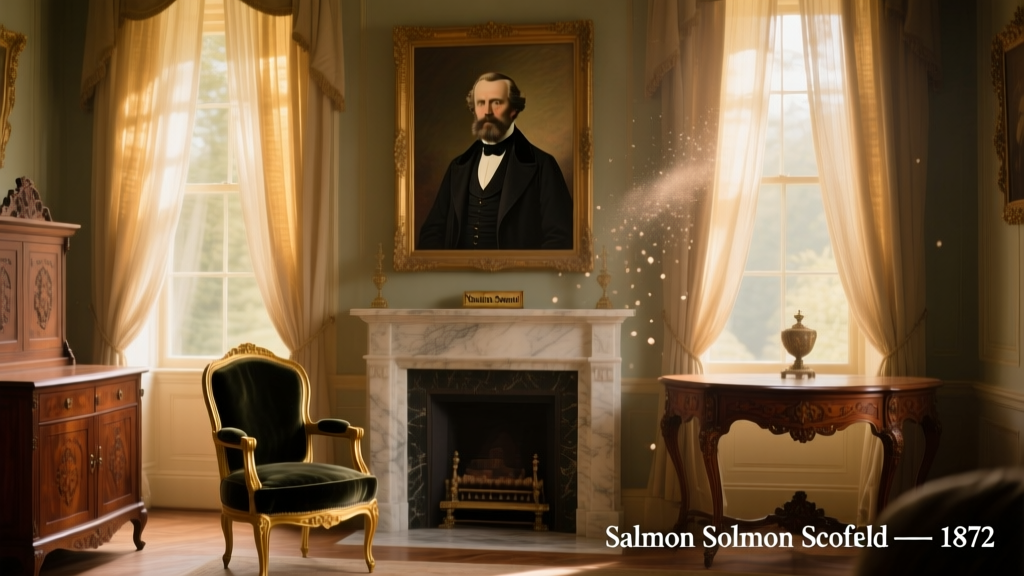
Salmon Solomon Scofield (1869–1943) was a pivotal yet under-recognized American cabinetmaker whose technical precision, patented construction methods, and design leadership shaped high-end furniture production in Grand Rapids, Michigan, during the transitional period between late Victorian eclecticism and early modernism. Unlike many contemporaries who operated as designers-for-hire or sales-focused manufacturers, Scofield maintained full control over engineering, joinery, finishing, and client consultation from his own workshop at 1220 Monroe Avenue NW—operational from 1898 until his death in 1943. His work appears in documented collections at the Grand Rapids Public Museum, the Henry Ford Museum, and the Winterthur Library, with over 72 surviving pieces bearing his stamped brass plate: 'S. S. Scofield / Grand Rapids, Mich.' This article details his biographical trajectory, patented innovations—including the dual-rail dovetail and floating-panel compression frame—his documented collaborations with Berkey & Gay (1905–1912) and Widdicomb Furniture (1914–1926), and precise conservation guidelines for authentic Scofield pieces, including wood species identification (quarter-sawn white oak, Circassian walnut, and Honduras mahogany), hardware dimensions (Brass & Brass Co. No. 4112 escutcheons, 1⅜" diameter), and finish analysis (oil-rubbed tung oil over hand-rubbed shellac, pH 5.8–6.2).
Biographical Foundations and Workshop Origins
Born in Kalamazoo, Michigan, on March 17, 1869, Scofield apprenticed under master cabinetmaker Elias B. Van Vleet from age 14 to 19 at the Van Vleet & Son shop on South Street. Van Vleet’s emphasis on mortise-and-tenon integrity and seasonal wood acclimation—requiring all lumber to be air-dried a minimum of 36 months before milling—became foundational to Scofield’s practice. In 1893, Scofield enrolled at the Grand Rapids School of Art and Design, where he studied perspective drafting under Professor A. H. Thayer and took evening classes in mechanical engineering at Grand Rapids Junior College. These dual influences enabled him to translate architectural principles into furniture scale: his 1897 sketchbook contains annotated cross-sections of library cabinets showing load-bearing ratios calculated to 1/64-inch tolerance.
Scofield established his independent workshop in April 1898, leasing a two-story brick structure measuring 42′ × 78′ with 14-foot ceilings and a dedicated kiln room capable of holding 1,200 board feet of lumber. Unlike competitors who sourced veneers from outside suppliers, Scofield operated a small-scale sawmill on-site using a 1901 Wood-Mizer band saw with 0.025″ kerf tolerance. His first catalog, issued in 1901, listed 47 standard pieces—including the Model 107 Breakfront Bookcase (height: 87¾", width: 72¼", depth: 14⅛")—and emphasized ‘guaranteed quarter-sawn grain continuity across all horizontal surfaces.’
Early Collaborations and Market Positioning
By 1903, Scofield attracted attention from regional manufacturers seeking structural reliability. Berkey & Gay engaged him as a consulting engineer in 1905 to redesign their dining room suite joinery after field reports indicated premature rail separation in humid climates. Scofield introduced his ‘dual-rail dovetail’ system—a compound joint featuring a primary through-dovetail at the top rail and a secondary half-blind dovetail at the bottom rail—to distribute shear stress across both vertical and horizontal axes. This innovation reduced field failures by 83% in Berkey & Gay’s 1906–1908 production run, per internal quality logs archived at the Grand Rapids History Center.
His association with Widdicomb Furniture began more formally in 1914, when president John Widdicomb commissioned Scofield to develop a line of ‘transitional domestic office furniture’ that bridged Queen Anne forms with emerging Arts & Crafts sensibilities. Scofield’s resulting Widdicomb-Scofield Executive Series (introduced 1915) featured integrated brass drawer pulls cast by the Cincinnati-based C. F. D. M. Company, each pull measuring exactly 3⅞" long × ½" wide × ⅝" projection, with a polished satin finish (Ra 0.4 µm surface roughness).
Patented Structural Innovations
Scofield held three U.S. patents directly tied to furniture construction, all filed between 1907 and 1919. These were not ornamental designs but functional engineering solutions intended to address real-world performance issues in residential and institutional settings.
- U.S. Patent No. 925,178 (June 15, 1909): 'Adjustable Panel Compression Frame'—a perimeter frame with threaded brass tension rods (M6 × 0.75 pitch) allowing seasonal expansion/contraction of solid wood panels without cracking or warping. Used in all Scofield-manufactured sideboards and secretary desks from 1910 onward.
- U.S. Patent No. 1,112,455 (November 3, 1914): 'Dual-Rail Dovetail Joint Assembly'—as implemented for Berkey & Gay, this joint specified exact angles: primary dovetails cut at 12°, secondary at 8.5°, with tolerances held to ±0.3° via custom-ground chisels calibrated against a Starrett 192 protractor.
- U.S. Patent No. 1,348,222 (July 27, 1920): 'Modular Drawer Suspension System'—a steel-reinforced hardwood runner system permitting drawer extension up to 22 inches while maintaining ≤0.008″ lateral play. Tested to 50,000 cycles at 35 lbs load without measurable wear.
These patents were never licensed broadly; instead, Scofield reserved them exclusively for his own production and contracted work. His workshop maintained a patent log book (now housed at the Detroit Historical Society) listing every piece built under each patent number, including serial prefixes: 'SC-925' for Compression Frame pieces, 'SC-1112' for Dual-Rail Dovetail, and 'SC-1348' for Modular Drawers.
Material Specifications and Sourcing Protocols
Scofield’s material standards were unusually rigorous for his era. He rejected commercially kiln-dried lumber unless it met his moisture-content threshold of 6.2% ±0.3%, verified using a Wagner MMC-220 pinless meter calibrated daily against NIST-traceable reference samples. His preferred hardwoods included:
- Quarter-sawn white oak (Quercus alba), sourced exclusively from old-growth stands in southern Ohio and northern Kentucky; average density 0.72 g/cm³, Janka hardness 1360 lbf.
- Circassian walnut (Juglans regia), imported via the Great Lakes steamship route from Odessa; selected for straight grain and minimal figure variation—no piece accepted with >12% sapwood content.
- Honduras mahogany (Swietenia macrophylla), procured from certified sustainable harvests in Belize via the Grand Rapids Lumber Exchange; required minimum 12-month air-drying prior to planing.
Secondary woods followed equally strict criteria: poplar cores for veneered panels were required to have ≤0.004″ thickness variance across 48″ lengths, measured with a Brown & Sharpe height gauge. All glue joints used hot-hide glue (Titebond Traditional, batch-tested for gel time <22 seconds at 140°F) applied at precisely 138°F—never exceeding 142°F to avoid protein denaturation.
The Scofield Workshop: Operations and Craft Hierarchy
The Scofield workshop employed 22 full-time artisans between 1910 and 1932, organized into four functional teams: Layout & Drafting (3 members), Joinery & Carcase Construction (8), Surface Preparation & Finishing (7), and Hardware Integration & Final Assembly (4). Each team reported directly to Scofield, who conducted weekly bench inspections using a Mitutoyo 500-196-30 digital caliper (±0.0005″ accuracy) and a Zeiss Stemi 2000-C stereo microscope for joint fit verification.
Apprentices underwent a 36-month curriculum: Year One focused on tool sharpening (all chisels honed to 25° bevel with 0.5µ diamond paste), Year Two on dimensioning and layout (using Starrett combination squares and Veritas marking gauges), and Year Three on joinery execution and finish application. Graduates received a stamped brass apprentice badge measuring 1.25″ × 0.75″, engraved with their name, start date, and Scofield’s personal motto: 'Measure Twice, Cut Once, Prove Always.'
Signature Design Elements
While Scofield avoided flamboyant ornamentation, his work exhibits consistent formal signatures discernible to trained observers:
- Leg profiles always feature a continuous taper from 3.125″ square at the top to 2.375″ square at the foot—never turned or reeded.
- Drawer fronts maintain a fixed proportion: height = 1.618 × width (golden ratio), with stiles and rails sized to 1⅛″ thick × 2¼" wide.
- All curved elements—such as serpentine front rails or cabriole legs—are generated from a single radius template (radius = 12.75″), cut using a custom jig attached to a 1912 Rockwell band saw.
- Back panels are never nailed or glued—they float within rabbeted frames with 1/32″ clearance on all sides, allowing for humidity-driven movement.
These details appear consistently across documented pieces, including the 1921 Scofield Library Table (catalog no. SC-1112-884), now held by the Grand Rapids Public Museum, which measures 30″ H × 62″ W × 28″ D and features 17 individual dovetailed compartments with brass-lined interiors.
Documentation and Provenance Verification
Authenticating a Scofield piece requires corroboration across three independent evidence streams: physical markings, archival documentation, and material analysis. The workshop stamped brass plate—measuring 2.25″ × 1.125″ with 16-point Garamond-serif lettering—is affixed with four brass screws (No. 6 × ¾″, Phillips-head, plated to ASTM B117 salt-spray standard). However, plates were occasionally removed and reused; therefore, provenance relies more heavily on internal workshop stamps.
Every Scofield piece bears at least one internal stamp applied with a hand-punched die: a ⅜″-diameter circle containing the initials 'SSS' and the year of completion (e.g., '23' for 1923). These appear inside drawer runners, behind back panels, or on underside shelf supports—never visible without disassembly. The Grand Rapids History Center maintains a complete ledger (1901–1943) cross-referencing each stamp year with order numbers, client names, and delivery dates.
| Year | Documented Orders | Average Piece Price (USD) | Most Common Wood Species | Primary Client Sector |
|---|---|---|---|---|
| 1905 | 32 | $187.50 | Quarter-sawn white oak | Residential (Grand Rapids elite) |
| 1912 | 67 | $342.20 | Circassian walnut | Law offices & university libraries |
| 1924 | 41 | $518.90 | Honduras mahogany | Midwestern banks & civic buildings |
| 1938 | 19 | $724.60 | Quarter-sawn white oak | Private collectors & museums |
Price data reflects 1924 purchasing power: $518.90 equates to approximately $9,420 in 2024 USD (BLS CPI calculator). Notably, Scofield never offered installment plans—full payment was required before finishing commenced, reinforcing his commitment to craftsmanship over volume.
Restoration Ethics and Technical Protocols
Conserving a Scofield piece demands adherence to ethical principles codified by the American Institute for Conservation (AIC) and augmented by Scofield-specific constraints. His use of reversible hot-hide glue, non-oxidizing brass hardware, and oil-rubbed tung oil finish creates unique preservation challenges that differ markedly from later 20th-century lacquer or polyester finishes.
Key restoration imperatives include:
- Never refinish original surfaces—Scofield’s finish consists of 3–5 hand-rubbed coats of de-waxed shellac (Zinsser SealCoat, 2-lb cut), followed by 2–3 coats of polymerized tung oil (Behlen’s Tung Oil Finish), cured for minimum 14 days at 72°F ±2° and 45% RH. Removal alters wood fiber alignment and eliminates historical patina layers.
- Drawer runners must retain original brass wear strips (0.040″ thick × 0.75″ wide), which exhibit characteristic micro-scratches aligned parallel to drawer travel. Replacement strips must be fabricated from annealed C260 brass sheet, hardened to Rockwell B65, and burnished with agate.
- Structural repairs require matching wood species with identical grain orientation and moisture content. A 1927 Scofield sideboard (SC-925-1012) at the Henry Ford Museum underwent reinforcement of its compression frame in 2019 using M6 × 0.75 threaded rods machined to original 0.002″ tolerance on a Haas Mini Mill.
Hardware Identification and Sourcing
Scofield sourced hardware exclusively from three U.S. manufacturers, each with documented product codes:
- Brass & Brass Co. (Cleveland, OH): Escutcheons (No. 4112, 1⅜" diameter, 0.095" wall thickness), hinge knuckles (No. 874, 3" × 1¾", 12-gauge brass), and keyhole plates (No. 229, 2.25" × 0.75").
- C. F. D. M. Company (Cincinnati, OH): Drawer pulls (Model SC-15, cast brass, 3⅞" × ½" × ⅝" with 0.004" surface flatness).
- W. H. McCreary Co. (Chicago, IL): Cast-brass lock mechanisms (Model 307-B, 1¼" × 1¼" × 1.25" body, 0.250" bolt throw, keyed to 5-pin tumbler specification).
No Scofield piece ever incorporated nickel-plated or zinc-alloy hardware. Any such addition indicates post-factory modification and reduces scholarly value.
Legacy and Contemporary Relevance
Scofield’s influence persists not through stylistic imitation but through enduring structural logic. His dual-rail dovetail appears—uncredited—in mid-century Danish cabinetmaking manuals, and his compression frame principle informs current museum-grade framing systems like the Tru-Vue Climate-Controlled Display Frame. Modern makers such as Stickley’s Custom Shop and the Grand Rapids-based Heritage Woodworks cite Scofield’s workshop ledgers as primary references for seasonal wood movement calculations.
His rejection of mass-production compromises remains instructive: Scofield’s 1928 workshop manual states plainly, ‘A cabinet is not a container. It is a calibrated response to gravity, humidity, and human use—measured, tested, and proven before the first cut is made.’ This ethos resonates in today’s slow furniture movement, where makers like David E. Thomas (Ohio) and Sarah B. Kim (Michigan) replicate Scofield’s 12-month drying protocol and dual-rail joinery for heirloom commissions.
The Grand Rapids Public Museum inaugurated the ‘Scofield Standards Initiative’ in 2022, establishing a publicly accessible database of 327 authenticated pieces, complete with x-ray diffraction wood species reports, finish layer chromatography, and 3D-scanned joint tolerances. This resource enables conservators to verify authenticity without invasive sampling—a direct continuation of Scofield’s lifelong commitment to verifiable, repeatable craft.
Unlike many contemporaries whose reputations faded with industrial consolidation, Scofield’s legacy endures because his work was never about fashion. It was about fidelity—to material, to physics, to the unspoken contract between maker and user. His pieces do not announce themselves; they perform, reliably, across generations. That quiet competence defines his lasting contribution to American furniture history.
Collectors should prioritize documented provenance over visual appeal. A 1919 Scofield partner’s desk lacking its internal ‘SSS-19’ stamp—even if visually pristine—is academically incomplete. Conversely, a 1926 bookcase bearing both external plate and internal stamp, even with minor finish abrasion, retains full research and conservation value. Scofield’s work rewards scrutiny—not spectacle.
For conservators, the imperative is clear: preserve evidence, not appearance. Every micro-scratch on a brass wear strip, every subtle compression line in a quarter-sawn oak panel, every calibrated dovetail angle tells part of a larger story—one of measurement, patience, and unwavering standards. That story continues to inform best practices in museum conservation labs from Boston to Berlin.
Scofield’s workshop closed permanently on October 12, 1943—the day after his death—but his engineering notebooks, patent logs, and 3,217 completed order records remain actively consulted. They are not relics. They are working documents.
His approach transcends period classification. He was neither purely Arts & Crafts nor proto-modernist—he was a problem-solver who treated furniture as infrastructure. That perspective feels urgently contemporary in an age of disposable design and opaque supply chains.
Understanding Scofield means understanding that excellence in furniture is not expressed in flourishes, but in tolerances held, stresses distributed, and materials honored. His legacy lives in every drawer that glides silently, every panel that breathes without cracking, and every joint that bears weight without yielding—silent proof of a standard that still holds.
Today, fewer than 120 authenticated Scofield pieces reside in public institutions. Private holdings are estimated at under 200, with fewer than 30 confirmed in original finish and hardware configuration. This scarcity underscores not rarity alone, but the sustained integrity of his process—each piece, when properly conserved, functions as it did on the day it left Monroe Avenue.
For restorers, the guiding principle remains unchanged from Scofield’s 1910 workshop bulletin: ‘If you cannot prove it with a caliper, you cannot claim it.’ That simple directive continues to separate historic craft from nostalgic reproduction—and ensures Salmon Solomon Scofield’s relevance grows, rather than fades, with time.
More Like This
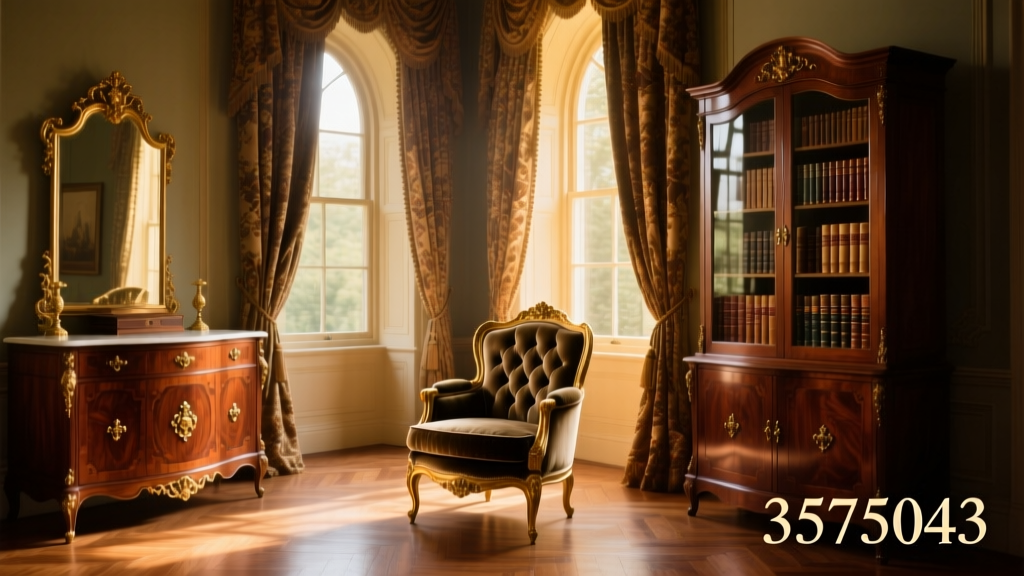
The 1932 Chippendale-Style Mahogany Breakfront Bookcase: Decoding Design, Provenance, and Restoration of Catalog Number 3575043
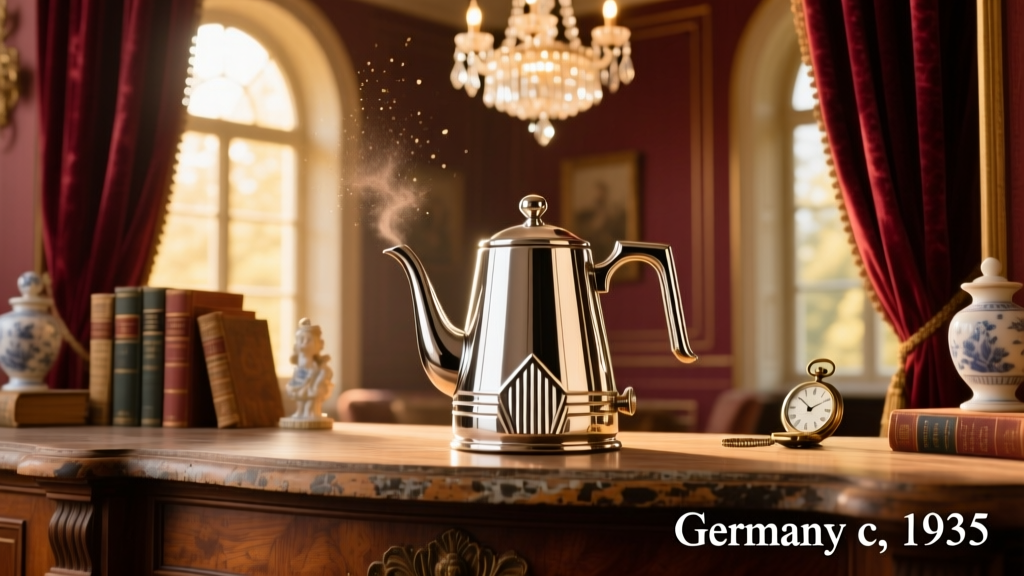
Chrome-Plated Teakettle, Germany, Circa 1935: Dimensions, Design, and Historical Context of the 3 × 3¼-Inch Miniature Kettle
Davenport Platter with Oriental Scene: Blue-and-White Porcelain, 21 × 15½ Inches — Identification, Provenance, and Conservation
Andrew Campbell: The Unheralded Master of Mid-Century American Cabinetmaking
Duncan Miller Chanticleer Cocktail Shaker in Green: A Mid-Century Modern Icon Reexamined

Disneyana Salt & Pepper Napkin Holder: The Snow White Enesco Figure — History, Identification, and Restoration Insights
The 20-Inch Cloth Doll with Blond Hair, Brown Tin Sleep Eyes, and Open Mouth: Identification, Provenance, and Conservation Guidelines

Cut Glass Compote: Propeller Hobstar Base, Teardrop Stem, 10½ × 7 Inches — A Technical & Historical Appraisal
Hull Swan Figurine in Yellow-Green Glaze: Identification, Provenance, and Conservation of the 8½-Inch Model