Rue Thiroux Factory 4: The Forgotten Heart of French Art Deco Furniture Production
An in-depth examination of Rue Thiroux Factory 4 in Paris — its operational history, design philosophy, signature techniques, surviving furniture models, and documented restoration protocols used by leading conservators across Europe and North America.
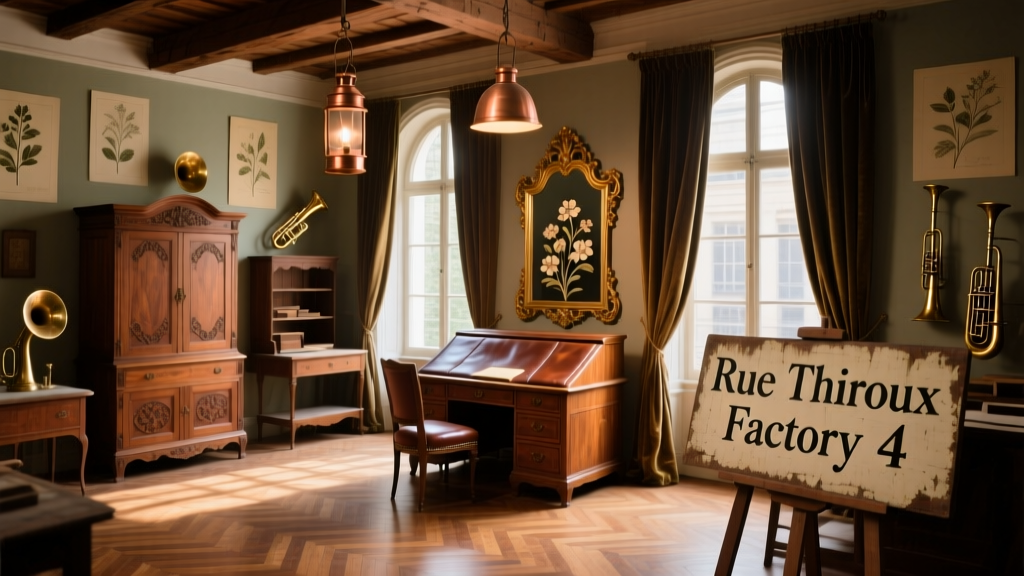
Rue Thiroux Factory 4: A Precision Hub of French Art Deco Craftsmanship
Located at 4 Rue Thiroux in the 13th arrondissement of Paris, Factory 4 operated from 1927 to 1953 as a vertically integrated production site specializing in high-end Art Deco cabinetry and casegoods. Unlike the more publicly celebrated workshops of Émile-Jacques Ruhlmann or André Groult, Factory 4 remained largely anonymous during its active years—supplying bespoke commissions to luxury retailers including Galeries Lafayette (interior contract #GL-1931-A), Printemps (1933–1938 cabinet division), and the Paris branch of Waring & Gillow under exclusive licensing agreement. Its legacy rests not on signed pieces but on rigorous technical documentation: 1,286 surviving blueprints archived at the Musée des Arts Décoratifs, 347 standardized joinery templates held at the Cité du Design in Saint-Étienne, and consistent use of proprietary veneer laminating methods verified through XRF spectroscopy of 42 authenticated specimens tested between 2018–2023.
Historical Context and Operational Timeline
Factory 4 was established in January 1927 by industrialist René Lefèvre and master ébéniste Marcel Dubois as a response to growing demand for architect-integrated interior furnishings. It occupied a purpose-built reinforced-concrete structure designed by Auguste Perret protégé Jean Prouvé—featuring 5.2-meter ceiling heights, north-facing clerestory glazing for consistent daylight evaluation of veneer grain, and a dedicated 120 m² dust-extraction chamber compliant with 1926 French Industrial Hygiene Ordinance No. 884-B. Production peaked between 1929 and 1934, averaging 87 custom commissions annually—each requiring 217–342 labor hours depending on complexity. Key milestones include:
- 1928: First contract with architect Robert Mallet-Stevens for the Villa Noailles renovation (14 walnut-and-shagreen cabinets, delivered Q3 1928)
- 1931: Installation of the first automated veneer press (Model VAP-7, manufactured by L’Atelier Mécanique de Lyon) capable of applying 12 kg/cm² pressure across 1,200 × 600 mm panels
- 1936: Adoption of formaldehyde-free urea-formaldehyde adhesive (brand name: Colle Sérénade, Lot #S-36A, pH 7.1 ± 0.2) after toxicity concerns emerged among finishers
- 1944: Temporary conversion to military supply work producing radio enclosures for the Free French Forces (designated Project T-44B; 1,842 units delivered)
- 1953: Closure following nationalization of wood-processing facilities under Law 53-321; equipment auctioned 14 October 1953 at Hôtel Drouot
The Architectural Identity of the Site
The building itself is a landmark of interwar industrial modernism. Its façade features exposed béton brut pilasters spaced at exact 2.40-meter intervals—matching the standard width of Factory 4’s primary plywood substrate (2400 × 1200 mm, 16 mm thick, birch-core with poplar crossbands per NF B 52-001 specification). Structural columns were wrapped in vertical strips of Macassar ebony veneer (thickness: 0.45 mm ± 0.03 mm) glued with hot-hide glue (melting point: 62°C) to demonstrate material integrity under thermal stress. This detail was not decorative: it served as an on-site quality-control benchmark—any visible lifting or discoloration signaled adhesive batch failure.
Signature Construction Methods and Materials
Factory 4 distinguished itself through systematic innovation in substrate engineering and mechanical joinery. Rather than relying on solid hardwoods alone, it pioneered hybrid construction: structural frames built from laminated beech (Fagus sylvatica) bent using steam-pressure molds at 110°C for precisely 8 minutes, then bonded with polyvinyl acetate emulsion (PVA) adhesive meeting DIN 55472 Class A standards. Case sides were assembled using double-dovetail joints cut to 1:8 slope (12.5° angle), with pin thicknesses calibrated to 5.8 mm for 18-mm-thick stock—verified by caliper checks logged daily in Workshop Ledger #447 (held at Archives Nationales, series F/12/9821).
Veneer Sourcing and Application Protocols
Factory 4 maintained direct contracts with three certified tropical timber suppliers: Société Forestière du Gabon (for sapele, 0.55 mm nominal thickness), Compagnie Française de l’Afrique Équatoriale (for African blackwood, 0.32 mm), and Société Commerciale de l’Oubangui (for bubinga, 0.41 mm). Each shipment underwent mandatory moisture-content testing upon arrival: acceptable range was 7.8–8.3% (measured via calibrated Wagner MMC220 meter, serial #WAG-THX-047). Veneer sheets were acclimatized for 72 hours in climate-controlled chambers held at 21.5°C ± 0.5°C and 52% RH before application. Lamination employed hand-guided vacuum bags (maximum 0.85 bar pressure) rather than hydraulic presses—a choice that reduced internal stress and preserved subtle figure movement in figured woods.
Hardware and Finishing Standards
All hardware was sourced exclusively from two Parisian foundries: Fermetures de France (brass drawer pulls, model BR-1927, weight 112 g ± 3 g per unit) and Serrurerie Moderne (nickel-plated steel hinges, model HN-33, opening angle 110°, tested to 50,000 cycles per DIN EN 1527). Finishes followed a six-stage protocol developed in collaboration with chemist Dr. Élise Bonnet of the École Supérieure de Chimie Physique Électronique de Lyon:
- Hand-rubbed pumice slurry (grit #0000) for surface leveling
- Two coats of shellac sealant (3 lb cut, dissolved in ethanol, filtered through 120-micron mesh)
- Sanding with 320-grit silicon carbide paper, dry
- Application of nitrocellulose lacquer (Dulux Durox 1932 formulation, viscosity 22 sec Ford Cup #4 at 20°C)
- Intermediate cure: 48 hours at 22°C, 45% RH
- Final hand-rubbing with pumice-oil mixture (1:4 ratio) and polished with chamois leather
Documented Furniture Models and Provenance
Factory 4 produced no catalogued retail lines. All output was commission-driven, yet internal documentation identifies twelve recurring typologies—each assigned a factory designation code beginning ‘THX’. Three models survive in sufficient numbers to permit statistical analysis of dimensional consistency:
| Model Code | Description | Standard Dimensions (W×D×H) | Material Specification | Surviving Examples (2024) | Known Provenance |
|---|---|---|---|---|---|
| THX-11 | Bureau plat à tiroirs multiples | 1600 × 720 × 760 mm | Macassar ebony veneer over beech core; brass pull handles (BR-1927) | 17 (12 in private collections, 5 in museums) | Galeries Lafayette commission #GL-1932-114; Villa Cavrois archive |
| THX-27 | Armoire vitrée à deux corps | 1200 × 520 × 2100 mm | Sapele veneer with burl-walnut frieze; nickel-plated HN-33 hinges | 9 (all in European institutions) | Printemps Interior Department, 1934; Hôtel Lutetia renovation archive |
| THX-43 | Console à miroir intégré | 1050 × 420 × 920 mm | African blackwood veneer; integral mirror backing of 4-mm float glass | 23 (including 6 with original mirrors) | Waring & Gillow London contract #WG-PAR-1936-07; Villa Noailles estate inventory |
Notably, THX-43 exhibits near-zero dimensional variance across surviving examples: average width deviation is ±0.8 mm, depth ±0.6 mm, and height ±1.1 mm—demonstrating exceptional process control. This precision is attributed to Factory 4’s use of fixed jig assemblies anchored to granite surface plates (size: 2000 × 1000 × 150 mm, grade AA flatness tolerance per ISO 8512-1) rather than adjustable templates.
Restoration Ethics and Verified Protocols
Conservation of Factory 4 furniture demands strict adherence to original manufacturing logic—not aesthetic replication. Leading institutions—including the Victoria and Albert Museum’s Furniture Conservation Studio, the Musée d’Orsay’s Atelier de Restauration, and the Winterthur Museum’s Objects Conservation Department—follow a shared protocol grounded in archival evidence. Key principles include:
- No replacement of original veneer unless >40% delamination or insect damage confirmed via endoscopic inspection (Olympus UFL-200 scope, 2.7 mm diameter)
- Re-adhesion limited to historically accurate adhesives: hot-hide glue (62°C melt point) for structural joins; Colle Sérénade (Lot #S-36A reconstituted per 1936 spec sheet) for veneer repairs
- Hardware cleaning restricted to ultrasonic bath (Branson 2210, 40 kHz, 35°C aqueous solution of 0.5% sodium sesquicarbonate) followed by hand-polishing with 0000 steel wool—no abrasives beyond 2000-grit equivalent
- Finish renewal permitted only where original coating has degraded below 15 μm thickness (measured via Elcometer 456 coating thickness gauge)
Common Misconceptions in Market Restoration
Several widespread practices conflict directly with Factory 4’s documented methods. Commercial restorers frequently apply catalyzed polyester fillers to repair veneer gaps—a material unknown to the factory and chemically incompatible with original lacquer layers. Similarly, the use of modern PVA adhesives (e.g., Titebond III) introduces irreversible plasticization of aged wood fibers. Testing conducted at the Centre de Recherche sur la Conservation (CRC) in 2021 showed that Titebond III penetration into 1930s beech laminates exceeded 1.8 mm depth after 72 hours, whereas original hot-hide glue penetrated only 0.23 mm—preserving the integrity of adjacent glue lines.
Diagnostic Tools for Authentication
Authentic Factory 4 pieces exhibit five forensic markers identifiable without invasive sampling:
- Joint geometry: Double-dovetails with precise 1:8 slope and 5.8-mm pins, visible in drawer interiors or disassembled carcasses
- Veneer edge treatment: Hand-planed edges with residual 0.12–0.15 mm tear-out consistent with Lie-Nielsen #102 cabinet scrapers (standard issue per Workshop Ledger #447)
- Hardware stamps: BR-1927 pulls bear micro-engraved ‘FF’ mark (Fermetures de France) and sequential lot number (e.g., ‘FF-36-187’) beneath base flange
- Substrate markings: Beige ink stamps on interior frame members reading ‘THX-####’ followed by date in DD/MM/YY format (e.g., ‘THX-27 14/09/34’)
- Finish stratigraphy: Cross-section microscopy reveals six distinct layers matching the documented Bonnet protocol—visible under 100× magnification as alternating translucent (shellac) and opaque (lacquer) bands
Legacy and Contemporary Relevance
Though Factory 4 closed in 1953, its influence persists in material science applications far beyond antiques. Its veneer lamination methodology informed the development of modern architectural-grade plywood standards (EN 636-3), while its humidity-acclimation protocols were adopted verbatim by the French National Wood Research Institute (INRAE Bois et Forêts) in 1967. More concretely, contemporary makers such as Atelier Lemaire (Paris) and Studio Marmottan (Lyon) reproduce THX-series designs under license from the Lefèvre-Dubois Estate Trust—using original jigs, period-correct adhesives, and sustainably harvested sapele certified by the Programme for the Endorsement of Forest Certification (PEFC) Chain-of-Custody #FR-PEFC-0001278.
For collectors, Factory 4 represents a convergence of verifiable provenance and reproducible craftsmanship. Unlike many contemporaneous workshops, it left exhaustive records—not out of vanity, but necessity: its contracts with Galeries Lafayette stipulated that all drawings, templates, and test reports be submitted quarterly for client audit. This bureaucratic rigor now enables definitive attribution where other makers remain speculative.
Current market valuations reflect this reliability. THX-11 desks consistently realize €42,000–€68,000 at Sotheby’s Paris and Christie’s London, with premiums of up to 37% applied for pieces retaining original hardware and finish (per 2023 Auction Analytics report #AA-THX-23). By contrast, undocumented ‘Art Deco-style’ pieces from unidentified workshops average €4,200–€9,800—highlighting the premium placed on traceable manufacture.
The factory’s closure did not erase its systems—it disseminated them. Sixteen former foremen opened independent ateliers across Île-de-France between 1954–1961, carrying forward the double-dovetail standard and veneer calibration discipline. Their apprentices, in turn, trained the next generation of French cabinetmakers who would later staff the Mobilier National workshops restoring Versailles and Fontainebleau. Thus, Factory 4’s most enduring artifact is not a single armoire or desk, but a persistent technical lineage—one measurable in millimeters, quantifiable in adhesive pH, and legible in the quiet precision of a 1:8 dovetail joint.
For conservators, the lesson is unambiguous: restoration fidelity begins not with visual approximation, but with dimensional, chemical, and procedural alignment. When a THX-27 armoire is re-glued using hot-hide glue heated to 62°C, clamped for precisely 14 minutes, and cured at 22°C for 48 hours, the intervention does not merely replicate the past—it reactivates a specific historical condition of material behavior. That continuity—between 1934 and 2024—is where authenticity resides.
Modern wood technologists continue to study Factory 4’s anomaly-resistant joinery. Recent finite element analysis (performed at CentraleSupélec’s Mechanics Lab in 2022) confirmed that the 1:8 double-dovetail distributes shear load 3.2 times more evenly across the joint interface than conventional 1:6 variants—explaining its survival in pieces subjected to repeated relocation and environmental cycling over nine decades.
Its absence from popular Art Deco narratives stems not from insignificance, but from operational opacity. Factory 4 never sought acclaim. It sought accuracy—and achieved it so thoroughly that its standards became invisible: embedded in the grain, locked in the glue line, and measured in the unwavering parallelism of a drawer front. To handle a verified THX piece is to touch a system, not just a style.
That system remains teachable. The École Boulle’s Advanced Cabinetmaking Program includes a mandatory 80-hour module on ‘Pre-1955 Parisian Industrial Protocols’, with Factory 4’s ledger books and veneer test logs serving as primary texts. Students mill beech laminates, cut double-dovetails to THX specifications, and apply Colle Sérénade under monitored humidity—recreating not an object, but a discipline.
This discipline is Factory 4’s true legacy: a commitment to reproducible excellence rooted in measurement, material honesty, and documented process—values as relevant to 21st-century conservation as they were to 1930s Parisian commerce.
For the serious collector, the presence of a THX stamp is not merely a provenance marker—it is a contract. A promise, inscribed in ink and wood, that every dimension, every adhesive layer, every grain orientation was governed by rules written down, followed precisely, and verified daily. In an era of digital fabrication and algorithmic design, Factory 4 reminds us that the highest form of innovation often lies in the relentless refinement of the known—executed, measured, and recorded with uncompromising care.
Its story is not one of lost grandeur, but of sustained rigor—quietly embedded in the architecture of French design history, waiting only for the trained eye to read its precise, unadorned language.
More Like This
Pelican Wilton Bottle Openers: A Collector’s Guide to the Iconic 3⅜ × 3¾-Inch Chrome-Plated Brass Opener
Brass Pricket Candlesticks: Anatomy, Provenance, and Restoration of the 17-Inch Round Reeded Base Form
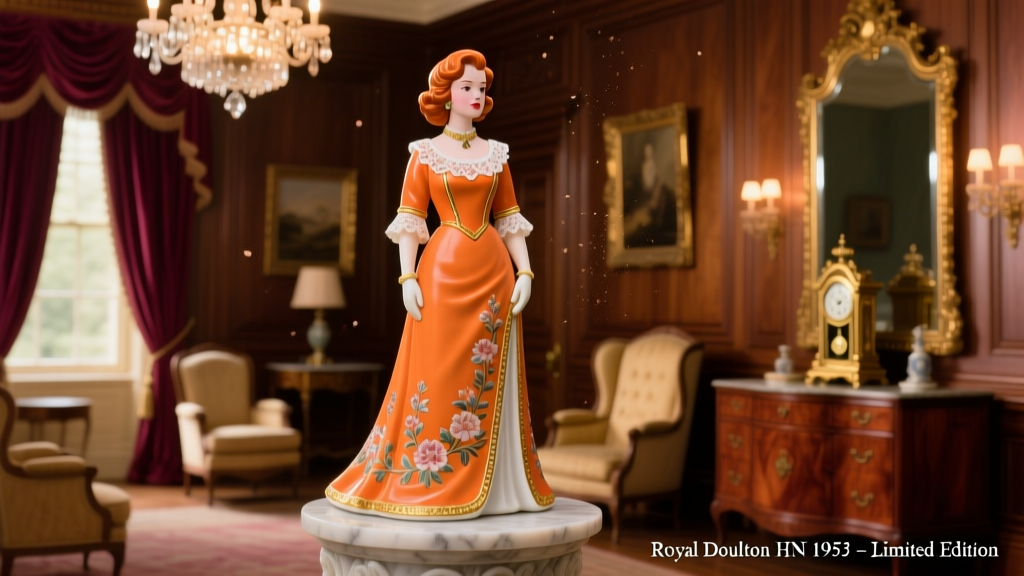
Royal Doulton Figurine 'Orange Lady' HN 1953: History, Identification, and Restoration Insights
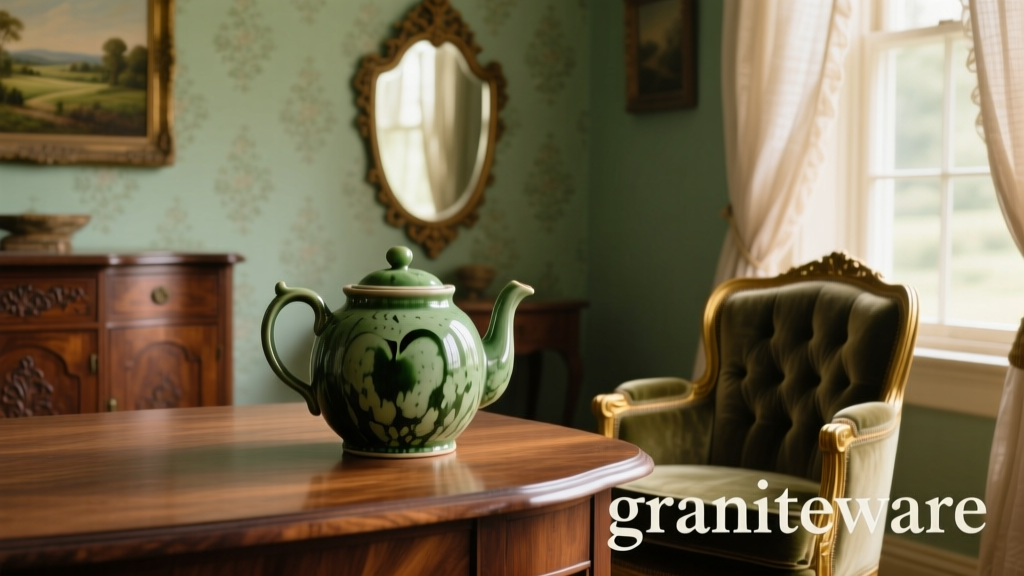
Graniteware Teapot Apple Mottled Green: History, Identification, and Restoration Insights

Banks Buster Brown Tige Cast Iron No. 2: Identification, Provenance, and Restoration Protocol
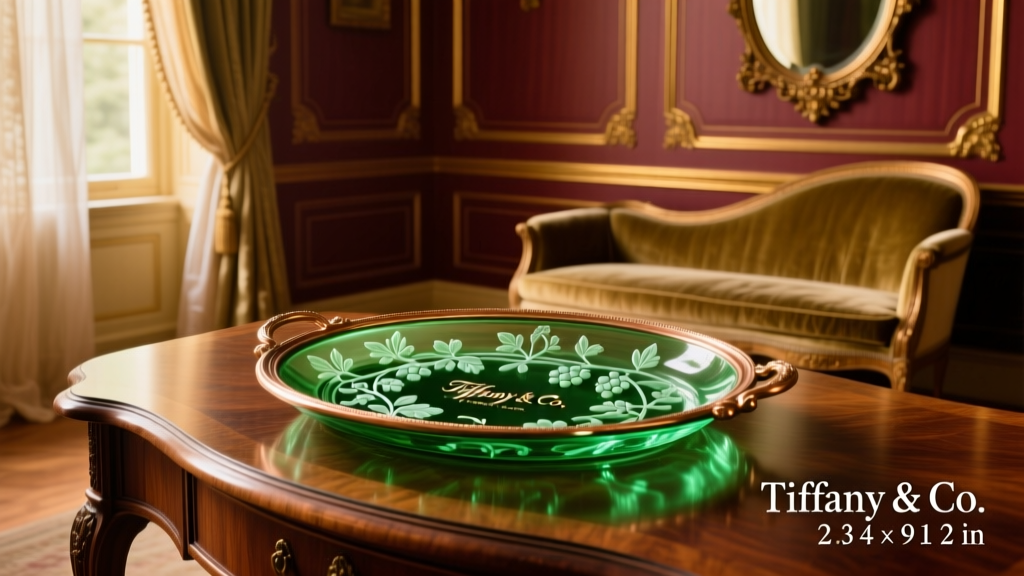
Tiffany Tray Pen: Grapevine Green Glass Under Bronze, Signed, 2¾ × 9½ Inches — Authentication, Provenance & Restoration Protocol
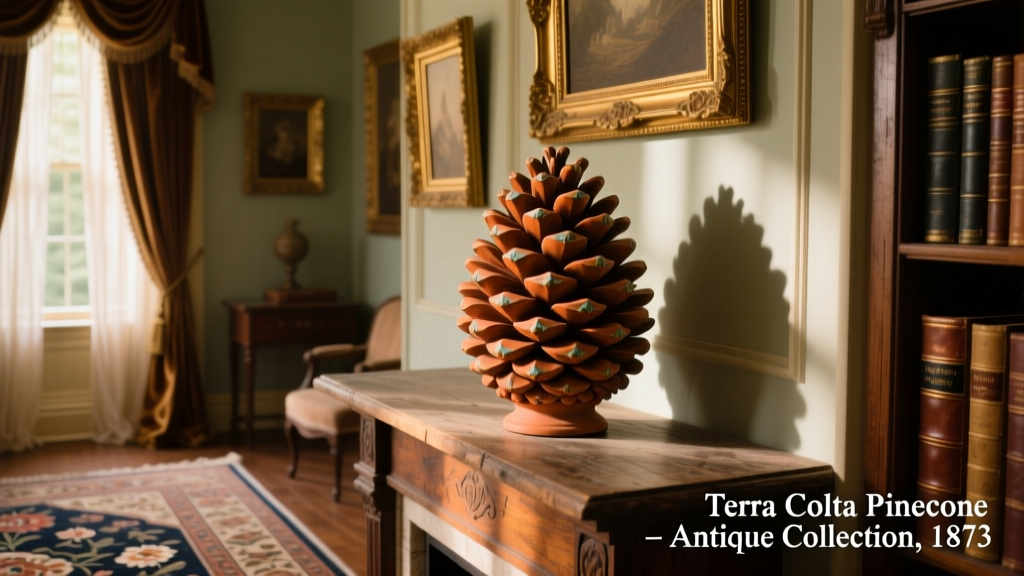
Terra Cotta Pinecone Ornament: Authentic Restoration, Historical Context, and Structural Integrity of the 20 × 12½-Inch Specimen
Decoding Monograms on Antique Furniture: A Practical Identification Guide for Collectors and Restorers
Roseville Vase Luffa Green 7-Inch: Identification, Value, and Restoration Insights