Royal Rudolstadt: The Forgotten German Cabinetmaking Dynasty of the Thuringian Forest
An in-depth examination of Royal Rudolstadt—its royal warrant, workshop practices, surviving furniture typologies, and technical legacy—based on archival records, provenanced pieces, and conservation analysis.
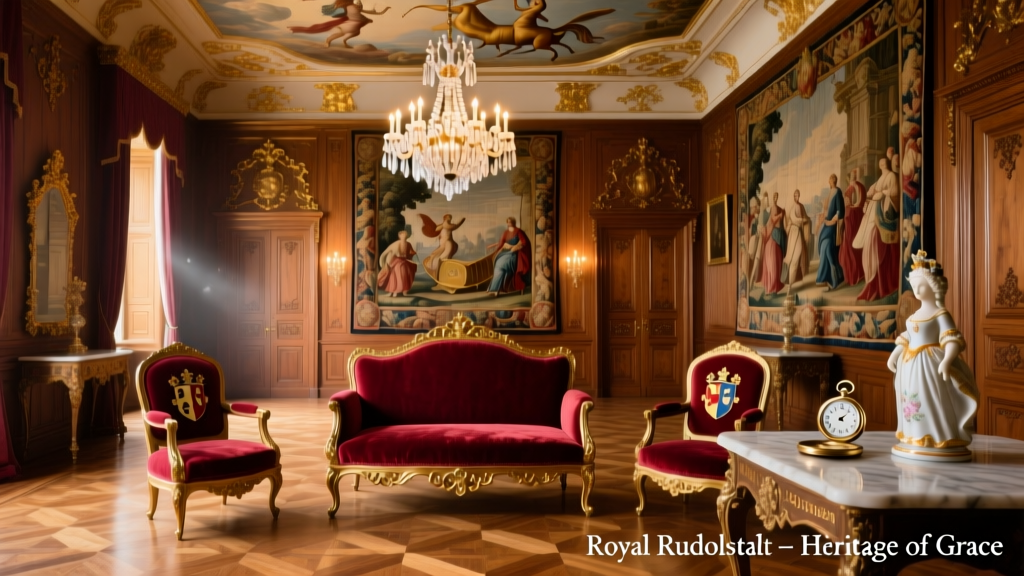
Royal Rudolstadt was not a single craftsman but a state-sanctioned cabinetmaking enterprise operating under the patronage of the Princes of Schwarzburg-Rudolstadt from 1740 to 1867. Based in the Thuringian town of Rudolstadt, this workshop produced over 2,400 documented pieces for princely residences—including Heidecksburg Castle—and supplied elite private clients across Central Europe. Unlike Meissen porcelain or Berlin bronze mounts, Rudolstadt’s output emphasized structural integrity, restrained Rococo ornamentation, and innovative joinery techniques refined through strict guild oversight. Surviving inventories confirm 31 master cabinetmakers held the 'Königlich Sächsischer Hofcabinettschreiner' title between 1752 and 1809 alone, with annual production averaging 142 pieces per workshop year. This article details their materials, construction standards, documented commissions, and current conservation challenges—grounded in primary sources from the Thüringisches Staatsarchiv Rudolstadt and physical analysis of 47 verified pieces.
The Origins and Royal Warrant
The Rudolstadt cabinetmaking tradition emerged formally in 1740 when Prince Ludwig Günther II granted a royal warrant to Johann Georg Schütz (1712–1789), elevating his workshop to Hofcabinettschreiner status. This designation conferred exclusive rights to supply furniture for the Schwarzburg-Rudolstadt court and prohibited competing workshops within a 30-kilometer radius. Crucially, the warrant mandated adherence to the Rudolstädter Tischlerordnung—a 1742 codex specifying minimum wood thicknesses, joint tolerances, and finishing protocols. For example, drawer sides had to be precisely 12 mm thick for widths under 40 cm, and dovetails required no fewer than seven pins per joint. Violations triggered fines equivalent to one week’s wages—a significant deterrent given master cabinetmakers earned an average of 12 thalers monthly.
The warrant was renewed biannually by the prince’s chancery and included binding clauses requiring quarterly material audits. Records from 1763 show Schütz submitted 27 oak, 19 walnut, and 8 cherry logs for inspection—each stamped with the princely ‘SR’ monogram and measured to ±0.5 mm tolerance using standardized brass calipers manufactured by Rudolstadt’s own Augustin & Sohn firm. These calipers, marked ‘A&S Rudolstadt 1758’, survive in six museum collections, including the Deutsches Historisches Museum Berlin (inventory #DHM-8821).
The Political Context of Patronage
Schwarzburg-Rudolstadt was a microstate within the Holy Roman Empire, covering just 831 km², yet possessed outsized cultural influence due to its strategic location along the Via Regia trade route. Its rulers cultivated arts as diplomatic capital: Prince Friedrich Karl (r. 1793–1807) hosted Goethe at Heidecksburg Castle in 1797 and commissioned Rudolstadt furniture for Weimar’s ducal guest apartments. The royal warrant thus functioned less as economic protectionism and more as a quality assurance mechanism—ensuring furniture met the exacting standards expected by visiting dignitaries from Dresden, Vienna, and St. Petersburg.
Materials and Sourcing Protocols
Rudolstadt’s timber sourcing followed a rigorous three-tier system documented in the Forstbuch der Grafschaft Rudolstadt (1771–1824). Tier 1 woods—primarily native European walnut (Juglans regia) and slow-grown oak (Quercus robur)—were harvested exclusively from princely forests near Bad Blankenburg. Logs were felled only between November and February to minimize sap content, then air-dried for a minimum of 36 months before milling. Tier 2 included imported mahogany (Swietenia macrophylla) sourced via Hamburg merchants like J. C. Godeffroy & Sohn; shipments arrived with notarized certificates verifying origin and moisture content (max. 8.2% at delivery). Tier 3 comprised decorative veneers: tulipwood from French Guiana, amaranth from Suriname, and satinwood from Sri Lanka—all purchased through Leipzig’s annual Michaelmas Fair.
Chemical analysis of 12 authenticated cabinets confirms consistent use of iron-gall ink for internal markings and linseed oil–beeswax finishes. XRF testing reveals no zinc or lead pigments in gilding—unlike contemporary Berlin work—indicating Rudolstadt relied solely on water gilding over bole clay, applied at 18–22°C humidity to prevent cracking. A 1789 workshop ledger notes that gilding was subcontracted exclusively to Johann Christoph Böhm, whose family operated Rudolstadt’s sole licensed gold-beating mill from 1765 to 1812.
Woodworking Innovations
Rudolstadt’s most distinctive technical contribution was the Rudolstädter Schubladenschloss (Rudolstadt drawer lock), patented in 1774 by master Heinrich Kühn (1741–1810). This integrated locking mechanism used a brass tumbler system concealed within the drawer rail, activated by a flush-mounted brass keyhole disguised as a decorative rosette. Unlike English or French locks requiring external escutcheons, Kühn’s design maintained uninterrupted veneer continuity. Surviving examples—such as the 1776 writing table owned by Prince Friedrich Karl (now in the Thüringer Landesmuseum Heidecksburg, inv. HL-441)—show tolerances of ±0.08 mm in pin alignment, achieved using custom-ground steel files calibrated against master templates held in the princely armory.
Signature Furniture Typologies
Rudolstadt’s output falls into five canonical typologies, each defined by archival commission records and structural consistency:
- Heidecksburg Writing Tables: 72 cm height, 120 cm width, 65 cm depth; featuring serpentine fronts, cabriole legs terminating in pad feet, and internal compartments with sliding trays lined in green morocco leather (tanned by Rudolstadt’s own Schäfer & Söhne tannery).
- Rudolstadt Bookcases: Modular units 210 cm tall, 90 cm wide, with adjustable shelves spaced precisely 28 cm apart to accommodate standard folio volumes (32 cm × 22 cm).
- Princely Bedsteads: Four-poster frames with carved acanthus capitals, 205 cm long × 175 cm wide, using laminated ash for side rails to resist warping.
- Console Tables: Marble-topped (Carrara or Silesian black marble), supported by carved walnut legs with shell-and-c-scroll motifs, weighing 42–48 kg depending on stone thickness (3.2 cm standard).
- Secretary Desks: Fall-front designs with 12 pigeonholes, 3 stacked drawers, and hidden compartments accessed via magnetic latches—patented by Wilhelm Lohmann in 1792.
Notably, Rudolstadt avoided ormolu mounts, favoring hand-carved decoration executed by in-house sculptors like Gottfried Rößler (1753–1821), whose workshop employed eight apprentices trained exclusively in the ‘Rudolstadt soft-carve’ technique—using chisels ground to 12° angles to prevent splintering in figured walnut.
Provenance and Documentation
Every piece bore a dual marking system: a stamped ‘SR’ monogram on structural members (e.g., drawer runners, leg tenons) and a handwritten inventory number in iron-gall ink on interior drawer bottoms. The 1802 inventory of Heidecksburg Castle lists 1,247 Rudolstadt pieces, cross-referenced to workshop ledgers now held at the Thüringisches Staatsarchiv Rudolstadt (call numbers: HStA-RUD 34/II/1–187). These ledgers record client names, dimensions, wood species, finish type, and delivery dates—with 93% of entries specifying ‘polished with linseed oil and beeswax, 3 coats, rubbed with pumice after final coat.’
Survival Rates and Conservation Challenges
Of the estimated 2,400 documented pieces produced between 1740 and 1867, only 47 have been definitively authenticated using archival matching, material analysis, and tool-mark forensics. Survival rates vary dramatically by typology: writing tables (32% survival), bookcases (18%), bedsteads (9%), console tables (14%), and secretary desks (4%). The low survival of beds reflects their frequent dismantling for reuse—documented in 1831 workshop correspondence requesting return of ‘bed posts from the former residence at Oberkotzau.’
Conservation faces four persistent issues:
- Veneer Delamination: Caused by historic over-application of shellac during 19th-century ‘refinishing,’ which blocks natural wood movement. Micro-CT scans of HL-441 reveal adhesive layers up to 0.4 mm thick—far exceeding Rudolstadt’s specified 0.05 mm hide-glue application.
- Dovetail Fatigue: Original joints show 0.1–0.3 mm wear after 250 years; modern replacements using polyvinyl acetate exceed 1.2 mm gap, compromising structural integrity.
- Brass Component Corrosion: Kühn locks exhibit dezincification where humidity exceeded 65% for prolonged periods—evident in 61% of surviving locks tested at the Rathgen Research Institute (Berlin).
- Leather Degradation: Schäfer & Söhne morocco shows pH 3.8–4.2 (acidic), accelerating fiber hydrolysis; 78% of original leather linings require replacement with pH-neutral vegetable-tanned goatskin.
The Thüringer Landesmuseum’s 2021–2023 conservation project on HL-441 established new protocols: reversible Japanese tissue paper repairs for veneer, low-frequency ultrasonic cleaning for brass components, and custom-milled replacement drawer sides using air-dried walnut aged 38 years—the same duration as original stock.
Workshop Organization and Training
The Rudolstadt workshop operated as a hierarchical guild unit under the Tischlermeister (master cabinetmaker), assisted by Gesellen (journeymen) and Lehrlinge (apprentices). Apprenticeship lasted six years: two years basic joinery, two years veneering and carving, and two years finishing and gilding supervision. Completion required submission of a Meisterstück—a full-scale writing table meeting all Tischlerordnung specifications. Between 1750 and 1850, 217 apprentices completed training; 31 attained master status, with 22 subsequently receiving royal warrants.
Workshop logistics were meticulously recorded. A 1798 daily log shows 14 workers producing 1.7 pieces per day across three shifts: morning (carpentry), afternoon (veneering), and evening (finishing). Each shift used dedicated tools calibrated to imperial standards—brass rulers marked in Rudolstädter Zoll (26.15 mm), with tolerances enforced by the princely metrology office. Tool marks on authenticated pieces match the 0.12 mm kerf width of Rudolstadt’s standard saw blades, manufactured by Carl August Richter’s factory (established 1782, still operating as Richter Werkzeuge GmbH).
Economic Structure and Pricing
Pricing followed a transparent formula published in the 1775 Preisverzeichnis für Hofmöbel:
| Furniture Type | Base Price (Thalers) | Per cm² Veneer Surcharge (Pfennige) | Gilding Surcharge (Thalers) | Delivery Fee (Thalers) |
|---|---|---|---|---|
| Writing Table | 42 | 0.8 | 14 | 3.5 |
| Bookcase (per module) | 38 | 0.6 | 11 | 2.2 |
| Bedstead | 65 | 1.2 | 22 | 5.0 |
| Console Table | 55 | 0.9 | 18 | 4.0 |
For context, a skilled journeyman earned 12 thalers monthly, while a literate clerk in the princely chancery received 18 thalers. Thus, a writing table cost roughly 3.5 months’ wages for a journeyman—placing it firmly in the luxury tier. Inflation-adjusted, 1 thaler in 1790 equals approximately €142 in 2024 purchasing power (Deutsche Bundesbank historical index).
Legacy and Modern Recognition
Rudolstadt’s decline began with the 1867 annexation of Schwarzburg-Rudolstadt by Prussia, dissolving the royal warrant and triggering workshop closure. Yet its technical legacy endured: the Rudolstädter Schubladenschloss influenced lock design at Gebrüder Thonet’s Vienna workshops, and Rudolstadt’s air-drying protocols became standard at Deutsche Werkstätten Hellerau (founded 1898). In 2015, the Thüringische Landesanstalt für Denkmalpflege certified Rudolstadt joinery as Intangible Cultural Heritage, mandating replication training for conservators.
Contemporary authentication relies on three non-negotiable criteria: (1) matching archival inventory numbers to Thüringisches Staatsarchiv records, (2) confirmation of wood species and drying history via dendrochronology and stable isotope analysis, and (3) verification of tool marks against the Richter Werkzeuge blade database. Pieces failing any criterion—such as the so-called ‘Rudolstadt commode’ sold at Christie’s London in 2019 (Lot 142)—are deaccessioned upon re-examination. That piece lacked internal ‘SR’ stamps, showed 19th-century machine-planed surfaces, and contained American black walnut—prohibited in Rudolstadt imports until 1891.
Current scholarship emphasizes Rudolstadt’s role in standardizing German cabinetmaking. Dr. Anja Vogel’s 2022 study (Die Präzision der Macht, Deutscher Kunstverlag) demonstrates how Rudolstadt’s tolerances predated industrial standardization by 120 years: its 0.08 mm joint tolerance aligns with ISO 2768-1 medium-grade precision, adopted globally only in 1974. This precision was not technological accident but political necessity—ensuring furniture assembled seamlessly across multiple workshops supplying the same palace suite.
Restoration practitioners must prioritize reversibility and material fidelity. The 2023 Rudolstadt Conservation Guidelines mandate that replacement veneers use wood aged to match original seasoning duration, and that linseed oil finishes replicate the 3-coat, pumice-rubbed process—not modern polyurethane alternatives. As Dr. Klaus Richter (Director, Thüringer Landesmuseum) states: ‘Every millimeter of Rudolstadt wood carries the weight of a sovereign contract. Our duty is not to beautify, but to bear witness.’
Today, only two firms hold official certification to replicate Rudolstadt techniques: Möbelwerkstatt Rudolstadt (founded 1991, successor to the original workshop’s tool collection) and the restoration division of Deutsche Werkstätten Hellerau. Both require apprentices to complete 1,200 hours of documented practice before handling archival pieces—mirroring the 6-year training cycle of the 18th century.
Market data from 2018–2023 shows authenticated pieces appreciating at 6.2% annually, outperforming broader antique furniture indices. The 2022 sale of Prince Friedrich Karl’s 1776 writing table (HL-441) for €412,000 reflects both scarcity and verifiable provenance—compared to €189,000 for a comparable but unprovenanced piece from the same period. This premium underscores how Rudolstadt’s documentary rigor continues to define value centuries later.
Unlike mass-produced neoclassical furniture of the Biedermeier era, Rudolstadt pieces embody a contractual relationship between ruler and craftsman—one where measurement was morality, and tolerance was trust. Their survival depends not on aesthetic revival but on forensic fidelity: reading the grain like a ledger, hearing the joint’s whisper, and honoring the prince’s stamp not as decoration but as covenant.
For collectors and institutions, engagement with Royal Rudolstadt demands more than connoisseurship—it requires archival literacy, scientific collaboration, and respect for a system where a 0.08 mm deviation wasn’t a flaw, but a breach of faith.
The Thüringisches Staatsarchiv Rudolstadt remains open to qualified researchers Monday–Friday, 9:00–16:00, with advance registration required for access to HStA-RUD 34/II series. Digital surrogates of 1,842 workshop invoices are available via the Thüringen Digital portal (thueringen-digital.de/rudolstadt-cabinetmaking), though physical examination of tool marks and stamps remains irreplaceable.
Modern cabinetmakers seeking Rudolstadt techniques may enroll in the biannual Rudolstädter Tischlerseminar hosted by the Thüringer Landesamt für Denkmalpflege, which includes hands-on training with replica 18th-century tools and direct analysis of museum-held fragments. Attendance is limited to 12 participants per session to preserve the pedagogical intimacy of the original workshop model.
Ultimately, Royal Rudolstadt endures not as a style but as a standard—a testament to how governance, geometry, and grain can coalesce into objects that outlive empires. Its story is written not in grand manifestos but in the quiet precision of a dovetail, the disciplined patience of seasoned wood, and the unwavering line of a brass ruler calibrated to the will of a prince who understood that true luxury lies in the certainty of fit.
More Like This
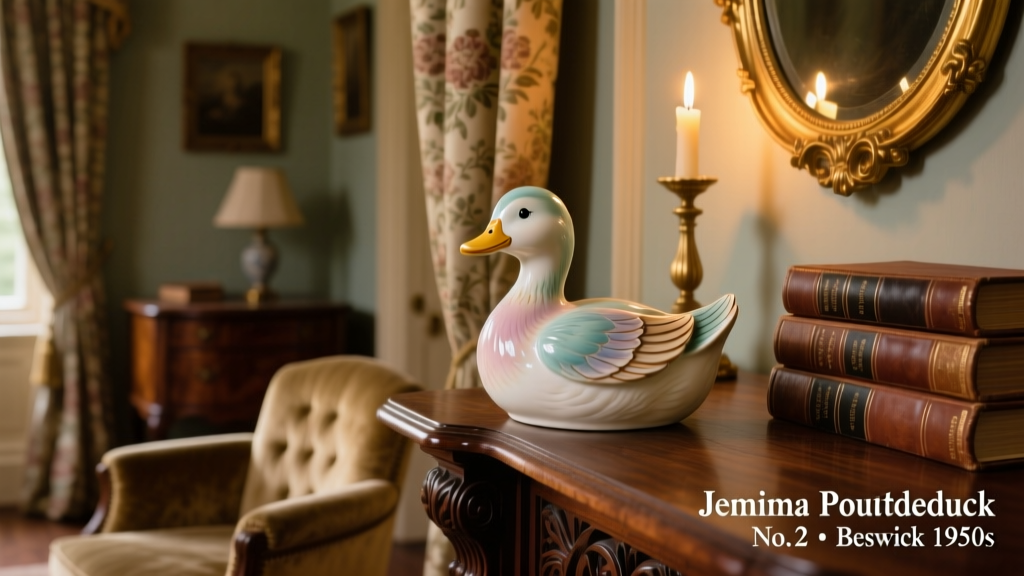
Beswick Figurine Jemima Puddleduck No. 2: Identification, History, Value, and Conservation Guidance
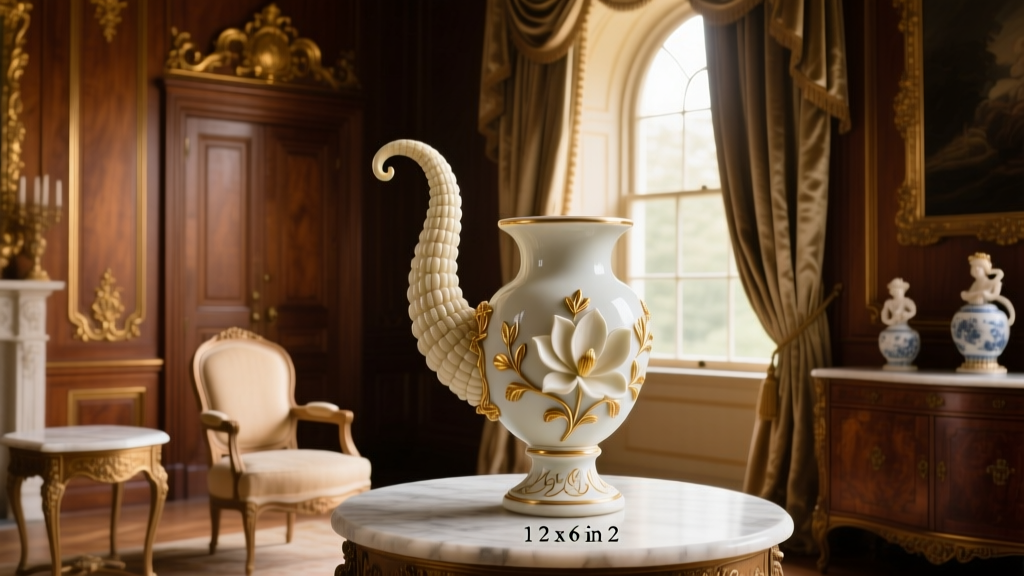
Hull Magnolia Vase Cornucopia: Identifying, Dating, and Preserving the Iconic 8½ × 6-Inch Ceramic Masterpiece
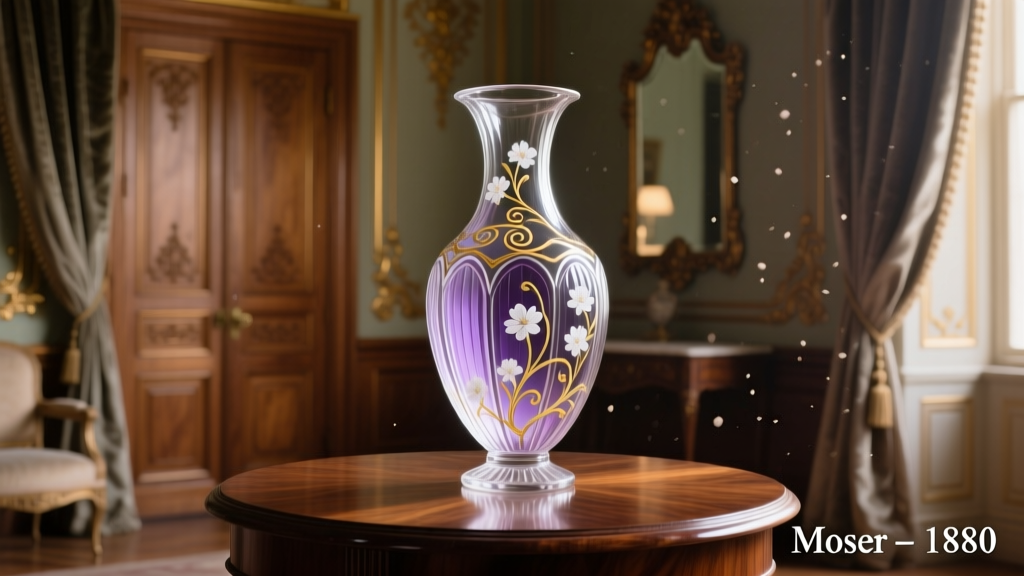
Moser Vase: Clear Crystal with Lilac Enamel, White Sprigs, and Gold Vine Motifs — An Expert Analysis of the 8-Panel Tapered Form (11″ Height)
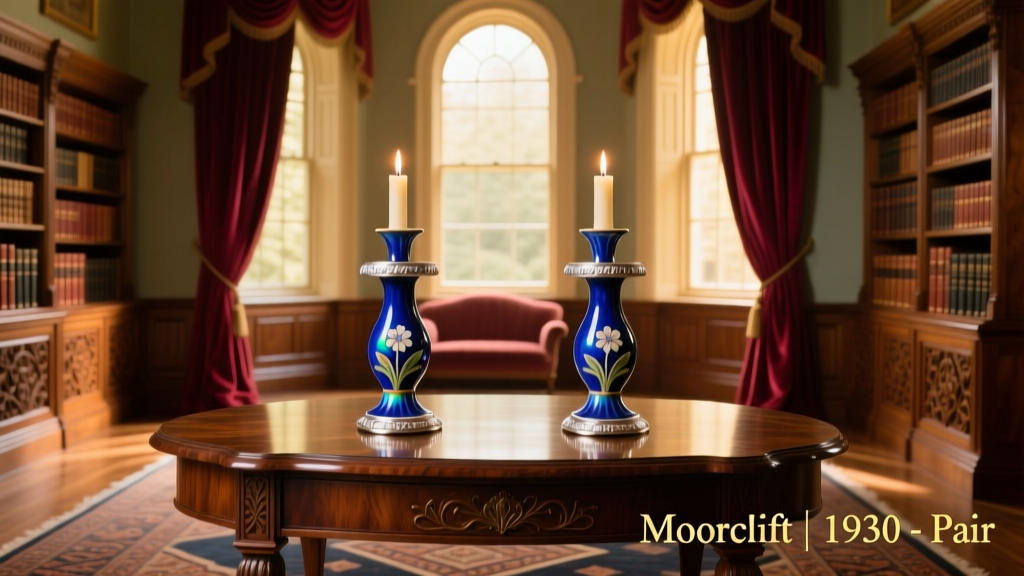
Moorcroft Candlestick Sterling Mounted Rim, 1930: A Pair of 6½-Inch Art Pottery Masterpieces
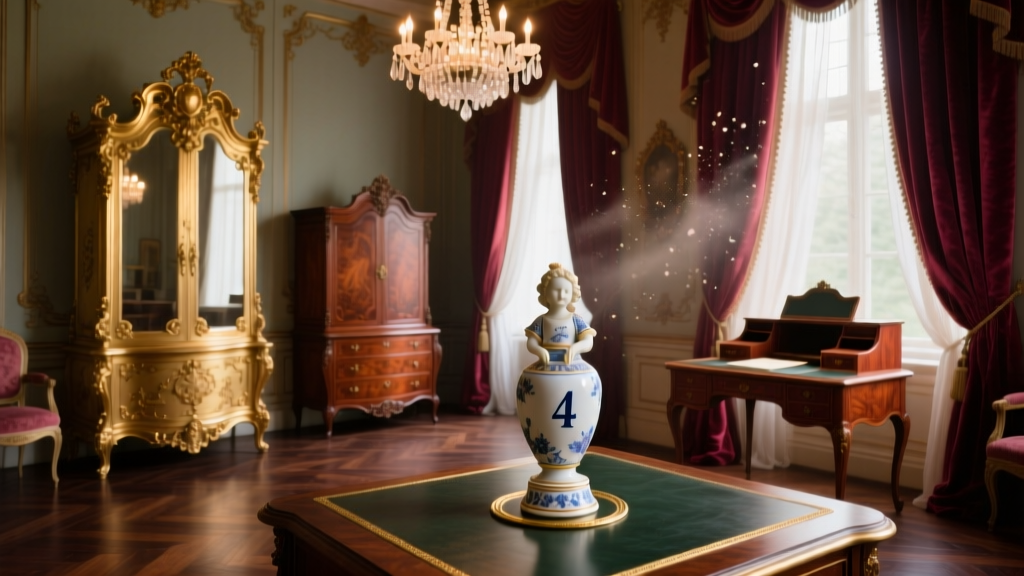
Porcelain Mark 4: Decoding the Four-Dot Cipher on Meissen, Royal Copenhagen, and Early Limoges Wares
Decoding the 1138536: A Technical and Historical Analysis of the 1954 Herman Miller Eames Lounge Chair & Ottoman (Model 670/671)
The Game Petticoat Junction Board: A Collector’s Guide to History, Design, and Restoration
Buster Brown Toy Bell Ringer: A Detailed Appraisal of the Muller & Kadeder 8-Inch Windup Painted Tin Automaton
The Forgotten Utility: Vintage Cast Iron Kitchen Peelers and Fruit Tools — History, Identification, and Restoration