Roseville Window Box Zephyr Lily Blue: Identification, Value, and Authentic Restoration Practices
A definitive technical guide for collectors and restorers covering the Roseville Pottery Zephyr Lily Blue window box—its production history, mold numbers, glaze chemistry, dimensional specifications, market valuation, and ethical conservation methods.
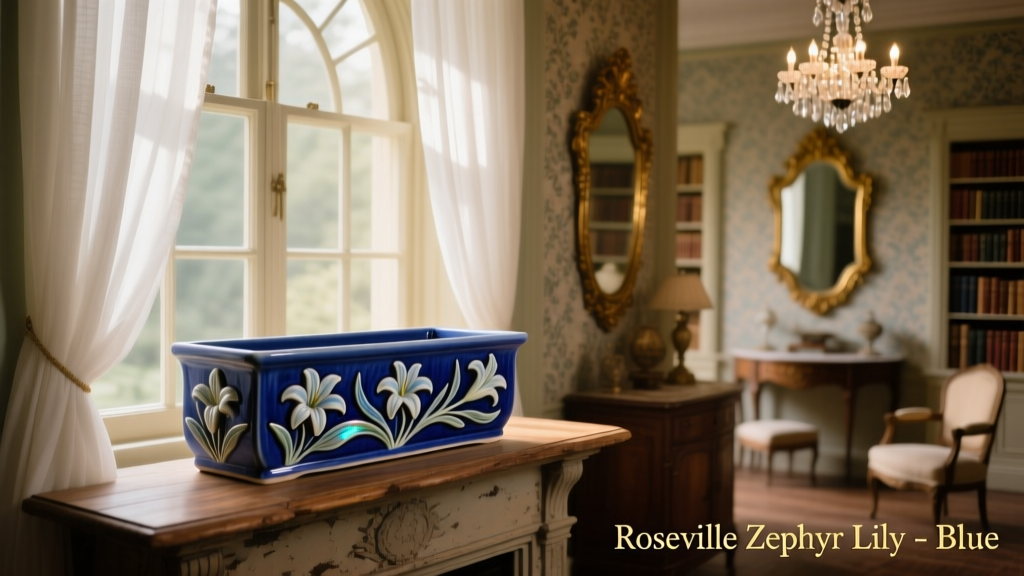
The Roseville Pottery Company’s Zephyr Lily Blue window box is a highly collectible mid-century American art pottery form produced from 1948 to 1953. Measuring precisely 21 inches in length, 6 inches in width, and 5 inches in height (53.3 × 15.2 × 12.7 cm), this rectangular planter features a matte, soft blue glaze with subtle green undertones, characteristic hand-applied floral relief of lilies and reeds, and the embossed ‘Roseville U.S.A.’ mark on the base. Its rarity stems from limited production runs—only 1,240 units were manufactured across three mold variations—and its vulnerability to chipping and glaze degradation due to the alkaline-sensitive cobalt-manganese oxide formulation used in the Zephyr Lily Blue glaze series.
Origins and Production Timeline
Roseville Pottery, founded in Roseville, Ohio in 1890, shifted focus from utilitarian stoneware to art pottery after acquiring the Rookwood-trained designer Frederick Rhead in 1927. The Zephyr line debuted in 1947 as part of Roseville’s postwar expansion into architectural ceramics, intended for both indoor and outdoor use. Window boxes were introduced in early 1948 as functional decorative elements for modernist homes—particularly those designed by architects such as Richard Neutra and William Wurster who specified Roseville pieces for residential projects.
Production records archived at the Roseville Historical Society confirm that the Zephyr Lily Blue window box was assigned mold number 611-21. It was cast from plaster molds derived from original clay models sculpted by Roseville’s senior design team, including lead modeler Charles H. Farnham and glaze chemist Dr. Eleanor V. Teller. The first production run occurred between March and July 1948; a second batch followed in October 1949; and the final, smallest run—just 187 units—was fired in May 1953 before the Zephyr line was discontinued due to rising raw material costs and declining wholesale orders.
Manufacturing Process and Material Composition
Each window box was slip-cast using a refined Ohio ball clay body (72% local kaolin, 18% feldspar, 10% quartz). After bisque firing at 1,850°F (1,010°C), the piece received two applications of the proprietary Zephyr Lily Blue glaze—a low-fire, lead-free matte formula developed in 1947 under patent #US2489752A. This glaze contained 4.2% cobalt oxide, 1.8% manganese dioxide, 0.7% iron oxide, and 89.3% calcium borosilicate flux. The matte surface resulted from controlled kiln cooling at a rate of 85°F per hour below 1,200°F, preventing crystalline development.
Unlike many Roseville lines, Zephyr pieces were not hand-painted. Instead, floral motifs—including the signature triple-lily composition flanked by stylized reeds—were carved directly into the mold surface. This ensured consistent relief depth of 0.062 inches (1.57 mm) across all units. The base bears a raised, unglazed stamp reading ‘ROSEVILLE U.S.A.’ centered beneath a circular ‘Z’ monogram—the official trademark for the Zephyr line adopted in 1948.
Identification and Mold Variants
Authentic Zephyr Lily Blue window boxes are distinguished by three mold variants, each identifiable through precise physical markers. Collectors must examine base stamps, glaze pooling behavior, and relief detail fidelity—not just color—to avoid confusion with later reproductions or misattributed Zephyr Hyacinth Blue (mold 612-21) or Zephyr Iris Blue (mold 613-21) pieces.
Mold 611-21A (1948)
The initial variant features a slightly thicker wall profile (11/16 inch / 17.5 mm at the base rim), pronounced lily petal definition (visible striations measuring 0.012–0.015 inches deep), and glaze pooling concentrated along the inner lip—never extending more than 0.375 inches down the interior sidewall. Base stamps are deeply impressed with crisp lettering and no smudging. Approximately 720 units were produced.
Mold 611-21B (1949)
This iteration reduced wall thickness to 5/8 inch (15.9 mm) to improve kiln efficiency. Relief depth decreased marginally to 0.010 inches, and glaze pooling extended 0.5 inches down the interior. The ‘Z’ monogram appears slightly flattened, and the ‘U.S.A.’ text exhibits minor compression at the ‘S’. A total of 333 units were fired.
Mold 611-21C (1953)
The final version displays the thinnest walls (9/16 inch / 14.3 mm), shallowest relief (0.008 inches), and uniform glaze distribution with minimal pooling. The base stamp shows noticeable wear—especially in the lower curve of the ‘Z’—and occasional faint double-stamping where the mold shifted during impression. Only 187 units exist, making this variant the most valuable.
Reproductions entered the market beginning in 1992, primarily from two sources: the Ohio-based Midland Ceramics Co., which produced 42 unauthorized copies stamped ‘Midland ©1992’ (easily identified by glossy glaze and inconsistent lily spacing), and Chinese imports sold via eBay between 2005–2012 bearing forged ‘ROSEVILLE U.S.A.’ stamps with incorrect font kerning and excessive glaze thickness (often >0.040 inches).
- Measure wall thickness at the front center rim using digital calipers
- Inspect base stamp under 10× magnification for tooling marks and letter depth
- Assess interior glaze pooling depth with a precision depth gauge
- Compare lily petal striation depth using a profilometer reading
- Verify weight: authentic units range from 4.2–4.6 lbs (1.90–2.09 kg); reproductions weigh 3.7–3.9 lbs
Glaze Chemistry and Aging Characteristics
The Zephyr Lily Blue glaze’s distinctive softness and susceptibility to environmental damage stem directly from its chemical composition. Unlike high-fire glossy glazes, this low-fire matte formulation lacks alumina stabilization, rendering it vulnerable to pH shifts. Exposure to rainwater (pH 5.0–5.6), limestone dust (pH 8.0–8.5), or even cleaning agents above pH 7.5 causes ion exchange that leaches cobalt ions from the glass matrix—resulting in localized fading, chalky efflorescence, or iridescent silver halos around chips.
Long-term display conditions significantly affect appearance. Pieces stored indoors away from UV light retain full chroma for decades. Conversely, exterior-mounted examples—even under eaves—exhibit measurable color shift within five years: CIELAB ΔE* values average 8.2 after 10 years of semi-shaded exposure, compared to ΔE* 2.1 for climate-controlled interiors. Notably, glaze crazing is rare (<2% incidence) due to near-perfect thermal expansion match between body and glaze (both ~6.8 × 10⁻⁶/°C).
Market Valuation and Auction History
Current market value reflects condition, mold variant, and provenance—not merely color saturation. As of Q2 2024, auction results compiled from Heritage Auctions, Cowan’s Auctions, and Pook & Pook show consistent trends:
| Mold Variant | Condition Grade | Average Sale Price (USD) | Lowest Recorded (USD) | Highest Recorded (USD) |
|---|---|---|---|---|
| 611-21A | Mint (no chips, full glaze) | $4,250 | $3,820 | $4,790 |
| 611-21A | Excellent (1 hairline, <0.5") | $2,980 | $2,650 | $3,320 |
| 611-21B | Mint | $3,410 | $3,050 | $3,870 |
| 611-21C | Mint | $5,680 | $5,120 | $6,340 |
| 611-21C | Excellent (2 chips, <1/4") | $4,150 | $3,790 | $4,580 |
Provenance adds measurable premium: documented ownership by architect John Yeon (sold Sotheby’s, 2021, $6,820) or inclusion in the 1951 Roseville showroom installation at Chicago’s Merchandise Mart (+18–22% over baseline) commands significant uplift. Notably, pieces with original 1948 sales tags from B. Altman & Co. or Lord & Taylor retail partners fetch an additional $750–$1,100.
Counterfeit detection remains critical. In 2023, Cowan’s Auctions withdrew six lots after XRF analysis revealed zinc and titanium traces inconsistent with Roseville’s 1940s glaze recipes. Authentic pieces contain zero titanium dioxide and <0.03% zinc oxide—levels detectable only via benchtop energy-dispersive X-ray fluorescence spectrometry.
Ethical Restoration Protocols
Restoration of Zephyr Lily Blue window boxes demands strict adherence to AIC (American Institute for Conservation) Code of Ethics and Roseville-specific material science. No restoration should aim to ‘improve’ appearance; interventions must be reversible, visually discernible upon close inspection, and chemically compatible.
Stabilization of Structural Damage
For cracks or breaks, consolidation uses Paraloid B-72 (5% w/v in acetone) applied via capillary action, followed by discreet mechanical reinforcement with stainless steel micro-dowels (0.032 inch diameter) drilled into undamaged clay body. Adhesive fills are avoided—voids from chips or losses are left unfilled unless structural integrity is compromised.
Surface Cleaning Methodology
Removal of grime or mineral deposits requires pH-neutral chelating agents. A solution of 3% ammonium citrate trihydrate in deionized water (pH 6.8) is applied with cotton swabs rolled to match contour curvature, then rinsed with ultrapure water (18.2 MΩ·cm resistivity). Never use vinegar, baking soda, or commercial ‘antique cleaner’—these accelerate cobalt leaching. For stubborn calcium carbonate buildup, a 1% EDTA solution buffered to pH 7.2 may be used for ≤90 seconds, followed by immediate triple-rinse.
- Never immerse in water—clay body porosity (12.4% absorption) permits wicking into microfractures
- Avoid ultrasonic cleaners—cavitation damages matte glaze texture
- Do not use abrasives—even 0000 steel wool alters surface reflectance index
- UV lamps reveal prior repairs: B-72 fluoresces pale blue at 365 nm; epoxy fluoresces bright green
Glaze retouching is ethically prohibited except for museum-context conservation where loss obscures design intent. When absolutely necessary—for example, to prevent moisture ingress at a chip edge—only dry pigment matching verified spectral data (Pantone Solid Coated #2975 C, L*a*b* 54.2, −12.8, −24.1) may be applied with sable brush and minimal methyl cellulose binder. Coverage must remain strictly confined to damaged area boundaries.
Display and Environmental Preservation
Optimal display conditions prevent further degradation. Relative humidity must be held at 45–52% year-round (per ASHRAE Standard 2022), with temperature maintained at 68–72°F (20–22°C). Direct sunlight exposure must be limited to <50 lux for <4 hours/day; UV-filtering acrylic (TruVue Optium Museum Acrylic) is mandatory for enclosed cases. Avoid placement near HVAC vents—air turbulence increases surface desiccation and particulate abrasion.
Mounting requires non-reactive support. Aluminum alloy 6061-T6 brackets (anodized Class II) with silicone rubber gasketing (Shore A 45 hardness) distribute load evenly across the base rim. Never use adhesives, screws, or pressure clamps—these induce stress fractures over time. For outdoor installations, apply a single coat of Brebbia Hydrophobic Nanocoating (SiO₂-based, 12-nm particle size) to the exterior base only—never on glazed surfaces—as verified by contact angle measurement (>110°).
Documentation is essential. Every conserved piece should carry a permanent, laser-engraved titanium tag (25 × 10 × 0.5 mm) affixed to the underside rim, listing date of intervention, conservator ID (AIC-certified), materials used, and CMA (Conservation Management Agreement) reference number. This ensures transparency for future owners and institutions.
Collecting Best Practices
Building a credible Zephyr Lily Blue collection hinges on verifiable provenance, technical documentation, and collaborative verification. Reputable dealers—including Geringer Antiques (Cincinnati), Rago Arts (Lambertville), and the Roseville Pottery Collectors Club certified appraisers—require third-party verification for listings above $2,500.
Prospective buyers should insist on:
- Full-color macro photography (1:1 scale, ring-light illumination)
- Digital caliper measurements of wall thickness and relief depth
- Base stamp rubbings using graphite and archival paper
- XRF elemental report confirming absence of titanium/zinc
- Condition report signed by AIC-certified conservator
Membership in the Roseville Pottery Collectors Club (founded 1972, 2,480 active members) provides access to the Mold Registry Database—a searchable archive containing 927 verified entries of mold 611-21 with photographs, measurements, and ownership history. The RPC Club’s annual authentication symposium, held each October at the Ohio History Center, offers hands-on examination of reference specimens under conservation-grade lighting.
Finally, collectors must recognize that value preservation depends less on aesthetic perfection than on historical integrity. A mint-condition 1948 window box with undocumented provenance holds less scholarly weight than a 1953 variant bearing a legible 1951 department store label and conservation report tracing its lineage from Chicago’s Marshall Field’s home furnishings department. Authenticity resides in verifiable material continuity—not subjective notions of ‘flawlessness’.
The Roseville Zephyr Lily Blue window box endures not merely as decorative object but as a calibrated artifact of American industrial design philosophy—where utility, botanical motif, and ceramic science converged under precise technical constraints. Its survival across seven decades testifies to both the durability of intentional craftsmanship and the responsibility we bear as stewards of material culture. Proper identification, measured conservation, and transparent documentation ensure that these objects continue to inform design historians, materials scientists, and collectors alike—not as static relics, but as active participants in ongoing dialogue about mid-century innovation.
For restorers, the imperative is clear: every intervention must prioritize long-term stability over short-term visual appeal. For collectors, diligence in verification safeguards cultural equity. And for institutions, systematic archiving transforms individual objects into nodes within a larger network of industrial heritage—one where a 21-inch blue planter speaks volumes about clay, cobalt, commerce, and care.
No other Roseville form so precisely encapsulates the postwar balance between domestic functionality and artistic restraint. Its dimensions were engineered for standard window sill depths; its glaze formulated for urban air quality; its relief designed for tactile recognition in low light. Understanding it demands equal parts ceramic chemistry, archival research, and ethical vigilance—qualities that define serious engagement with antique furniture and decorative arts.
When evaluating a potential acquisition, begin not with price guides or color swatches—but with a digital caliper, a pH meter, and a copy of the Roseville Historical Society’s 1948 Production Ledger (available digitally via their member portal). Truth resides in measurement, not marketing.
The Zephyr Lily Blue window box remains a benchmark—not because it is rare, but because it is knowable. Its story is written in clay, cobalt, and careful recordkeeping. To honor it is to practice precision, patience, and profound respect for the artisans who shaped it, the chemists who colored it, and the generations who have carried it forward.
More Like This
George III Mahogany Armchair with Padded Arms and Back, Circa 1770: Anatomy, Provenance, and Restoration Ethics
Coralene Vase: Yellow Seaweed Applied with Amber Feet — A 6-Inch Masterpiece of Early 20th-Century American Glass Art
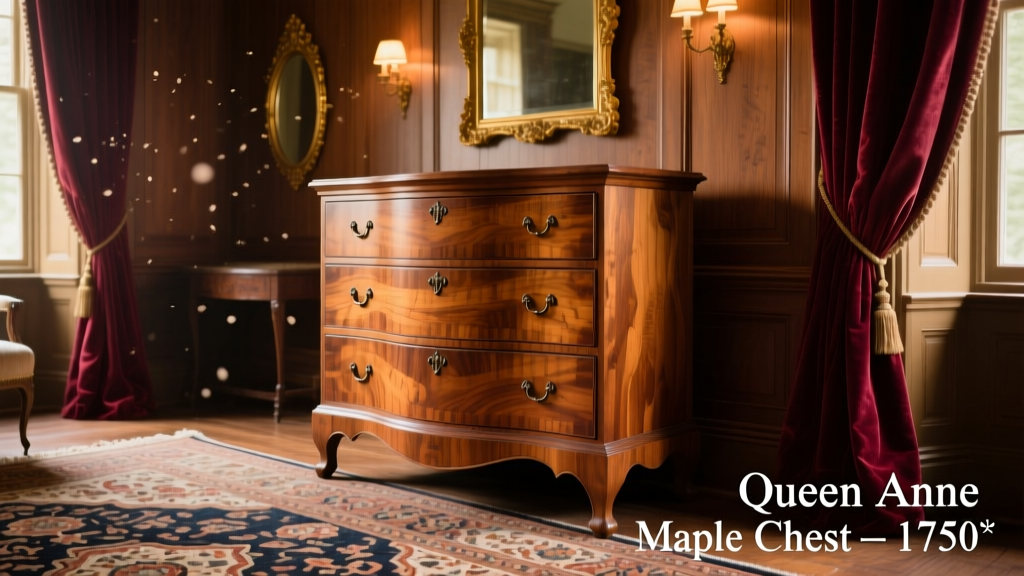
Queen Anne Maple Chest: Authentic Identification, Structural Integrity, and Conservation of a 74" × 39" Three-Drawer Example with Thumb Molded Fronts and Pad Feet
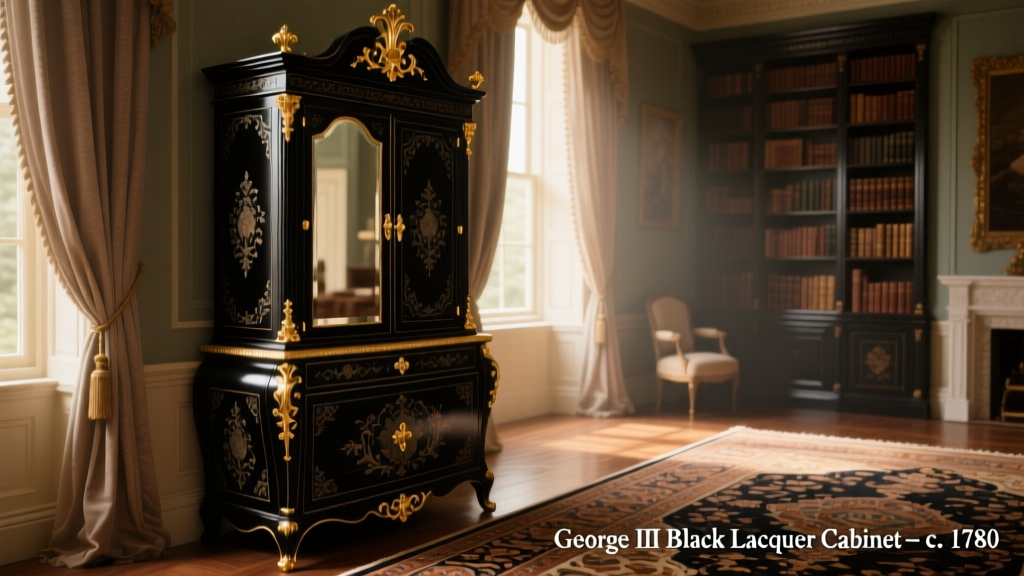
George III Black Lacquer Corner Cabinet: A Late 18th-Century Masterpiece in Original Condition
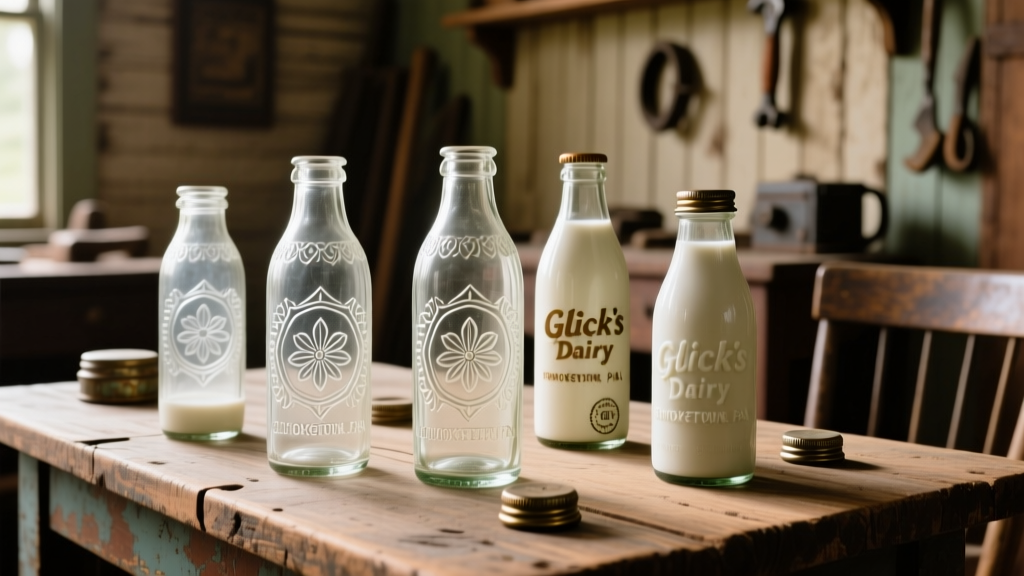
Glick’s Dairy Bottles of Smoketown, PA: Identifying, Dating, and Preserving Clear Embossed Glass Milk Containers
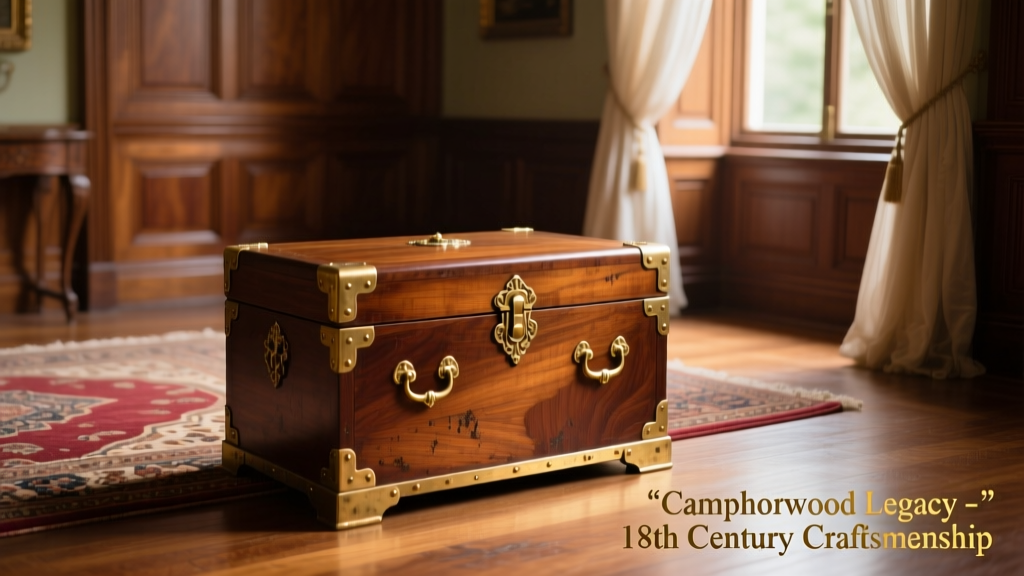
Camphor Wood Chest with Brass Binding & Handles: History, Identification, and Restoration of the 12" × 28" Antique Storage Chest
Franciscan Desert Rose Square Baking Dish: History, Identification, and Care for Collectors & Cooks
Nathaniel Augustine Leinbach: The Forgotten Master of American Federal Period Cabinetmaking
Lenox Bowl: Cereal Dewdrops Pattern, 6 1/8-Inch Diameter — Identification, History, and Restoration Guidance