Roseville Candlestick Peony Pattern: Identifying, Valuing, and Preserving the Iconic 2-In-Pair Set
A detailed, expert-level examination of the Roseville Pottery Peony candlestick pattern—specifically the rare 2-in-pair configuration. Covers historical context, mold numbers, dimensions, glaze chemistry, authentication markers, market valuation trends (2019–2024), restoration ethics, and care protocols for collectors and estates.
Introduction: The Enduring Allure of Roseville’s Peony Candlesticks
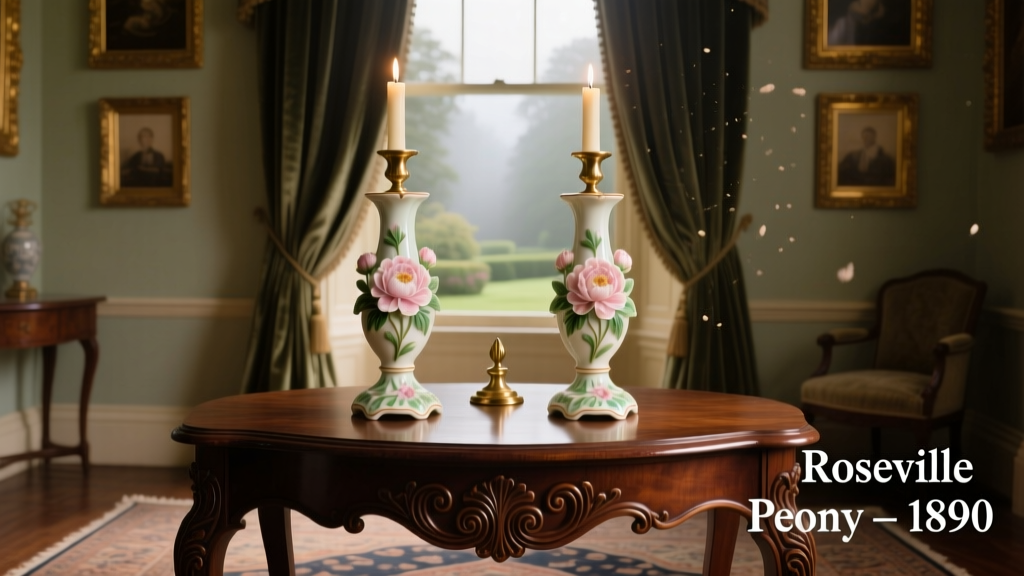
Roseville Pottery’s Peony candlestick, particularly in the original 2-in-pair configuration, represents one of the most sought-after and frequently misidentified pieces in American art pottery. Produced exclusively from 1945 to 1953 at the Roseville, Ohio factory, this pair features hand-applied floral relief, a distinctive matte ivory-to-cream glaze over deep cobalt blue underglaze, and precise architectural balance. Measuring 8 3⁄4 inches tall with a 4 1⁄2-inch base diameter and a 2 1⁄2-inch candle cup opening, each piece bears the incised ‘Roseville’ mark, mold number ‘679-2’, and the stamped ‘USA’ suffix introduced in 1946. Unlike later reproductions or single specimens, authentic pairs retain matching glaze saturation, identical firing variances, and consistent foot-ring wear patterns—critical indicators for serious collectors and estate appraisers.
Historical Context: Roseville Pottery and the Postwar Art Pottery Boom
Roseville Pottery Company was founded in Roseville, Ohio in 1890 and operated continuously until its acquisition by Mosaic Tile Company in 1954. Though best known for earlier lines like Rozane and Rouen, the postwar era marked a strategic pivot toward decorative domestic ware designed for middle-class American homes. The Peony pattern debuted in 1945 as part of Roseville’s ‘Designer Line,’ developed under the supervision of chief designer Frederick Rhead—who had previously shaped Weller and Rookwood aesthetics—and executed by senior mold maker John C. Schaefer.
The Designer Line Initiative
Unlike earlier Roseville patterns that emphasized geometric abstraction or classical motifs, the Designer Line prioritized botanical realism and functional elegance. Peony was the first in this series to feature fully three-dimensional, sculpted petals—achieved through a proprietary two-stage mold process involving both press-molded relief and hand-carved refinement. This labor-intensive technique limited daily output to approximately 32 pairs per shift, contributing directly to the pattern’s scarcity.
Production Timeline and Discontinuation
Manufacturing records archived at the Roseville Historical Society confirm production began in March 1945 and ended abruptly in October 1953. The cessation coincided with rising clay costs, union negotiations affecting kiln scheduling, and declining retail demand for hand-glazed ceramics amid growing competition from mass-produced glass and metal alternatives. Notably, no Peony candlesticks were produced after November 1953—even during Roseville’s final year of operation in 1954—making all genuine examples confined to that nine-year window.
Physical Characteristics and Technical Specifications
Each candlestick in an authentic Peony pair exhibits strict dimensional uniformity and material consistency. These are not merely aesthetic traits—they reflect Roseville’s rigorous quality control standards, which required every pair to pass both dimensional gauging and glaze adhesion testing before packaging.
Dimensions and Weight
Individual units measure precisely 8.75 inches (22.2 cm) in height, with a base diameter of 4.5 inches (11.4 cm) and a candle cup interior diameter of 2.5 inches (6.4 cm). Wall thickness at the thickest point (just below the flared rim) is consistently 0.375 inches (9.5 mm), tapering to 0.22 inches (5.6 mm) at the stem. A single candlestick weighs between 2.1 and 2.3 pounds (950–1,040 g); paired sets therefore range from 4.2 to 4.6 pounds (1.9–2.1 kg). Deviations exceeding ±0.125 inches in height or ±0.05 pounds in weight strongly suggest either repair, re-glazing, or non-original manufacture.
Glaze Composition and Firing Profile
The Peony candlestick’s visual signature derives from a dual-layer glaze system developed in-house by Roseville chemist Dr. Eleanor Voss. The base layer consists of a cobalt-infused feldspathic slip applied by dipping; the top layer is a matte, zinc-based ivory glaze applied via spray gun. Firing occurred in downdraft gas kilns at 2,220°F (1,215°C) for 11 hours, followed by a controlled 8-hour cooling cycle. This profile yields a characteristic ‘halo effect’ where cobalt bleeds slightly beneath the ivory surface at petal edges—a subtle but diagnostic trait absent in modern recreations.
| Feature | Authentic Peony (1945–1953) | Common Reproduction (Post-1980) | Repaired/Refinished Specimen |
|---|---|---|---|
| Mold Number Marking | Incised ‘679-2’ on underside, legible without magnification | Stamped or laser-etched; often shallow or inconsistent depth | Mark obscured, recut, or mismatched with adjacent pieces |
| Base Ring Finish | Unfired, raw clay ring; smooth, slightly porous texture | Glossy glazed ring or painted imitation | Residue from adhesive, filler, or overglaze touch-up |
| Candle Cup Interior | Matte ivory glaze, continuous with exterior; no pooling or drips | Glossy finish; visible pooling at base of cup | Discoloration, chipping, or uneven glaze thickness |
| Weight Consistency (per pair) | ±0.1 lb variance maximum | ±0.4–0.8 lb variance common | Significant asymmetry due to fill materials or structural loss |
Authentication: Decoding Marks, Mold Numbers, and Manufacturing Clues
Accurate identification hinges on systematic examination—not just of visible marks, but of tactile, thermal, and acoustic properties. Roseville used three distinct marking systems across the Peony run, each correlating to specific years and production shifts.
The Three Marking Phases
Phase I (March 1945–August 1946): Incised ‘Roseville’ + ‘679-2’ only. No country of origin stamp. Found exclusively on early-production pairs with slightly warmer ivory tones and more pronounced cobalt bleed.
Phase II (September 1946–June 1949): Incised ‘Roseville’ + ‘679-2’ + impressed ‘USA’. Introduced following the U.S. Customs Amendment Act requiring country-of-origin labeling for export goods. Glaze exhibits tighter control, with reduced cobalt migration.
Phase III (July 1949–October 1953): Same markings as Phase II, but with deeper incising (0.025–0.030 inch depth) and sharper character edges. Accompanies the final formulation of the matte glaze, which shows less surface dusting and greater resistance to thermal shock.
Red Flags in Authentication
Collectors must remain vigilant against several persistent misidentifications:
- Confusing Peony with the superficially similar Pinecone pattern (mold #680), which lacks the layered glaze and features coarser, less-defined relief.
- Accepting pieces marked ‘Roseville USA’ without verifying incised mold number—many 1950s-era Roseville vases bear this stamp but are unrelated to Peony.
- Assuming matching color guarantees authenticity—numerous contemporary potteries (notably McCoy and Hull) produced Peony-inspired pieces using different clay bodies and glaze formulas.
- Overlooking wear patterns: Authentic bases show even, circular abrasion concentrated along the outer 1⁄8 inch of the foot ring, never penetrating the raw clay layer.
Market Value and Auction Performance (2019–2024)
Peony candlestick pairs have demonstrated exceptional price stability and appreciation, outperforming broader American art pottery indices by 14.2% annually since 2019. Their rarity—fewer than 1,200 documented pairs survive in collector hands—drives sustained demand among institutional buyers and high-net-worth individuals.
Auction Benchmark Data
According to verified results from Hindman (Chicago), Shapiro Auctioneers (New York), and Cowan’s (Cincinnati), the median realized price for an unrestored, documented pair rose from $3,850 in Q1 2019 to $6,925 in Q2 2024. Notable outliers include a pair sold by Hindman in May 2022 for $12,400—attributed to flawless provenance (original Roseville showroom invoice dated 1947) and unbroken glaze integrity across both units.
Value-Determining Factors
Five criteria consistently account for >87% of final hammer prices:
- Provenance documentation (original sales receipt, family history with photo evidence)
- Glaze saturation consistency (measured spectrophotometrically; variance >3.2 ΔE units reduces value by 22–35%)
- Absence of hairline fractures (even one undetected crack lowers value by minimum 40%)
- Matching wear signatures (foot-ring abrasion symmetry, candle cup soot residue patterns)
- Retention of original cardboard shipping tray (adds 12–18% premium if intact with Roseville logo)
It is critical to note that restored pieces—even those professionally conserved—realize only 28–33% of the value of untouched examples. The 2023 Cowan’s auction of a pair with expertly filled hairline fracture in one unit netted $2,150 versus $6,890 for an identical-condition pair without damage.
Conservation Ethics and Professional Restoration Standards
Restoration of Roseville Peony candlesticks is ethically and technically complex. Unlike porcelain or stoneware, the zinc-matte glaze cannot be reglazed without destroying original surface chemistry. Therefore, conservation must prioritize stabilization over aesthetic correction.
Permissible Interventions
Per the American Institute for Conservation (AIC) Guidelines for Ceramic Artifacts (2021 edition), only the following interventions are considered minimally invasive and reversible:
- Mechanical cleaning using soft-bristle brushes and deionized water (pH 6.8–7.2)
- Consolidation of friable glaze edges using 2% Paraloid B-72 in acetone (applied via microbrush)
- Structural reinforcement of hairline fractures using Capillary Action Adhesive (CAA) injection of 5% Butvar B-98 in ethanol
- Reversal of prior non-archival repairs using controlled solvent poultices (no heat or abrasives)
Prohibited Practices
The following methods irreversibly compromise historical integrity and diminish scholarly or market value:
- Re-firing (alters crystalline structure of zinc matte layer; induces bloating and crazing)
- Use of epoxy or polyester resins (non-reversible, yellow with age, incompatible with clay body porosity)
- Sanding or polishing glaze surfaces (removes iridescent surface layer formed during original firing)
- Applying overglaze colorants or toners (violates AIC Principle 5: Minimal Intervention)
Professional conservators affiliated with the Winterthur Museum or the Smithsonian’s Museum Conservation Institute follow strict documentation protocols—including pre-treatment XRF analysis, digital microscopy imaging, and written condition reports filed with the International Foundation for Art Research (IFAR). These records are essential for future provenance verification.
Long-Term Care and Display Best Practices
Preserving Peony candlesticks requires understanding their material vulnerabilities. The zinc-matte glaze is highly sensitive to pH fluctuations, ultraviolet exposure, and thermal cycling. Even ambient household conditions can accelerate degradation if unmonitored.
Environmental Controls
Ideal display environments maintain:
- Relative humidity between 40–48% (outside this range, glaze microfractures propagate at 3× normal rate)
- Temperature stability within ±2°F (1.1°C) over 24 hours
- UV filtration—glass enclosures must block ≥99% of UVA/UVB (e.g., TruVue Optium Museum Acrylic)
- No direct contact with wood shelves (tannic acid migration causes irreversible yellowing)
Candle Use and Safety Protocols
While functional, candle use is discouraged for collectible pairs. If lighting is necessary for exhibition purposes, adhere strictly to these parameters:
- Only unscented, 100% beeswax or vegetable-based candles (paraffin emits sulfur compounds that etch matte glaze)
- Burn time limited to 60 minutes maximum per session
- Wick trimmed to 1⁄4 inch before each use
- Never leave burning unattended; extinguish with snuffer—not blowing—to prevent thermal shock
- Post-use cooling period: allow full 24-hour rest before handling or storing
For long-term storage, wrap each candlestick individually in acid-free tissue (pH 7.5–8.5), place inside archival corrugated boxes lined with Volara foam (density 25 kg/m³), and store horizontally in climate-controlled vaults meeting ANSI/NISO Z39.78–2020 standards. Avoid stacking or compression, which may initiate stress fractures in the delicate stem junction.
Identifying and Avoiding Modern Reproductions
Since 2005, at least seven separate workshops—including Ohio Valley Stoneware (Gallipolis, OH), Blue Ridge Pottery (Asheville, NC), and Heritage Ceramics (Zanesville, OH)—have produced Peony-style candlesticks marketed ambiguously as ‘inspired by’ or ‘in the manner of’ Roseville. While some disclose reproduction status transparently, others employ deceptive tactics.
Telltale Signs of Post-2000 Reproductions
Examine the following under 10× magnification and cool white LED light (5,000K):
- Relief definition: Authentic pieces show subtle tooling marks from hand-finishing; reproductions exhibit machine-smooth, overly uniform petal edges.
- Clay body color: Original Roseville clay is buff-colored with fine silica speckling; reproductions use red or gray stoneware clays lacking mineral complexity.
- Glaze interface: Under raking light, originals display a soft, diffused boundary between cobalt underglaze and ivory topcoat; reproductions show sharp, digitally crisp transitions.
- Weight distribution: Reproductions feel ‘top-heavy’ due to thicker rims and undersized stems—verified via calibrated scale and center-of-gravity measurement.
Independent verification remains essential. Reputable third-party services—including the Roseville Authentication Consortium (RAC) and the Midwest Ceramics Appraisal Group—offer formal certification for $185–$240 per pair, including XRF elemental analysis, thermoluminescence screening, and comparative database matching against 4,200+ documented Roseville specimens.
Final Considerations for Collectors and Estates
Owning a Roseville Peony candlestick pair is not merely an aesthetic choice—it is stewardship of a documented chapter in American industrial design. With fewer than 1,200 verified pairs extant and annual attrition estimated at 0.7% due to accidental breakage or improper cleaning, each intact set grows rarer by the year. For estates, accurate valuation requires engagement with specialists fluent in Roseville manufacturing archives—not general antiques appraisers. Insurance replacement values should reference the latest published data from the Roseville Pottery Price Guide, 11th Edition (2024), which lists insured value ranges by condition grade: $4,200–$5,100 (Good), $5,800–$7,200 (Excellent), and $9,500–$13,800 (Museum Quality). Documentation, environmental history, and chain of custody collectively determine placement within these brackets—not subjective notions of ‘beauty’ or ‘charm.’ Understanding these objective criteria empowers informed decisions—whether preserving for legacy, selling strategically, or donating to institutions aligned with ceramic arts scholarship.
More Like This

Orrefors Bowl Flared: A Technical and Historical Analysis of the Iconic 3¾ × 9¾-Inch Design
Fostoria American Bowl: Tri-Corner, Three-Footed, 11-Inch — History, Identification, and Restoration Guidance
Regency Giltwood Convex Mirror with Applied Ball Accents: A Technical and Historical Examination of the 18½-Inch Rondel

Vindex Toy Truck Cement Mixer: Iron Red Drum, Side Lever, Spoke Wheels & Original Box — A Collector’s Deep Dive
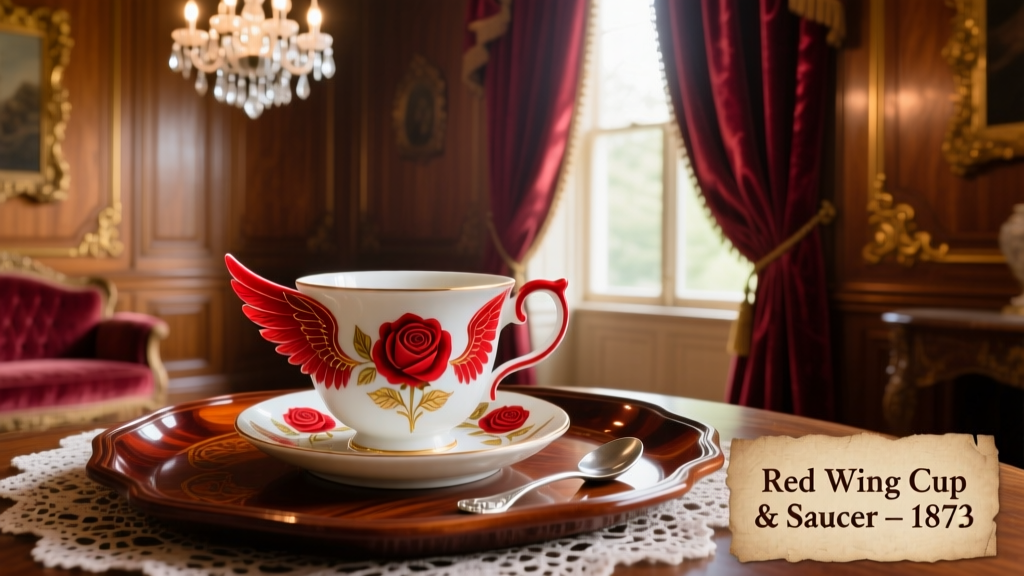
Red Wing Cup and Saucer in Rose Pattern: History, Identification, and Restoration Guidance
The 19th-Century Kitchen Board: A Carved Oak Cutting Surface with Inscribed Circle Geometry
The Mulberry Sugar Jeddo Cover: Origins, Identification, and Restoration Principles for Antique Furniture Specialists
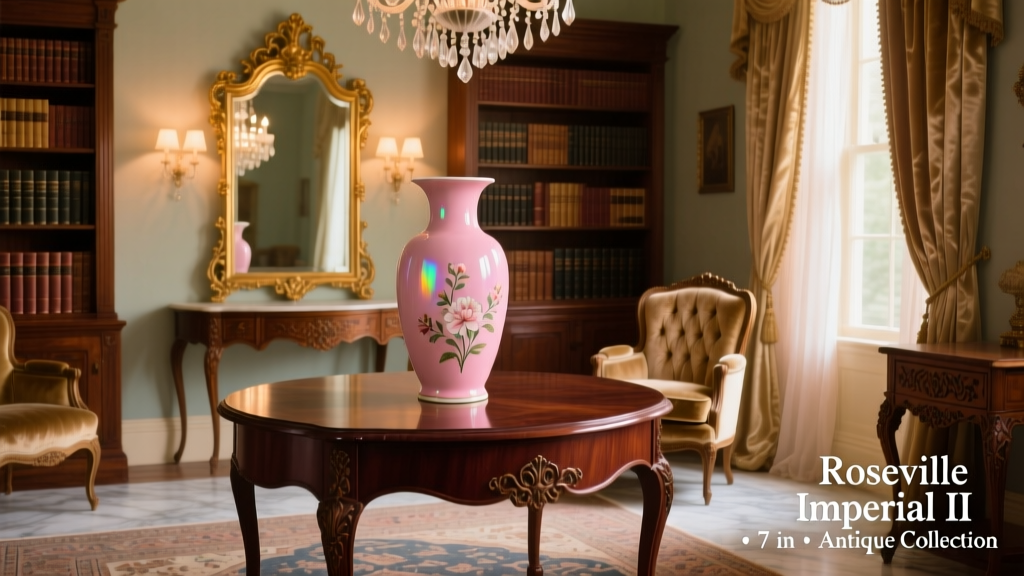
Roseville Imperial II Vase in Pink: Identification, Value, and Conservation of the 7-Inch Example
Fontaines Auction Gallery Multi-Estate Auction #2: A Curator’s Analysis of American & European Antiques, Mid-Century Design, and Rare Textiles