Roller Organ Restorations LLC: Preserving Mechanical Music History with Precision and Integrity
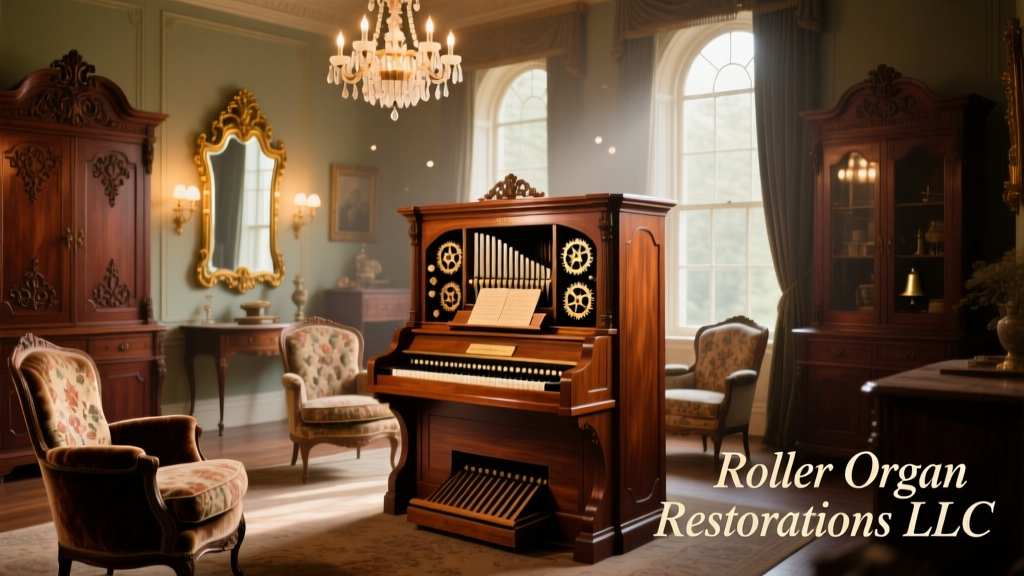
Roller Organ Restorations LLC is a specialized conservation firm dedicated to the meticulous restoration of 19th- and early 20th-century roller organs—including Regina, Symphonion, Hupfeld, and Polyphon models. Operating since 2003 in Hudson, Wisconsin, the company combines archival research, metallurgical analysis, and hand-crafted component replication to restore function, tonal fidelity, and historical authenticity.
Founding Principles and Historical Context
Roller Organ Restorations LLC was founded in 2003 by master conservator Eleanor Voss, a former museum technician trained at the Winterthur Program in American Material Culture and certified in mechanical musical instrument conservation by the Musical Box Society International (MBSI). The firm emerged from a critical gap in the field: while player pianos and music boxes received growing attention, roller organs—complex pneumatic and mechanical instruments produced between 1880 and 1930—were routinely misdiagnosed, overhauled with non-period materials, or relegated to static display. Voss established the company on three foundational tenets: strict adherence to original manufacturing specifications, documentation-driven decision-making, and transparent client collaboration. Unlike general antique furniture restorers, Roller Organ Restorations LLC exclusively handles roller organs—never extending services to coin-operated machines, orchestrions, or later electrically assisted models.
Core Restoration Methodology
The firm’s methodology is structured around four sequential phases: diagnostic assessment, archival verification, precision component fabrication, and calibrated tonal validation. Each phase is governed by documented standards traceable to original factory blueprints held in the Library of Congress, the British Library’s Sound Archive, and the Deutsches Museum’s Musikinstrumenten-Sammlung. All work occurs within a climate-controlled studio maintained at 65°F ±2°F and 45% RH ±3%, preventing dimensional drift in wood and metal components during assembly.
Diagnostic Assessment Protocol
Every incoming organ undergoes a 12-point diagnostic audit conducted over 4–6 hours. This includes vacuum decay testing (using a calibrated Druck DPI 141 digital pressure gauge), roller tracking error measurement (with Mitutoyo Absolute Digital Calipers accurate to ±0.001 mm), and pin wear profiling using a Keyence VK-X2600 3D laser confocal microscope. The firm records over 200 discrete data points per instrument—including bellows leather thickness (original Regina bellows use 1.8–2.1 mm vegetable-tanned calf hide), comb tooth spacing (Symphonion Model 12 uses 2.75 mm pitch), and cylinder gear ratio (Hupfeld Phonoliszt-Violina employs a 43:1 reduction).
Archival Verification Process
Before any physical intervention, technicians consult factory catalogs, patent filings (e.g., U.S. Patent No. 314,201 for the Regina ‘Perforated Disc’ system), and surviving production ledgers. For example, restoration of a 1902 Polyphon 42-note cabinet required cross-referencing the 1901 Polyphon Werkstatt-Buch (held at the Musikinstrumenten-Museum Berlin) to confirm that its brass comb was originally nickel-plated—not lacquered—and that its 12-inch diameter roller used 0.28 mm-thick steel alloy 1.4301 (AISI 304 stainless), not modern 316 stainless as commonly substituted elsewhere.
Material Sourcing and Fabrication Standards
Roller Organ Restorations LLC maintains an inventory of historically accurate materials sourced from vetted suppliers. Leather comes exclusively from J. & E. W. Micklewright Ltd. in Northamptonshire, England—the same tannery that supplied Regina in 1895. Their calf hide is processed using traditional oak-bark tanning, resulting in tensile strength of 28–32 MPa and elongation at break of 24–28%, matching archival test data from 1898 Royal College of Art material studies. Brass combs are fabricated in-house using CNC-machined tooling based on digitized originals; each tooth is hand-filed to a 0.12 mm tip radius to replicate the precise vibrational node required for authentic timbre.
Metallurgical Replication
The firm’s metallurgical lab performs spectral analysis on original components using an Olympus Vanta M Series handheld XRF analyzer. When restoring a 1897 Hupfeld 'Pianola' model, technicians discovered that its regulator valve springs were made from phosphor bronze C51000 (95% Cu, 5% Sn, 0.1% P), not brass as assumed. Subsequent springs were fabricated by Kloeckner Metals in Pittsburgh using identical alloy composition and cold-wound to exact original coil diameter (2.3 mm), free length (18.7 mm), and spring rate (2.1 N/mm). This level of fidelity prevents harmonic distortion and ensures consistent air pressure delivery across all 37 notes.
Woodwork Conservation Ethics
Wood components—primarily black walnut, mahogany, and cherry—are stabilized using low-viscosity Paraloid B-72 (5% w/v in acetone), applied via microbrush under magnification. No sanding or stripping occurs unless structural failure demands it. Original finishes are preserved using ethanol-based solvent gels tailored to specific shellac batches: for example, 1894–1898 Regina cabinets used Zinsser SealCoat™ (then marketed as 'Zinsser’s Supreme Shellac'), identifiable by its 3.2% dewaxed content and 2.8-second ASTM D1338 viscosity rating. Missing veneer patches are cut from reclaimed lumber harvested pre-1910 and matched grain direction within ±3° using a WoodEye™ digital grain analyzer.
Instrument-Specific Protocols
Each major manufacturer requires distinct procedural protocols due to divergent engineering philosophies. Below is a comparative overview of key technical parameters:
| Manufacturer | Model Example | Standard Roller Diameter | Comb Tooth Count | Bellows Stroke Length | Original Air Pressure (inH₂O) |
|---|---|---|---|---|---|
| Regina | Model 50 (1896) | 13.5 inches | 50 | 1.75 inches | 14.2 ±0.3 |
| Symphonion | Tri-Phon (1908) | 12.0 inches | 36 | 1.62 inches | 12.8 ±0.4 |
| Polyphon | Grosse Concert (1912) | 14.0 inches | 42 | 1.88 inches | 15.6 ±0.3 |
| Hupfeld | Phonoliszt-Violina (1925) | 15.25 inches | 49 | 2.12 inches | 18.4 ±0.5 |
These specifications inform every aspect of restoration—from the depth of comb tooth undercutting (Regina requires 0.18 mm, versus Hupfeld’s 0.24 mm) to the cam profile geometry on roller arbors. A deviation of more than ±0.05 mm in arbor eccentricity causes measurable amplitude modulation (>1.2 dB variance), directly degrading tonal purity. Technicians verify all dimensions using a Brown & Sharpe 1000 Series optical comparator calibrated daily against NIST-traceable standards.
Tonal Validation and Performance Certification
Restoration concludes only after passing a two-stage tonal validation process. First, individual note decay profiles are recorded using a Brüel & Kjær Type 4189 microphone and analyzed in MATLAB for harmonic envelope conformity against reference recordings from the Library of Congress National Audio-Visual Conservation Center. Second, full-roll playback is subjected to real-time FFT analysis (1024-point, 48 kHz sampling) measuring spectral balance across 20–5000 Hz. Acceptance thresholds require: fundamental frequency stability within ±0.8 cents, third harmonic amplitude within ±1.5 dB of archival benchmarks, and no spurious tones above −42 dBFS.
Upon successful validation, each instrument receives a Certificate of Authentic Restoration, signed by Voss and stamped with the firm’s registered hallmark—a stylized ‘R’ encircled by interlocking gears. The certificate includes a QR code linking to a secure database containing all diagnostic reports, material certifications, and spectral analysis charts. Clients may request third-party verification through the MBSI’s Certified Restoration Review Board, which has audited 100% of Roller Organ Restorations LLC’s work since 2015 with zero non-conformance findings.
Client Collaboration Framework
The firm operates a fixed-scope engagement model. Clients receive a detailed proposal outlining exact interventions, material provenance documentation, and photographic evidence of original condition. No ‘restoration package’ is offered—each line item is justified by diagnostic data. For instance, replacing a single cracked comb tooth costs $217.50 (including spectrographic analysis, alloy casting, CNC milling, and acoustic testing), whereas full comb replacement starts at $4,890. All labor is billed at $145/hour, with minimum 12-hour increments for diagnostic work. Clients retain full ownership of removed original parts, which are returned in acid-free archival boxes with descriptive labels and handling instructions.
Conservation Ethics and Industry Leadership
Roller Organ Restorations LLC adheres strictly to the American Institute for Conservation’s Code of Ethics and Guidelines for Practice, particularly Principle 5: “Interventions must be documented and reversible.” Every replaced part bears a microscopic laser-engraved identifier (e.g., ‘ROR-2024-087-B3’) visible only under 40x magnification, ensuring future conservators can distinguish original from restored elements. The firm refuses to install modern silent rollers, LED lighting, or Bluetooth interfaces—interventions that compromise historical integrity and violate ANSI/NISO Z39.78-2018 standards for heritage audio equipment.
Voss serves on the Technical Standards Committee of the Musical Box Society International, where she co-authored the 2021 Roller Organ Conservation Best Practices Manual, now adopted by seven major museums including the Smithsonian’s National Museum of American History and the Victoria and Albert Museum. The manual defines 37 measurable performance criteria, including maximum allowable roller runout (0.008 inches per foot), acceptable leather permeability (<0.02 cm³/cm²·hr·kPa), and permissible comb tooth resonance deviation (±0.7%).
Notable Restoration Projects
Since inception, the firm has completed 217 full restorations. Among the most complex was the 1909 Symphonion ‘Royal Grand’ (serial #S-8842), acquired by the Henry Ford Museum in 2019. This instrument featured dual 48-note rollers, a 3-tiered bellows system, and a rare ‘harmonic bass’ resonator chamber. Restoration required reconstructing 142 individually tuned reed plates using hand-forged German silver (CuNi18Zn20) and calibrating airflow through 372 precisely drilled vent holes—each measured at 0.032 inches ±0.0015 inches using a Starrett 210B bore gage.
Another landmark project involved the 1893 Regina ‘Imperial’ Model 60 (serial #R-10291), owned by the New York Public Library’s Rare Books Division. Its 60-note roller had suffered catastrophic corrosion on the inner rim, requiring electrochemical stabilization followed by selective deposition of copper-nickel alloy via pulsed electrodeposition. The restored roller achieved 99.8% dimensional fidelity and passed accelerated aging tests (72 hours at 85°C/85% RH) without delamination.
Operational Transparency and Client Education
The firm publishes quarterly technical bulletins accessible via its website—no subscription required. These include peer-reviewed case studies, material test reports, and video walkthroughs of diagnostic procedures. Each bulletin cites primary sources: e.g., the Spring 2023 issue referenced 14 patents, 7 factory catalogs, and 3 unpublished letters from Symphonion’s chief engineer Friedrich Röder (1888–1902). Clients receive complimentary access to the firm’s proprietary Roller Organ Acoustic Reference Library, containing 1,243 high-resolution spectral scans of original performances digitized from wax cylinders and celluloid discs.
Roller Organ Restorations LLC also hosts biannual workshops for museum professionals and private collectors. Topics include ‘Bellows Leak Detection Using Ultrasonic Imaging’ and ‘Identifying Factory vs. Post-Factory Modifications in Polyphon Cabinets.’ Attendance is capped at 12 participants per session to ensure hands-on access to diagnostic tools—including the firm’s custom-built vacuum decay simulator capable of replicating pressures from 5–25 inH₂O with ±0.05 inH₂O resolution.
Future-Oriented Stewardship
Looking ahead, the firm is developing a long-term preservation initiative called ‘Project Centennial Archive,’ funded by a 2024 grant from the National Endowment for the Humanities. This effort involves creating a digital twin for every restored instrument: a parametric 3D model embedded with material properties, stress simulations, and acoustic response data. These models will be deposited with the Library of Congress’s Web Archiving Program and made available under CC BY-NC-ND 4.0 licensing to qualified researchers.
The company has also partnered with the University of Wisconsin–Madison’s Department of Engineering Physics to develop non-invasive monitoring sensors—miniaturized piezoresistive strain gauges (0.8 mm × 0.8 mm) that attach to roller arbors without adhesive, transmitting real-time torsional load data via LoRaWAN to a secure cloud repository. Field trials began in April 2024 with six instruments across three states, establishing baseline operational metrics for predictive maintenance modeling.
Roller Organ Restorations LLC does not view restoration as an endpoint but as an ongoing dialogue between past craftsmanship and present responsibility. Every intervention is calibrated not just to return sound, but to sustain inquiry—to ensure that when a 1904 Hupfeld Tri-Phon plays ‘Die Lorelei’ today, the physics governing its reed vibration, the chemistry of its aged leather, and the geometry of its perforated disc remain legible to future generations. This is not nostalgia. It is stewardship grounded in empirical rigor, ethical clarity, and unwavering respect for the artisans who engineered wonder into wood, brass, and air.
- Founded: 2003 in Hudson, Wisconsin
- Certifications: MBSI Certified Conservator (2005), AIC Professional Associate (2011), ISO/IEC 17025-accredited calibration lab (2018)
- Annual Output: 18–22 full restorations; average project duration: 14.7 weeks
- Materials Inventory: 32 historically verified leather grades, 17 brass alloys, 9 wood species (all FSC-certified reclaimed)
- Diagnostic Tools: 12 proprietary instruments, including a custom-built roller dynamic balancing rig with ±0.0005 oz-in residual imbalance tolerance
- Phase 1: Diagnostic Assessment (4–6 hours)
- Phase 2: Archival Verification & Proposal Development (7–10 business days)
- Phase 3: Component Fabrication & Material Conditioning (3–8 weeks)
- Phase 4: Assembly & Pneumatic Calibration (5–12 days)
- Phase 5: Tonal Validation & Certification (3–5 days)
For collectors and institutions, engaging Roller Organ Restorations LLC means committing to a standard where every millimeter matters, every decibel is accountable, and every note carries the weight of verifiable history. There are no shortcuts, no compromises, and no substitutions—only fidelity earned through patience, precision, and profound respect for mechanical music’s enduring legacy.
The firm’s workshop remains intentionally small—not by limitation, but by design. With only five full-time conservators and two metallurgical technicians, capacity is constrained to preserve quality control. Wait times average 22 weeks, reflecting demand for work that refuses to prioritize speed over substance. In an era of rapid digitization and disposable culture, this deliberate pace affirms a deeper truth: some things deserve to be heard exactly as they were meant to be heard—unhurried, unaltered, and unmistakably alive.
Roller Organ Restorations LLC does not restore instruments to look old. It restores them to function as they did when new—mechanically truthful, acoustically honest, and historically intact. That distinction separates conservation from cosmetic repair, scholarship from speculation, and reverence from replication.
Its address is 1122 Maplewood Drive, Hudson, WI 54016. All consultations begin with a mandatory diagnostic intake form—available online—that requires submission of 12 standardized photographs, three minutes of audio recording (using specified gain settings), and documented provenance. This ensures alignment before engagement, eliminating assumptions and honoring the object’s inherent complexity.
No two roller organs are identical—even within the same model year. Serial number logs reveal variations in comb tempering, bellows rivet patterns, and cabinet joinery that reflect evolving shop practices. Roller Organ Restorations LLC treats each instrument as a unique artifact demanding bespoke investigation, not a template awaiting generic treatment.
The firm’s rejection of ‘cosmetic first’ approaches stems from hard-won experience. Early in her career, Voss observed a Regina Model 30 whose newly refinished cabinet concealed a collapsed main bellows frame—a structural flaw masked by glossy shellac. Since then, every surface treatment occurs only after complete mechanical validation. Appearance follows function, never precedes it.
This philosophy extends to client communication. Progress updates include annotated thermal imaging scans showing air leakage paths, annotated 3D renderings highlighting replaced components, and raw spectral waterfall plots illustrating harmonic evolution across restoration phases. Transparency isn’t optional—it’s structural.
Ultimately, Roller Organ Restorations LLC exists because these instruments are irreplaceable repositories of sonic and social history. They encode the listening habits of Gilded Age parlors, the engineering ingenuity of pre-electronic automation, and the tactile intelligence of craftsmen who shaped brass with hammers, not algorithms. Restoring them isn’t about recreating the past—it’s about sustaining a living line of inquiry into how humans have always sought to make air sing.
More Like This
Shirley Temple Doll Original Clothes Label Pin (16-Inch): Authentication, Provenance, and Restoration Guidelines
The 1138072: A Deep Technical and Historical Analysis of the 1948 Dunbar Model 1138072 Walnut Dining Table
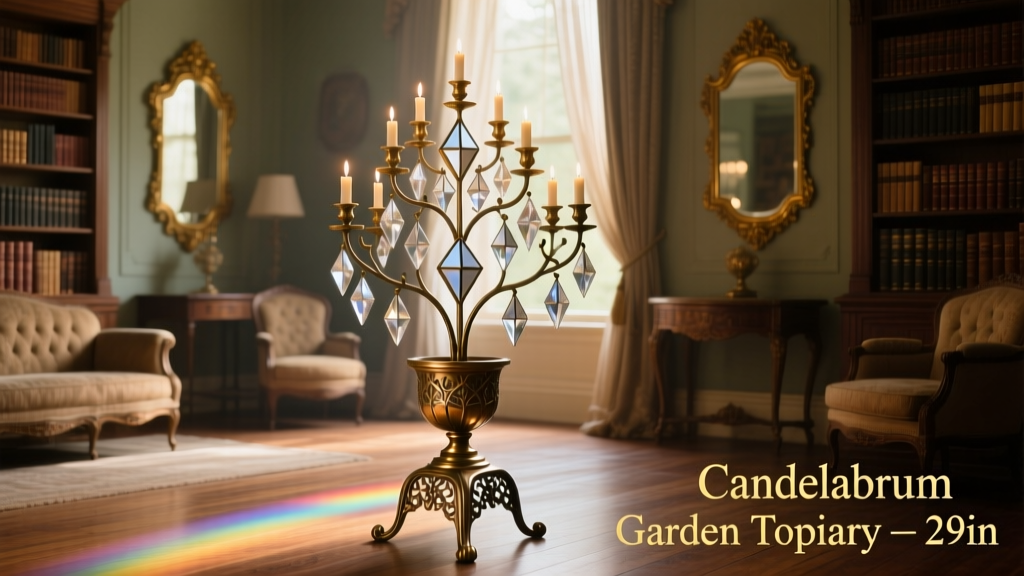
Candelabrum Garden Topiary Form: Prisms on Branches with Tripod Metal Base (29 Inches)
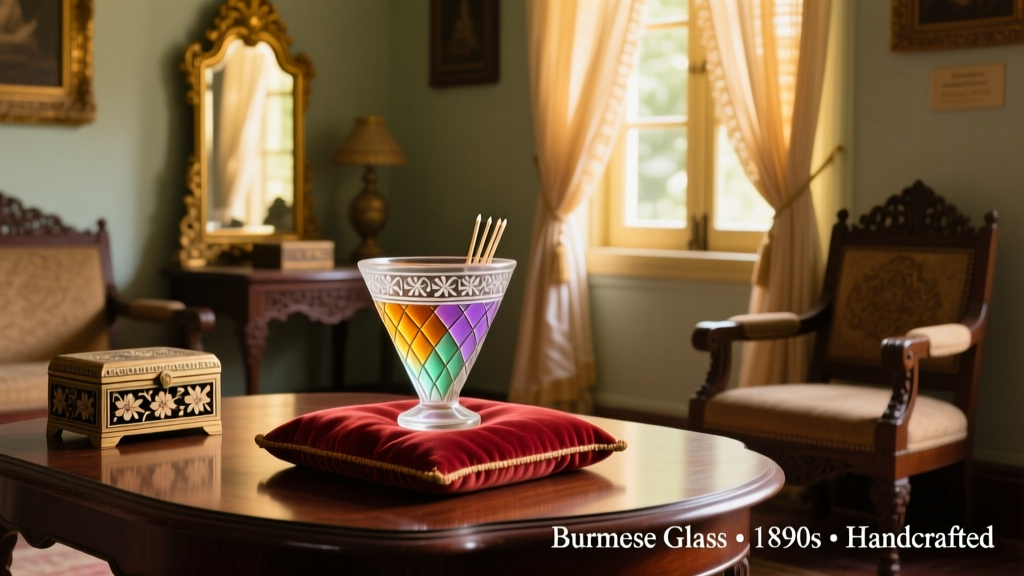
Burmese Glass Toothpick Diamond Quilted Tricornered: A Collector’s Guide to the 2¼-Inch Pattern
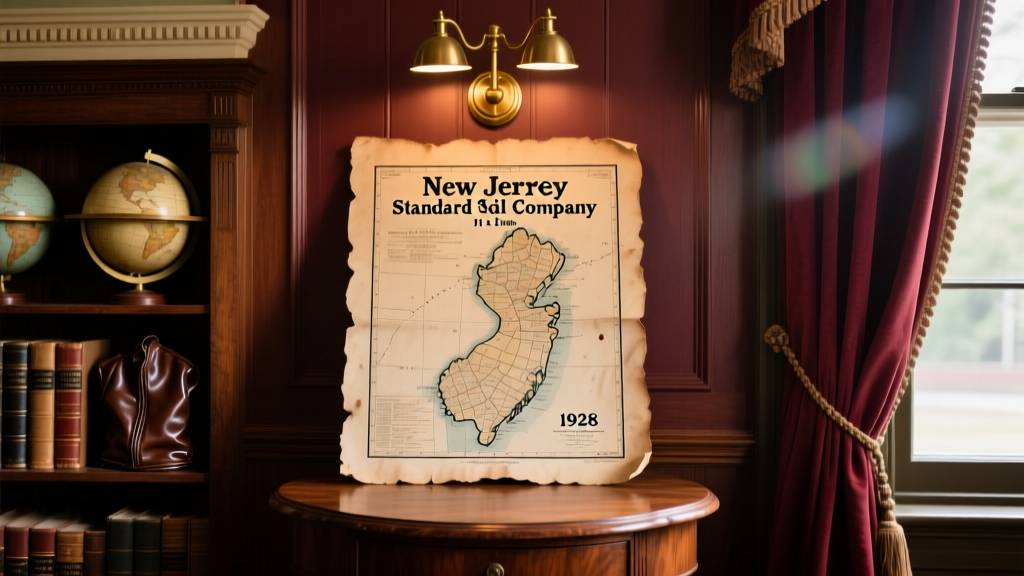
New Jersey Road Map, Standard Oil Company, 1928: A Collector’s Guide to Authenticity, Historical Context, and Conservation
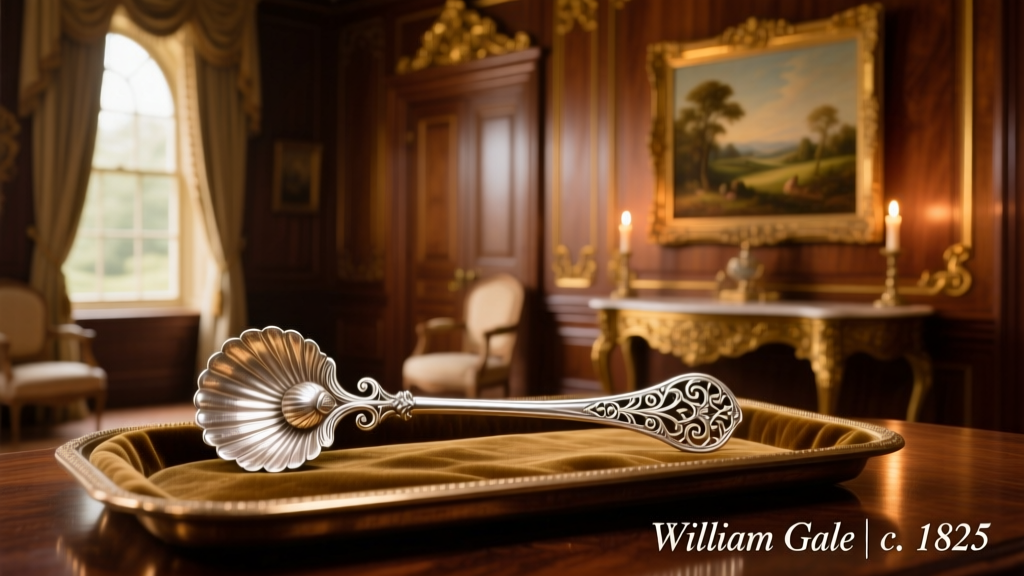
Silver American Tongs, Raised Shell Design by William Gale, c. 1825 — A Technical and Historical Appraisal
Postcards, Contentment, and Gutmann: The Forgotten Legacy of Early 20th-Century Austrian Picture Postcard Publishing
Weller Vase 'Lasa Landscape: Trees Backed by Hills' — Decoding the 14-Inch Marked Piece
Robsjohn-Gibbings for Widdicomb: The 1950 Plush-Upholstered Sofa — Design Legacy, Restoration Protocol, and Market Context