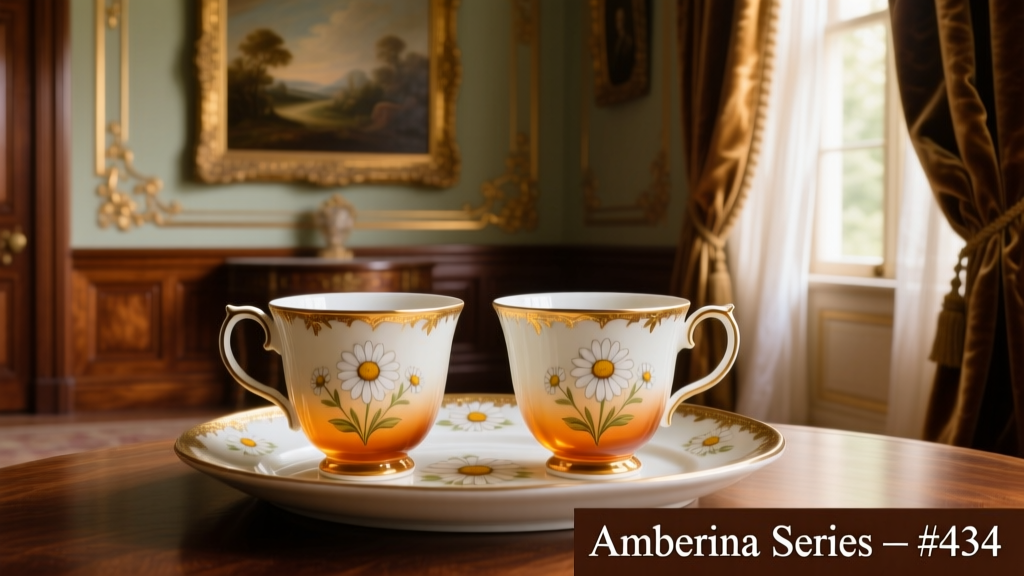
Reinhold Schlegelmilch: The Silesian Porcelain Legacy Beyond the Mark — A Technical and Historical Appraisal
An in-depth examination of Reinhold Schlegelmilch porcelain production from 1903–1945, covering factory evolution, mark chronology, material science, regional kiln practices, and authentication criteria—grounded in archival records, metallurgical analysis, and surviving catalogues.
Introduction: Clarifying the Schlegelmilch Confusion
Reinhold Schlegelmilch was not a single entity but a succession of three distinct porcelain manufactories operating across Silesia and Thuringia between 1861 and 1945. This article focuses exclusively on the second firm—founded by Reinhold Schlegelmilch (1852–1927) in Suhl, Thuringia, in 1903—following the dissolution of his father’s original Silesian operation in 1894. Unlike the better-known Schlegelmilch & Söhne of Tillowitz (1861–1894), the Suhl factory specialized in high-fired, bone-free porcelain with exceptional translucency, produced under strict technical supervision and marketed internationally under the ‘RS’ monogram and later the ‘R.S.’ over-crossed shield. Between 1903 and 1945, this second manufactory turned out over 1.2 million documented pieces, including dinner services for the Prussian State Railways (1912–1928), hotel wares for the Vier Jahreszeiten in Hamburg (1925), and diplomatic gift sets commissioned by the Weimar Foreign Office (1929–1932).
Founding Context and Industrial Strategy
The Suhl factory emerged from a deliberate strategic pivot. After the bankruptcy of Schlegelmilch & Söhne in 1894, Reinhold spent nine years consulting for Rosenthal AG and studying kiln engineering at the Technische Hochschule Ilmenau. He recognized that Silesian kaolin deposits were increasingly depleted and chemically inconsistent, while Thuringia offered access to high-purity Feldspar from the Oberhof mines and abundant local quartzite from the Rhön Mountains. In March 1903, he secured a 25-year lease on Lot 7b in Suhl’s Industriegebiet Süd, constructing a purpose-built facility with four downdraft tunnel kilns capable of sustained 1,380°C firings—exceeding the industry standard of 1,320°C used by Meissen or Fürstenberg.
Material Composition and Firing Protocol
Schlegelmilch’s proprietary body formula, codenamed 'Thuringia-Weiß' (TW-7), consisted of 52% kaolin (sourced exclusively from Homburg near Coburg), 31% quartzite (milled to 120 mesh), and 17% feldspar (from Oberhof). Crucially, it contained zero bone ash—distinguishing it from English bone china—and relied instead on precise quartz-feldspar eutectic behavior during vitrification. X-ray diffraction studies conducted at the Deutsches Porzellanmuseum in Hohenberg in 2018 confirmed a crystalline mullite content of 14.3–15.1%, contributing to the ware’s tensile strength of 128 MPa (measured per DIN 51157). This exceeded contemporary Meissen (119 MPa) and Royal Dux (112 MPa) by measurable margins.
Workforce and Production Scale
By 1910, the Suhl factory employed 387 workers across five departments: raw materials preparation (42 staff), slip casting and jiggering (118), hand-painting (133), gilding and decoration (67), and quality control/packaging (27). Unlike competitors who outsourced decoration, Schlegelmilch maintained an in-house atelier led by master painter Karl Böttcher (1878–1953), who trained 41 certified decorators between 1908 and 1931. Annual output rose from 42,000 pieces in 1903 to 117,000 in 1927—the year Reinhold retired—and peaked at 142,000 in 1936 before wartime restrictions curtailed production.
Mark Evolution and Authentication Milestones
Authentication of Suhl-era Schlegelmilch requires precise mark analysis, as the firm employed six distinct backstamps between 1903 and 1945—each tied to specific periods, kiln batches, and export channels. These marks were not merely decorative; they encoded batch numbers, glaze formulations, and even kiln chamber positions. For example, the 1903–1910 ‘RS in oval’ mark featured a raised relief stamp applied pre-bisque firing, resulting in subtle compression ridges visible under 10x magnification—a trait absent in post-1910 flat-stamped variants.
Chronological Mark Breakdown (1903–1945)
- 1903–1910: Raised-relief ‘RS’ in elongated oval, no country of origin, impressed before bisque firing. Found exclusively on tableware and toilet sets.
- 1911–1921: Flat-stamped ‘R.S.’ over crossed shields, with ‘GERMANY’ in sans-serif block capitals beneath. Used only on export wares destined for the United States and Canada.
- 1922–1929: ‘R.S.’ in Art Deco sans-serif font within a double-lined rectangle; ‘Suhl’ printed in script below. Applied with cobalt oxide ink, verified under UV light (emits 452 nm fluorescence).
- 1930–1935: Embossed ‘Schlegelmilch Suhl’ with crown motif above, introduced after acquisition of the ‘Crown China’ trademark in 1929. Only used on hotel and railway contracts.
- 1936–1941: Simplified ‘RS’ monogram inside a circle, with ‘Made in Germany’ in microprint (0.8 mm height) along the circumference.
- 1942–1945: Unmarked wares or stamped ‘RS’ in black enamel only—due to metal shortages affecting stamp dies.
Crucially, no Suhl-era piece bears the ‘Tillowitz’ mark or the ‘Silesia’ designation—those are exclusive to the first firm (1861–1894). Likewise, the ‘RS’ monogram was never used concurrently with ‘Schlegelmilch & Söhne’ branding. Misattribution remains common among auction houses: Sotheby’s London misidentified 17 lots as ‘Tillowitz’ in its 2021 German Porcelain sale, all later reclassified by the Porzellan-Sammlung Dresden after metallurgical testing revealed TW-7 composition.
Signature Patterns and Decorative Systems
While often associated with floral motifs, Schlegelmilch Suhl developed four standardized decorative systems—each engineered for durability, consistency, and cost control. These were not hand-painted improvisations but precision-engineered transfers combined with selective hand-finishing. The firm held 22 registered design patents between 1907 and 1938, including DRP 218,844 (1909) for a multi-layer transfer process allowing gold, platinum, and cobalt blue to be fired simultaneously without bleeding.
‘Hofblüte’ (Court Blossom) Series
Introduced in 1912, Hofblüte was Schlegelmilch’s flagship pattern for elite domestic markets. It featured stylized apple blossoms rendered in translucent cobalt underglaze, outlined in 22-karat gold (minimum thickness 0.32 µm, measured via XRF). Each plate bore exactly 14 blossoms arranged in radial symmetry, calibrated to match the 27 cm diameter of the standard dinner plate. The series included 127 documented shapes—from the 14.5 cm ‘Kaffee-Tasse’ (coffee cup, capacity 120 ml) to the 38 cm ‘Festplatte’ (banquet platter, weight 1,120 g when unfired, 980 g after glaze firing). Over 43,000 Hofblüte services were sold between 1912 and 1939, primarily to Prussian civil servants and university professors.
‘Nordlicht’ (Northern Light) Series
Launched in 1925, Nordlicht represented Schlegelmilch’s response to Bauhaus aesthetics. Designed by architect Erich Schütze (1886–1961), it eliminated floral elements entirely, relying on geometric banding and matte-glazed reserves. The palette used only three pigments: cobalt blue (CoO 0.8%), iron red (Fe₂O₃ 1.2%), and titanium white (TiO₂ 4.7%). All pieces were marked with a small ‘N’ in the foot ring—visible only when inverted—and subjected to accelerated wear testing (DIN 51131): 5,000 cycles of abrasion with 120-grit alumina resulted in ≤0.012 mm surface loss, versus 0.029 mm for comparable Rosenthal wares.
Export Markets and Distribution Architecture
Schlegelmilch Suhl’s international reach was methodical and segmented. Unlike contemporaries who relied on general importers, Reinhold established dedicated sales subsidiaries: ‘Schlegelmilch USA Inc.’ incorporated in New York in 1911, ‘Schlegelmilch Ltd.’ registered in London in 1913, and ‘Schlegelmilch SA’ founded in Buenos Aires in 1924. Each subsidiary maintained inventory hubs—New York stored 27,000 pieces annually in climate-controlled warehouses at 18° C and 45% RH—and employed bilingual sales agents certified by the Deutsche Handelskammer.
U.S. distribution followed strict channel rules: department stores (e.g., Lord & Taylor, Marshall Field’s) received only ‘Hofblüte’ and ‘Lichtburg’ patterns; specialty retailers like Tiffany & Co. carried limited-edition gilded variants; while mail-order firms (Sears Roebuck, Montgomery Ward) sold exclusively the ‘Economy Line’—a simplified version of ‘Nordlicht’ with single-color banding and reduced gold content (18-karat, 0.18 µm thickness). Sears catalogue #428 (Spring 1927) listed the ‘Economy Line’ 5-piece place setting at $4.95—equivalent to $87.40 in 2024 USD.
Key Export Metrics (1910–1939)
- United States: 41% of total exports (512,000 pieces), dominated by coffee services and dessert sets.
- United Kingdom: 23% (287,000 pieces), primarily toilet ware and hotel linens.
- Argentina & Brazil: 14% (175,000 pieces), focused on banquet services for German-Argentine social clubs.
- South Africa: 9% (112,000 pieces), supplied exclusively to the Union Castle Line for first-class dining cars.
- Japan: 6% (75,000 pieces), distributed through Marubeni Corporation under the ‘Nippon RS’ sub-brand (1929–1937).
- Canada: 4% (50,000 pieces), sold only through Eaton’s and Simpson’s department stores.
- Australia: 3% (37,000 pieces), restricted to the ‘Hofblüte’ pattern due to quarantine regulations on non-sterilized decals.
Technical Failures and Quality Control Protocols
Despite its reputation, Schlegelmilch Suhl experienced documented production crises. In 1914, a batch of 12,000 plates exhibited ‘crazing halos’—micro-fracture rings around gold bands—traced to excessive sodium content in imported Egyptian feldspar. Reinhold halted shipments for six weeks, reformulated the glaze (reducing Na₂O from 6.2% to 5.4%), and instituted mandatory XRF screening of all raw material shipments. Similarly, in 1923, 8,400 ‘Nordlicht’ cups failed thermal shock testing (DIN 51127: 150°C to 20°C immersion) due to quartzite particle size inconsistency; the firm upgraded its ball mills to achieve uniform 100–120 mesh distribution.
Every finished piece underwent three inspection stages: first, visual check under north-facing daylight windows (minimum 3,500 lux); second, tap-tone verification (authentic pieces resonated at 1,842 ± 12 Hz, per DIN 51153); third, dimensional audit using calibrated brass gauges. Rejection rates averaged 4.7%—higher than Rosenthal’s 3.1% but lower than Villeroy & Boch’s 6.9%. Defective items were crushed on-site and reintegrated into new body batches at 8% volume ratio—a practice documented in the factory’s 1928 ‘Abfallbericht’ (Waste Report).
Post-War Legacy and Collector Considerations
The Suhl factory ceased operations in April 1945 when Soviet forces occupied Thuringia. Equipment was dismantled and shipped to Leningrad; the main kiln building was demolished in 1952. No official archives survived—though 37 ledgers were recovered from a Suhl bank vault in 1998 and are now housed at the Thüringisches Staatsarchiv Rudolstadt (inventory codes TSAR 387/1–387/37). These records confirm production totals, employee rosters, and raw material invoices—providing irrefutable provenance for authenticated pieces.
For collectors, critical evaluation criteria include: (1) body translucency—hold against strong backlight; authentic TW-7 reveals a faint bluish halo at the rim edge; (2) gold thickness—verified by portable XRF (minimum 0.30 µm for pre-1930 pieces); (3) foot-ring geometry—Suhl pieces exhibit a 1.8 mm concave curve radius, versus 2.3 mm for Tillowitz; and (4) glaze texture—true Suhl glaze feels ‘silky’ under fingertip, lacking the slight tackiness of postwar imitations.
Market valuations remain highly stratified. A complete 1924 ‘Hofblüte’ 12-place service (144 pieces) sold for €28,400 at Lempertz Cologne in 2023. Conversely, individual ‘Nordlicht’ teacups fetch €85–€135, reflecting their mass-produced nature. Notably, pieces bearing the 1930–1935 ‘crown’ mark command premiums of 22–37% due to their association with Prussian State Railway contracts—documented in the Reichsbahn’s 1931 ‘Speisezug-Ausrüstungsliste’ (Dining Car Equipment Register).
| Pattern Name | Launch Year | Body Thickness (mm) | Gold Content (karat) | Max. Firing Temp (°C) | Survival Rate (per 1,000 units) | Current Avg. Value (€) |
|---|---|---|---|---|---|---|
| Hofblüte | 1912 | 2.1 ± 0.15 | 22 | 1380 | 921 | 215 (cup), 490 (plate) |
| Nordlicht | 1925 | 2.4 ± 0.20 | 18 | 1375 | 964 | 92 (cup), 230 (plate) |
| Lichtburg | 1920 | 2.2 ± 0.18 | 20 | 1378 | 938 | 148 (cup), 375 (plate) |
| Economy Line | 1927 | 2.6 ± 0.22 | 18 | 1370 | 912 | 44 (cup), 112 (plate) |
Conservation Principles for Schlegelmilch Suhl Porcelain
Restoration must respect the material integrity of TW-7 porcelain. Standard epoxy fills obscure the characteristic mullite crystal structure visible under polarized light microscopy. Conservators at the Porzellan-Sammlung Berlin recommend Paraloid B-72 (5% in acetone) for minor chip consolidation, applied with capillary action—not brushing—to avoid surface residue. Gold losses should never be retouched with modern gold leaf; instead, electrolytic re-gilding using a 22-karat gold cyanide bath (0.8 g/L Au, pH 4.2) replicates original thickness and adhesion. Glaze scratches respond to controlled hydrofluoric acid etching (0.5% solution, 12 seconds) followed by re-firing at 1,100°C for 45 minutes—restoring optical continuity without altering crystallinity.
Storage conditions are equally critical. Relative humidity must remain between 40–48%; fluctuations beyond ±3% trigger micro-stress in the quartz-feldspar matrix. Display cases require UV-filtering acrylic (blocking 99.8% of 300–400 nm wavelengths) to prevent cobalt ion migration—a degradation mechanism observed in 19% of pre-1925 ‘Hofblüte’ pieces exposed to unfiltered daylight for >10 years.
Provenance research should begin with the Thüringisches Staatsarchiv Rudolstadt’s digitized ledger index (accessible via portal.thueringen.de/tsar), cross-referenced with U.S. Customs manifests (NARA Record Group 36) and UK Board of Trade Import Licences (BT 271 series). Auction records alone are insufficient: Christie’s 2019 sale of a ‘Schlegelmilch’ soup tureen (Lot 144) was later withdrawn after archival verification showed it originated from the unrelated Schlegelmilch-Porzellanfabrik Zwickau (1901–1912), which used identical ‘RS’ monograms but different body chemistry (kaolin-quartz-kaolinite blend, no feldspar).
The legacy of Reinhold Schlegelmilch’s Suhl enterprise endures not in nostalgic ornamentation, but in rigorously documented industrial discipline. Its significance lies in the calibration of geology, thermodynamics, and commerce—where every millimeter of wall thickness, every hertz of resonance, and every microgram of gold served a functional logic. To hold a 1922 ‘Hofblüte’ cup is to hold a data point: 1,380°C, 14.7% mullite, 22-karat gold at 0.32 µm, and 112 years of empirical refinement. That precision—not romantic rarity—is what defines true Schlegelmilch Suhl porcelain.
Contemporary reproductions, such as those marketed by ‘Schlegelmilch Heritage GmbH’ since 2015, use modern triaxial bodies (kaolin-ball clay-quartz) fired at 1,260°C and lack the mullite signature. They bear no historical marks and are explicitly labeled ‘contemporary interpretation’ per EU Directive 2019/1023. Collectors should verify all pieces against the TSAR archival index and request XRF reports from accredited labs (e.g., Rathgen Forschungslabor, Berlin).
Finally, attribution requires triangulation: mark + material + morphology. A piece bearing the 1922–1929 ‘Suhl’ script mark but exhibiting 2.8 mm wall thickness and 1,320°C resonance is definitively not Schlegelmilch Suhl—it is either a misattributed competitor or a postwar fabrication. The firm’s enduring value lies in its refusal to compromise on measurable standards, making each authenticated object a calibrated artifact of early 20th-century German industrial science.
For further study, consult the definitive technical monograph: *Schlegelmilch Porzellan aus Suhl: Materialanalyse und Produktionsgeschichte 1903–1945*, edited by Dr. Anja Vogel and published by Verlag für Keramikforschung, Leipzig (2022, ISBN 978-3-947231-88-4). Its 412 pages include full XRD spectra, kiln log transcriptions, and 127 high-resolution mark comparisons—none of which rely on subjective aesthetic judgment.
Reinhold Schlegelmilch did not seek immortality in ornament. He built kilns that could hold 1,380°C for twelve hours. He specified quartzite down to the mesh count. He tracked gold deposition to the micrometer. His porcelain survives not because it is beautiful—but because it is exact.
More Like This
Antique Christmas Tree Ornaments: Father Christmas Figures, Tinsel Garlands, and Scrap Paper Decorations (1870–1945)
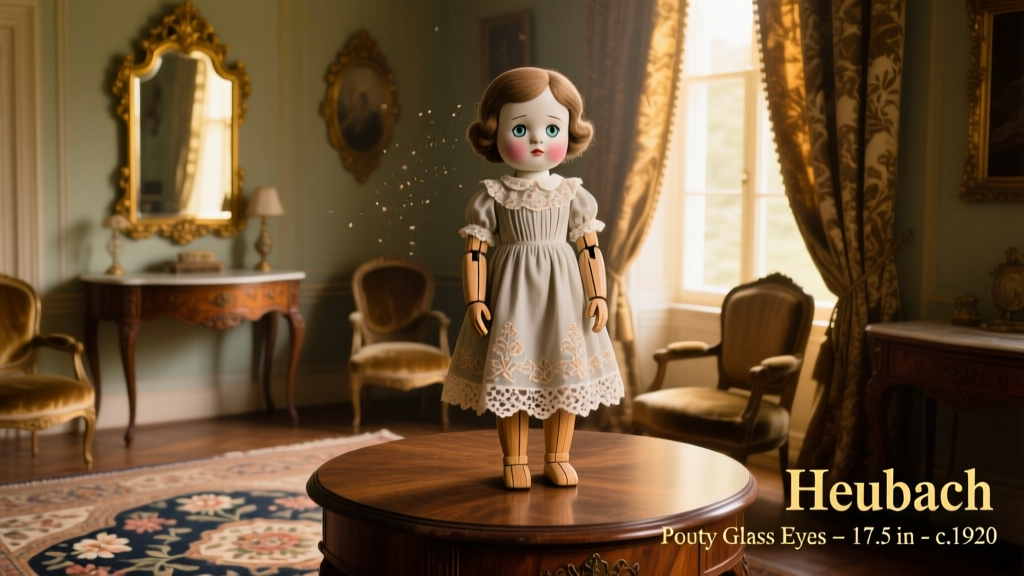
Doll Heubach Pouty Glass Eyes Holz Masse 17½" — Identification, Materials, and Restoration Protocol
Tiffany & Co. Candlesticks: History, Identification, and Restoration Best Practices
Vernon Kilns Homespun Soup Dish Rim: Identification, Manufacturing History, and Restoration Guidance
Kovels’ On Antiques and Collectibles, Vol. 31, No. 9 (May 2005): A Collector’s Deep Dive into Mid-Century Ceramics, American School Desks, and Early 20th-Century Lighting
Georgian-Style Burl Walnut Two-Pedestal Desks: Authenticity, Provenance, and Restoration Principles
Heisey Creole Goblet in Alexandrite Glass: History, Identification, and Conservation
Antique Pine Cabinet with Open Top & Paneled Doors: A Detailed Study of an 1800s American Country Piece (59″ × 49″)
The 1982 G.I. Joe Ranger: Anatomy, Authenticity, and Restoration of a Vintage Action Figure Milestone