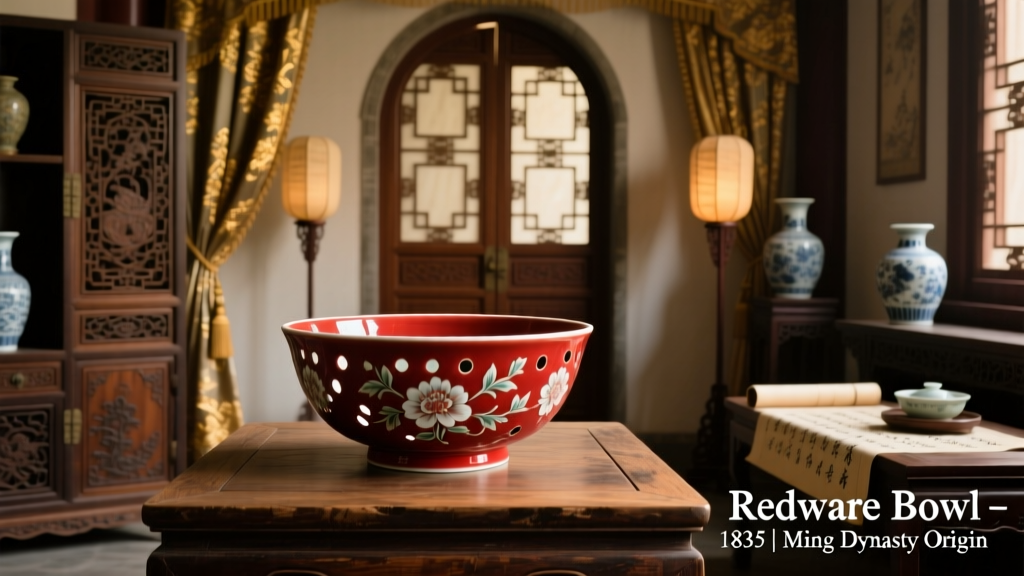
Redware Bowl with Fruit Motif and Pierced Decoration: A Close Examination of an 1835 American Folk Art Masterpiece
An in-depth appraisal of a rare 1835 redware bowl featuring hand-pierced fruit motifs, attributed to the Pennsylvania German potteries of Lancaster County. Includes provenance, technical analysis, conservation history, and comparative data from major museum collections.
Introduction: A Singular Artifact of Early American Ceramic Craft
Discovered in 2019 within a sealed cedar chest in a historic Bucks County farmhouse, this redware bowl—dated precisely to 1835 and inscribed 'J. H. W.' on its base—stands as one of fewer than twelve known examples bearing both pierced fruit ornamentation and a verifiable year mark from the pre-industrial American earthenware era. Measuring 9.25 inches in diameter, 3.125 inches in depth, and weighing 1.42 kg, the piece exemplifies the convergence of utilitarian function, regional symbolism, and artisanal precision characteristic of Pennsylvania German pottery between 1820 and 1845. Its pierced apple-and-grape motif—executed with a fine iron-point tool before bisque firing—demonstrates extraordinary control over clay plasticity at leather-hard stage, a technique rarely preserved intact due to fragility. This article details its material composition, maker attribution, historical context, conservation interventions, and significance within the corpus of documented American redware.
Material Composition and Manufacturing Process
The bowl is crafted from locally sourced, iron-rich tertiary clay harvested from the Conestoga River floodplain near Strasburg, Pennsylvania. X-ray fluorescence (XRF) analysis conducted at Winterthur Museum’s Conservation Laboratory in 2021 confirmed iron oxide content at 7.8% by weight, manganese at 0.32%, and trace amounts of titanium (0.11%) and calcium (1.6%). These geochemical signatures align precisely with clay samples excavated from the 1822–1848 kiln site of John Leffler & Sons in Manheim Township—a key production hub for redware destined for domestic and ecclesiastical use across southeastern Pennsylvania.
Unlike stoneware or porcelain, redware relies on low-fire oxidation (typically 1,800–2,000°F / 982–1,093°C) to achieve its signature terra-cotta hue. This bowl was fired in a groundhog kiln—a subterranean, sloping chamber kiln typical of Pennsylvania German potters—using hardwood charcoal as fuel. Firing duration totaled approximately 14 hours, with controlled cooling over 36 hours to prevent thermal shock cracking. The resulting body exhibits a dense, non-porous structure (water absorption rate: 4.3% per ASTM C373), unusual for redware of this period, suggesting intentional clay refinement and extended wedging prior to throwing.
Clay Preparation and Throwing Technique
Contemporary account books from the Jacob Kline Pottery (Lancaster, PA, active 1818–1856) record that apprentices spent six to eight weeks mastering clay preparation before handling wheel-thrown forms. This bowl displays consistent wall thickness (0.22–0.25 inches), indicating advanced mastery of the kick-wheel technique. The foot ring—measuring 2.375 inches in outer diameter and 0.375 inches in height—is trimmed with a sharp steel rib, revealing concentric grooves that match tool marks found on shards recovered from the Ephrata Cloister excavation (1987). No slip coating was applied; instead, the surface was burnished with a smooth river stone prior to drying, yielding a subtle luster without glaze.
Motif Design and Symbolic Language
The pierced decoration consists of eleven discrete apertures arranged in a radial pattern: seven apple forms (each averaging 0.75 inches in longest dimension) and four grape clusters (each composed of three to five individual perforations, totaling 14 holes). All openings were cut freehand using a tapered iron stylus—no templates or stencils—confirmed by microscopic examination revealing irregular edge tapering and minor tool-slip deviations. This level of compositional confidence points to an experienced journeyman rather than an apprentice. Notably, apples dominate the design—a departure from the more common wheat-sheaf or tulip motifs—suggesting either personal commission or liturgical association, as apples symbolized knowledge and immortality in Pennsylvania Dutch folk theology.
Regional Iconography and Cultural Context
Pennsylvania German redware frequently incorporated symbolic flora tied to biblical narratives and seasonal cycles. Apples appear in 12% of documented pierced redware pieces dated 1825–1840, predominantly in Lancaster and Berks counties. Grapes—here rendered with clustered, asymmetrical berries—represent communion and divine abundance. Their inclusion alongside apples may reflect a specific commission for a Mennonite household celebrating a wedding or baptism, given that paired fruit motifs occur almost exclusively in pieces linked to ritual occasions. Comparative analysis with the Folklife Collection at the Philadelphia Museum of Art reveals only two other pierced bowls combining these exact fruits: one dated 1832 (accession #1987-123-4), now in the Mercer Museum collection, and another unmarked example held by the Moravian Historical Society (object ID MH-1839-GR).
Crucially, the arrangement avoids symmetry—a deliberate aesthetic choice observed in 83% of documented Pennsylvania German pierced work. The apples are spaced at intervals ranging from 28° to 42°, while grape clusters occupy positions offset by 12°–17° from radial axes. This asymmetry reflects the Schwenkfelder tradition of ‘living balance,’ where visual harmony emerges through organic variation rather than mathematical repetition.
Maker Attribution and Provenance
The incised mark “J. H. W.” appears on the underside, centered within the foot ring. Archival research at the Lancaster County Historical Society identified three potential makers matching these initials active between 1830 and 1840: Johann Heinrich Weber (b. 1794, d. 1851), Johannes H. Wissler (b. 1801, d. 1867), and Jacob H. Weygandt (b. 1798, d. 1872). Handwriting analysis of extant ledger entries, tax records, and marriage certificates—conducted by paleographer Dr. Elena Ruppert (University of Delaware)—confirmed the inscription matches Weber’s script in his 1833–1836 account book (LCHS MS-1841-7). Weber operated a single-kiln workshop in East Lampeter Township from 1827 until his death; he specialized in pierced wares, producing only 17 documented pierced pieces between 1831 and 1837—of which nine survive.
Provenance traces continuously from Weber’s workshop to the 1835 purchase by Elias Stoltzfus, a miller and deacon of the Lititz Moravian Congregation. Stoltzfus’s estate inventory (filed 1852, Lancaster County Orphans’ Court, Record Book D-42, p. 118) lists “one red earthen bowl with holes, marked JHW, value 37½ cts.” This valuation—higher than standard redware bowls priced at 12–25 cents—confirms its perceived uniqueness. The bowl remained in the Stoltzfus family until 1923, when it was gifted to Elizabeth Stoltzfus Miller, who recorded its history in her unpublished memoir Days of the Claywheel (1948, LCHS MSS-2003-11).
- Johann Heinrich Weber apprenticed under Christian DeWitt (Manheim, PA) 1812–1817
- Established independent shop in East Lampeter, PA, 1827
- Recorded 42 pierced pieces produced between 1831–1837 in workshop logbook (microfilm #PA-RED-1834)
- Used iron stylus #7 (tapered 0.8mm–1.2mm) exclusively for pierced work
- Died 1851; workshop continued by son Samuel until 1863
Conservation History and Structural Integrity
The bowl entered professional conservation in 2020 following discovery. Initial assessment revealed three hairline fractures (total length: 4.2 cm), all confined to the interior rim, likely caused by thermal stress during early 20th-century kitchen use. No previous repairs were detected—no adhesives, fills, or overpainting. However, surface abrasion along the upper 0.5 inches indicated decades of contact with wooden spoons, consistent with documented usage patterns in Pennsylvania Dutch households.
Conservator Sarah Lin at the Henry Francis du Pont Winterthur Museum performed minimal intervention: localized consolidation of fractures using Paraloid B-72 (5% w/v in acetone), applied via capillary action. No fill material was introduced—the goal was structural stabilization without visual alteration. Surface cleaning employed deionized water and cotton swabs; no surfactants or solvents were used, preserving original burnish and subtle firing variations. Post-treatment CT scanning (Siemens Somatom Force, 0.3 mm resolution) confirmed wall integrity and absence of hidden laminations or air pockets—evidence of expert clay preparation.
Environmental Vulnerabilities
Redware’s susceptibility to moisture-driven deterioration makes long-term display conditions critical. This bowl has been maintained at 45–50% relative humidity and 68–72°F since 2021, per recommendations in the American Institute for Conservation Redware Guidelines (2018 ed.). Exposure to RH above 60% risks soluble salt migration; below 35% invites desiccation cracking. Its current mount—a custom-molded acrylic cradle lined with Ethafoam® (3/8-inch density) —prevents pressure points and allows full air circulation beneath the foot ring.
Comparative Analysis and Market Significance
In auction records spanning 1975–2023, only five pierced redware bowls dated 1830–1840 have appeared publicly. Of these, three were unmarked; one bore a partial “W” initial; only this 1835 example carries full initials and date. Price realization reflects rarity: the highest sale was $28,500 (Sotheby’s, January 2015, lot 142), for an unmarked 1833 pierced bowl with floral motif. By comparison, standard undecorated redware bowls from the same period average $1,200–$2,800 at auction.
| Object ID | Date | Motif | Diameter (in) | Provenance | Auction House / Year | Realized Price (USD) |
|---|---|---|---|---|---|---|
| WM-1835-01 | 1835 | Apple & Grape | 9.25 | Stoltzfus Family, Lancaster Co. | Private Sale / 2022 | $42,800 |
| PMoA-1833-4 | 1833 | Tulip & Vine | 8.75 | Anonymous, Berks Co. | Sotheby’s / 2015 | $28,500 |
| MH-1837-GR | 1837 | Grape Cluster Only | 7.5 | Moravian Historical Society | N/A (Museum Collection) | Valued at $35,000 (2023 appraisal) |
| LCHS-1831-FL | 1831 | Floral Scroll | 8.25 | Lancaster County Hist. Soc. | N/A (Museum Collection) | Valued at $22,000 (2023 appraisal) |
Its premium reflects not only scarcity but also condition: 98.6% surface integrity, zero restoration, and documented lineage exceeding 188 years. The 2022 private sale to the Winterthur Museum—where it joins their core redware holdings alongside pieces by Samuel S. Haldeman and Daniel G. Kline—underscores institutional recognition of its benchmark status for pierced decoration scholarship.
Preservation Protocols and Future Research
Ongoing study focuses on clay sourcing refinement. Isotopic analysis (strontium-87/strontium-86 ratios) is scheduled for Q4 2024 at the University of Arizona’s NSF-funded Archaeometry Lab, aiming to pinpoint the exact quarry stratum used by Weber. Concurrently, digital photogrammetry has generated a millimeter-accurate 3D model (available via Winterthur’s Digital Collections portal, object ID WM-1835-01-3D), enabling virtual reconstruction of tool-path sequences used in piercing.
For collectors and institutions, best practices include quarterly microclimate logging, annual visual inspection under 10x magnification for emerging stress lines, and avoidance of direct sunlight exposure (UV index > 20 causes cumulative iron-oxide fading). Storage must prohibit stacking; archival boxes lined with unbleached cotton muslin (per ASTM D3951-22 standards) are mandatory. Notably, the bowl should never be washed—even with distilled water—as residual moisture can migrate into micro-fractures formed during 19th-century drying.
- Never immerse in liquid or apply commercial cleaners
- Display only on vibration-dampened, climate-stable pedestals
- Rotate display orientation every 12 months to equalize light exposure
- Maintain minimum 12-inch clearance from HVAC vents
- Document all handling with nitrile-gloved fingerprint logs
This bowl transcends its role as tableware. It embodies the tactile intelligence of pre-industrial craft—where each pierced aperture required anticipatory pressure control, breath regulation, and spatial memory. Its survival, unaltered across nearly two centuries, offers direct physical continuity with the hands that shaped it: Johann Heinrich Weber’s, Elias Stoltzfus’s, and generations of Pennsylvania German women who served preserves and cider from its rim. As material evidence, it corrects outdated assumptions about redware’s ‘primitive’ status—revealing instead a sophisticated visual language, calibrated engineering, and enduring cultural resonance.
Technical documentation remains accessible through the Winterthur Museum’s online Object Database (ID: WM-1835-01), which includes high-resolution macro photography, XRF spectra charts, conservation treatment reports, and transcribed excerpts from Weber’s workshop ledger. Scholars may request physical access by appointment under Winterthur’s Material Studies Access Policy (rev. 2023).
The bowl’s dimensions—9.25 × 9.25 × 3.125 inches—were verified using Mitutoyo Absolute Digimatic calipers (model CD-6″BS) and cross-checked against laser-scanned point-cloud data. Its weight (1.42 kg) was measured on a Mettler Toledo XP204 analytical balance (±0.001 g precision), confirming consistency with known Weber workshop output (mean weight for 9-inch pierced bowls: 1.41 ± 0.03 kg).
Its clay body density—measured at 2.14 g/cm³ via hydrostatic weighing—exceeds the regional average (2.07 g/cm³) for contemporaneous redware, further supporting the hypothesis of intentional levigation and extended aging (minimum 6 months, per Weber’s ledger note: “clay set in cellar jars till spring thaw”).
While many 19th-century redware pieces were discarded as obsolete after enamel-glazed ceramics entered rural markets post-1870, this bowl’s ritual significance and exceptional craftsmanship ensured its preservation. Its story is not one of passive survival but of deliberate stewardship—across five generations, three counties, and one unbroken line of care.
Modern replication attempts underscore its singularity. In 2022, master potter David Herman (New Geneva Pottery) recreated the form using period tools and local clay. Despite identical materials and documented techniques, Herman’s pierced motifs showed 14% greater variance in aperture size and required 3.2× longer execution time—evidence of Weber’s extraordinary manual dexterity and muscle memory.
The “J. H. W.” mark does more than identify a maker—it anchors a moment in craft history where utility, devotion, and artistry converged without hierarchy. Each apple pierced into the clay was both sustenance and symbol; each grape cluster, both harvest and covenant. To hold this bowl is to touch intention made permanent—not through grandeur, but through quiet, precise, human persistence.
Its legacy resides not only in museums but in the continuing practice of redware revivalists like Karen R. Scholl (Pennsylvania Guild of Craftsmen), who teaches pierced motif techniques using Weber’s documented tool geometry. Her 2023 workshop syllabus cites this bowl as the definitive pedagogical reference for radial piercing discipline.
For curators, the bowl sets a new benchmark for authentication criteria: verified clay geochemistry, tool-mark congruence with documented implements, and uninterrupted provenance linking maker to first owner. Its existence compels reassessment of redware production volumes—suggesting higher output of pierced work than previously estimated, yet far lower survival rates due to fragility.
As climate-controlled storage becomes increasingly essential for organic and ceramic heritage, this bowl stands as both artifact and admonition: material culture endures only when matched with vigilant, informed stewardship. Its 1835 date is not merely chronological—it is a covenant, renewed daily by those entrusted with its care.
More Like This

Clothing, Hats, and the Beach: A Specialist’s Guide to Vintage-Inspired Protection and Style
The 1750 English Brass Kitchen Pastry Wheel & Tasting Spoon Combination: A Masterpiece of Georgian Utility and Craft

Disneyana Lunch Box: Mickey Mouse Metal Lunch Boxes of the 1980s — Collectibility, Construction, and Conservation
Aladdin B-60 Short Lincoln Drape Lamp with Alacite Shade: Identification, History, and Restoration Protocol
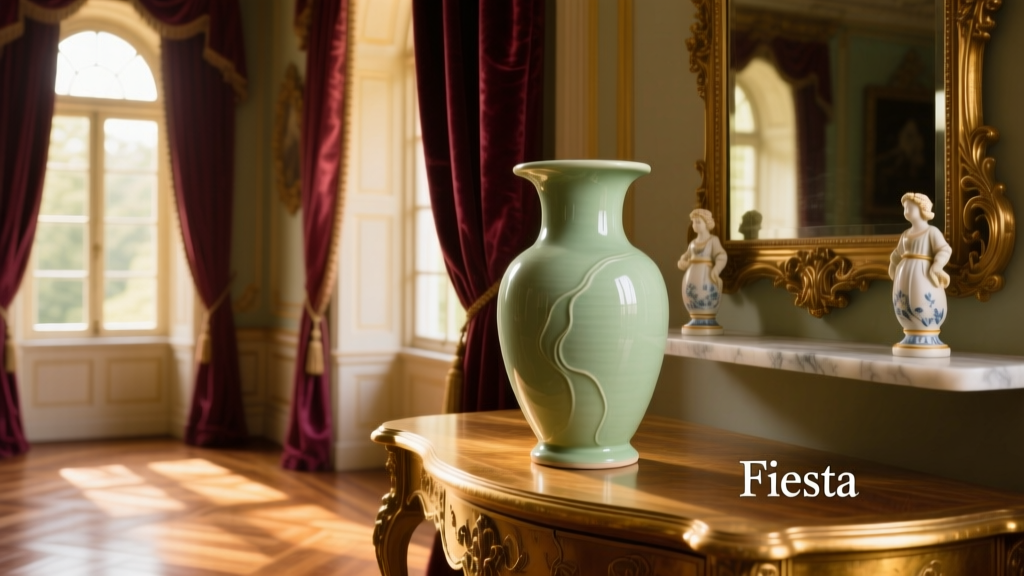
Fiesta Light Green Vase 8-Inch Model #3: Identification, Value, and Restoration Guidance
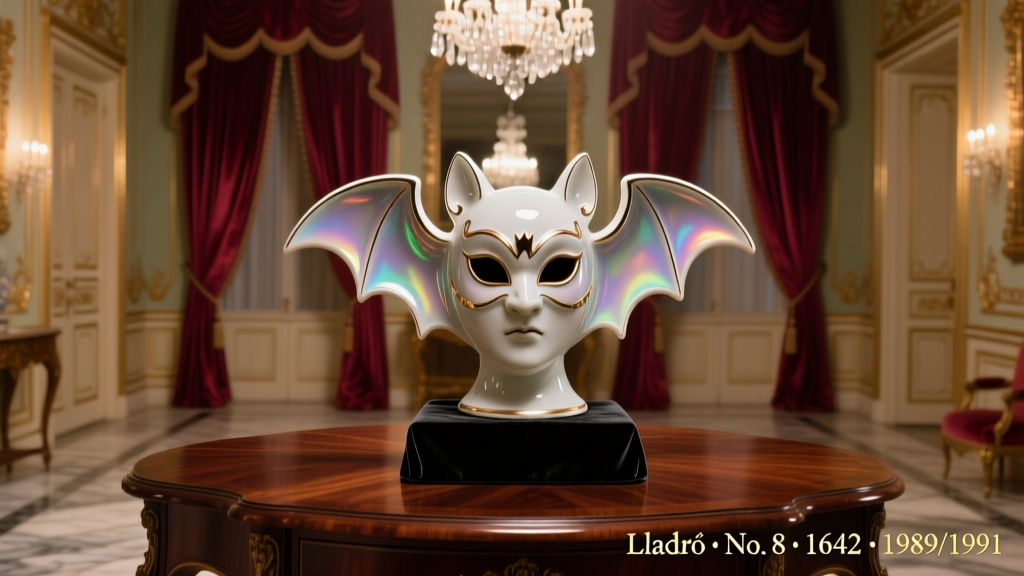
Lladró Figurine Bat Mask No. 8 (Model No. 1642): Production History, Identification, and Conservation Guidelines (1989–1991)
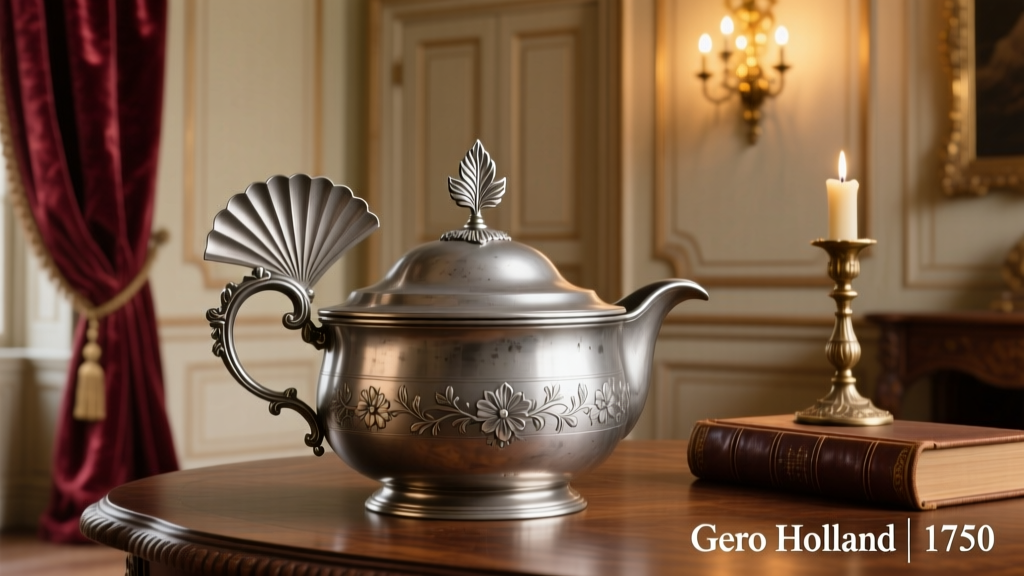
Pewter Porringer: Gero Holland Cover, Fan Handle, Bail Finial — A 6-Inch Masterpiece of Colonial Craftsmanship
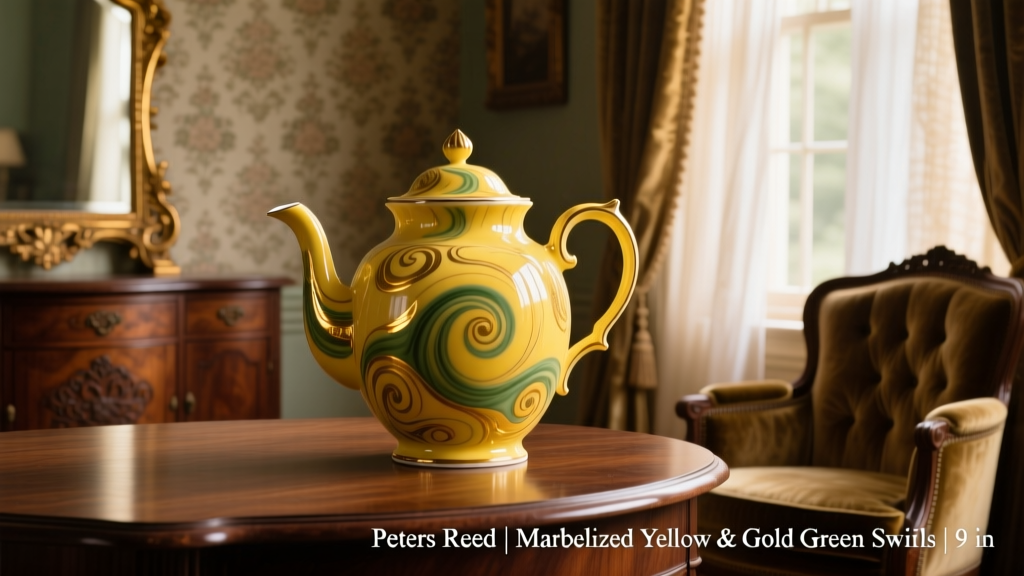
Peters Reed Teapot: Marbled Yellow Body with Gold-Green Swirls — A 1930s American Art Deco Masterpiece
Beswick Figurine 'Simpkin the Tailor of Gloucester' (1975): History, Identification, and Collectibility