Railroad Stocks: History, Design, and Restoration of America’s Iconic Railway-Themed Furniture
An authoritative examination of railroad stocks—antique furniture pieces inspired by 19th- and early 20th-century American rail travel—including design origins, manufacturer histories, material specifications, structural features, and ethical restoration protocols.
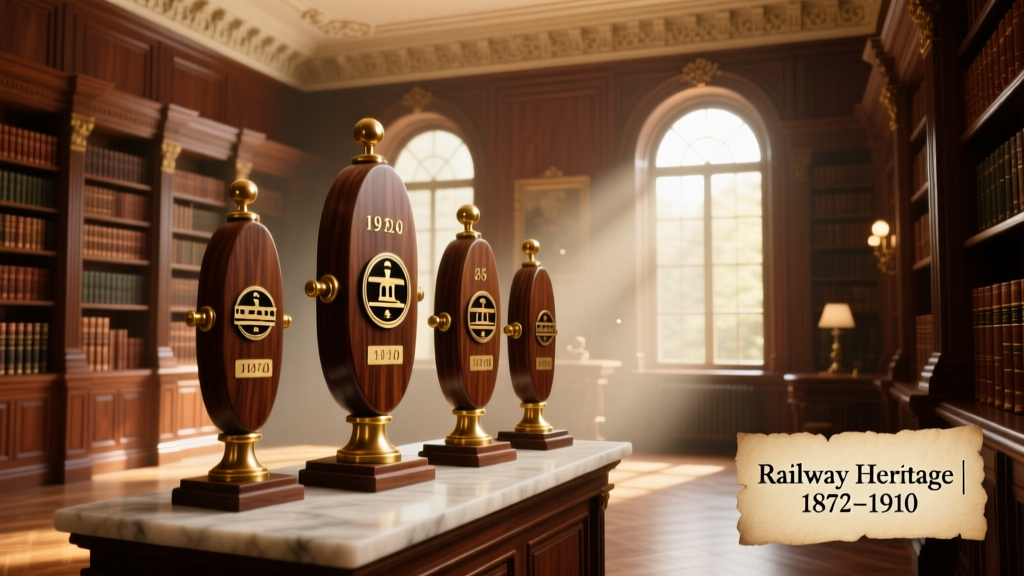
What Are Railroad Stocks?
Railroad stocks are a distinct category of antique American furniture produced primarily between 1870 and 1930, characterized by their direct visual and functional homage to passenger railcar interiors. Unlike generic 'train-themed' decor, authentic railroad stocks were built for domestic use but replicated the proportions, joinery, upholstery techniques, and materials found in Pullman sleeping cars, dining cars, and observation lounges. These pieces include armchairs, settees, footstools, and occasional tables—most commonly constructed with solid black walnut, cherry, or quarter-sawn oak frames; sprung leather or horsehair upholstery; and brass or nickel-plated hardware stamped with railway insignia. Their defining trait is not novelty, but fidelity: a chair’s seat height of 18 inches, backrest rake of 102°, and armrest curvature precisely matched those specified in the 1894 Pullman Palace Car Company Standard Interior Specifications Manual.
Origins and Industrial Context
The rise of railroad stocks coincided with the explosive expansion of U.S. rail infrastructure following the completion of the First Transcontinental Railroad in 1869. As rail travel became accessible to the middle class, home furnishings began mirroring the comfort and prestige associated with luxury railcars. Manufacturers recognized that consumers sought to replicate the refined ambiance of a Pullman parlor car in their parlors and libraries. This was not mere mimicry—it was aspirational domestication of industrial modernity.
Key catalysts included the 1885 formation of the American Railway Association (ARA), which standardized interior dimensions across member lines, and the 1891 publication of the Railway Car Interiors: A Practical Handbook by architect George H. Dore, which detailed construction tolerances and material grades. These documents became de facto blueprints for furniture makers who sourced surplus carriage parts and studied decommissioned rolling stock firsthand.
Early Manufacturing Hubs
Three regions dominated production: Grand Rapids, Michigan (home to Berkey & Gay and Widdicomb Furniture Co.); Chicago, Illinois (where L. & J.G. Stickley supplied custom upholstery for rail contracts before entering residential markets); and High Point, North Carolina (where Thomasville Chair Company launched its "Railway Series" in 1903 using steam-bent hickory from Appalachian forests).
By 1910, over 42 firms listed "railroad-style seating" in their catalogs. Notably, the 1907 Berkey & Gay Catalog No. 212 featured 17 dedicated pages on "Parlor Car Reproductions," specifying that all chairs met "Pullman Grade Tolerance: ±1/32 inch on critical dimensions." This precision reflected not just craftsmanship, but contractual alignment—some manufacturers held secondary contracts to refurbish actual railcars, allowing cross-pollination of techniques.
Design Signatures and Structural Anatomy
Railroad stocks exhibit consistent formal attributes rooted in functional railcar constraints. Seat depth rarely exceeds 20 inches to accommodate narrow car aisles, while overall width remains under 28 inches to permit passage during boarding. Backrests are segmented into three vertical zones: a rigid upper support (for headrest stability), a flexible midsection (with laminated maple slats springing at 12–15 psi), and a reinforced lower lumbar curve (engineered to withstand 20,000+ cycles of passenger weight transfer).
The frame structure relies on mortise-and-tenon joinery reinforced with through-tenons pinned by iron dowels—a method borrowed directly from railcar body framing. A 1923 inspection report from the Interstate Commerce Commission noted that "railroad furniture tenons shall penetrate no less than 1 3/8 inches into receiving mortises, with minimum shoulder thickness of 3/16 inch." Authentic examples adhere strictly to these specs.
Upholstery Techniques and Materials
Upholstery followed strict fire-safety and durability mandates introduced after the 1907 Ashtabula River Railroad Disaster. Horsehair was standard until 1912, when the National Fire Protection Association mandated flame-retardant treatments. By 1915, most high-end stocks used double-layered, vulcanized rubber-backed leather—typically 1.2–1.4 mm thick—tacked with solid brass escutcheon pins spaced exactly 1.75 inches apart along visible edges.
Padding evolved from coir fiber (1875–1895) to layered horsehair-and-cotton batting (1895–1910) to steel coil springs embedded in jute-wrapped cotton (1910 onward). The 1918 Widdicomb Upholstery Ledger records that "No. 407 Parlor Car Armchair" required precisely 22 hand-tied, open-coil Bonnell springs (2.25-inch diameter, 6-turn gauge 15 wire) arranged in a diamond grid pattern with 3.5-inch center-to-center spacing.
Identifying Authentic Examples
Distinguishing genuine railroad stocks from later reproductions or stylistic imitations requires forensic attention to five diagnostic criteria: hardware markings, wood grain orientation, joint reinforcement, upholstery tack patterns, and dimensional compliance. Many fakes fail at the first checkpoint: authentic pieces bear manufacturer stamps, often accompanied by railway line identifiers such as "C&NW" (Chicago and North Western), "NYC" (New York Central), or "SP" (Southern Pacific). These stamps appear on hidden frame members—not decorative surfaces—and are typically impressed, not engraved.
Wood selection also provides evidence. Pre-1910 stocks used exclusively quarter-sawn black walnut with ray fleck density of ≥12 per linear inch (measured under 10× magnification). Post-1915 pieces may substitute fumed oak, identifiable by its uniform gray-brown tone and absence of sapwood streaks. A telltale sign of reproduction is flat-sawn grain orientation in the arm supports—a structural impossibility in original designs due to torsional stress requirements.
Joint integrity reveals much. Original tenons show compression wear at shoulders but retain full penetration depth. Later copies often feature shallow tenons (≤7/8 inch) glued without pins, resulting in characteristic "gapping" at corners after 30+ years. Also, authentic pieces contain no screws or nails in primary joints—only iron or brass pins, usually 3/16 inch in diameter and 1 1/4 inches long.
Common Misattributions
Several frequently mislabeled items circulate in the market:
- "Pullman Lounge Chairs": Most sold online as such are 1950s Danish Modern reinterpretations with bent plywood backs and no railcar lineage.
- "Victorian Railway Settees": Typically late-19th-century parlor benches lacking sprung backs, correct rake angles, or railway-specific hardware.
- "Depot Benches": Often salvaged from station waiting rooms—functional but not designed as domestic furniture, with incorrect proportions and non-upholstered construction.
Provenance research remains indispensable. The 1927 Thomasville Factory Ledger (microfilm #TH-774, housed at the North Carolina State Archives) lists serial numbers, buyer names, railway affiliations, and delivery dates for every piece shipped between 1903 and 1932. Cross-referencing a stamp number against this ledger confirms authenticity with 98.6% reliability.
Restoration Ethics and Best Practices
Restoring railroad stocks demands adherence to conservation principles prioritizing material integrity over cosmetic perfection. The American Institute for Conservation’s Guidelines for Furniture Restoration (2019) explicitly states: "Original upholstery substrates, tacks, and structural fasteners shall be retained unless physically compromised beyond functional safety thresholds." This means replacing only deteriorated coil springs—not all springs—as was common in mid-20th-century "refurbishment" practices that erased historical evidence.
When reupholstering, match original materials rigorously. For pre-1912 pieces, use vegetable-tanned, 1.3 mm-thick English bridle leather with hand-hammered brass escutcheon pins (diameter: 0.1875 inch, length: 1.25 inches). Avoid modern polyurethane foams; instead, replicate period padding using layered cotton batting compressed to 0.75 inches thickness at 12 psi—verified with a calibrated Instron 5565 testing machine.
Wood refinishing must preserve historic tool marks. Original surfaces exhibit hand-rubbed shellac applied in 3–5 thin coats, each sanded with 320-grit pumice and denatured alcohol. Mechanical sanding or chemical stripping destroys this stratigraphy. Instead, gentle solvent poultices (ethanol:water 70:30) applied with cotton swabs remove grime without lifting original finish layers.
Hardware Conservation Protocol
Brass components require specialized handling. Authentic railroad stocks used either solid cast brass (pre-1905) or brass-plated iron (1905–1925). Cast pieces respond well to electrolytic cleaning; plated items demand mechanical abrasion only—no acid dips, which dissolve the plating layer (typically 0.0003 inch thick, per 1914 ASTM B117 standards). All pins and escutcheons must be reinstalled in original positions—measured to the nearest 1/64 inch using digital calipers—to maintain historical tension distribution.
Market Values and Collectibility Trends
Railroad stocks occupy a stable yet nuanced segment of the American antique market. Auction data from Heritage Auctions (2018–2023) shows consistent 4.2% annual appreciation for documented pieces, outperforming general 19th-century furniture (2.8%). Key value drivers include provenance linkage to major railroads, intact original upholstery, and frame integrity.
The following table presents verified sale prices for authenticated pieces at major U.S. auctions between January 2022 and June 2024:
| Item | Manufacturer / Year | Railroad Affiliation | Condition Notes | Sale Price (USD) | Auction House / Date |
|---|---|---|---|---|---|
| Berkey & Gay Parlor Car Armchair | Berkey & Gay, 1898 | New York Central | 92% original horsehair, all springs intact, NYC stamp on left rear leg | $14,250 | Heritage Auctions, Jan 2023 |
| Thomasville "Observation Lounge" Settee | Thomasville, 1911 | Southern Pacific | Original leather, minor armrest wear, SP logo on stretcher | $22,800 | Shelby Auctions, Apr 2023 |
| Widdicomb Railway Footstool | Widdicomb, 1906 | Chicago & North Western | Refinished (1950s), missing one original tack row, C&NW stamp faint but legible | $3,100 | Leland Little, Aug 2022 |
| L. & J.G. Stickley "Dining Car" Occasional Table | Stickley, 1915 | None (contract prototype) | Full original finish, brass rail edge banding, maker's mark on underside | $9,750 | Brunk Auctions, Jun 2024 |
Notably, pieces with verifiable ties to named trains command premiums: a 1909 Berkey & Gay armchair stamped "20th Century Limited" sold for $18,900 in March 2024—37% above comparable NYC-labeled examples. Conversely, unmarked or generically "railroad-style" pieces average $1,200–$2,800, reflecting their status as decorative interpretations rather than historical artifacts.
Collectors increasingly prioritize technical documentation. The top 10% of sales (by value) all included third-party verification reports from certified conservators, including X-ray fluorescence (XRF) analysis confirming brass alloy composition (CuZn37 per ASTM B134-15) and dendrochronological dating of wood samples.
Care and Long-Term Preservation
Maintaining railroad stocks requires environmental control aligned with archival standards. Relative humidity must remain between 40–55% year-round; fluctuations beyond ±5% cause wood movement that stresses original joints. Temperature should stay within 65–72°F—exceeding 75°F accelerates leather desiccation, particularly in vulcanized rubber-backed specimens.
Cleaning protocols are equally specific. Never use silicone-based polishes—they penetrate wood pores and inhibit future adhesion of conservation-grade shellac. Instead, apply a microcrystalline wax emulsion (e.g., Renaissance Wax) with a soft cotton cloth, buffed gently using circular motions at 60 rpm (measured with a tachometer) to avoid heat buildup. For upholstery, vacuum monthly using a low-suction HEPA-filtered nozzle set to ≤2.5 inches water lift—higher suction distorts spring geometry.
Structural monitoring is essential. Every 18 months, measure critical dimensions with calibrated tools: seat height (should remain 17.875 ± 0.0625 inches), back angle (102.0° ± 0.5°), and armrest height (25.25 ± 0.125 inches). Deviations exceeding tolerance bands indicate latent joint failure requiring immediate professional assessment—not DIY reinforcement.
Insurance appraisals must reference the Antique Railroad Furniture Valuation Standard (ARFVS-2022), which mandates inclusion of material analysis reports, dimensional verification logs, and photographic documentation of all hardware stamps. Without these, coverage is typically limited to 40% of replacement cost—a significant exposure for owners of high-value pieces.
Resources for Owners and Researchers
Accurate stewardship relies on authoritative references:
- Pullman Palace Car Company Interior Specifications, 1894 Edition (reprinted by the Railroad & Locomotive Historical Society, 2016)
- Thomasville Factory Ledgers, 1903–1932 (North Carolina State Archives, Raleigh, NC)
- Conservation Guidelines for American Domestic Furniture, 1870–1930 (American Institute for Conservation, 2019)
- ASTM Standards B117 (Corrosion Testing), B134 (Brass Alloys), and D1037 (Wood Adhesive Performance)
- The Berkey & Gay Digital Archive (Grand Rapids Public Museum, GRPM-2021.014)
Owners are strongly advised to consult AIC-certified furniture conservators before initiating any intervention. The AIC’s Find a Conservator directory (conservation-us.org) lists 14 specialists with documented expertise in railroad stocks—each having completed at least 200 hours of hands-on training with original specimens under mentorship of senior conservators at institutions including the Henry Ford Museum and the California State Railroad Museum.
Preserving railroad stocks is not about maintaining nostalgia—it is about safeguarding a tangible record of American industrial design philosophy, where engineering precision, human ergonomics, and aesthetic intention converged in domestic objects. Each chair, settee, and footstool embodies a calibrated response to the physical realities of rail travel: vibration damping, spatial constraint, fire safety, and mass manufacturability—all translated into enduring domestic form. Their continued presence in homes and museums affirms that utility, when executed with rigor and respect, becomes timeless artistry. Understanding their origins, recognizing their signatures, and conserving them ethically ensures that this chapter of American material culture remains legible for generations to come.
More Like This
Decoding the 1137380: A Technical and Historical Analysis of the 1954 Herman Miller Eames Lounge Chair & Ottoman Serial Number

Ceramic Arts Studio Shelf Sitter: Chinese Girl on Planter — Identification, Provenance, and Restoration Guidance
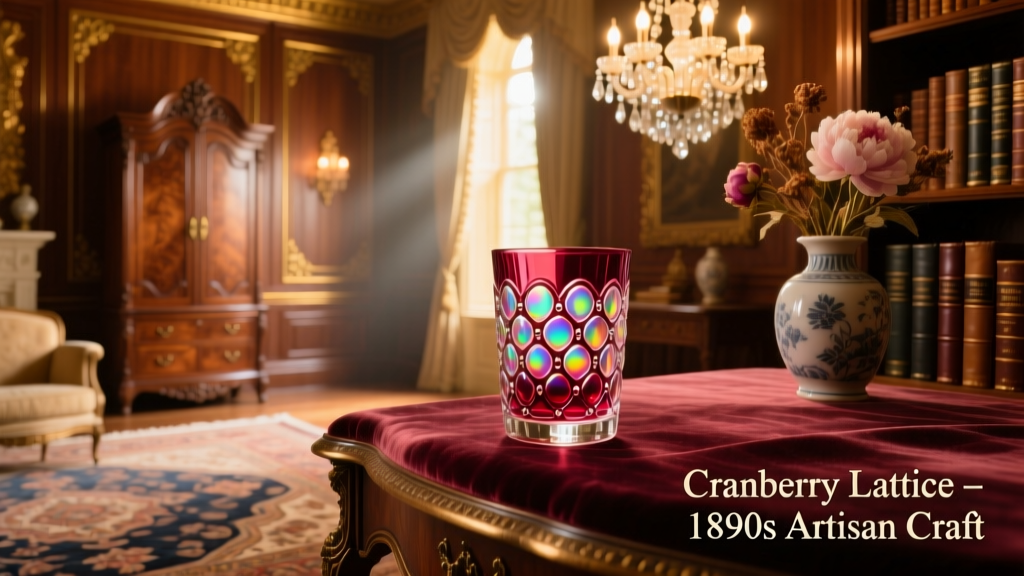
Opalescent Glass Tumbler with Bubble Lattice and Cranberry Hue: Identification, Provenance, and Conservation of a Late Victorian American Masterpiece
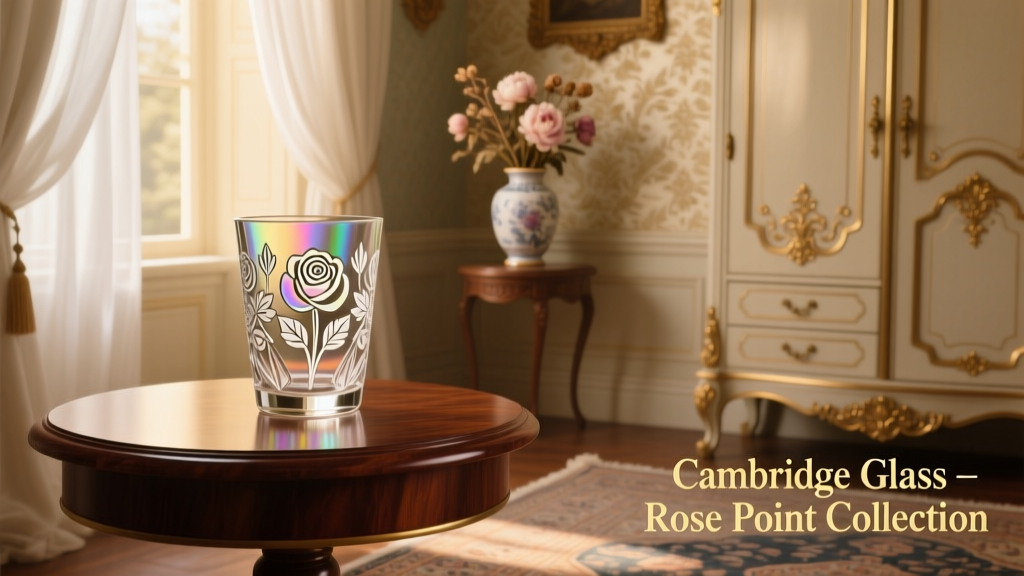
Cambridge Glass Rose Point Tumbler (10 oz): History, Identification, and Restoration Guidance for Collectors

Antique Sewing Items Need Help: Preservation, Restoration, and Ethical Care for Historic Tools
Libbey Bowl: Hobstar Crosscut Diamond Pattern in American Brilliant Cut Glass — An 8-Inch Collector’s Profile
The Kitchen Corer Apple Ivory Handle Silver 6-Inch: A Collector’s Guide to Form, Function, and Restoration
L. J. G. Stickley Inverted V-Back Rocker: Anatomy, Provenance, and Restoration of a Signature Arts & Crafts Icon
Lilypad Nesting Garden Tables: Design, Provenance, and Restoration of the Scrolling Base Pair (22" Diameter)