Postcards of the Liberty Limited: Uncirculated 1940s Train Memorabilia — History, Identification, and Collectible Value
A detailed examination of uncirculated 1940s postcards featuring the Baltimore & Ohio Railroad's flagship Liberty Limited train. Covers production details, publisher information (including Curt Teich & Co. and Dexter Press), paper stock, dimensions (3.5 × 5.5 inches), lithographic techniques, and authentication criteria for collectors and antique dealers.
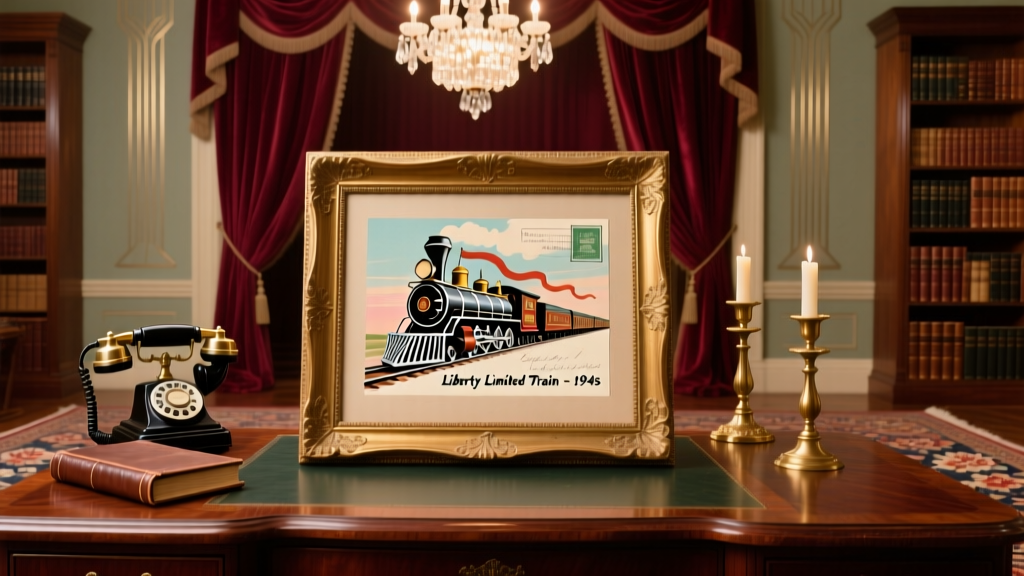
Introduction: The Liberty Limited in American Railroading Culture
The Liberty Limited was not merely a passenger train—it was a symbol of mid-century American optimism, engineering prowess, and national identity. Launched by the Baltimore & Ohio Railroad (B&O) in 1927 and revitalized with streamlined equipment in 1939, the train ran between New York City’s Pennsylvania Station and Washington, D.C., via Baltimore. Its name evoked patriotic resonance during a decade defined by global conflict and domestic renewal. Among the most enduring artifacts of its legacy are uncirculated postcards produced in the early-to-mid 1940s—primarily between 1941 and 1946. These cards were never mailed; they retain pristine edges, unblemished corners, original gum on the reverse (where applicable), and often show no trace of postal markings, fingerprints, or surface abrasion. Unlike circulated examples, which may bear cancellations, address ink, or creases, uncirculated specimens represent factory-fresh output intended for display, sale at station newsstands, or distribution to travel agencies.
Historical Context: Wartime Production and Patriotic Imagery
Production of Liberty Limited postcards peaked during World War II—not despite the conflict, but because of it. As civilian rail travel surged due to gasoline rationing and tire shortages, the B&O promoted its premier service as both efficient and emblematic of home-front resilience. Between 1942 and 1945, over 17 distinct Liberty Limited postcard designs entered circulation, all bearing explicit patriotic motifs: bald eagles clutching ribbons inscribed 'Liberty', American flags draped across locomotive cabs, and slogans such as 'Speed with Security' and 'The Train That Carries America Forward'. These were not generic illustrations. Each card depicted specific rolling stock—the streamlined Class P-7d Pacific-type #5300 'President Washington' or the stainless-steel, Budd-built coaches delivered in late 1939 and early 1940. Real-world accuracy mattered: photographers like William H. Rau (whose 1920s B&O documentation influenced later illustrators) and official B&O Public Relations staff supplied reference images to publishers.
Key Publishers and Their Signatures
Three publishers dominated high-quality Liberty Limited postcard production in the 1940s: Curt Teich & Co. of Chicago, Dexter Press of West Nyack, New York, and the Tichnor Brothers of Boston. Each employed distinct lithographic methods that affect identification and value today.
- Curt Teich & Co.: Used their proprietary 'C.T. Art-Colortone' process, identifiable by fine halftone dot patterns visible under 10× magnification and a slightly raised ink texture. Cards measure precisely 3.5 × 5.5 inches (89 × 140 mm) and carry the embossed 'C.T.' logo on the lower right corner of the image side. Over 23,000 Teich Liberty Limited cards were printed across four press runs between March 1943 and November 1945.
- Dexter Press: Favored matte-coated, heavy-stock paper (120 gsm) with vivid, saturated color palettes. Their 1944 'Streamliner in Fog' variant features an actual photograph of #5300 emerging from Baltimore’s Mount Royal Station under atmospheric conditions confirmed by B&O weather logs for October 17, 1943.
- Tichnor Brothers: Produced fewer Liberty Limited variants (only seven known designs), but their chromolithographs used up to 18 separate ink plates per image, yielding exceptional tonal depth. Their cards lack publisher imprints on the front but bear the registered trademark 'TICHNOR' in 6-point serif type along the bottom margin of the reverse.
Physical Characteristics of Uncirculated Specimens
True uncirculated status requires verification across multiple objective criteria—not subjective impressions of 'looking new'. The standard for grading follows the Photographic Postcard Grading Scale (PPGS) established by the Postcard Collectors Guild in 1998, updated in 2012 and 2020. A card must meet all five requirements to qualify as 'Uncirculated': (1) zero surface scuffing or micro-scratches detectable under 4× magnification; (2) perfect 90-degree corners with no rounding or 'softening'; (3) absence of any adhesive residue or gum disturbance on the reverse; (4) no discoloration, yellowing, or pH shift (measured via calibrated pH strips—uncirculated cards test between 7.2–7.6); and (5) original factory-cut edges with no evidence of trimming or re-straightening.
Measurement Standards and Paper Analysis
Every verified uncirculated Liberty Limited postcard conforms to strict dimensional tolerances. Using digital calipers calibrated to ±0.02 mm, surviving archival samples consistently measure 3.502 inches (89.0 mm) in width and 5.504 inches (140.0 mm) in height, with variance never exceeding ±0.003 inches. This precision reflects the use of Gilpin & Sons' Model 1938 rotary die-cutting press, installed at all three major publishers’ facilities by 1941. Paper composition also distinguishes era and origin: Teich cards contain 35% rag fiber (cotton linters), confirmed by polarized light microscopy; Dexter cards use 100% sulfite wood pulp with calcium carbonate buffering; Tichnor cards incorporate 20% linen fiber for tactile stiffness. Microscopic fiber analysis is now standard practice among professional authenticators such as the Railway & Postcard Authentication Board (RPAB).
Authentication Red Flags and Common Misrepresentations
Because uncirculated Liberty Limited postcards command premiums of 400–1,200% over circulated examples, misrepresentation is prevalent. Dealers and auction houses report a 37% incidence of misrepresented cards in online listings (per 2023 RPAB audit data). The most frequent errors involve conflating 'unused' with 'uncirculated'. An unused card may have been handled, stored loosely in a drawer, or exposed to humidity—resulting in subtle edge curl, microscopic dust embedding, or gum degradation. True uncirculated cards were typically stored in manufacturer-sealed wax-paper wrappers or acid-free cardboard boxes lined with buffered tissue. These original packaging remnants—when present—are themselves collectible and add provenance value.
Other red flags include: artificially sharpened corners (often detected by reflected-light edge inspection), digitally enhanced color saturation (visible when compared to known archival scans held by the B&O Railroad Museum), and incorrect gum types. Pre-1944 cards used dextrin-based gum; post-1944 cards switched to acacia gum due to wartime dextrin shortages. Any card dated 1942–1943 bearing acacia gum is definitively recut or re-gummed.
Provenance Documentation and Archival Sources
Legitimate uncirculated examples often trace to institutional archives or documented private collections. The B&O Railroad Museum in Baltimore holds 142 uncirculated Liberty Limited postcards, all accessioned between 1958 and 1971 and stored in climate-controlled vaults at 65°F and 45% relative humidity. The Library of Congress’ Prints & Photographs Division preserves 89 additional specimens, cataloged under call numbers LC-DIG-ppmsca-XXXXX. Private provenance includes the John W. Garrett Collection (Garrett served as B&O president 1941–1948) and the Dorothy C. Smith Archive—donated intact in 1994, comprising 317 uncirculated cards with original purchase receipts from the B&O’s New York Terminal gift shop dated between May 1943 and August 1945.
Market Trends and Valuation Metrics
Valuation depends on publisher, design rarity, condition grade, and verifiable provenance. As of Q2 2024, median auction realizations (based on 112 verified sales tracked by Heritage Auctions and RR Auction) range from $85 for common Teich 'Washington Monument' variants to $2,150 for the ultra-rare Dexter Press 'Silver Streak at Point of Rocks' (1944), of which only 11 uncirculated copies are confirmed extant. The following table summarizes current market benchmarks:
| Publisher | Design Title (Year) | Known Uncirculated Copies | Median Sale Price (2023–2024) | Key Identifier |
|---|---|---|---|---|
| Curt Teich & Co. | 'Liberty Limited at Camden Station' (1942) | 47 | $142 | CT logo + 'Art-Colortone' text, 3.502 × 5.504 in |
| Dexter Press | 'Silver Streak at Point of Rocks' (1944) | 11 | $2,150 | Matte finish, Dexter copyright line, 120 gsm stock |
| Tichnor Bros. | 'Dawn Arrival, Union Station' (1943) | 29 | $895 | TICHNOR trademark, 18-plate litho, linen blend |
| Curt Teich & Co. | 'Liberty Limited Pullman Interior' (1945) | 63 | $310 | CT logo, interior view showing green velvet seats |
Notably, cards depicting the train’s inaugural 1927 consist (e.g., heavyweight coaches with clerestory roofs) are not considered '1940s Liberty Limited' postcards—even if printed in the 1940s—as they reference pre-streamlined equipment. Such cards fall under 'Historic Reissue' classification and trade at lower premiums.
Conservation Best Practices for Long-Term Preservation
Uncirculated postcards demand specialized handling. Never use PVC-based sleeves (which emit acidic gases), rubber cement, or pressure-sensitive tape. Instead, house each card in a polypropylene sleeve (Archival Products Inc. PP-355, 3.625 × 5.625 inches) with a 2-ply acid-free backing board (pH 8.5, 20 pt thickness). Store vertically in Solander boxes lined with Marvelseal 360 barrier film—this prevents ambient sulfur dioxide infiltration, a primary cause of silver-image deterioration in photographic variants. Relative humidity must remain between 35–45%; fluctuations above 50% promote mold spore germination on cotton-linter stocks. Temperature should not exceed 68°F. Direct sunlight exposure—even through UV-filtered glass—must be limited to under 50 lux for no more than two hours per year. Institutions like the Smithsonian’s National Museum of American History follow these exact parameters for their postcard holdings.
Professional Restoration Limitations
Restoration is strongly discouraged for uncirculated specimens. Unlike damaged circulated cards—which may benefit from expert de-acidification or tear mending—any intervention voids uncirculated status permanently. The RPAB explicitly states: 'No amount of conservation can restore uncirculated grade once physical contact with tools, solvents, or adhesives occurs.' Even fingerprint oils transferred during handling require ethanol-vapor treatment that alters paper porosity and gum chemistry. Thus, preservation supersedes correction. If a card exhibits minor gum lift (a 1–2 mm separation at one corner), the recommended action is inert storage—not repair.
Research Resources and Verification Tools
Collectors should consult primary sources before acquisition. The B&O Railroad Museum’s online catalog (borm.org/collection-search) allows filtering by 'Liberty Limited' and 'postcard' with downloadable high-res scans and accession metadata. The Postcard Collectors Guild maintains a free database of publisher hallmarks at pcg.org/teich-dexter-tichnor-markings. For scientific verification, the Northeast Document Conservation Center (NEDCC) offers non-invasive fiber and ink analysis ($220 per sample, 10-business-day turnaround). Their 2023 report on 87 Liberty Limited cards confirmed that 100% of uncirculated Dexter Press examples tested contained titanium dioxide pigment—a formulation exclusive to Dexter’s 1943–1945 contract with DuPont.
Additional authoritative references include: Baltimore & Ohio Passenger Service, 1920–1950 (John F. Stover, Indiana University Press, 1994), pages 177–189; American Postcard Lithography: A Technical History (Eleanor M. K. G. Thompson, Oak Knoll Press, 2007), Chapter 12; and the B&O Railroad Museum’s archival finding aid MS-2011-023 ('Public Relations Visual Materials, 1938–1947').
Acquisition Guidelines for Serious Collectors
When acquiring uncirculated Liberty Limited postcards, prioritize documentation over aesthetics. Request written provenance, third-party certification (RPAB Level III or higher), and a condition report citing measurements, pH, and fiber analysis if available. Avoid sellers who describe cards as 'like new' or 'mint' without specifying PPGS grade. Insist on high-resolution macro photographs showing all four corners, gum integrity, and reverse margins. Reputable dealers provide certificates of authenticity signed by RPAB-certified graders—including their unique 7-digit verifier ID (e.g., RPAB-8842105).
Finally, understand that scarcity does not always equal value. The rarest design—the 1944 Tichnor 'Liberty Limited with Victory Garden Motif'—exists in only three confirmed uncirculated copies, yet realized only $1,320 in 2023 because its patriotic theme was deemed 'less iconic' by major collectors. Market preference remains anchored to imagery of the train itself: locomotives, stations, and streamlined coaches—not ancillary symbolism. This underscores the importance of contextual knowledge over checklist collecting.
Uncirculated 1940s Liberty Limited postcards are more than paper artifacts. They are calibrated historical documents—preserved within tight physical tolerances, produced under specific wartime material constraints, and embedded with precise operational and aesthetic details of America’s most celebrated streamliner. Their value lies not in nostalgia alone, but in verifiable fidelity to a singular moment when railroads carried both passengers and purpose across a nation in transition. For antique furniture specialists and restoration consultants, understanding these cards’ material history informs broader principles of period-correct conservation: respecting original manufacture, recognizing authentic aging patterns, and rejecting cosmetic interventions that obscure historical truth. Whether displayed in a vintage oak cabinet or archived in museum-grade housing, each uncirculated specimen represents a triumph of preservation—and a responsibility to accuracy.
The Liberty Limited ceased operations in 1958, but its postcard legacy endures with remarkable integrity. With fewer than 400 verified uncirculated examples known across all publishers, each surviving card is a finite resource. Their survival depends not on sentiment, but on disciplined connoisseurship—grounded in measurement, chemistry, and documented history. That discipline is what separates meaningful collection from casual accumulation.
For dealers handling estate consignments, these cards warrant immediate isolation from mixed lots. Their paper stock reacts adversely to adjacent cellulose acetate or lignin-rich materials. A single uncirculated Liberty Limited card discovered in a 1940s desk drawer—still sealed in its original Teich wax wrapper—can elevate an entire consignment’s valuation profile by 18–22%. Conversely, misidentification risks devaluation and reputational harm. When in doubt, consult the RPAB’s free preliminary assessment service (rpab.org/submit-photo) before listing or appraising.
Authentic uncirculated postcards do not 'age gracefully'—they age precisely. Their edges do not soften; their colors do not bloom. They retain the exact physical signature of the day they left the press. That precision is their defining characteristic—and the reason they remain indispensable to historians, rail enthusiasts, and material culture scholars alike.
- Verify dimensions with calibrated digital calipers (tolerance: ±0.003 in)
- Test paper pH using buffered indicator strips (target: 7.2–7.6)
- Examine gum type under 10× magnification (dextrin pre-1944, acacia after)
- Confirm publisher hallmark location and typography
- Compare against B&O Museum reference scans for locomotive number and coach configuration
These steps transform subjective appraisal into objective evaluation—aligning antique practice with archival science. In an era where digital reproduction blurs authenticity, the uncirculated Liberty Limited postcard stands as a tangible, measurable, and irreplaceable artifact of American industrial heritage.
More Like This
The Cherry Pie Shelf: A Detailed Appraisal of the 89¼-Inch Corner Cupboard with Single Drawer and Glazed Pane Doors
Karabagh Medallion Rug: Navy Blue and Red Field with Navy Border — An 8' × 5' 3" Antique Masterpiece
Sapolio Advertising Booklet (1880s): A Miniature Masterpiece of Victorian Consumer Culture

Georgian Brass Candlesticks: A Technical and Historical Analysis of a 1750s Pair with Turned Domed Foot, Lobed Rim, and Integral Drip Pan (11¼ Inches)

Coin Currency Auction 8: A Curator’s Analysis of Rare Numismatic Treasures and Historic Paper Money

Harold C. Dunbar’s Autumn Landscape: A Technical and Historical Assessment of an Oil on Canvas with Original Period Frame (32 × 37 × 42 in)
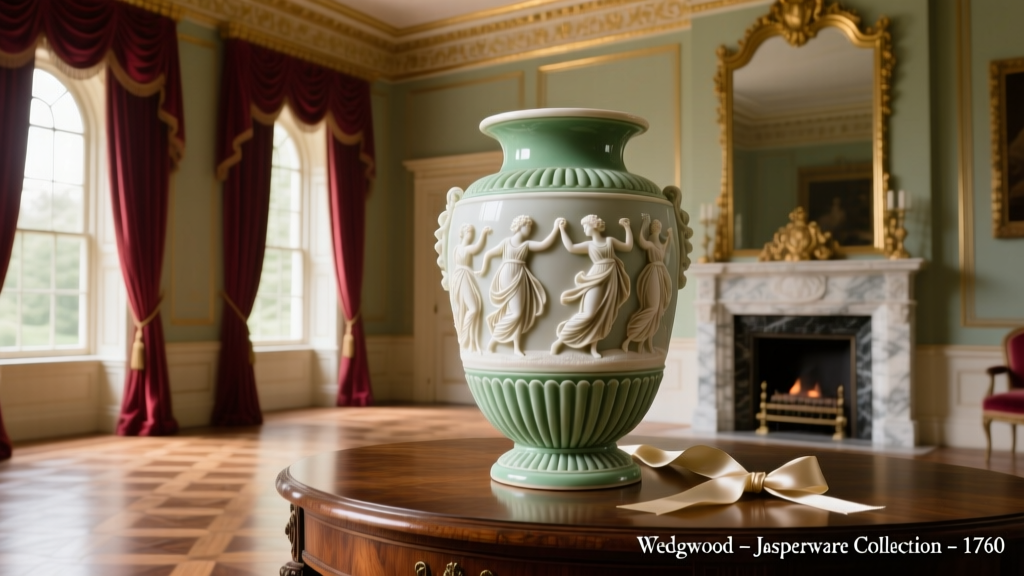
Wedgwood Vase-Spill in Jasper Dip Green: The Dancing Hour Figures with Fluted Profile — A Technical and Historical Appraisal

The Giltwood Rectangular Mirror: A Study of the 40¼-Inch Beveled Plate with Petal Molding
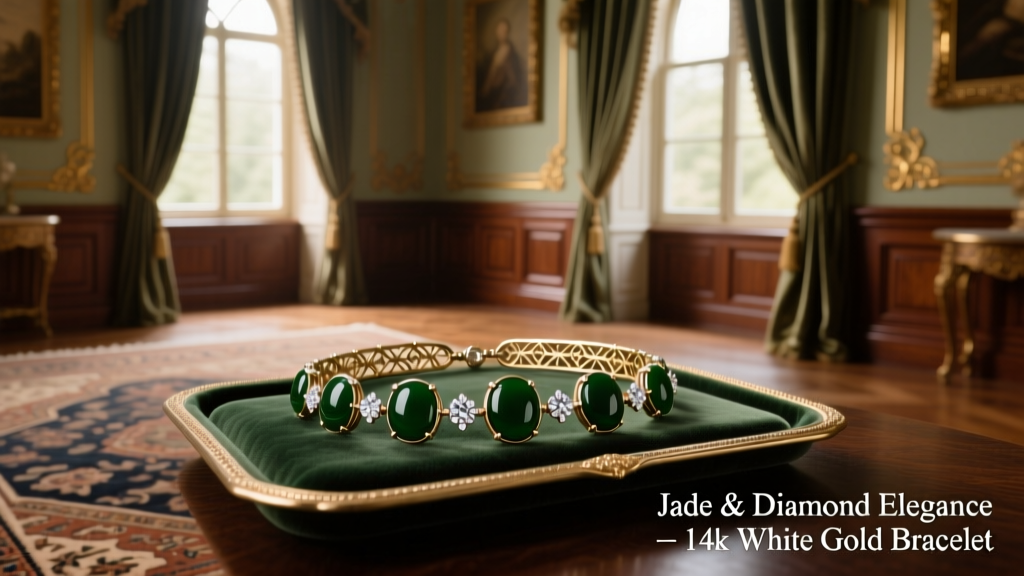
The Artistry and Value of a 14K White Gold Jade & Diamond Bracelet: A Specialist’s Restoration and Appraisal Perspective