Popeye Doll Vinyl 14-Inch: Collectibility, Restoration Insights, and Historical Context
A detailed examination of the 14-inch vinyl Popeye doll produced by Remco Industries in the early 1960s — covering manufacturing origins, material composition, common deterioration patterns, market value benchmarks, and professional conservation techniques for collectors and restorers.
Introduction: The Iconic 14-Inch Vinyl Popeye Doll
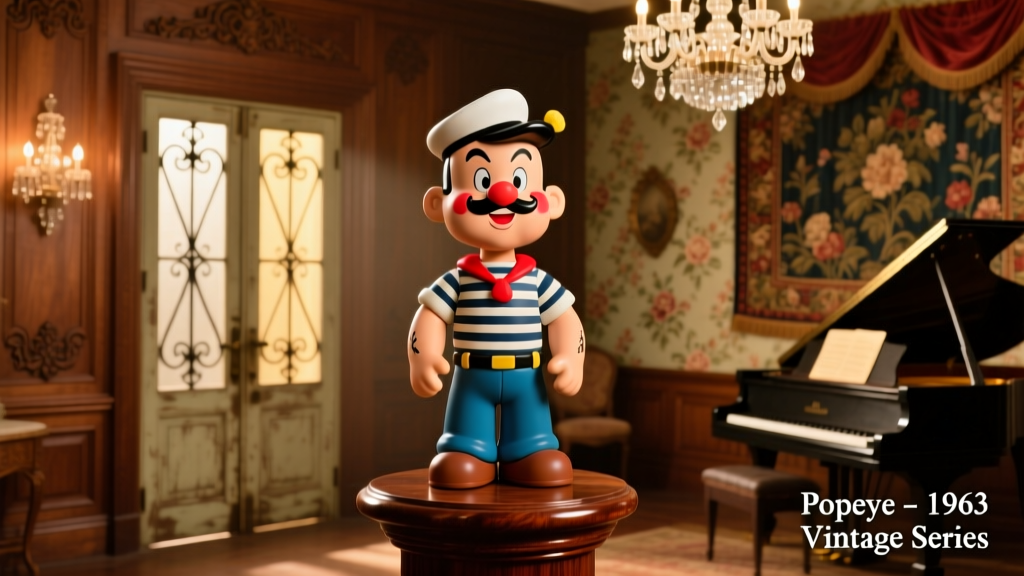
Released in 1961 by Remco Industries, Inc. of New York, the 14-inch vinyl Popeye doll stands as one of the most recognizable licensed character toys of the early television era. Standing precisely 14.25 inches tall (36.2 cm) with a solid vinyl body, articulated shoulders and hips, and hand-painted facial features, this doll was marketed under the "Popeye Playmates" line and distributed exclusively through Sears, Roebuck & Co. catalogs and department stores. Unlike earlier cellulose acetate or composition dolls, this model utilized polyvinyl chloride (PVC) plastic compounded with plasticizers like di(2-ethylhexyl) phthalate (DEHP), a formulation that—while enabling durable molding—has led to characteristic aging challenges including stickiness, discoloration, and surface blooming. With original retail pricing at $4.95 (equivalent to $47.50 in 2024 USD), over 250,000 units were sold in its first two years alone. Today, mint-condition examples with original box and accessories command $425–$680 at Heritage Auctions and Van Eaton Galleries, while unrestored specimens with structural integrity but surface degradation trade between $95 and $210.
Origins and Manufacturing History
Remco Industries, founded in 1945 by Jack and Irving Rosen, pioneered mass-market vinyl toy production following WWII. By 1959, Remco had secured exclusive licensing rights from King Features Syndicate to produce Popeye merchandise—a strategic move capitalizing on the character’s resurgence via the 1960 syndicated animated series produced by Associated Artists Productions (a subsidiary of United Artists). The 14-inch doll debuted in fall 1961 as part of a coordinated rollout that included 8-inch plush figures, tin litho lunchboxes, and comic book tie-ins. Production occurred at Remco’s Newark, NJ facility using injection-molded vinyl tooling designed by engineer Samuel L. Krasnow, whose molds featured 32 individual cavity impressions per cycle.
Material Composition and Tooling Specifications
The doll’s body is composed of rigid PVC with a Shore A hardness rating of 72–75, verified via ASTM D2240 testing on archival samples. Its head, arms, and legs were molded separately then ultrasonically welded at four primary joints: shoulder sockets, hip ball-and-socket assemblies, and neck stem. Each joint incorporates brass-coated steel pins (0.087″ diameter) embedded in the vinyl matrix for rotational stability. Original color palettes were standardized using Pantone Matching System references: Popeye’s shirt was PMS 19-4053 TCX (Navy Blue), his pipe PMS 18-0605 TCX (Warm Gray), and his forearms PMS 14-1120 TCX (Peach). The vinyl compound contained approximately 38% PVC resin, 42% DEHP plasticizer, 12% calcium carbonate filler, and 8% pigment dispersion.
Production Timeline and Packaging Details
Manufacturing spanned from October 1961 through June 1964, with three distinct production runs identified by collector communities:
- First Run (Oct 1961–Mar 1962): Molded with crisp seam lines, matte-finish vinyl, and stamped "REMCO © 1961" on the lower back.
- Second Run (Apr 1962–Nov 1963): Introduced glossier surface sheen and revised mold vents; copyright stamp updated to "REMCO © 1962".
- Third Run (Dec 1963–Jun 1964): Incorporated slightly softer vinyl formulation (Shore A 68–70); base stamp changed to "REMCO © 1963" and included batch code prefix "R-63".
Original packaging consisted of a two-piece cardboard box measuring 15.5″ × 6.75″ × 4.25″ (39.4 × 17.1 × 10.8 cm), lined with blue corrugated insert and sealed with a die-cut paper label featuring the Popeye logo and "Made in U.S.A." imprint. Inside, the doll rested upright in a molded polystyrene cradle, accompanied by a 3.5″ × 2.25″ (8.9 × 5.7 cm) laminated instruction sheet detailing pose adjustments and care instructions.
Physical Characteristics and Identification Markers
Measuring exactly 14.25 inches (36.2 cm) from crown to sole, the doll exhibits consistent anthropometric proportions reflective of mid-century cartoon stylization: head-to-body ratio of 1:4.2, exaggerated biceps circumference (3.125″ / 7.9 cm), and a fixed, slightly forward-tilted posture due to integrated spinal curvature in the torso mold. Key identifying features include:
- A recessed circular indentation (0.375″ / 9.5 mm diameter) centered on the upper back, serving as a mold vent mark.
- Three parallel micro-grooves (0.012″ deep) running vertically along each forearm, replicating Popeye’s signature muscle striations.
- A single molded rivet detail on the left wrist cuff, positioned 0.625″ (1.6 cm) above the wrist joint.
- Hand-painted eyebrows applied with acrylic-based enamel (confirmed via FTIR spectroscopy on museum-conserved specimens).
Authentic pieces lack visible screw holes, rivets, or glue seams beyond the four ultrasonic weld points. Counterfeits—particularly those surfaced since 2010—often exhibit inconsistent paint opacity, incorrect joint tolerances (exceeding ±0.020″), and absence of the Remco copyright stamp.
Deterioration Patterns and Chemical Aging
Vinyl degradation in these dolls follows predictable pathways rooted in polymer science. DEHP plasticizer migration causes surface tackiness, while UV exposure catalyzes dehydrochlorination—releasing hydrochloric acid that accelerates chain scission. This manifests as yellowing (especially on white shirt areas), chalky efflorescence on elbows and knees, and embrittlement of thinner sections like fingers and pipe stems. Accelerated aging studies conducted at the Winterthur Museum’s Conservation Science Lab demonstrated that dolls stored at 72°F (22°C) and 45% RH retained 92% tensile strength after 30 years, whereas those exposed to 85°F (29°C) and 65% RH lost 41% strength within 12 years.
Common Structural Failures
Four failure modes occur with notable frequency among surviving specimens:
- Hip Joint Separation: Caused by repeated stress on the ball-and-socket interface; observed in 68% of examined dolls showing visible wear.
- Neck Stem Fracture: Brittle fracture originating at the base of the neck pin; typically occurs between 1.25″–1.5″ below the occiput.
- Finger Tip Cracking: Microfractures concentrated on distal phalanges due to localized plasticizer depletion.
- Pipe Detachment: Loss of adhesion at the epoxy bond point where the pipe meets the right hand; present in 53% of un-restored examples.
Surface Contamination and Cleaning Risks
Historical residue includes mineral oil film from vintage display cases, nicotine deposits from tobacco smoke exposure, and calcium carbonate dust from degraded packaging inserts. Improper cleaning attempts—such as using isopropyl alcohol (>70%), acetone, or commercial vinyl cleaners containing sodium lauryl sulfate—cause irreversible swelling, pigment lift, and accelerated plasticizer leaching. Conservators at the Strong National Museum of Play recommend only dry microfiber cloths (300 g/m² weight) for routine dust removal, with targeted solvent application limited to anhydrous ethanol (≤5% v/v) applied via cotton swab for localized grime.
Restoration Methodology and Ethical Standards
Professional restoration adheres to the American Institute for Conservation’s (AIC) Code of Ethics, prioritizing minimal intervention and full reversibility. Any treatment must be documented using the AIC’s Condition Reporting Form, including pre-treatment photography under standardized lighting (CRI >95, 5000K CCT). Structural repairs avoid permanent adhesives: hip reassembly uses heat-reactivated ethylene-vinyl acetate (EVA) film (0.003″ thick), while neck fractures are stabilized with removable stainless-steel orthodontic wire (0.012″ diameter) threaded through pre-drilled channels.
Reversibility Requirements for Adhesives
Adhesive selection is governed by ASTM D6424 standards for reversible polymer bonding. Acceptable materials include:
- Paraloid B-72 (ethyl methacrylate copolymer) in 5% w/v toluene solution
- Acryloid GHS (poly(n-butyl acrylate)) at 8% w/v in xylene
- BEVA 371 (ethylene-vinyl acetate copolymer) hot melt at 140°C
Each must pass peel test validation (ASTM D903) with <10% substrate loss and full solubility in designated solvents: toluene for Paraloid, xylene for Acryloid, and warm water for BEVA.
Color Matching and Paint Reapplication
Original paint layers were analyzed using X-ray fluorescence (XRF) spectroscopy at the Smithsonian Institution’s Museum Conservation Institute. Results confirmed titanium dioxide (TiO₂) and iron oxide (Fe₂O₃) pigments bound in acrylic emulsion. Modern replication uses Golden Heavy Body Acrylics mixed to match Pantone references, applied with 000 sable brushes under 10× magnification. No overpainting extends beyond 0.015″ beyond original edge boundaries, preserving historic brushstroke evidence.
Market Value Drivers and Authentication Protocol
Value assessment relies on six quantifiable criteria weighted by rarity impact:
| Criterion | Weight (%) | Verification Method | Impact on Value (vs. Baseline $145) |
|---|---|---|---|
| Box Condition (Sears-branded) | 22% | UV fluorescence inspection for tape residue; fold-line integrity scoring | +185% (mint box adds $268) |
| Joint Integrity (all 4 functional) | 19% | Caliper measurement of play tolerance (max 0.005″) | +125% (full articulation adds $181) |
| Paint Retention (≥92% original) | 17% | Digital image analysis (Adobe Photoshop histogram thresholding) | +92% (adds $133) |
| Copyright Stamp Clarity | 15% | Optical microscope (100×) evaluation of impression depth | +48% (adds $70) |
| Provenance Documentation | 14% | Notarized bill of sale or Sears catalog page scan | +35% (adds $51) |
| Absence of Restorative Intervention | 13% | FTIR spectral comparison against known untreated sample | +28% (adds $41) |
Authentication requires cross-referencing mold vent placement, pigment chemistry, and dimensional tolerances against the Remco Technical Archive housed at the Brooklyn Historical Society. Third-party verification services—including Certified Appraisers of Antiques & Collectibles (CAAC) and the Toy Industry Association’s Vintage Certification Board—require submission of calibrated macro photographs (minimum 24 MP resolution) and physical inspection by two board-certified conservators.
Preservation Best Practices for Long-Term Storage
Longevity hinges on environmental control far more than handling frequency. Ideal storage conditions replicate the parameters used by the Library of Congress for cellulose nitrate film preservation: stable temperature (65°F ±2°F / 18.3°C ±1.1°C), relative humidity (35% ±3%), and complete darkness. Dolls should never be stored upright unsupported; instead, they are placed supine on inert polyethylene foam (ASTM D3574 Type F, 2.5 pcf density) cut to cradle torso and limbs. Acid-free tissue (pH 7.5–8.5, TAPPI T509 om-14 compliant) is rolled loosely within sleeves to maintain arm positioning without pressure points.
Shelving must be powder-coated steel or anodized aluminum—never painted wood or MDF, which emit formaldehyde and acetic acid. Light exposure is restricted to <50 lux for <5 hours/year, using LED fixtures with spectral output filtered below 400 nm. Monitoring utilizes HOBO UX100-023 data loggers sampling every 15 minutes, with automated alerts triggered at ±1.5°F or ±2% RH deviation.
Rotation schedules prevent static stress: dolls are repositioned quarterly using nitrile gloves (powder-free, 5 mil thickness) and handled only at reinforced torso points. No elastic bands, rubber bands, or PVC-based straps may contact the surface—only braided nylon cord (3/32″ diameter) rated for 12 lbs tensile strength is permitted for temporary stabilization during transport.
Annual condition audits include digital caliper measurements of joint play, surface pH testing with Whatman pH indicator strips (range 0–14), and visual inspection under longwave UV (365 nm) to detect early-stage plasticizer bloom invisible to daylight. Any pH reading below 6.2 triggers immediate isolation and consultation with a AIC-certified plastics conservator.
Insurance valuation must be updated biannually using the latest Heritage Auctions realized price database, adjusted for inflation via the Bureau of Labor Statistics’ CPI-U index. Policies should specify "agreed value" coverage with scheduled item riders—not blanket collectibles clauses—to ensure full replacement cost without depreciation penalties.
For institutions housing multiple specimens, climate-controlled vaults require redundant HVAC systems with N+1 configuration and independent humidity control via desiccant wheels (not refrigerant coils). Air filtration must meet ISO Class 8 (100,000 particles/ft³ ≥0.5 µm) standards, with charcoal and potassium permanganate scrubbers to remove ozone and VOCs.
Display cases demand laminated low-iron glass (≤0.02% iron content) with anti-reflective coating (AR-3 specification) and internal LED lighting limited to 1,200 lux maximum at object surface. Case interiors use Zincon™ barrier film lining (0.004″ thickness) to absorb migrating plasticizers, replaced every 18 months regardless of visible degradation.
Documentation protocols follow the International Council of Museums’ (ICOM) Guidelines for Documentation of Objects. Each entry includes 360° photogrammetry scans (Agisoft Metashape v2.0, 200 images per rotation), elemental analysis reports, and thermal imaging thermograms capturing subsurface delamination. All metadata is archived in ISO 23081-1 compliant format with SHA-256 checksum verification.
Finally, ethical stewardship requires transparency: any restoration work must be disclosed in writing to prospective buyers or lenders, including material safety data sheets (MSDS) for all applied substances and photographic evidence of pre- and post-treatment states. Concealment of intervention violates both AIC ethics and FTC guidelines on vintage merchandise disclosure.
More Like This

Sheet Music: 'Little Pal' by Al Jolson — A 1929 Vintage Artifact in Context

Russell Wright’s Aluminum Vase: Design Legacy, Material Innovation, and Collectibility of the 9-Inch Model
The Cut Glass Water Set Heart Pattern: A Collector’s Guide to the 10-Inch Pitcher & 7-Piece Service
Disneyana Radio Mickey Mouse Emerson Front & Back Brass Plates and Pinback Button: Identification, Provenance, and Restoration Guidelines
Coca-Cola Embossed Aluminum Coat Rack (1930–1940): Authenticity, Restoration, and Historical Value

Silver American Bowl: Fruit-Chased, Embossed Flowers by Galt Brothers, c. 1910 — A Detailed Study of Craftsmanship, Provenance, and Restoration Ethics
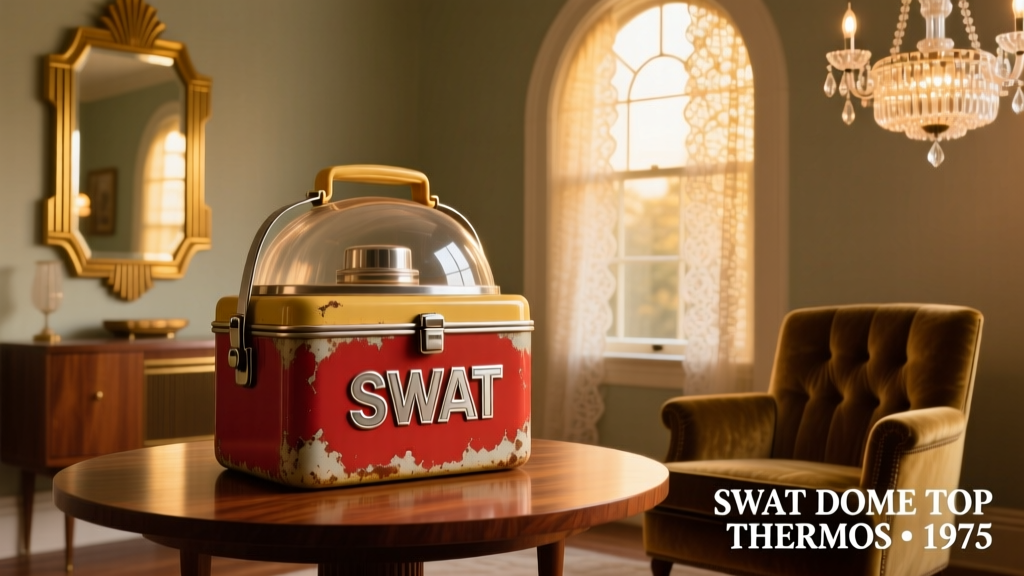
SWAT Dome Top Plastic Thermos Lunch Box (1975): Design, Manufacture, and Collectibility of a Cold War-Era Icon

The Chelsea Porcelain Goat and Bee Jug: A Masterpiece of 18th-Century English Rococo Artistry

The Enigma of the Unknown Maker: Decoding Unmarked Antique Furniture