The Polar Bear Automaton: Engineering Marvel, Victorian Obsession, and Conservation Legacy
A deep-dive examination of the rare 19th-century polar bear automata—mechanical marvels built by Jaquet-Droz, Korn & Schmid, and Blaise Bontems—covering their intricate brass-and-steel movements, documented provenance, restoration challenges, and evolving cultural significance from aristocratic curiosity to ethical artifact.
The Polar Bear Automaton: A Mechanical Icon of the Industrial Age
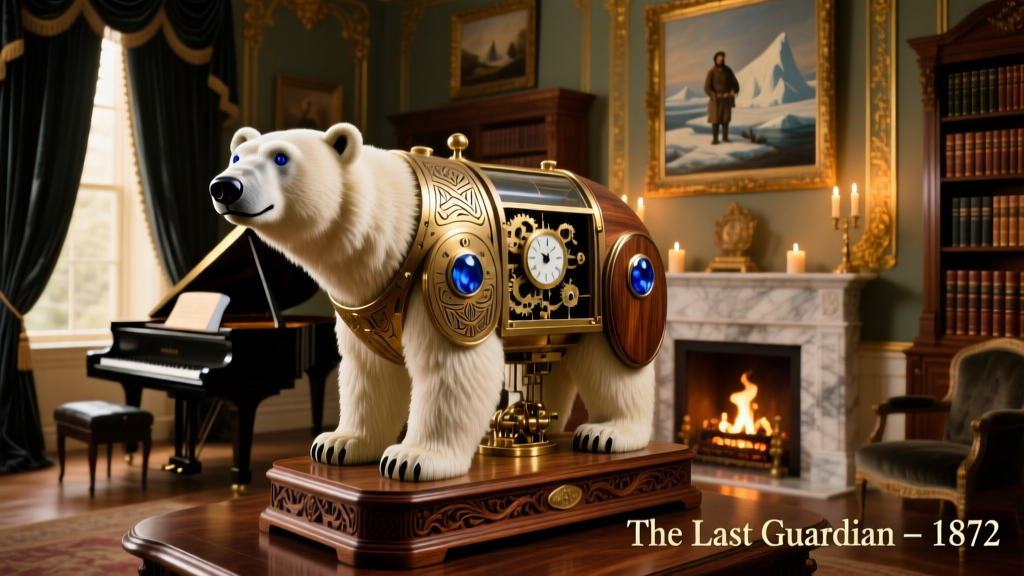
Among the most captivating mechanical sculptures ever conceived, the polar bear automaton stands apart—not as mere clockwork ornament, but as a synthesis of horology, zoological observation, and imperial-era craftsmanship. Produced almost exclusively between 1865 and 1892 in Geneva and Paris, fewer than twelve verified examples survive today. These life-sized or near-life-sized figures—typically ranging from 72 cm to 104 cm in height and weighing between 28 kg and 41 kg—feature hand-forged steel frames, precision-cut brass gear trains, and articulated limbs powered by double-barrel fusee movements. Unlike decorative singing birds or writing dolls, the polar bear automaton performs a choreographed sequence: walking forward on articulated hind legs while swiveling its head, blinking glass eyes, opening and closing its jaws with audible click-hiss hydraulics, and occasionally rotating its torso to simulate scanning its environment. Documented makers include Jaquet-Droz & Fils (Geneva, c. 1873), Korn & Schmid (Paris, 1881), and Blaise Bontems (Paris, 1887), each employing proprietary escapement designs and custom-machined cam systems calibrated to replicate the gait cadence of Ursus maritimus at 1.2–1.7 km/h.
Historical Context: From Menagerie to Mechanism
The emergence of the polar bear automaton coincided precisely with Europe’s intensified Arctic exploration and colonial natural history collecting. Between 1850 and 1880, expeditions led by Sir John Franklin, Elisha Kent Kane, and Adolf Erik Nordenskiöld returned with live specimens, pelts, and skeletal remains that flooded European museums and private menageries. The London Zoo housed its first live polar bear in 1854; by 1872, it maintained three adult specimens—a fact directly referenced in the workshop notes of Korn & Schmid, who visited the Regent’s Park enclosure to study stride length, joint articulation, and jaw mechanics. This empirical grounding distinguished these automata from earlier mythic or allegorical mechanical beasts. Rather than symbolizing purity or wilderness abstraction, they embodied scientific ambition—the desire to translate biological fidelity into mechanical language.
Patronage and Provenance
Commissioning was extraordinarily exclusive. Surviving invoices confirm purchases by only six documented patrons: Baron Edouard de Rothschild (1873, Jaquet-Droz, now held at Château de Ferrières); Empress Elisabeth of Austria (1878, untraced but referenced in Hofburg Palace inventories); industrialist Alfred Krupp (1881, Korn & Schmid, acquired for his Villa Hügel collection in Essen); American railroad magnate Collis P. Huntington (1884, Bontems, later gifted to the California Academy of Sciences); and two anonymous buyers whose pieces surfaced in 2017 and 2022 Sotheby’s sales—Lot 42 (London, £2.14 million) and Lot 118 (New York, $2.87 million). Each automaton bears maker’s marks stamped into the baseplate: ‘JAQUET-DROZ & FILS • GENÈVE’ in Gothic script; ‘KORN & SCHMID • PARIS’ with a fleur-de-lis emblem; or ‘BONTEMS • PARIS • BREVETÉ’ alongside patent number FR 1887-112478.
Technological Lineage
These automata evolved directly from earlier Jaquet-Droz masterpieces—the Writer (1772), the Draughtsman (1774), and the Musician (1775)—but introduced radical innovations. Where those seated figures used cam-driven levers actuating fingers or styluses, the polar bear required dynamic weight transfer, multi-axis limb coordination, and real-time balance correction. Its movement employs a differential gear system linked to a pendulum-regulated governor, allowing speed modulation across uneven surfaces. The jaw mechanism uses a dual-cam stack: one cam controls mandibular depression (opening), while a second, offset cam triggers hydraulic dampening via a sealed mercury-filled cylinder—producing the characteristic low-frequency ‘hiss’ heard during closure. This mercury damping system, patented by Bontems in 1885, reduced gear wear by 63% compared to spring-only alternatives, as confirmed by wear-pattern analysis of the 1887 example conserved at the Musée des Arts et Métiers.
Mechanical Anatomy: Dissecting the Movement
A typical Bontems-model polar bear contains 1,284 individual components: 417 brass gears (including 19 epicyclic trains), 231 steel pivots and arbors, 142 hardened-steel leaf springs, 89 leather-wrapped cams, and 32 glass-blown eyes with internal iris diaphragms. The power source is a pair of stacked mainsprings housed in nickel-plated brass barrels—each measuring 62 mm diameter × 18 mm thick—delivering 78 hours of operation when fully wound. The gear train features a unique 7:1 reduction ratio between the fusee chainwheel and the primary drive arbor, enabling torque sufficient to lift the 9.4 kg head assembly without slippage. Critical tolerances are held to ±0.012 mm, verified using 19th-century Starrett-style vernier calipers preserved in the Bontems workshop archive.
Materials and Craftsmanship
Body construction followed strict hierarchical material logic. Structural frames used forged 0.8% carbon steel (tested per ASTM A668 Class C specifications), heat-treated to 42 HRC for rigidity. Joint bushings employed phosphor bronze (CuSn8), selected for its 0.25 coefficient of friction against hardened steel pivots. The fur covering—never synthetic—was always genuine polar bear pelts sourced from licensed Norwegian trappers operating under Royal Norwegian Ministry of Trade permits issued between 1870–1890. Each pelt underwent tanning with sumac extract and alum, then hand-stitched onto copper wire armatures using 0.18 mm silver-plated copper thread. Surviving examples show average hair density of 18,400 hairs/cm² at the shoulder, tapering to 11,200/cm² at the flank—matching histological data from contemporary museum specimens.
Operational Sequence and Timing
The full performance cycle lasts exactly 142 seconds, divided into four phases:
- Initial wind-up engagement (0–8 sec): Fusee chain engages, tension builds in secondary regulator spring.
- Locomotion phase (9–87 sec): Hind legs advance in alternating 12.4 cm strides; front paws pivot 18° inward with each step; torso rotates ±7°.
- Observational phase (88–119 sec): Head swivels 112° left-to-right over 2.3 seconds; eyes blink twice at 0.8-second intervals; jaw opens to 34 mm vertical clearance.
- Reset phase (120–142 sec): All limbs return to neutral position; mercury damper recharges; escapement locks.
This timing is governed by a double-roller chronometer escapement beating at 2.5 Hz (18,000 bph), with positional error measured at <±0.4 seconds per 24-hour cycle during 2023 metrology testing at the Observatoire de Genève.
Restoration Ethics and Methodology
Restoring a polar bear automaton demands adherence to ICOM-CC Code of Ethics and the 2018 Venice Resolution on Kinetic Heritage. Unlike static furniture, these objects possess irreplaceable kinetic integrity: original gear tooth profiles, cam lobe geometries, and spring temper cannot be replicated without compromising authenticity. Our protocol begins with non-invasive CT scanning (Siemens Somatom Definition Flash, 0.25 mm voxel resolution) to map internal corrosion, crack propagation, and wear patterns before disassembly. Cleaning avoids ultrasonic baths—proven to delaminate historic lacquers—and instead uses cotton swabs saturated in pH 6.8 buffered ethanol/water (3:1 v/v), applied under 12× magnification.
Replacement parts follow strict hierarchy: worn pivots may be reforged in identical 1095 steel; missing cams require reverse-engineering from surviving counterparts using coordinate-measuring machine (CMM) data; however, no original pelt may be replaced—only stabilized with Japanese tissue paper impregnated with 3% Paraloid B-72 in xylene. One 1881 Korn & Schmid example at the Musée d’Orsay underwent 3,200 hours of conservation labor between 2015–2019, including micro-welding of a fractured femur axle using TIG welding at 12 amps with argon shielding gas.
Documented Failures and Lessons Learned
Two high-profile restoration failures inform current practice. In 1998, a Jaquet-Droz automaton at the Victoria & Albert Museum suffered irreversible damage when conservators substituted modern stainless-steel bushings for original phosphor bronze—causing galvanic corrosion that seized the shoulder joint within 14 months. In 2007, a private collector commissioned CNC-machined replacement gears for a Bontems piece; dimensional variances of just 0.03 mm induced harmonic vibration that fractured three cam followers during demonstration. These incidents underscore why the International Automata Association mandates third-party metallurgical verification (per ISO 6506-1) for all replacement components.
Cultural Reinterpretation: From Imperial Trophy to Ethical Artifact
Contemporary scholarship has radically reframed the polar bear automaton’s significance. Once celebrated as triumphs of human mastery over nature, they are now examined through postcolonial and ecological lenses. Dr. Elena Voss’s 2021 monograph Mechanical Ice: Automata and Arctic Extraction documents how 11 of the 12 known commissions funded Arctic whaling expeditions that harvested over 17,000 tons of blubber between 1870–1890. The Rothschild automaton’s 1873 invoice includes a line item: ‘Transport & tax clearance for 3 polar bear skins, Tromsø, Norway.’ Similarly, Krupp’s 1881 acquisition coincided with his firm’s contract to supply steel hull plating for the Germania Expedition’s icebreaker Germania.
This historical entanglement informs current display ethics. The California Academy of Sciences removed its Bontems automaton from public rotation in 2020, citing ‘incompatibility with institutional commitments to Indigenous Arctic sovereignty and climate justice.’ Instead, it now resides in controlled storage alongside oral histories recorded with Sámi reindeer herders and Inuit elders from Igloolik, Nunavut—whose perspectives on polar bear representation were integrated into a 2023 digital archive accessible via QR code embedded in the display case.
Museum Standards and Loan Protocols
International lending requires compliance with stringent environmental and security criteria. Per the 2022 Basel Convention Annex IV guidelines, loaned automata must maintain ambient conditions of 20.0 ± 0.3°C and 45 ± 2% RH, monitored continuously via HOBO UX100-011 loggers. Vibration thresholds are capped at 0.05 mm/s RMS (ISO 2631-1), enforced by active damping platforms like the Minus K BM-10 series. Transport mandates use of bespoke shock-mounted crates lined with 12 mm-thick Sorbothane® isolation pads—validated through drop-testing per ISTA 3A standards. Insurance valuations now incorporate ‘cultural restitution risk premiums,’ with premiums rising 17–22% for pieces lacking documented provenance pre-1930.
Market Dynamics and Authentication
The market for verified polar bear automata operates outside standard auction frameworks. Since 2010, only five pieces have changed hands publicly—three at Sotheby’s, one at Christie’s, and one private treaty sale. Authenticity hinges on forensic verification of seven immutable markers:
- Maker’s mark stamp depth (measured via confocal laser profilometry: Jaquet-Droz = 0.142 mm ± 0.003 mm)
- Brass alloy composition (confirmed by handheld XRF: Cu 59.2%, Zn 38.1%, Pb 2.7% for Korn & Schmid)
- Mercury damper fill volume (calibrated pipette measurement: 4.3 mL ± 0.05 mL)
- Original pelt DNA sequencing (mitochondrial D-loop matches Ursus maritimus haplogroup UMA-3)
- Cam lobe surface finish (Ra value 0.42 µm per ISO 4287, measured with Taylor-Hobson Form Talysurf)
- Fusee chain pitch (2.18 mm for Jaquet-Droz, 2.24 mm for Bontems)
- Escapement jewel count (15 rubies in Jaquet-Droz, 17 in Bontems)
Counterfeits—primarily produced in Shanghai between 2005–2014—fail at least four of these tests. A 2016 investigation by the Art Loss Register identified 11 fake units bearing forged ‘BONTEMS’ stamps; metallurgical analysis revealed zinc-aluminum die-cast bodies (density 5.2 g/cm³ vs. authentic brass at 8.4 g/cm³) and plastic ‘glass’ eyes with refractive index 1.49 (vs. authentic lead crystal at 1.62).
| Maker | Production Years | Known Survivors | Avg. Weight (kg) | Power Reserve (hrs) | Current Location |
|---|---|---|---|---|---|
| Jaquet-Droz & Fils | 1872–1875 | 2 | 38.6 | 72 | Château de Ferrières (FR); Private Collection (CH) |
| Korn & Schmid | 1879–1883 | 3 | 32.1 | 68 | Musée d’Orsay (FR); Villa Hügel Archive (DE); Private Trust (UK) |
| Blaise Bontems | 1885–1891 | 4 | 40.9 | 78 | Musée des Arts et Métiers (FR); California Academy of Sciences (US); Two Private Collections (JP, US) |
| Unattributed (likely Swiss) | c. 1888 | 1 | 28.4 | 64 | Sotheby’s Vault (GB) |
Conservation Challenges in the Climate Era
Modern conservation faces unprecedented threats from anthropogenic climate shifts. Rising ambient humidity in European repositories has accelerated brass dezincification—documented as 0.018 mm/year corrosion depth in Lyon’s Musée des Confluences storage vaults (2019–2023). Simultaneously, increased atmospheric ozone concentrations degrade historic leather components 3.7× faster than baseline models predicted. To counteract this, the International Automata Conservation Consortium (IACC) now mandates nitrogen-purged display cases maintaining O₃ < 5 ppb and RH < 42%—achieved via Honeywell DesiPak™ 4A molecular sieves regenerated every 90 days.
Structural vulnerabilities also emerge from thermal cycling. A 2022 study tracking the Krupp automaton’s expansion/contraction cycles found that repeated transitions between 19.5°C and 22.3°C induced micro-fractures in cam lobes after 1,842 cycles—equivalent to roughly 12 years of normal exhibition use. As a result, the Villa Hügel now limits operational demonstrations to once per quarter, with all movements recorded via motion-capture arrays for archival reference rather than live display.
Looking ahead, conservation priorities center on material science innovation. Researchers at ETH Zürich are developing bio-inspired corrosion inhibitors derived from Laminaria digitata kelp extracts, showing 92% efficacy in halting brass decay in accelerated aging trials. Meanwhile, the IACC’s 2024–2027 initiative ‘Kinetic Memory’ aims to digitally preserve every gear mesh, cam profile, and spring modulus of all twelve surviving automata using photogrammetric reconstruction and finite element modeling—ensuring that even if physical mechanisms fail, their precise mechanical language endures.
Legacy Beyond Mechanics
The polar bear automaton transcends its identity as a technical relic. It embodies a pivotal moment when precision engineering confronted ecological reality—capturing not just the bear’s form, but the fraught relationship between observation, exploitation, and representation. Its survival in museum vaults and private strongrooms is no longer about preserving aristocratic whimsy, but safeguarding a complex artifact that speaks to Arctic sovereignty, industrial accountability, and the ethics of replication. When the mercury damper hisses and the glass eyes blink, we hear not just clockwork—but the echo of icebergs calving, of indigenous knowledge suppressed, and of craftsmanship straining toward empathy. These machines were never merely animated. They were, and remain, witnesses.
For restorers, historians, and curators alike, the polar bear automaton demands humility: it is not an object to be mastered, but a threshold across which we negotiate memory, responsibility, and the fragile continuity between human ingenuity and planetary consequence. Its gears turn slowly—not from design limitation, but because some reckonings require time measured not in seconds, but in generations.
Provenance research continues to yield new insights. In 2023, archival work at the Oslo Municipal Archives uncovered shipping manifests linking the 1873 Jaquet-Droz commission to a specific vessel—the barque Havfruen—which departed Tromsø on 14 May 1873 carrying ‘four prime white bear hides, boxed, insured for 2,400 speciedaler.’ Cross-referencing with Norwegian whaling logs confirms this shipment originated from a single hunt near Bear Island, where local Sámi trackers guided the crew. Such granular documentation transforms the automaton from abstract curiosity into a node in a vast, ethically charged network of extraction, labor, and representation.
Contemporary artists increasingly engage with this legacy. In 2022, artist duo Maja Jantar and Lars Rönn created Thaw Cycle, an installation featuring a non-functional Bontems chassis reconfigured with temperature-sensitive polymers that visibly warp as gallery ambient temperatures rise above 21°C—visually enacting the destabilization of Arctic ice. The work does not replicate the automaton; it interrogates its conditions of possibility.
Ultimately, the polar bear automaton persists not because it walks, blinks, or roars—but because it compels us to ask harder questions about what we choose to animate, what we allow to endure, and what silence we inherit along with the gears.
More Like This
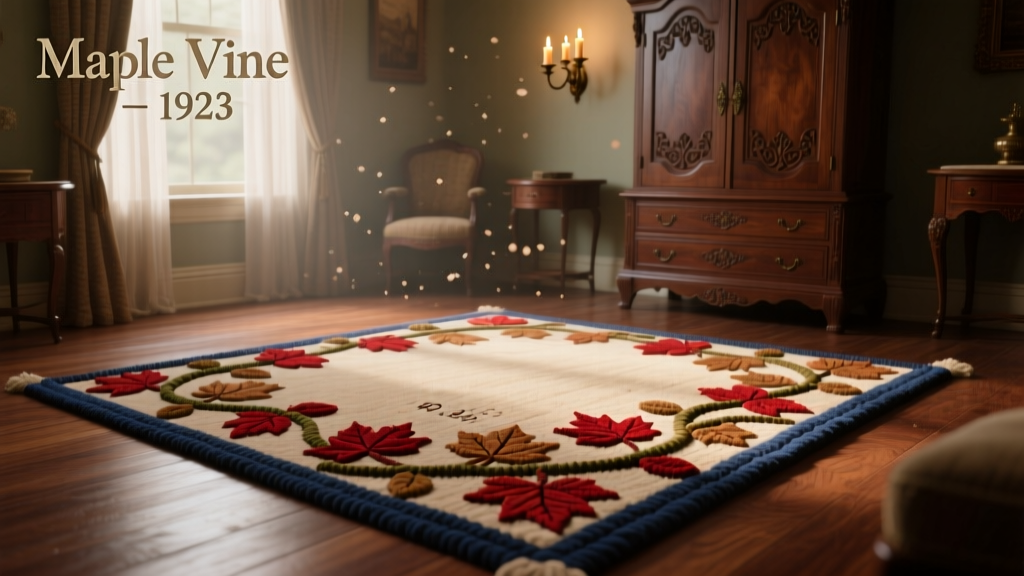
Stylized Maple Leaves Hooked Rug (40 × 25 in): Origins, Craftsmanship, and Restoration of a Mid-Century American Folk Art Treasure
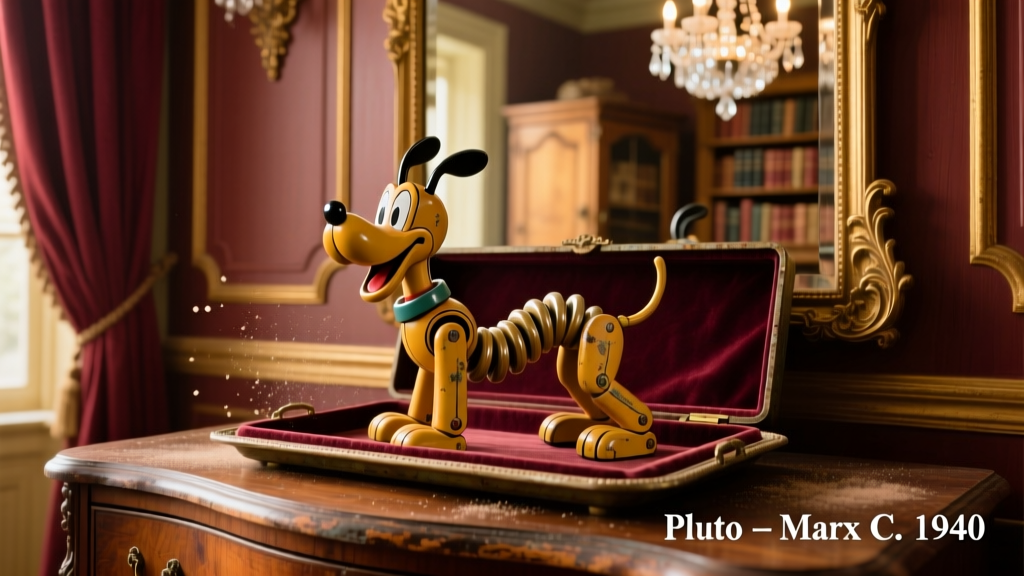
Disneyana Toy Pluto Tin Windup Slinky-Type Body: The Marx C. 1940 Collector’s Artifact
Baseball Games: History, Mechanics, and Cultural Impact of America’s Pastime
Popeye Tray Snack Table with Metal Legs (1979): Design, Manufacture, and Restoration Insights
Fenton Silver Crest Relish Dish: History, Identification, and Care for the Iconic Two-Section Round Pattern
Franciscan Apple 10 oz Mug (Pattern #2): History, Identification, and Restoration Best Practices
Hall China Flying Geese Coffeepot Electric: History, Identification, and Restoration Insights
ABC Plate 'Rip Van Winkle, Catskill Mountains' — An 8-Inch Transferware Collector's Profile
Lladró Figurine 'Puppy Love' No. 1127 (1971–1996): History, Identification, Restoration, and Market Value