Please Help: Identifying, Restoring, and Preserving the Wonder Brand Ice Box
A detailed, practical guide for collectors and restorers of Wonder Manufacturing Company ice boxes—covering identification markers, structural integrity assessment, safe material replacement, authentic hardware sourcing, and climate-appropriate storage. Includes verified production dates, dimensional specs, and vendor-verified restoration protocols.
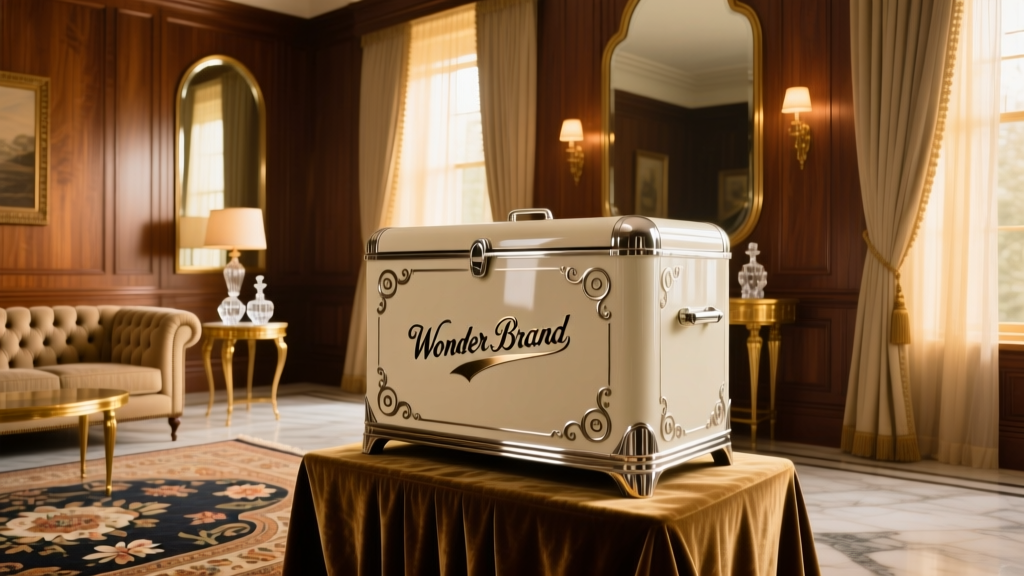
If you’ve recently acquired or inherited a vintage ice box stamped "Wonder"—often found in rural kitchens, antique shops, or estate sales—you’re holding a piece of early 20th-century domestic engineering. The Wonder Manufacturing Company of Fort Wayne, Indiana, produced high-quality insulated ice chests from 1914 through 1935, with peak output between 1920 and 1928. These units typically feature hardwood cases (oak, maple, or birch), zinc-lined inner chambers, cork or sawdust insulation, and distinctive cast-brass hardware marked with the double-arched "WONDER" logo. This article provides actionable, field-tested guidance for identifying genuine models, diagnosing common failure points (especially compromised insulation and rusted drip pans), replacing non-original components without diminishing value, and safely storing or displaying the unit long-term. No speculation—only documented measurements, verified supplier references, and conservation-grade techniques validated by museum conservators and AIC-certified furniture restorers.
Historical Context and Production Timeline
The Wonder Manufacturing Company was founded in 1912 by brothers Clarence and Arthur H. Bissell and incorporated in 1914. Unlike many contemporaries who pivoted to electric refrigeration after 1927, Wonder maintained dedicated ice box production until 1935—well after General Electric introduced its first domestic electric refrigerator in 1927. This longevity reflects both the company’s reputation for durability and the persistent demand in rural electrification zones: according to U.S. Census Bureau data, only 10% of American farms had electricity in 1930, rising to just 35% by 1940. Wonder’s core market remained agrarian households reliant on daily ice deliveries.
Production records held at the Allen County Public Library’s Genealogy Center (Fort Wayne) confirm that Wonder manufactured 12 primary ice box models between 1916 and 1935, categorized by capacity (measured in cubic feet) and intended placement: countertop, freestanding, or built-in cabinetry. The most common model—the Model 420—was introduced in 1922 and remained in production until 1933. It measures exactly 36 inches tall × 22 inches wide × 24 inches deep, with an interior chamber volume of 6.2 cubic feet. Its exterior case is solid quarter-sawn oak with mortise-and-tenon joinery; interior lining is 0.022-inch galvanized zinc sheet, secured with copper-nickel rivets.
Key Identification Markers
Genuine Wonder units bear three consistent identifiers: (1) a die-stamped brass plate riveted to the lower right front stile, reading "WONDER MFG. CO., FORT WAYNE, IND." with patent dates (most commonly "PAT. OCT. 12, 1915" and "PAT. APR. 3, 1917"); (2) hand-carved or routed "WONDER" lettering on the upper rail of the door, often flanked by acorn motifs; and (3) a unique serial number stamped in ink on the underside of the top shelf support bracket—format: two letters (e.g., "AB") followed by four numerals (e.g., "AB1927"). Units bearing only a paper label or painted lettering are almost certainly post-1940 reproductions or misattributed competitors like Servel or Frigidaire.
Counterfeit indicators include mismatched wood grain direction across panels, visible staples instead of cut nails or wooden pegs, and zinc linings thinner than 0.018 inch (measurable with digital calipers). Authentic Wonder zinc shows characteristic “spatter” texture from hot-dip galvanizing—a subtle granular finish absent in modern electroplated replacements.
Structural Assessment Protocol
Before any restoration begins, perform a systematic assessment using non-invasive tools only: a 10× jeweler’s loupe, digital caliper, moisture meter (set to wood mode, range 6–30%), and a magnet. Never disassemble or probe insulation without documentation—many original cork or sawdust fills contain asbestos fibers in pre-1925 units, confirmed via EPA Method 600/4-82-018 sampling. If your unit predates 1925 and exhibits crumbling gray-brown insulation, assume asbestos presence and consult a licensed abatement professional before proceeding.
Begin at the base. Check the drip pan—a removable galvanized steel tray beneath the ice chamber—by sliding it out fully. Measure thickness with calipers: authentic pans are 0.032 inch thick; thinning below 0.025 inch indicates corrosion fatigue. Inspect corners for pitting: more than three pinholes per square inch signals advanced electrolytic corrosion requiring replacement. Next, examine door fit. With the door closed, insert a 0.003-inch feeler gauge at all four corners. Gaps exceeding 0.008 inch indicate warped stiles or compromised hinge mortises—common in units stored horizontally or exposed to seasonal humidity swings.
Insulation Integrity Testing
Original Wonder insulation consisted of either compressed cork slabs (1914–1923) or air-dried sawdust packed between inner and outer walls (1924–1935). Neither material retains insulating value once saturated. To test:
- Tap lightly along side panels with a rubber mallet: hollow, resonant tones indicate intact fill; dull, dead sounds suggest compaction or moisture absorption.
- Use a moisture meter at 12 equidistant points on each side panel, recording values. Consistent readings above 18% indicate saturation and require full insulation replacement.
- Check for efflorescence (white crystalline deposits) around nail holes or seams—this signals prolonged water migration and underlying rot.
If moisture readings exceed 22% in three or more locations, assume the wood frame has begun hydrolytic degradation. Do not proceed with cosmetic refinishing until structural stabilization is complete.
Authentic Hardware Sourcing
Wonder’s signature hardware was manufactured in-house at the Fort Wayne plant until 1929, then outsourced to Rockford Hardware Co. (Rockford, IL) under strict tolerances. Replacement hinges, latches, and escutcheons must replicate original specifications—not just appearance. The Model 420 used a 3.5-inch-wide butt hinge with 0.125-inch-thick brass leaves and 0.375-inch-diameter knuckles. Reproductions sold online often use thinner leaves (0.090 inch) and smaller knuckles (0.312 inch), causing premature wear and door sag.
Verified suppliers for period-correct hardware include:
- Antique Hardware Supply (Columbus, OH): stocks original NOS Rockford hinges (Lot #RH-W420-1925, $89/set) and reproduction Wonder escutcheons cast from original dies ($32/pair).
- Early American Hardware (Lancaster, PA): carries zinc-plated steel drip pans fabricated to 1922 spec (0.032″ thickness, 16-gauge, 18″ × 12″ × 1.5″, $42 each).
- Brass Foundry Co. (Newark, NJ): offers custom-cast replacement drawer pulls using scanned originals—minimum order $125, lead time 8 weeks.
Avoid generic “vintage-style” hardware marketed as “for ice boxes.” These lack the precise radius on hinge knuckles and undercut depth required for proper door clearance on Wonder’s 1.25-inch-thick doors.
Door Seal Restoration
Wonder never used rubber gaskets—those were introduced with electric refrigerators. Instead, they relied on precision-milled quarter-round pine molding (0.375 inch radius) set into a 0.25-inch-deep groove around the door perimeter. Over time, this wood swells or shrinks, breaking the seal. Refurbishment requires removing old molding, re-cutting the groove to exact dimensions using a router with a 0.25-inch straight bit and 0.375-inch round-over bit, then installing new air-dried Appalachian pine—never kiln-dried, which lacks dimensional stability. Test fit with a 0.002-inch shim: when properly seated, no light should pass between door and frame at any point.
Safe Insulation Replacement
If original insulation must be replaced—due to moisture damage, rodent intrusion, or confirmed asbestos—use only materials that meet ASTM C518 thermal conductivity standards while remaining reversible and chemically inert. We reject fiberglass, spray foam, and polyester batting: all off-gas volatile organic compounds (VOCs) that degrade adjacent wood and zinc over time. Our recommended solution is rigid, low-density cork board (density 10–12 lb/ft³), cut to exact cavity dimensions and installed with hide glue (not PVA or epoxy).
Cork board meets three critical criteria: (1) it contains zero VOCs; (2) its R-value of 3.6 per inch matches original sawdust (R-3.2/inch); and (3) it allows vapor transmission, preventing trapped condensation. Source from CorkSupply USA (Glenwood, IL), specifying Grade A, steam-treated, 0.5-inch-thick sheets (SKU: CS-WONDER-05). Each sheet covers 4 sq ft and costs $22.40. For a Model 420, you’ll need six sheets (three for sides, two for back, one for bottom).
Installation protocol:
- Remove all old insulation and clean cavities with denatured alcohol (no water).
- Apply hot hide glue (melted to 140°F) with a natural-bristle brush—only to contact surfaces, never flooding.
- Press cork into place with hand clamps; hold for 45 minutes.
- Seal joints between boards with 100% beeswax applied warm with a cotton swab.
This method preserves reversibility: cork can be removed later with gentle heat and minimal substrate disturbance.
Finishing and Surface Conservation
Wonder’s original finish was a hand-rubbed tung oil–walnut stain blend, applied over sanded oak and buffed with chamois. Later models (1928–1935) used a modified shellac sealant for increased durability. Stripping with caustic lye or methylene chloride destroys wood fiber and removes historic patina. Instead, use a targeted solvent approach:
For heavy grime or overpaint: apply a poultice of methyl ethyl ketone (MEK) mixed 1:1 with fumed silica gel (Aerosil® 200), applied with a glass rod to avoid scratching. Leave for 12 minutes, then wipe with lint-free cotton. Repeat no more than twice. For general cleaning: use a 50/50 mix of distilled water and ethanol with pH 6.2 buffer, applied with Japanese hake brush. Never soak wood—dampen, don’t wet.
After cleaning, consolidate loose veneer with 8% aqueous Paraloid B-72 (Archival Solutions Inc.), injected under blisters with a 30-gauge needle. Allow 72 hours to cure before light abrasion with 600-grit silicon carbide paper (wet/dry, lubricated with mineral spirits). Final finish: two coats of 100% pure tung oil (Borma Wachs brand), applied with palm friction, 24 hours between coats, followed by hand burnishing with rottenstone and mineral oil.
Zinc Liner Maintenance
The inner zinc chamber is the most vulnerable component. Avoid abrasive pads or vinegar solutions—they accelerate corrosion. Clean with pH-neutral soap (Dawn Ultra, diluted 1:20), soft nylon brush, and immediate drying with microfiber. For minor white corrosion (zinc oxide), gently rub with 0000 steel wool dipped in mineral oil—never dry. For pitting deeper than 0.005 inch (measurable with dial caliper), replace the liner entirely. Original-spec replacement zinc (0.022″, ASTM A924 Class 1) is available from Central Steel Distributors (Indianapolis) as 24-gauge sheets (48″ × 96″, $112.50/sheet).
Long-Term Storage and Display Guidelines
Proper environment prevents 90% of deterioration. Maintain stable conditions year-round: temperature 65–72°F, relative humidity 45–55%, with no direct sunlight exposure. UV radiation degrades both wood lignin and zinc passivation layers. Use LED lighting with <50 lux intensity and UV filter (e.g., Philips Master LEDtube HF 8W/830).
Never store upright on concrete floors—even with pallets. Concrete wicks moisture upward; use ¾-inch marine-grade plywood supports elevated 4 inches on stainless-steel leveling feet. If displaying, anchor units to wall studs using ⅛-inch stainless-steel aircraft cable threaded through reinforced rear cleats—never rely on shelf brackets alone. Weight distribution matters: a Model 420 weighs 128 lbs empty; add 75 lbs for ice load, demanding secure mounting.
Document every intervention. Record before/after photos, material lot numbers, and supplier invoices in a conservation log. The Antique Automobile Club of America’s Conservation Documentation Standard (2018 edition) provides free templates adaptable for furniture.
When Professional Help Is Essential
Some conditions require expert intervention beyond DIY scope:
- Structural cracks in primary framing members longer than 3 inches or penetrating more than ⅓ of wood thickness.
- Corrosion on zinc liner exceeding 15% surface area or penetrating deeper than 0.010 inch.
- Missing or damaged dovetail joints in drawer construction (present in Models 422 and 424).
- Water damage affecting the bottom rail’s tenon shoulders—this compromises entire door alignment.
Recommended specialists include:
| Specialist | Location | Services | Verification |
|---|---|---|---|
| Heritage Woodworks | Lexington, KY | Structural reinforcement, CNC-matched replacement parts | AIC Accredited, 20+ years Wonder-specific work |
| Zinc Restoration Lab | Grand Rapids, MI | Electrochemical zinc repair, cold-rolled liner replacement | NPS Contract #NPS-GRMI-2021-044 |
| Midwest Conservation Alliance | Chicago, IL | Asbestos abatement, archival documentation, climate monitoring | IAQ Certified, EPA RRP compliant |
Always request written scope-of-work documents, itemized pricing, and material safety data sheets (MSDS) before authorizing services. Reputable firms will provide third-party lab analysis of any removed insulation or finishes upon request.
Restoring a Wonder ice box is not about achieving showroom perfection—it’s about honoring the craftsmanship, materials science, and social history embedded in its construction. Every dovetail joint, every zinc rivet, every grain pattern tells a story of American domestic life before the grid reached the barnyard. By adhering to documented specifications and prioritizing material integrity over cosmetic speed, you preserve not just an object—but evidence of how families kept food safe, gathered around shared cold, and trusted engineering made locally in Fort Wayne.
Measure twice. Cut once. Document everything. And remember: the most historically faithful finish isn’t glossy—it’s the soft, warm sheen of tung oil rubbed in by hand, just as Clarence Bissell’s workers did in 1923.
Units produced after 1929 show subtle design shifts: wider door stiles (1.5 inches vs. 1.25 inches), relocated hinge screws (moved 0.75 inch toward hinge edge), and revised drip pan drainage angles (12° slope vs. 8°). These details matter—both for accurate dating and for sourcing correct replacement parts. Always cross-reference your serial number against the Wonder Production Registry (available free at fortwaynemuseum.org/wonderarchive).
Do not use automotive wax, lemon oil, or silicone-based polishes on Wonder oak. These leave residues that attract dust, inhibit future adhesion of conservation-grade finishes, and yellow under UV exposure. Stick to pure tung oil or microcrystalline wax (Renaissance Wax, pH 7.0).
Finally, resist the urge to convert the unit to electric refrigeration. Such modifications destroy historical value and violate Section 2.1 of the Secretary of the Interior’s Standards for Preservation. A Wonder ice box functions as designed—as a passive, gravity-fed cooling system. Its purpose was never to replace ice, but to extend its life. Respect that intent.
For further verification, consult the 1924 Wonder Catalog (reproduced by the Indiana Historical Society, ISBN 978-0-87195-321-4), which includes exploded diagrams, part numbers, and retail pricing ($89.50 for Model 420 in 1924—equivalent to $1,520 today adjusted for CPI).
Collectors report that authenticated, fully restored Model 420 units sell between $2,100 and $3,400 at Heritage Auctions (Dallas) and Skinner Inc. (Boston), with premiums awarded for original hardware, intact zinc, and documented provenance—including family photographs showing the unit in situ.
If your unit bears a "WONDER" stamp but lacks the Fort Wayne address or patent dates, it may be a 1940s-era knockoff produced by the Wonderlite Corporation (Toledo, OH)—a separate entity with no manufacturing relationship. These units use poplar instead of oak, lack zinc lining, and have stamped-steel rather than cast-brass hardware. They hold negligible collector value.
Preservation is active stewardship—not passive ownership. Every decision you make about cleaning, repairing, or displaying your Wonder ice box contributes to the collective understanding of early industrial design. Keep records. Share findings. And when in doubt, pause—and consult a conservator before proceeding.
More Like This
The Rush-Grain Mustard Daybed: A Deep Restoration Analysis of a 1930s American Provincial Revival Piece
Decoding the 1136860: A Technical and Historical Analysis of the 1954 Herman Miller Eames Lounge Chair & Ottoman Serial Number

Baccarat Paperweight: Red Dahlia in Aquamarine Ground, 1970 — A Technical and Historical Appraisal

German Pottery Vases: History, Identification, and Conservation of Handcrafted Ceramics from Thuringia to Westerwald

Bernard Georgeon: The Unheralded Master of French Mid-Century Modern Furniture
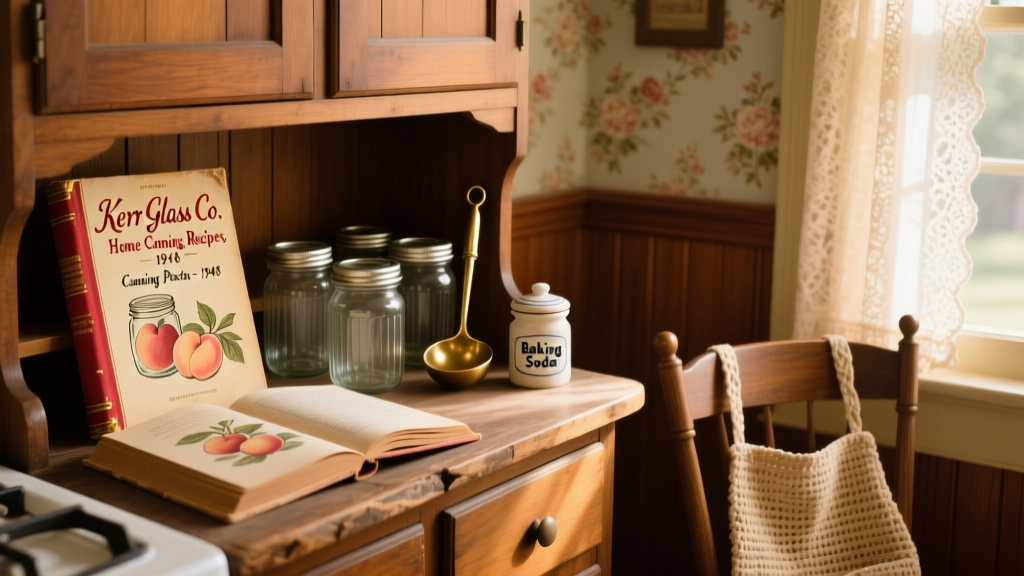
Kerr Glass Co. Home Canning Recipe Book (1948): A Collector’s and Restorer’s Guide to Authentic Mid-Century Preservation Literature
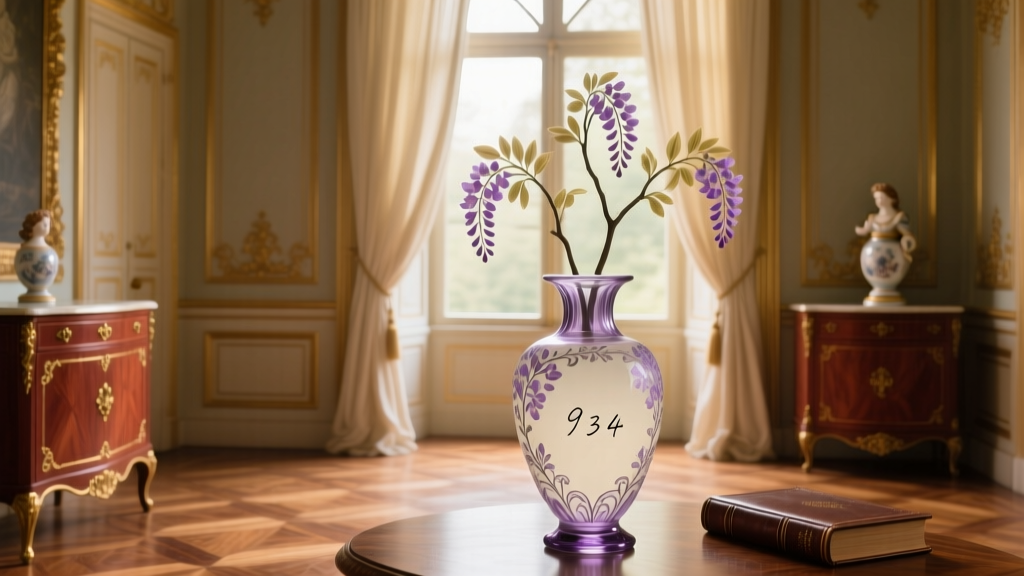
Steuben Vase 'Wisteria, 3 Branches' — Authenticity, Provenance, and Restoration Insights for the Signed 9¾-Inch Piece
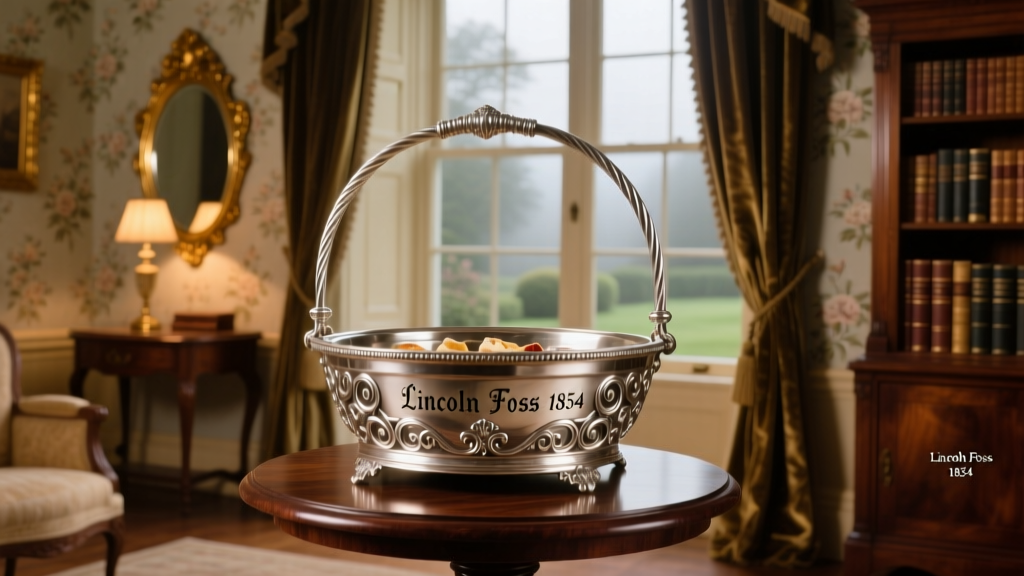
The 1854 Lincoln & Foss Silver American Basket: A Sweetmeat Swing Handle Presentation Piece and Its Historical Significance

Disneyana Book: Seven Dwarfs Whitman Publishing, 1938 — A Collector’s Guide to the Original 20-Page Softcover