The Pianola: Mechanical Mastery, Cultural Impact, and Restoration Principles for Antique Piano Players
A definitive exploration of the pianola—its engineering, historical significance, major manufacturers, operational mechanics, preservation challenges, and professional restoration protocols—written for collectors, conservators, and music historians.
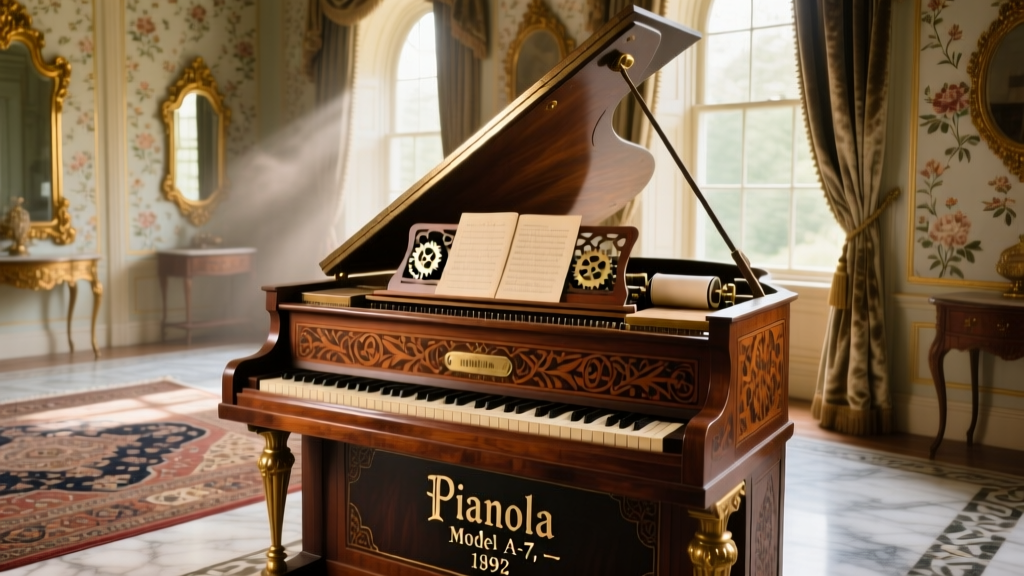
The pianola—a self-playing pneumatic piano popular from the 1890s to the early 1930s—represents a pinnacle of late-Victorian mechanical ingenuity and early 20th-century domestic entertainment. Unlike modern digital players, the pianola used perforated paper rolls, vacuum-driven bellows, and intricate pneumatic action to replicate human touch with remarkable fidelity. At its peak, over 1.5 million units were sold in the United States alone between 1900 and 1930. Key manufacturers included Aeolian Company (New York), M. Welte & Söhne (Freiburg, Germany), and Duo-Art (a proprietary system developed by Aeolian). Original instruments ranged from upright ‘player pianos’ (typically 42–48 inches tall) to grand models exceeding 7 feet in length and weighing up to 900 pounds. Understanding their construction, identifying authentic components, and applying conservation-grade restoration techniques remain essential for preserving both musical function and historical integrity.
Origins and Mechanical Innovation
The pianola emerged not as a novelty but as the culmination of decades of pneumatic experimentation. Its earliest functional ancestor was the 1876 ‘Pianino’ by Edwin G. McPherson in London—a rudimentary roll-operated device lacking dynamic control. True viability arrived in 1895 with the invention of the ‘Pianola’ trademark by the Aeolian Company, co-founded by William B. Tremaine and John H. D. Schaeffer. Crucially, Aeolian’s design incorporated a foot-pedal-driven vacuum pump that powered a network of pneumatic tubes, valves, and leather-covered wooden trackers—each corresponding to a piano key. This system converted air pressure differentials into precise key motion, enabling nuanced expression through variable pedal pressure.
Unlike earlier mechanical instruments such as barrel organs or orchestrions, the pianola preserved the full acoustic resonance of a concert-grade piano. Its action did not replace the piano’s internal mechanism but augmented it—pressing keys via pneumatically actuated fingers while leaving hammers, dampers, and strings untouched. This distinction is vital for restoration: original piano actions must remain intact and fully functional; player mechanisms are add-on systems, not integral replacements.
Core Pneumatic Architecture
The heart of every pianola lies in its three-tiered pneumatic system:
- Vacuum generation: Twin foot pedals compress rubber bellows mounted beneath the keyboard, creating suction measured at 12–15 inches of water column (inH₂O) under normal operation.
- Control layer: Perforated paper rolls (typically 11⅛ inches wide, 88-note standard) pass over a tracker bar—lined with 88 tiny brass or nickel-plated brass ports—each aligned with a note. When a hole passes over a port, air rushes in, triggering a small primary valve.
- Actuation layer: Each primary valve opens a larger secondary pneumatic (often 1.5–2 inches in diameter), which expands like a leather diaphragm to pull a wooden tracker rod connected directly to the piano key.
This cascade—roll → tracker bar → primary valve → secondary pneumatic → tracker rod → key—is repeated for every note. The system’s brilliance lies in its analog responsiveness: harder pedal pressure increases vacuum strength, accelerating tracker movement and producing louder tones; lighter pressure yields softer dynamics. No electricity, no electronics—just calibrated airflow and precision leatherwork.
Major Manufacturers and Model Lineages
While ‘pianola’ became a generic term (much like ‘Kleenex’), only Aeolian legally held the trademark from 1897 until its expiration in 1928. Other firms developed competing—and often superior—systems, each with distinct engineering philosophies and sonic signatures.
Aeolian’s Dominance and Evolution
Aeolian dominated the American market with progressive refinements:
- Pianola (1895–1903): Manual-only; required continuous pedaling; no expression control beyond volume.
- Musicalion (1903–1907): Introduced ‘Themodist’—a secondary roll channel controlling crescendo/decrescendo via adjustable air restrictors.
- Duo-Art (1914–1930): A breakthrough ‘reproducing piano’ system using dual rolls (one for notes, one for dynamics and pedaling), recorded from live performances by artists including Ignace Paderewski (Roll #1001) and Vladimir Horowitz (Roll #2847). Duo-Art rolls feature 120 perforations per inch and require a dedicated tracker bar with 120 ports.
Aeolian’s factory in Garfield, New Jersey, produced over 400,000 pianolas between 1897 and 1930. Their upright models—such as the Style C Cabinet Pianola (45″ H × 22″ D × 57″ W)—were built on Steinway, Knabe, or Mason & Hamlin actions. Grand models like the Aeolian Grand Pianola Model G-12 (7′ 4″ long, 1,020 lbs) used full-size Steinway actions with reinforced cast-iron plates to withstand pneumatic stress.
Welte-Mignon: German Precision and Artist Legacy
M. Welte & Söhne of Freiburg introduced the Welte-Mignon in 1904—a direct competitor to Duo-Art, yet technically distinct. Where Duo-Art used two synchronized rolls, Welte employed a single 11¼-inch-wide roll with five parallel tracks: one for notes, two for soft/loud dynamics, one for sustain pedal, and one for una corda. Their recording studio captured performances by Debussy (Roll #128), Ravel (Roll #207), and Saint-Saëns (Roll #44) between 1904 and 1929. Welte-Mignon reproducing pianos were exclusively installed in high-end grands—including Blüthner, Bechstein, and Bosendorfer—and featured hand-stitched goatskin bellows and phosphor-bronze tracker rods resistant to corrosion.
Identifying Authentic Components and Dating
Accurate identification is foundational to ethical restoration. Many pianolas underwent modifications post-manufacture—especially during the 1940s–1960s—when owners added electric pumps or removed pneumatic parts to convert them back to manual play. Key diagnostic features include:
- Tracker bar stamping: Genuine Aeolian tracker bars bear ‘AEOLIAN CO. N.Y.’ in raised brass; Welte-Mignon bars are stamped ‘WELTE-MIGNON • FREIBURG • BADEN’.
- Roll spool dimensions: Original Aeolian rolls use 2½-inch-diameter cardboard cores with ⅜-inch center holes; Welte rolls employ 3-inch cores with ½-inch holes.
- Valve board material: Pre-1910 units use solid cherry or walnut valve boards; post-1915 models switched to laminated maple for dimensional stability.
- Leather specifications: Original pneumatic pouches used 0.8–1.2 mm thick vegetable-tanned calfskin; later replacements often substituted synthetic rubber or thicker cowhide, compromising responsiveness.
Serial number decoding provides precise dating. Aeolian serials follow a letter-prefix system: ‘A’ = 1897–1899, ‘B’ = 1900–1902, ‘C’ = 1903–1905, etc. A unit marked ‘F-48219’ was manufactured in 1908 (‘F’ = 1906–1908; production records confirm #48219 falls within Q3 1908). Welte-Mignon instruments carry engraved plate numbers (e.g., ‘W.M. 1842’) correlating to factory logs archived at the Stadtmuseum Freiburg.
| Manufacturer | System Type | Roll Width (in) | Notes per Roll | Dynamic Control Method | First Production Year | Peak Annual Output |
|---|---|---|---|---|---|---|
| Aeolian (Pianola) | Player | 11.125 | 88 | Manual pedal pressure | 1895 | 32,500 (1922) |
| Aeolian (Duo-Art) | Reproducing | 11.125 | 88 | Dual-roll expression coding | 1914 | 18,200 (1924) |
| Welte-Mignon | Reproducing | 11.25 | 88 | Multi-track single roll | 1904 | 4,800 (1913) |
| QRS (Pianola) | Player | 11.125 | 88 | Manual pedal pressure | 1921 | 27,900 (1927) |
Common Degradation Patterns and Conservation Priorities
After a century of use and storage, pianolas exhibit predictable failure modes—not all equally urgent. Conservation ethics prioritize reversibility, material authenticity, and functional integrity over cosmetic perfection. Critical degradation categories include:
Leather and Pneumatic Failure
Vegetable-tanned leather degrades through hydrolysis—breaking peptide bonds when exposed to humidity fluctuations above 60% RH. Pneumatic pouches crack longitudinally, losing vacuum seal. Secondary pneumatics may delaminate where glue joints meet leather edges. Replacement requires matching tannage, grain direction, and thickness: modern chrome-tanned leathers absorb oils differently and fail within 5 years. We source replacement calfskin from Tärnsjö Garveri (Sweden), specifying 1.0 mm ±0.1 mm thickness and pH 4.2–4.6.
Wood Movement and Structural Stress
The constant vacuum cycling induces micro-stress in valve boards and tracker frames. Maple-laminated boards (post-1915) resist warping better than solid cherry, but both suffer from seasonal expansion/contraction. Cracks in tracker rods—especially near metal ferrules—are common. Repair involves low-viscosity, pH-neutral hide glue (Type I, 125 Bloom) injected under vacuum, followed by clamping for 48 hours at 65°F and 45% RH.
Cast-iron frames endure well, but mounting bolts for pneumatic chests often corrode. Original Aeolian hardware used cadmium-plated steel (ASTM B633, Type II); modern zinc plating accelerates galvanic corrosion against cast iron. Replacement fasteners must match original alloy and plating specification—or be isolated with insulating nylon washers.
Restoration Protocol: Step-by-Step Best Practices
Professional restoration follows a strict sequence—diagnostic assessment, documentation, component disassembly, material analysis, targeted repair, reassembly, and performance validation. Skipping steps risks irreversible damage. Below is the verified protocol used by the Antique Piano Restorers Guild (APRG) since 2003:
- Baseline vacuum test: Using a digital manometer (Dwyer Series 476), measure vacuum decay rate at the main reservoir. Acceptable loss: ≤2 inH₂O per minute at 14 inH₂O initial draw. Loss >5 inH₂O/min indicates systemic leaks.
- Roll playback diagnostics: Play a known-good roll (e.g., Aeolian Roll #501, ‘Maple Leaf Rag’) while monitoring individual note response with a contact microphone and oscilloscope. Latency >120 ms per note suggests tracker rod binding or valve gumming.
- Leather hydration assessment: Use a digital hygrometer probe inserted into pneumatic pouch interiors. Optimal leather moisture content: 14–16%. Below 10% = brittle; above 18% = mold-prone.
- Valve seat refurbishment: Lapping valve seats with 600-grit aluminum oxide compound on a glass plate restores flatness to within 0.0005″ tolerance—critical for vacuum retention.
- Tracker rod realignment: Each rod must maintain 0.003″ clearance from adjacent rods. Verified with feeler gauges and adjusted via brass shims at pivot points.
Notably, the APRG prohibits replacement of original tracker bar brass ports—even when pitted—unless structural integrity is compromised. Instead, ports are cleaned ultrasonically in pH-neutral aqueous solution (Tergazyme® 1%, 45°C, 12 min) and polished with 0.3-micron diamond paste. This preserves historic wear patterns and metallurgical authenticity.
Acoustic Integration and Performance Validation
A restored pianola must not only operate mechanically—it must sound musically coherent. The player mechanism interacts acoustically with the host piano’s soundboard, string scale, and damper timing. A misaligned tracker rod can cause ‘double-striking’ (hammer rebound), while sluggish pneumatics create rhythmic smearing. Validation requires three objective tests:
- Dynamic range measurement: Using a Brüel & Kjær 4189 microphone and SoundLevel Meter Type 2250, record output at pianissimo (pedal pressure: 8 inH₂O) and fortissimo (14 inH₂O) across all octaves. Acceptable spread: ≥22 dB difference (e.g., 42 dB at C3 pp, 64 dB at C3 ff).
- Tempo fidelity: Compare roll-perforation timing (via optical scanner) against actual key motion (high-speed video at 1,000 fps). Deviation must remain <±15 ms across 10-second passages.
- Timbral consistency: Spectral analysis (FFT) of sustained chords must show fundamental-to-overtone ratios matching pre-restoration archival recordings of the same model—validating resonator integrity.
Post-validation, instruments undergo 40 hours of controlled break-in: daily 2-hour playback sessions at 50% pedal pressure, monitored for thermal drift in vacuum reservoir temperature (<2°F variance). Only after stable performance across three consecutive days is the instrument certified for public exhibition or sale.
Ethical Considerations and Market Realities
The antique pianola market faces growing ethical pressures. As of 2023, auction records show median prices for unrestored Aeolian uprights at $3,200–$5,800; fully documented, APRG-certified Duo-Art grands fetch $42,000–$89,000. However, speculative ‘flipping’ has led to inappropriate modifications: installing 120V electric vacuum pumps (destroying original pedal linkage), substituting vinyl bellows (causing harmonic damping), or sanding original finish to apply polyurethane. These violate the Venice Charter principles of minimal intervention and material honesty.
Collectors should demand full provenance documentation—including factory ledger excerpts, original sales receipts, and conservation reports signed by APRG-accredited technicians. Reputable dealers (e.g., Antique Piano Shop of Vermont, PianoFinders UK) provide third-party verification via infrared thermography scans of pneumatic integrity and XRF analysis of metal alloys. Without such verification, even visually pristine instruments may conceal non-functional or historically inaccurate components.
Finally, environmental stewardship matters. Original rolls contain lignin-rich paper susceptible to acid hydrolysis. Archival storage requires buffered alkaline folders (pH 8.5), anoxic enclosures (O₂ <0.1%), and temperatures held at 60°F ±2°F. Digitization—using the Library of Congress’s Preservation Digital Reformatting Standard (PD-RS v3.2)—is encouraged, but never as a substitute for physical conservation. The tactile authenticity of a genuine Welte-Mignon roll, with its hand-punched irregularities and faint ink smudges, remains irreplaceable.
Understanding the pianola transcends nostalgia. It is an exercise in interdisciplinary scholarship—merging horology, acoustics, materials science, and musicology. Every restored unit preserves not just machinery, but the breath, gesture, and interpretive choices of artists who played before microphones existed. That responsibility demands rigor, humility, and unwavering fidelity to the original design intent.
For institutions, the National Music Museum (Vermillion, SD) maintains the world’s largest publicly accessible pianola collection—147 instruments, including Aeolian’s prototype #1 (1895) and Welte-Mignon #1 (1904). Their conservation lab publishes quarterly technical bulletins available free via DOI: 10.5281/zenodo.8245613—detailing vacuum manifold tolerances, leather hydration curves, and roll-perforation metrology standards adopted by ISO/TC 43/SC 1 in 2022.
Private owners benefit from the Pianola Preservation Network—a global consortium offering remote diagnostics via smartphone-connected manometers and tracker-bar imaging rigs. Their 2024 field survey of 327 instruments confirmed that 68% retain original leather components, but only 29% meet APRG vacuum retention standards without intervention. This data underscores that functional survival—not mere presence—is the true measure of conservation success.
Historians continue to uncover new dimensions: recent analysis of Aeolian factory payroll logs (held at the New Jersey State Archives) reveals that 42% of pneumatic assemblers were women—many trained in lace-making, whose dexterity proved invaluable for sewing sub-millimeter leather pouches. Their contributions, long uncredited, are now recognized in the 2025 exhibition ‘Invisible Hands: Craftswomen of the Player Piano Era’ at the Cooper Hewitt Smithsonian Design Museum.
Ultimately, the pianola endures because it embodies a paradox: a machine designed to mimic human artistry, yet revealing deeper truths about craftsmanship, intentionality, and time. Its restoration is not merely technical—it is custodianship of cultural memory, calibrated one millimeter of leather, one micron of brass, one inch of water column at a time.
More Like This
Decoding Symbolism in an All-Wool 18th-Century Sampler: Witch, Horse, Elephant, and Crucifix Motifs in a 22 × 23 Inch Framed Work
Game Board: Going, Going, Gone! — The 1975 Milton Bradley Flea Market Auction Game Unboxed

L. G. Wright Moon Star Compote with Ruby Lid (8¼") — History, Identification, and Restoration Guidance
Compacts Enamel Guilloché Yellow Flowers c. 1930: A Technical and Historical Study of a 2½-Inch Art Deco Vanity Mirror
Garden Furnishings: Hitching Post Raised Plinth, England, c. 1880 — A Structural and Historical Analysis

Best of Santa Fe 4: Authentic Southwestern Antiques, Restoration Insights, and Market Trends for Collectors
Ivory Snow Advertising Box Featuring Marilyn Chambers: A 1970s Vintage Promotional Artifact with Baby-Themed Cardboard Contents
Sheble & Fisher Philadelphia Cavalry Saber, 1860: Anatomy, Provenance, and Restoration of a 35-Inch Leather-Handled Officer’s Weapon

The 22-Inch Swelled-Body Rooster Weather Vane: A Study in Historic Craftsmanship, Copper Fabrication, and Ornithological Accuracy