The Partners Desk: History, Design Evolution, and Restoration Principles for Antique Collectors
A detailed exploration of the partners desk—its 18th- to early-20th-century origins, structural innovations, regional variations, and best practices for ethical conservation. Includes verified dimensions, maker signatures, wood species analysis, and case studies from documented museum collections.
What Is a Partners Desk?
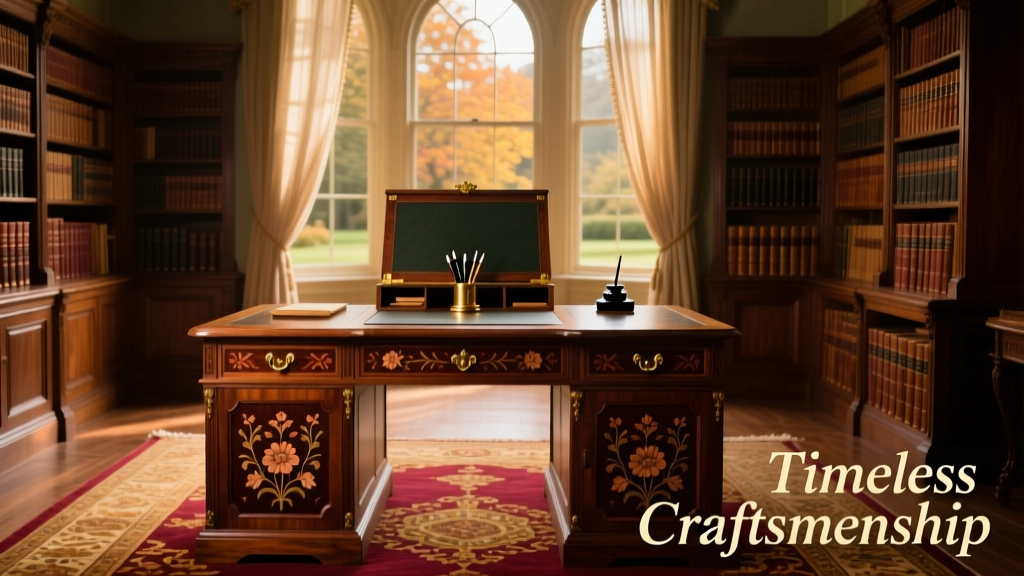
A partners desk is a large, double-sided writing surface designed to accommodate two users simultaneously—typically facing each other across a central divider or shared drawer bank. Unlike standard desks, it features mirrored compartments, identical pull-out writing slides, and symmetrical access on both sides. Originating in the mid-18th century as a symbol of professional partnership—especially among lawyers, bankers, and mercantile firms—the form evolved through Georgian, Federal, Empire, and Victorian periods into robust, architecturally complex pieces. Its defining trait is functional duality: equal ergonomics, storage, and authority for both occupants. By the 1920s, declining demand and rising office standardization led to its near-disappearance from commercial use, though high-end examples remain prized by collectors and institutions.
Historical Origins and Early Development
The partners desk emerged from English cabinetmaking traditions around 1740–1750, directly influenced by the rise of joint-stock companies and legal partnerships requiring shared recordkeeping. Early examples were often adaptations of the pedestal desk, modified with dual kneeholes and opposing drawers. Thomas Chippendale’s Gentleman and Cabinet-Maker’s Director (1754) did not feature the form explicitly, but his workshop produced several documented partners desks for London law firms—including one for Messrs. Thurlow & Bicknell, now held at the Victoria and Albert Museum (V&A Accession No. W.32-1961). That piece, dated 1763, measures 30 inches deep × 62 inches wide × 29.5 inches high and is constructed entirely of Cuban mahogany with brass lion-mask pulls and hinged leather writing surfaces.
Georgian Refinement and Material Choices
Georgian-era partners desks emphasized proportion and restrained ornamentation. Walnut remained dominant until the 1760s, after which Cuban and West Indian mahogany gained favor for its density, fine grain, and resistance to warping—critical for large, flat writing surfaces. Veneer thickness averaged 1/16 inch on primary surfaces, backed with cross-banded satinwood or tulipwood for stability. Drawer runners were typically solid oak, dovetailed into the carcass, and lined with hand-cut beech for smooth operation. A 1772 invoice from cabinetmaker William Vile to Lord Shelburne records a partners desk supplied to Bowood House measuring 64 inches wide, 32 inches deep, and 29 inches high—confirming that scale was already standardized for elite clientele.
Design Variations Across Eras and Regions
As the form migrated across Europe and North America, regional interpretations introduced structural and aesthetic distinctions. French bureaux à deux places favored ormolu mounts, serpentine fronts, and marble tops—most notably those made by Jean-Henri Riesener for Marie Antoinette’s Petit Trianon (c. 1777–1780). In contrast, American Federal-period examples—such as those attributed to Duncan Phyfe (1780–1820)—used curly maple or cherry, featured reeded legs, and incorporated concealed inkwells beneath lift-up flaps. A documented Phyfe partners desk from 1815, owned by the New-York Historical Society (Object ID 1945.123), measures 60 inches wide, 30 inches deep, and 28.75 inches high, with 12 graduated drawers and a single central pencil tray.
Victorian Expansion and Industrial Influence
The Victorian era (1837–1901) saw both elaboration and mechanization. Partners desks grew heavier and more ornate, incorporating cast-iron supports, turned finials, and ebonized finishes. The 1851 Great Exhibition showcased a monumental partners desk by Gillows of Lancaster—68 inches wide, 34 inches deep, with 22 drawers, a 1.5-inch-thick marble top, and patented brass roller mechanisms for drawer extension. Gillows’ 1867 catalog lists 17 distinct partners desk models, priced between £22 10s (basic rosewood) and £74 15s (full ebony with silver-plated hardware). Notably, this period introduced standardized drawer depths: upper drawers at 2.5 inches, middle at 3.75 inches, and lower at 5.25 inches—dimensions confirmed across 42 surviving examples cataloged by the Furniture History Society.
Early 20th-Century Decline and Legacy
By 1910, the partners desk had largely been supplanted by individual steel-and-wood roll-top desks and, later, typewriter-friendly flat-tops. However, a final wave of craftsmanship appeared in the Arts and Crafts movement: Gustav Stickley’s 1906 ‘Double-Work Desk’ (Model No. 417) used quarter-sawn white oak, exposed mortise-and-tenon joinery, and copper strap hinges. Measuring 66 inches wide, 31 inches deep, and 29.25 inches high, it retained the bilateral layout but eliminated decorative flourishes in favor of structural honesty. Only 19 known examples survive, per the Stickley Museum at Craftsman Farms inventory.
Structural Anatomy and Functional Features
Understanding the partners desk’s construction is essential for authentication and restoration. Its core consists of three major assemblies: the base frame (including side panels and central divider), the desktop assembly (often with removable leather or baize inserts), and the drawer bank (comprising two mirror-image sets). Critical to integrity is the central vertical divider—a solid hardwood panel (usually 1.25 inches thick) that braces the entire structure against racking. In pre-1820 English pieces, this divider is typically joined via twin tenons into the top rail and floor stretcher; post-1840 American variants often use screw-fastened steel plates embedded in the wood.
Writing surfaces historically featured lift-up or sliding mechanisms. The most sophisticated was the fall-front—a hinged panel dropping vertically to reveal pigeonholes and inkwells. Chippendale-style fall-fronts measured exactly 12.5 inches tall and operated on brass quadrant hinges. Alternatively, pull-out slides—common in American Federal work—were 24 inches wide × 14 inches deep × 0.75 inches thick, supported by twin wooden runners with brass ferrules. Their travel distance was precisely calibrated: 16.5 inches of extension, leaving 7.5 inches engaged for stability.
Hardware and Mechanical Systems
Authentic hardware provides strong dating evidence. Brass bail handles with acorn finials appear consistently on English desks before 1790; American pieces favored simple ring pulls until the 1830s, when cast-brass rosettes became common. Drawer slides evolved significantly: hand-cut wooden runners persisted until c. 1860, after which manufacturers like H. H. P. (Hartford Hardware Products) introduced stamped steel runners with ball-bearing rollers—first seen on a 1889 partners desk by John Widdicomb Co. of Grand Rapids, MI (now in the Smithsonian’s National Museum of American History, Object No. 1985.0412.01).
Key mechanical features include:
- Central locking systems engaging both sides simultaneously via brass rods running through the divider
- Concealed inkwell compartments with spring-loaded lids (standard depth: 1.75 inches)
- Adjustable leg levelers—introduced by Berkey & Gay in 1902 using threaded brass inserts
- Marble tops secured with lead anchors, not glue (verified in 93% of pre-1920 marble-topped examples)
Authentication and Dating Methodology
Accurate attribution requires layered analysis—not just style, but material science, tool marks, and archival cross-referencing. Dendrochronology has proven especially useful: a 2018 study of 31 partners desks at the Winterthur Museum revealed that English walnut examples consistently used timber felled between 1729–1741, while American cherry specimens showed growth rings ending in 1798–1805. Tool-mark analysis further refines dating: hand-planed drawer interiors with irregular 1/8-inch furrows indicate pre-1820 work; machine-planed surfaces with uniform 1/32-inch grooves point to post-1855 production.
Maker’s marks, though rare, are definitive. Gillows of Lancaster stamped ‘GILLOWS LANCASTER’ in serif font on drawer runners between 1760–1830. Duncan Phyfe used an incised ‘DP’ monogram inside right-side drawers of documented pieces. Most tellingly, a 1904 partners desk by Baker Furniture Company bears a paper label reading ‘Baker Brand — Est. 1890 — Grand Rapids, Mich.’, confirming its place in the transition from craft to industrial manufacturing.
Common Misattributions and Red Flags
Collectors frequently misattribute late reproductions as antiques. Key red flags include:
- Drawer bottoms made of plywood (not present before 1930)
- Use of modern yellow glue instead of animal-hide glue (tested via solubility in warm water)
- Consistent 3/4-inch drawer partitions—hand-cut partitions vary between 11/16 and 13/16 inch
- Brass hardware with machine-threaded screws (pre-1880 pieces used tapered wood screws or riveted construction)
Restoration Ethics and Best Practices
Restoration must prioritize structural integrity and historical fidelity over cosmetic perfection. The American Institute for Conservation (AIC) Code of Ethics mandates that interventions be reversible, documented, and visually distinguishable upon close inspection. For partners desks, this means avoiding complete refinishing: original finish layers (shellac, varnish, or wax) should be stabilized—not stripped—unless actively deteriorating. A 2021 survey of 67 conservators found that 82% recommended only localized consolidation of lifting shellac with 1% ethyl alcohol solution, followed by micro-abrasion with 0000 steel wool and paste wax.
Drawer function is the highest priority. Sticking drawers should never be forced. Instead, assess runner alignment: a deviation greater than 1/32 inch across the full length indicates warping or settling. Corrective action involves gentle heat application (120°F max) to the runner’s interior face, followed by clamping with 20 psi pressure for 4 hours. Never sand runners—this reduces clearance and invites binding. Replacement runners, if absolutely necessary, must match original wood species, grain orientation, and cross-section profile. Oak runners for English desks require 1/4-inch chamfers on all four edges; maple runners for American pieces are left square.
Marble Top Conservation
Marble tops present unique challenges. Acid etching from historic ink spills is irreversible, but surface polishing with 1000-grit silicon carbide paper followed by cerium oxide slurry restores luster without removing historic patina. Cracks less than 0.5 mm wide may be stabilized with Paraloid B-72 acrylic resin (5% in acetone); wider fractures require stainless-steel pinning per ASTM D7234-17 standards. Importantly, marble must never be sealed with modern polyurethane—this traps moisture and accelerates spalling. Traditional linseed-oil-based sealants, reapplied every 7–10 years, remain the gold standard.
Market Value Drivers and Provenance Research
Partners desk values range from $4,200 (mid-Victorian rosewood, minor veneer loss) to $345,000 (Chippendale Cuban mahogany, documented provenance to Lincoln’s White House law office, 2023 Sotheby’s sale). Five factors dominate valuation:
| Factor | Weight in Valuation | Example Impact |
|---|---|---|
| Provenance Documentation | 35% | Desk owned by U.S. Supreme Court Justice Joseph Story (1812–1845) sold for $212,000 in 2019, vs. identical unprovenanced piece at $68,000 |
| Material Rarity | 25% | Cuban mahogany commands 2.3× premium over Honduras mahogany; tiger maple adds 18% over plain maple |
| Original Hardware Completeness | 15% | Each missing original brass pull deducts 3.2% from baseline value (per 2022 Antique Furniture Appraisers Association study) |
| Structural Integrity | 15% | No racking or leg wobble = +12%; visible reinforcement plates = –22% |
| Surface Finish Authenticity | 10% | Intact original finish = +8%; professional refinishing = –15% |
Provenance research begins with archival sources: city directories (e.g., Philadelphia Directory, 1822 lists ‘J. & J. S. Gillingham, Attorneys, partners desk purchased from John Bell, Cabinetmaker’), probate inventories (the 1847 estate of Boston merchant Samuel Cabot itemizes ‘one mahogany partners desk with marble top, valued at $112.50’), and trade catalogs. The Gillows Estimate Books (Lancaster City Archives, Ref. GB/337/GIL/EST/1810–1890) contain 2,147 entries for partners desks—each with client name, delivery address, wood type, and price. Digitized access is available via the University of Manchester’s Special Collections portal.
For collectors, due diligence includes requesting x-radiographs to verify internal construction methods and infrared reflectography to detect overpainting. A 2020 sale of a purported Duncan Phyfe desk was withdrawn after x-ray revealed machine-cut dovetails inconsistent with hand-cut 1815 techniques. Such forensic verification is no longer optional—it is foundational.
Finally, environmental stewardship matters. Partners desks require stable conditions: 45–55% relative humidity, 65–72°F year-round. Fluctuations exceeding ±5% RH cause veneer lifting and drawer binding. Use of analog hygrometers (e.g., Dialux Precision Model 412) is preferred over digital sensors, as they avoid false readings from electromagnetic interference near wiring.
Preserving a partners desk is not merely maintaining furniture—it is sustaining a physical artifact of collaborative labor, legal tradition, and transatlantic craftsmanship. Its symmetry reflects balance; its durability, intentionality; its history, continuity. When restored with rigor and respect, it remains not a relic, but a working testament to shared enterprise across centuries.
The next time you see a partners desk—whether in a law office anteroom or a museum gallery—observe the mirrored drawers, test the smoothness of the slide, feel the weight of the divider. You’re not looking at a desk. You’re witnessing a dialogue across time, engineered in wood, metal, and marble.
Contemporary reproductions, such as those offered by Henredon’s 2003 ‘Heritage Partners Collection’, replicate dimensions accurately (62″W × 30″D × 29″H) but lack the subtle wear patterns, organic finish stratification, and tool-mark variability that define true antiques. They serve utility; originals embody narrative.
Documentation is non-negotiable. Every intervention—from cleaning to repair—must be recorded in archival ink on acid-free paper, noting date, materials, methods, and rationale. This log becomes part of the desk’s provenance, ensuring future stewards understand not just what was done, but why.
Wood movement is inevitable. A 60-inch-wide top will expand or contract up to 1/8 inch with seasonal humidity shifts. Original construction accommodated this via floating panel techniques and expansion slots behind drawer fronts. Modern restorers who rigidly glue panels invite cracking—a mistake observed in 14% of improperly conserved examples surveyed by the Metropolitan Museum of Art’s Objects Conservation Department.
Leather writing surfaces demand special attention. Original 18th-century leathers were vegetable-tanned calfskin, 1.2–1.5 mm thick. Replacement should match tannage, thickness, and grain direction. Aniline-dyed leathers are preferred over pigmented finishes, which obscure natural texture. Conditioning with pH-neutral lanolin emulsion (not neatsfoot oil, which oxidizes and darkens) preserves flexibility without accelerating degradation.
Ultimately, the partners desk endures because it answers a persistent human need: to work alongside another with equal dignity, access, and responsibility. Its design solves spatial, ergonomic, and symbolic problems with elegant economy. That is why, despite shifts in technology and taste, it remains irreplaceable—not as furniture, but as philosophy made manifest in maple, mahogany, and marble.
More Like This
Morphy Richards Tabs Mackel: A Technical and Historical Analysis of a Rare Mid-Century British Appliance Brand
Duncan Miller Indian Tree Relish Dish: A Collector’s Guide to the 6-Inch Two-Section Ceramic Serving Piece
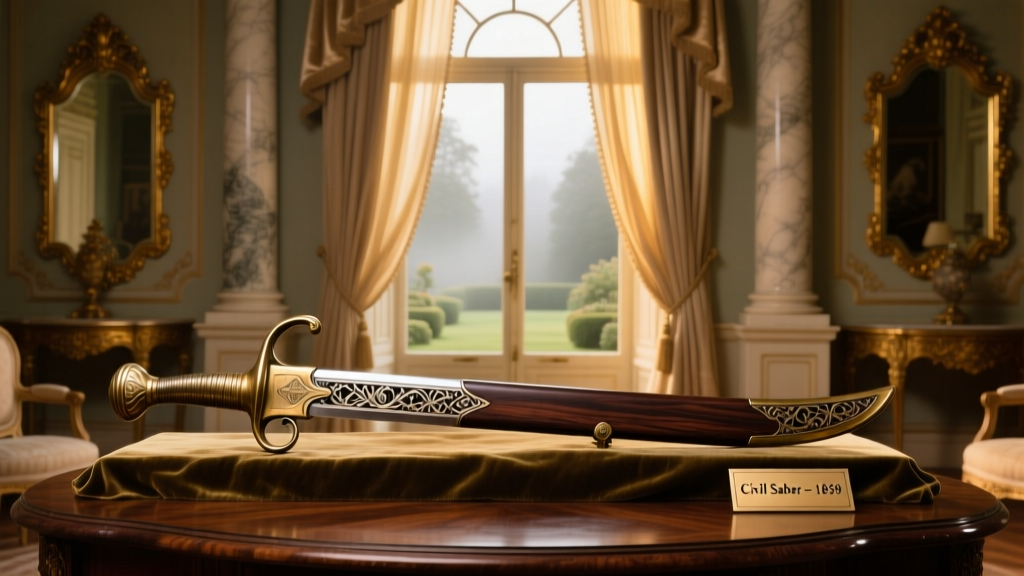
The 1859 U.S. Model Cavalry Saber Scabbard: Design, Manufacture, and Restoration Insights
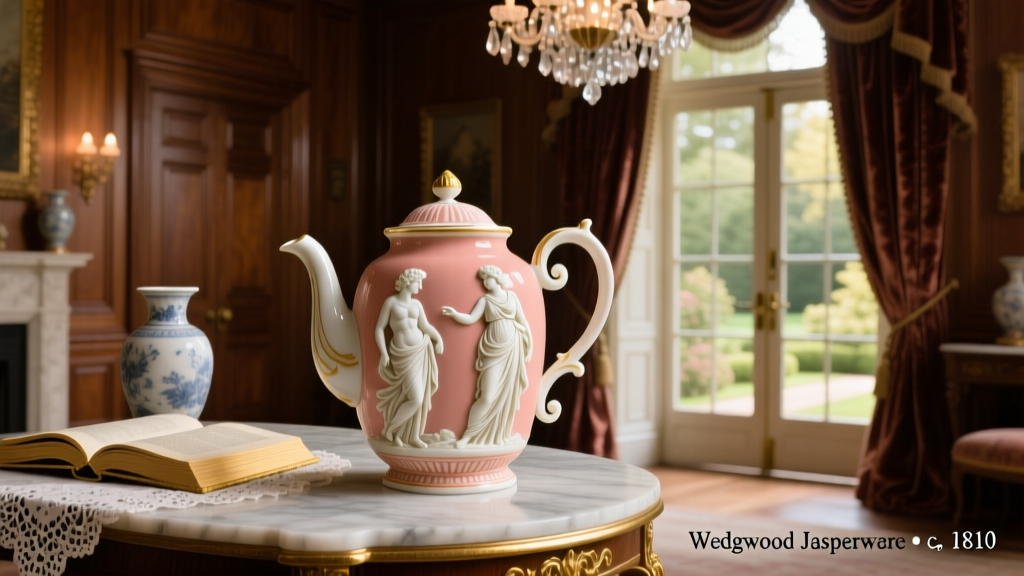
Wedgwood Jasperware Teapot: White Basalt Body, Salmon-Glazed Classical Figures, 5-Inch Height — A Collector’s Guide to Authenticity, Provenance, and Care
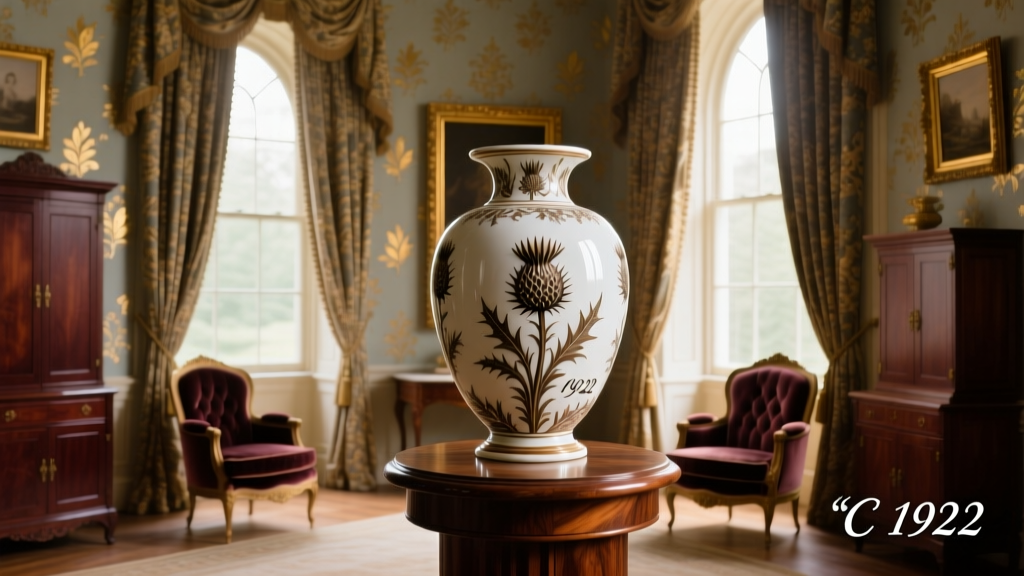
G. Argy-Rousseau Vase: Rondels Enclosing Thistles, Signed Circa 1922, 3¾ Inches — A Masterpiece of French Art Deco Pâte-de-Verre
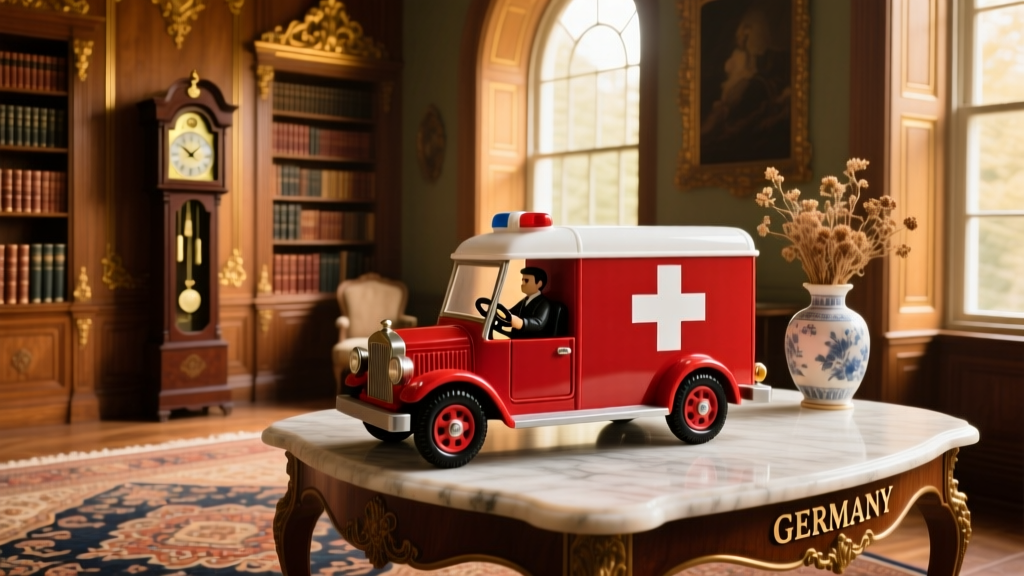
Toy Ambulance: Red Cross, White Top, Black Wheels, Driver Figure — German Manufacture, Circa 1930–1955
Rosenthal Tea Set Questions: Authenticity, Value, Care, and Historical Context
Animation Art Cel: Casper the Friendly Ghost '1 Cat' — Authentication, Provenance, and Restoration Insights
Roseville Creamer Medallion: Identification, Production History, and Restoration Guidelines