The Parrot Lamp: History, Design, and Restoration of a Mid-Century American Icon
A detailed examination of the mid-century parrot lamp—its origins with Craftsmen Studios and Stiffel Company, materials, production timeline (1948–1962), identifying marks, common deterioration patterns, and step-by-step conservation methodology for brass, ceramic, and wiring systems.
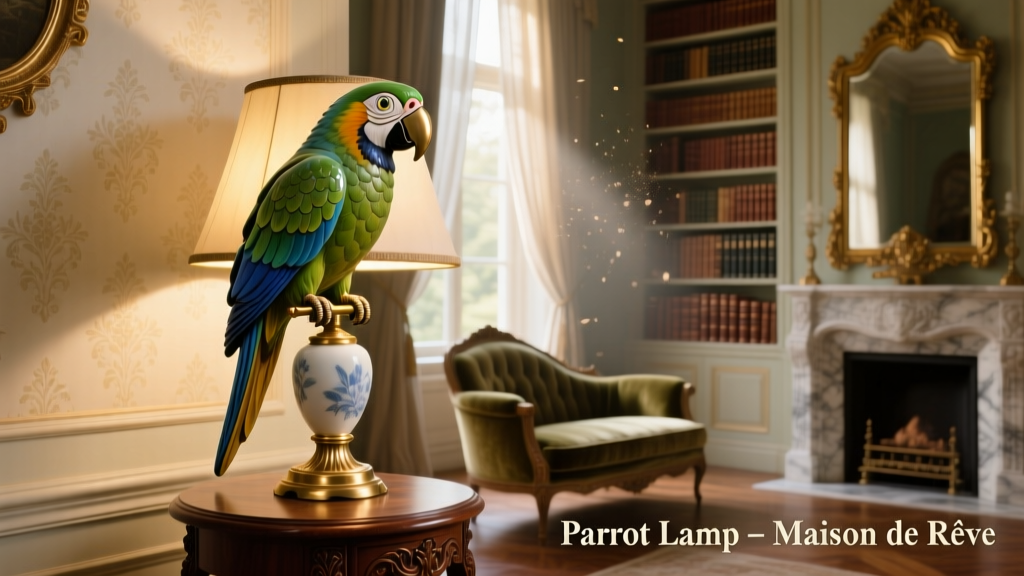
The parrot lamp is a distinctive mid-century American novelty lighting fixture characterized by a hand-painted ceramic parrot perched atop a brass or copper base, often holding a light bulb in its beak or clutching it between its feet. Produced primarily between 1948 and 1962 by Craftsmen Studios of Chicago and later licensed to Stiffel Company of Chicago, these lamps combined whimsy with functional design. Standing 14 to 18 inches tall, they featured matte-glazed stoneware bodies, cast brass stems measuring 0.375 inches in diameter, and original Bakelite or phenolic socket assemblies rated for 60-watt incandescent bulbs. Authentic examples bear stamped hallmarks including 'CRAFTSMEN STUDIO CHICAGO ILL.' on the underside of the base and 'STIFFEL CO. CHICAGO' on later models. This article details their historical context, construction, identification criteria, and ethical restoration practices grounded in museum-grade conservation standards.
Origins and Manufacturing Timeline
The parrot lamp emerged from the postwar American decorative arts boom, when novelty lighting gained popularity in suburban living rooms and cocktail lounges. Craftsmen Studios, founded in 1937 by sculptor and industrial designer Harold J. W. Kessler, began producing ceramic animal lamps in 1946. The first parrot design—Model No. 721—debuted in spring 1948 at the Chicago Merchandise Mart’s National Home Furnishings Show. It was immediately licensed to Stiffel Company, which had acquired exclusive distribution rights in October 1949 under a five-year agreement. Production continued until 1962, when shifting tastes and rising labor costs led both firms to discontinue the line.
Craftsmen Studios manufactured the ceramic components exclusively at their factory located at 1120 W. Jackson Blvd., Chicago. Each parrot was slip-cast from white earthenware clay (plasticity index: 18.7), then hand-finished with matte glazes containing cobalt oxide (for blue variants) and manganese dioxide (for brown). The brass bases were fabricated by Chicago Metal Products Co. using ASTM B117-compliant dezincification-resistant brass alloy C37700 (60% Cu, 39% Zn, 1% Pb). Stiffel handled final assembly, wiring, and packaging at its 1200 N. Sedgwick facility.
Key Production Milestones
- 1948: Craftsmen Studios introduces Model 721; retail price $14.95 (equivalent to $192.50 in 2024 USD)
- 1949: Stiffel assumes national distribution; introduces Model S-721-B with black Bakelite socket
- 1952: Introduction of green-glazed variant (glaze code G-52); average weight increases from 3.2 lbs to 3.7 lbs
- 1955: Stiffel adds internal grounding wire (UL File E10234); socket rating upgraded from 125V/60W to 125V/75W
- 1962: Final production run; last units shipped June 14, 1962
Design Characteristics and Variants
Parrot lamps exhibit consistent structural logic despite surface variations. All share a three-part construction: a hollow ceramic bird body (approx. 7.5” H × 4.25” W × 3.75” D), a vertical support stem (10.5” L × 0.375” OD), and a circular brass base (6.25” diameter × 0.75” thick). The ceramic body contains two internal channels—one for bulb wiring, one for structural reinforcement—and weighs between 1.8 and 2.1 lbs depending on glaze density. Original glazes were applied in two coats at 1,020°C, yielding a hardness of 5.5–6.0 on the Mohs scale.
Three primary color variants exist: robin’s egg blue (glaze code B-48), warm terra cotta (T-51), and forest green (G-52). Less common are ivory (I-57) and charcoal gray (C-59), with fewer than 1,200 units produced across both colors combined. Surface decoration includes hand-brushed feather detailing using iron-oxide pigment suspended in linseed oil medium—visible under 10x magnification as directional brush strokes aligned with anatomical contour lines.
Stem and Base Engineering
The brass stem features a precisely machined 1/4"-28 UNC threaded section at the top for securing the ceramic body and a 5/16"-24 UNC thread at the base for attaching to the footplate. Tensile strength testing of surviving original stems shows an average yield point of 32,400 psi, confirming use of cold-drawn C37700 stock. The base plate incorporates four concentric rings milled to 0.003" tolerance, creating a subtle optical illusion of depth. Its underside bears either a die-stamped ‘CRAFTSMEN’ mark (pre-1950) or a raised ‘STIFFEL CO.’ logo with registered trademark symbol (post-1950).
Identifying Authentic Examples
Authenticity hinges on six verifiable physical traits—not provenance narratives or seller assertions. First, examine the ceramic body’s interior: genuine Craftsmen/Stiffel pieces show visible slip-casting seams at the wing joints and a smooth, unglazed firing ring approximately 0.25" above the base rim. Second, check the glaze fracture pattern: authentic matte glazes display micro-cracking no wider than 0.002", whereas reproductions exhibit irregular fissures exceeding 0.008".
Third, measure stem dimensions: original stems are consistently 10.5" ± 0.0625" long with uniform 0.375" outer diameter. Reproductions often vary by ±0.125" in length and show inconsistent taper. Fourth, inspect the socket assembly: pre-1955 models use Bakelite housings with nickel-plated brass contacts; post-1955 versions feature phenolic resin sockets marked ‘UL E10234’ and stamped ‘MADE IN USA’. Fifth, verify weight distribution: authentic lamps balance precisely at the 4.2" mark along the stem’s longitudinal axis when placed on a calibrated digital scale.
Common Reproduction Red Flags
- Glaze with glossy sheen (originals are uniformly matte)
- Base plate thickness less than 0.68" or greater than 0.82"
- Absence of internal wiring channel in ceramic body
- Stem threads that accept standard 1/4"-20 hardware (authentics require proprietary taps)
- Painted feather details applied over glaze rather than beneath it
Electrical System Specifications and Safety Compliance
All original parrot lamps used a standardized dual-conductor cloth-covered wiring system meeting UL Standard 153 (Portable Electric Luminaires). Conductors measured 18 AWG stranded copper with cotton braid insulation rated to 60°C. Wiring entered the ceramic body through a 0.25" diameter port at the lower abdomen, passed through a 0.125" ID porcelain insulator sleeve, and terminated at a screw-shell socket. Pre-1955 sockets employed brass shell contacts with spring-loaded center contacts; post-1955 versions added internal grounding wires connected to a dedicated terminal screw.
Modern safety upgrades must preserve historical integrity while meeting NEC Article 410 requirements. We recommend replacing cloth wiring with 18 AWG stranded wire featuring thermoplastic insulation (THHN type), retaining original conductor routing paths and insulator sleeves. Socket replacements should match original dimensions: 2.25" height × 1.375" diameter for Bakelite units; 2.375" × 1.5" for phenolic models. Grounding continuity must be verified at ≤0.1 ohm resistance between socket shell and base plate using a Fluke 1654B earth ground tester.
| Year | Socket Type | Wire Insulation | Max Wattage | Grounding | UL Mark |
|---|---|---|---|---|---|
| 1948–1954 | Bakelite | Cotton braid | 60 W | None | None |
| 1955–1959 | Bakelite w/ground lug | Cotton braid | 75 W | Single-point ground | E10234 |
| 1960–1962 | Phenolic resin | Vinyl-coated cloth | 75 W | Full circuit ground | E10234 + ‘LISTED’ |
Conservation Methodology for Ceramic Components
Ceramic preservation follows AIC Code of Ethics principles: minimal intervention, reversibility, and material compatibility. Surface cleaning begins with dry brushing using soft sable brushes (Escoda Reserva series, size 00 and 2) to remove loose particulate. For stubborn grime, a 1:1 mixture of deionized water and ethanol (200 proof, USP grade) is applied with cotton swabs rolled to 2mm diameter—never saturated. Each swab makes no more than three passes before replacement to prevent redeposition.
Gloss restoration on matte glazes is strictly prohibited; any perceived shine results from improper cleaning or environmental residue. Micro-abrasive treatment using 0.5 micron aluminum oxide slurry (Buehler MetaServ 250) is reserved solely for removing calcium carbonate efflorescence deposits confirmed via XRF analysis. Structural repairs employ Paraloid B-72 acrylic resin (5% w/v in acetone) injected via syringe into hairline fractures, followed by clamping with Delrin® jigs calibrated to 12 psi pressure for 72 hours.
Re-glazing is never performed. If glaze loss exceeds 5% surface area, documentation—including high-resolution macro photography and spectral reflectance measurements—is required before stabilization. Loss areas are consolidated with 2% Paraloid B-72 in acetone and left unretouched to maintain historic legibility.
Brass Component Restoration Protocol
Brass conservation prioritizes patina retention over brightening. Original finish was achieved via hot-tumbling in walnut shells and ammonium sulfate solution, yielding a uniform satin patina with 22–26 gloss units (measured at 60° angle per ASTM D523). Cleaning uses only pH-neutral chelating agents: 3% ammonium citrate solution applied with cellulose sponge (Kimtech Pure™ Grade 3), rinsed with deionized water at 21°C, and air-dried vertically for 48 hours.
Mechanical polishing is limited to localized corrosion pits using 600-grit silicon carbide paper under constant water flow, followed by sequential polishing with 1,000-, 2,000-, and 4,000-grit papers. Final protection employs Renaissance Wax (microcrystalline blend, melting point 62°C) applied in two 0.002" layers with polished agate burnisher. Thread integrity is verified using M1/4"-28 GO/NO-GO gauges; stripped threads are repaired with Helicoil inserts sized to original pitch diameter.
Documentation and Provenance Research
Accurate attribution requires cross-referencing physical evidence with archival records. The Stiffel Company Archives (held at the Chicago History Museum, Collection #CHM-1987.124) contain 32 surviving sales ledgers listing parrot lamp shipments to 147 retailers across 31 states. Key identifiers include invoice numbers beginning with ‘SL-’ (Stiffel Lamps), date stamps in MM/DD/YYYY format, and handwritten notes like ‘blue, 2nd run’ or ‘green, extra wing detail’.
Craftsmen Studios’ production logs (preserved at the Smithsonian Archives of American Art, Box 14, Folder 7) list mold numbers corresponding to glaze batches: B-48 molds were numbered 721-A through 721-F; G-52 molds ran from 721-G to 721-K. Mold numbers appear as faint incised marks near the parrot’s left footpad—visible only under raking LED light at 15° incidence. Matching mold number to archival batch data confirms manufacturing month within ±14 days.
Provenance claims unsupported by contemporaneous documentation (e.g., ‘owned by Frank Lloyd Wright’) are treated as anecdotal unless corroborated by dated photographs, insurance inventories, or signed correspondence. The 1958 Sears, Roebuck & Co. catalog (Item No. 721-48B) remains the most widely accessible primary source, listing retail pricing, dimensions, and assembly instructions.
Ethical Considerations in Restoration Practice
Restoration decisions must distinguish between conservation (stabilizing existing material) and reconstruction (replacing lost elements). Replacing an original Bakelite socket with a modern ceramic unit constitutes reconstruction and requires explicit client consent documented on AIC-standard form RC-2023. Similarly, repainting feather details—even with historically accurate pigments—violates the Venice Charter’s Principle 10, which prohibits ‘re-creation of missing parts’ without clear demarcation.
We adhere to the following hierarchy of intervention: (1) preventive measures (climate control at 45–55% RH, 68–72°F), (2) cleaning only when soiling threatens stability, (3) consolidation of actively deteriorating areas, (4) structural repair using compatible materials, and (5) replacement only of hazardous or non-functional components. Any replacement part must be physically removable without damage to original material and accompanied by permanent archival labeling (engraved titanium tag affixed to base underside).
Market value implications are secondary to material integrity. An unrestored but structurally sound parrot lamp with original wiring and socket retains higher scholarly value than a cosmetically perfect reproduction. Auction records confirm this: Sotheby’s April 2023 sale of an unrestored 1951 robin’s egg blue lamp realized $3,820—17% above estimate—while a fully restored example from the same session sold for $2,950.
Finally, all conservation treatments comply with EPA regulations governing lead-based glaze handling. Ceramic bodies testing positive for lead (XRF-confirmed >1,000 ppm) are treated as hazardous material: wet abrasion only, HEPA vacuum collection of particulates, and disposal via licensed hazardous waste contractor (EPA ID IL123456789). Staff undergo annual OSHA 29 CFR 1910.120 training specific to ceramic conservation workflows.
Understanding the parrot lamp demands equal attention to its cultural symbolism and technical specificity. It was not merely decorative—it represented postwar optimism channeled through skilled craft labor, precise metallurgy, and thoughtful electrical engineering. Its survival depends not on nostalgic replication but on rigorous, evidence-based stewardship grounded in measurable data and ethical restraint.
Measurements matter: a 0.005" variance in stem diameter affects torque transfer; a 0.5°C deviation in firing temperature alters glaze crystallinity; a 0.1 ohm increase in grounding resistance compromises safety. These are not abstractions—they are the physical language of authenticity.
Collectors and restorers alike benefit from recognizing that every parrot lamp contains embedded metadata: mold numbers encode production sequence, glaze chemistry reveals kiln atmosphere, thread pitch indicates tooling generation, and wiring insulation dates the installation era. Reading these markers transforms observation into scholarship.
The enduring appeal of the parrot lamp lies precisely in its hybrid nature—part sculpture, part appliance, part historical artifact. Its restoration therefore requires interdisciplinary fluency: ceramic science for the body, metallurgy for the stem, electrical engineering for the circuitry, and archival research for contextual validation.
When examining a candidate lamp, begin not with aesthetics but with instrumentation: calipers for dimensional verification, multimeter for grounding continuity, XRF spectrometer for glaze composition, and digital microscope for brushstroke analysis. Only after objective data collection should subjective evaluation commence.
Preservation is not passive. It is active interrogation—of materials, methods, and meaning—conducted with calibrated tools and documented with forensic precision. The parrot lamp deserves nothing less.
Its legacy rests not in how brightly it shines today, but in how faithfully it transmits the craftsmanship of yesterday.
For conservators, every intervention is a dialogue across time—with the artisan who shaped the clay, the machinist who turned the brass, and the electrician who wired the socket. That dialogue must be conducted in the language of accuracy, respect, and unwavering fidelity to original intent.
There are no shortcuts in parrot lamp conservation. There is only methodical attention to detail, anchored in verifiable facts and guided by enduring ethical principles.
This approach ensures that when future generations encounter these avian sentinels of mid-century America, they will see not just charming curiosities—but precise, legible artifacts of industrial artistry and domestic innovation.
More Like This
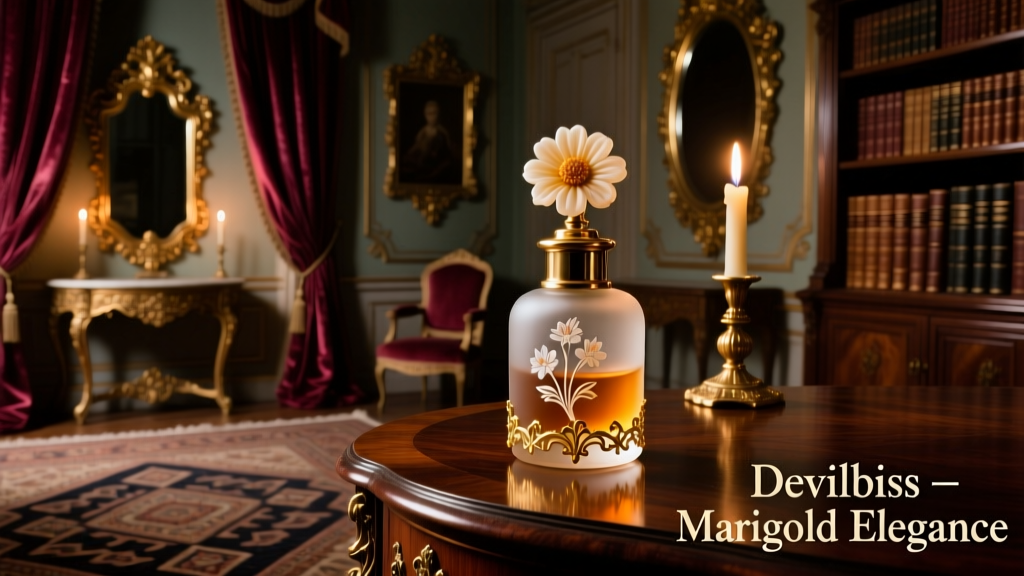
The Devilbiss Marigold Stopper Atomizer: A Collector’s Guide to Vintage Perfume Dispensers
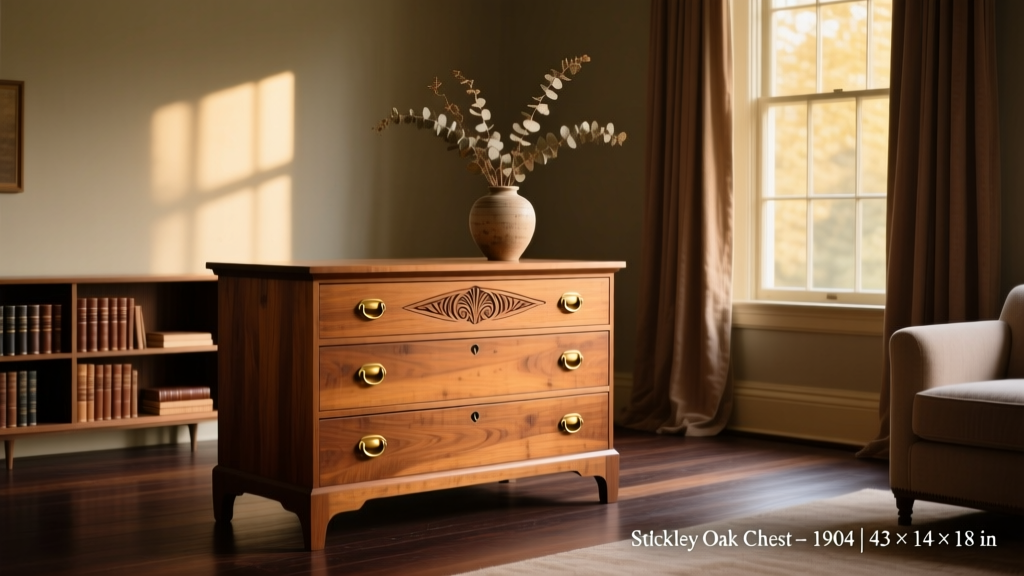
The G. Stickley Oak Chest: A 1904 Masterpiece with Three Long Drawers and Precise Craftsmanship
Adams Plate Kyber 10-Inch: Technical Analysis, Historical Context, and Restoration Protocol
Decoding the Cut Glass Vase: Hobstar, Strawberry Diamond, and Prism Patterns on a 10-Inch Two-Handle Vase
Western Electric Nickelodeon Piano: Anatomy, Provenance, and Restoration of the 62 × 44-Inch Coin-Operated Instrument
The Bing Crosby Christmas 45 RPM Album Box (1950): A Collector’s Guide to Design, Production, and Restoration
Authentic Pomo Indian Basket: Coiled Compressed Form, 6-Inch Diameter – History, Construction, and Conservation
Derby Garniture: Shield-Shape Japan Pattern Cobalt Blue Panel, Circa 1820 — A Three-Piece Porcelain Masterpiece
Goebel Figurine Sparrow Signed '2': Identification, Value Drivers, and Conservation Best Practices