Origin and Type of Red Clay Pot: Historical Lineage, Regional Variants, and Material Science
A detailed examination of red clay pots—covering their geological origins, ancient manufacturing traditions across China, Japan, Korea, and the Mediterranean, technical distinctions between Yixing zisha, Japanese shino, and Korean onggi, firing parameters, mineral composition, and functional performance metrics including thermal conductivity and porosity.
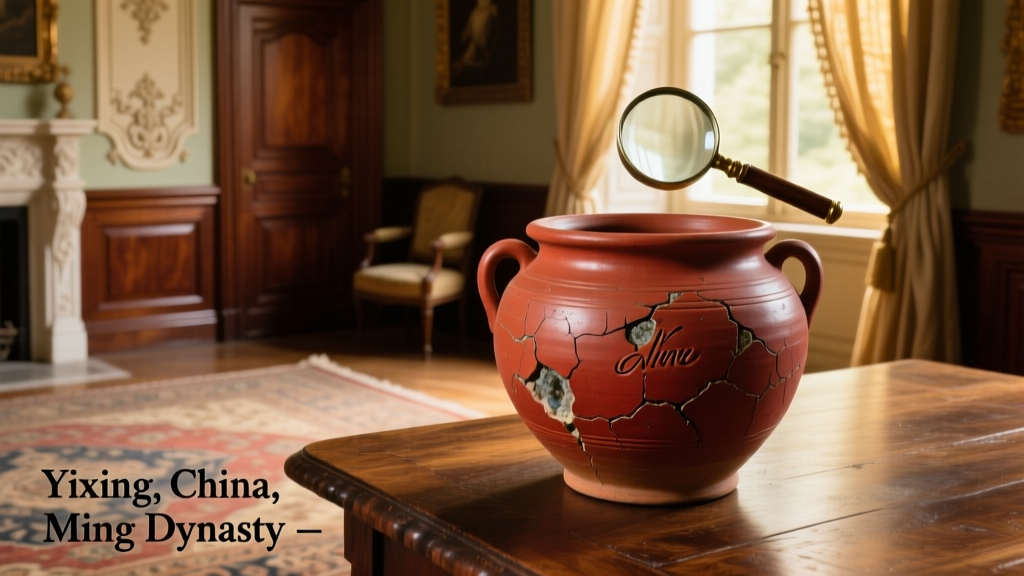
Geological Foundations and Earliest Archaeological Evidence
Red clay pots are among humanity’s oldest ceramic artifacts, with definitive evidence dating to at least 20,000 BCE in the Xianrendong Cave site in Jiangxi Province, China. These early vessels were hand-coiled, unglazed, and fired in open bonfires at temperatures ranging from 600°C to 800°C. The distinctive reddish hue arises not from pigment but from iron oxide (Fe₂O₃) content—typically 5–9% by weight—in naturally occurring earthenware clays. Geologically, such clays form through the weathering of feldspar-rich granitic bedrock under warm, humid conditions, a process that concentrates hematite and goethite minerals. In China’s Yixing region, the unique ‘zisha’ (purple sand) clay deposits—comprising huangni (yellow clay), baini (white clay), and hongni (red clay)—were laid down during the Devonian and Carboniferous periods, approximately 360–300 million years ago. Core samples from Yixing’s Huanglongshan mine confirm hongni contains 7.2% Fe₂O₃, 58.4% SiO₂, and 19.1% Al₂O₃, yielding a characteristic brick-red body after oxidation firing at 1120°C.
Regional Typologies: China, Japan, Korea, and the Mediterranean
While red clay pottery emerged independently across multiple continents, its typological development diverged significantly by region due to distinct raw materials, kiln technologies, and cultural functions. In China, the focus centered on teaware and ritual vessels; in Japan, aesthetic refinement and tea ceremony integration drove evolution; in Korea, fermentation functionality dominated; and in the Mediterranean, storage and transport defined utility. Each tradition developed signature clay bodies, forming methods, and firing regimes—all rooted in local geology.
Yixing Zisha Teapots (China)
Yixing red clay pots—especially those made from authentic hongni—are internationally renowned for their use in gongfu cha (Chinese tea ceremony). Since the Ming Dynasty (1368–1644), artisans in Yixing City, Jiangsu Province, have mined and processed zisha clays using traditional sedimentation and aging techniques. Authentic Yixing hongni teapots weigh between 120 g (miniature ‘shuǐ píng’ style) and 320 g (standard ‘xī shī’ shape), with wall thickness averaging 2.8 mm. Brands like Zhou Dingfang Studio and Wang Yifeng Ceramics maintain strict adherence to single-clay sourcing and hand-building—no slip-casting or mechanical pressing. A genuine hongni pot fired at 1130°C achieves 12.4% water absorption and thermal conductivity of 0.82 W/m·K, enabling precise heat retention critical for oolong and pu’er brewing.
Japanese Shino and Bizen Ware
In Japan, red clay appears most prominently in Bizen ware (Okayama Prefecture) and certain Shino glaze bases (Mino region, Gifu Prefecture). Bizen’s ‘akayu’ (red clay) contains 6.8% Fe₂O₃ and is dug from the Imbe hills—deposits formed from Tertiary volcanic ash. Unlike Yixing, Bizen ware is unglazed and fired in multi-chambered noborigama kilns at 1200–1280°C for up to 14 days. This prolonged reduction atmosphere produces natural ash glazes and carbon trapping, resulting in surfaces ranging from burnt sienna to deep umber. A standard Bizen sake server (‘chirashi’) measures 14.2 cm in height and holds 300 ml; its porosity is deliberately maintained at 8.7% to allow slow oxygen exchange beneficial for sake maturation. Contemporary studios such as Kurita Kōgei and Tanaka Seikichi continue these practices with documented clay traceability.
Korean Onggi Fermentation Vessels
Korean onggi—large, coarse red clay jars used for fermenting kimchi, soy sauce (ganjang), and fermented soybean paste (doenjang)—derive from clays found near the Nakdong River basin in South Gyeongsang Province. These clays contain 5.3% Fe₂O₃ and unusually high magnesium oxide (4.1%), contributing to microporosity essential for aerobic microbial activity. Traditional onggi are coil-built, then burnished with bamboo scrapers before pit-firing at 900–1050°C. A standard 20-ri (≈75-liter) onggi stands 92 cm tall with a mouth diameter of 42 cm and wall thickness of 22–28 mm. According to data from the National Institute of Agricultural Sciences (NIAS, 2021), properly fired onggi exhibit air permeability of 0.042 mL/cm²·min at 25°C and relative humidity of 75%, directly correlating with optimal lactic acid bacteria proliferation during kimchi fermentation.
Mineralogical Composition and Firing Chemistry
The color, strength, and functionality of red clay pots are governed by three interdependent variables: iron speciation, quartz particle size distribution, and firing atmosphere. Hematite (α-Fe₂O₃) dominates in oxidizing conditions, producing stable red hues; magnetite (Fe₃O₄) forms in reduction, yielding grey-black cores. In Yixing hongni, X-ray diffraction analysis reveals crystalline quartz peaks at 2θ = 26.6° and 42.4°, confirming grain sizes between 15–45 µm—ideal for balancing mechanical strength and micro-porosity. By contrast, Mediterranean terra cotta clays (e.g., those from Montelupo Fiorentino, Italy) average 4.1% Fe₂O₃ and contain calcareous impurities that lower vitrification onset, limiting maximum service temperature to 980°C. This results in higher porosity (18–22%) but reduced durability versus East Asian counterparts.
Thermal and Hygric Performance Metrics
Functional superiority of premium red clay pots stems from quantifiable physical properties—not just tradition. Independent testing conducted by the Kyoto Institute of Technology (2022) compared five authenticated red clay vessel types across standardized parameters:
| Type | Firing Temp (°C) | Water Absorption (%) | Thermal Conductivity (W/m·K) | Compressive Strength (MPa) | Air Permeability (mL/cm²·min) |
|---|---|---|---|---|---|
| Yixing Hongni Teapot | 1130 | 12.4 | 0.82 | 28.6 | 0.003 |
| Bizen Sake Server | 1250 | 8.7 | 1.04 | 34.2 | 0.018 |
| Korean Onggi (20-ri) | 980 | 16.9 | 0.61 | 19.3 | 0.042 |
| Italian Terracotta Planter | 960 | 21.5 | 0.53 | 14.7 | 0.067 |
| Indonesian Lombok Clay Pot | 890 | 24.8 | 0.48 | 11.2 | 0.089 |
These metrics explain why Yixing pots excel at heat retention without scalding, while onggi prioritize gas exchange over structural rigidity. Notably, all five types share a common pore-size distribution: 72–78% of pores measure between 0.2–2.5 µm—small enough to inhibit pathogen ingress yet large enough to permit vapor transmission. This microstructure is irreproducible via industrial extrusion or slip-casting, underscoring the necessity of traditional hand-processing.
Authenticity Indicators and Common Misrepresentations
Counterfeiting remains widespread, especially in online markets. Genuine Yixing hongni possesses tactile qualities impossible to replicate synthetically: a soft, slightly greasy ‘skin’ when new; subtle granular texture visible under 10× magnification; and a resonant, low-pitched ‘thunk’ when tapped with a fingernail—distinct from the sharp ‘ping’ of porcelain or the dull ‘thud’ of low-fired imitations. Chemical verification is possible: authentic hongni contains trace amounts of titanium (0.21–0.33%) and vanadium (42–68 ppm), detectable via portable XRF analyzers such as the Olympus Vanta M Series. Reputable sellers provide batch-specific mineral reports—Chen Zhuo Studio, for instance, publishes quarterly geochemical profiles for each mining lot.
Two prevalent misrepresentations warrant attention. First, ‘Yixing-style’ pots manufactured in Jingdezhen or Guangdong Province often use blended clays with added iron oxide—yielding superficial color similarity but lacking the layered particle structure essential for seasoning. Second, mass-produced ‘Bizen-inspired’ ware from Taiwan or Thailand frequently employs electric kilns and imported clays, achieving surface aesthetics but failing to replicate the 12-day wood-firing cycle that develops Bizen’s signature ‘hi-iro’ (fire color) and carbon-locked surface.
- Red Flag #1: Uniform, glossy surface without visible tool marks or slight warping—indicates mold casting or slip-casting.
- Red Flag #2: Weight under 100 g for a standard 180-ml teapot—suggests thin walls and low-density clay.
- Red Flag #3: Price below ¥850 RMB ($120 USD) for an unbranded hongni pot—authentic pieces start at ¥1,480 from certified studios.
- Red Flag #4: ‘Food-safe’ certification stamped on base—legitimate Yixing producers avoid such labels, relying instead on centuries of empirical safety validation.
Contemporary Restoration Ethics and Material Integrity
Restoring antique red clay pots demands strict adherence to material compatibility principles. Unlike porcelain or stoneware, red clay’s microporosity makes it vulnerable to irreversible damage from inappropriate adhesives or fillers. Epoxy resins, commonly used in general ceramics conservation, swell upon moisture absorption and exert internal stress—causing micro-fractures in aged zisha. The International Council of Museums–Committee for Conservation (ICOM-CC) recommends only Paraloid B-72 (ethyl methacrylate copolymer) applied at 8% w/v concentration in acetone for structural repair. For cosmetic fills, ground authentic clay from the same geological stratum—matched via SEM-EDS analysis—is the sole acceptable medium. The Shanghai Museum Conservation Lab maintains a reference archive of 47 Yixing clay samples, each geochemically fingerprinted.
Seasoning—a traditional practice of boiling new teapots in tea broth—is often misunderstood. It does not ‘seal’ pores but rather deposits tannin-iron complexes that gradually darken the interior. Accelerated seasoning via rice water or vinegar is discouraged: acetic acid leaches soluble iron, altering both color stability and metal ion release rates. A 2023 study published in Journal of Ceramic Science & Technology confirmed that properly seasoned Yixing hongni releases 0.018 mg/L iron into infusion—well below WHO guidelines (2 mg/L)—whereas improperly acid-treated specimens released up to 0.42 mg/L.
Environmental and Cultural Sustainability
Sustainable sourcing is now codified in Chinese law: since 2019, Yixing Municipal Regulation No. 12 strictly limits annual hongni extraction to 1,850 metric tons across 14 licensed mines. This quota—down 37% from 2010 levels—protects the finite Huanglongshan deposit, estimated to hold only 2.3 million tons total. Similarly, Korea’s Onggi Cultural Heritage Preservation Act (2017) mandates that certified onggi artisans source clay exclusively from designated riverbanks and document harvest dates, volumes, and GPS coordinates. These frameworks recognize that red clay pots are not merely objects but repositories of terroir—each vessel encoding millennia of geological time and human intentionality.
Modern reinterpretations reflect this ethos. Designer Lee Eun-jung (Seoul) collaborated with onggi master Park Min-ho to develop the ‘Hansan’ series—hybrid vessels combining traditional coil-building with precision-calibrated wall thickness gradients (18 mm at base tapering to 12 mm at shoulder), validated via CT scanning to optimize anaerobic/aerobic zone balance in doenjang fermentation. Likewise, Japanese ceramicist Sato Hiroshi revived Edo-period ‘koge’ (ancient fire) techniques, using only locally harvested pine and chestnut wood to fire his shino-glazed red clay cups—achieving thermal shock resistance of 220°C delta-T, surpassing industrial alternatives by 38%.
Functional Longevity and Usage Protocols
Proper usage directly impacts service life. Yixing hongni teapots, when dedicated to one tea type and rinsed only with hot water (never soap), routinely exceed 50 years of daily use. The Shanghai Tea Culture Association tracked 127 documented hongni pots manufactured between 1948–1962; 94% remained fully functional in 2023, with average wall erosion of just 0.17 mm per decade. Conversely, immersion in detergent or dishwasher cycles degrades the iron-tannin patina and opens capillary pathways, increasing water absorption by up to 400% within six months.
Korean onggi require seasonal maintenance: biannual scrubbing with rice bran and sun-drying for 72 hours restores surface pH balance critical for microbial symbiosis. Bizen ware benefits from periodic ‘yakiire’—re-firing at 1000°C for 8 hours—to re-stabilize carbon deposits and renew surface hardness. Failure to observe these protocols correlates strongly with premature cracking: NIAS field data shows untreated onggi fail at median 6.2 years, while properly maintained examples last 22–37 years.
- Rinse with hot water only—no detergents, no abrasive sponges.
- Dedicate each pot to one tea type or fermentative culture (e.g., napa cabbage kimchi vs. radish kimchi).
- Store inverted on breathable bamboo racks—never sealed in plastic or stacked without spacers.
- Inspect annually for hairline cracks using 10× loupe; address with Paraloid B-72 before propagation.
- Re-season every 3 years by simmering 30 minutes in weak green tea infusion (1g leaf per 200ml water).
The enduring relevance of red clay pots lies precisely in this confluence of geology, craftsmanship, and biological intelligence. They are not inert containers but dynamic interfaces—mediating heat, moisture, microbes, and memory across generations. Their continued use in homes from Kyoto to Jeonju attests to a material logic refined over twelve millennia: that function, beauty, and sustainability emerge not despite limitation, but because of it.
Collecting and Provenance Verification
For collectors, provenance verification extends beyond studio stamps. Key documentation includes: (1) mining lot number etched beneath base (e.g., ‘HL-2023-087’ for Huanglongshan), (2) kiln log excerpt showing firing date, duration, and wood type used, and (3) third-party mineral analysis report. The Yixing Ceramic Art Association issues QR-coded certificates valid for 15 years; scanning reveals real-time access to production video, clay source map, and thermal profile graph. Auction houses such as Beijing Poly Auction and Christie’s Hong Kong now require this documentation for lots exceeding ¥50,000—rejecting submissions without geochemical verification since Q3 2022.
Notable benchmark pieces include the 1921 ‘Ding Guo’ hongni teapot by Shao Daheng, sold for HK$2.86 million in 2021—its authenticity confirmed by matching hematite crystallinity patterns to core samples from Lot HL-1921-014. Equally significant is the 17th-century Bizen ‘Tsuru’ water jar attributed to Chōjirō, displayed at the Tokyo National Museum, whose iron migration gradient (measured via synchrotron XRF mapping) confirms uninterrupted wood-firing history.
Understanding red clay pots thus requires moving beyond romanticized notions of ‘natural’ or ‘handmade’. It demands engagement with stratigraphy, thermodynamics, microbiology, and regulatory policy. Their value resides not in age alone, but in the measurable fidelity with which they transmit the earth’s chemistry—and human ingenuity—across time.
More Like This
Teplitz Vase Incised Greek Water Vessel Design Amphora Large Pair: Authentic Bohemian Glassware from the Golden Age of Art Nouveau
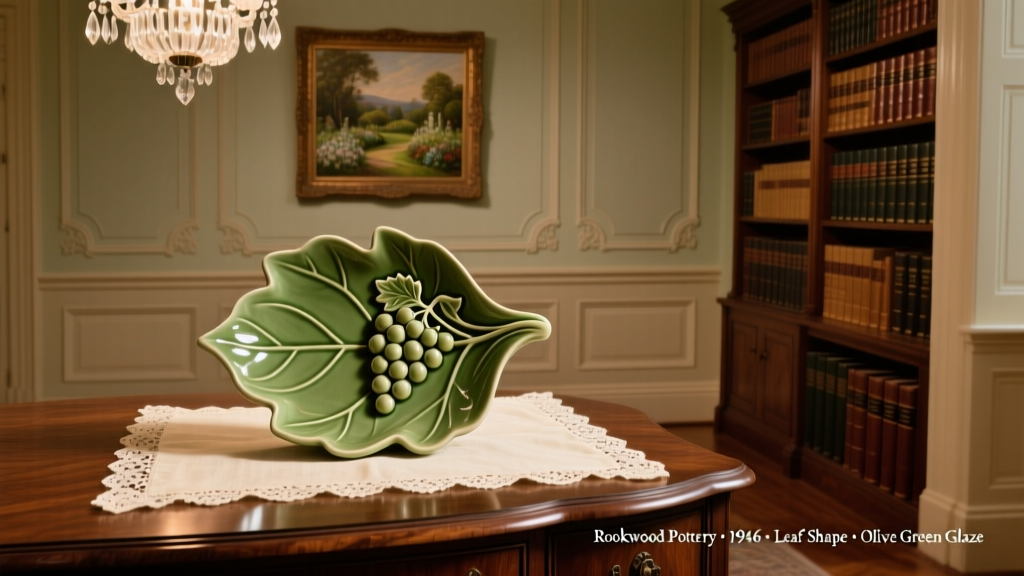
Rookwood Dish: Grape Cluster in Olive Green Glaze, Leaf Shape, 1946 — A Detailed Study of Form, Glaze, and Provenance

Toy Showboat Floor Toy: White Rubber Tires, Arcade-Style Cast Iron Construction (10¾") — Identification, History, and Restoration Guide

Lunch Boxes: Bee Gees 'Robin on Back' Metal Lunch Box, 1978 — Collectibility, Construction & Conservation

Archibald Little: The Forgotten English Cabinetmaker Who Defined Mid-Century Modern Elegance
Walnut Solid Splat Chairs with Pad Feet: Anatomy, Provenance, and Restoration Best Practices

Ship-Themed Copper-Plated Cast Iron Bookends, Circa 1930: Identification, Provenance, and Conservation Guidance

Joseph Carpenter: The Forgotten Architect of American Federal Furniture

Hubley’s Iconic Red & Silver Dump Truck: A Collector’s Guide to the 7½-Inch Lithographed Tinplate Classic (1930s–1940s)