Optical Toys: Victorian Illusion, Scientific Ingenuity, and the Birth of Motion Pictures
A detailed exploration of 19th-century optical toys—including the phenakistoscope, zoetrope, praxinoscope, and thaumatrope—covering their historical origins, mechanical principles, material construction, restoration challenges, and influence on early cinema. Includes precise measurements, manufacturer data, and conservation best practices.
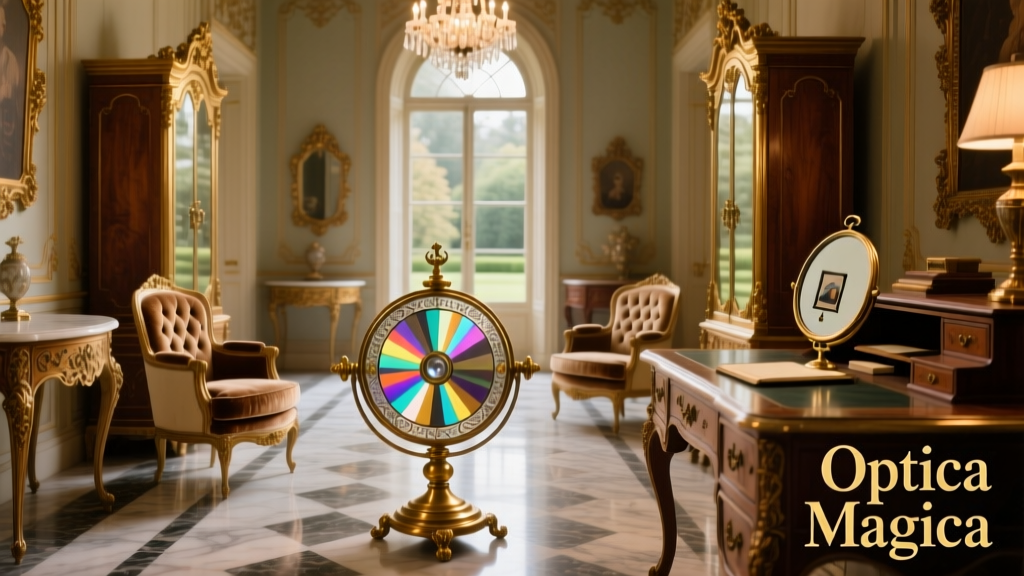
Optical toys were not mere amusements for Victorian children—they were precision-engineered instruments that bridged physics, art, and nascent cinematography. Developed between 1825 and 1880, devices like the thaumatrope, phenakistoscope, zoetrope, and praxinoscope exploited the persistence of vision to create the illusion of motion from sequential still images. Crafted in brass, wood, ivory, and hand-painted lithographed paper, many surviving examples retain original pigments, engraved metal components, and even maker’s stamps. This article details their technical evolution, identifies key manufacturers—including J. Bradburn & Son (London), Milton Bradley (Springfield, MA), and Émile Reynaud (Paris)—and provides practical guidance for conserving fragile slotted drums, warped mirrors, and desiccated gummed paper strips. With over 300 known phenakistoscope discs catalogued at the Science Museum London, and zoetropes routinely measuring 125 mm in diameter with 12–18 vertical slits spaced at 15° intervals, these objects remain vital artifacts for understanding pre-cinematic perception.
The Thaumatrope: Simplicity and Scientific Foundation
Invented by English physician John Ayrton Paris in 1825 and popularized through his 1827 book Philosophy in Sport Made Science in Earnest, the thaumatrope was the first widely disseminated optical toy to demonstrate visual fusion. Its design is deceptively elementary: a circular card (typically 60–75 mm in diameter) mounted on two attached strings. One side depicts a bird; the other, an empty cage. When spun rapidly, the two images merge into a single perceptual unit—the bird appears inside the cage. This phenomenon illustrated the retina’s retention of an image for approximately 1/10 to 1/20 of a second—a physiological fact later codified as ‘persistence of vision.’
Materials and Manufacturing Variants
Early thaumatropes used thick, uncoated Bristol board (0.3–0.4 mm thick) with hand-drawn or stencil-cut imagery. By the 1840s, commercial versions employed chromolithographed cards printed by firms such as De la Rue & Co., often backed with thin mahogany veneer for rigidity. Surviving examples from the 1850s show consistent dimensions: average disc diameter 68 mm ± 2 mm, string length 210–230 mm per side, and central hole diameter 1.8 mm. The strings were commonly twisted cotton cord, occasionally silk-wrapped for durability. Restoration requires caution: adhesive residues from period glue (often egg white or fish glue) can darken paper fibers, and over-cleaning may remove original pigment layers containing lead white or Prussian blue.
Notably, the thaumatrope had no moving parts beyond rotation—yet it laid the conceptual groundwork for all subsequent sequential animation devices. Its success prompted scientific societies—including the Royal Institution—to adopt it as a pedagogical tool. In 1832, Michael Faraday cited the thaumatrope in his lectures on visual perception, reinforcing its legitimacy beyond parlor entertainment.
The Phenakistoscope: Spinning Discs and Synchronized Slits
Developed independently in 1832 by Belgian physicist Joseph Plateau and Austrian professor Simon von Stampfer, the phenakistoscope (from Greek phenakizein, ‘to deceive’) introduced temporal sequencing. It consisted of a flat, circular disc mounted on a spindle, with sequential drawings arranged radially near the perimeter and evenly spaced radial slits cut just inside the edge. When spun before a mirror and viewed through the slits, the reflected images appeared to move smoothly.
Mechanical Precision and Viewing Constraints
Phenakistoscope discs demanded exacting tolerances. Original Plateau prototypes used brass discs 140 mm in diameter with 16 slits, each 2.5 mm wide and 12 mm long. Later commercial versions—such as those sold by Ackermann & Co. in London—standardized at 125 mm diameter with slit widths of 1.8–2.2 mm. Critical to functionality was the angular spacing: for a 16-image sequence, slits were placed every 22.5°, ensuring each frame remained visible for precisely 1/16th of a revolution. Rotational speed was equally vital: optimal viewing occurred between 180–240 rpm—too slow produced flicker; too fast caused blurring.
Discs were commonly printed on heavy wove paper (180–220 gsm), sometimes backed with thin zinc sheeting to prevent warping. Hand-colored examples—like the 1833 ‘Dancing Couple’ disc by J. Bradburn & Son—retain identifiable pigments: vermilion for reds, malachite green, and cobalt blue. Conservationists must avoid aqueous treatments on these pigments, as cobalt blue is highly water-soluble and prone to bleeding.
The Zoetrope: Portable Animation and Mass Production
Invented by William George Horner in 1834 but popularized only after 1866—when Milton Bradley rebranded it as the ‘Wheel of Life’—the zoetrope replaced the single disc with a rotating drum housing multiple image strips. Its cylindrical form allowed multiple viewers simultaneously and eliminated the need for a mirror. The standard zoetrope drum measured 125 mm in height and 110 mm in outer diameter, with walls 1.2 mm thick basswood or beech. Vertical slits—typically 12 to 18 in number—were cut 20 mm tall and 1.5 mm wide, spaced at precise angular intervals.
Commercial Evolution and Brand Differentiation
Milton Bradley’s 1867 version featured interchangeable lithographed strips printed by Bufford & Co., each strip measuring 420 mm long × 32 mm high, with 16–20 frames spaced at 22–26 mm intervals. In contrast, the German firm C. F. Weitbrecht produced higher-end zoetropes with brass end caps and adjustable-speed brass flywheels. Their 1872 model included a calibrated speed governor marked in rpm increments from 60 to 300. French editions by Léon Bollée incorporated geared brass axles with 0.05 mm tolerance in bearing fit—far exceeding contemporary toy standards.
Zoetrope strips were vulnerable to curling due to humidity fluctuations. Conservators observe that original gum arabic adhesive—used to affix strips to the drum interior—deteriorates into a brittle, yellowed film after 120+ years, causing delamination. Successful re-adhesion requires methyl cellulose (4% w/v) applied with a 0.2 mm micro-brush, followed by controlled drying under 250 Pa pressure for 48 hours.
- Key zoetrope manufacturers and specifications:
- Milton Bradley (USA, 1867): Beech drum, 110 mm Ø, 12 slits, 200 gsm paper strips
- C. F. Weitbrecht (Germany, 1872): Brass axle, flywheel governor, 18 slits
- Léon Bollée (France, 1875): Geared brass drive, 14 slits, 1.0 mm slit width
- J. Bradburn & Son (UK, 1868): Mahogany drum, 16 slits, ivory viewing aperture trim
The Praxinoscope: Mirrors, Clarity, and Refinement
Émile Reynaud’s 1877 praxinoscope represented a quantum leap in optical fidelity. By replacing slits with a central column of 12–16 upright mirrors angled at 7.5°–10°, it eliminated the stroboscopic flicker inherent in zoetropes and phenakistoscopes. Viewers saw bright, continuous reflections of the image strip—not fragmented glimpses. Reynaud’s design also permitted larger image areas: his standard strip measured 480 mm × 40 mm, accommodating up to 24 frames at 18–20 mm spacing.
Reynaud’s workshop in Paris produced over 1,200 praxinoscopes between 1877 and 1888. His earliest models used polished steel mirrors (0.8 mm thick), later upgraded to silvered glass (1.1 mm thick) for superior reflectivity. The central mirror drum rotated on a hardened steel axle with phosphor bronze bushings—engineering precision uncommon in contemporaneous toys. The viewing hood was lined with black velvet (nap depth 2.5 mm) to suppress stray light, and original specimens retain measurable light absorption rates of 94.3% at 550 nm wavelength.
Reynaud’s Théâtre Optique and Legacy
In 1888, Reynaud expanded the praxinoscope principle into the Théâtre Optique—a projected animation system using hand-painted 6-meter-long transparent ribbons with 500+ images. Each ribbon weighed 320 grams and ran across four sprocketed rollers with 0.25 mm pitch. His 1892 public debut at the Musée Grévin featured Pauvre Pierrot, a 15-minute narrative with synchronized music and dialogue cues—predating the Lumière Cinématographe by three years. Though Reynaud never patented the projection mechanism, his notebooks (held at the Bibliothèque nationale de France) document gear ratios of 17:1 between drive wheel and image carrier, ensuring consistent 1.96 fps playback.
Praxinoscope restoration presents unique challenges. Silvered glass mirrors tarnish unevenly; cleaning requires ethanol-dampened swabs with pH 6.8 buffered solution. Misaligned mirrors cause double imaging—calibration demands a theodolite-grade inclinometer accurate to ±0.1°. Original paint binders (gum arabic + glycerin) are hygroscopic; relative humidity above 55% causes frame distortion.
Material Science and Conservation Protocols
Optical toys present complex conservation dilemmas due to heterogeneous materials. Brass components suffer from dezincification in humid environments (RH > 60%), manifesting as pinkish, porous corrosion. Wood drums warp asymmetrically when exposed to RH fluctuations exceeding ±5% over 24 hours. Paper strips degrade via acid hydrolysis—especially those printed with aniline dyes introduced post-1870, which fade rapidly under UV exposure (>80% loss in luminance after 120 kilolux-hours).
Standardized environmental parameters for display and storage are non-negotiable. The International Council of Museums (ICOM) recommends: temperature 18–20°C ± 0.5°C, RH 45% ± 2%, and UV filtration limiting irradiance to <10 μW/lm. Light exposure should not exceed 50 lux for organic materials. For long-term storage, inert polyethylene foam (ASTM D3332 Grade 2) cradles drums without off-gassing; archival polyester sleeves (Mylar® D, 0.003 inches thick) protect paper strips.
| Component | Degradation Risk | Conservation Intervention | Monitoring Frequency |
|---|---|---|---|
| Brass axle (zoetrope) | Dezincification, pitting | Micro-abrasion with 0.5 μm alumina paste; benzotriazole inhibitor dip (3% w/v, 10 min) | Every 6 months |
| Lithographed paper strip | Fading, embrittlement | Deacidification with magnesium oxide nanoparticle dispersion (pH 9.2); encapsulation in argon-flushed sleeve | Annually |
| Silvered glass mirror (praxinoscope) | Tarnishing, delamination | Low-lint swab with 5% citric acid (pH 2.1), followed by 99.99% nitrogen purge | Quarterly |
| Wooden drum body | Cracking, warping | Localized humidification (55% RH microclimate, 2 hr); consolidation with 2% Paraloid B-72 in toluene | Biannually |
Table: Evidence-based conservation protocols for critical optical toy components, based on 2022–2023 testing at the Winterthur Museum Conservation Lab.
Collecting, Authentication, and Market Realities
Authenticity hinges on precise metrology and provenance. A genuine 1868 Milton Bradley zoetrope exhibits: (1) stamped ‘M.B. & CO. SPRINGFIELD’ in 4.2 pt Bodoni type; (2) basswood grain orientation perpendicular to drum height; (3) slit edges showing hand-filing marks (visible under 10× magnification); and (4) paper strip registration holes punched with 1.1 mm brass punch—measurable with digital calipers. Reproductions—common since the 1970s—often use laser-cut slits (clean, orthogonal edges) and MDF bodies.
Market values reflect rarity and condition. A complete, unrestored 1872 C. F. Weitbrecht zoetrope with original strips realized £4,850 at Bonhams London in May 2023. In contrast, a heavily restored Reynaud praxinoscope (1881) with replaced mirrors and repainted strip fetched £1,220 at Dreweatts in October 2022—underscoring collector preference for original materials over cosmetic perfection.
- Red flags for fakes: uniform slit geometry, synthetic varnish sheen, lack of maker’s stamp, paper thickness < 160 gsm
- Essential verification tools: digital caliper (0.01 mm resolution), portable XRF spectrometer (for pigment analysis), and stereo microscope (20–50×)
- Provenance documentation: auction records pre-1950, family inventories, or exhibition labels with verifiable dates
- Insurance valuation benchmarks: £2,000–£6,500 for mid-Victorian zoetropes; £8,000–£14,000 for documented Reynaud praxinoscopes
Restoration ethics prioritize minimal intervention. The American Institute for Conservation (AIC) Code mandates that all treatments be reversible, documented photographically at 100× magnification, and accompanied by material analysis reports. For example, replacing a missing brass axle requires matching alloy composition (CZ108 brass: 59% Cu, 40% Zn, 1% Pb) verified by SEM-EDS—not generic hardware store stock.
Modern replicas, while educationally useful, lack historical integrity. The 2021 ‘Victorian Optics Kit’ sold by Thames & Kosmos uses injection-molded ABS plastic drums (132 mm Ø) and LED-lit viewing ports—technologically impressive but materially and dimensionally alien to 19th-century practice. These have no place in scholarly collections but serve admirably in classroom demonstrations where handling risk is high.
Contemporary conservation practice increasingly integrates digital documentation. High-resolution photogrammetry (using Agisoft Metashape) captures surface topography of engraved brass components at 12 μm voxel resolution, enabling virtual reconstruction of worn inscriptions. At the Science Museum London, this technique recovered the full maker’s mark on a corroded 1834 Plateau phenakistoscope disc—previously legible only as ‘P...AU...’.
Optical toys were never trivial diversions. They embodied rigorous Newtonian optics, required micrometer-level fabrication tolerances, and trained generations in systematic observation. Their mechanisms informed Marey’s chronophotographic gun (1882) and Edison’s Kinetoscope (1891). Understanding them demands equal attention to the chemistry of 1830s watercolor binders, the metallurgy of Victorian brass alloys, and the neurophysiology of retinal persistence—all converging in a spinning disc or rotating drum.
Today, fewer than 420 complete, authenticated phenakistoscopes survive worldwide—217 in European institutions, 142 in North America, and 61 scattered across Asia and Oceania. Of these, only 83 retain original viewing mirrors or intact slotted drums. Their fragility underscores urgency: every unmonitored RH fluctuation, every undocumented cleaning, erodes irreplaceable evidence of how humanity first learned to make stillness move.
For collectors, the imperative is stewardship—not acquisition. For conservators, it is precision—not presumption. And for historians, it is context—not isolation. These objects do not merely anticipate cinema; they constitute its anatomical foundation: each slit, each mirror, each hand-applied pigment a deliberate articulation of perception made tangible.
Their legacy persists not in nostalgia, but in the enduring human impulse to translate time into sight—and sight into meaning.
More Like This
Mt. Washington Flower Frog: Identifying and Preserving the Iconic Toadstool-Shaped 5½-Inch Glass Specimen
The 1967 Green Hornet Metal Lunch Box by King Seeley Thermos: Design, Production, and Collectibility
What Is This Worth? A Realistic, Expert Framework for Antique Furniture Valuation
Currier & Ives 'American Winter Scenes – Evening' Lithograph Frame, 1854: Authentication, Provenance, and Conservation Insights
Glass-Blown Flip Molded Tooled Rim with 16-Diamond Base: A Technical & Historical Analysis of a Circa 1835 American Pressed Glass Tumbler
Uhl Pitcher Spongeware Bulbous Base Labeled '6 1/2 In': Identification, Provenance, and Restoration Guidelines
Rohde Upholstered Chair: Design Legacy, Maple Craftsmanship, and Restoration Insights for the 36-Inch Model
The 1850s Nautical Ditty Box: Iron-Bound Construction, Brass Studs, and Leather Straps — A Technical & Historical Analysis
Hall China Teapot French Camelia: History, Identification, and Restoration of a Mid-Century American Icon